

Photos: U.S. Border Patrol horseback unit
- Updated
The U.S. Border Patrol's Tucson Sector horse patrol, created in 1924, combines the Old West with 21st Century technology. Agents carefully track and corner suspects and go where vehicles can't.
U.S. Border Patrol horse unit
- A.E. Araiza / Arizona Daily Star
- Updated
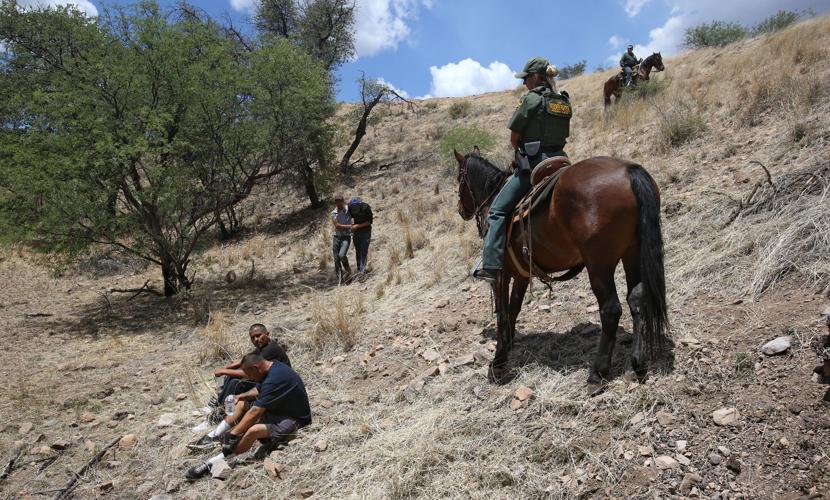
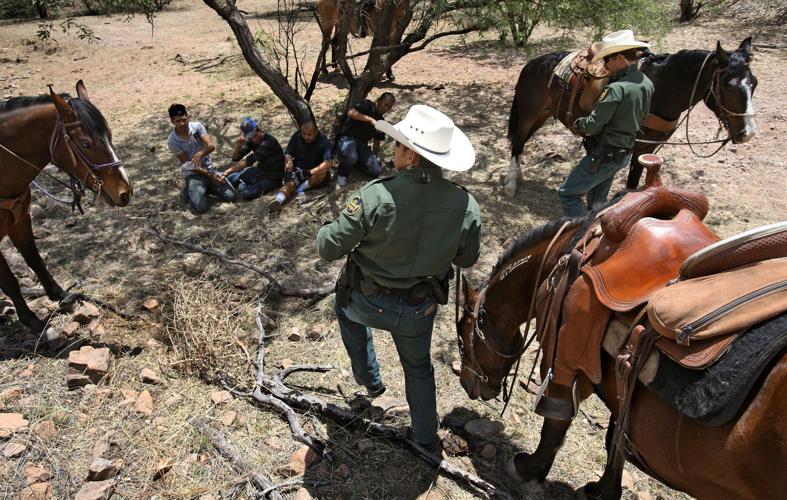
US Border Patrol agent Bobbi Schad keeps an eye on two illegal border crossers as two more handcuffed crossers join the group outside Nogales, Ariz., on May 18, 2016. Watching from below the ridgeline is agent Eric Robles. The four men were first detected by cameras and sensors in the area. Then agents, relying on their mustangs and knowledge of the area are able to locate and capture the crossers. A.E. Araiza / Arizona Daily Star
U.S. Border Patrol horse unit
- A.E. Araiza / Arizona Daily Star
- Updated
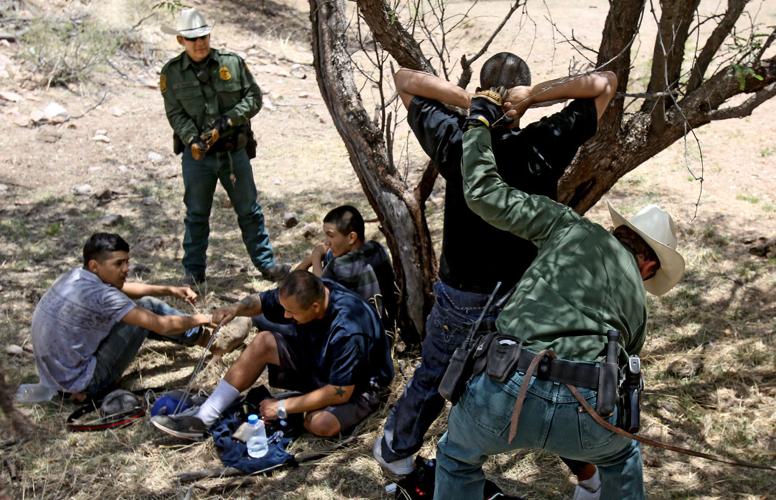
Even as he searches for weapons, identification and contraband, Shawn Rodgers, with the US Border Patrol Horse Patrol unit, keeps his horse nearby by having the reins looped through his belt while detaining several crossers outside Nogales, Ariz., on May 18, 2016. This allows him to use both hands and if the horse spooks he can still maintain balance and grab the reins, he said. A.E. Araiza / Arizona Daily Star
U.S. Border Patrol horse unit
- Photos by A.E. Araiza / Arizona Daily Star
- Updated
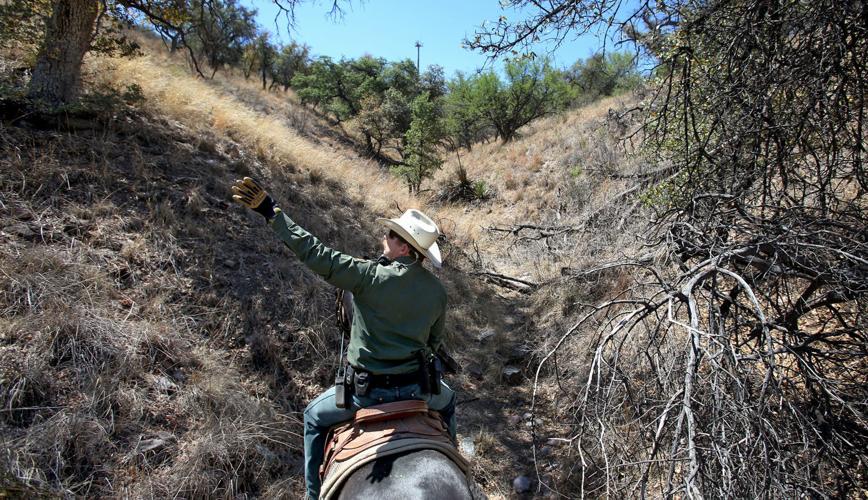
Shawn Rodgers, a supervisory Border Patrol agent, looks for the best way out of a ravine so he can get better radio reception.
U.S. Border Patrol horse unit
- A.E. Araiza / Arizona Daily Star
- Updated
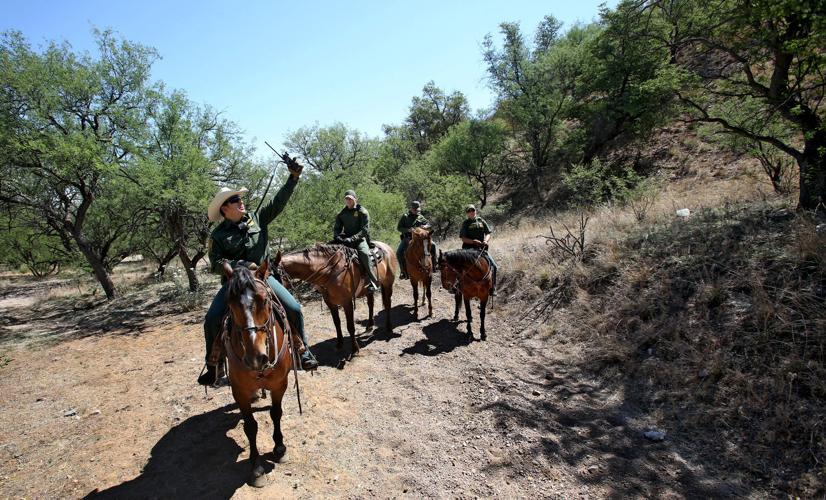
Hampered by steep terrain, US Border Patrol agent Eric Robles, with the agency's Horse Patrol Unit, has trouble making contact with his radio during a routine ride in the steep hills outside Nogales, Ariz., on May 18, 2016. Robles and fellow agents use their horses, their knowledge of the area and technology to locate and capture those crossing into the country illegally. A.E. Araiza / Arizona Daily Star
U.S. Border Patrol horse unit
- A.E. Araiza / Arizona Daily Star
- Updated
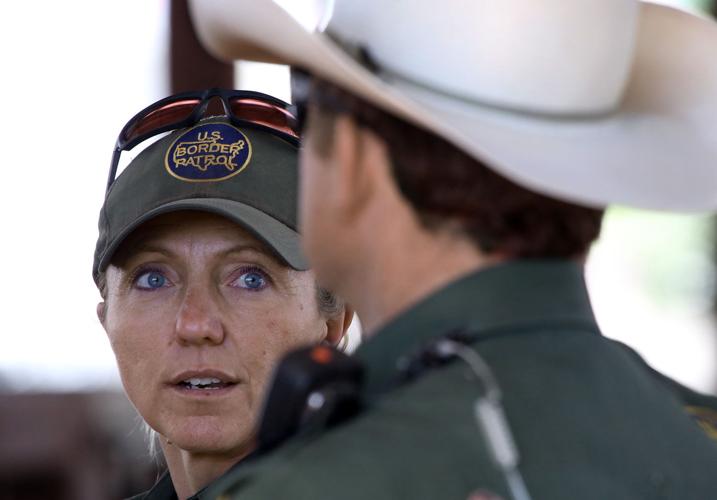
US Border Patrol agent Bobbi Schad talks with Shawn Rodgers after a ride in the steep rolling hills outside Nogales, Ariz., on May 18, 2016. Combining 21st Century technology with an age-old form of transportation has proven effective in the area of border security. A.E. Araiza / Arizona Daily Star
U.S. Border Patrol horse unit
- A.E. Araiza / Arizona Daily Star
- Updated
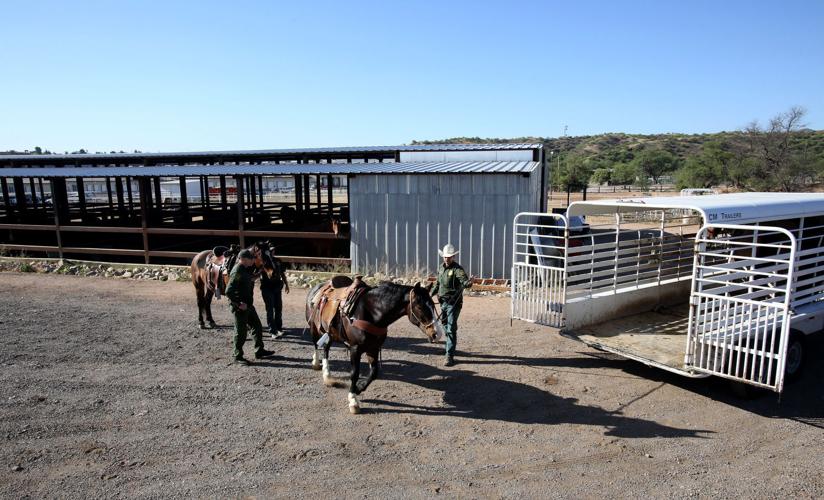
The barn area at the US Border Patrol's Nogales Station was built using various materials left over from past projects in Nogales, Ariz., on May 18, 2016. The teams travel by trailer to various locations depending on best information at the time. And although times and technology have changed since the horse unit was created in 1924 it is proven to be a reliable tool. A.E. Araiza / Arizona Daily Star
U.S. Border Patrol horse unit
- photos by A.E. Araiza / Arizona Daily Star
- Updated
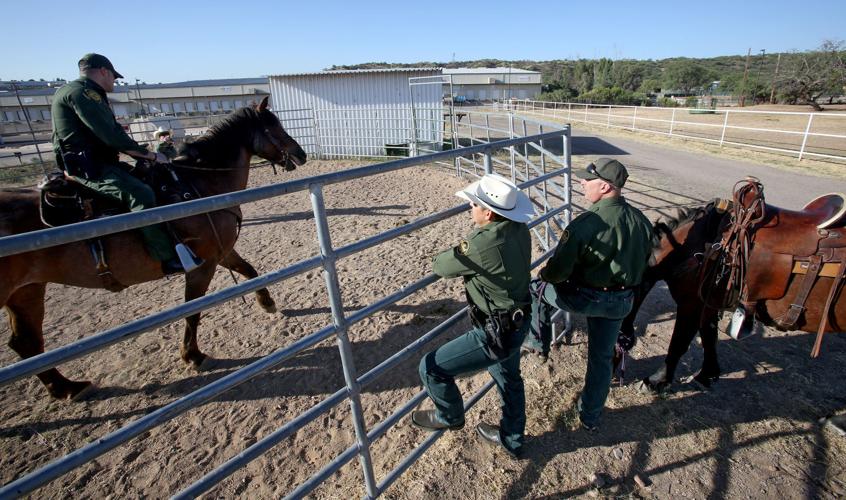
Border Patrol agents Eric Robles, middle, and Tim Cameron watch as fellow agent Matt Eisenhauer attempts to qualify to ride with them.
U.S. Border Patrol horse unit
- A.E. Araiza / Arizona Daily Star
- Updated
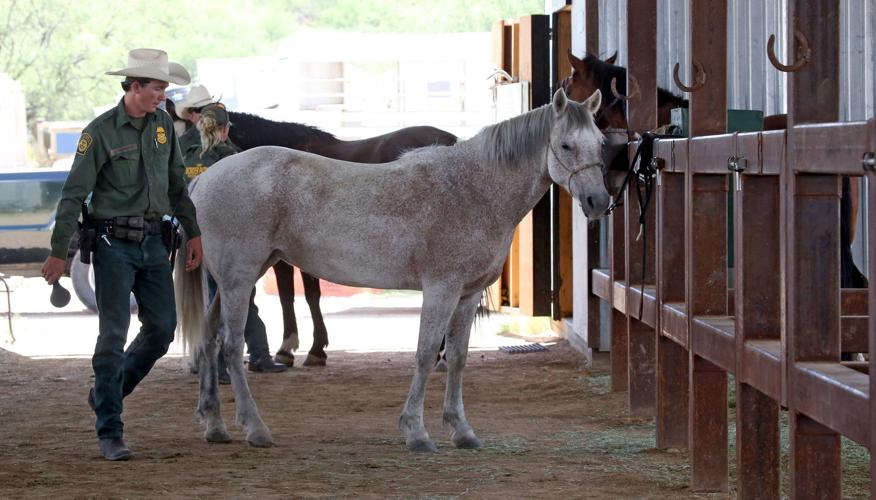
Agent Tim Cameron’s horse, Gus, came from the state prison in Florence. Many of the horses are mustangs from the Bureau of Land Management.
U.S. Border Patrol horse unit
- A.E. Araiza / Arizona Daily Star
- Updated
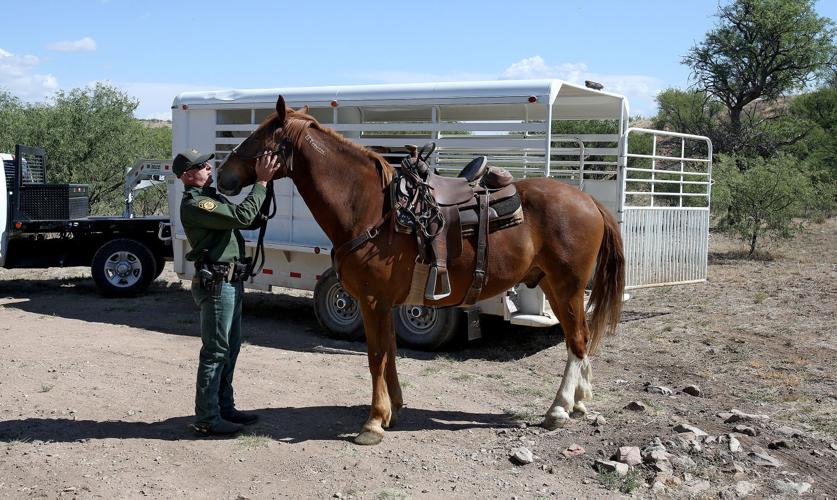
US Border Patrol agent Justin Thatcher, with the agency's Nogales Horse Patrol unit, attends to a small mare named "Penny" while in Nogales, Ariz., on May 18, 2016. Penny was "seized" after a previous arrest. For the most part the horse unit relies on captured mustangs, mostly from the Bureau of Land Management, the unit is able to traverse terrain that is not easily accessible. A.E. Araiza / Arizona Daily Star
U.S. Border Patrol horse unit
- A.E. Araiza / Arizona Daily Star
- Updated
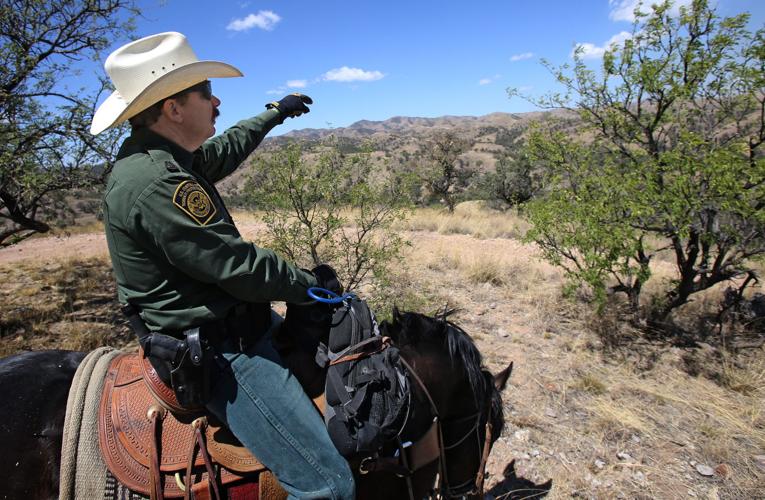
Spotters use the hills in the distance to assist illegal activities along the border outside Nogales by monitoring US Border Patrol movement said Shawn Rodgers, a Border Patrol agent outside Nogales, Ariz., on May 18, 2016. They keep an eye on border patrol activity and let others know when it is safe to cross, he said. A.E. Araiza / Arizona Daily Star
U.S. Border Patrol horse unit
- A.E. Araiza / Arizona Daily Star
- Updated
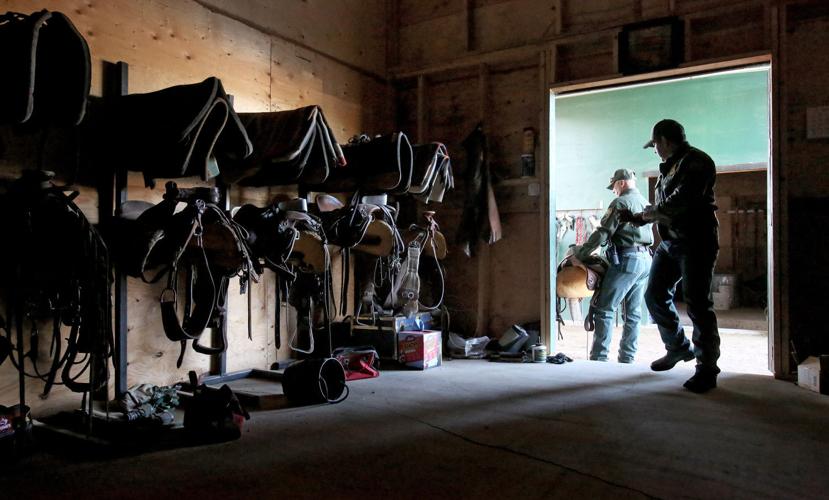
Saddles, blankets, bridles are neatly placed along a wall of the tack room as US Border Patrol agents get their mounts ready for the day at the agency's Horse Patrol unit in Nogales, Ariz., on May 18, 2016. Although times and technology have changed since the horse unit was created in 1924 it is proven to be a reliable tool. A.E. Araiza / Arizona Daily Star
U.S. Border Patrol horse unit
- A.E. Araiza / Arizona Daily Star
- Updated
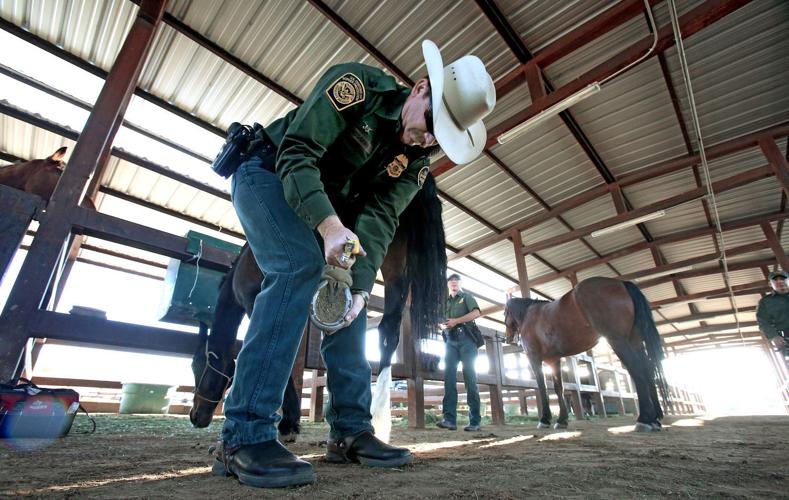
Shawn Rodgers cleans the hooves of his horse, Mayhem, before heading out. Bobbi Schad, background, commands the mounted and ATV patrols in the Border Patrol’s Tucson Sector.
U.S. Border Patrol horse unit
- A.E. Araiza / Arizona Daily Star
- Updated
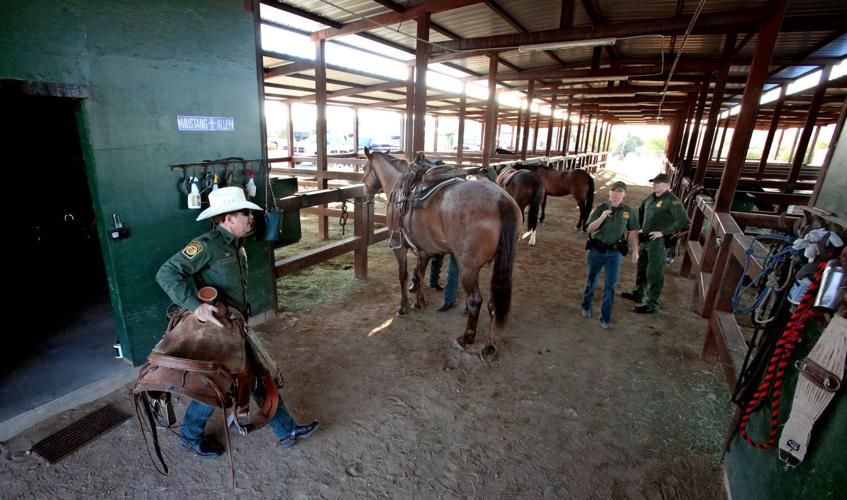
Shawn Rodgers, a supervisory Border Patrol agent with the Nogales Station Horse Patrol unit, carries his saddle as he and fellow US Border Patrol agents start their day in Nogales, Ariz., on May 18, 2016. Relying on captured mustangs, mostly from the Bureau of Land Management, the unit is able to traverse terrain that is not easily accessible, even on foot. A.E. Araiza / Arizona Daily Star
U.S. Border Patrol horse unit
- A.E. Araiza / Arizona Daily Star
- Updated
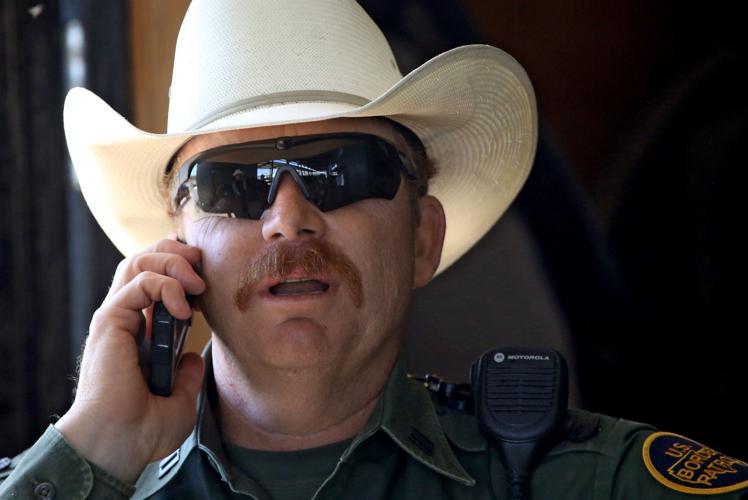
Shawn Rodgers, a supervisory Border Patrol agent with the Nogales Station Horse Patrol unit, talks on the phone after a ride in the steep outside Nogales, Ariz., on May 18, 2016. Although times and technology have changed since the horse unit was created in 1924 it is proven to be a reliable tool. A.E. Araiza / Arizona Daily Star
U.S. Border Patrol horse unit
- A.E. Araiza / Arizona Daily Star
- Updated
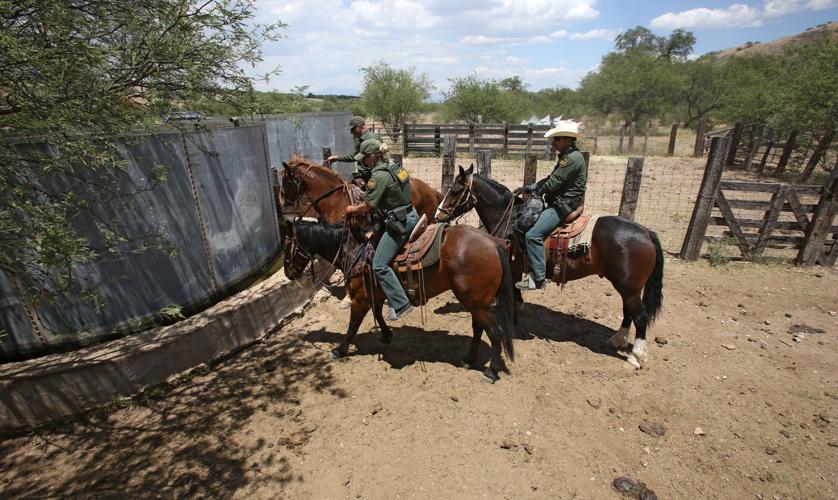
US Border Patrol agents Tim Cameron, background, Bobbi Schad, foreground, and Shawn Rodgers lead their horses to water at Community Wells outside Nogales, Ariz., on May 18, 2016. Relying on captured mustangs, mostly from the Bureau of Land Management, the unit is able to traverse terrain that is not easily accessible, even on foot.
U.S. Border Patrol horse unit
- A.E. Araiza / Arizona Daily Star
- Updated
Agents Eric Robles, middle, and Shawn Rodgers approach border crossers they chased down on horseback.
More like this...
U.S. Border Patrol horse unit
- A.E. Araiza / Arizona Daily Star
US Border Patrol agent Bobbi Schad keeps an eye on two illegal border crossers as two more handcuffed crossers join the group outside Nogales, Ariz., on May 18, 2016. Watching from below the ridgeline is agent Eric Robles. The four men were first detected by cameras and sensors in the area. Then agents, relying on their mustangs and knowledge of the area are able to locate and capture the crossers. A.E. Araiza / Arizona Daily Star
U.S. Border Patrol horse unit
- A.E. Araiza / Arizona Daily Star
Even as he searches for weapons, identification and contraband, Shawn Rodgers, with the US Border Patrol Horse Patrol unit, keeps his horse nearby by having the reins looped through his belt while detaining several crossers outside Nogales, Ariz., on May 18, 2016. This allows him to use both hands and if the horse spooks he can still maintain balance and grab the reins, he said. A.E. Araiza / Arizona Daily Star
U.S. Border Patrol horse unit
- A.E. Araiza / Arizona Daily Star
Hampered by steep terrain, US Border Patrol agent Eric Robles, with the agency's Horse Patrol Unit, has trouble making contact with his radio during a routine ride in the steep hills outside Nogales, Ariz., on May 18, 2016. Robles and fellow agents use their horses, their knowledge of the area and technology to locate and capture those crossing into the country illegally. A.E. Araiza / Arizona Daily Star
U.S. Border Patrol horse unit
- A.E. Araiza / Arizona Daily Star
US Border Patrol agent Bobbi Schad talks with Shawn Rodgers after a ride in the steep rolling hills outside Nogales, Ariz., on May 18, 2016. Combining 21st Century technology with an age-old form of transportation has proven effective in the area of border security. A.E. Araiza / Arizona Daily Star
U.S. Border Patrol horse unit
- A.E. Araiza / Arizona Daily Star
The barn area at the US Border Patrol's Nogales Station was built using various materials left over from past projects in Nogales, Ariz., on May 18, 2016. The teams travel by trailer to various locations depending on best information at the time. And although times and technology have changed since the horse unit was created in 1924 it is proven to be a reliable tool. A.E. Araiza / Arizona Daily Star
U.S. Border Patrol horse unit
- A.E. Araiza / Arizona Daily Star
US Border Patrol agent Justin Thatcher, with the agency's Nogales Horse Patrol unit, attends to a small mare named "Penny" while in Nogales, Ariz., on May 18, 2016. Penny was "seized" after a previous arrest. For the most part the horse unit relies on captured mustangs, mostly from the Bureau of Land Management, the unit is able to traverse terrain that is not easily accessible. A.E. Araiza / Arizona Daily Star
U.S. Border Patrol horse unit
- A.E. Araiza / Arizona Daily Star
Spotters use the hills in the distance to assist illegal activities along the border outside Nogales by monitoring US Border Patrol movement said Shawn Rodgers, a Border Patrol agent outside Nogales, Ariz., on May 18, 2016. They keep an eye on border patrol activity and let others know when it is safe to cross, he said. A.E. Araiza / Arizona Daily Star
U.S. Border Patrol horse unit
- A.E. Araiza / Arizona Daily Star
Saddles, blankets, bridles are neatly placed along a wall of the tack room as US Border Patrol agents get their mounts ready for the day at the agency's Horse Patrol unit in Nogales, Ariz., on May 18, 2016. Although times and technology have changed since the horse unit was created in 1924 it is proven to be a reliable tool. A.E. Araiza / Arizona Daily Star
U.S. Border Patrol horse unit
- A.E. Araiza / Arizona Daily Star
Shawn Rodgers, a supervisory Border Patrol agent with the Nogales Station Horse Patrol unit, carries his saddle as he and fellow US Border Patrol agents start their day in Nogales, Ariz., on May 18, 2016. Relying on captured mustangs, mostly from the Bureau of Land Management, the unit is able to traverse terrain that is not easily accessible, even on foot. A.E. Araiza / Arizona Daily Star
U.S. Border Patrol horse unit
- A.E. Araiza / Arizona Daily Star
Shawn Rodgers, a supervisory Border Patrol agent with the Nogales Station Horse Patrol unit, talks on the phone after a ride in the steep outside Nogales, Ariz., on May 18, 2016. Although times and technology have changed since the horse unit was created in 1924 it is proven to be a reliable tool. A.E. Araiza / Arizona Daily Star
U.S. Border Patrol horse unit
- A.E. Araiza / Arizona Daily Star
US Border Patrol agents Tim Cameron, background, Bobbi Schad, foreground, and Shawn Rodgers lead their horses to water at Community Wells outside Nogales, Ariz., on May 18, 2016. Relying on captured mustangs, mostly from the Bureau of Land Management, the unit is able to traverse terrain that is not easily accessible, even on foot.
More like this...
As featured on

Ranchers want agents closer to border along with more electronic surveillance.
Ranchers want agents closer to border along with more electronic surveillance.

Customs officers catch a small fraction of the guns smuggled into Mexico.
Most Popular
-
 Plans floated to reopen San Manuel Mine as part of regional copper development
 -
Arizona governor vetoes license plate honoring Charlie Kirk
-
Florence ICE detainee dead after untreated tooth infection, official says
-
Burger countdown: A new Shake Shack is set to open in Tucson
-
Kansas City no longer a slam dunk for Big 12 basketball tournament | Greg Hansen

