



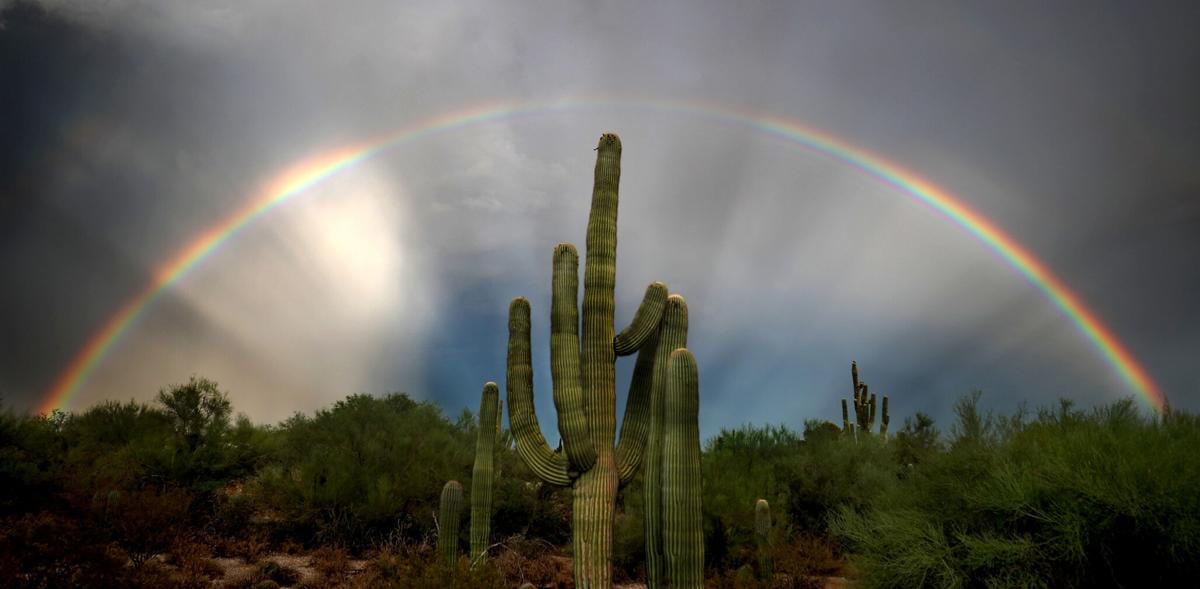
The North American monsoon officially starts in mid-June and lasts through September 30. Of course, we’re not guaranteed to have rain during that entire period. The monsoon is very climatologically complex, and any given year will have different features, rainfall, and, dare I say it, personality.
In 2024 we’ve been fortunate to start early, which means that Tucson's June weather has been cooler and rainier. This, in turn, has meant that our plants are surviving the hottest month much easier than other years. There’s no guarantee that will continue, but at least our (usually) hottest and driest month has been a lot more bearable.
Given the unpredictability of our monsoon, gardeners may find it difficult to know what they should be doing. Do I turn down my watering? Do I plant new plants? Here are some tips.
Watering
Getting a rain gauge will help you decide what to do about your watering. A rain gauge will tell you how much you got in any given rainfall. Generally, you will want to see between one-fourth to half of an inch of rain before you skip an irrigation cycle. Make sure your rain gauge is placed away from large trees or walls to avoid getting false readings. If you have an irrigation system with a rain sensor, that will make your life easier. Just make sure the sensor is uncovered and is functioning and set it to sense half of an inch. You can also upgrade your existing system with a sensor like this one.
Saving seeds
Since many of our native plants flower now, this is a good time to gather seeds from your garden. This allows you to select for varieties of plants that do well in your microclimate. You can read more in my article “Saving seeds from your Tucson garden.” Just remember to leave some for the birds and other small animals that share your yard.
Planting
A good monsoon is a great time to put native heat-loving plants in the ground, with some caveats. Choose plants that love full sun and are more drought-tolerant. Cacti, palms and agave or yucca will do very well this time of year. To be on the safe side, I avoid plants that are native to our washes and streams and require more water to establish. You also will need to set up irrigation for your plants regardless of the monsoon, since our rains in the summer are so unpredictable.
Here are some other options for leafy and flowering plants:
Trees:
Shrubs:
Small perennial shrubs:
Sowing
It’s a perfect time to sow native wildflower seeds. You can sprinkle them around when you see the rain starting to fall. If you’re using seedballs you can toss them around your yard anytime; they will dissolve with the next big rain and sow your seeds for you.
Yard maintenance
The winds and torrential rains that often accompany our monsoon can cause a lot of damage. Keep an eye on your trees to make sure you don’t have any branches that are about to break and fall, and remove them immediately if you see any issues. You may need to prune back some of your plants if the rains make them grow into your pathways and entrances.
Also pay attention to water flowing through your yard during high-precipitation events. Do you have pooling? Erosion? Flooding? If so, address that issue now before it results in property damage. You can read more about this in my article "Dealing with drainage issues in your Tucson yard."
You may also get lots of plant debris in your yard. The best place for it is either in the compost bin or under your trees and shrubs as mulch.
What will this year's monsoon season look like in Southern Arizona? Here's a preview from the National Weather Service's Tucson Forecast Office.

