

LED bulbs need compatibility; solar panels barely reducing bills; door fix
- Updated
Get tips on making fixes around the house.

- By Rosie Romero Special to the Arizona Daily Star
- Updated
Q: In my garage I have a light fixture with a sensor in it that is supposed to turn on the lighting when someone comes out in the garage. I’ve always used incandescent lights in the fixture, but recently I put an LED bulb into it. So now the LED bulb blinks on and off and on again all the time until I turn off the sensor in the wall switch by hand. How can I fix this?
A: If you keep the fixture the same and change the type of bulb, the light won’t always operate the way that it’s supposed to. You’ll have to buy and install a fixture that’s compatible with LED bulbs. LED bulbs are electronic as opposed to the resistance nature of incandescent bulbs. So LEDs require a fixture designed for electronic devices.
For more do-it-yourself tips, go to rosieonthehouse.com. Rosie Romero is the host of the syndicated Saturday morning Rosie on the House radio program.
- By Rosie Romero Special to the Arizona Daily Star
- Updated
Q: I have a half–inch gap between the bottom of my front door and the threshold at the bottom and as a result we get some water coming into the house during monsoon season. How hard would it be for me to replace the front door myself?
A: It’s not that hard to do, but possibly, as long as there is no water draining down to your door off your lot, you probably only need to put in a door sweep at the bottom of the existing door to close the gap.
For more do-it-yourself tips, go to rosieonthehouse.com. Rosie Romero is the host of the syndicated Saturday morning Rosie on the House radio program.
- By Rosie Romero Special to the Arizona Daily Star
- Updated
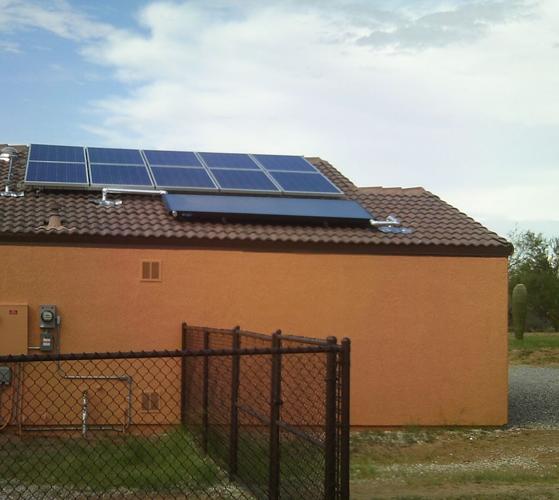
Q: I had solar panels put on my 1,600-square-foot house in January 2015. But I’ve only seen a 10 percent reduction in my utility bill since then. Shouldn’t it be more than that? I’m also wondering if I’m still eligible for state and federal tax credits or is it too late to apply for them?
A: First of all, you need to call up the company that installed your panels and have them come back to see if repairs are needed. A 10 percent reduction does not seem like enough. And yes, you have a number of years in which to claim those credits; you’d better talk to your tax adviser about how you can do that and what the rules and regulations say.
For more do-it-yourself tips, go to rosieonthehouse.com. Rosie Romero is the host of the syndicated Saturday morning Rosie on the House radio program.
- By Rosie Romero Special to the Arizona Daily Star
- Updated
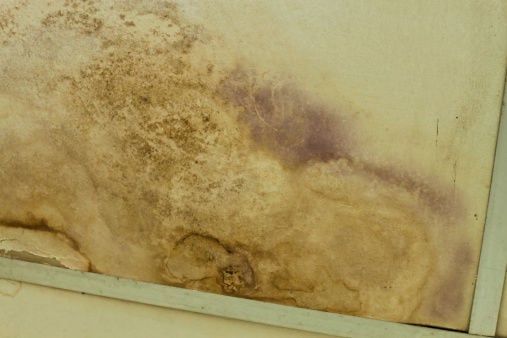
Q: I have been leasing a townhouse that I’m now thinking of buying, but I’m worried because the roof has been leaking. You can see dried water spots in the living room and also on the common wall in the garage. The homeowners association will fix the roof, but they won’t do anything about repairing the interior walls. What can I do about that?
A: That’s not an unusual situation in townhouses or condominiums. The HOA will repair the roof, but won’t do anything about the damage inside a house. You might check to see if there is some kind of insurance policy that will cover that type of repair, but if not, you would have to pay for it yourself. Make sure to have a qualified home inspection to check for any other possible resulting damage from leaks.
For more do-it-yourself tips, go to rosieonthehouse.com. Rosie Romero is the host of the syndicated Saturday morning Rosie on the House radio program.

- By Rosie Romero Special to the Arizona Daily Star
- Updated
Q: Wild bees have been making tiny holes in the stucco in my house. Then the woodpeckers come along and start pecking at the holes; I guess they’re looking for insects or honey. How can we get the woodpeckers to go away?
A: You probably need to have a bee expert treat the entire section of holes with some kind of foam to get rid of chemicals that bees leave behind to attract other bees. Bee experts call those chemicals pheromones. Once the bees stop making the holes, it’s likely the woodpeckers will stop their visits.
For more do-it-yourself tips, go to rosieonthehouse.com. An Arizona home building and remodeling industry expert for 25 years, Rosie Romero is the host of the syndicated Saturday morning Rosie on the House radio program, heard locally from 8-11 a.m. on KNST-AM (790) in Tucson and KGVY-AM (1080) and -FM (100.7) in Green Valley. Call 888-767-4348.
- By Rosie Romero Special to the Arizona Daily Star
- Updated
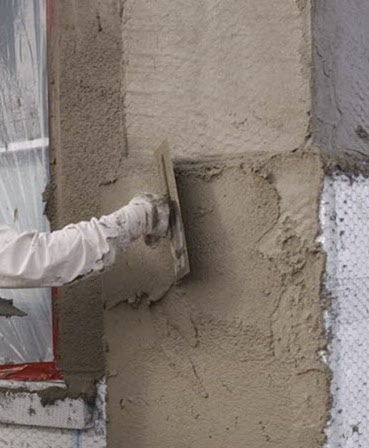
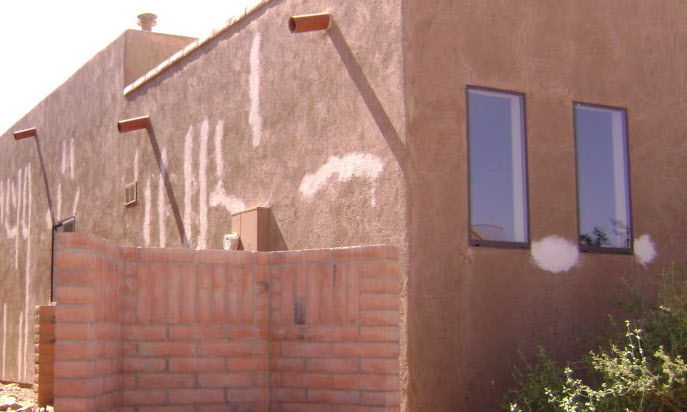
Q: I had to have all the stucco around the edges of my windows replaced because of problems with leaks. Workers pulled the old stucco off to reflash the windows. Now I’m wondering how long I’ll have to wait before I can repaint the new bare stucco. I was told to wait four to six weeks, but does it have to be that long?
A: Four to six weeks is about right. But you can also buy a kit at the hardware store and test the moisture levels in the stucco to be sure it’s thoroughly dry. When you do paint, put a good primer on first; then apply the paint. That fresh paint will help your stucco shed water. After you paint the new areas, the fresh paint color will probably look very different from the paint already on the house. Eventually, you may want to repaint the entire house because it’s too easy to see where the new paint stops and the old begins.
Window flashing, of course, is material installed around the windows to keep water from entering gaps between adjoining surfaces. Wind-driven rainwater can find its way through even tiny spaces between the frame or casing of a window and the trim.
For more do-it-yourself tips, go to rosieonthehouse.com. An Arizona home building and remodeling industry expert for 25 years, Rosie Romero is the host of the syndicated Saturday morning Rosie on the House radio program, heard locally from 8-11 a.m. on KNST-AM (790) in Tucson and KGVY-AM (1080) and -FM (100.7) in Green Valley. Call 888-767-4348.
- By Rosie Romero Special to the Arizona Daily Star
- Updated
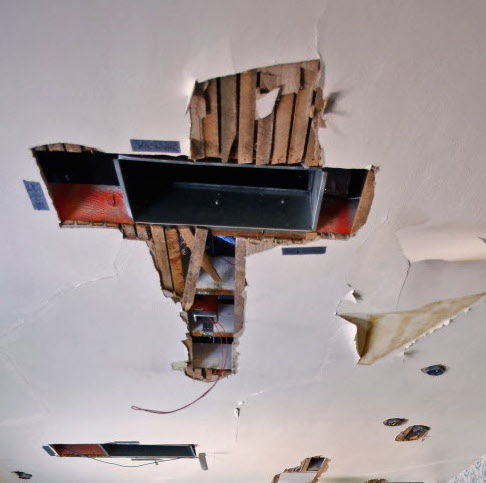
Q: I had an energy audit done on my house and then had some work done on my air ducts. Ever since then, my house has been a whole lot dustier, and I’ve noticed more dust on the air filters when I change them. What could be causing this problem?
A: It’s possible that the air ducts weren’t reconnected properly when they did the duct work in your house. Then the air conditioner could be sucking in a lot of dust in the attic, for example, and blowing it back into the house. You need to have another blower door test and duct blast test done on your house – the kinds of things that they did during the energy audit – to find out where the problem is.
Q: What kind of vegetables can you plant in a container garden?
A: Just about any kind of vegetable can be grown in containers, but you have to use a large enough pot or container. The biggest mistake that home gardeners make is using a container that is way too small.
Q: I have a leaky window on the second story of my house. Water seems to be leaking through the stucco. I’ve tried many possible solutions, but they just don’t work. When it rains, I run through four or five beach towels soaking up water. Three or four years ago, I had a contractor replace the flashing and stucco around the window, but he wouldn’t guarantee that it would stop the leak. Can’t I just buy some kind of sealer to put over the stucco to make this stop?
A: You’re looking for some kind of miracle top coat that just doesn’t exist. The best solution is to find a different, more dependable contractor to redo the flashing. The problem with sealing the stucco is that you will end up with moisture soaking into the walls of your house. The water can’t escape, and it can cause an even bigger mess inside.
For more do-it-yourself tips, go to rosieonthehouse.com. An Arizona homebuilding and remodeling industry expert for 25 years, Rosie Romero is the host of the syndicated Saturday morning “Rosie on the House” radio program, heard locally from 8-11 a.m. on KNST-AM (790) in Tucson and KGVY-AM (1080) and -FM (100.7) in Green Valley. Call 888-767-4348.
- By Rosie Romero Special to the Arizona Daily Star
- Updated
Q: I had an energy audit done on my house and then had some work done on my air ducts. Ever since then, my house has been a whole lot dustier, and I’ve noticed more dust on the air filters when I change them. What could be causing this problem?
A: It’s possible that the air ducts weren’t reconnected properly when they did the duct work in your house. Then the air conditioner could be sucking in a lot of dust in the attic, for example, and blowing it back into the house. You need to have another blower door test and duct blast test done on your house – the kinds of things that they did during the energy audit – to find out where the problem is.
For more do-it-yourself tips, go to rosieonthehouse.com. An Arizona homebuilding and remodeling industry expert for 25 years, Rosie Romero is the host of the syndicated Saturday morning “Rosie on the House” radio program, heard locally from 8-11 a.m. on KNST-AM (790) in Tucson and KGVY-AM (1080) and -FM (100.7) in Green Valley. Call 888-767-4348.

- By Rosie Romero Special to the Arizona Daily Star
- Updated
Q: What’s the best kind of ductwork to do when building a new house? Should ducts be rigid metal or should you install flexible ducts?
A: Most of what’s being installed in new houses now is flexible ducts because they cost so much less than rigid, sheet-metal ductwork. The installation of hard ducts is also more difficult because they have to be wrapped in insulation and more transition points have to be made. Those transitions are where leaks tend to occur. The problem with flexible ducts is that installers have a tendency to make too many turns and bends as they run the ducts through the house. But both types of ductwork can work just fine if the ductwork is designed and installed correctly.
For more do-it-yourself tips, go to rosieonthehouse.com. An Arizona homebuilding and remodeling industry expert for 25 years, Rosie Romero is the host of the syndicated Saturday morning “Rosie on the House” radio program, heard locally from 8-11 a.m. on KNST-AM (790) in Tucson and KGVY-AM (1080) and -FM (100.7) in Green Valley. Call 888-767-4348.
- By Rosie Romero Special to the Arizona Daily Star
- Updated
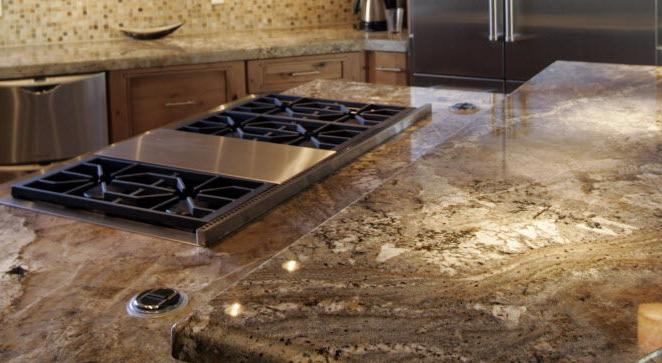
Q: I have granite countertops in my house, and in one area where a seam runs from front to back, the slab near the sink seems to have settled about a 16th of an inch lower than the slab on the other side of the seam. Can this be fixed?
A: That’s a very difficult situation. Someone might be able to fix it, but that repair person really has to be an expert or the countertop could break. Workers can’t grind it down; they probably have to push one side up instead. It would be easy to damage the slab, however, in trying that.
If the counters are fairly new, you need to get the original contractor in to look at it. Whoever works on it has to know what they’re doing.
For more do-it-yourself tips, go to
An Arizona home building and remodeling industry expert for 25 years, Rosie Romero is the host of the syndicated Saturday morning Rosie on the House radio program, heard locally from 8-11 a.m. on KNST-AM (790) in Tucson and KGVY-AM (1080) and -FM (100.7) in Green Valley. Call 888-767-4348.
- By Rosie Romero Special to the Arizona Daily Star
- Updated
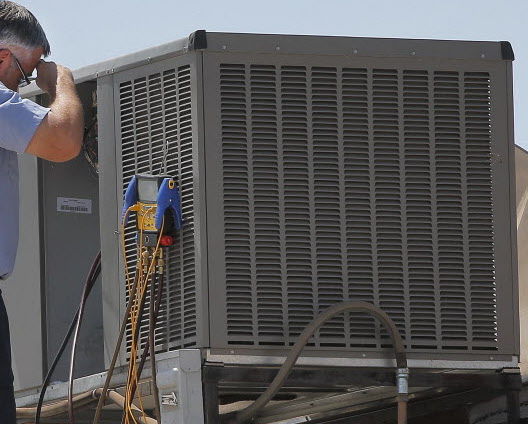
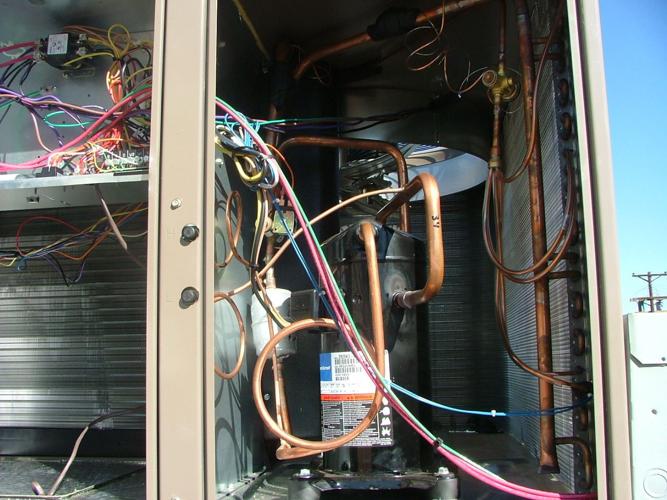
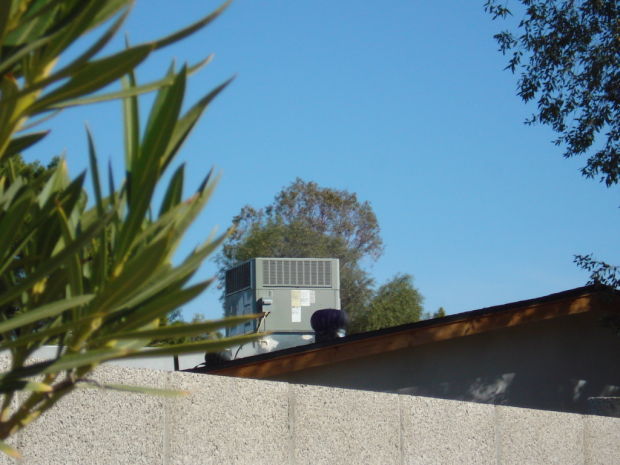
Q: I have a 5-ton, 6-year-old air conditioner compressor located right outside my master bedroom window. When it runs, it’s really loud. Can I move it about 10 to 15 feet away from the window? Right now itIt’s in a shady spot, but the new location would be a lot sunnier. Would that affect its performance?
A: It would probably cost about $1,500 to $2,000 to move it, partly because you have to pump it down to remove the refrigerant and move the copper lines. The amount of shade that the unit gets will not affect its cooling power. Newer air conditioners are getting quieter to operate all the time, so it may be time to consider a newer, quieter and more efficient unit.
For more do-it-yourself tips, go to
An Arizona home building and remodeling industry expert for 25 years, Rosie Romero is the host of the syndicated Saturday morning Rosie on the House radio program, heard locally from 8-11 a.m. on KNST-AM (790) in Tucson and KGVY-AM (1080) and -FM (100.7) in Green Valley. Call 888-767-4348.
- By Rosie Romero Special to the Arizona Daily Star
- Updated
Q: I was told about a sealant that can be injected into air conditioners. Is that true? I have a small Freon leak in my AC so I’d like to know if a sealant will fix the leakage. I’ve been replacing about a pound of Freon every year.
A: Freon is a refrigerant that is no longer used in manufacturing air conditioners. Although you can still replace the refrigerant when it leaks out of an older unit, federal regulations say AC repair workers have to try to find the leak and fix it first. During these repairs, a dye is often injected into the coils though the process might not work that well. Eventually, you’ll probably find it might be more economical to buy a new air conditioner.
For more do-it-yourself tips, go to
An Arizona home building and remodeling industry expert for 25 years, Rosie Romero is the host of the syndicated Saturday morning Rosie on the House radio program, heard locally from 8-11 a.m. on KNST-AM (790) in Tucson and KGVY-AM (1080) and -FM (100.7) in Green Valley. Call 888-767-4348.
- By Rosie Romero Special to the Arizona Daily Star
- Updated
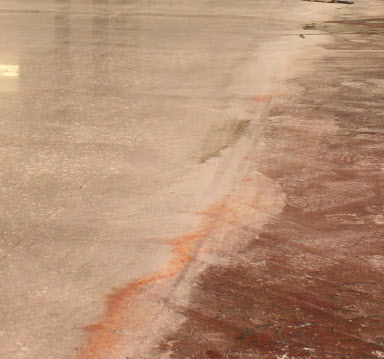
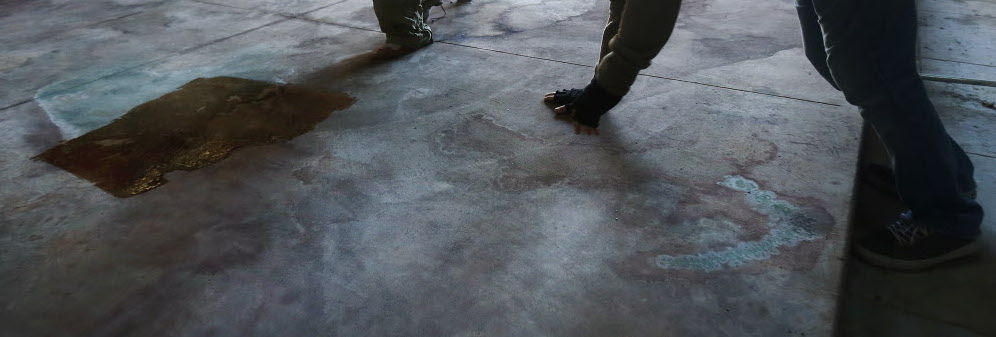
Q: I have a polished concrete floor with tiny cracks in it; what can I do to fix it?
A: Hairline cracks are often possible when you use polished concrete as your flooring. There are toppings that you can put over the floor to take care of those cracks. However, many people consider the rustic look of polished concrete — along with the cracks — to be part of the beauty. Another possibility is incorporating some kind of design or pattern into the flooring to disguise the cracks.
Go to rosieonthehouse.com for more do-it-yourself tips. An Arizona homebuilding and remodeling industry expert for 25 years, Rosie Romero is the host of the syndicated Saturday morning “Rosie on the House” radio program, heard from 8-11 a.m. on KNST-AM (790) in Tucson and KGVY-AM (1080) and -FM (100.7) in Green Valley. Call 1-888-767-4348.
- By Rosie Romero Special to the Arizona Daily Star
- Updated
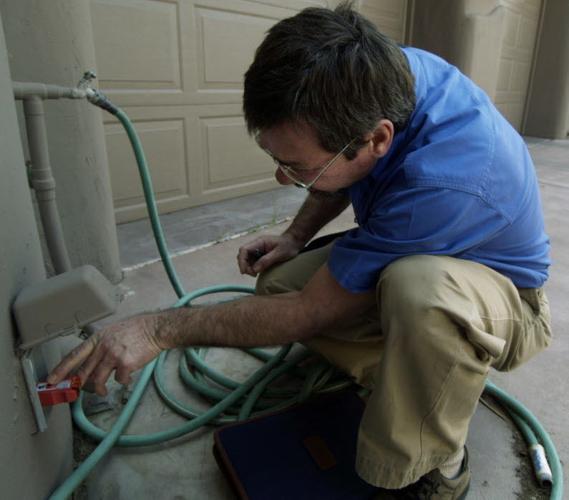
Q: There is a shut-off valve outside my house on the water pipeline, but when I use it, I turn off both the irrigation line and the water line for the house at the same time. I don’t want to turn off the irrigation when I go on trips; I just want to turn off the water to the house so there will be no leaks while I’m away. What can I do about this issue?
A: You need to hire a plumber who can move the shut-off valve behind the vacuum blocker going into the house. It should be fairly easy to do.
Go to rosieonthehouse.com for more do-it-yourself tips. An Arizona homebuilding and remodeling industry expert for 25 years, Rosie Romero is the host of the syndicated Saturday morning “Rosie on the House” radio program, heard locally from 8-11 a.m. on KNST-AM (790) in Tucson and KGVY-AM (1080) and -FM (100.7) in Green Valley. Call 888-767-4348.
- By Rosie Romero Special to the Arizona Daily Star
- Updated
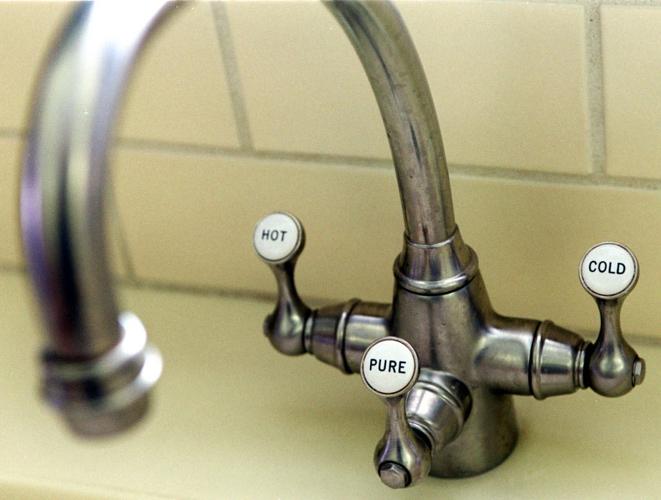
Q: For the past couple weeks, the water coming out of our kitchen faucet has been steadily decreasing — both hot and cold. I tried cleaning the surface of the end of the faucet spout with vinegar and it doesn’t seem to have helped improve the flow.
A: There could be bits of sand and minerals caught in the aerator at the very end of the faucet, so you need to remove the aerator to clean it out completely. Even before you clean it up, you’ll probably notice that the water runs out very well once you take the aerator off the faucet spout.
It can take a little muscle to get the aerator to unscrew. Also draw a sketch of the order in which parts are taken off or take a quick photo of the parts with your phone. That way you can put everything back the same way.
To clean the aerator, start by turning off the water supply by turning off the valves under the sink. Cover the end of the spout with masking tape to protect the finish, then use pliers to unscrew the aerator from the spout. Take out the screen aerator section and clean it by soaking it in vinegar and then scrubbing with a soft brush.
You can also replace the washer while the faucet is disassembled.
Reassemble the parts in the right order and thread the aerator by hand back on the faucet. Once everything is back in place, tighten with pliers.
For more do-it-yourself tips, go to rosieonthehouse.com. An Arizona home building and remodeling industry expert for 25 years, Rosie Romero is the host of the syndicated Saturday morning Rosie on the House radio program, heard locally from 8-11 a.m. on KNST-AM (790) in Tucson and KGVY-AM (1080) and -FM (100.7) in Green Valley. Call 888-767-4348.
- By Rosie Romero Special to the Arizona Daily Star
- Updated
Q: A large mesquite in my backyard has grown to the point where its roots are lifting up the concrete paving all over the yard. What can I do to stop this from happening?
A: The problem is probably going to get worse as time goes on. You need to dig down all around the tree and cut off some sections of the roots. But don’t get too close to the tree if you want to keep that tree alive and growing. Cutting too close to the trunk can kill the tree. You only want to cut roots that are less than a third of the diameter of the trunk in their thickness.
For more do-it-yourself tips, go to rosieonthehouse.com. An Arizona home building and remodeling industry expert for 25 years, Rosie Romero is the host of the syndicated Saturday morning Rosie on the House radio program, heard locally from 8-11 a.m. on KNST-AM (790) in Tucson and KGVY-AM (1080) and -FM (100.7) in Green Valley. Call 888-767-4348.

- By Rosie Romero Special to the Arizona Daily Star
- Updated
Q: We are getting ready to rent out a two-bedroom townhome that has four hard-wired smoke alarms with battery backups. Would it be a good idea to switch to combination smoke alarm and carbon monoxide detector units? And should we use 10-year lithium batteries in the alarms? Will those batteries be as long-lasting as they say or would it be better to stick with replacing regular 9-volts all the time?
A: It would be a great idea to use those combo alarms plus lithium batteries. Since you will have tenants in the townhome, you don’t want the chore of replacing batteries every year. Lithium batteries, by the way, die very slowly. They will give you warnings for weeks before they finally need replacing.
For more do-it-yourself tips, go to rosieonthehouse.com. An Arizona home building and remodeling industry expert for 25 years, Rosie Romero is the host of the syndicated Saturday morning Rosie on the House radio program, heard locally from 8-11 a.m. on KNST-AM (790) in Tucson and KGVY-AM (1080) and -FM (100.7) in Green Valley. Call 888-767-4348.
- By Rosie Romero Special to the Arizona Daily Star
- Updated
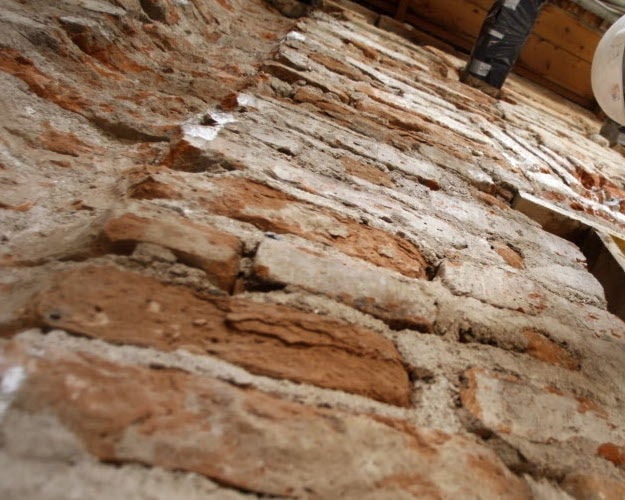
Q: I have a 45-year-old house built with adobe bricks that originally had black mortar used in between the bricks. Over time, the mortar faded from black to almost white. I was told that I could restain the mortar to make it black again, but that I would have to brush the stain on the mortar seams. Can’t I just spray it on using a tiny spray gun?
A: You can put a new stain on the mortar, provided it’s in good shape, but you would have to mask every brick in order to spray on the stain, and you wouldn’t want to do that. You want to be sure that the stain doesn’t drip onto the bricks themselves. Before you proceed, you should talk to an adobe brick expert.
For more do-it-yourself tips, go to rosieonthehouse.com. An Arizona homebuilding and remodeling industry expert for 25 years, Rosie Romero is the host of the syndicated Saturday morning “Rosie on the House” radio program, heard locally from 8-11 a.m. on KNST-AM (790) in Tucson and KGVY-AM (1080) and -FM (100.7) in Green Valley. Call 888-767-4348.
- By Rosie Romero Special to the Arizona Daily Star
- Updated
Q: I would like to save money whenever I can on my energy bills. Can I turn off the circuit breaker on my electric panel that controls my air conditioner during the winter and save on electricity? I heat my home with a gas-powered furnace in colder months.
A: Turning off power to your HVAC system won’t work because your heating system needs electricity to run the motor for a fan that blows warmth into your house. In a sense, the circuit breaker that powers your AC also powers your gas-powered furnace.
For more do-it-yourself tips, go to rosieonthehouse.com. An Arizona home building and remodeling industry expert for 25 years, Rosie Romero is the host of the syndicated Saturday morning Rosie on the House radio program, heard locally from 8-11 a.m. on KNST-AM (790) in Tucson and KGVY-AM (1080) and -FM (100.7) in Green Valley. Call 888-767-4348.
- By Rosie Romero Special to the Arizona Daily Star
- Updated
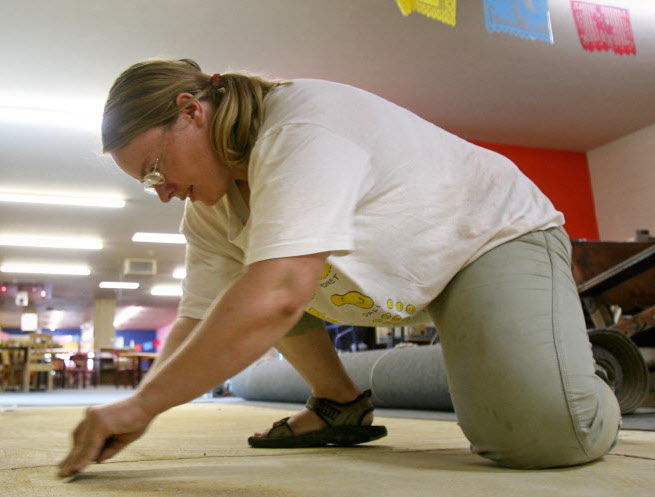
Q: We are renting an older house where the owners had previously installed green indoor-outdoor carpeting inside the entrance way in a 10-foot by 20-foot area. It’s very old and ugly and had begun to smell as well. So we’ve been removing the carpet. But we can’t get rid of the gooey adhesive residue left behind underneath the carpeting. We tried gel paint remover, but it didn’t work.
A: There are other adhesive removers you can use to try to soften the old glue so you can scrape it off the floor more easily.
The one I like best is soybean-based Bean-e-Doo mastic remover. But even after applying a product like that, it will still take some scraping and hard work to remove all that goo that’s on the floor.
Go to rosieonthehouse.com for more do-it-yourself tips. An Arizona homebuilding and remodeling industry expert for 25 years, Rosie Romero is the host of the syndicated Saturday morning “Rosie on the House” radio program, heard locally from 8-11 a.m. on KNST-AM (790) in Tucson and KGVY-AM (1080) and -FM (100.7) in Green Valley. Call 888-767-4348.

- By Rosie Romero Special to the Arizona Daily Star
- Updated
Q: I have a water softening system and it works just fine, but I always have a pink-colored ring in my toilet bowl. How can I stop that?
A: That ring is caused by bacteria that are not harmful; many people have the same problem. You can put a very small amount of bleach in the bowl to control the bacteria. But you do want to avoid putting bleach in the toilet tank as it can eat away at the mechanism inside the tank.
For more do-it-yourself tips, go to rosieonthehouse.com. An Arizona home building and remodeling industry expert for 25 years, Rosie Romero is the host of the syndicated Saturday morning Rosie on the House radio program, heard locally from 8-11 a.m. on KNST-AM (790) in Tucson and KGVY-AM (1080) and -FM (100.7) in Green Valley. Call 888-767-4348.
- By Rosie Romero Special to the Arizona Daily Star
- Updated
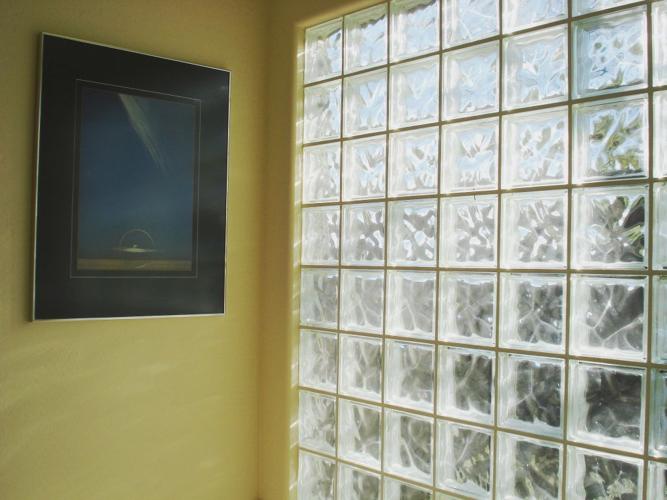
Q: My master bath shower has a “snail” entry with glass blocks comprising two sides of the entry. A few of the glass blocks on the bottom row have gotten mold or mildew in them. Since the glass blocks are sealed, how do I get at the mold in order to clean it out? How did it get in there to begin with?
A: If the mildew is indeed inside the block itself and not in the surrounding mortar, the block has likely lost its seal and would need to be removed and replaced as there is no way to gain entry to the interior of the block to disinfect and reseal it.
If the mildew is in the surrounding mortar joints, the mortar will need to be scraped out, the area thoroughly disinfected then re-mortared. After the mortar cures, it will require a couple coats of a good silicone sealer to protect it.
We’ve seen a lot of glass block shower enclosures with moldy mortar around the blocks, but can’t say we’ve ever seen a block with the mold on the inside of the block itself. They’re typically pretty tightly sealed at the factory. So take a good look at the area because what you may be seeing is the mold in the mortar as seen through the edge of the block, not inside the block itself.
These repairs are not the normal DIY kind of project and should be done by a licensed tile installation company that uses glass block in the normal course of their shower tile work, or a good masonry contractor familiar with this situation as an alternative. Glass blocks are very durable, but if not dealt with carefully, they can break and cause flying glass particles, so this kind of repair is not something we recommend homeowners undertake.
For more do-it-yourself tips, go to rosieonthehouse.com. An Arizona home building and remodeling industry expert for 25 years, Rosie Romero is the host of the syndicated Saturday morning Rosie on the House radio program, heard locally from 8-11 a.m. on KNST-AM (790) in Tucson and KGVY-AM (1080) and -FM (100.7) in Green Valley. Call 888-767-4348.
- By Rosie Romero Special to the Arizona Daily Star
- Updated
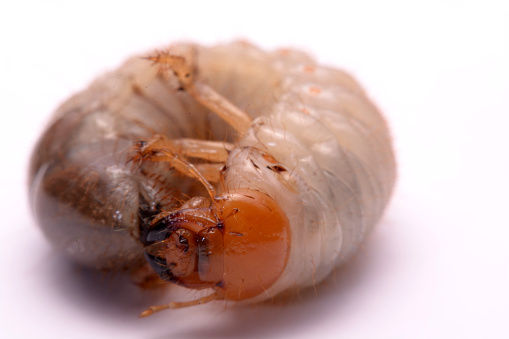
Q: I have a major grub problem in my yard. My flowers always die and when I pull them out of the ground, I always find lots of grubs among the roots. I had been using beneficial nematodes but they haven’t helped. How can I get rid of the grubs without using poison?
A: You can try mixing diatomaceous earth into the soil of your garden. Diatomaceous earth contains the tiny remains of diatoms, a type of hard-shelled algae.
If that doesn’t work, try solarizing your flower bed. In that process you remove the plants from the bed, till the soil, and then water heavily to two feet down. Then spread clear plastic over the soil. Weight down the plastic to keep it in place. Leave the plastic over the area all summer, and by fall, the grubs should be gone.
For more do-it-yourself tips, go to rosieonthehouse.com. An Arizona home building and remodeling industry expert for 25 years, Rosie Romero is the host of the syndicated Saturday morning Rosie on the House radio program, heard locally from 8-11 a.m. on KNST-AM (790) in Tucson and KGVY-AM (1080) and -FM (100.7) in Green Valley. Call 888-767-4348.
- By Rosie Romero Special to the Arizona Daily Star
- Updated
Q: I want to put an addition on my garage in order to put in a workroom plus extra storage space. There is an existing concrete slab next to the house where I could do the addition. What are some of the big issues involved?
A: You need to check with the city to make sure that you don’t violate any setbacks for your property. You may need to pour new concrete over the old in order to bring the slab up to the height of the current garage. This can be a very complicated process, however, so you want a licensed contractor to do this part of the project.
You’re also going to have to cut into the slab to put in the bearing footings to hold up the addition. You also have to address any drainage problems due to the extra water draining off the new roofing.
- By Rosie Romero Special to the Arizona Daily Star
- Updated
Q: I’m buying a 1,700-square-foot house that is being constructed by a builder. The builder has made me an interesting offer. For just $600, he will either upgrade our air conditioner from a 14 SEER to a 16 SEER level or he will increase our attic insulation to R38. Which of these would be a better choice for me?
A: The best decision is to improve your insulation and stick with the 14 SEER air conditioner. The insulation improvement will provide benefits for a whole lot longer than a slightly better air conditioner would. And, of course, a more efficient air conditioner would not provide savings at all times of the year. The letters SEER stand for Seasonal Energy Efficiency Ratio. The higher the SEER rating, the more efficiently your AC will use energy to do its job. But the truth is that the insulation will last much longer than the AC will.
For more tips, go to rosieonthehouse.com. An Arizona home building and remodeling industry expert for 25 years, Rosie Romero is the host of the syndicated “Rosie on the House” radio program, heard Saturday from 8-11 a.m. on KNST-AM (790) in Tucson and KGVY-AM (1080) and -FM (100.7) in Green Valley. Call 888-767-4348.

- By Rosie Romero Special to the Arizona Daily Star
- Updated
Q: I have a beautiful Texas ebony tree; it’s very large and has a lot of thick foliage. Short of getting a chainsaw and cutting it down, how can I discourage the doves from roosting there and making a big mess under the tree?
A: Sometimes lighting up the tree with strings of lights can get them to go away. You can also discourage them from landing on the tree by spreading branches with a sticky bird repellent that comes in a non-drying form. You can try squirting water on them. The good news is that doves are fairly temporary and won’t be around much now that winter is arriving. Probably thinning out the tree and opening up the canopy some more will help as well. But the Texas ebony is indeed very thick and abundant in foliage, and it will probably always be a great place for birds to build their nests.
For more do-it-yourself tips, go to rosieonthehouse.com. An Arizona home building and remodeling industry expert for 25 years, Rosie Romero is the host of the syndicated Saturday morning Rosie on the House radio program, heard locally from 8-11 a.m. on KNST-AM (790) in Tucson and KGVY-AM (1080) and -FM (100.7) in Green Valley. Call 888-767-4348.
- By Rosie Romero Special to the Arizona Daily Star
- Updated
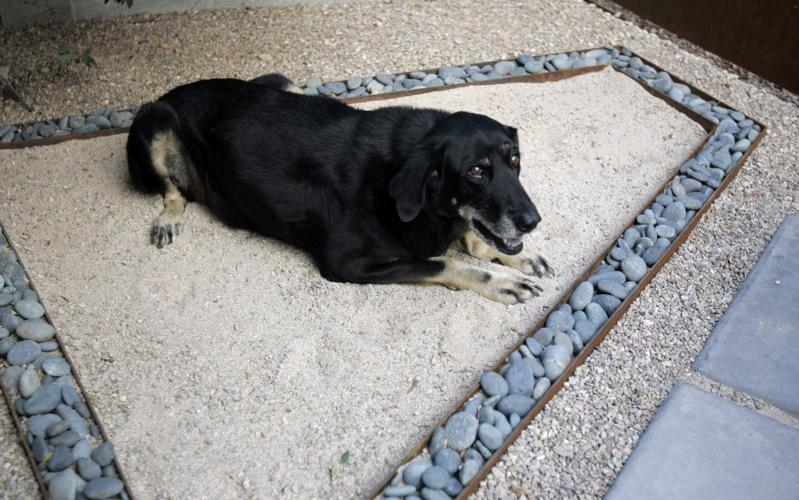
Q: I live in Sabino Canyon and have two large dogs that live in my backyard and keep digging holes in the pea gravel. I keep filling the holes up, but they continue to dig. How do I get them to stop?
A: There are natural products you can buy at nurseries that work. One is called Go Away, and is good for deterring visits by rabbits, cats and dogs. It’s a behavior-modification compound that can help keep pets away from trees, shrubs, gardens and garbage cans. It is environmentally safe and biodegradable, and will not harm animals.
For more do-it-yourself tips, go to rosieonthehouse.com. An Arizona homebuilding and remodeling industry expert for 25 years, Rosie Romero is the host of the syndicated Saturday morning “Rosie on the House” radio program, heard locally from 8-11 a.m. on KNST-AM (790) in Tucson and KGVY-AM (1080) and -FM (100.7) in Green Valley. Call 888-767-4348.
- By Rosie Romero Special to the Arizona Daily Star
- Updated
Q: I’m a renter, but I’m interested in buying my own home. Recently, I have been looking at houses for sale owned by people who originally bought them as investments only. They made some improvements in the houses but quickly put them back on the market. I wanted to make offers on three of them. In each case, I hired a home inspector to look at the houses and problems were found, so the sales fell through. In all, I spent about $1,000 on inspections. Is there any recourse for recovering that money? Shouldn’t there be red flags on houses like these?
A: There’s no way to get reimbursed for those expenses. But you were smart to check out these homes carefully before finalizing sales. Make a list of some of the problems that the inspectors found. That list could help your real estate agent pre-screen houses before showing them to you. You might also tell the agent that you want to buy a house that actually had been lived in — not purchased as an investment. As you continue the process, you will probably be able to spot problems very quickly yourself before you decide to hire an inspector again.
Go to rosieonthehouse.com for more do-it-yourself tips. An Arizona homebuilding and remodeling industry expert for 25 years, Rosie Romero is the host of the syndicated Saturday morning “Rosie on the House” radio program, heard locally from 8-11 a.m. on KNST-AM (790) in Tucson and KGVY-AM (1080) and -FM (100.7) in Green Valley. Call 888-767-4348.
- By Rosie Romero Special to the Arizona Daily Star
- Updated
Q: We are in the market for a new water heater and wondered what you think about heat pump water heaters. How do they work?
A: Heat pump water heaters use electricity to move heat from one place to another instead of heating up water directly. A stand-alone heat pump water heater pulls heat from the surrounding air and dumps it into a tank to heat water.
Sometimes homeowners install this type of device in a furnace area or near a washer and dryer. That’s because this type of water heater must be installed in a spot that remains in the 40- to 90-degree heat range year-round. Heat pump water heaters can be very efficient and greatly reduce the cost of hot water. But I think I’d prefer to install a solar water heater that would produce free hot water.
Go to rosieonthehouse.com for more do-it-yourself tips. An Arizona homebuilding and remodeling industry expert for 25 years, Rosie Romero is the host of the syndicated Saturday morning “Rosie on the House” radio program, heard locally from 8-11 a.m. on KNST-AM (790) in Tucson and KGVY-AM (1080) and -FM (100.7) in Green Valley. Call 888-767-4348.

- By Rosie Romero Special to the Arizona Daily Star
- Updated
Q: I’m a renter, but I’m interested in getting into vegetable gardening. Would it be all right to build a 4-by-8-foot raised bed on top of part of my landlord’s lawn without damaging the grass?
A: Raised garden beds are definitely the way to go in planting vegetables. But no, you can’t do that without causing some damage to any lawn and grass that is under the beds. So you had better check first with the landlord about whether you it’s OK or not.
Go to rosieonthehouse.com for more do-it-yourself tips. An Arizona homebuilding and remodeling industry expert for 25 years, Rosie Romero is the host of the syndicated Saturday morning “Rosie on the House” radio program, heard from 8-11 a.m. on KNST-AM (790) in Tucson and KGVY-AM (1080) and -FM (100.7) in Green Valley. Call 1-888-767-4348.
- By Rosie Romero Special to the Arizona Daily Star
- Updated
Q: A large mesquite in my backyard has grown to the point where its roots are lifting up the concrete paving all over the yard. What can I do to stop this from happening?
A: The problem is probably going to get worse as time goes on. You need to dig down all around the tree and cut off some sections of the roots. But don’t get too close to the tree if you want to keep that tree alive and growing. Cutting too close to the trunk can kill the tree. You only want to cut roots that are less than a third of the diameter of the trunk in their thickness.
For more do-it-yourself tips, go to rosieonthehouse.com. An Arizona home building and remodeling industry expert for 25 years, Rosie Romero is the host of the syndicated Saturday morning Rosie on the House radio program, heard locally from 8-11 a.m. on KNST-AM (790) in Tucson and KGVY-AM (1080) and -FM (100.7) in Green Valley. Call 888-767-4348.
- By Rosie Romero Special to the Arizona Daily Star
- Updated
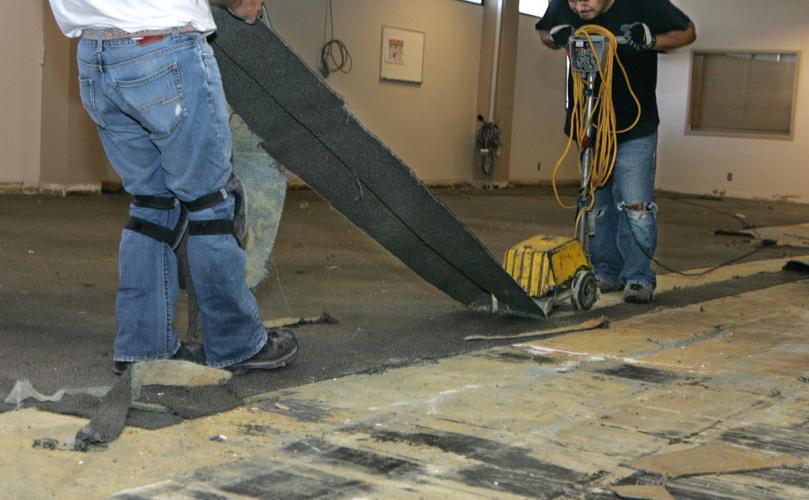
Q: We bought a 17-year-old house recently and removed the old carpeting. We want to have tile instead. But when we pulled up the carpet, we found a small gap all the way around the house between the slab and the wall. It probably had to do with a change in the expansion joint. Do we have to fill that gap before putting in the tile? And does this mean there is a possibility of termites infesting the house?
A: Yes, there is a danger of termites, and you should probably have the house inspected further to see if you need to treat for termites now — inside the house and outside. As for the gap, you should let your licensed tile contractor decide how to fill it. Contractors deal with these situations all the time, and they will know what the best material is for filling the space before they install the tile.
For more do-it-yourself tips, go to rosieonthehouse.com. An Arizona home building and remodeling industry expert for 25 years, Rosie Romero is the host of the syndicated Saturday morning Rosie on the House radio program, heard locally from 8-11 a.m. on KNST-AM (790) in Tucson and KGVY-AM (1080) and -FM (100.7) in Green Valley. Call 888-767-4348.
- By Rosie Romero Special to the Arizona Daily Star
- Updated
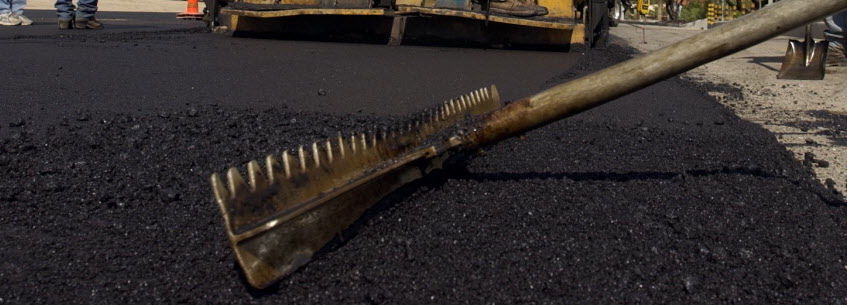
Q: My home has a 100-foot-long driveway with a 10-degree slope. It now has six very large cracks in its surface that range from about a half-inch wide to 2 inches wide. Is there anything I can do to repair those cracks?
A: Asphalt is very tough to patch and repair. Putting a semi-permanent patch on the cracks would require a large piece of paving equipment. In general, it’s not economical for contractors using that equipment to pave a residential driveway. They only make money when they are fixing large areas, like shopping center parking lots.
My advice is that you remove the driveway in segments and replace each section you take out with concrete pavers. It’s easier to do it in sections rather than taking on the whole job in one big bite.
I’m doing that myself right now with a driveway problem of my own. My situation is probably worse than yours actually. There are some consumer asphalt patch products on the market, like liquid asphalt. By using one of those products, you could end up with areas of your driveway that are a different shade of black than the old black. You could do that temporarily, of course, until you can put in the pavers.
For more do-it-yourself tips, go to rosieonthehouse.com. An Arizona home building and remodeling industry expert for 25 years, Rosie Romero is the host of the syndicated Saturday morning Rosie on the House radio program, heard locally from 8-11 a.m. on KNST-AM (790) in Tucson and KGVY-AM (1080) and -FM (100.7) in Green Valley. Call 888-767-4348.
- By Rosie Romero Special to the Arizona Daily Star
- Updated
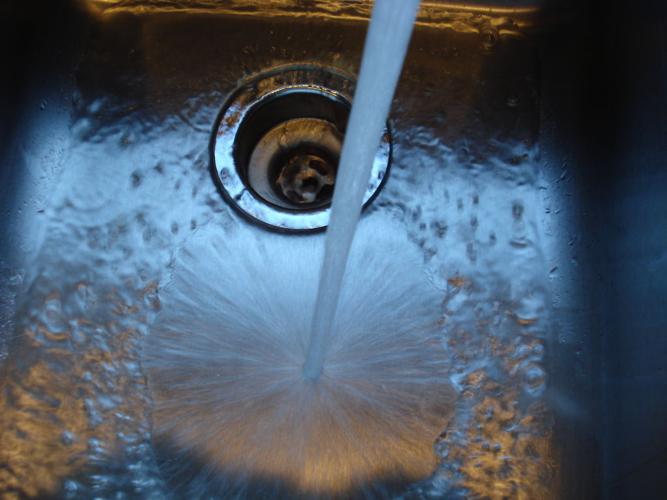
Q: People sometimes tell me that if you fill a big container with water and use it once a month to flush your toilet, you’ll never have clogged plumbing. Is that true or is it some kind of urban legend?
A: That technique is probably not all that beneficial for toilets, though it can’t hurt to try it. But flushing out lines with extra water can sometimes help improve drainage in kitchen plumbing, especially in homes of snowbirds who are not living in a house all year round.
If you’re worried about your toilets not flushing properly, you can check inside the tank to be sure that the water is reaching the proper level. If it isn’t, you might want to replace some of the equipment in the tank.
For more do-it-yourself tips, go to rosieonthehouse.com. An Arizona home building and remodeling industry expert for 25 years, Rosie Romero is the host of the syndicated Saturday morning Rosie on the House radio program, heard locally from 8-11 a.m. on KNST-AM (790) in Tucson and KGVY-AM (1080) and -FM (100.7) in Green Valley. Call 888-767-4348.
- By Rosie Romero Special to the Arizona Daily Star
- Updated
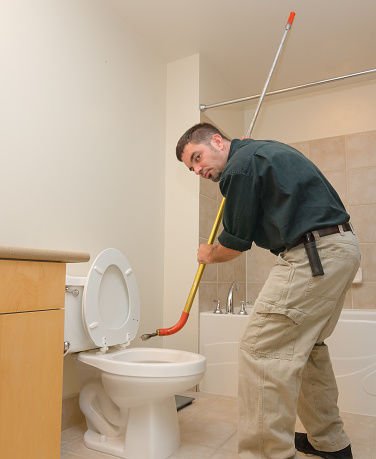
Q: I have a rental property where a toilet seems to be clogged off and on. Is this the kind of repair that I can do by myself?
A: You can buy an auger at a hardware store for about $15 and run it through the trap in the toilet to see if that works. Maybe something is caught in the trap — like a child’s toy. If that doesn’t help, you might need to call a plumber.
For more do-it-yourself tips, go to rosieonthehouse.com. An Arizona home building and remodeling industry expert for 25 years, Rosie Romero is the host of the syndicated Saturday morning Rosie on the House radio program, heard locally from 8-11 a.m. on KNST-AM (790) in Tucson and KGVY-AM (1080) and -FM (100.7) in Green Valley. Call 888-767-4348.
- By Rosie Romero Special to the Arizona Daily Star
- Updated
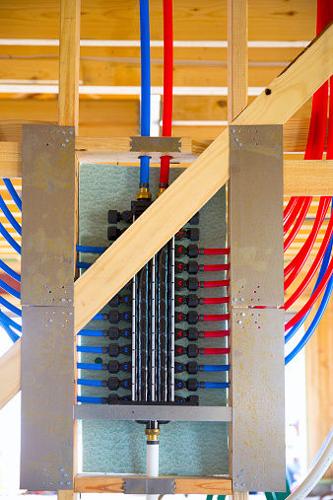
Q: There’s a gas water heater inside my house, but it creates too much heat and I want to move the heater out of the house to the garage. But should I use PEX or copper lines for the job?
A: When it’s not a challenge to run copper lines, it’s best to use copper. But PEX is a good alternative. If you ask plumbers which type of piping they prefer, half of them will say copper and the other half will choose PEX. The letters P-E-X stand for crosslinked polyethylene. PEX is generally lower cost and requires fewer fittings than rigid pipes. It also does not require soldering so the risk of fire is eliminated. But PEX isn’t really a do-it-yourself product; special tools and training are needed before you can use it.
For more do-it-yourself tips, go to rosieonthehouse.com. An Arizona home building and remodeling industry expert for 25 years, Rosie Romero is the host of the syndicated Saturday morning Rosie on the House radio program, heard locally from 8-11 a.m. on KNST-AM (790) in Tucson and KGVY-AM (1080) and -FM (100.7) in Green Valley. Call 888-767-4348.

- By Rosie Romero Special to the Arizona Daily Star
- Updated
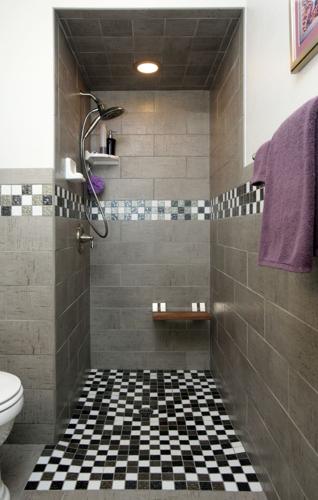
Q: I want to remodel my kitchen, and part of my plan is to move the sink to another wall about 20 feet away. Can I move the water line without too much trouble?
A: Moving the water line is the easy part. You can easily move it to another wall. The hard part is moving the drain.
Most of the time you have to saw-cut the floor in order to run the drain line to where the new sink will be located. It won’t be too hard though if the new sink location is on an outside wall. Then you can often find the drain line in the yard and can run a new connection up to the wall where the new sink will be.
For more do-it-yourself tips, go to rosieonthehouse.com. An Arizona home building and remodeling industry expert for 25 years, Rosie Romero is the host of the syndicated Saturday morning Rosie on the House radio program, heard locally from 8-11 a.m. on KNST-AM (790) in Tucson and KGVY-AM (1080) and -FM (100.7) in Green Valley. Call 888-767-4348.
- By Rosie Romero Special to the Arizona Daily Star
- Updated
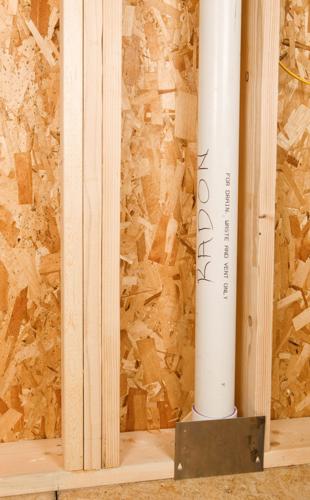
Q: I live in a 15-year-old house where the master bath shower only produces hot water if you first turn on the cold water in the bathtub and let it run for a little while. It’s always been a problem since we bought the house nine months ago, but now it seems to be getting worse.
A: If you get plenty of hot water coming out of other faucets in the house, then there is probably something wrong with the valve pressure in your shower. It’s possible to fix this type of problem yourself if an O-ring or washer has worn out. You need to shut off the water and pull the valve cover plate to see what’s going on underneath.
Take a photo of the area and take it to a plumbing supply house to show to them. They may be able to tell you what to do next and what parts you will need. Take note of the brand of the valve so the store clerk will know what you have.
- By Rosie Romero Special to the Arizona Daily Star
- Updated
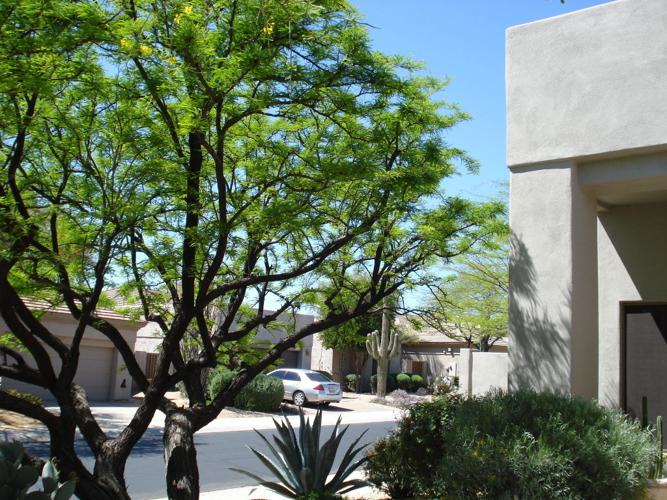
Q: We’re thinking of building a house on a lot near an old capped landfill. The landfill is about 600 feet away from the site. Is there any increased risk of radon in this house because of the landfill? And can we test the site for radon exposure before we build?
A: It doesn’t seem like there would be much risk of radon exposure, but there is no way of knowing for sure before you build. You have to wait until the home is finished to do a test. However, as you build the house, you can install a passive piping system in the walls that would be there later if you detect radon. The pipes would be there, but you wouldn’t install the fans on the roof unless you come up with positive radon readings later. The plastic pipes would not cost a great deal to install as you build.
For more do-it-yourself tips, go to rosieonthehouse.com. An Arizona home-building and remodeling industry expert for 25 years, Rosie Romero is the host of the syndicated Saturday morning Rosie on the House radio program, heard locally from 8-11 a.m. on KNST-AM (790) in Tucson and KGVY-AM (1080) and -FM (100.7) in Green Valley. Call 888-767-4348.
- By Rosie Romero Special to the Arizona Daily Star
- Updated
Q: Recently, we had a lot of water come flooding up through our bathroom drains and toilets. Plumbers came out and ran a device through the drains twice to cut out all the tree roots that were blocking the pipes. Once that was done, they ran a camera through the line and determined that the pipe was clear way out to the street. But just inside the city pipe line, tree roots were blocking the pipe. It’s possible that those were from one of our trees, but are we responsible for cleaning the city line, too?
A: Finding a solution to this problem will probably rest on your shoulders, not the city’s. You need to meet with the city to discuss the situation and any regular maintenance that needs to be done. Perhaps you will need to remove one of your trees as well. The problem is that the roots that were cut will be a continuing problem. The cutting can just make the roots grow faster.
- By Rosie Romero Special to the Arizona Daily Star
- Updated
Q: I have an older concrete block home and on some walls inside the house, I often find condensation building up on exterior walls. I want to find the source of the moisture and I can’t seem to locate it. Moisture is not running down the walls onto the floor and there are no plants next to the wall outside that are being irrigated. What do I do next to find the problem?
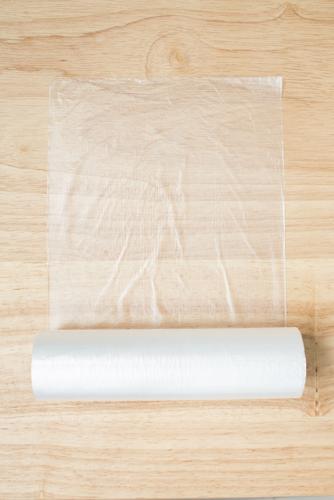
A: Get several large pieces of kitchen-style plastic wrap and duct tape them to the walls in a few locations where this moisture problem seems to be happening. See if you find moisture on just one wall or more walls. Once you find out the location of your problem, you will have to concentrate your investigation on that area of the house. You may need to do what they call “out-sulation” to prevent moisture from getting through the problem walls.
For more do-it-yourself tips, go to rosieonthehouse.com. An Arizona home-building and remodeling industry expert for 25 years, Rosie Romero is the host of the syndicated Saturday morning Rosie on the House radio program, heard locally from 8-11 a.m. on KNST-AM (790) in Tucson and KGVY-AM (1080) and -FM (100.7) in Green Valley. Call 888-767-4348.
- By Rosie Romero Special to the Arizona Daily Star
- Updated
Q: I have trouble getting full pressure at my kitchen sink when I use the spray hose to clean off dishes. In fact, I have a lot of problems with getting full water pressure in my kitchen at all. It takes forever to fill the ice maker with water. It was bad when I moved into my house five years ago, but it seems to be getting worse and worse. My house was built in 2003.
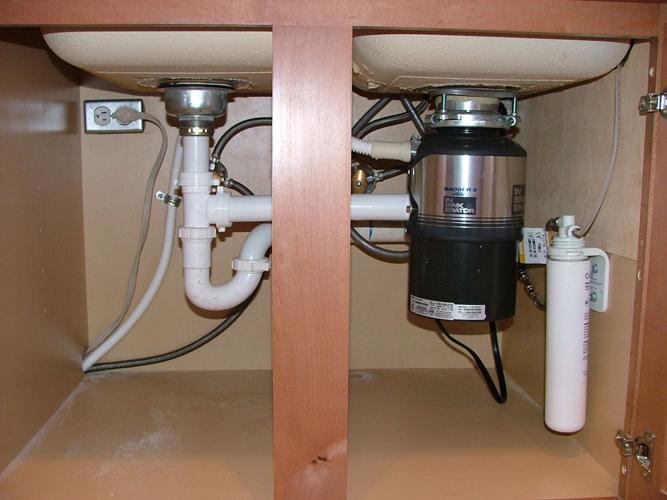
A: It’s possible that some debris got stuck in your pipeline when your home was built. You might try removing the faucet and blowing it out to see if that helps. You could also turn off the emergency valves under the sink, take off the water supply lines, and flush them out into a large bucket. When you replace the lines, turn them on again very slowly. The worst possibility is that a construction worker might have crimped the line during installation. In that case, you will probably need the help of a plumber.
For more do-it-yourself tips, go to rosieonthehouse.com. An Arizona home-building and remodeling industry expert for 25 years, Rosie Romero is the host of the syndicated Saturday morning Rosie on the House radio program, heard locally from 8-11 a.m. on KNST-AM (790) in Tucson and KGVY-AM (1080) and -FM (100.7) in Green Valley. Call 888-767-4348.
- By Rosie Romero Special to the Arizona Daily Star
- Updated
Q: I replaced my windows in the early 1990s with dual-pane windows that are still under warranty. The windows have argon gas between the panes and vinyl on the outside of the frames. Now the putty and vinyl are starting to disintegrate. What should I do?
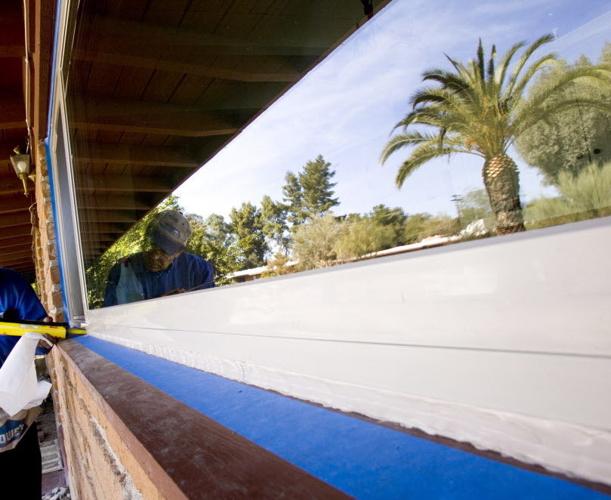
A: Contact the manufacturer to see if they’ll live up to their warranty. However, I have to add that vinyl windows are not a favorite of mine for use in our desert climate.
My preference is wood with aluminum cladding on the outside. Vinyl windows have improved greatly over the years, however, and the latest models may perform more efficiently than those manufactured 10 to 20 years ago.
For more do-it-yourself tips, go to rosieonthehouse.com. An Arizona home building and remodeling industry expert for 25 years, Rosie Romero is the host of the syndicated Saturday morning Rosie on the House radio program, heard locally from 8-11 a.m. on KNST-AM (790) in Tucson and KGVY-AM (1080) and -FM (100.7) in Green Valley. Call 888-767-4348.

- By Rosie Romero Special to the Arizona Daily Star
- Updated
Q: I have a gas clothes dryer that was having a problem drying clothes – possibly because lint was building up in the unit and the vent. We tried to clean out the vent tube in the wall and filled up an entire shop vacuum with the lint debris. But then my husband went up on the roof to clean out the vent opening up there, but he couldn’t find the outdoor end of the vent. Where in the world is it?
A: It’s possible that your dryer vent ends up in your attic somewhere. It’s against code to do that when you install a dryer. But workers take that dubious shortcut all the time.
It might be hard to find in your attic — especially if the roof is really low and there is very little space to move around.
One trick you can try is putting some flour in the bottom of the vent and then blowing it up into the attic so you can see where the vent empties out. However, the vent may also exit through an opening in the exterior wall. So look around for a louvered vent or other type of exterior wall vent.
If the vent is truly in the attic, you might consider having it moved so it exits on the roof.
For more do-it-yourself tips, go to rosieonthehouse.com. An Arizona home building and remodeling industry expert for 25 years, Rosie Romero is the host of the syndicated Saturday morning Rosie on the House radio program, heard locally from 8-11 a.m. on KNST-AM (790) in Tucson and KGVY-AM (1080) and -FM (100.7) in Green Valley. Call 888-767-4348.
- By Rosie Romero Special to the Arizona Daily Star
- Updated
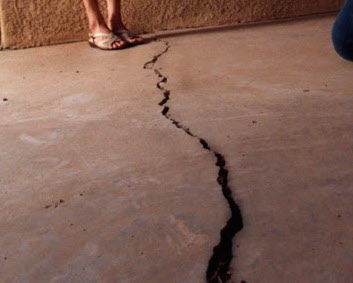
Q: I live in Tucson but have a second home in Show Low. It’s a two-story unit that’s half of a duplex. Recently, we found a crack in the slab near a brick wall. The crack is about 3/8ths to a half-inch wide, about 6 to 8 inches away from the brick wall. It runs all the way across the slab and into the other unit. Can this crack be fixed?
A: Yes, it can be fixed, but you should find out what’s causing the crack. It might even be that the slab is heaving up due to clay soils under the duplex.
You and your neighbor need to have a footprint done for the entire building with a manometer; an engineer needs to look at the results as well. Although the test will cost about $650, perhaps you and your neighbor could split the expense.
For more do-it-yourself tips, go to rosieonthehouse.com. An Arizona home building and remodeling industry expert for 25 years, Rosie Romero is the host of the syndicated Saturday morning Rosie on the House radio program, heard locally from 8-11 a.m. on KNST-AM (790) in Tucson and KGVY-AM (1080) and -FM (100.7) in Green Valley. Call 888-767-4348.
- By Rosie Romero Special to the Arizona Daily Star
- Updated
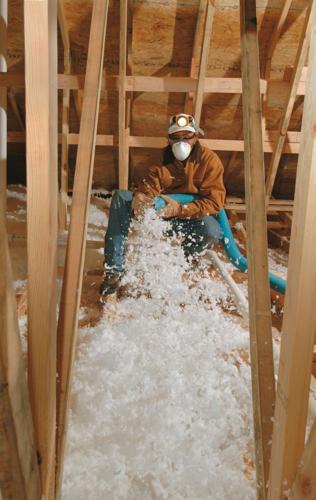
Q: If I have insulation blown into my attic, what is the recommended amount I need to have?
A: Anywhere below the Mogollon Rim in Arizona, you need to reach at least the R-30 level of insulation in your attic. You can put in a little more fill to reach the R-38 level — which would be slightly better for energy efficiency. But if an insulation contractor wants to blow in R-40 to R-60, the additional fill needed will not be much more of a benefit in Central or Southern Arizona. The extra cost will not provide you with great savings in your heating and cooling bills.
Make sure the insulation is properly and evenly installed in your attic. If there are any voids in the thickness of the fill, you could have serious reductions in the efficiency of your insulation.
The higher the R-value, the greater the insulation’s effectiveness. The R-value depends on the type of insulation, its thickness and density.
For more do-it-yourself tips, go to rosieonthehouse.com. An Arizona home building and remodeling industry expert for 25 years, Rosie Romero is the host of the syndicated Saturday morning Rosie on the House radio program, heard locally from 8-11 a.m. on KNST-AM (790) in Tucson and KGVY-AM (1080) and -FM (100.7) in Green Valley. Call 888-767-4348.
- By Rosie Romero Special to the Arizona Daily Star
- Updated
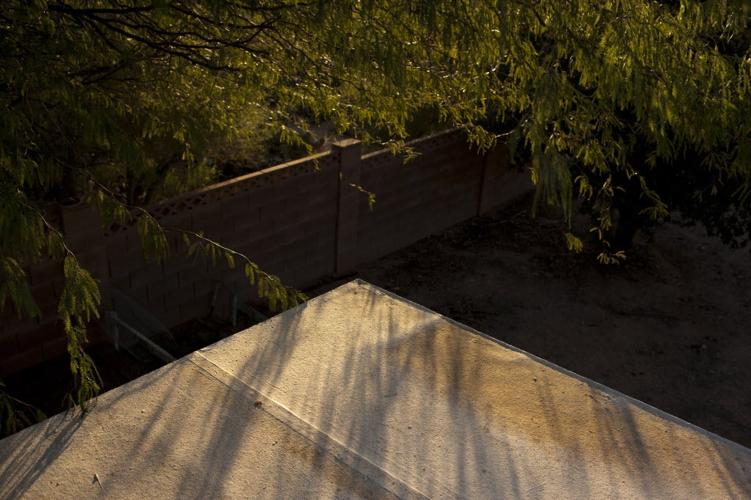
Q: We have a relatively flat roof on our house that is covered with foam but that needs to have an elastomeric coating put over the foam every few years. But if I have solar panels installed on the roof, how do I maintain that covering that lies under the panels? How can they spread the coating on the foam?
A: Solar companies generally install the panels on a system of brackets so that the panels are elevated above the roof. The panels are also tilted to take advantage of the angle of the sunshine. That means that the elastomeric coating for your foam roof can probably be wet- mopped under the panel structure.
For more do-it-yourself tips, go to rosieonthehouse.com. An Arizona home building and remodeling industry expert for 25 years, Rosie Romero is the host of the syndicated Saturday morning Rosie on the House radio program, heard locally from 8-11 a.m. on KNST-AM (790) in Tucson and KGVY-AM (1080) and -FM (100.7) in Green Valley. Call 888-767-4348.
- By Rosie Romero Special to the Arizona Daily Star
- Updated
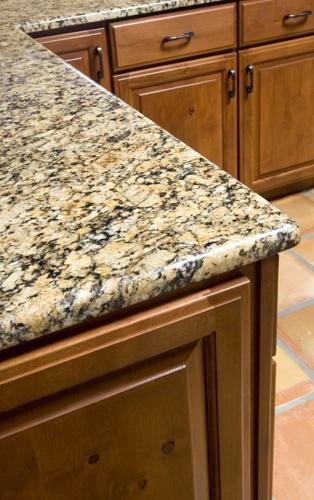
Q: I live in a house that I bought in the 1970s, and I have out-of-date green laminate countertops in the bathroom. Recently, I went to a home show where someone was displaying a special glaze that they could paint on the countertops to make the surface look like granite. It is a glaze that they would spray on top of the tile and tub surrounds. Does that seem like something that would work? And how long would that finish last? They said they would guarantee it for five years, which is about what I’m hoping for.
A: In a case like that, you should ask the contractor to give you the names of homeowners whom he had worked for at least five years ago. You could call those clients and ask them how the refinishing worked. You could even go to see the houses where the contractor had done his work. If the reglazing looks good to you, then you might want to proceed.
For more tips, go to rosieonthehouse.com. An Arizona home building and remodeling industry expert for 25 years, Rosie Romero is the host of the syndicated “Rosie on the House” radio program, heard Saturday from 8-11 a.m. on KNST-AM (790) in Tucson and KGVY-AM (1080) and -FM (100.7) in Green Valley. Call 888-767-4348.

- By Rosie Romero Special to the Arizona Daily Star
- Updated
Q: We have a two-story house built with a back patio that is covered by a tar and gravel roof. Now when I look out on that roof, most of the gravel is gone. It apparently washed off in the rain over the years. It was a mixture of sand and pebbles on top of 90-pound rolled roofing that had hot tar covering it. Do I need to replace the pebbles?
A: That sand-and-pebble mixture was put on there to protect the roofing material from ultraviolet rays. You can replace it, but you might want to have the whole roof sealed first with elastomeric roof coating to prevent future leaks. Then you need to power wash the roof lightly and apply another sand-and-gravel mixture.
For more do-it-yourself tips, go to rosieonthehouse.com. An Arizona homebuilding and remodeling industry expert for 25 years, Rosie Romero is the host of the syndicated Saturday morning “Rosie on the House” radio program, heard locally from 8-11 a.m. on KNST-AM (790) in Tucson and KGVY-AM (1080) and -FM (100.7) in Green Valley. Call 888-767-4348.
- By Rosie Romero Special to the Arizona Daily Star
- Updated
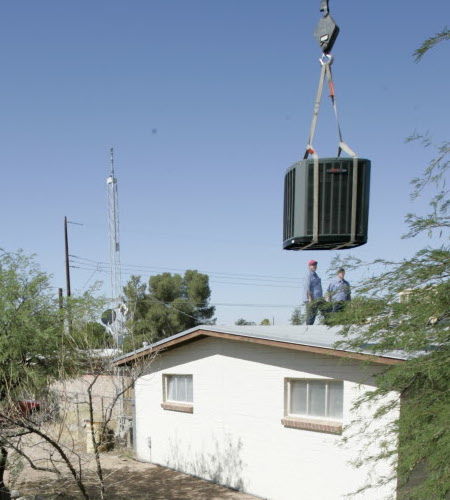
Q: I have a 5-year-old electrically powered air conditioner on my roof as well as having an electrically powered, forced-air furnace. Lately, the blower motor for this system seems to kick on and off 24 hours a day every five minutes. I have the fan set on “auto.” So what’s causing this?
A: It could be that you have wiring that is shorting out or you could have a bad fan control. You need an HVAC contractor to find and correct the problem.
For more do-it-yourself tips, go to rosieonthehouse.com. An Arizona homebuilding and remodeling industry expert for 25 years, Rosie Romero is the host of the syndicated Saturday morning Rosie on the House radio program, heard locally from 8-11 a.m. on KNST-AM (790) in Tucson and KGVY-AM (1080) and -FM (100.7) in Green Valley. Call 888-767-4348.
- By Rosie Romero Special to the Arizona Daily Star
- Updated
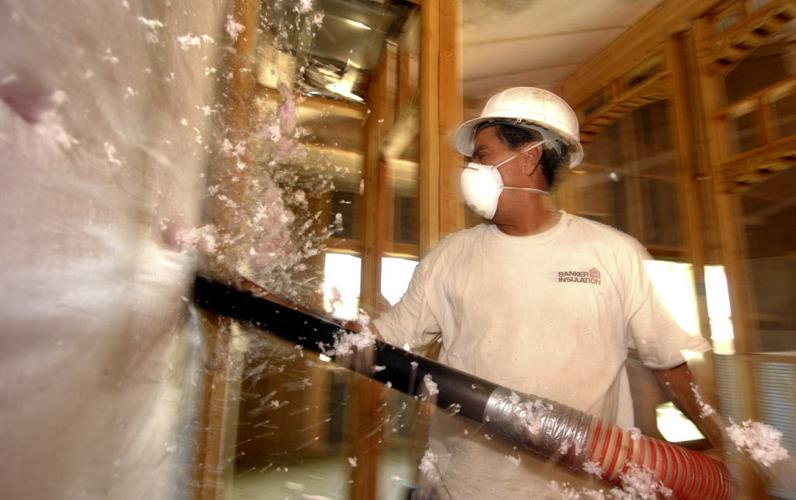
Q: I live in a 1970s-era house retrofitted with can lights in the ceiling. Now I’d like to blow insulation into my attic, but I’m worried that those can lights might not be thermal-protected and could cause a fire in the attic if I go ahead with the insulation. Can that happen?
A: Yes, adding insulation could create a hazard if the can lights are not rated “insulation compatible.” Here’s how to check: Remove the light bulb and look up inside the housing. There should be a label attached to the sheet metal with the rating of the fixture. If you see that “IC” rating, then the housing is approved for direct contact with insulation. But we like to err on the side of caution. So it’s best to build mesh cones as a protecting shroud around each fixture as well. Then leave an opening at the top of each cone so the heat can vent.
For more do-it-yourself tips, go to rosieonthehouse.com. An Arizona homebuilding and remodeling industry expert for 25 years, Rosie Romero is the host of the syndicated Saturday morning Rosie on the House radio program, heard locally from 8-11 a.m. on KNST-AM (790) in Tucson and KGVY-AM (1080) and -FM (100.7) in Green Valley. Call 888-767-4348.
- By Rosie Romero Special to the Arizona Daily Star
- Updated
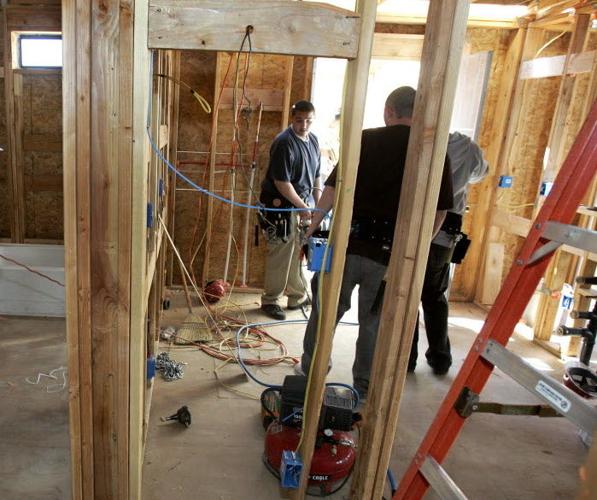
Q: What would cause a house to creak and pop when it is only two years old? We have tried to stop this problem by putting air vents into the roofing; we have had the AC and heating system checked; we had roofing and truss companies out to take a look. It only used to pop when the air conditioning and furnace heat came on, but now it seems to do it at random, especially during warmer weather.
A: Your problem is probably related to thermal and humidity issues. This type of popping tends to decrease as the lumber dries out and comes to rest in its final location; that might not have happened yet in your relatively new home. Another possibility is that this noise is due to having the roof sheathing laid so tightly that it creates this sound. If that’s true, and the roof is covered with asphalt shingles, you might begin to see small visible ridges in the shingles along the plywood sheathing joint lines. Keep us posted on whether the situation improves.
For more do-it-yourself tips, go to rosieonthehouse.com. An Arizona homebuilding and remodeling industry expert for 25 years, Rosie Romero is the host of the syndicated Saturday morning Rosie on the House radio program, heard locally from 8-11 a.m. on KNST-AM (790) in Tucson and KGVY-AM (1080) and -FM (100.7) in Green Valley. Call 888-767-4348.
- By Rosie Romero Special to the Arizona Daily Star
- Updated
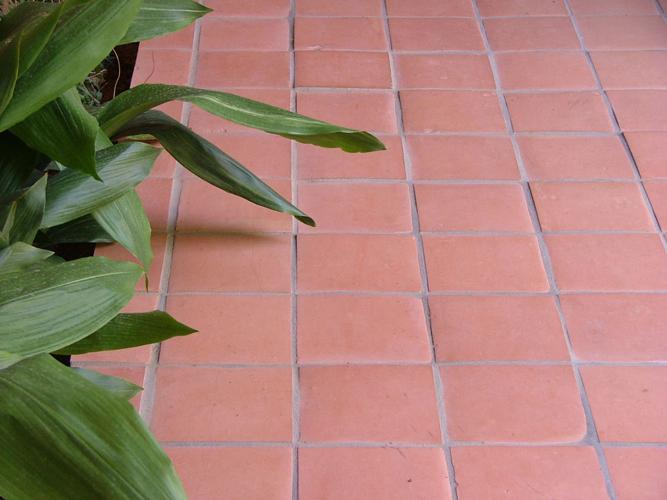
Q: We bought a fixer-upper that has 2,300 square feet of Saltillo tile flooring that we’re going to replace. After remodelers removed the kitchen tile, we realized what a disaster this would be — dusty and messy. So how should we go about removing the rest — some that’s on our concrete slab and some on an underlay? Some people say keep chipping away with a cold chisel; others say there’s a machine that will do the job. We plan to remove the rest of the tile ourselves, but we’ll have an expert put in the new flooring.
A: Saltillo tile is the messiest tile to remove of all. I’d suggest renting an electric chipping hammer from a rental outlet. It will take you some practice though to figure out just how to hold the blade of this machine onto the floor so you will not chip up the concrete when you work on the tile. However, if you do chip up some of the concrete slab, it can be fixed with a concrete patch. Be sure to tell the rental company that you are removing Saltillo tile so that they give you the right type of equipment. While you’re working, wear protective knee pads and dust masks, and protect your personal belongings and electronics from the dust that is created.
For more do-it-yourself tips, go to rosieonthehouse.com. An Arizona homebuilding and remodeling industry expert for 25 years, Rosie Romero is the host of the syndicated Saturday morning Rosie on the House radio program, heard locally from 8-11 a.m. on KNST-AM (790) in Tucson and KGVY-AM (1080) and -FM (100.7) in Green Valley. Call 888-767-4348.

- By Rosie Romero Special to the Arizona Daily Star
- Updated
Q: If I install photovoltaic solar panels on the roof of my home, and the electric power grid goes down in my area, will the solar panels still supply electricity for my home while the public power system is out?
A: No, they will not supply power in a blackout because you are still technically connected to the public power grid. As you probably know, your solar system is designed to sell extra electricity from your panels to the grid — operated by your local public utility — in order to defray some costs of your system. It’s the concept known as “net-metering.” But at the same time, the public power system is still connected to your house to keep your electricity going on shady days or during the night when your panels do not supply enough power.
Now, you can go off the grid completely and supply all your own power, but you’d have to install very, very expensive batteries — perhaps in your garage —where you would store your excess electrical power for times when your panels are not producing electricity. To sum up the situation, homes with solar panels may lose power in the event of a grid outage if they don’t have some backup form of energy storage, like the batteries.
For more tips, go to rosieonthehouse.com. An Arizona home building and remodeling industry expert for 25 years, Rosie Romero is the host of the syndicated “Rosie on the House” radio program, heard Saturday from 8-11 a.m. on KNST-AM (790) in Tucson and KGVY-AM (1080) and -FM (100.7) in Green Valley. Call 888-767-4348.
- By Rosie Romero Special to the Arizona Daily Star
- Updated
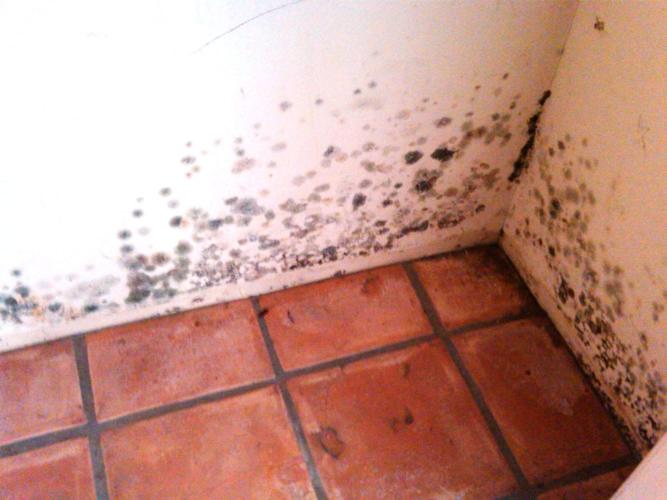
Q: I have a lot of mold on some of my baseboards and I think it’s because I have a lot of rain water seeping into the house due to a crack in a felt expansion joint on the edge of the house. Water tends to puddle up in the area just outside the house at that point. I plan to fill the crack, but how should I get rid of the mold?
A: There are several steps you need to take for this project before you think about cleaning up the mold. You need to stop the puddling outside near the foundation of your house by putting in gutters on your roof on that side of the house. That way, you can divert the water to a new location. Installing gutters is always a great benefit for a house in Arizona.
Then you can also make a small saw-cut in the concrete sidewalk next to the house to provide more nearby drainage for water in storms.
Next, dig out and remove all the old black expansion felt on your foundations. Then brush waterproof coating material on the foundation below the stucco in the area of the leak. Paint over the coating so the area will match the color of your house. Finally, you insert caulk in the area of the old expansion joint.
Only then can you start removing the old moldy baseboards and dry wall and clean up the inside of the house. That’s because you have to take all those other steps first to stop the leak or you’ll never get rid of the mold. As long as that mold is being fed with water, it will keep on coming back again.
For more do-it-yourself tips, go to rosieonthehouse.com. An Arizona home building and remodeling industry expert, Rosie Romero is the host of the syndicated Saturday morning Rosie on the House radio program, heard locally from 8-11 a.m. on KNST-AM (790) in Tucson and KGVY-AM (1080) and -FM (100.7) in Green Valley. Call 888-767-4348.

- By Rosie Romero Special to the Arizona Daily Star
- Updated
Q: I have an older house with a water pipeline that goes through the house before going out into the backyard so that I can use its water to irrigate my plants. I’d like to install a water softener and water treatment system, but then I’d end up having to irrigate my plants with softened water, wouldn’t I? I don’t know if that would be good for the plants. What should I do?
A: That fear of using soft water for irrigation is kind of an urban legend; softened water definitely won’t affect any plants indigenous to Arizona. But you do want to set up your water treatment so that you don’t run that irrigation water through a treatment system. That’s because using treated water for irrigation is a more expensive way to go. But water softening companies can add a hose bib to your softening system that will allow you to use unsoftened water in your yard.
For more do-it-yourself tips, go to rosieonthehouse.com. An Arizona home building and remodeling industry expert for 25 years, Rosie Romero is the host of the syndicated Saturday morning Rosie on the House radio program, heard locally from 8-11 a.m. on KNST-AM (790) in Tucson and KGVY-AM (1080) and -FM (100.7) in Green Valley. Call 888-767-4348.
- By Rosie Romero Special to the Arizona Daily Star
- Updated
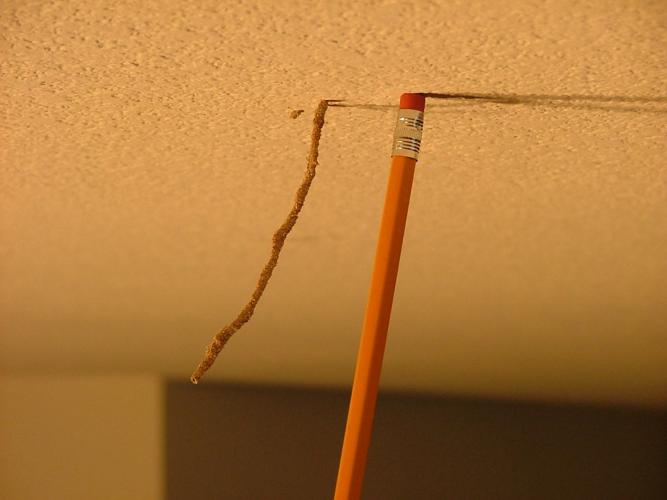
Q: I’m a new homeowner doing renovation work on an older house, and we are removing the popcorn ceilings. About four months into the job, we have noticed some mud tubes on the tops of walls. I imagine they are from termites. What should we do?
A: You need to call a termite company immediately. It’s time to get aggressive with those termites because they’re very, very active now after all the rain we had in the past few months. Even though your home is built with concrete blocks, the termites can still eat away at the wood furring strips that are located under your drywall as well as eat into the wood in your attic and the drywall itself.
For more do-it-yourself tips, go to rosieonthehouse.com. An Arizona home building and remodeling industry expert for 25 years, Rosie Romero is the host of the syndicated Saturday morning Rosie on the House radio program, heard locally from 8-11 a.m. on KNST-AM (790) in Tucson and KGVY-AM (1080) and -FM (100.7) in Green Valley. Call 888-767-4348.
- By Rosie Romero Special to the Arizona Daily Star
- Updated
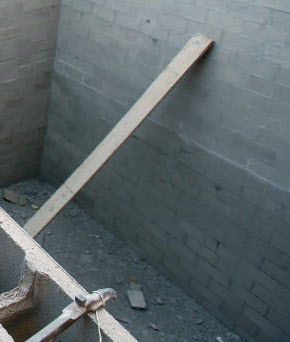
Q: I live in a subdivision that was built on a slope, and my neighbor’s lot is slightly higher than that of my house. A concrete block wall stands between our lots; the concrete is covered with stucco and paint. But when water drains off my neighbor’s lot during storms or when he irrigates his plants, the runoff is directed to my lot through some small drainage holes. There is so much water that it’s washing away the paint and stucco on my side of the wall. I’ve had to fix the wall twice, and it keeps right on happening over and over again. How can I fix this permanently?
A: There probably isn’t much you can do if your neighbor won’t cooperate in the effort. He would have to be involved in fixing the drains on his side of the wall or decreasing the irrigation. Try to approach him about the issue, because eventually the drainage could cause erosion of the footings for the wall.
For more do-it-yourself tips, go to rosieonthehouse.com. An Arizona homebuilding and remodeling industry expert for 25 years, Rosie Romero is the host of the syndicated Saturday morning “Rosie on the House” radio program, heard locally from 8-11 a.m. on KNST-AM (790) in Tucson and KGVY-AM (1080) and -FM (100.7) in Green Valley. Call 888-767-4348.

- By Rosie Romero Special to the Arizona Daily Star
- Updated
Q: I live in an apartment, but love to do container gardening. Because of the small space I work with, it doesn’t seem possible to do composting. But could I put coffee grounds directly into the pots where my plants are growing without composting the coffee first?
A: Although coffee grounds are acidic, they probably can be directly added to the soil – particularly for acid-loving plants. However, even with your limited space, it is possible to compost the grounds a little bit by buying a few small pots to use for processing the grounds along with other plant materials.
For more do-it-yourself tips, go to rosieonthehouse.com. An Arizona home building and remodeling industry expert, Rosie Romero is the host of the syndicated Saturday morning Rosie on the House radio program, heard locally from 8-11 a.m. on KNST-AM (790) in Tucson and KGVY-AM (1080) and -FM (100.7) in Green Valley. Call 888-767-4348.

- By Rosie Romero Special to the Arizona Daily Star
- Updated
Q: Can you plant a tree in the soil on top of a septic system?
A: Yes, you can do that provided that you don’t have a really old septic system. Contrary to popular opinion, the roots of trees don’t go straight down into the ground so they’re unlikely to bother a septic system that is two or three feet deep in your yard. The roots tend to grow laterally, but not deeply. They stay close to the soil’s surface in order to get adequate oxygen and water. You also want to make sure that you choose a moderately sized tree and not a really large, tall one.
For more do-it-yourself tips, go to rosieonthehouse.com. An Arizona home building and remodeling industry expert for 25 years, Rosie Romero is the host of the syndicated Saturday morning Rosie on the House radio program, heard locally from 8-11 a.m. on KNST-AM (790) in Tucson and KGVY-AM (1080) and -FM (100.7) in Green Valley. Call 888-767-4348.

- By Rosie Romero Special to the Arizona Daily Star
- Updated
Q: We have a sunken family room that was built about 4 inches lower than the rest of the house. For various reasons, we’d like to bring it up to the level of the other floors. Can you give us some advice on doing this job?
A: Homeowners often ask me if they can put new floor joists down and build a new wooden floor. That may work, but adding all that wood is very conducive to attracting termites. The right way to do the job is by pouring in high-slump fresh concrete to fill the area to the level of the rest of your flooring. It could be somewhat uncomfortable to do this as your house will feel like a cold sauna for about a week. You’ll have to open all the windows to let the moisture escape while the concrete is curing.
For more do-it-yourself tips, go to rosieonthehouse.com. An Arizona home building and remodeling industry expert for 25 years, Rosie Romero is the host of the syndicated Saturday morning Rosie on the House radio program, heard locally from 8-11 a.m. on KNST-AM (790) in Tucson and KGVY-AM (1080) and -FM (100.7) in Green Valley. Call 888-767-4348.
- By Rosie Romero Special to the Arizona Daily Star
- Updated
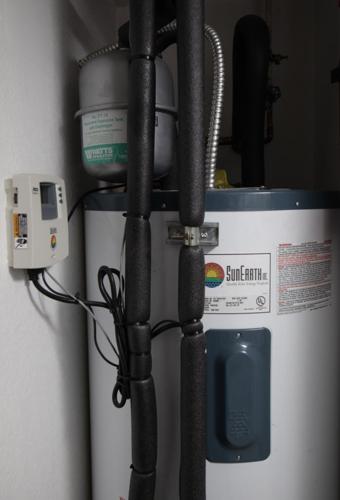
Q: I just replaced the hot water heater in my house and did the job myself. Now we’re getting hot and cold flashes of water coming out of faucets throughout the house. What did I do wrong?
A: It sounds as if the on-off valve on top of the tank is not working properly. You probably have installed a gate valve instead of an angle ball valve. But you can easily replace that valve after you turn off the water heater.
For more do-it-yourself tips, go to rosieonthehouse.com. An Arizona home building and remodeling industry expert for 25 years, Rosie Romero is the host of the syndicated Saturday morning Rosie on the House radio program, heard locally from 8-11 a.m. on KNST-AM (790) in Tucson and KGVY-AM (1080) and -FM (100.7) in Green Valley. Call 888-767-4348.
- By Rosie Romero Special to the Arizona Daily Star
- Updated
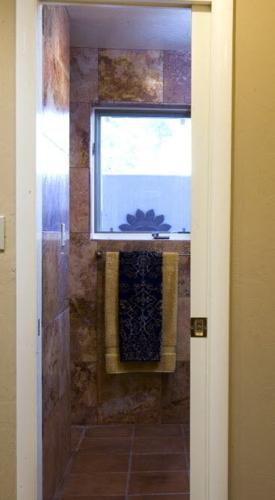
Q: I’m doing a bathroom renovation and wondered if I could remove the old fiberglass panels for my present shower and replace the whole thing with a drop-in shower stall? Or should I remove the panels and refinish the walls with tile and grout?
A: If you’re concerned about saving money on your bath remodel, tub and shower liners are an effective and low-cost alternative. A shower liner can actually be dropped in on top of your old shower pan. The finished product will be just as durable as a tile shower.
For more do-it-yourself tips, go to rosieonthehouse.com. An Arizona home building and remodeling industry expert for 25 years, Rosie Romero is the host of the syndicated Saturday morning Rosie on the House radio program, heard locally from 8-11 a.m. on KNST-AM (790) in Tucson and KGVY-AM (1080) and -FM (100.7) in Green Valley. Call 888-767-4348.
- By Rosie Romero Special to the Arizona Daily Star
- Updated
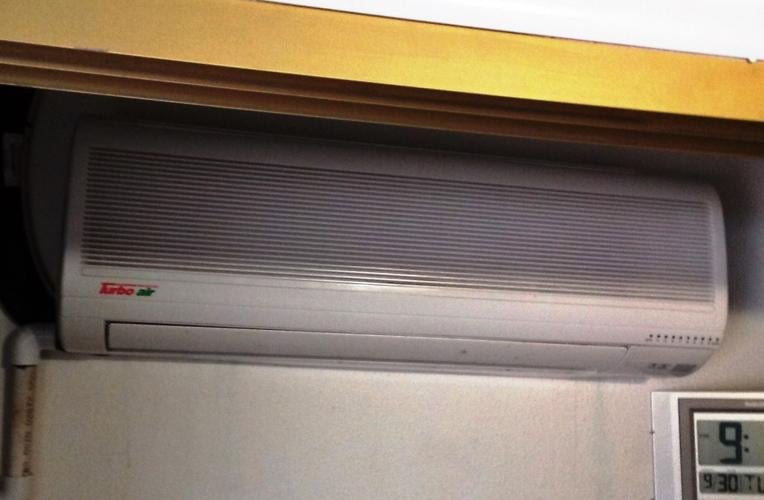
Q: Our heat pump went out a couple of months ago; the compressor broke down. It’s going to cost us $5,000 to $6,000 to replace the whole unit. However, we’ve been able to keep our 1,700 square-foot, all-electric house bearable this winter by using an infrared space heater. Its heat, along with heat generated by cooking and showering, seems to be enough to make it comfortable. So I’ve been wondering could we just put a mini-split air-conditioning unit in a couple of rooms to provide cooling, rather than one big heat pump?
A: Mini-splits are a wonderful alternative, and they can be installed room by room without connecting them to your ductwork. But the fact is that putting in three individual mini-splits would cost you much, much more money than replacing your old heat pump. The best way to use a mini-split is to provide extra cooling in a room that isn’t getting much benefit from your standard HVAC system.
For more do-it-yourself tips, go to rosieonthehouse.com. An Arizona home building and remodeling industry expert for 25 years, Rosie Romero is the host of the syndicated Saturday morning Rosie on the House radio program, heard locally from 8-11 a.m. on KNST-AM (790) in Tucson and KGVY-AM (1080) and -FM (100.7) in Green Valley. Call 888-767-4348.

- By Rosie Romero Special to the Arizona Daily Star
- Updated
Q: I’m trying to decide whether to install carpet tiles or laminate on the floor in my children’s bedroom. Which would be better? And will changing the flooring get rid of the current smell in the old carpeting? It’s been like that ever since we moved into the house a year and a half ago.
A: I like the idea of having hard-surfaced flooring like laminate because it’s easier to keep clean. You can also put in an area rug over it that can be rolled up and taken to the carpet cleaners when it gets too dirty. On the other hand, the carpet tiles are the easiest to install, and if one or two of them get worn or damaged, you can remove them and replace them yourself. I have a feeling that the odor problem might have been caused by someone else’s pet. So if you really want to get rid of that problem, you can pull up all the flooring, get down to the slab, and then paint the floor with a sealant before putting down carpet or tile. If you don’t seal that floor, the odor could come back again.
For more do-it-yourself tips, go to rosieonthehouse.com. An Arizona home building and remodeling industry expert for 25 years, Rosie Romero is the host of the syndicated Saturday morning “Rosie on the House” radio program, heard locally from 8-11 a.m. on KNST-AM (790) in Tucson and KGVY-AM (1080) and -FM (100.7) in Green Valley. Call 888-767-4348.

- By Rosie Romero Special to the Arizona Daily Star
- Updated
Q: I have completely turned my garage into a workshop area. On one side, I have my tools, workbench and all my projects going on; on the other side, my wife has her projects. I have built a temporary, freestanding wall down the middle that is not attached to the other walls in any way. I use it for shelves to store my tools. I didn’t run new electricity into the work areas; I power my tools using extension cords connected to existing outlets. Have I done anything illegal? Would I need a building permit for this area? Now I’m planning to rent out the house. Do I have to make any changes first?
A: Certainly, it goes against code to use extension cords to power up those tools on a semi-permanent basis. You need to have new permanent outlets installed with wiring that runs to your electric panel and that is protected by approved circuit breakers. Installing new electrical circuits requires a permit from the city. If you’re planning to rent the house, you might need to make more changes, like turning the garage back into a garage again.
For more do-it-yourself tips, go to rosieonthehouse.com. An Arizona home building and remodeling industry expert for 25 years, Rosie Romero is the host of the syndicated Saturday morning “Rosie on the House” radio program, heard locally from 8-11 a.m. on KNST-AM (790) in Tucson and KGVY-AM (1080) and -FM (100.7) in Green Valley. Call 888-767-4348.
- By Rosie Romero Special to the Arizona Daily Star
- Updated
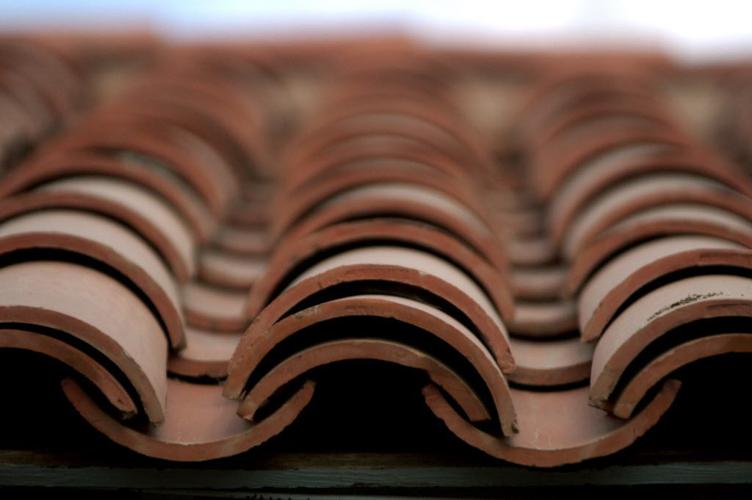
Q: I have a 30-year-old concrete tile roof that needs replacing. After taking off the tile, the roofers want to put new peel-and-stick roofing on top of the old underlayment. Then they’d put the old tiles back on. Is it OK to put the new peel-and-stick on the old underlayment?
A: Your best option is to take the old underlayment off and get down to the deck to find out if you have any other problems with your roof. Maybe some wood in the deck needs replacing. Then you can put on the new underlayment and put the old tiles back. You might also go up in your attic right now to look at the deck from the underside so that you can see if there are other problems going on — like leaks or mold or rotting wood.
For more do-it-yourself tips, go to rosieonthehouse.com. An Arizona home building and remodeling industry expert for 25 years, Rosie Romero is the host of the syndicated Saturday morning “Rosie on the House” radio program, heard locally from 8-11 a.m. on KNST-AM (790) in Tucson and KGVY-AM (1080) and -FM (100.7) in Green Valley. Call 888-767-4348.

- By Rosie Romero Special to the Arizona Daily Star
- Updated
Q: I have a 2-foot-tall mesquite that sprouted in my yard that I’d like to move to a new location. Is it OK to do that and will it survive?
A: You can certainly do that, but it’s just a tough job to do just to save that young tree that you’re better off to go to a nursery and buy a 5-gallon mesquite and plant it. It’s just too much work to transplant the other tree. Even though it’s only 2 feet tall, it’s going to have a tap root that goes really, really deep and would be difficult to remove from your garden.
For more do-it-yourself tips, go to rosieonthehouse.com. An Arizona home building and remodeling industry expert for 25 years, Rosie Romero is the host of the syndicated Saturday morning “Rosie on the House” radio program, heard locally from 8-11 a.m. on KNST-AM (790) in Tucson and KGVY-AM (1080) and -FM (100.7) in Green Valley. Call 888-767-4348.
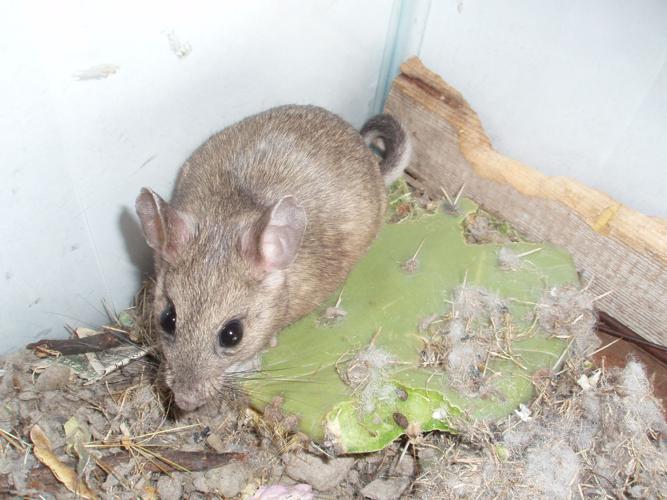
- By Rosie Romero Special to the Arizona Daily Star
- Updated
Q: I own a rental home where the storage shed in the yard is completely filled up with my stuff. Now I’ve found out that there are a couple of pack rats living in the shed. I don’t want to set traps because I am not on the property often enough to monitor the traps. But if I clear out all the junk, how can I then keep the pack rats from coming back?
A: You can install a strobe light that will go on and off when the pack rats enter the shed. That might work. You can also install plug-in soundwave devices — the kind that some people use to keep rats and mice out of summer cabins. Another possibility is using hot pepper wax — a good animal repellent. In fact, you might use a few different methods at once — the smell plus the lights and the soundwave. But be advised that you must keep replacing the hot pepper smell, and you have to monitor the lights and soundwaves to ensure that they don’t break down.
For more do-it-yourself tips, go to rosieonthehouse.com. An Arizona home building and remodeling industry expert for 25 years, Rosie Romero is the host of the syndicated Saturday morning Rosie on the House radio program, heard locally from 8-11 a.m. on KNST-AM (790) in Tucson and KGVY-AM (1080) and -FM (100.7) in Green Valley. Call 888-767-4348.

- By Rosie Romero Special to the Arizona Daily Star
- Updated
Q: Two years ago, I bought a home where the previous owner enclosed a single-car garage to turn it into a fourth bedroom. He put drywall inside on the walls so that it looks just like a bedroom. However, they left the garage door on the front of the house. How can I find out if he did this legally or not?
A: Check the appraisal for your home to see if the additional square footage is listed in the size estimate for your home. If the appraisal uses language that says the square footage is “as-built,” then the previous owner clearly did the work without a permit. It would be good if you would get the home inspected now and apply for a permit to make everything legitimate. You might not even have to make improvements if there are no code violations with the seller’s workmanship. But if you’re planning to keep the bedroom, it would be nice if you’d remove the garage door. Be advised that your property taxes might go up if you increase the livable square footage. You can also check with your local building department to see whether any permits were issued for work done on the house.
For more do-it-yourself tips, go to rosieonthehouse.com. An Arizona home building and remodeling industry expert for 25 years, Rosie Romero is the host of the syndicated Saturday morning Rosie on the House radio program, heard locally from 8-11 a.m. on KNST-AM (790) in Tucson and KGVY-AM (1080) and -FM (100.7) in Green Valley. Call 888-767-4348.

- By Rosie Romero Special to the Arizona Daily Star
- Updated
Q: My one-story home was built in 1965; now my house’s cast-iron drain pipes are deteriorating and might need replacing. However, the plumber has recommended doing some e-piping to coat the interior of the pipes. Will that work?
A: E-piping was a process originally developed in California for storm sewers. An epoxy coating is pumped into the pipes to clean them up and seal them. It’s not a cure-all; sometimes you can use this coating and sometimes you can’t. Your plumber would be your best resource to know if e-piping will be effective with your pipes in their current condition. However, they’ve been using it for several years with considerable success so you might want to give it a try.
For more do-it-yourself tips, go to rosieonthehouse.com. An Arizona home building and remodeling industry expert for 25 years, Rosie Romero is the host of the syndicated Saturday morning Rosie on the House radio program, heard locally from 8-11 a.m. on KNST-AM (790) in Tucson and KGVY-AM (1080) and -FM (100.7) in Green Valley. Call 888-767-4348.
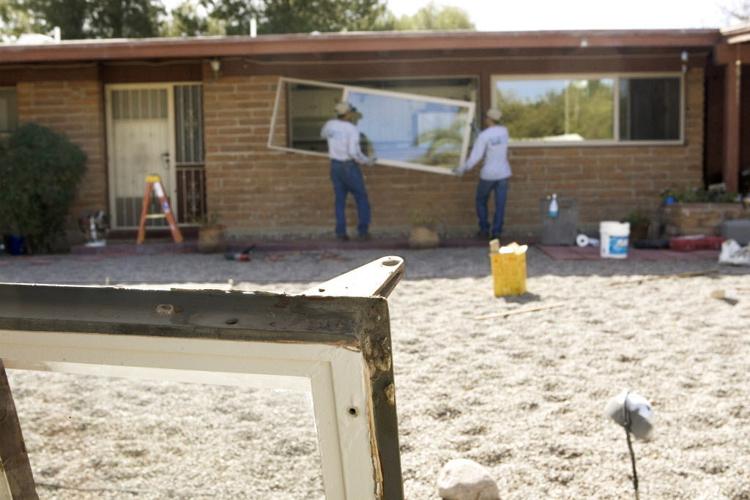
- By Rosie Romero Special to the Arizona Daily Star
- Updated
Q: I need to replace all my windows in my stucco home. There are a number of different installation methods and I need help determining which are OK to use. Should it be “nail fin,” “flush fin,” or “Z bar frame?” There are also so many contractors doing window work. I am just not sure which construction method I need to stay away from.
A: There are several methods used by various window replacement companies and as long as their process guarantees a leak-free installation, you’ll probably be fine. But the process we recommend includes removing the stucco from around the perimeter of the window about 6 inches to 8 inches on all four sides.
This needs to be done rather surgically as we want to keep the chicken wire and building paper under the stucco as intact as possible for future stucco repair. The window flange of the old window will now be exposed and all the fasteners can be removed and the old window taken out.
The new window is now installed to the framing of the home via the attached flanges and properly flashed on both sides and across the top of the new flanges. We also recommend that an aluminum drip-flashing be installed across the top of the window to divert water away from the window itself. Then a qualified stucco company needs to come in and make sure the building paper is properly installed in the area where the stucco was removed, the chicken wire is put back in place and the repair area is re-stuccoed to blend with the existing stucco. You’ll want to wait about 30 days for the stucco repair to fully cure before you prime and apply 100 percent acrylic exterior house paint to the repaired area.
In case you’re wondering about the terminology, “nail fins” are strips of metal used to attach a window frame to a stud opening. “Flush fins” and “Z bar frames” are similar; they are vinyl fins surrounding the window frame that are flush with the exterior frame of the existing window.
For more do-it-yourself tips, go to rosieonthehouse.com. An Arizona home building and remodeling industry expert for 25 years, Rosie Romero is the host of the syndicated Saturday morning Rosie on the House radio program, heard locally from 8-11 a.m. on KNST-AM (790) in Tucson and KGVY-AM (1080) and -FM (100.7) in Green Valley. Call 888-767-4348.
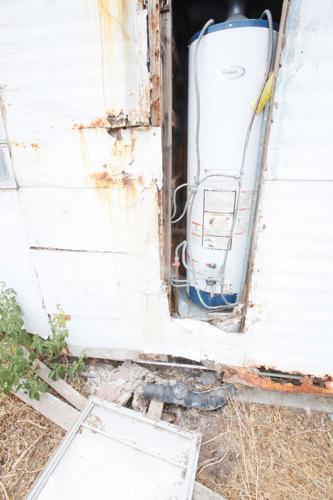
- By Rosie Romero Special to the Arizona Daily Star
- Updated
Q: How often should I drain my water heater?
A: It’s good to drain your water heater once a year, but if you haven’t drained it in seven or eight years, don’t do it. Too much sediment will have built up in your water heater that the draining process might mean your water heater can spring a leak.
For more do-it-yourself tips, go to rosieonthehouse.com. An Arizona home building and remodeling industry expert for 25 years, Rosie Romero is the host of the syndicated Saturday morning Rosie on the House radio program, heard locally from 8-11 a.m. on KNST-AM (790) in Tucson and KGVY-AM (1080) and -FM (100.7) in Green Valley. Call 888-767-4348.
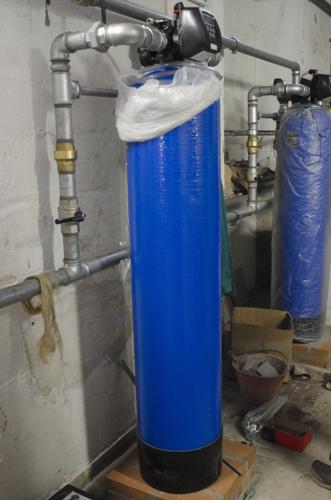
- By Rosie Romero Special to the Arizona Daily Star
- Updated
Q: Is there any way to keep sediment and calcium from building up in your water heater except for installing a water softener?
A: No there isn’t, especially not in the Tucson area. The problem is that Tucson is at the end of the supply line for Central Arizona Project water. So by the time that water reaches Tucson, there has been a lot of evaporation; that, of course, leaves the CAP water much harder. Then that water is mixed with ground water which is even harder. The only way to handle the problem is by installing a water softener. Water softening can benefit your water heater as well as other equipment and appliances in your home, like your dishwasher, clothes washer and faucets and fixtures.
For more do-it-yourself tips, go to rosieonthehouse.com. An Arizona home building and remodeling industry expert for 25 years, Rosie Romero is the host of the syndicated Saturday morning Rosie on the House radio program, heard locally from 8-11 a.m. on KNST-AM (790) in Tucson and KGVY-AM (1080) and -FM (100.7) in Green Valley. Call 888-767-4348.

- By Rosie Romero Special to the Arizona Daily Star
- Updated
Q: I have laminate counter tops in my kitchen that have a triple bullnose edge. They also stick out pretty far from the counter. Is it possible to cut the bullnose off and put a more modern straight edge on the countertops?
A: It might be possible to cut it off and grind it down, but it could be hard to do that and it could create quite a mess in the kitchen. It also depends to some extent on what kind of cabinet you have under the laminate. You would need to have someone who is an expert in laminate surfaces take a thorough look at the counter before you try doing anything like this, as this operation is not a good prospect for a successful DIY project.
For more do-it-yourself tips, go to rosieonthehouse.com. An Arizona home building and remodeling industry expert for 25 years, Rosie Romero is the host of the syndicated Saturday morning Rosie on the House radio program, heard locally from 8-11 a.m. on KNST-AM (790) in Tucson and KGVY-AM (1080) and -FM (100.7) in Green Valley. Call 888-767-4348.
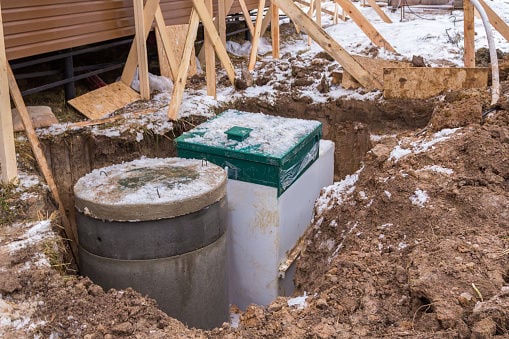
- By Rosie Romero Special to the Arizona Daily Star
- Updated
Q: I want to install laminate wood flooring over a concrete slab that has a 14-foot-long crack in it that is about 1/8-inch deep. What do I have to do before putting in the flooring?
A: You need to start by have a termite company treat that crack for possible termite infestation before laying the flooring. That’s because that crack could make it very easy for termites to attack your new flooring. You also need to determine whether the parts of the floor on both sides of the crack are level. If they are not, some grinding needs to be done on the concrete to make sure it’s flat. After that, you will need to seal the crack area with grout. These advance steps will ensure that you can put in a level floor.
For more do-it-yourself tips, go to rosieonthehouse.com. An Arizona home building and remodeling industry expert for 25 years, Rosie Romero is the host of the syndicated Saturday morning Rosie on the House radio program, heard locally from 8-11 a.m. on KNST-AM (790) in Tucson and KGVY-AM (1080) and -FM (100.7) in Green Valley. Call 888-767-4348.
- By Rosie Romero Special to the Arizona Daily Star
Q: In my garage I have a light fixture with a sensor in it that is supposed to turn on the lighting when someone comes out in the garage. I’ve always used incandescent lights in the fixture, but recently I put an LED bulb into it. So now the LED bulb blinks on and off and on again all the time until I turn off the sensor in the wall switch by hand. How can I fix this?
A: If you keep the fixture the same and change the type of bulb, the light won’t always operate the way that it’s supposed to. You’ll have to buy and install a fixture that’s compatible with LED bulbs. LED bulbs are electronic as opposed to the resistance nature of incandescent bulbs. So LEDs require a fixture designed for electronic devices.
For more do-it-yourself tips, go to rosieonthehouse.com. Rosie Romero is the host of the syndicated Saturday morning Rosie on the House radio program.
- By Rosie Romero Special to the Arizona Daily Star
Q: I have a half–inch gap between the bottom of my front door and the threshold at the bottom and as a result we get some water coming into the house during monsoon season. How hard would it be for me to replace the front door myself?
A: It’s not that hard to do, but possibly, as long as there is no water draining down to your door off your lot, you probably only need to put in a door sweep at the bottom of the existing door to close the gap.
For more do-it-yourself tips, go to rosieonthehouse.com. Rosie Romero is the host of the syndicated Saturday morning Rosie on the House radio program.
- By Rosie Romero Special to the Arizona Daily Star
Q: I had solar panels put on my 1,600-square-foot house in January 2015. But I’ve only seen a 10 percent reduction in my utility bill since then. Shouldn’t it be more than that? I’m also wondering if I’m still eligible for state and federal tax credits or is it too late to apply for them?
A: First of all, you need to call up the company that installed your panels and have them come back to see if repairs are needed. A 10 percent reduction does not seem like enough. And yes, you have a number of years in which to claim those credits; you’d better talk to your tax adviser about how you can do that and what the rules and regulations say.
For more do-it-yourself tips, go to rosieonthehouse.com. Rosie Romero is the host of the syndicated Saturday morning Rosie on the House radio program.
- By Rosie Romero Special to the Arizona Daily Star
Q: I have been leasing a townhouse that I’m now thinking of buying, but I’m worried because the roof has been leaking. You can see dried water spots in the living room and also on the common wall in the garage. The homeowners association will fix the roof, but they won’t do anything about repairing the interior walls. What can I do about that?
A: That’s not an unusual situation in townhouses or condominiums. The HOA will repair the roof, but won’t do anything about the damage inside a house. You might check to see if there is some kind of insurance policy that will cover that type of repair, but if not, you would have to pay for it yourself. Make sure to have a qualified home inspection to check for any other possible resulting damage from leaks.
For more do-it-yourself tips, go to rosieonthehouse.com. Rosie Romero is the host of the syndicated Saturday morning Rosie on the House radio program.
- By Rosie Romero Special to the Arizona Daily Star
Q: Wild bees have been making tiny holes in the stucco in my house. Then the woodpeckers come along and start pecking at the holes; I guess they’re looking for insects or honey. How can we get the woodpeckers to go away?
A: You probably need to have a bee expert treat the entire section of holes with some kind of foam to get rid of chemicals that bees leave behind to attract other bees. Bee experts call those chemicals pheromones. Once the bees stop making the holes, it’s likely the woodpeckers will stop their visits.
For more do-it-yourself tips, go to rosieonthehouse.com. An Arizona home building and remodeling industry expert for 25 years, Rosie Romero is the host of the syndicated Saturday morning Rosie on the House radio program, heard locally from 8-11 a.m. on KNST-AM (790) in Tucson and KGVY-AM (1080) and -FM (100.7) in Green Valley. Call 888-767-4348.
- By Rosie Romero Special to the Arizona Daily Star
Q: I had to have all the stucco around the edges of my windows replaced because of problems with leaks. Workers pulled the old stucco off to reflash the windows. Now I’m wondering how long I’ll have to wait before I can repaint the new bare stucco. I was told to wait four to six weeks, but does it have to be that long?
A: Four to six weeks is about right. But you can also buy a kit at the hardware store and test the moisture levels in the stucco to be sure it’s thoroughly dry. When you do paint, put a good primer on first; then apply the paint. That fresh paint will help your stucco shed water. After you paint the new areas, the fresh paint color will probably look very different from the paint already on the house. Eventually, you may want to repaint the entire house because it’s too easy to see where the new paint stops and the old begins.
Window flashing, of course, is material installed around the windows to keep water from entering gaps between adjoining surfaces. Wind-driven rainwater can find its way through even tiny spaces between the frame or casing of a window and the trim.
For more do-it-yourself tips, go to rosieonthehouse.com. An Arizona home building and remodeling industry expert for 25 years, Rosie Romero is the host of the syndicated Saturday morning Rosie on the House radio program, heard locally from 8-11 a.m. on KNST-AM (790) in Tucson and KGVY-AM (1080) and -FM (100.7) in Green Valley. Call 888-767-4348.
- By Rosie Romero Special to the Arizona Daily Star
Q: I had an energy audit done on my house and then had some work done on my air ducts. Ever since then, my house has been a whole lot dustier, and I’ve noticed more dust on the air filters when I change them. What could be causing this problem?
A: It’s possible that the air ducts weren’t reconnected properly when they did the duct work in your house. Then the air conditioner could be sucking in a lot of dust in the attic, for example, and blowing it back into the house. You need to have another blower door test and duct blast test done on your house – the kinds of things that they did during the energy audit – to find out where the problem is.
Q: What kind of vegetables can you plant in a container garden?
A: Just about any kind of vegetable can be grown in containers, but you have to use a large enough pot or container. The biggest mistake that home gardeners make is using a container that is way too small.
Q: I have a leaky window on the second story of my house. Water seems to be leaking through the stucco. I’ve tried many possible solutions, but they just don’t work. When it rains, I run through four or five beach towels soaking up water. Three or four years ago, I had a contractor replace the flashing and stucco around the window, but he wouldn’t guarantee that it would stop the leak. Can’t I just buy some kind of sealer to put over the stucco to make this stop?
A: You’re looking for some kind of miracle top coat that just doesn’t exist. The best solution is to find a different, more dependable contractor to redo the flashing. The problem with sealing the stucco is that you will end up with moisture soaking into the walls of your house. The water can’t escape, and it can cause an even bigger mess inside.
For more do-it-yourself tips, go to rosieonthehouse.com. An Arizona homebuilding and remodeling industry expert for 25 years, Rosie Romero is the host of the syndicated Saturday morning “Rosie on the House” radio program, heard locally from 8-11 a.m. on KNST-AM (790) in Tucson and KGVY-AM (1080) and -FM (100.7) in Green Valley. Call 888-767-4348.
- By Rosie Romero Special to the Arizona Daily Star
Q: I had an energy audit done on my house and then had some work done on my air ducts. Ever since then, my house has been a whole lot dustier, and I’ve noticed more dust on the air filters when I change them. What could be causing this problem?
A: It’s possible that the air ducts weren’t reconnected properly when they did the duct work in your house. Then the air conditioner could be sucking in a lot of dust in the attic, for example, and blowing it back into the house. You need to have another blower door test and duct blast test done on your house – the kinds of things that they did during the energy audit – to find out where the problem is.
For more do-it-yourself tips, go to rosieonthehouse.com. An Arizona homebuilding and remodeling industry expert for 25 years, Rosie Romero is the host of the syndicated Saturday morning “Rosie on the House” radio program, heard locally from 8-11 a.m. on KNST-AM (790) in Tucson and KGVY-AM (1080) and -FM (100.7) in Green Valley. Call 888-767-4348.
- By Rosie Romero Special to the Arizona Daily Star
Q: What’s the best kind of ductwork to do when building a new house? Should ducts be rigid metal or should you install flexible ducts?
A: Most of what’s being installed in new houses now is flexible ducts because they cost so much less than rigid, sheet-metal ductwork. The installation of hard ducts is also more difficult because they have to be wrapped in insulation and more transition points have to be made. Those transitions are where leaks tend to occur. The problem with flexible ducts is that installers have a tendency to make too many turns and bends as they run the ducts through the house. But both types of ductwork can work just fine if the ductwork is designed and installed correctly.
For more do-it-yourself tips, go to rosieonthehouse.com. An Arizona homebuilding and remodeling industry expert for 25 years, Rosie Romero is the host of the syndicated Saturday morning “Rosie on the House” radio program, heard locally from 8-11 a.m. on KNST-AM (790) in Tucson and KGVY-AM (1080) and -FM (100.7) in Green Valley. Call 888-767-4348.
- By Rosie Romero Special to the Arizona Daily Star
Q: I have granite countertops in my house, and in one area where a seam runs from front to back, the slab near the sink seems to have settled about a 16th of an inch lower than the slab on the other side of the seam. Can this be fixed?
A: That’s a very difficult situation. Someone might be able to fix it, but that repair person really has to be an expert or the countertop could break. Workers can’t grind it down; they probably have to push one side up instead. It would be easy to damage the slab, however, in trying that.
If the counters are fairly new, you need to get the original contractor in to look at it. Whoever works on it has to know what they’re doing.
For more do-it-yourself tips, go to
An Arizona home building and remodeling industry expert for 25 years, Rosie Romero is the host of the syndicated Saturday morning Rosie on the House radio program, heard locally from 8-11 a.m. on KNST-AM (790) in Tucson and KGVY-AM (1080) and -FM (100.7) in Green Valley. Call 888-767-4348.
- By Rosie Romero Special to the Arizona Daily Star
Q: I have a 5-ton, 6-year-old air conditioner compressor located right outside my master bedroom window. When it runs, it’s really loud. Can I move it about 10 to 15 feet away from the window? Right now itIt’s in a shady spot, but the new location would be a lot sunnier. Would that affect its performance?
A: It would probably cost about $1,500 to $2,000 to move it, partly because you have to pump it down to remove the refrigerant and move the copper lines. The amount of shade that the unit gets will not affect its cooling power. Newer air conditioners are getting quieter to operate all the time, so it may be time to consider a newer, quieter and more efficient unit.
For more do-it-yourself tips, go to
An Arizona home building and remodeling industry expert for 25 years, Rosie Romero is the host of the syndicated Saturday morning Rosie on the House radio program, heard locally from 8-11 a.m. on KNST-AM (790) in Tucson and KGVY-AM (1080) and -FM (100.7) in Green Valley. Call 888-767-4348.
- By Rosie Romero Special to the Arizona Daily Star
Q: I was told about a sealant that can be injected into air conditioners. Is that true? I have a small Freon leak in my AC so I’d like to know if a sealant will fix the leakage. I’ve been replacing about a pound of Freon every year.
A: Freon is a refrigerant that is no longer used in manufacturing air conditioners. Although you can still replace the refrigerant when it leaks out of an older unit, federal regulations say AC repair workers have to try to find the leak and fix it first. During these repairs, a dye is often injected into the coils though the process might not work that well. Eventually, you’ll probably find it might be more economical to buy a new air conditioner.
For more do-it-yourself tips, go to
An Arizona home building and remodeling industry expert for 25 years, Rosie Romero is the host of the syndicated Saturday morning Rosie on the House radio program, heard locally from 8-11 a.m. on KNST-AM (790) in Tucson and KGVY-AM (1080) and -FM (100.7) in Green Valley. Call 888-767-4348.
- By Rosie Romero Special to the Arizona Daily Star
Q: I have a polished concrete floor with tiny cracks in it; what can I do to fix it?
A: Hairline cracks are often possible when you use polished concrete as your flooring. There are toppings that you can put over the floor to take care of those cracks. However, many people consider the rustic look of polished concrete — along with the cracks — to be part of the beauty. Another possibility is incorporating some kind of design or pattern into the flooring to disguise the cracks.
Go to rosieonthehouse.com for more do-it-yourself tips. An Arizona homebuilding and remodeling industry expert for 25 years, Rosie Romero is the host of the syndicated Saturday morning “Rosie on the House” radio program, heard from 8-11 a.m. on KNST-AM (790) in Tucson and KGVY-AM (1080) and -FM (100.7) in Green Valley. Call 1-888-767-4348.
- By Rosie Romero Special to the Arizona Daily Star
Q: There is a shut-off valve outside my house on the water pipeline, but when I use it, I turn off both the irrigation line and the water line for the house at the same time. I don’t want to turn off the irrigation when I go on trips; I just want to turn off the water to the house so there will be no leaks while I’m away. What can I do about this issue?
A: You need to hire a plumber who can move the shut-off valve behind the vacuum blocker going into the house. It should be fairly easy to do.
Go to rosieonthehouse.com for more do-it-yourself tips. An Arizona homebuilding and remodeling industry expert for 25 years, Rosie Romero is the host of the syndicated Saturday morning “Rosie on the House” radio program, heard locally from 8-11 a.m. on KNST-AM (790) in Tucson and KGVY-AM (1080) and -FM (100.7) in Green Valley. Call 888-767-4348.
- By Rosie Romero Special to the Arizona Daily Star
Q: For the past couple weeks, the water coming out of our kitchen faucet has been steadily decreasing — both hot and cold. I tried cleaning the surface of the end of the faucet spout with vinegar and it doesn’t seem to have helped improve the flow.
A: There could be bits of sand and minerals caught in the aerator at the very end of the faucet, so you need to remove the aerator to clean it out completely. Even before you clean it up, you’ll probably notice that the water runs out very well once you take the aerator off the faucet spout.
It can take a little muscle to get the aerator to unscrew. Also draw a sketch of the order in which parts are taken off or take a quick photo of the parts with your phone. That way you can put everything back the same way.
To clean the aerator, start by turning off the water supply by turning off the valves under the sink. Cover the end of the spout with masking tape to protect the finish, then use pliers to unscrew the aerator from the spout. Take out the screen aerator section and clean it by soaking it in vinegar and then scrubbing with a soft brush.
You can also replace the washer while the faucet is disassembled.
Reassemble the parts in the right order and thread the aerator by hand back on the faucet. Once everything is back in place, tighten with pliers.
For more do-it-yourself tips, go to rosieonthehouse.com. An Arizona home building and remodeling industry expert for 25 years, Rosie Romero is the host of the syndicated Saturday morning Rosie on the House radio program, heard locally from 8-11 a.m. on KNST-AM (790) in Tucson and KGVY-AM (1080) and -FM (100.7) in Green Valley. Call 888-767-4348.
- By Rosie Romero Special to the Arizona Daily Star
Q: A large mesquite in my backyard has grown to the point where its roots are lifting up the concrete paving all over the yard. What can I do to stop this from happening?
A: The problem is probably going to get worse as time goes on. You need to dig down all around the tree and cut off some sections of the roots. But don’t get too close to the tree if you want to keep that tree alive and growing. Cutting too close to the trunk can kill the tree. You only want to cut roots that are less than a third of the diameter of the trunk in their thickness.
For more do-it-yourself tips, go to rosieonthehouse.com. An Arizona home building and remodeling industry expert for 25 years, Rosie Romero is the host of the syndicated Saturday morning Rosie on the House radio program, heard locally from 8-11 a.m. on KNST-AM (790) in Tucson and KGVY-AM (1080) and -FM (100.7) in Green Valley. Call 888-767-4348.
- By Rosie Romero Special to the Arizona Daily Star
Q: We are getting ready to rent out a two-bedroom townhome that has four hard-wired smoke alarms with battery backups. Would it be a good idea to switch to combination smoke alarm and carbon monoxide detector units? And should we use 10-year lithium batteries in the alarms? Will those batteries be as long-lasting as they say or would it be better to stick with replacing regular 9-volts all the time?
A: It would be a great idea to use those combo alarms plus lithium batteries. Since you will have tenants in the townhome, you don’t want the chore of replacing batteries every year. Lithium batteries, by the way, die very slowly. They will give you warnings for weeks before they finally need replacing.
For more do-it-yourself tips, go to rosieonthehouse.com. An Arizona home building and remodeling industry expert for 25 years, Rosie Romero is the host of the syndicated Saturday morning Rosie on the House radio program, heard locally from 8-11 a.m. on KNST-AM (790) in Tucson and KGVY-AM (1080) and -FM (100.7) in Green Valley. Call 888-767-4348.
- By Rosie Romero Special to the Arizona Daily Star
Q: I have a 45-year-old house built with adobe bricks that originally had black mortar used in between the bricks. Over time, the mortar faded from black to almost white. I was told that I could restain the mortar to make it black again, but that I would have to brush the stain on the mortar seams. Can’t I just spray it on using a tiny spray gun?
A: You can put a new stain on the mortar, provided it’s in good shape, but you would have to mask every brick in order to spray on the stain, and you wouldn’t want to do that. You want to be sure that the stain doesn’t drip onto the bricks themselves. Before you proceed, you should talk to an adobe brick expert.
For more do-it-yourself tips, go to rosieonthehouse.com. An Arizona homebuilding and remodeling industry expert for 25 years, Rosie Romero is the host of the syndicated Saturday morning “Rosie on the House” radio program, heard locally from 8-11 a.m. on KNST-AM (790) in Tucson and KGVY-AM (1080) and -FM (100.7) in Green Valley. Call 888-767-4348.
- By Rosie Romero Special to the Arizona Daily Star
Q: I would like to save money whenever I can on my energy bills. Can I turn off the circuit breaker on my electric panel that controls my air conditioner during the winter and save on electricity? I heat my home with a gas-powered furnace in colder months.
A: Turning off power to your HVAC system won’t work because your heating system needs electricity to run the motor for a fan that blows warmth into your house. In a sense, the circuit breaker that powers your AC also powers your gas-powered furnace.
For more do-it-yourself tips, go to rosieonthehouse.com. An Arizona home building and remodeling industry expert for 25 years, Rosie Romero is the host of the syndicated Saturday morning Rosie on the House radio program, heard locally from 8-11 a.m. on KNST-AM (790) in Tucson and KGVY-AM (1080) and -FM (100.7) in Green Valley. Call 888-767-4348.
- By Rosie Romero Special to the Arizona Daily Star
Q: We are renting an older house where the owners had previously installed green indoor-outdoor carpeting inside the entrance way in a 10-foot by 20-foot area. It’s very old and ugly and had begun to smell as well. So we’ve been removing the carpet. But we can’t get rid of the gooey adhesive residue left behind underneath the carpeting. We tried gel paint remover, but it didn’t work.
A: There are other adhesive removers you can use to try to soften the old glue so you can scrape it off the floor more easily.
The one I like best is soybean-based Bean-e-Doo mastic remover. But even after applying a product like that, it will still take some scraping and hard work to remove all that goo that’s on the floor.
Go to rosieonthehouse.com for more do-it-yourself tips. An Arizona homebuilding and remodeling industry expert for 25 years, Rosie Romero is the host of the syndicated Saturday morning “Rosie on the House” radio program, heard locally from 8-11 a.m. on KNST-AM (790) in Tucson and KGVY-AM (1080) and -FM (100.7) in Green Valley. Call 888-767-4348.
- By Rosie Romero Special to the Arizona Daily Star
Q: I have a water softening system and it works just fine, but I always have a pink-colored ring in my toilet bowl. How can I stop that?
A: That ring is caused by bacteria that are not harmful; many people have the same problem. You can put a very small amount of bleach in the bowl to control the bacteria. But you do want to avoid putting bleach in the toilet tank as it can eat away at the mechanism inside the tank.
For more do-it-yourself tips, go to rosieonthehouse.com. An Arizona home building and remodeling industry expert for 25 years, Rosie Romero is the host of the syndicated Saturday morning Rosie on the House radio program, heard locally from 8-11 a.m. on KNST-AM (790) in Tucson and KGVY-AM (1080) and -FM (100.7) in Green Valley. Call 888-767-4348.
- By Rosie Romero Special to the Arizona Daily Star
Q: My master bath shower has a “snail” entry with glass blocks comprising two sides of the entry. A few of the glass blocks on the bottom row have gotten mold or mildew in them. Since the glass blocks are sealed, how do I get at the mold in order to clean it out? How did it get in there to begin with?
A: If the mildew is indeed inside the block itself and not in the surrounding mortar, the block has likely lost its seal and would need to be removed and replaced as there is no way to gain entry to the interior of the block to disinfect and reseal it.
If the mildew is in the surrounding mortar joints, the mortar will need to be scraped out, the area thoroughly disinfected then re-mortared. After the mortar cures, it will require a couple coats of a good silicone sealer to protect it.
We’ve seen a lot of glass block shower enclosures with moldy mortar around the blocks, but can’t say we’ve ever seen a block with the mold on the inside of the block itself. They’re typically pretty tightly sealed at the factory. So take a good look at the area because what you may be seeing is the mold in the mortar as seen through the edge of the block, not inside the block itself.
These repairs are not the normal DIY kind of project and should be done by a licensed tile installation company that uses glass block in the normal course of their shower tile work, or a good masonry contractor familiar with this situation as an alternative. Glass blocks are very durable, but if not dealt with carefully, they can break and cause flying glass particles, so this kind of repair is not something we recommend homeowners undertake.
For more do-it-yourself tips, go to rosieonthehouse.com. An Arizona home building and remodeling industry expert for 25 years, Rosie Romero is the host of the syndicated Saturday morning Rosie on the House radio program, heard locally from 8-11 a.m. on KNST-AM (790) in Tucson and KGVY-AM (1080) and -FM (100.7) in Green Valley. Call 888-767-4348.
- By Rosie Romero Special to the Arizona Daily Star
Q: I have a major grub problem in my yard. My flowers always die and when I pull them out of the ground, I always find lots of grubs among the roots. I had been using beneficial nematodes but they haven’t helped. How can I get rid of the grubs without using poison?
A: You can try mixing diatomaceous earth into the soil of your garden. Diatomaceous earth contains the tiny remains of diatoms, a type of hard-shelled algae.
If that doesn’t work, try solarizing your flower bed. In that process you remove the plants from the bed, till the soil, and then water heavily to two feet down. Then spread clear plastic over the soil. Weight down the plastic to keep it in place. Leave the plastic over the area all summer, and by fall, the grubs should be gone.
For more do-it-yourself tips, go to rosieonthehouse.com. An Arizona home building and remodeling industry expert for 25 years, Rosie Romero is the host of the syndicated Saturday morning Rosie on the House radio program, heard locally from 8-11 a.m. on KNST-AM (790) in Tucson and KGVY-AM (1080) and -FM (100.7) in Green Valley. Call 888-767-4348.
- By Rosie Romero Special to the Arizona Daily Star
Q: I want to put an addition on my garage in order to put in a workroom plus extra storage space. There is an existing concrete slab next to the house where I could do the addition. What are some of the big issues involved?
A: You need to check with the city to make sure that you don’t violate any setbacks for your property. You may need to pour new concrete over the old in order to bring the slab up to the height of the current garage. This can be a very complicated process, however, so you want a licensed contractor to do this part of the project.
You’re also going to have to cut into the slab to put in the bearing footings to hold up the addition. You also have to address any drainage problems due to the extra water draining off the new roofing.
- By Rosie Romero Special to the Arizona Daily Star
Q: I’m buying a 1,700-square-foot house that is being constructed by a builder. The builder has made me an interesting offer. For just $600, he will either upgrade our air conditioner from a 14 SEER to a 16 SEER level or he will increase our attic insulation to R38. Which of these would be a better choice for me?
A: The best decision is to improve your insulation and stick with the 14 SEER air conditioner. The insulation improvement will provide benefits for a whole lot longer than a slightly better air conditioner would. And, of course, a more efficient air conditioner would not provide savings at all times of the year. The letters SEER stand for Seasonal Energy Efficiency Ratio. The higher the SEER rating, the more efficiently your AC will use energy to do its job. But the truth is that the insulation will last much longer than the AC will.
For more tips, go to rosieonthehouse.com. An Arizona home building and remodeling industry expert for 25 years, Rosie Romero is the host of the syndicated “Rosie on the House” radio program, heard Saturday from 8-11 a.m. on KNST-AM (790) in Tucson and KGVY-AM (1080) and -FM (100.7) in Green Valley. Call 888-767-4348.
- By Rosie Romero Special to the Arizona Daily Star
Q: I have a beautiful Texas ebony tree; it’s very large and has a lot of thick foliage. Short of getting a chainsaw and cutting it down, how can I discourage the doves from roosting there and making a big mess under the tree?
A: Sometimes lighting up the tree with strings of lights can get them to go away. You can also discourage them from landing on the tree by spreading branches with a sticky bird repellent that comes in a non-drying form. You can try squirting water on them. The good news is that doves are fairly temporary and won’t be around much now that winter is arriving. Probably thinning out the tree and opening up the canopy some more will help as well. But the Texas ebony is indeed very thick and abundant in foliage, and it will probably always be a great place for birds to build their nests.
For more do-it-yourself tips, go to rosieonthehouse.com. An Arizona home building and remodeling industry expert for 25 years, Rosie Romero is the host of the syndicated Saturday morning Rosie on the House radio program, heard locally from 8-11 a.m. on KNST-AM (790) in Tucson and KGVY-AM (1080) and -FM (100.7) in Green Valley. Call 888-767-4348.
- By Rosie Romero Special to the Arizona Daily Star
Q: I live in Sabino Canyon and have two large dogs that live in my backyard and keep digging holes in the pea gravel. I keep filling the holes up, but they continue to dig. How do I get them to stop?
A: There are natural products you can buy at nurseries that work. One is called Go Away, and is good for deterring visits by rabbits, cats and dogs. It’s a behavior-modification compound that can help keep pets away from trees, shrubs, gardens and garbage cans. It is environmentally safe and biodegradable, and will not harm animals.
For more do-it-yourself tips, go to rosieonthehouse.com. An Arizona homebuilding and remodeling industry expert for 25 years, Rosie Romero is the host of the syndicated Saturday morning “Rosie on the House” radio program, heard locally from 8-11 a.m. on KNST-AM (790) in Tucson and KGVY-AM (1080) and -FM (100.7) in Green Valley. Call 888-767-4348.
- By Rosie Romero Special to the Arizona Daily Star
Q: I’m a renter, but I’m interested in buying my own home. Recently, I have been looking at houses for sale owned by people who originally bought them as investments only. They made some improvements in the houses but quickly put them back on the market. I wanted to make offers on three of them. In each case, I hired a home inspector to look at the houses and problems were found, so the sales fell through. In all, I spent about $1,000 on inspections. Is there any recourse for recovering that money? Shouldn’t there be red flags on houses like these?
A: There’s no way to get reimbursed for those expenses. But you were smart to check out these homes carefully before finalizing sales. Make a list of some of the problems that the inspectors found. That list could help your real estate agent pre-screen houses before showing them to you. You might also tell the agent that you want to buy a house that actually had been lived in — not purchased as an investment. As you continue the process, you will probably be able to spot problems very quickly yourself before you decide to hire an inspector again.
Go to rosieonthehouse.com for more do-it-yourself tips. An Arizona homebuilding and remodeling industry expert for 25 years, Rosie Romero is the host of the syndicated Saturday morning “Rosie on the House” radio program, heard locally from 8-11 a.m. on KNST-AM (790) in Tucson and KGVY-AM (1080) and -FM (100.7) in Green Valley. Call 888-767-4348.
- By Rosie Romero Special to the Arizona Daily Star
Q: We are in the market for a new water heater and wondered what you think about heat pump water heaters. How do they work?
A: Heat pump water heaters use electricity to move heat from one place to another instead of heating up water directly. A stand-alone heat pump water heater pulls heat from the surrounding air and dumps it into a tank to heat water.
Sometimes homeowners install this type of device in a furnace area or near a washer and dryer. That’s because this type of water heater must be installed in a spot that remains in the 40- to 90-degree heat range year-round. Heat pump water heaters can be very efficient and greatly reduce the cost of hot water. But I think I’d prefer to install a solar water heater that would produce free hot water.
Go to rosieonthehouse.com for more do-it-yourself tips. An Arizona homebuilding and remodeling industry expert for 25 years, Rosie Romero is the host of the syndicated Saturday morning “Rosie on the House” radio program, heard locally from 8-11 a.m. on KNST-AM (790) in Tucson and KGVY-AM (1080) and -FM (100.7) in Green Valley. Call 888-767-4348.
- By Rosie Romero Special to the Arizona Daily Star
Q: I’m a renter, but I’m interested in getting into vegetable gardening. Would it be all right to build a 4-by-8-foot raised bed on top of part of my landlord’s lawn without damaging the grass?
A: Raised garden beds are definitely the way to go in planting vegetables. But no, you can’t do that without causing some damage to any lawn and grass that is under the beds. So you had better check first with the landlord about whether you it’s OK or not.
Go to rosieonthehouse.com for more do-it-yourself tips. An Arizona homebuilding and remodeling industry expert for 25 years, Rosie Romero is the host of the syndicated Saturday morning “Rosie on the House” radio program, heard from 8-11 a.m. on KNST-AM (790) in Tucson and KGVY-AM (1080) and -FM (100.7) in Green Valley. Call 1-888-767-4348.
- By Rosie Romero Special to the Arizona Daily Star
Q: A large mesquite in my backyard has grown to the point where its roots are lifting up the concrete paving all over the yard. What can I do to stop this from happening?
A: The problem is probably going to get worse as time goes on. You need to dig down all around the tree and cut off some sections of the roots. But don’t get too close to the tree if you want to keep that tree alive and growing. Cutting too close to the trunk can kill the tree. You only want to cut roots that are less than a third of the diameter of the trunk in their thickness.
For more do-it-yourself tips, go to rosieonthehouse.com. An Arizona home building and remodeling industry expert for 25 years, Rosie Romero is the host of the syndicated Saturday morning Rosie on the House radio program, heard locally from 8-11 a.m. on KNST-AM (790) in Tucson and KGVY-AM (1080) and -FM (100.7) in Green Valley. Call 888-767-4348.
- By Rosie Romero Special to the Arizona Daily Star
Q: We bought a 17-year-old house recently and removed the old carpeting. We want to have tile instead. But when we pulled up the carpet, we found a small gap all the way around the house between the slab and the wall. It probably had to do with a change in the expansion joint. Do we have to fill that gap before putting in the tile? And does this mean there is a possibility of termites infesting the house?
A: Yes, there is a danger of termites, and you should probably have the house inspected further to see if you need to treat for termites now — inside the house and outside. As for the gap, you should let your licensed tile contractor decide how to fill it. Contractors deal with these situations all the time, and they will know what the best material is for filling the space before they install the tile.
For more do-it-yourself tips, go to rosieonthehouse.com. An Arizona home building and remodeling industry expert for 25 years, Rosie Romero is the host of the syndicated Saturday morning Rosie on the House radio program, heard locally from 8-11 a.m. on KNST-AM (790) in Tucson and KGVY-AM (1080) and -FM (100.7) in Green Valley. Call 888-767-4348.
- By Rosie Romero Special to the Arizona Daily Star
Q: My home has a 100-foot-long driveway with a 10-degree slope. It now has six very large cracks in its surface that range from about a half-inch wide to 2 inches wide. Is there anything I can do to repair those cracks?
A: Asphalt is very tough to patch and repair. Putting a semi-permanent patch on the cracks would require a large piece of paving equipment. In general, it’s not economical for contractors using that equipment to pave a residential driveway. They only make money when they are fixing large areas, like shopping center parking lots.
My advice is that you remove the driveway in segments and replace each section you take out with concrete pavers. It’s easier to do it in sections rather than taking on the whole job in one big bite.
I’m doing that myself right now with a driveway problem of my own. My situation is probably worse than yours actually. There are some consumer asphalt patch products on the market, like liquid asphalt. By using one of those products, you could end up with areas of your driveway that are a different shade of black than the old black. You could do that temporarily, of course, until you can put in the pavers.
For more do-it-yourself tips, go to rosieonthehouse.com. An Arizona home building and remodeling industry expert for 25 years, Rosie Romero is the host of the syndicated Saturday morning Rosie on the House radio program, heard locally from 8-11 a.m. on KNST-AM (790) in Tucson and KGVY-AM (1080) and -FM (100.7) in Green Valley. Call 888-767-4348.
- By Rosie Romero Special to the Arizona Daily Star
Q: People sometimes tell me that if you fill a big container with water and use it once a month to flush your toilet, you’ll never have clogged plumbing. Is that true or is it some kind of urban legend?
A: That technique is probably not all that beneficial for toilets, though it can’t hurt to try it. But flushing out lines with extra water can sometimes help improve drainage in kitchen plumbing, especially in homes of snowbirds who are not living in a house all year round.
If you’re worried about your toilets not flushing properly, you can check inside the tank to be sure that the water is reaching the proper level. If it isn’t, you might want to replace some of the equipment in the tank.
For more do-it-yourself tips, go to rosieonthehouse.com. An Arizona home building and remodeling industry expert for 25 years, Rosie Romero is the host of the syndicated Saturday morning Rosie on the House radio program, heard locally from 8-11 a.m. on KNST-AM (790) in Tucson and KGVY-AM (1080) and -FM (100.7) in Green Valley. Call 888-767-4348.
- By Rosie Romero Special to the Arizona Daily Star
Q: I have a rental property where a toilet seems to be clogged off and on. Is this the kind of repair that I can do by myself?
A: You can buy an auger at a hardware store for about $15 and run it through the trap in the toilet to see if that works. Maybe something is caught in the trap — like a child’s toy. If that doesn’t help, you might need to call a plumber.
For more do-it-yourself tips, go to rosieonthehouse.com. An Arizona home building and remodeling industry expert for 25 years, Rosie Romero is the host of the syndicated Saturday morning Rosie on the House radio program, heard locally from 8-11 a.m. on KNST-AM (790) in Tucson and KGVY-AM (1080) and -FM (100.7) in Green Valley. Call 888-767-4348.
- By Rosie Romero Special to the Arizona Daily Star
Q: There’s a gas water heater inside my house, but it creates too much heat and I want to move the heater out of the house to the garage. But should I use PEX or copper lines for the job?
A: When it’s not a challenge to run copper lines, it’s best to use copper. But PEX is a good alternative. If you ask plumbers which type of piping they prefer, half of them will say copper and the other half will choose PEX. The letters P-E-X stand for crosslinked polyethylene. PEX is generally lower cost and requires fewer fittings than rigid pipes. It also does not require soldering so the risk of fire is eliminated. But PEX isn’t really a do-it-yourself product; special tools and training are needed before you can use it.
For more do-it-yourself tips, go to rosieonthehouse.com. An Arizona home building and remodeling industry expert for 25 years, Rosie Romero is the host of the syndicated Saturday morning Rosie on the House radio program, heard locally from 8-11 a.m. on KNST-AM (790) in Tucson and KGVY-AM (1080) and -FM (100.7) in Green Valley. Call 888-767-4348.
- By Rosie Romero Special to the Arizona Daily Star
Q: I want to remodel my kitchen, and part of my plan is to move the sink to another wall about 20 feet away. Can I move the water line without too much trouble?
A: Moving the water line is the easy part. You can easily move it to another wall. The hard part is moving the drain.
Most of the time you have to saw-cut the floor in order to run the drain line to where the new sink will be located. It won’t be too hard though if the new sink location is on an outside wall. Then you can often find the drain line in the yard and can run a new connection up to the wall where the new sink will be.
For more do-it-yourself tips, go to rosieonthehouse.com. An Arizona home building and remodeling industry expert for 25 years, Rosie Romero is the host of the syndicated Saturday morning Rosie on the House radio program, heard locally from 8-11 a.m. on KNST-AM (790) in Tucson and KGVY-AM (1080) and -FM (100.7) in Green Valley. Call 888-767-4348.
- By Rosie Romero Special to the Arizona Daily Star
Q: I live in a 15-year-old house where the master bath shower only produces hot water if you first turn on the cold water in the bathtub and let it run for a little while. It’s always been a problem since we bought the house nine months ago, but now it seems to be getting worse.
A: If you get plenty of hot water coming out of other faucets in the house, then there is probably something wrong with the valve pressure in your shower. It’s possible to fix this type of problem yourself if an O-ring or washer has worn out. You need to shut off the water and pull the valve cover plate to see what’s going on underneath.
Take a photo of the area and take it to a plumbing supply house to show to them. They may be able to tell you what to do next and what parts you will need. Take note of the brand of the valve so the store clerk will know what you have.
- By Rosie Romero Special to the Arizona Daily Star
Q: We’re thinking of building a house on a lot near an old capped landfill. The landfill is about 600 feet away from the site. Is there any increased risk of radon in this house because of the landfill? And can we test the site for radon exposure before we build?
A: It doesn’t seem like there would be much risk of radon exposure, but there is no way of knowing for sure before you build. You have to wait until the home is finished to do a test. However, as you build the house, you can install a passive piping system in the walls that would be there later if you detect radon. The pipes would be there, but you wouldn’t install the fans on the roof unless you come up with positive radon readings later. The plastic pipes would not cost a great deal to install as you build.
For more do-it-yourself tips, go to rosieonthehouse.com. An Arizona home-building and remodeling industry expert for 25 years, Rosie Romero is the host of the syndicated Saturday morning Rosie on the House radio program, heard locally from 8-11 a.m. on KNST-AM (790) in Tucson and KGVY-AM (1080) and -FM (100.7) in Green Valley. Call 888-767-4348.
- By Rosie Romero Special to the Arizona Daily Star
Q: Recently, we had a lot of water come flooding up through our bathroom drains and toilets. Plumbers came out and ran a device through the drains twice to cut out all the tree roots that were blocking the pipes. Once that was done, they ran a camera through the line and determined that the pipe was clear way out to the street. But just inside the city pipe line, tree roots were blocking the pipe. It’s possible that those were from one of our trees, but are we responsible for cleaning the city line, too?
A: Finding a solution to this problem will probably rest on your shoulders, not the city’s. You need to meet with the city to discuss the situation and any regular maintenance that needs to be done. Perhaps you will need to remove one of your trees as well. The problem is that the roots that were cut will be a continuing problem. The cutting can just make the roots grow faster.
- By Rosie Romero Special to the Arizona Daily Star
Q: I have an older concrete block home and on some walls inside the house, I often find condensation building up on exterior walls. I want to find the source of the moisture and I can’t seem to locate it. Moisture is not running down the walls onto the floor and there are no plants next to the wall outside that are being irrigated. What do I do next to find the problem?
A: Get several large pieces of kitchen-style plastic wrap and duct tape them to the walls in a few locations where this moisture problem seems to be happening. See if you find moisture on just one wall or more walls. Once you find out the location of your problem, you will have to concentrate your investigation on that area of the house. You may need to do what they call “out-sulation” to prevent moisture from getting through the problem walls.
For more do-it-yourself tips, go to rosieonthehouse.com. An Arizona home-building and remodeling industry expert for 25 years, Rosie Romero is the host of the syndicated Saturday morning Rosie on the House radio program, heard locally from 8-11 a.m. on KNST-AM (790) in Tucson and KGVY-AM (1080) and -FM (100.7) in Green Valley. Call 888-767-4348.
- By Rosie Romero Special to the Arizona Daily Star
Q: I have trouble getting full pressure at my kitchen sink when I use the spray hose to clean off dishes. In fact, I have a lot of problems with getting full water pressure in my kitchen at all. It takes forever to fill the ice maker with water. It was bad when I moved into my house five years ago, but it seems to be getting worse and worse. My house was built in 2003.
A: It’s possible that some debris got stuck in your pipeline when your home was built. You might try removing the faucet and blowing it out to see if that helps. You could also turn off the emergency valves under the sink, take off the water supply lines, and flush them out into a large bucket. When you replace the lines, turn them on again very slowly. The worst possibility is that a construction worker might have crimped the line during installation. In that case, you will probably need the help of a plumber.
For more do-it-yourself tips, go to rosieonthehouse.com. An Arizona home-building and remodeling industry expert for 25 years, Rosie Romero is the host of the syndicated Saturday morning Rosie on the House radio program, heard locally from 8-11 a.m. on KNST-AM (790) in Tucson and KGVY-AM (1080) and -FM (100.7) in Green Valley. Call 888-767-4348.
- By Rosie Romero Special to the Arizona Daily Star
Q: I replaced my windows in the early 1990s with dual-pane windows that are still under warranty. The windows have argon gas between the panes and vinyl on the outside of the frames. Now the putty and vinyl are starting to disintegrate. What should I do?
A: Contact the manufacturer to see if they’ll live up to their warranty. However, I have to add that vinyl windows are not a favorite of mine for use in our desert climate.
My preference is wood with aluminum cladding on the outside. Vinyl windows have improved greatly over the years, however, and the latest models may perform more efficiently than those manufactured 10 to 20 years ago.
For more do-it-yourself tips, go to rosieonthehouse.com. An Arizona home building and remodeling industry expert for 25 years, Rosie Romero is the host of the syndicated Saturday morning Rosie on the House radio program, heard locally from 8-11 a.m. on KNST-AM (790) in Tucson and KGVY-AM (1080) and -FM (100.7) in Green Valley. Call 888-767-4348.
- By Rosie Romero Special to the Arizona Daily Star
Q: I have a gas clothes dryer that was having a problem drying clothes – possibly because lint was building up in the unit and the vent. We tried to clean out the vent tube in the wall and filled up an entire shop vacuum with the lint debris. But then my husband went up on the roof to clean out the vent opening up there, but he couldn’t find the outdoor end of the vent. Where in the world is it?
A: It’s possible that your dryer vent ends up in your attic somewhere. It’s against code to do that when you install a dryer. But workers take that dubious shortcut all the time.
It might be hard to find in your attic — especially if the roof is really low and there is very little space to move around.
One trick you can try is putting some flour in the bottom of the vent and then blowing it up into the attic so you can see where the vent empties out. However, the vent may also exit through an opening in the exterior wall. So look around for a louvered vent or other type of exterior wall vent.
If the vent is truly in the attic, you might consider having it moved so it exits on the roof.
For more do-it-yourself tips, go to rosieonthehouse.com. An Arizona home building and remodeling industry expert for 25 years, Rosie Romero is the host of the syndicated Saturday morning Rosie on the House radio program, heard locally from 8-11 a.m. on KNST-AM (790) in Tucson and KGVY-AM (1080) and -FM (100.7) in Green Valley. Call 888-767-4348.
- By Rosie Romero Special to the Arizona Daily Star
Q: I live in Tucson but have a second home in Show Low. It’s a two-story unit that’s half of a duplex. Recently, we found a crack in the slab near a brick wall. The crack is about 3/8ths to a half-inch wide, about 6 to 8 inches away from the brick wall. It runs all the way across the slab and into the other unit. Can this crack be fixed?
A: Yes, it can be fixed, but you should find out what’s causing the crack. It might even be that the slab is heaving up due to clay soils under the duplex.
You and your neighbor need to have a footprint done for the entire building with a manometer; an engineer needs to look at the results as well. Although the test will cost about $650, perhaps you and your neighbor could split the expense.
For more do-it-yourself tips, go to rosieonthehouse.com. An Arizona home building and remodeling industry expert for 25 years, Rosie Romero is the host of the syndicated Saturday morning Rosie on the House radio program, heard locally from 8-11 a.m. on KNST-AM (790) in Tucson and KGVY-AM (1080) and -FM (100.7) in Green Valley. Call 888-767-4348.
- By Rosie Romero Special to the Arizona Daily Star
Q: If I have insulation blown into my attic, what is the recommended amount I need to have?
A: Anywhere below the Mogollon Rim in Arizona, you need to reach at least the R-30 level of insulation in your attic. You can put in a little more fill to reach the R-38 level — which would be slightly better for energy efficiency. But if an insulation contractor wants to blow in R-40 to R-60, the additional fill needed will not be much more of a benefit in Central or Southern Arizona. The extra cost will not provide you with great savings in your heating and cooling bills.
Make sure the insulation is properly and evenly installed in your attic. If there are any voids in the thickness of the fill, you could have serious reductions in the efficiency of your insulation.
The higher the R-value, the greater the insulation’s effectiveness. The R-value depends on the type of insulation, its thickness and density.
For more do-it-yourself tips, go to rosieonthehouse.com. An Arizona home building and remodeling industry expert for 25 years, Rosie Romero is the host of the syndicated Saturday morning Rosie on the House radio program, heard locally from 8-11 a.m. on KNST-AM (790) in Tucson and KGVY-AM (1080) and -FM (100.7) in Green Valley. Call 888-767-4348.
- By Rosie Romero Special to the Arizona Daily Star
Q: We have a relatively flat roof on our house that is covered with foam but that needs to have an elastomeric coating put over the foam every few years. But if I have solar panels installed on the roof, how do I maintain that covering that lies under the panels? How can they spread the coating on the foam?
A: Solar companies generally install the panels on a system of brackets so that the panels are elevated above the roof. The panels are also tilted to take advantage of the angle of the sunshine. That means that the elastomeric coating for your foam roof can probably be wet- mopped under the panel structure.
For more do-it-yourself tips, go to rosieonthehouse.com. An Arizona home building and remodeling industry expert for 25 years, Rosie Romero is the host of the syndicated Saturday morning Rosie on the House radio program, heard locally from 8-11 a.m. on KNST-AM (790) in Tucson and KGVY-AM (1080) and -FM (100.7) in Green Valley. Call 888-767-4348.
- By Rosie Romero Special to the Arizona Daily Star
Q: I live in a house that I bought in the 1970s, and I have out-of-date green laminate countertops in the bathroom. Recently, I went to a home show where someone was displaying a special glaze that they could paint on the countertops to make the surface look like granite. It is a glaze that they would spray on top of the tile and tub surrounds. Does that seem like something that would work? And how long would that finish last? They said they would guarantee it for five years, which is about what I’m hoping for.
A: In a case like that, you should ask the contractor to give you the names of homeowners whom he had worked for at least five years ago. You could call those clients and ask them how the refinishing worked. You could even go to see the houses where the contractor had done his work. If the reglazing looks good to you, then you might want to proceed.
For more tips, go to rosieonthehouse.com. An Arizona home building and remodeling industry expert for 25 years, Rosie Romero is the host of the syndicated “Rosie on the House” radio program, heard Saturday from 8-11 a.m. on KNST-AM (790) in Tucson and KGVY-AM (1080) and -FM (100.7) in Green Valley. Call 888-767-4348.
- By Rosie Romero Special to the Arizona Daily Star
Q: We have a two-story house built with a back patio that is covered by a tar and gravel roof. Now when I look out on that roof, most of the gravel is gone. It apparently washed off in the rain over the years. It was a mixture of sand and pebbles on top of 90-pound rolled roofing that had hot tar covering it. Do I need to replace the pebbles?
A: That sand-and-pebble mixture was put on there to protect the roofing material from ultraviolet rays. You can replace it, but you might want to have the whole roof sealed first with elastomeric roof coating to prevent future leaks. Then you need to power wash the roof lightly and apply another sand-and-gravel mixture.
For more do-it-yourself tips, go to rosieonthehouse.com. An Arizona homebuilding and remodeling industry expert for 25 years, Rosie Romero is the host of the syndicated Saturday morning “Rosie on the House” radio program, heard locally from 8-11 a.m. on KNST-AM (790) in Tucson and KGVY-AM (1080) and -FM (100.7) in Green Valley. Call 888-767-4348.
- By Rosie Romero Special to the Arizona Daily Star
Q: I have a 5-year-old electrically powered air conditioner on my roof as well as having an electrically powered, forced-air furnace. Lately, the blower motor for this system seems to kick on and off 24 hours a day every five minutes. I have the fan set on “auto.” So what’s causing this?
A: It could be that you have wiring that is shorting out or you could have a bad fan control. You need an HVAC contractor to find and correct the problem.
For more do-it-yourself tips, go to rosieonthehouse.com. An Arizona homebuilding and remodeling industry expert for 25 years, Rosie Romero is the host of the syndicated Saturday morning Rosie on the House radio program, heard locally from 8-11 a.m. on KNST-AM (790) in Tucson and KGVY-AM (1080) and -FM (100.7) in Green Valley. Call 888-767-4348.
- By Rosie Romero Special to the Arizona Daily Star
Q: I live in a 1970s-era house retrofitted with can lights in the ceiling. Now I’d like to blow insulation into my attic, but I’m worried that those can lights might not be thermal-protected and could cause a fire in the attic if I go ahead with the insulation. Can that happen?
A: Yes, adding insulation could create a hazard if the can lights are not rated “insulation compatible.” Here’s how to check: Remove the light bulb and look up inside the housing. There should be a label attached to the sheet metal with the rating of the fixture. If you see that “IC” rating, then the housing is approved for direct contact with insulation. But we like to err on the side of caution. So it’s best to build mesh cones as a protecting shroud around each fixture as well. Then leave an opening at the top of each cone so the heat can vent.
For more do-it-yourself tips, go to rosieonthehouse.com. An Arizona homebuilding and remodeling industry expert for 25 years, Rosie Romero is the host of the syndicated Saturday morning Rosie on the House radio program, heard locally from 8-11 a.m. on KNST-AM (790) in Tucson and KGVY-AM (1080) and -FM (100.7) in Green Valley. Call 888-767-4348.
- By Rosie Romero Special to the Arizona Daily Star
Q: What would cause a house to creak and pop when it is only two years old? We have tried to stop this problem by putting air vents into the roofing; we have had the AC and heating system checked; we had roofing and truss companies out to take a look. It only used to pop when the air conditioning and furnace heat came on, but now it seems to do it at random, especially during warmer weather.
A: Your problem is probably related to thermal and humidity issues. This type of popping tends to decrease as the lumber dries out and comes to rest in its final location; that might not have happened yet in your relatively new home. Another possibility is that this noise is due to having the roof sheathing laid so tightly that it creates this sound. If that’s true, and the roof is covered with asphalt shingles, you might begin to see small visible ridges in the shingles along the plywood sheathing joint lines. Keep us posted on whether the situation improves.
For more do-it-yourself tips, go to rosieonthehouse.com. An Arizona homebuilding and remodeling industry expert for 25 years, Rosie Romero is the host of the syndicated Saturday morning Rosie on the House radio program, heard locally from 8-11 a.m. on KNST-AM (790) in Tucson and KGVY-AM (1080) and -FM (100.7) in Green Valley. Call 888-767-4348.
- By Rosie Romero Special to the Arizona Daily Star
Q: We bought a fixer-upper that has 2,300 square feet of Saltillo tile flooring that we’re going to replace. After remodelers removed the kitchen tile, we realized what a disaster this would be — dusty and messy. So how should we go about removing the rest — some that’s on our concrete slab and some on an underlay? Some people say keep chipping away with a cold chisel; others say there’s a machine that will do the job. We plan to remove the rest of the tile ourselves, but we’ll have an expert put in the new flooring.
A: Saltillo tile is the messiest tile to remove of all. I’d suggest renting an electric chipping hammer from a rental outlet. It will take you some practice though to figure out just how to hold the blade of this machine onto the floor so you will not chip up the concrete when you work on the tile. However, if you do chip up some of the concrete slab, it can be fixed with a concrete patch. Be sure to tell the rental company that you are removing Saltillo tile so that they give you the right type of equipment. While you’re working, wear protective knee pads and dust masks, and protect your personal belongings and electronics from the dust that is created.
For more do-it-yourself tips, go to rosieonthehouse.com. An Arizona homebuilding and remodeling industry expert for 25 years, Rosie Romero is the host of the syndicated Saturday morning Rosie on the House radio program, heard locally from 8-11 a.m. on KNST-AM (790) in Tucson and KGVY-AM (1080) and -FM (100.7) in Green Valley. Call 888-767-4348.
- By Rosie Romero Special to the Arizona Daily Star
Q: If I install photovoltaic solar panels on the roof of my home, and the electric power grid goes down in my area, will the solar panels still supply electricity for my home while the public power system is out?
A: No, they will not supply power in a blackout because you are still technically connected to the public power grid. As you probably know, your solar system is designed to sell extra electricity from your panels to the grid — operated by your local public utility — in order to defray some costs of your system. It’s the concept known as “net-metering.” But at the same time, the public power system is still connected to your house to keep your electricity going on shady days or during the night when your panels do not supply enough power.
Now, you can go off the grid completely and supply all your own power, but you’d have to install very, very expensive batteries — perhaps in your garage —where you would store your excess electrical power for times when your panels are not producing electricity. To sum up the situation, homes with solar panels may lose power in the event of a grid outage if they don’t have some backup form of energy storage, like the batteries.
For more tips, go to rosieonthehouse.com. An Arizona home building and remodeling industry expert for 25 years, Rosie Romero is the host of the syndicated “Rosie on the House” radio program, heard Saturday from 8-11 a.m. on KNST-AM (790) in Tucson and KGVY-AM (1080) and -FM (100.7) in Green Valley. Call 888-767-4348.
- By Rosie Romero Special to the Arizona Daily Star
Q: I have a lot of mold on some of my baseboards and I think it’s because I have a lot of rain water seeping into the house due to a crack in a felt expansion joint on the edge of the house. Water tends to puddle up in the area just outside the house at that point. I plan to fill the crack, but how should I get rid of the mold?
A: There are several steps you need to take for this project before you think about cleaning up the mold. You need to stop the puddling outside near the foundation of your house by putting in gutters on your roof on that side of the house. That way, you can divert the water to a new location. Installing gutters is always a great benefit for a house in Arizona.
Then you can also make a small saw-cut in the concrete sidewalk next to the house to provide more nearby drainage for water in storms.
Next, dig out and remove all the old black expansion felt on your foundations. Then brush waterproof coating material on the foundation below the stucco in the area of the leak. Paint over the coating so the area will match the color of your house. Finally, you insert caulk in the area of the old expansion joint.
Only then can you start removing the old moldy baseboards and dry wall and clean up the inside of the house. That’s because you have to take all those other steps first to stop the leak or you’ll never get rid of the mold. As long as that mold is being fed with water, it will keep on coming back again.
For more do-it-yourself tips, go to rosieonthehouse.com. An Arizona home building and remodeling industry expert, Rosie Romero is the host of the syndicated Saturday morning Rosie on the House radio program, heard locally from 8-11 a.m. on KNST-AM (790) in Tucson and KGVY-AM (1080) and -FM (100.7) in Green Valley. Call 888-767-4348.
- By Rosie Romero Special to the Arizona Daily Star
Q: I have an older house with a water pipeline that goes through the house before going out into the backyard so that I can use its water to irrigate my plants. I’d like to install a water softener and water treatment system, but then I’d end up having to irrigate my plants with softened water, wouldn’t I? I don’t know if that would be good for the plants. What should I do?
A: That fear of using soft water for irrigation is kind of an urban legend; softened water definitely won’t affect any plants indigenous to Arizona. But you do want to set up your water treatment so that you don’t run that irrigation water through a treatment system. That’s because using treated water for irrigation is a more expensive way to go. But water softening companies can add a hose bib to your softening system that will allow you to use unsoftened water in your yard.
For more do-it-yourself tips, go to rosieonthehouse.com. An Arizona home building and remodeling industry expert for 25 years, Rosie Romero is the host of the syndicated Saturday morning Rosie on the House radio program, heard locally from 8-11 a.m. on KNST-AM (790) in Tucson and KGVY-AM (1080) and -FM (100.7) in Green Valley. Call 888-767-4348.
- By Rosie Romero Special to the Arizona Daily Star
Q: I’m a new homeowner doing renovation work on an older house, and we are removing the popcorn ceilings. About four months into the job, we have noticed some mud tubes on the tops of walls. I imagine they are from termites. What should we do?
A: You need to call a termite company immediately. It’s time to get aggressive with those termites because they’re very, very active now after all the rain we had in the past few months. Even though your home is built with concrete blocks, the termites can still eat away at the wood furring strips that are located under your drywall as well as eat into the wood in your attic and the drywall itself.
For more do-it-yourself tips, go to rosieonthehouse.com. An Arizona home building and remodeling industry expert for 25 years, Rosie Romero is the host of the syndicated Saturday morning Rosie on the House radio program, heard locally from 8-11 a.m. on KNST-AM (790) in Tucson and KGVY-AM (1080) and -FM (100.7) in Green Valley. Call 888-767-4348.
- By Rosie Romero Special to the Arizona Daily Star
Q: I live in a subdivision that was built on a slope, and my neighbor’s lot is slightly higher than that of my house. A concrete block wall stands between our lots; the concrete is covered with stucco and paint. But when water drains off my neighbor’s lot during storms or when he irrigates his plants, the runoff is directed to my lot through some small drainage holes. There is so much water that it’s washing away the paint and stucco on my side of the wall. I’ve had to fix the wall twice, and it keeps right on happening over and over again. How can I fix this permanently?
A: There probably isn’t much you can do if your neighbor won’t cooperate in the effort. He would have to be involved in fixing the drains on his side of the wall or decreasing the irrigation. Try to approach him about the issue, because eventually the drainage could cause erosion of the footings for the wall.
For more do-it-yourself tips, go to rosieonthehouse.com. An Arizona homebuilding and remodeling industry expert for 25 years, Rosie Romero is the host of the syndicated Saturday morning “Rosie on the House” radio program, heard locally from 8-11 a.m. on KNST-AM (790) in Tucson and KGVY-AM (1080) and -FM (100.7) in Green Valley. Call 888-767-4348.
- By Rosie Romero Special to the Arizona Daily Star
Q: I live in an apartment, but love to do container gardening. Because of the small space I work with, it doesn’t seem possible to do composting. But could I put coffee grounds directly into the pots where my plants are growing without composting the coffee first?
A: Although coffee grounds are acidic, they probably can be directly added to the soil – particularly for acid-loving plants. However, even with your limited space, it is possible to compost the grounds a little bit by buying a few small pots to use for processing the grounds along with other plant materials.
For more do-it-yourself tips, go to rosieonthehouse.com. An Arizona home building and remodeling industry expert, Rosie Romero is the host of the syndicated Saturday morning Rosie on the House radio program, heard locally from 8-11 a.m. on KNST-AM (790) in Tucson and KGVY-AM (1080) and -FM (100.7) in Green Valley. Call 888-767-4348.
- By Rosie Romero Special to the Arizona Daily Star
Q: Can you plant a tree in the soil on top of a septic system?
A: Yes, you can do that provided that you don’t have a really old septic system. Contrary to popular opinion, the roots of trees don’t go straight down into the ground so they’re unlikely to bother a septic system that is two or three feet deep in your yard. The roots tend to grow laterally, but not deeply. They stay close to the soil’s surface in order to get adequate oxygen and water. You also want to make sure that you choose a moderately sized tree and not a really large, tall one.
For more do-it-yourself tips, go to rosieonthehouse.com. An Arizona home building and remodeling industry expert for 25 years, Rosie Romero is the host of the syndicated Saturday morning Rosie on the House radio program, heard locally from 8-11 a.m. on KNST-AM (790) in Tucson and KGVY-AM (1080) and -FM (100.7) in Green Valley. Call 888-767-4348.
- By Rosie Romero Special to the Arizona Daily Star
Q: We have a sunken family room that was built about 4 inches lower than the rest of the house. For various reasons, we’d like to bring it up to the level of the other floors. Can you give us some advice on doing this job?
A: Homeowners often ask me if they can put new floor joists down and build a new wooden floor. That may work, but adding all that wood is very conducive to attracting termites. The right way to do the job is by pouring in high-slump fresh concrete to fill the area to the level of the rest of your flooring. It could be somewhat uncomfortable to do this as your house will feel like a cold sauna for about a week. You’ll have to open all the windows to let the moisture escape while the concrete is curing.
For more do-it-yourself tips, go to rosieonthehouse.com. An Arizona home building and remodeling industry expert for 25 years, Rosie Romero is the host of the syndicated Saturday morning Rosie on the House radio program, heard locally from 8-11 a.m. on KNST-AM (790) in Tucson and KGVY-AM (1080) and -FM (100.7) in Green Valley. Call 888-767-4348.
- By Rosie Romero Special to the Arizona Daily Star
Q: I just replaced the hot water heater in my house and did the job myself. Now we’re getting hot and cold flashes of water coming out of faucets throughout the house. What did I do wrong?
A: It sounds as if the on-off valve on top of the tank is not working properly. You probably have installed a gate valve instead of an angle ball valve. But you can easily replace that valve after you turn off the water heater.
For more do-it-yourself tips, go to rosieonthehouse.com. An Arizona home building and remodeling industry expert for 25 years, Rosie Romero is the host of the syndicated Saturday morning Rosie on the House radio program, heard locally from 8-11 a.m. on KNST-AM (790) in Tucson and KGVY-AM (1080) and -FM (100.7) in Green Valley. Call 888-767-4348.
- By Rosie Romero Special to the Arizona Daily Star
Q: I’m doing a bathroom renovation and wondered if I could remove the old fiberglass panels for my present shower and replace the whole thing with a drop-in shower stall? Or should I remove the panels and refinish the walls with tile and grout?
A: If you’re concerned about saving money on your bath remodel, tub and shower liners are an effective and low-cost alternative. A shower liner can actually be dropped in on top of your old shower pan. The finished product will be just as durable as a tile shower.
For more do-it-yourself tips, go to rosieonthehouse.com. An Arizona home building and remodeling industry expert for 25 years, Rosie Romero is the host of the syndicated Saturday morning Rosie on the House radio program, heard locally from 8-11 a.m. on KNST-AM (790) in Tucson and KGVY-AM (1080) and -FM (100.7) in Green Valley. Call 888-767-4348.
- By Rosie Romero Special to the Arizona Daily Star
Q: Our heat pump went out a couple of months ago; the compressor broke down. It’s going to cost us $5,000 to $6,000 to replace the whole unit. However, we’ve been able to keep our 1,700 square-foot, all-electric house bearable this winter by using an infrared space heater. Its heat, along with heat generated by cooking and showering, seems to be enough to make it comfortable. So I’ve been wondering could we just put a mini-split air-conditioning unit in a couple of rooms to provide cooling, rather than one big heat pump?
A: Mini-splits are a wonderful alternative, and they can be installed room by room without connecting them to your ductwork. But the fact is that putting in three individual mini-splits would cost you much, much more money than replacing your old heat pump. The best way to use a mini-split is to provide extra cooling in a room that isn’t getting much benefit from your standard HVAC system.
For more do-it-yourself tips, go to rosieonthehouse.com. An Arizona home building and remodeling industry expert for 25 years, Rosie Romero is the host of the syndicated Saturday morning Rosie on the House radio program, heard locally from 8-11 a.m. on KNST-AM (790) in Tucson and KGVY-AM (1080) and -FM (100.7) in Green Valley. Call 888-767-4348.
- By Rosie Romero Special to the Arizona Daily Star
Q: I’m trying to decide whether to install carpet tiles or laminate on the floor in my children’s bedroom. Which would be better? And will changing the flooring get rid of the current smell in the old carpeting? It’s been like that ever since we moved into the house a year and a half ago.
A: I like the idea of having hard-surfaced flooring like laminate because it’s easier to keep clean. You can also put in an area rug over it that can be rolled up and taken to the carpet cleaners when it gets too dirty. On the other hand, the carpet tiles are the easiest to install, and if one or two of them get worn or damaged, you can remove them and replace them yourself. I have a feeling that the odor problem might have been caused by someone else’s pet. So if you really want to get rid of that problem, you can pull up all the flooring, get down to the slab, and then paint the floor with a sealant before putting down carpet or tile. If you don’t seal that floor, the odor could come back again.
For more do-it-yourself tips, go to rosieonthehouse.com. An Arizona home building and remodeling industry expert for 25 years, Rosie Romero is the host of the syndicated Saturday morning “Rosie on the House” radio program, heard locally from 8-11 a.m. on KNST-AM (790) in Tucson and KGVY-AM (1080) and -FM (100.7) in Green Valley. Call 888-767-4348.
- By Rosie Romero Special to the Arizona Daily Star
Q: I have completely turned my garage into a workshop area. On one side, I have my tools, workbench and all my projects going on; on the other side, my wife has her projects. I have built a temporary, freestanding wall down the middle that is not attached to the other walls in any way. I use it for shelves to store my tools. I didn’t run new electricity into the work areas; I power my tools using extension cords connected to existing outlets. Have I done anything illegal? Would I need a building permit for this area? Now I’m planning to rent out the house. Do I have to make any changes first?
A: Certainly, it goes against code to use extension cords to power up those tools on a semi-permanent basis. You need to have new permanent outlets installed with wiring that runs to your electric panel and that is protected by approved circuit breakers. Installing new electrical circuits requires a permit from the city. If you’re planning to rent the house, you might need to make more changes, like turning the garage back into a garage again.
For more do-it-yourself tips, go to rosieonthehouse.com. An Arizona home building and remodeling industry expert for 25 years, Rosie Romero is the host of the syndicated Saturday morning “Rosie on the House” radio program, heard locally from 8-11 a.m. on KNST-AM (790) in Tucson and KGVY-AM (1080) and -FM (100.7) in Green Valley. Call 888-767-4348.
- By Rosie Romero Special to the Arizona Daily Star
Q: I have a 30-year-old concrete tile roof that needs replacing. After taking off the tile, the roofers want to put new peel-and-stick roofing on top of the old underlayment. Then they’d put the old tiles back on. Is it OK to put the new peel-and-stick on the old underlayment?
A: Your best option is to take the old underlayment off and get down to the deck to find out if you have any other problems with your roof. Maybe some wood in the deck needs replacing. Then you can put on the new underlayment and put the old tiles back. You might also go up in your attic right now to look at the deck from the underside so that you can see if there are other problems going on — like leaks or mold or rotting wood.
For more do-it-yourself tips, go to rosieonthehouse.com. An Arizona home building and remodeling industry expert for 25 years, Rosie Romero is the host of the syndicated Saturday morning “Rosie on the House” radio program, heard locally from 8-11 a.m. on KNST-AM (790) in Tucson and KGVY-AM (1080) and -FM (100.7) in Green Valley. Call 888-767-4348.
- By Rosie Romero Special to the Arizona Daily Star
Q: I have a 2-foot-tall mesquite that sprouted in my yard that I’d like to move to a new location. Is it OK to do that and will it survive?
A: You can certainly do that, but it’s just a tough job to do just to save that young tree that you’re better off to go to a nursery and buy a 5-gallon mesquite and plant it. It’s just too much work to transplant the other tree. Even though it’s only 2 feet tall, it’s going to have a tap root that goes really, really deep and would be difficult to remove from your garden.
For more do-it-yourself tips, go to rosieonthehouse.com. An Arizona home building and remodeling industry expert for 25 years, Rosie Romero is the host of the syndicated Saturday morning “Rosie on the House” radio program, heard locally from 8-11 a.m. on KNST-AM (790) in Tucson and KGVY-AM (1080) and -FM (100.7) in Green Valley. Call 888-767-4348.
- By Rosie Romero Special to the Arizona Daily Star
Q: I own a rental home where the storage shed in the yard is completely filled up with my stuff. Now I’ve found out that there are a couple of pack rats living in the shed. I don’t want to set traps because I am not on the property often enough to monitor the traps. But if I clear out all the junk, how can I then keep the pack rats from coming back?
A: You can install a strobe light that will go on and off when the pack rats enter the shed. That might work. You can also install plug-in soundwave devices — the kind that some people use to keep rats and mice out of summer cabins. Another possibility is using hot pepper wax — a good animal repellent. In fact, you might use a few different methods at once — the smell plus the lights and the soundwave. But be advised that you must keep replacing the hot pepper smell, and you have to monitor the lights and soundwaves to ensure that they don’t break down.
For more do-it-yourself tips, go to rosieonthehouse.com. An Arizona home building and remodeling industry expert for 25 years, Rosie Romero is the host of the syndicated Saturday morning Rosie on the House radio program, heard locally from 8-11 a.m. on KNST-AM (790) in Tucson and KGVY-AM (1080) and -FM (100.7) in Green Valley. Call 888-767-4348.
- By Rosie Romero Special to the Arizona Daily Star
Q: Two years ago, I bought a home where the previous owner enclosed a single-car garage to turn it into a fourth bedroom. He put drywall inside on the walls so that it looks just like a bedroom. However, they left the garage door on the front of the house. How can I find out if he did this legally or not?
A: Check the appraisal for your home to see if the additional square footage is listed in the size estimate for your home. If the appraisal uses language that says the square footage is “as-built,” then the previous owner clearly did the work without a permit. It would be good if you would get the home inspected now and apply for a permit to make everything legitimate. You might not even have to make improvements if there are no code violations with the seller’s workmanship. But if you’re planning to keep the bedroom, it would be nice if you’d remove the garage door. Be advised that your property taxes might go up if you increase the livable square footage. You can also check with your local building department to see whether any permits were issued for work done on the house.
For more do-it-yourself tips, go to rosieonthehouse.com. An Arizona home building and remodeling industry expert for 25 years, Rosie Romero is the host of the syndicated Saturday morning Rosie on the House radio program, heard locally from 8-11 a.m. on KNST-AM (790) in Tucson and KGVY-AM (1080) and -FM (100.7) in Green Valley. Call 888-767-4348.
- By Rosie Romero Special to the Arizona Daily Star
Q: My one-story home was built in 1965; now my house’s cast-iron drain pipes are deteriorating and might need replacing. However, the plumber has recommended doing some e-piping to coat the interior of the pipes. Will that work?
A: E-piping was a process originally developed in California for storm sewers. An epoxy coating is pumped into the pipes to clean them up and seal them. It’s not a cure-all; sometimes you can use this coating and sometimes you can’t. Your plumber would be your best resource to know if e-piping will be effective with your pipes in their current condition. However, they’ve been using it for several years with considerable success so you might want to give it a try.
For more do-it-yourself tips, go to rosieonthehouse.com. An Arizona home building and remodeling industry expert for 25 years, Rosie Romero is the host of the syndicated Saturday morning Rosie on the House radio program, heard locally from 8-11 a.m. on KNST-AM (790) in Tucson and KGVY-AM (1080) and -FM (100.7) in Green Valley. Call 888-767-4348.
- By Rosie Romero Special to the Arizona Daily Star
Q: I need to replace all my windows in my stucco home. There are a number of different installation methods and I need help determining which are OK to use. Should it be “nail fin,” “flush fin,” or “Z bar frame?” There are also so many contractors doing window work. I am just not sure which construction method I need to stay away from.
A: There are several methods used by various window replacement companies and as long as their process guarantees a leak-free installation, you’ll probably be fine. But the process we recommend includes removing the stucco from around the perimeter of the window about 6 inches to 8 inches on all four sides.
This needs to be done rather surgically as we want to keep the chicken wire and building paper under the stucco as intact as possible for future stucco repair. The window flange of the old window will now be exposed and all the fasteners can be removed and the old window taken out.
The new window is now installed to the framing of the home via the attached flanges and properly flashed on both sides and across the top of the new flanges. We also recommend that an aluminum drip-flashing be installed across the top of the window to divert water away from the window itself. Then a qualified stucco company needs to come in and make sure the building paper is properly installed in the area where the stucco was removed, the chicken wire is put back in place and the repair area is re-stuccoed to blend with the existing stucco. You’ll want to wait about 30 days for the stucco repair to fully cure before you prime and apply 100 percent acrylic exterior house paint to the repaired area.
In case you’re wondering about the terminology, “nail fins” are strips of metal used to attach a window frame to a stud opening. “Flush fins” and “Z bar frames” are similar; they are vinyl fins surrounding the window frame that are flush with the exterior frame of the existing window.
For more do-it-yourself tips, go to rosieonthehouse.com. An Arizona home building and remodeling industry expert for 25 years, Rosie Romero is the host of the syndicated Saturday morning Rosie on the House radio program, heard locally from 8-11 a.m. on KNST-AM (790) in Tucson and KGVY-AM (1080) and -FM (100.7) in Green Valley. Call 888-767-4348.
- By Rosie Romero Special to the Arizona Daily Star
Q: How often should I drain my water heater?
A: It’s good to drain your water heater once a year, but if you haven’t drained it in seven or eight years, don’t do it. Too much sediment will have built up in your water heater that the draining process might mean your water heater can spring a leak.
For more do-it-yourself tips, go to rosieonthehouse.com. An Arizona home building and remodeling industry expert for 25 years, Rosie Romero is the host of the syndicated Saturday morning Rosie on the House radio program, heard locally from 8-11 a.m. on KNST-AM (790) in Tucson and KGVY-AM (1080) and -FM (100.7) in Green Valley. Call 888-767-4348.
- By Rosie Romero Special to the Arizona Daily Star
Q: Is there any way to keep sediment and calcium from building up in your water heater except for installing a water softener?
A: No there isn’t, especially not in the Tucson area. The problem is that Tucson is at the end of the supply line for Central Arizona Project water. So by the time that water reaches Tucson, there has been a lot of evaporation; that, of course, leaves the CAP water much harder. Then that water is mixed with ground water which is even harder. The only way to handle the problem is by installing a water softener. Water softening can benefit your water heater as well as other equipment and appliances in your home, like your dishwasher, clothes washer and faucets and fixtures.
For more do-it-yourself tips, go to rosieonthehouse.com. An Arizona home building and remodeling industry expert for 25 years, Rosie Romero is the host of the syndicated Saturday morning Rosie on the House radio program, heard locally from 8-11 a.m. on KNST-AM (790) in Tucson and KGVY-AM (1080) and -FM (100.7) in Green Valley. Call 888-767-4348.
- By Rosie Romero Special to the Arizona Daily Star
Q: I have laminate counter tops in my kitchen that have a triple bullnose edge. They also stick out pretty far from the counter. Is it possible to cut the bullnose off and put a more modern straight edge on the countertops?
A: It might be possible to cut it off and grind it down, but it could be hard to do that and it could create quite a mess in the kitchen. It also depends to some extent on what kind of cabinet you have under the laminate. You would need to have someone who is an expert in laminate surfaces take a thorough look at the counter before you try doing anything like this, as this operation is not a good prospect for a successful DIY project.
For more do-it-yourself tips, go to rosieonthehouse.com. An Arizona home building and remodeling industry expert for 25 years, Rosie Romero is the host of the syndicated Saturday morning Rosie on the House radio program, heard locally from 8-11 a.m. on KNST-AM (790) in Tucson and KGVY-AM (1080) and -FM (100.7) in Green Valley. Call 888-767-4348.
- By Rosie Romero Special to the Arizona Daily Star
Q: I want to install laminate wood flooring over a concrete slab that has a 14-foot-long crack in it that is about 1/8-inch deep. What do I have to do before putting in the flooring?
A: You need to start by have a termite company treat that crack for possible termite infestation before laying the flooring. That’s because that crack could make it very easy for termites to attack your new flooring. You also need to determine whether the parts of the floor on both sides of the crack are level. If they are not, some grinding needs to be done on the concrete to make sure it’s flat. After that, you will need to seal the crack area with grout. These advance steps will ensure that you can put in a level floor.
For more do-it-yourself tips, go to rosieonthehouse.com. An Arizona home building and remodeling industry expert for 25 years, Rosie Romero is the host of the syndicated Saturday morning Rosie on the House radio program, heard locally from 8-11 a.m. on KNST-AM (790) in Tucson and KGVY-AM (1080) and -FM (100.7) in Green Valley. Call 888-767-4348.


View this profile on Instagram#ThisIsTucson 🌵 (@this_is_tucson) • Instagram photos and videos
Most viewed stories
-
A list of places that will be open on Christmas Day 2025
-
Over 40 free events happening in Tucson this December! ⛄
-
40 exciting things to do in Tucson December 19-21! ⭐
-
A local gift guide for the foodie in your life 🍽️
-
More than 40 fun events in Tucson, December 12-14! ❄️✨
-
3 teaspoons of anise, 6 cups of flour and lots of love: My grandma's biscochitos recipe is more than a delicious cookie
-
Save the date! Here's the ultimate list of Tucson holiday events 🎄
-
17 festive holiday markets that support Tucson artisans
-
‘Less screen time, more hobbies:’ Tucson journaling group helps young adults connect
-
Ring in 2026 at these fun local New Year's Eve events 🥳