



A Tucson-based cancer biologist is helping lead the development of a new sampling method that can better detect the genetic diversity of tumors using an unlikely tool — a blender.
Nelson Alexander, the project’s principal investigator at Roche Molecular Solutions, is collaborating with the Crick Research Institute in London and The Royal Marsden NHS Foundation Trust to significantly improve treatment options and outcomes for patients.
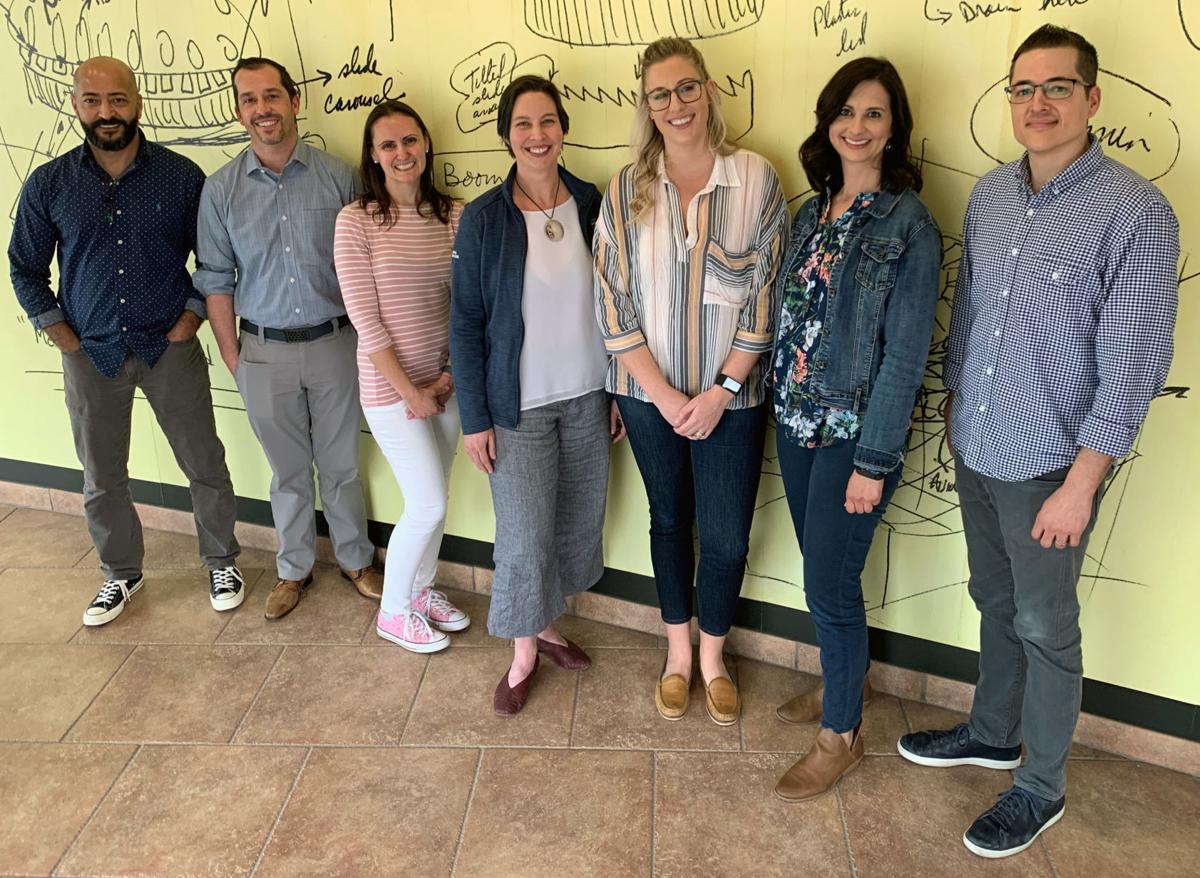
Alongside his team of eight, the Tucson-based biologist and University of Arizona graduate said he’s been working toward this goal for five years. After losing a family member to cancer, Alexander said his personal connection to the disease, as well as his curiosity, is what drove him to the field.
“You’re fighting evolution,” he said. “Tumors are made of hundreds of millions of cells, each of which can have a mutation that could essentially make a patient resistant to a specific therapy. That problem is so very hard to solve. It is such an intellectual challenge that will never go away.
“It is the thing that drives scientists and researchers and clinicians to push the boundaries of science to try and make the world a safer place and improve the lives of cancer patients.”
To help doctors select treatment options for cancer patients, a sample is normally taken from their tumor to be DNA sequenced. DNA sequencing allows doctors to find mutations, which reveal if the tumor will be either susceptible or resistant to a specific treatment. The results of this test therefore have a significant impact on treatment choices and the patient’s prognosis.
However, the genetics of a single tumor can vary greatly from one part of the tumor to the next. According to Alexander, current sampling methods can miss this genetic diversity because they use tissue taken from just one small location in the tumor. The team found that on average, only about 0.0005% of the tumor’s cells are actually tested. Because doctor’s don’t have information from the whole tumor, this can lead to limitations in the treatments and therapies available to patients.
“Tumors are kind of like cities in that they’re comprised of different areas of tumor. It’s just like in the city of Tucson. Oro Valley is a little bit different than Marana, which is a little bit different than around the UA, which is a little different from the area by the Air Force base,” Alexander said. “None of these places are the same. And if you really wanted to know what was happening in the city of Tucson, you would never just go ask questions in a single ZIP code. What you would want to do is survey all of the ZIP codes.”
In order to find out more about a tumor beyond a single biopsy, the team had to take a step outside of the lab and into the kitchen. Using a blender, they take the majority of the tumor removed during surgery, which would normally just be discarded, and mix it together so that cells from different areas of the tumor are more evenly distributed. This technique is called representative sequencing.
From here, a sample is taken from the mixture to be DNA sequenced and it represents the diversity of the entire tumor, rather than just a small part.
“We’re pioneering this new method to sample the rest of the tumor, which is currently being incinerated,” Alexander said. “So a really important aspect here is that today, the tissue we are using is trash. Nobody uses it. Nobody ever has used it.”
The researchers tested this new method in 12 patients with kidney, breast, colon, lung or skin cancer. Comparing the new and current methods, they found that representative sequencing gave far more consistent results.
Upon further research and trials, Alexander and his team are hoping this new method will lead to patients and treatments being better matched, resulting in better outcomes.
“We’re incredibly excited about what this could do for the lives of cancer patients in the future and how we can contribute to improving personalized health care,” Alexander said. “I work with the greatest scientists on the planet, and the greatest collaborators in the world. This has been an absolute joy to work on.”

