

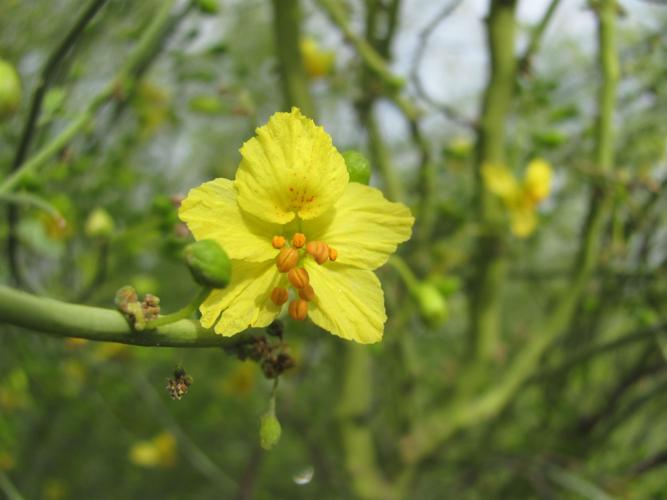
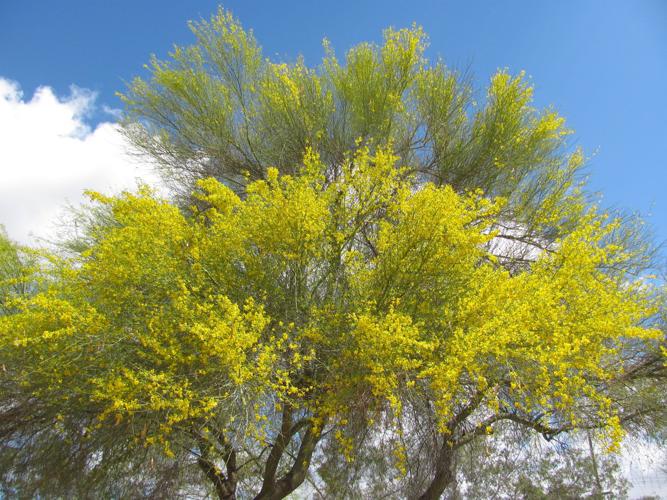
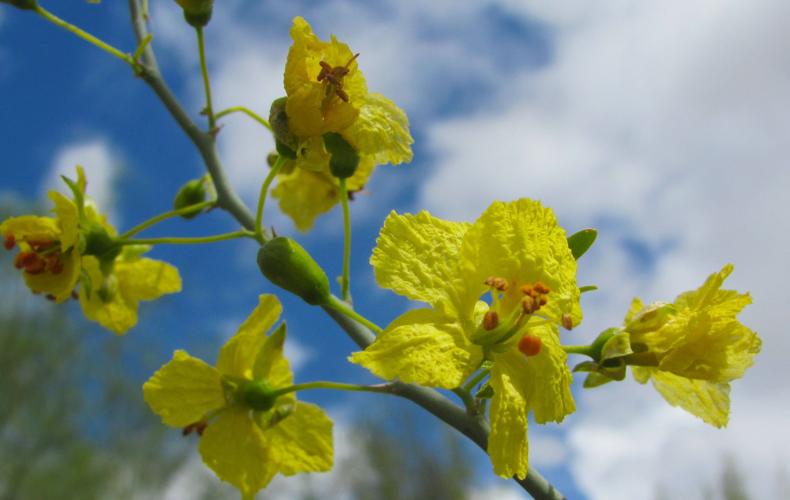

Palo verde trees are bursting into early bloom around Tucson — creating splashes of yellow desert beauty but also ushering in a season of sniffles for some allergy sufferers.
“This year is earlier than usual” for palo verde blooms,” said Dr. George Makol, a physician and allergy specialist with Alvernon Allergy and Asthma in Tucson.
“There is so much pollen in each tree now, and on a windy day it can blow for several blocks,” Makol said.
Other plants — from ragweed and rabbitbush to ash, mulberry and olive trees — are often considered greater problems for allergy sufferers than palo verde trees. But palo verdes are flourishing in current climatic conditions and appear to be causing more allergic reactions than in the past.
“We’re seeing very lush palo verde trees these days,” Makol said. “The reason we see palo verdes become so lush is that there is more carbon dioxide in the atmosphere. That is what the plants breathe.
“So the palo verde is becoming a more important allergen.”
BEAUTY WITH A BITE
The palo verde — with a name that means “green stick” in Spanish — is Arizona’s official state tree.
It’s revered for its beauty, especially during the spring blooming season — but that beauty comes with a bite for those who are allergic to its pollen.
“Eye itching and sneezing can be the first symptoms,” Makol said. “There can also be nasal itching, nasal drip and congestion” with continued exposure.
COPING STRATEGIES
Home treatments such as antihistamines and nasal sprays are available over the counter at stores, Makol said.
“They can reduce eye symptoms and nasal symptoms,” he said.
For people who experience recurrent symptoms every spring, “then we look at allergy desensitization, with injections of the protein of the pollens they’re allergic to,” Makol said.
Staying indoors on windy days and taking care not to track plant debris into the house can also help reduce allergic reactions, experts say.

