

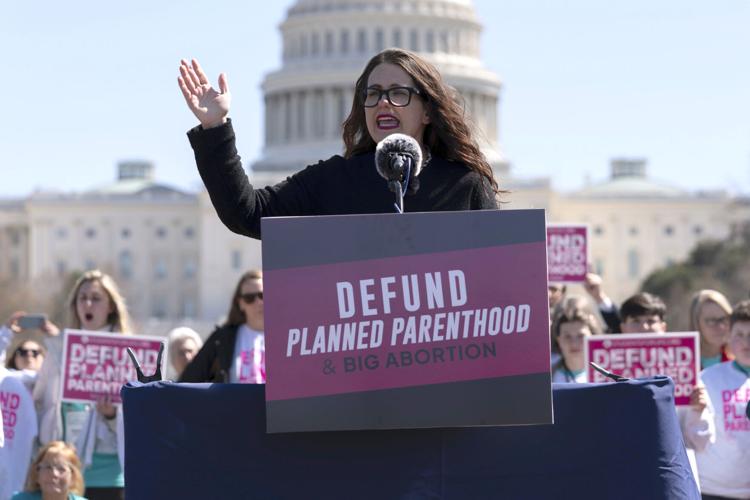
WASHINGTON — As Kristan Hawkins, president of the national anti-abortion group Students for Life, toured college campuses, she grew accustomed to counterprotests from abortion rights activists.
More recently, fellow abortion opponents who call themselves abortion abolitionists showed up to her booths with signs, often screaming "baby killer" at her while she speaks with students.
Hawkins sent alerts to donors asking them to help pay for increased security. "I'm pretty sure they protest me more than they protest Planned Parenthood," she said. "Believe it or not, I now know the price of a bomb dog."
Hawkins' encounters, which she related during an interview, are just one example of what many people involved in the abortion debate describe as the widening influence of a movement that seeks to outlaw all abortions and enforce the ban with criminal prosecution of any women who have abortions. It gained momentum after the Supreme Court's 2022 ruling overturning Roe v. Wade national abortion protections and accelerated since Republicans won full political control in Washington in last year's elections.
The movement also is showing up in statehouses.
Mainstream anti-abortion groups largely shied away from legislation that would punish women for having abortions, but abortion abolitionists believe abortion should be considered homicide and punished with the full force of the law. In many states, they advocate for legislation to do just that.
"With the reversal of Roe v. Wade, now states can pass the most severe abortion bans, which has galvanized the anti-abortion movement as a whole, including this part of it," said Rachel Rebouche, dean of Temple University Beasley School of Law in Philadelphia. "Certainly the fall of Roe has brought abortion abolitionists one step closer to what they want — banning abortion nationwide."
In February, Hawkins posted on social media that "the people I fear getting shot by, most of the time," are not abortion rights activists but abortion abolitionists.
Her post opened a fire hose of online barbs from abortion abolitionists: "Demon," "Ungodly," "An accessory to murder," "Enemy of God." Some called for her to resign and asserted that women should not have roles outside the home, let alone leading national anti-abortion groups.
Some conservative podcasts and online figures hosted abortion abolitionists or echoed similar disdain for the larger anti-abortion movement. Ben Zeisloft, a podcaster for TheoBros, a network of Christian nationalist influencers, blamed feminism for abortion and said, "We need Christian men leading the fight against abortion."
The comments reflect a broader uptick in misogynistic rhetoric and align with the religious doctrines motivating many in the abortion abolitionist movement, said Laura Hermer, a professor at Mitchell Hamline School of Law in St. Paul, Minnesota.
She said members of the movement were emboldened by the overturning of Roe and recent actions by Republican President Donald Trump.
Those actions include pausing some family planning grants pending investigations, pardoning anti-abortion activists who blockaded clinics and signing an executive order that uses fetal personhood language similar to verbiage in state laws declaring that a fetus should have the same legal rights as a person.
In 2016, Trump backtracked after saying there should be "some form of punishment" for women who have abortions. He recently pledged to protect in vitro fertilization, a fertility treatment threatened by fetal personhood laws.
Still, several experts said many state lawmakers took Trump's return to the White House as a green light to pursue more aggressive policies.
So far this year, bills introduced in at least 12 states — Alabama, Georgia, Idaho, Indiana, Iowa, Kansas, Kentucky, Missouri, North Dakota, Oklahoma, South Carolina and Texas — would allow prosecutors to charge those who have abortions with homicide. In some of those states, women could be subject to the death penalty if the bills become law.
Most of those states already ban abortions in most cases, but the restrictions typically penalized providers rather than those seeking the procedure.
Alabama lawmakers this past week filed legislation that would consider abortion as murder. In Georgia last month, protesters massed at the Capitol to oppose legislation that would classify abortions from the point of fertilization as homicide. The bill had nearly two dozen Republican co-sponsors.
Nearly 8 in 10 Americans opposed laws making it a crime for women who get abortions that would result in either fines or prison time, according to a KFF poll conducted in September 2022, a few months after the Roe ruling.
Dana Sussman, senior vice president at Pregnancy Justice, which tracks this type of legislation, said she is seeing more of those bills than ever before. In 2022, when one such bill passed a Louisiana state House subcommittee, it sparked national outcry, she said.
"Now, because they are normalizing this idea, what was shocking then is no longer shocking," she said.
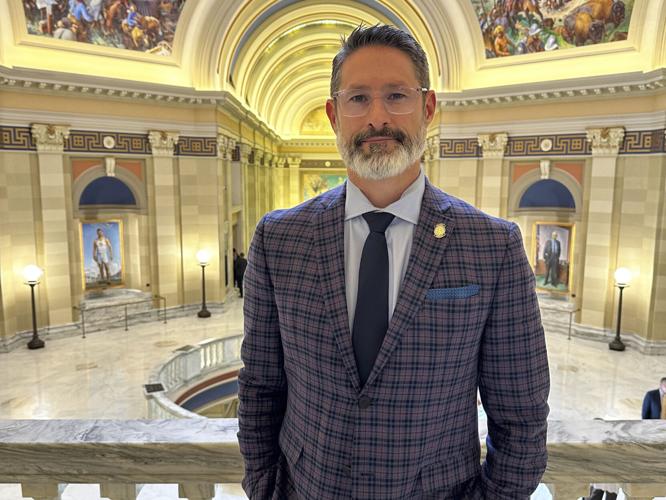
Dusty Deevers, a Republican state senator who co-sponsored the bill in Oklahoma, said he ran his campaign on a platform of abolishing abortion. He said he feels a sense of duty to his constituents and his Christian faith to pursue this type of legislation.
The bill died in Oklahoma after some anti-abortion organizations there spoke out against it. Deevers, who also advocated against contraception, expressed frustration with mainstream anti-abortion groups.
"Politics and compromise have corrupted their mission," he said, adding he was encouraged that his bill received a hearing. "This is how change happens. When we're dealing with controversial issues, change may not happen quickly … It's not the result we wanted, but it is progress."
The North Dakota Legislature voted down a similar bill after a staff member from the national anti-abortion group SBA Pro-Life America testified against it and read from a 2022 letter signed by more than 70 national and state anti-abortion groups that urged state lawmakers not to pass bills criminalizing women for abortions.

