

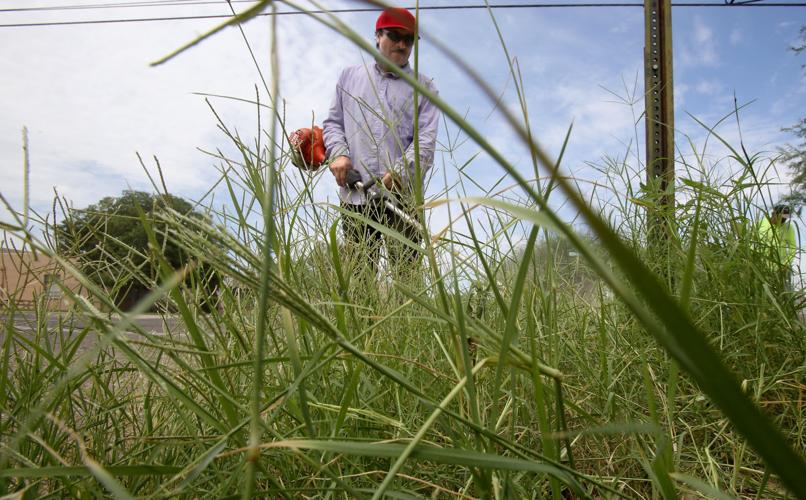


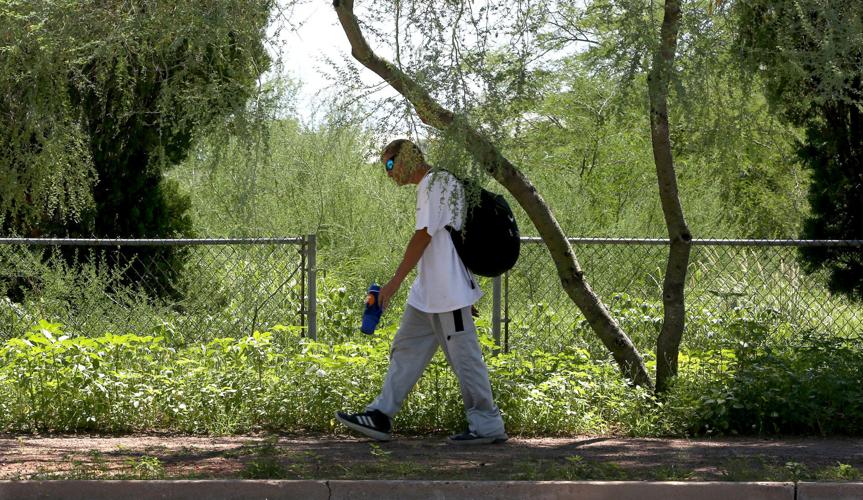

Well, we asked for it and we got it. Rain, probably more than we thought possible.
But in all the euphoria we forgot one thing — weeds, and there are lots of them.
Look around: Tucson hasn’t been this green in a long time, and it’s not all in a good way.
With all that divides us (I’m referring to politics, but only briefly), weeds are our common enemy and their extermination should be our ultimate goal.
This could be the issue that unites us all.
Forget tax reform, give me a hula hoe with a good edge.
However, is that the best method of eradicating the herbal heathens?
What about herbicides? Is pulling a weed by hand, roots and all, the most tried-and-true method? How about a dash of salt, a squirt of vinegar or a sprinkling of corn gluten meal — will they work?
To fight this battle there is no need to read up on Sun Tzu, the ancient Chinese general who literally wrote the book on war. But he does bring up a good point: “Know the enemy.” The seeds of this war may go as far back as the dawn of agriculture when weeds invaded crops that were needed for basic survival.
Here are some basic characteristics of weeds, which can be useful in getting rid of them.
1. It may be necessary to remove them as soon as they appear because if you wait too long they will produce seeds and they may end up in the soil for many years. So, if you delay, there may be more weed-pulling in your immediate future.
2. The more soil is disturbed, the greater the chance old seeds will be brought to the surface, where sunlight can trigger them to sprout.
3. Targeting the roots is important. However, you can remove the shoot of young weeds at ground level, as they have a shallow root system. A more established weed will take some digging.
Three questions regarding weeds:
1. How many ways are there to control unwanted weeds?
Bill McCloskey is the only University of Arizona faculty member who is a weed specialist in the School of Plant Sciences. He’s been on the faculty since 1991. McCloskey said there are basically three types of weed control in Tucson’s urban area: mechanical, physical and chemical.
Mechanical: This involves hand weeding, using tools such as the hoe, shears, a two-pronged weeder, a shovel or even an ax, for what some call the mother of weeds: the desert broom. It is a native plant that is more like a bushy shrub with green twigs and stems and white or cream poofy blooms that drift in the wind and can look like snow in the fall.
Physical: The physical method, as McCloskey calls it, is where there is no actual contact with the weed. It does involve using flame but not like you think. Ideally, it’s best to slowly pass a torch-like implement over a living plant. The idea is to heat the plant shoot to convert its cellular water to steam that will burst its cells. Even though it’s highly tempting and really cool, incinerating the plant to a withered, black husk is just a waste of propane. Besides, it is illegal within the city limits.
So let’s be clear, using a flame around dry weeds, grass or any flammable object is a recipe for disaster. That strange odor you smell, well that just might be your neighbor’s wooden fence.
The Tucson Fire Department also takes a dim view of this technique. In fact after checking with Capt. Julian Herrera he gave some clarification on the city’s fire code.
The department “cannot support or advocate for any open flame burning of weeds within the city limits,” he wrote in an email.
“It may be an effective way of eliminating the very annoying problem of weeds, however the risk is too high for us to support that method.”
The city code does not allow for any open flame burning of garbage or weeds although the department acknowledges that weeds are a huge problem because of the wet summer, Herrera said.
“We do advocate for the removal of weeds because once dried they do create a substantial fire risk.”
Rats! So much for getting the Red Dragon BP 223 C backpack propane torch kit I found on Amazon.
Another physical process is to apply mulch by either using organic material like wood chips or even big rocks.
Chips may be aesthetically nice but the problem is they can degrade over time and provide an area for plant germination.
A deep layer of big rocks, about the size of a hand, can be all you need to prevent sunlight from reaching the soil surface, which is ideal.
McCloskey is not a fan of plastic because it may make its way to the surface and it can prevent rainwater from percolating into the soil.
Chemical: There are two types of herbicides: organic and synthetic.
OK, first let’s be clear because chances are:
a) You’ve seen it or
b) You’ve done it, especially on a hot day.
There you are spraying for weeds in shorts, flip-flops, and a tank top while sipping a cool beverage on a windy day.
In all seriousness, new reports have been surfacing lately on the risks of using chemical weedkillers with some claiming a risk to cancer after long-term use.
McCloskey highly recommends extreme caution whenever using any chemical.
Eye protection, proper gloves, long sleeves and other suitable attire should be worn.
And unlike the “terms and conditions” on your cellphone or computer it is really important to read the label on any chemical you are going to use at any time. Your health and the health of your pets depends on it.
In fact, McCloskey suggests going online for more details because, in some cases, not all information is on the label of the container you just bought at your local hardware or garden store.
Some of the common words on labels, even for organic herbicides, say things like DANGER, WARNING and CAUTION. There is a reason for that.
2. Are there alternative methods to removing weeds?
Salt, vinegar and corn meal can be used on weeds, McCloskey said, but there is a caveat.
Salt has been called the poor man’s Roundup but adding too much can change the soil structure in your yard and in the long run inhibit plant growth.
Vinegar is a liquid that has acetic acid. Some vinegar has only 5 percent acetic acid, and anywhere between 10 percent and 20 percent is needed to be effective to work on weeds, McCloskey said.
The concentration is too low but it also has another drawback. It can be a problem around concrete, pavers and decorative rock because it has a tendency to stain. If it is applied in anything that has a steel finish, the acid could cause rust.
As far as spreading corn meal around, it can be done but is way too expensive, McCloskey said.
3. What is the legal responsibility as far as maintaining the weeds on a private residence?
Here is the legalese found in the City of Tucson’s Neighbor Preservation Ordinance, Chapter 16, Article II, under the Maintenance Standards section that eventually gets around to say each owner, tenant, or occupant should maintain property so it is free of untended vegetation that can create a fire, safety or health hazard.
In addition, it is our “duty to remove weeds, debris and refuse (referring to the noun, not the verb) from sidewalks, streets and alleys upon notice.”
Now, “upon notice” is code for someone who complains about your weed collection.
In fact, “It’s the No. 1 complaint we get every year,” said Cristina Polsgrove, the public information officer with Environmental and General Services.
The city started a new weed pilot program in 2016, she said.
Once the city receives a complaint they send a letter to the resident. If it is not immediately resolved, the city still provides additional time.
In the worst-case scenario, there is a remote possibility it could end in city court and if it all goes downhill, the fine is a stiff one, $2,500.
Long story short, what usually happens is by the time the inspector comes by to check the issue has been settled, she said.
The best solution, Polsgrove said, is to keep your weeds and grass trimmed so they do not exceed 6 inches in height, which is the law.
Now, armed with this information, slowly step away from the TV remote, grab some water, get your gloves, raise your hoes and weedeaters in defiance and march out the door.
“Honey! Where’s my scythe!”

