

PHOENIX — State senators are balking at a House-backed bill to allow lenders to charge triple-digit interest rates to Arizonans, signaling the industry-backed measure could be doomed.
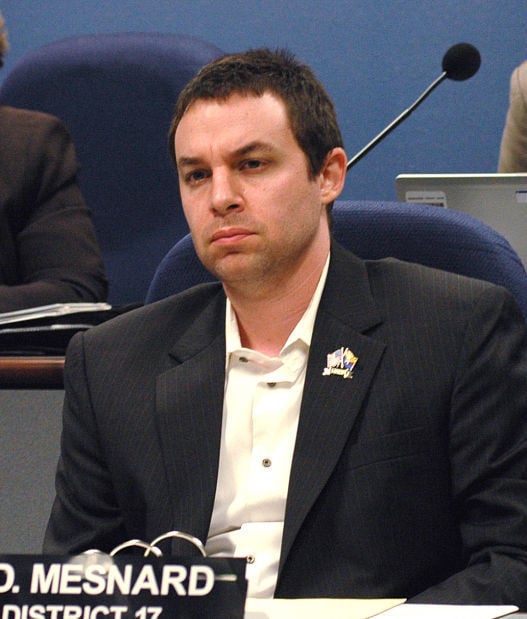
Rep. J.D. Mesnard, R-Chandler, yanked his HB 2611 from consideration Wednesday by the Senate Finance Committee when he could not line up the necessary votes.
But the problems for the “flex loan” bill are deeper than that five-member committee. Mesnard said he is having trouble lining up the necessary 16 senators needed for approval by the full Senate.
“I’m still assessing where things are at,” he said. Mesnard said even if he could get approval of a committee — a precursor to a floor vote — “it’s going to be a challenge getting it all the way through.”
If the measure falters it will be a victory for consumer groups, which argued the proposal amounts to little more than legalized usury.
Arizona law limits interest to an annual rate of 36 percent. On paper, these flex loans of up to $3,000 would comply.
But the law also caps fees lenders can charge at $150, an amount that was increased just last year at the behest of the industry.
Flex lenders, however, want permission to charge one-half of a percentage point of the outstanding balance every day. That could mean paying as much as $15 a day for a $3,000 loan, or $450 a month.
Jean Ann Fox of the Consumer Federation of America said that makes the effective annual interest rate something north of 200 percent.
Mesnard said the loans fill a need. He said people without credit — and without a car for a title loan — have nowhere else to get cash for emergency needs.
He managed to push the proposal through the House with the minimum 31 votes. The Senate, however, appears to present additional hurdles.
If Mesnard cannot resurrect HB 2611 it will mark the second defeat in seven years for the industry.
A 2000 law allowed “payday loans” that carried interest rates of more than 300 percent. But that law was approved only on a trial basis for a decade.
Unable to get legislators to approve renewal, the industry took its case to voters in 2008, spending more than $14 million to try to make payday loans permanent. The proposal was rejected by a 3-2 margin.

