



The U.S. Missile Defense Agency carried out a successful flight test of its ground-based missile-defense system on Monday, with interceptors featuring a hit-to-kill warhead made by Tucson-based Raytheon Missile Systems.
The test over the Pacific Ocean was the first salvo, or multi-shot, engagement of a “threat-representative” intercontinental ballistic missile target by two ground-based interceptors, the defense agency said.
The test marked the second intercept of an ICBM target by a ground-based interceptor, after a successful intercept with a single missile in May 2017.
During the test of the Ground-based Midcourse Defense system, a target missile was launched from the Reagan Test Site on Kwajalein Atoll in the Republic of the Marshall Islands. More than 4,000 miles away, two interceptors were launched from Vandenberg Air Force Base in California.
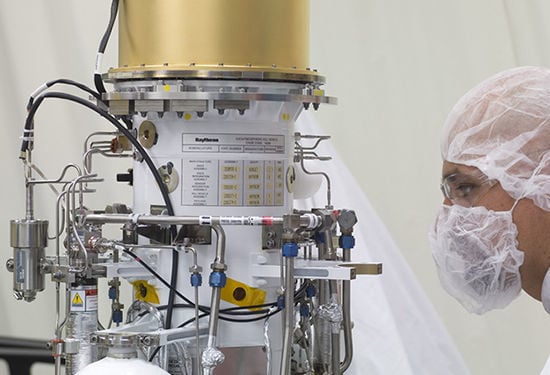
Guided to the target by space, ground and sea-based sensors, each missile launched its Raytheon-made Exoatmospheric Kill Vehicle (EKV), which is designed to destroy targets by sheer impact rather than with explosives.
The agency said one interceptor tracked and destroyed the target missile’s re-entry vehicle, which in a real attack would carry a missile warhead.
The other interceptor then scanned the resulting debris and, not finding any other re-entry vehicles, “selected the next ‘most lethal object’ it could identify, and struck that, precisely as it was designed to do,” the defense agency said.
Initial results showed the test met requirements, and program officials will continue to evaluate test data and system performance, the agency said.
In prepared remarks, the agency’s director, Air Force Lt. Gen. Samuel A. Greaves, called the test “a critical milestone.”
“The system worked exactly as it was designed to do, and the results of this test provide evidence of the practicable use of the salvo doctrine within missile defense,” Greaves said.
“The system is among the most complex, and serves as the first line of ballistic missile defense for the United States,” Raytheon Missile Systems president Taylor Lawrence said in a news release.
Monday’s shot was also the third successful test of the GMD interceptor since two intercept failures in 2010 and one in 2013, as engineers worked out apparent problems with a “capability enhanced” version.
Raytheon, which also makes kill vehicles for the mainly ship-based Aegis Ballistic Missile Defense System, said the systems have a combined record of more than 40 successful space intercepts.
Boeing is the prime contractor on the GMD program, with Raytheon as the lead contractor for the kill vehicle.
The problems with the EKV prompted the MDA to take the lead on the design of a new Redesigned Kill Vehicle with concepts from Raytheon, Boeing and Lockheed Martin.
But at a recent briefing on the fiscal 2020 defense budget, the MDA said technical issues with the new kill vehicle would delay its planned rollout by two years, to 2025.

