


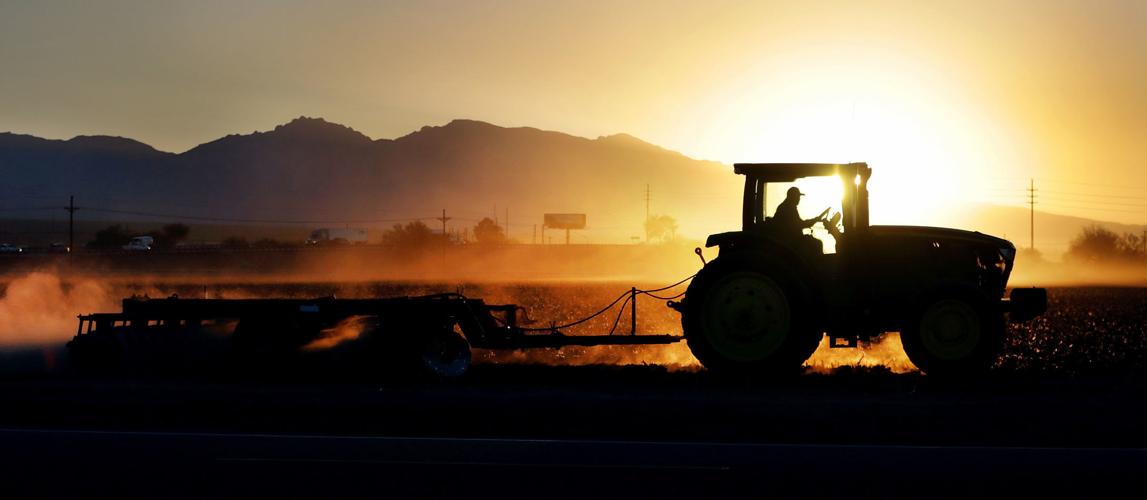


Despite working 11-hour days on the farm because he is unable to find workers, Daniel Pacheco recently declined a man’s offer to work for him.
The man did not have legal papers to work in the U.S.
“I had to turn away a guy who came to me in tears because he needed a job so bad and I needed an irrigator,” Pacheco said. “It killed me to turn him away.”
But, the fourth-generation Marana farmer is unwilling to take the risk of hiring undocumented workers.
“It’s illegal and there are very stiff penalties,” Pacheco said.
Efforts to find U.S. workers have been a struggle.
“I think there’s just not enough reward in it,” he said. “There’s always somebody else who wants to clean a toilet or make a bed or grow food.
“People don’t recognize the value of agriculture; they just expect the shelves to be stocked when they go to the grocery store.”
Pacheco’s story is hardly unique. Getting young people interested in farm work is a challenge.
In the agriculture industry, work weeks can be seven days a week, 11 hours a day.
Nationwide, there are two jobs available in agriculture for every new job seeker, according to industry experts and more than half of all farm workers are unauthorized to work in the U.S., the National Agricultural Worker Survey shows.
“We need a guest worker program that makes sure they pay their taxes, without fear of deportation, that doesn’t give them citizenship but recognizes that they’re here,” Pacheco said. “We need workers and we have them, but the system is so flawed we can’t put them to use.
“It’s not like they’re taking jobs from Americans because we advertise but it’s done no good.”
GROWING INTEREST
In response to the need, the Arizona Farm Bureau has launched a new program to help garner interest in farming, which is a $23.3 billion industry in the state.
The bureau spent the past year developing the Arizona Agriculture Skills and Assessment Certificate, which launches this month.
“There are a few ways to explain the labor crisis,” the bureau wrote in its February newsletter announcing the program. “For one, today’s educational environment tends to look down on trade-related careers as ‘lesser’ options to college-degree required jobs.”
By highlighting the complementary technology involved in farm work, the hope is to pique student interest.
“An employee in a modern-day milking barn doesn’t just need to have a great work ethic, he or she also needs to know about automated milking technology, how to comply with complex food safety rules, and maybe even how to use robotic technology on a milking carousel,” the bureau says. “A tractor driver needs to know how to program a GPS unit to do the driving for them. And for a farm owner, it costs valuable time and money to train a brand-new employee to handle all the technology that’s become essential to making inputs more efficient and realize higher yields.”
The bureau is working with high schools around the state to implement the program.
Visit azfb.org for more information.
‘NOBLE’ CAUSE
Pacheco appreciates the bureau’s effort to help with the labor shortage, but fears the long, hot days and modest pay is a turnoff for many.
“It may get people interested but once they get out on the field to do the work, they usually don’t last,” he said.
Pacheco Farm Management primarily grows cotton, but also durum wheat and maize. The farm currently has six employees to work the 1,200-acre farm.
The starting pay is $10.50 an hour and includes benefits. A foreman can make up to $25.40 an hour, Pacheco said.
His passion for the profession hasn’t waned.
“I grew up this way and I love the challenges,” Pacheco said. “It’s a matter of pride and doing something that feels noble — to feed people.”
Automation can help with some tasks, but not all.
A cotton picker, which can roll and package cotton, costs up to $700,000.
“Irrigation and nutrient management requires feet on the ground and you can’t do that with robots,” Pacheco said. “Not yet.”

