





If you grew up with a landline phone attached to the wall with a cord restricting you from walking very far, you’re probably pretty familiar with the basics of phone etiquette.
But that’s not really a thing anymore.
Maybe that’s because talking on the phone has become a rarity among the rise of other technologies. Maybe it’s because the skills required to talk on the phone aren’t taught to younger generations until they enter the workforce.
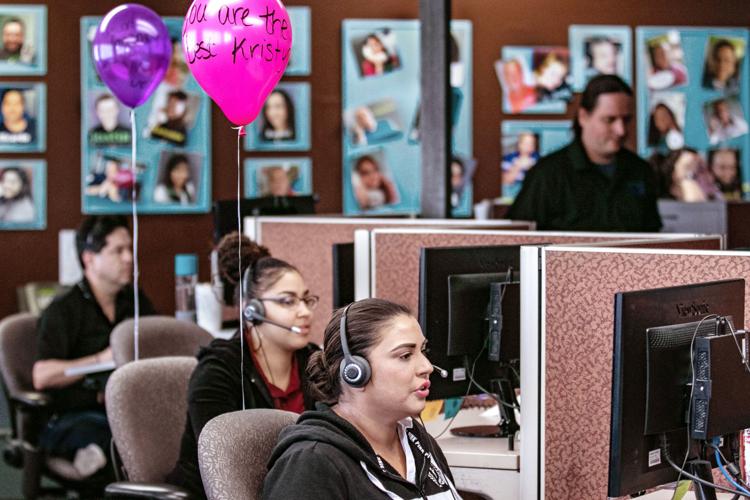
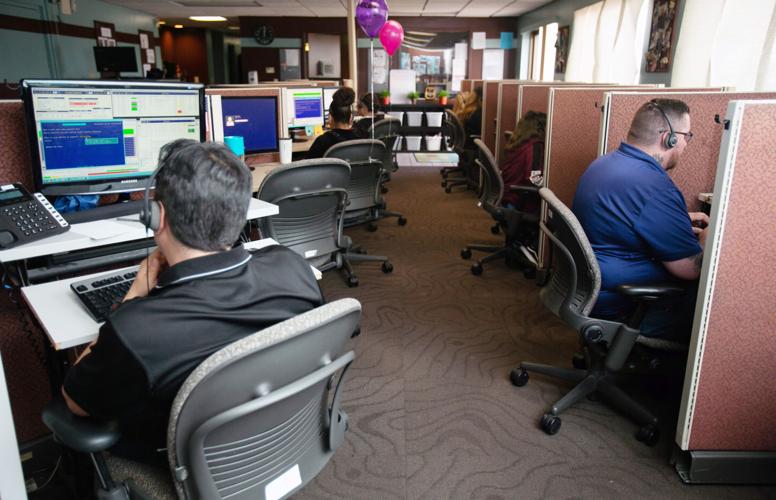
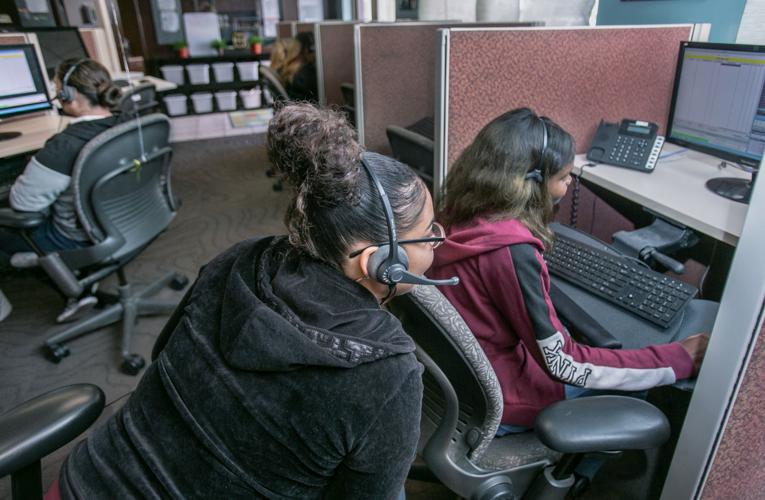
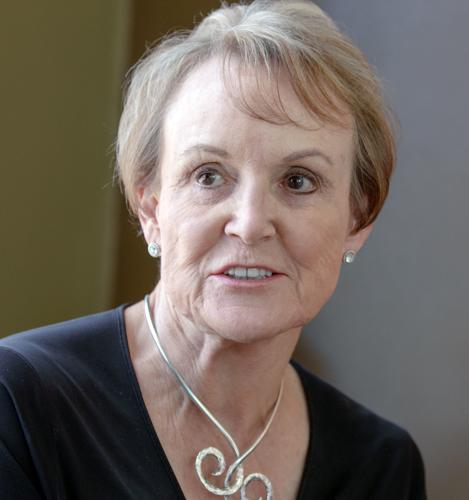
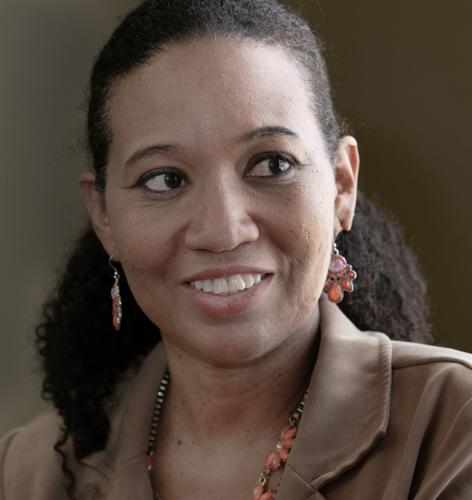
The lack of phone conversation skills among young adults is not lost on Judy Wood, CEO of Contact One Call Center in Tucson, which is working to tackle the issue head-on.
“Many people would rather communicate via text or email and they just don’t see any reason to make a telephone call,” Wood says. “It’s not that they’re not capable; it’s just a skill that’s unpracticed.”
Just picking up the phone isn’t enough, says Brandie Jackson-Starks, who works in training development at the call center. Skills emphasized through Contact One’s training center include acknowledging verbal cues, active listening and empathy.
Because phones have so many capabilities beyond calling, it can be hard to pinpoint a way to fix the problem — before it becomes a problem.
“If they aren’t using the phone in that way, it’s hard to teach the skills,” Wood says.
That’s where Kathryn Kellner, director of Tucson’s Human Communication Studio, comes in.
Kellner works with people to strengthen communication skills in a world “overloaded” with communication platforms — texting, Twitter, Facebook and dozens of other applications with messaging systems.
“It’s not that you don’t know how; it’s the lack of practice perhaps, and you have loads of choices to do it other ways,” she says. “Wouldn’t you rather do the easier thing? The more convenient thing?”
In some ways, texting can be informal and quicker, which often makes it preferable.
“What’s the benefit they’re getting out of talking on the phone?” Kellner says. “I think a lot of young people aren’t interested to talk on the phone because it takes up their time and energy, not just their discomfort for having an intimate conversation.”
For example, delivering bad news via text avoids an uncomfortable confrontation over the phone.
Plus, while texting, you have all the time in the world to choose the right words — not so much when you’re chatting on the phone.
“We become more comfortable with that dynamic because it starts to take out the risk,” Kellner says.
But since you can’t hear the tone of someone’s voice through text, you aren’t getting “all the information,” Kellner says, which opens the door for assumptions about how the other person is feeling.
Kellner also notes that answering the phone was once a very specific task. With corded phones limiting mobility, callers’ attention was mostly devoted to nothing but that call.
Now, with the ability to talk virtually anywhere, that same amount of focus isn’t always required, though many think it is, Kellner says.
“I think there’s still a convention that if you’re going to talk on the phone, you have to stop what you’re doing to give that person attention,” Kellner says.
While younger generations are more likely to be lacking in phone etiquette, it is not limited to them, both Kellner and Wood say.
Take Kellner’s father, who was born in 1929, for example.
“He was the person who told all the stories. In person? An incredible presence,” she says. “But on the phone? Not one bit.”
Kellner boils it down to what the phone meant to her father. To him, the phone wasn’t a way to have a conversation — it was just used to deliver information.

