


Every single day, I get emails from readers that say things like this: “My wife and I are getting SSI. And we would like to ask you some questions.” Or this: “My SSI check is $2,140 per month. My wife’s SSI check is $1,800. Can she get any of my SSI?”
You know the uncomfortable feeling you get when someone scratches their fingernails on a chalkboard? Well, that’s how I feel when I get emails like this. Why does this bother me so? Because these folks are not getting SSI. They are getting Social Security benefits. And there is a HUGE difference, which I will explain.
Most people know what Social Security is. You work. You pay taxes. And then, when you retire or become disabled, you start getting Social Security checks based on what you paid into the system. Or if you die, your widow, widower or minor children start getting monthly benefits — again, based on what you paid into Social Security during your working years.
But it is obvious to me, based on the reader mail I get, that most people do not know what SSI is. It stands for Supplemental Security Income. It is a federal welfare program that pays a small monthly stipend to people who are 65 or older who are very poor, or to people who are under 65 but disabled and very poor. How poor? Usually, they have to have a monthly income of less than about $800 to qualify for SSI payments.
Many people confuse SSI with Social Security for a variety of reasons. One is the name. Supplemental Security Income just sounds like some kind of supplemental Social Security program. It is NOT.
Another reason for the confusion is the fact that the Social Security Administration runs the SSI program for the federal government. But that is all they do. They manage the program. To repeat: SSI is not a Social Security benefit. And SSI payments are not paid for out of Social Security funds. The money for SSI comes out of the government’s general operating funds. In fact, Social Security’s trust funds are even reimbursed from the general funds for the costs of administering the SSI program.
Former Arizona Daily Star reporter Doug Kreutz enjoyed sharing the outdoors with readers before his retirement. Here are some of his saguaro videos.
And getting back to that name business. So many people think that SSI stands for “Social Security income.” In other words, when my readers say, “I’m getting SSI,” they think they are saying, “I’m getting Social Security.” But when I hear you say, “I’m getting SSI,” or when a Social Security representative hears you say that, we think you are saying, “I’m getting Supplemental Security Income.”
So, it’s not really just a matter of semantics. By phrasing a question using the wrong terminology, you are going to get a wrong answer.
Here is an example. Recently, a woman wrote to me and told me she was getting SSI and was planning to move from California to Texas. She asked if her SSI checks would change because of the move, and I answered telling her that her benefits would very likely change. Because SSI is a welfare benefit, the payment amount depends on your living arrangements (whether or not you own a home, rent, share expenses with others, etc.). Also, the payment rate can change from one state to another. For example, California adds a supplement to the federal benefit payment. When she moves from California to Texas, she is going to lose that extra California money. So, I told her that when she moves to Texas, there was a pretty good chance her SSI benefits would go down.
Well, she later wrote back to tell me that when she called the Social Security people and they checked their records, she learned that her payment rates would stay the same. And surprise, surprise — that’s because it turns out she was not getting SSI, as she told me; she was getting Social Security benefits. And your Social Security check stays the same no matter where you live in the country.
Actually, I partly blame myself for giving her bad information. I am so used to having people incorrectly tell me they are getting SSI that I usually respond by saying something like: “I bet you meant to say you are getting Social Security. And here is the answer to your question assuming you are getting Social Security and not SSI.” But I must have been lazy or rushed when I answered the California-to-Texas lady, so I assumed she was getting SSI and later had to apologize.
But sometimes, just the opposite happens. I get emails from people who are actually getting SSI, but they tell me they are getting Social Security, and we end up with more misinformation. Not long ago, a woman wrote to me to say her mother was getting Social Security and planned to move to Honduras. She asked if her mother could get her Social Security check sent to that central American country. I initially told the daughter that her mother could move just about anywhere in the world and still get her Social Security checks. But after exchanging another email or two, I figured out her mother was actually getting SSI. As I said earlier, SSI is a welfare benefit. And we do not send welfare benefits overseas. So, if Mom leaves the United States, her SSI checks will stop immediately.
So, please, dear readers, repeat after me: Social Security is not SSI, and SSI is not Social Security! If you use the wrong terms when asking questions, you’re going to get wrong answers.
I’ve got a little space left, and I want to share this story about the birth of the SSI program. Back in the 1970s, President Richard Nixon’s administration thought it would be a good idea if instead of 50 different state welfare programs, as we had at the time, it would be better to have one national program with the same basic eligibility rules applying to everyone no matter where they lived. So, in 1973, they scrapped the 50 separate programs and created one national welfare program for the country. They decided to let the Social Security Administration run the program because it already had lots of experience paying monthly benefits to millions of Americans. But then, in my opinion, they made one huge mistake. They called the program Supplemental Security Income. And that name, coupled with the fact that the SSA ran the program, has led to a half-century of confusion between the two entirely separate programs.
Aerial photos of Tucson, Pima County, in 1980
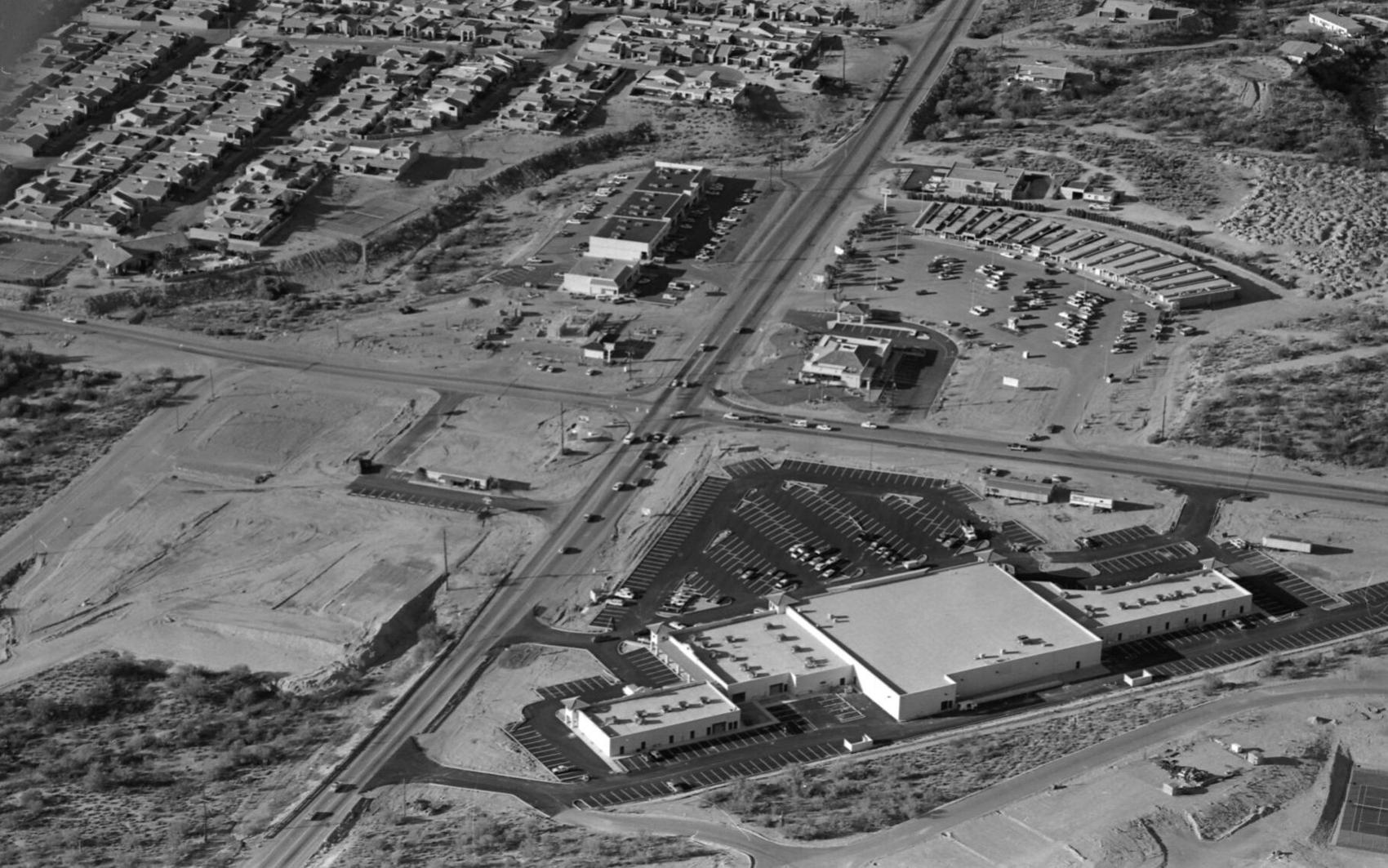
Swan Road and Sunrise Drive in February, 1980. The new Safeway Plaza is bottom right. Catty-corner from the Safeway, a Burger King restaurant is under construction. Across the street, land bladed for a Valley National Bank (now Chase Bank), a restaurant, retail and apartments. The old Rural Metro fire station is behind the street mall at top right.

Oracle Road (left to right) and Ina Road in February, 1980. There were gas stations on three corners of the intersection. All have been demolished. The venerable Casas Adobes Plaza is lower right, now anchored by Whole Foods. The open land at upper right is now the Safeway Plaza. The bank on the corner is still there, but the existing buildings to the right were demolished to make way for parking for the new plaza. Lower left is the property for the Haunted Bookshop, now Tohono Chul Park.

Oracle Road and Magee Road north of Tucson in February, 1980. Plaza Escondida is at right, now anchored by Trader Joe's. The open land at bottom of the photos is now the large retail plaza anchored by Kohl's, Sprouts and Summit Hut. The Circle K (sitting alone, upper left) is now a ballroom dance studio. Note the new asphalt on Oracle Road. In 1977, the state approved a project to widen Oracle Road (a state highway) to six lanes from Ina to Calle Concordia. That may be the last time the road was paved.

Tucson Medical Center in February, 1980. The intersection of Grant and Craycroft roads is at bottom left.

O'Reilly Chevrolet (cluster of cars), then Park Mall (center left) and Broadway Road in February, 1980. The open land at top left is now Williams Centre.

The FICO pecan orchards, bisected by South Nogales Highway, looking north to Sahuarita Road in February, 1980.

Tanque Verde Road (bottom left to upper left) and Wrightstown Road in February, 1980, before the City of Tucson constructed the grade-separated interchange. The first units of the Tanque Verde Apartments are lower left. The Circle K facing Wrightstown at the intersection is now Pair-A-Dice Barbers. The large parking lot and building to the left of the Circle K was the O.K. Corral Steakhouse, which was established in 1968. It closed in 2008. It's now Borderlands Trading Company.

Corona de Tucson Baptist Church, lower right, on Houghton Road south of Sahuarita Road in February, 1980. With exception of some infill housing and a few more trees, the neighborhood looks pretty much the same.

IBM (International Business Machines) on south Rita Road, looking north to the Santa Catalina Mountains in February, 1980. In 1988, IBM began phasing out data storage products manufacturing in Tucson, resulting in the loss of nearly 2,800 workers in Tucson, part of a $600 million consolidation plan.
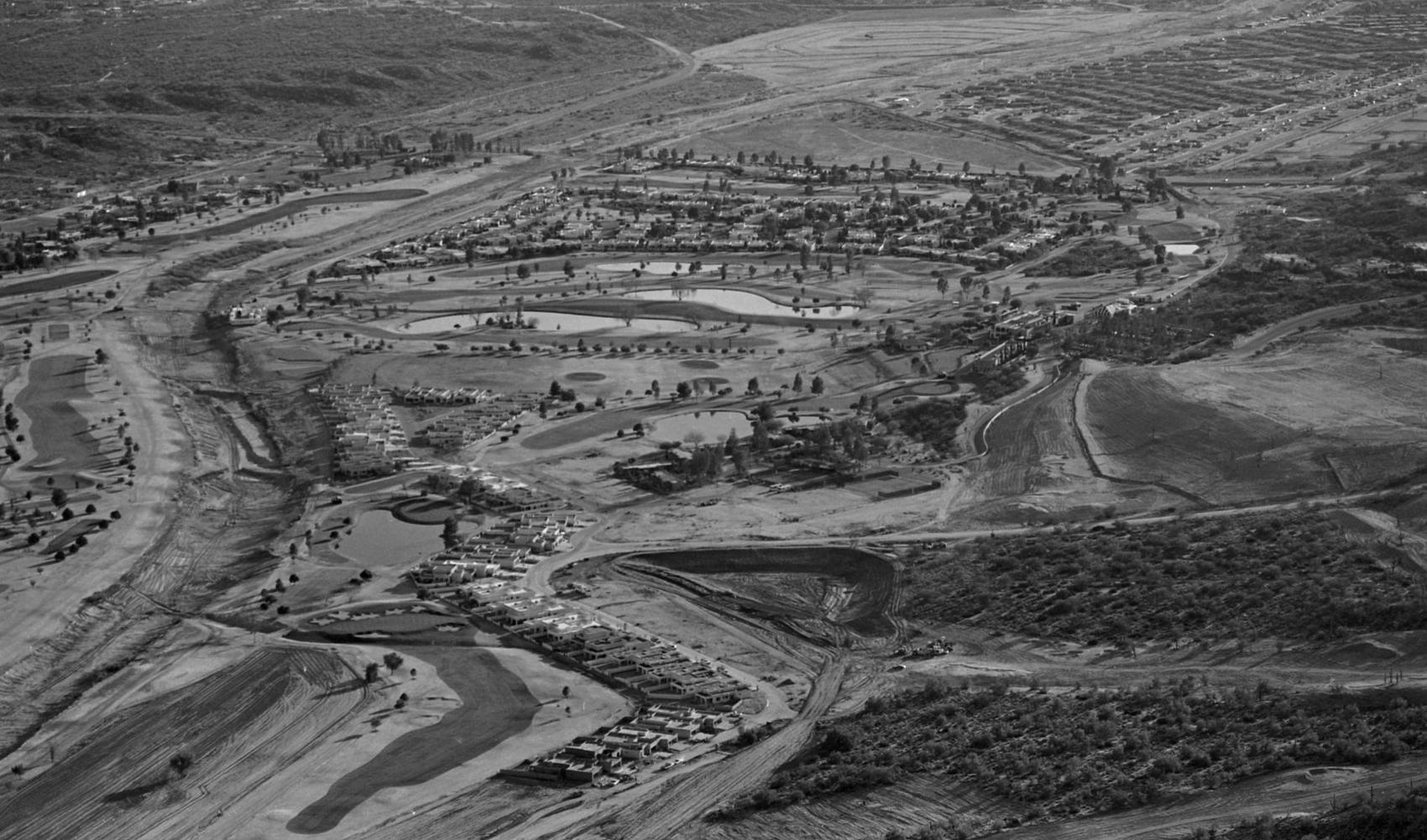
Tucson National Golf Course north of Tucson, looking south, in February, 1980. The Cañada del Oro Wash is at left. Magee Road goes left to right at the top of the photo. Shannon Road curves to the left at top of the photo. That open land is now home to Pima Community College and the YMCA.

