

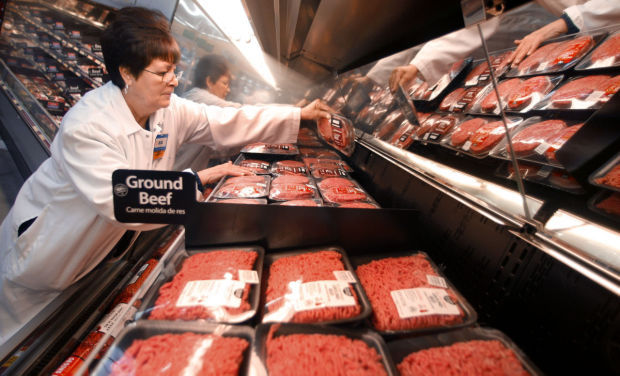
PHOENIX — Beef prices are finally starting to drop in Arizona.
But they’re still no bargain.
The latest survey by the Arizona Farm Bureau Federation shows that prices for typical cuts of beef dropped between the second and third quarter of this year. Pork and chicken prices also were down.
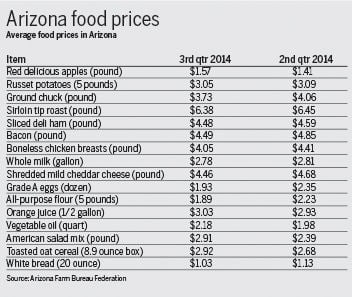
That helped drop the total cost of a typical market basket of 16 items down about 3.3 percent in the last quarter, to $50.88
But overall prices for those same 16 items are virtually identical to the same time a year ago, when lower meat prices then were offset by higher costs for other items.
Julie Murphree, spokeswoman for the Farm Bureau, acknowledged the drop in beef prices wasn’t very significant.
“You might still go to the meat counter and say, ‘these prices are still a little bit high for me,’ “ she said.
Consider: Last year you could get a pound of ground chuck for $3.14 a pound. It hit $4.06 in the second quarter of 2014 but has since dropped to $3.73.
And a pound of sirloin tip roast that cost just $5.15 a year ago is selling now for $6.38. Still, that’s a bit better than $6.45 a pound the prior quarter.
But Murphree said at least they appear to be headed in the right direction.
As with most prices, the issue continues to be the question of supply and demand.
Murphree said the number of cattle being raised remains tight, the result of ranchers deciding to raise fewer animals because of high feed prices. And those feed prices are important because while the steers may spend most of their lives on the range, they get fattened up at feedlots before being turned into so many steaks, chops and hamburger.
“That’s starting to shift,” Murphree said, as the drought eases. “Feed prices are a lot better for our ranchers right now.”
She said, though, that happens slowly, as it takes about 24 months to raise an animal before bringing it to market. So decisions being made now by ranchers about herd size will show up in meat prices in 2015 and 2016.
Pork prices are a little more volatile — and a little more reactive to feed prices — with only eight months before an animal can be butchered. And chickens are raised and slaughtered in just a fraction of that.
Lower meat prices were offset by higher prices of some other items in the basket, notably produce.
Murphree stressed that the survey reflects what Farm Bureau volunteers pay on items, considering all sales but before the use of any coupons. She said greater savings may be available for shoppers who have a chain’s loyalty discount card.

