






Some of Tucson’s best-known companies were once startups. Here are three of their stories:
Eegee’s: Two buddies with
a truck and a dream
Red licorice, lucky lime, mango tango, orange dream and jungle juice.
These are some of the flavors of the frozen Eegee’s goodness that Tucsonans crave throughout the year.
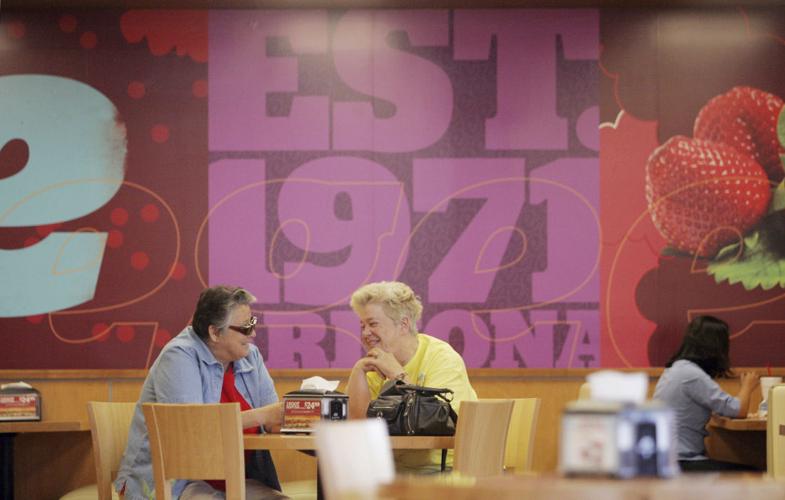
Eegee’s restaurant started in 1971 with two buddies from the East Coast with a shared dream to make the best frozen lemonade, like the Italian ice drinks they grew up treasuring in Rhode Island.
Founders Bob Greenberg and Ed Irving came out to Tucson and sold one of their cars to buy a food truck. They sold their frozen lemonade drinks out of that truck, at University of Arizona games, special events, in public parks, “anywhere they could,” said Robert Jensen, the company’s current president, who began his Eegee’s career in the kitchen more than three decades ago.
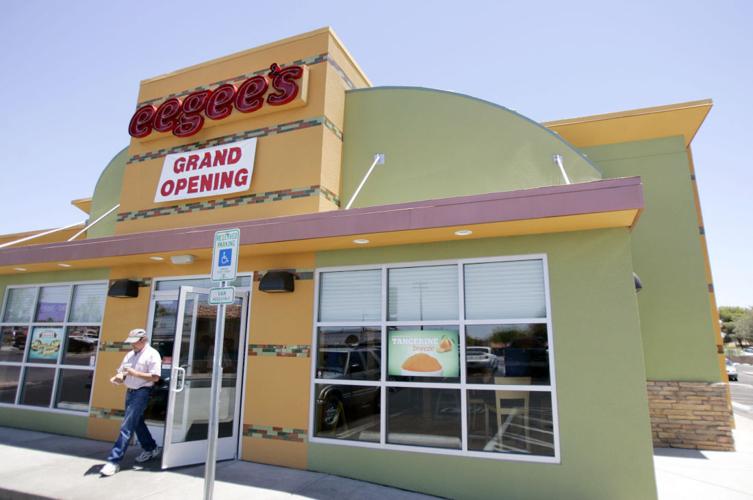
That single truck, operating out of a base location at East Speedway and North Craycroft Road, has now expanded to a chain of almost two-dozen restaurants in Tucson and Casa Grande.
The menu back then featured a single item: the frozen lemonade that people began calling “Eegee’s,” after the business’ name. That name is a combination of Ed’s “E” and Greenberg’s “G.”
The customers decided much of the restaurant’s direction, Jensen said.
People asked the two friends if they had any food to sell. So they began selling bags of potato chips and frozen candy bars. Then came a microwave, used to heat up salted and cheese pretzels. And in 1974, Irving and Greenberg began making sandwiches; their signature Italian grinders were born. Likewise, customers asked for drinks in flavors other than lemon, so the friends began juicing oranges to make an orange tart flavor.
“Here we are 44 years later,” Jensen said.
Now, Eegee’s employs about 670 people at 22 locations in Tucson and 20 people at one in Casa Grande.
The company tried to expand beyond that to Phoenix in the 1980s with six locations, but that venture failed for different reasons, according to Jensen. In recent years, the company has been giving it another go on a wholesale basis, supplying Eegee’s signature frozen drinks to businesses in Phoenix.
In the near future, he said Eegee’s hopes to rebrand its existing stores in Tucson and look toward expanding in Southern Arizona. Its strategy? Continue listening to customers.
Over the decades, as the chain has grown its numbers, it also grew its presence in the community by pairing up with charities to give back, and to hire employees with disabilities.
Last year, Eegee’s raised $267,000, distributed to Interfaith Community Services and the Tucson Wildlife Center. The company also has a recycling program; its proceeds are given to employees as bonuses.
“We don’t just talk the talk,” Jensen said. “We walk the walk.”
Ventana Medical Systems: Idea becomes global presence
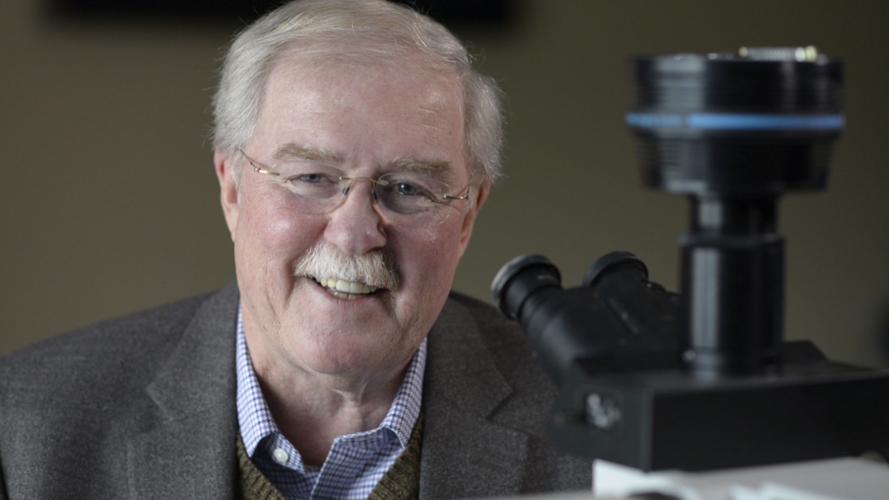
Dr. Thomas Grogan, a pathologist, had an idea.
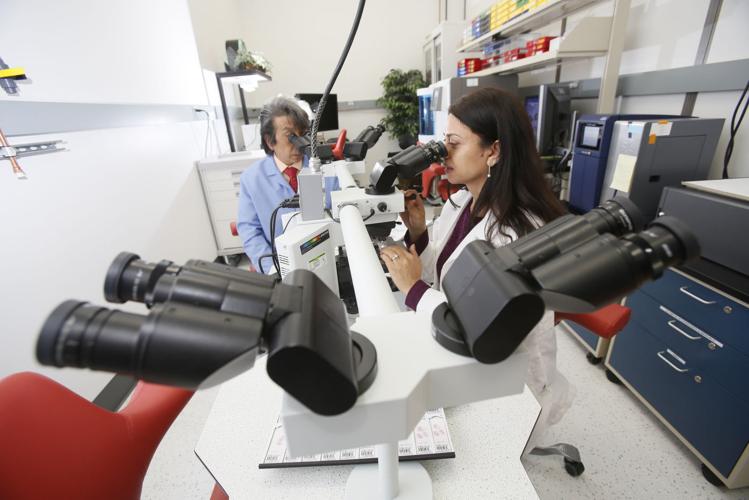
He was conducting tissue biopsy testing by hand in the 1980s. But he thought, what if it didn’t have to be done by hand?
Think of the old days of photography, he said. Say, a mother takes a picture of her child for a birthday party. She then has to develop the film by hand, and that is an elaborate chemical process that is time-consuming.
But developing film has been automated and standardized, noted Grogan, a professor at the University of Arizona at the time. “The idea occurred to me that (tissue biopsy testing) was a lot like developing film, which could be done automatically,” he said. “I had the idea to automate it.”
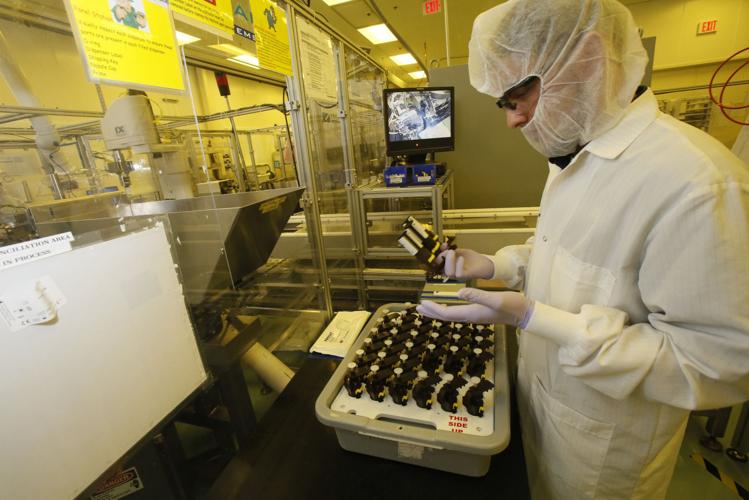
That idea was the seed to the ever-growing plant that is Ventana Medical Systems, of which Grogan is the founder and chief medical adviser. The company now provides more than 10,000 medical diagnostic instruments, manufactured in the Tucson area, to about 100 countries worldwide.
In the late 1980s, Grogan formed a team of scientists to make the idea become a reality. But the team needed money. “You’re a farmer working with a horse and you have an idea for a tractor,” he said. “The big issue is capitalization and paying for the development work.”
Grogan said he turned to venture capitals for funding and was confronted with 35 rejections. It took a year and half and many across-the-country meetings to secure the funding.
He also needed the help of the UA and its then-president Henry Koffler, who supported spin-off companies from the university. Koffler took the issue to the Arizona Board of Regents, which agreed and pursued legislative actions. Then-Republican House Majority Leader Burton Barr sponsored legislation that allowed research by state employees to lead to a spin-off.
By 1991, the team had built an instrument that automates the tissue-biopsy testing, a process that identifies the presence and extent of a disease.
The team’s innovation eventually caught the eye of Roche, a pharmaceutical giant. Roche bought Ventana Medical Systems for $3.4 billion in 2008.
“I’ve lived it from being worth zero to being worth $3.4 billion,” Grogan said.
The purchase has been a “virtuous marriage,” he said. Roche expanded the scope of Ventana to a global level and made it possible for Ventana’s medical instruments to be operated anywhere in the world with an electrical outlet.
The goal from here on out, he said, is to be in “hospitals in every city and every country in the world.”
“We’ve got a couple of hundred countries left to go,” Grogan said.
Canyon Ranch: Sick and overweight, founder sought healthy living
Overweight and dealing with numerous health issues, Mel Zuckerman, then a homebuilder, sought change in the late 1970s.
“I carried 40 extra pounds and had asthma, high blood pressure, a hiatal hernia, ulcers and diverticulitis,” he recalled recently in an email. “I never exercised, I had poor nutrition and my primary goal was to succeed in my homebuilding business.”
That desire for personal change, fueled by his father’s death, led to something much bigger, he said. He and his wife, Enid Zuckerman, wanted to create an optimal environment for healthy living, not just for themselves but for others.
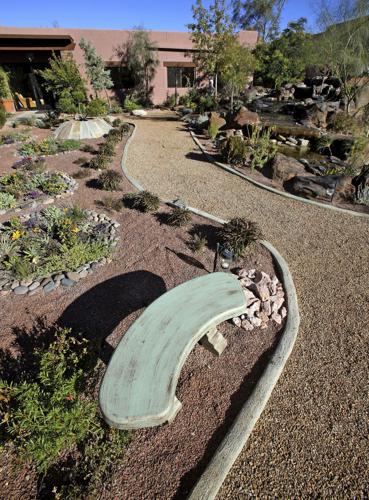
With that dream came Canyon Ranch, a luxury health and fitness resort on Tucson’s northeast side, which now has four other locations nationwide. The resorts provide a variety of spa and health services.
Mel Zuckerman said he was inspired by a “life-changing” trip in 1978 to a spa in California. He initially intended to stay 10 days, but after glimpsing what healthy living could be through exercising, getting massages, eating right and relaxing, he extended his stay for a month.
Two weeks after he returned to Tucson, he and Enid were looking at properties for what would become Canyon Ranch.
The resort began with a run-down ranch. “Enid and I felt its magic right away and knew it was meant for us,” he said.
In 1979, Canyon Ranch opened its doors. On the first day, there was a total of eight guests, only one of whom was a paying customer.
People told them they would never make it because it was in Tucson, Mel said. But the reason Canyon Ranch succeeded was because it was in Tucson.
This community has many alternative therapy providers and an “unparalleled setting for a health-oriented resort,” he said.
In the first year since the opening, there was an average of 26 guests a week. The next year, that number doubled, and by the third, “we felt we could make it.”
Canyon Ranch went from 88 staff members at the opening to having 674 full-time equivalent employees now. The scope of provided services has also expanded, including the Health & Healing Center, which provides medicine consultation, nutrition, biofeedback, hypnotherapy and more.
It now has locations in Lenox, Massachusetts; Las Vegas; Miami Beach, Florida; and on a cruise ship. The resorts have won numerous awards, including “Best Spa” from the Condé Nast Traveler readers’ poll.
In 2002, the Zuckermans and Jerry Cohen founded the Canyon Ranch Institute, a nonprofit organization formed to help underserved populations with health and wellness philosophies. That same year, the University of Arizona named the public health college after the Zuckermans.
“I must admit that the Canyon Ranch of 2015 is immensely different from anything that Enid and I ever dreamed of in 1979,” Mel Zuckerman said. “Our mission has always been bigger than our business, but as we enter our second 35 years, we recognize the challenge of keeping it that way —especially with the broad expansion we’ve undertaken into new venues of wellness.”

