


YUMA — Every month, the U.S. Bureau of Labor Statistics publishes a report listing metropolitan areas with the highest unemployment rates in the country.
The Yuma metropolitan area often finds itself at the top of that list. The area had a nonseasonally adjusted unemployment rate of 23.3 percent in October, when the national average stood at 5.0 percent.
It’s a distinction no metro area wants — and it’s a statistic local business leaders and community officials insist doesn’t accurately depict the area’s economic condition.
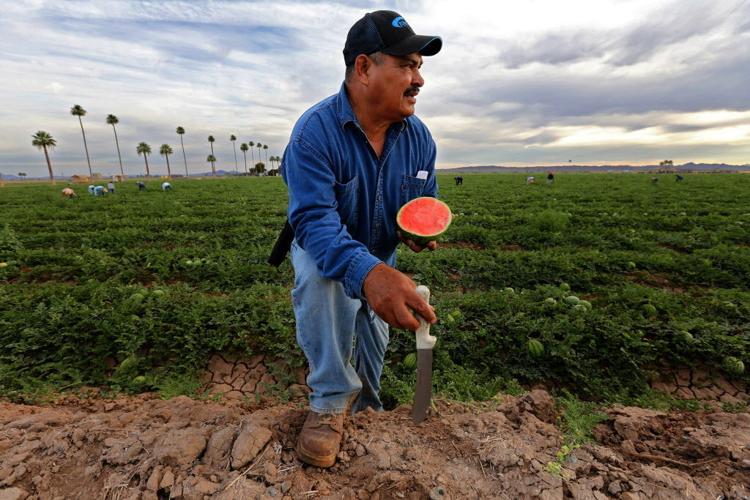
After all, Yuma ranks in the top 1 percent of U.S. counties in vegetable sales and acreage, with gross receipts topping $1 billion. And the region is the second-leading producer of lettuce in the United States, accounting for 90 percent of the nation’s leafy green vegetables in the winter months, according to a University of Arizona presentation.
Yuma is also home to the world’s largest orchard of medjool dates, and its date-farming industry has grown at a rate of 35 percent annually.
“We’re really tired of talking about the unemployment rate, because it’s not reflective of this community,” said Julie Engel, CEO of Greater Yuma Economic Development Corp.
But people generally use the unemployment rate as a diagnostic for the overall economic health of countries, states, counties and cities. Why, then, wouldn’t it be relevant for the Yuma area?
“A lot of the unemployment is related to the seasonality of our work,” said Jason Rogers, who manages a date farm in Yuma.
Tom Krolik, an economist at the Bureau of Labor Statistics, said of Yuma’s high unemployment rate, “It’s an extreme-weather area, an agricultural area, but there’s not much else we can really do to try to figure out what’s going on there.”
Krolik said skeptics of the high rate often speculate that the bureau has not calculated the figure properly. But the bureau stands by its information.
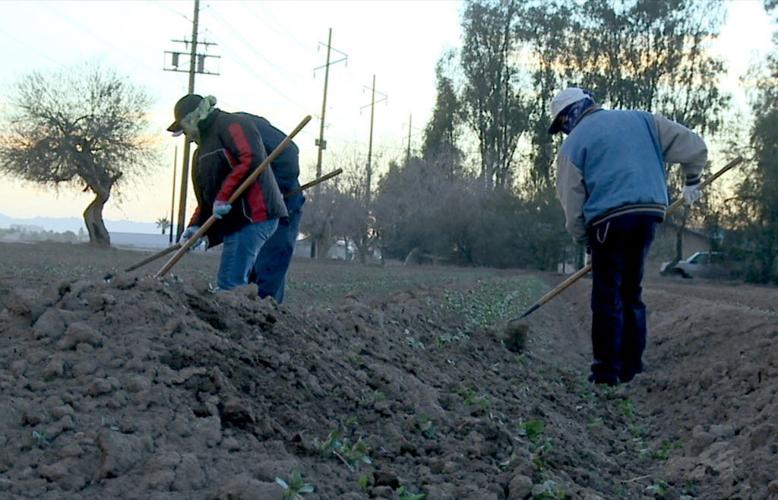
Many farm workers based in the Yuma area travel north to California, following the winter farm-work season. If they can’t find work and file for unemployment, the unemployment checks come to Yuma.
Because the bureau uses unemployment-insurance data to calculate metro area unemployment rates, that’s part of the reason why Yuma often has a higher unemployment rate, Krolik said.
An influx of migrantS
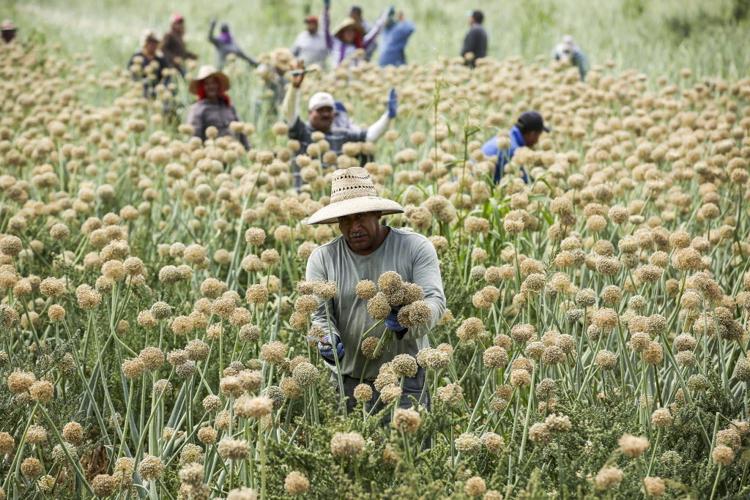
A growing number of U.S. farm workers want their children to get an education to avoid the backbreaking labor they endure, Engel said. And as the U.S. economy continues to improve, more people have found other, less physically demanding ways to earn cash. As a result, Yuma farms often turn to farm workers from Mexico.
Before sunrise at the San Luis border checkpoint, about 30,000 workers cross the border from Mexico to begin their workday, Engel said. “You won’t believe your eyes. That city takes on a complete metamorphosis of the amount of people that are crossing and getting ready to go on buses and go to the fields. It’s insane.”
Of the 1 million farm workers in the U.S., a majority are Mexican, the Labor Department says.
But the industry faces a shortage of workers for several reasons: previous delays in seasonal-worker visas, crackdowns on illegal immigration and a declining birthrate in Mexico were listed as factors in a Wall Street Journal article.
Matt McGuire works as the general manager of farming operations at JV Farms, a branch of the JV Smith Co., which operates farms in Arizona, California, Colorado and Mexico.
To attract farm workers and comply with visa regulations, Engel said some companies have purchased hotels and converted them into housing for employees and their families.
McGuire manages hundreds of workers at a 12,000-acre lettuce farm. The company wants to hire more workers to keep up with increasing demand and the approaching harvest season. To attract more laborers, he raised wages and added jobs for those seeking alternatives to picking crops, such as tractor drivers or other machinery operators.
“We’re labor-short right now, and have been since the start of the season,” McGuire said.
At JV Smith, McGuire oversees about 300 workers for eight to nine months, about the length of the regular growing season. His farm also utilizes 500 independent contractors during the growing season.
Come harvest season, the farm adds another 500 workers to meet peak demand.
“You can make really good wages in this industry,” McGuire said. “But you have to be willing to work.”
The average hourly wage is about $9.75. Crews that work based on the amount they can harvest can earn the equivalent of $13 to $18 per hour, he said.
Reshaping the STORY
Engel said headlines proclaiming the high unemployment rate can be demoralizing, and there needs to be a shift in the Yuma area’s narrative to counter the negative perception.
Articles often merely rank U.S. metro areas without further explanation of how the Yuma area’s seasonal jobs affect its unemployment rate, she said.
“We have to change our story,” Engel said. “We have to make it about the statistics that tell the picture the way it actually is.”
Yuma has the highest market value for agricultural sales per farm in Arizona, according to a late 2015 presentation by Ashley Kerna, a UA economic impact analyst, as reported by the Yuma Sun.
Yuma generated $1.7 million on average per farm in 2012, according to the most recent Department of Agriculture Census of Agriculture.
For every 100 agribusiness jobs, 78 more are created as a result, according to a UA study.
The gross agricultural contribution to the state’s gross domestic product — the monetary value of all finished goods and services produced within the state’s borders — was $7.3 billion in 2012, the UA says.

