


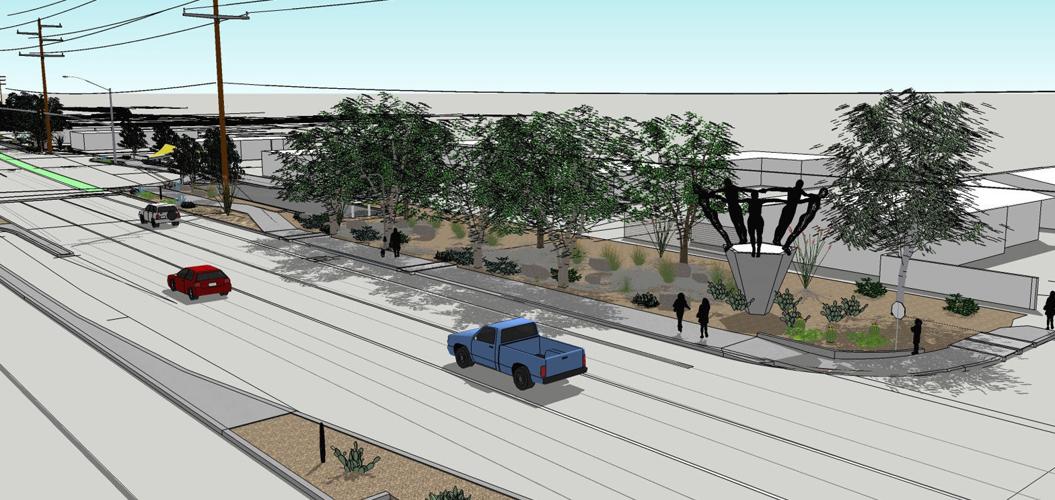
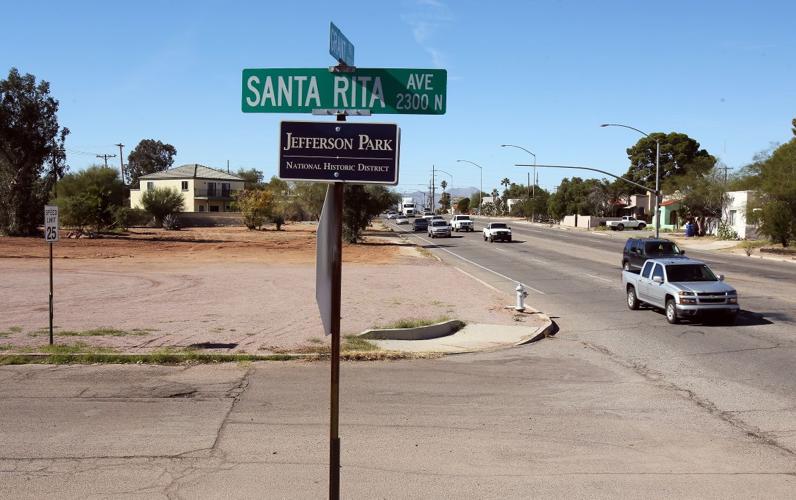
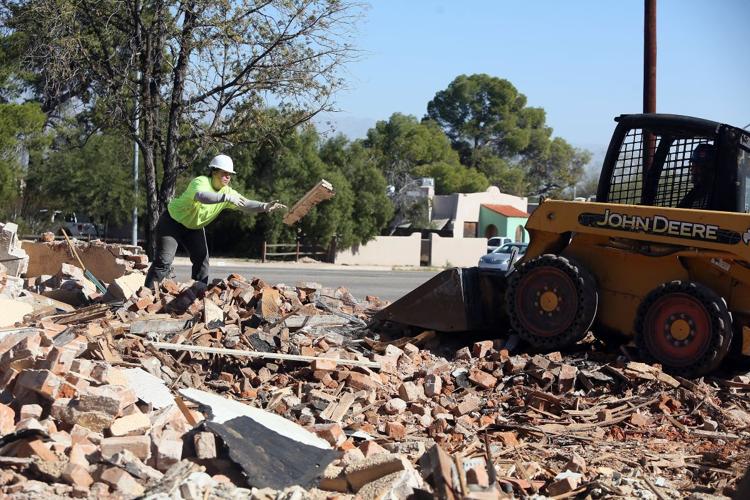

Homes along Grant Road in central Tucson are disappearing as one of Tucson’s major east-west thoroughfares is widened to six lanes with bike lanes and pedestrian improvements.
More than a dozen permits have been issued for demolition of homes on the south side of Grant Road between Euclid and Mountain avenues, data from commercial permits show.
The widening project stretches from Oracle to Swan roads and is being completed in phases. Once the work is done in the current phase II, crews will move to the east end of the project and work their way back west.
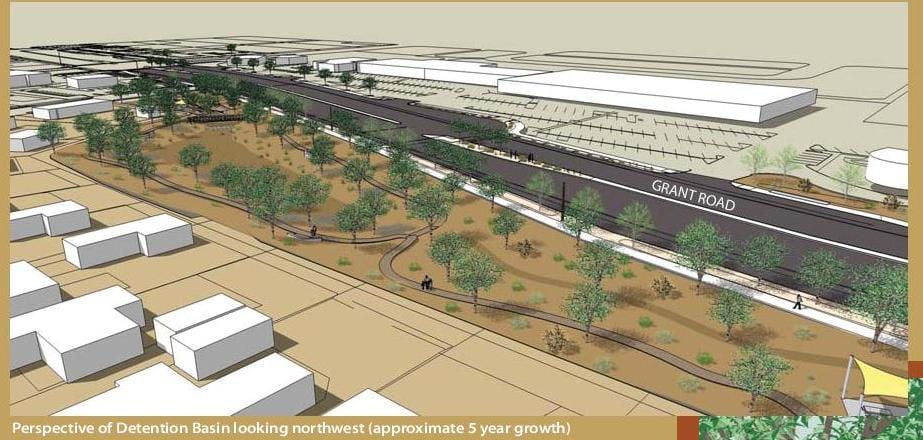
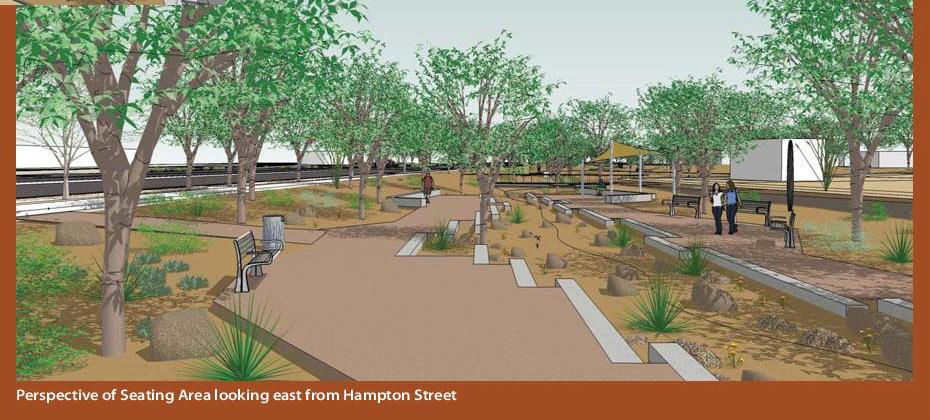
A 20-foot buffer will be created on the south side of Grant Road, between Park Avenue and just east of North First Avenue, with walking paths and a seating area, said Beth Abramovitz, the engineering project manager with the city’s Department of Transportation.
After the demolitions are complete and utility work is done, contractors will begin the widening of that stretch in March.
Voters approved the Grant Road Improvement Project in May 2006 as part of the $2.1 billion Regional Transportation Authority plan.
Under the federal Uniform Relocation Assistance and Real Property Acquisition Policies Act of 1970, residents and businesses can be displaced to make way for a public project. And while area residents understand the need for the widening, concern for preserving serenity and history of neighborhoods is a concern.
For that reason, the Grant Road Coalition, made up of several neighborhood associations along the project’s route, was established.
Among the victories the group has celebrated is keeping the zoning residential between Mountain and Campbell avenues so shops and restaurants don’t set up, said Joan Daniels, one of the coalition’s chairs.
Another was preserving Jefferson Park’s historic neighborhood designation. The city has agreed to change the neighborhood boundaries if the demolition of historic homes is necessary so the ratio of historic homes is at least 51 percent of the total homes.
“The city needs to be given a pat on the back for that,” Daniels said.
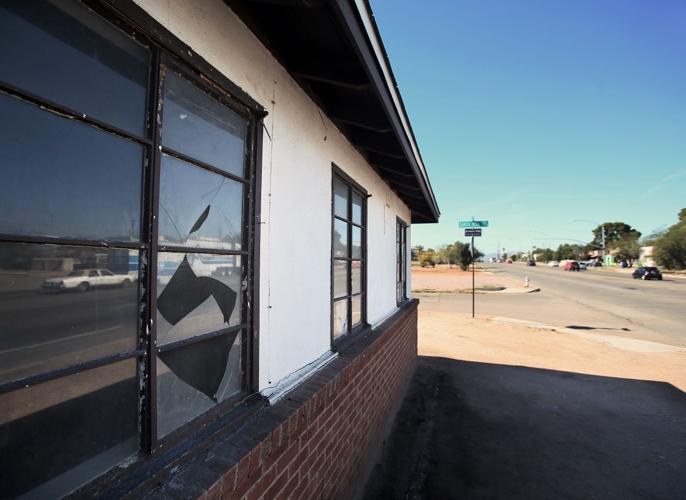
The abandoned houses, awaiting demolition, have become a target for graffiti, and some food trucks have parked on the empty lots.
“You start to get this element with boarded-up houses,” Daniels said. “That’s why the coalition is so vigilant.”
The city holds public meetings to keep residents updated. Last month, close to 200 people showed up.
“The majority of comments are not project-specific, such as being unhappy with the alignment,” Abramovitz said. “The majority of comments are about things, solar panels in the basin, collection of storm water.”
After working on neighborhood projects for more than 20 years, Abramovitz said she is rarely surprised by the complaints of residents or business owners.
“When weighing all the competing interests, if one group is really happy, it means another is very upset,” she said. “I know I’ve done a good job when everybody is a little upset.”

