



Arizona’s biggest technology business group will push for legislation to restore career and technical education funding for high school freshmen and boost private-investment tax credits in 2017.
The Arizona Technology Council says its legislative priorities are aimed at improving the business climate for high-tech companies by widening access to capital, supporting tech-related job growth and attracting and training tech workers.
Arizona already is a center of technology business, with major employers including Raytheon Missile Systems in Tucson, said Alex Rodriguez, the Tech Council’s vice president for Southern Arizona.
But the state remains at a disadvantage in workforce education and the availability of capital to fund startups, he said.
“We have a lot of successes we can point to in the state,” Rodriguez said. “Our vision is to make Arizona the fastest-growing tech hub in the nation.”
JTED funding
The Tech Council is again focusing on the restoration of funding for ninth-grade career technical education, including the Pima County Joint Technical Educational District and 13 other similar districts statewide that operate across school-district boundaries.
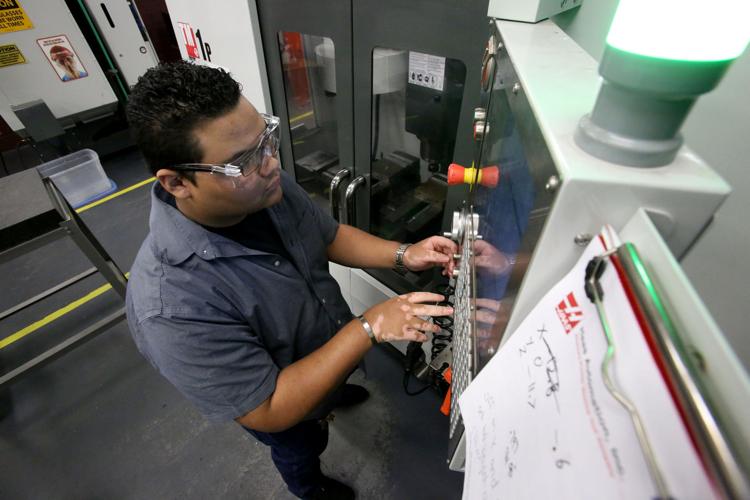
Programming runs the gamut and varies by high school. Pima County’s JTED program boasts more than 60 offerings, including industrial skills like precision machining and welding; auto repair; computers and media; culinary arts; biosciences; fashion design and technical theater.
Some programs allow students to work toward industry certifications or transfer credits to Pima Community College programs. Some offer internship opportunities.
The Legislature dropped funding for freshman-level JTED programs in 2011 and has not restored it despite the pleas of schools, business groups including the Tech Council, and various chambers of commerce.
“JTED is a program that produces skilled technicians and gets them out to companies where they can add value on day one,” Rodriguez said. “We should be expanding a highly successful program, especially one that serves disadvantaged students.”
A founding member of a local manufacturer’s group that has supported JTED industrial programs said freshman funding is critical.
“The problem right now is, there’s not enough funding to get those kids exposure to different things,” said Jeremy Schalk, vice president of Hi-Tech Machining and Engineering.
Shalk said that’s important because the sooner students select a career track, they can work toward achieving a technical credential, or toward a degree at Pima Community College, allowing them to land jobs right out of high school.
Shalk is a founding member of Southern Arizona Manufacturing Partners, which was formed in 2012 to build a pipeline of talent in critical areas such as precision machining.
Last year, Desert View High School’s precision machining program won accreditation through the National Institute for Metalworking Skills (NIMS), which certifies machinists, including computerized machine operators and related tradesmen.
Tucson High Magnet School’s machining program was approved for NIMS accreditation last month.
After graduating from high school, students can transfer some credits to Pima Community College under a dual-enrollment program and work toward associate degrees. Pima’s machining program won NIMS accreditation last year.
“When they have a NIMS certification, I have a good idea of where they are are on their path,” said Shalk, who has hosted JTED interns and hired several program grads.
Angel tax credit
Supporting startup ventures is also at the forefront for the Tech Council through the use of angel investors — affluent individuals classified as accredited investors who can be solicited for private equity investments.
A tax credit created in 2006 gave angel investors a 30 percent state credit on qualifying investments, or 35 percent for investments in rural or bioscience startups.
But the program reached its statutory cap of $20 million in credits last June and remains suspended pending further funding authority.
Tucson’s Desert Angels and the Phoenix-based Arizona Tech Investors Forum were two of the three most active angel investment groups in the Southwest from 2010 to 2015, according to the Angel Resource Institute at Willamette University.
Curtis Gunn, chairman of the Desert Angels, said the Arizona Angel Tax Credit program has been “vitally important” in boosting investments in Arizona tech startups.
“The expiration of the credits has leveled the playing field to the disadvantage of Arizona,” Gunn wrote in an email. “There is no longer any reason for members of Desert Angels to focus on Arizona-based companies and more of our investment dollars are going out of state.”
A 2014 study by the Arizona Commerce Authority showed that the angel tax credit program showed a 2.3-to-one direct return on investment, with more than $60 million invested by angels seeding an additional $420 million in financing, for an estimated overall economic impact of more than $1 billion.
“It’s an asset-producing program, rather than being a taxpayer liability,” Rodriguez said.
School funding
The Tech Council’s ongoing legislative priority is to adequately fund the state’s schools, from preschool programs to the universities.
Rodriguez said the council members remain concerned about school and university funding levels and, despite a contentious political climate, he’s encouraged by Gov. Ducey’s apparent move to boost school spending.
“Red or blue, what Arizonans want is an education governor and a Legislature that supports education funding,” he said.
Other Tech Council legislative priorities include:
- Creating and funding a new job-training program — a state program that reimbursed employers for worker training expired last year.
- Maintaining the state’s current research and development tax credit, and creating policies to allow investing companies to use stranded credits.
- Supporting the findings of the Legislature’s Surface Transportation Funding Task Force, which is studying options for the state’s transportation infrastructure.

