

Quarter 2 garden sage
- Updated
Answers to your gardening questions from an expert in Southern Arizona.
- By Peter L. Warren Special to the Arizona Daily Star
- Updated
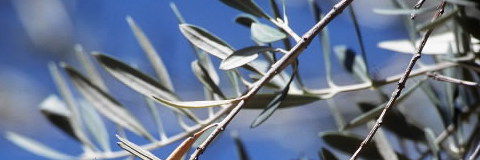
Q: I plan to buy a 15-gallon fruitless olive tree. Please tell me how much water daily or weekly it should be given once planted. The irrigation system in place for shrubs and trees comes on Monday and Friday for one hour. There are two black adjustable 10-gallon emitters where the tree will be planted. If the tree requires daily watering instead of the two days, I can water with a hose. When the temperature increases to 90 and higher, the irrigation system waters Monday, Wednesday, and Friday for two hours.
A: Olive trees should receive water every seven to 10 days in the summer to a depth of 24 to 36 inches. In the spring and fall, you can water every 10 to 14 days and in the winter, you can water every 14 to 21 days. Typically, two emitters can supply new trees as you described. As trees get older and their root zones increase in size, adding an emitter to the increasingly wider circle of drip irrigation would be appropriate every few years. The depth of irrigation can be measured with a soil probe. The schedule you are using now is watering too often and will encourage shallow root growth that will be more susceptible to our blast furnace summer heat.
Peter L. Warren is the urban horticulture agent for the Pima County Cooperative Extension and the University of Arizona. Questions may be emailed to
- By Peter L. Warren Special to the Arizona Daily Star
- Updated
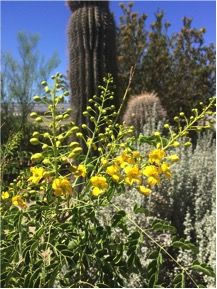
Q: My husband pruned two of our Mexican bird of paradise shrubs way down. Only one came back and is doing nicely. We have watered and used Miracle Grow fertilizer on the other one but nothing happens. Will it come back next season or do we need to replant a new one?
A: If you aren’t seeing any new growth by now, I suspect it’s a goner. You can scratch the surface of the branches to see if there is any green beneath. The good news is you can probably plant new ones from the seeds of the one that is doing nicely. The Mexican bird of paradise (Caesalpinia mexicana) is one of three species that grow in our area. The other two are the yellow (Caesalpinia gilliesii) and red (Caesalpinia pulcherrima) birds of paradise. A good time to prune is once blooming is finished. If you cut them too short, you risk killing them. Try just cutting back the top third next time to be safe. The flower stalks on all three species may be removed to prevent seedpods from forming and to reduce the likelihood of volunteer seedlings. If the pods are left on the plant to dry and split, the seeds can be thrown a surprising distance. The red bird of paradise dies back to ground at temperatures below freezing. It generally regrows in spring, from the ground and the dead parts can be pruned to a few inches above the ground in late winter. Mulching the base of plant in colder areas may protect the plant’s crown until spring.
Peter L. Warren is the urban horticulture agent for the Pima County Cooperative Extension and the University of Arizona. Questions may be emailed to
- By Peter L. Warren Special to the Arizona Daily Star
- Updated
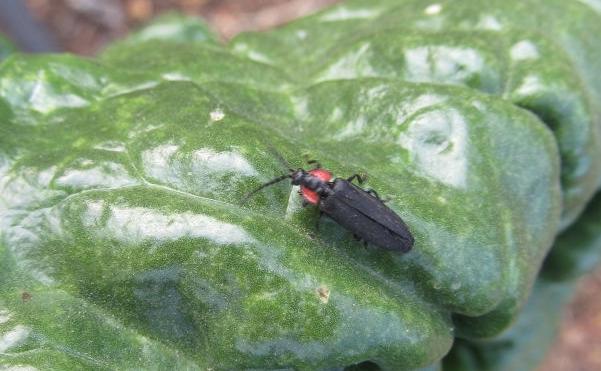
Q: When your time permits, Would you share your thoughts on this newest visitor to the garden? He/she has increased in numbers over the past weeks and I have yet to determine which plant is part of their meal choices.
A: The insect, Pyropyga nigricans, is a firefly species without a light. These are predatory insects and are garden helpers so you’re lucky to have them.
Peter L. Warren is the urban horticulture agent for the Pima County Cooperative Extension and the University of Arizona. Questions may be emailed to
- By Peter L. Warren Special to the Arizona Daily Star
- Updated
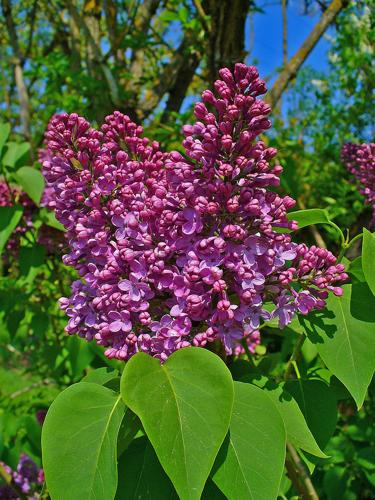
Q: I have a lilac bush, which I purchased from a mail order company. It is about 12 years old, and it has never bloomed a single flower. It grows larger each year and has lush green foliage. I have given it fertilizer but nothing seems to help. What am I doing wrong?
A: The common lilac (Syringa vulgaris) is a favorite in many places so I understand your desire to grow them. Unfortunately, your place might not be suitable. Lack of blooms is usually related to one of six causes: the age of the plant, temperature, alternate flowering, light, nutrition, or pruning practices. In your situation, I think the likely problem is temperature. Lilacs require a certain amount of cold to trigger blooming, also known as vernalization. We don’t usually get enough cold in Southern Arizona for this plant to bloom unless you live at higher elevations. There are lilacs at the Santa Rita Experimental Range near Green Valley than have been monitored for bloom times by the USA National Phenology Network for many years. The elevation there is approximately 3,714 feet above sea level. You can check their web site for details if you are interested: usanpn.org/nn/lilacs
In downtown Tucson, where the elevation is closer to 2,389 and winter is barely recognizable, it’s too warm.
Peter L. Warren is the urban horticulture agent for the Pima County Cooperative Extension and the University of Arizona. Questions may be emailed to
- By Peter L. Warren Special to the Arizona Daily Star
- Updated
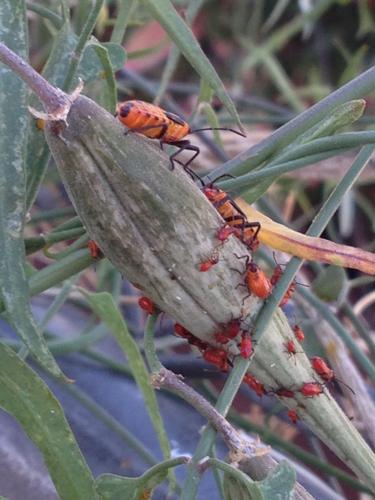
Q: What are these bugs on this milkweed?
A: The red and black ones are milkweed bugs. That might seem like a snarky answer but it’s the official common name for these insects otherwise known as Oncopeltus fasciatus. They can also be found on oleander plants, which might explain why the yellow insects are called oleander aphids (Aphis nerii).
Both species are commonly found on milkweed and oleander plants. Insects tend to favor specific plants or plant families when they feed. Milkweed and oleander are relatives from the same plant family and known for their sap that contains cardiac glycosides, which are poisonous. The insects that ingest it as a food source are able to sequester it and become protected to some extent.
If you watch other animals preying on these insects, you may notice they spit them back out. The red and yellow coloration is nature’s way of warning predators to leave them alone but not everyone understands the warning signs without a taste test.
Peter L. Warren is the urban horticulture agent for the Pima County Cooperative Extension and the University of Arizona. Questions may be emailed to
- By Peter L. Warren Special to the Arizona Daily Star
- Updated
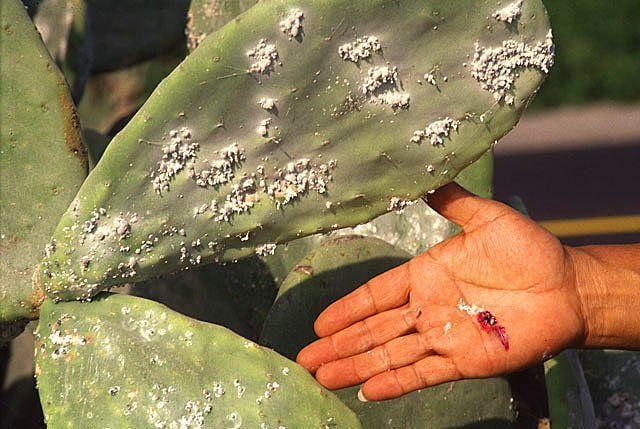
Q: We have infested-with-mealybugs prickly pears on a border with a neighbor who insists that the only way to control the infestation is to use a Bayer Tree and Shrub chemical. I so dislike and try to avoid these solutions. Can you direct me to an online intelligent discussion that isn’t sponsored by Bayer? Or do you have a nonpoisonous alternative?
A: I suspect what you are seeing isn’t mealybugs but rather Cochineal scale (Dactylopious coccus) on your prickly pear cactus. The easiest treatment is spraying them with a hose. You can also use a soap solution (1 tablespoon per gallon of water).
While the Bayer product will kill these insects, it is also likely to kill beneficial insects in the area that may be feeding on the scale insects. You and your neighbor shouldn’t expect to eradicate these insects. They are very common in our area and will likely continue to feed on the cactus no matter what method you choose.
Fortunately, they aren’t likely to kill these plants if you spray them with a hose periodically.
Peter L. Warren is the urban horticulture agent for the Pima County Cooperative Extension and the University of Arizona. Questions may be emailed to
- By Peter L. Warren Special to the Arizona Daily Star
- Updated
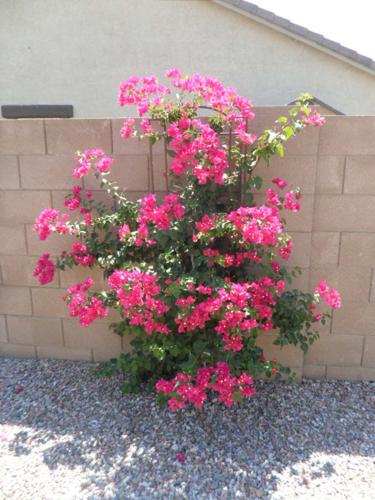
Q: I have six bougainvillea plants in my back yard. I have three on the east side and three on the west side planted about a year ago. Last summer the ones on the west side looked great and ones on the east side looked really bad. This summer the ones on the east side look great (see picture), the ones on the west side (not shown) look really bad.
We feed them and spray for bugs but still no luck. The water system goes off every other day at 7 a.m. and 3 p.m. My wife also waters them with the hose. But we can’t seem the get them to look good at the same time. Do you have any ideas as to what we can do?
A: Bougainvilleas are fairly tough plants once established and by the time they are a year old they should be doing well. The trouble last summer could have been from the shock of transplanting them. The plants on the east side appear to be getting western afternoon sun. That is where they do best and your plants on that side look great.
The plants on the west side appear to be getting eastern morning sun and might be shaded in the afternoon by the wall. Since full sun is prescribed for these plants, it could be a factor for the ones that may be shaded. It’s hard for me to say from the photos (not shown) how much shade they get but it’s something to keep in mind.
From your description, the trouble this year may be due to overfertilizing and overwatering. Once or twice each year is all you need to fertilize and watering should be done less often and deeper than your current schedule. Try switching your irrigation schedule to once every seven to 10 days to a depth of 12 to 18 inches in the summer. Then you can reduce the irrigation to once every two weeks in the fall and every three weeks in the winter.
Peter L. Warren is the urban horticulture agent for the Pima County Cooperative Extension and the University of Arizona. Questions may be emailed to
- By Peter L. Warren Special to the Arizona Daily Star
- Updated
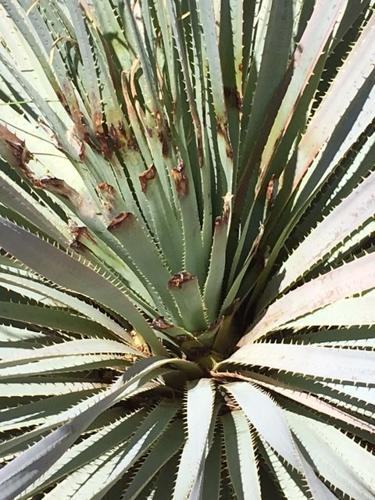
Q: The leaves/stalks in the center of my desert spoon plants are being eaten away about 6 inches up from the base. I don’t see any problem from the base and only water them about once per month with a hose. What is causing the problem and what can I do to make them healthy again?
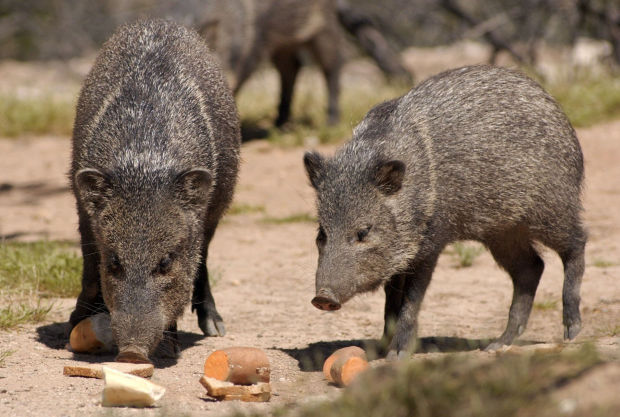
A: It appears your desert spoons are a food source for a four-legged critter, probably javelina. These animals will feed on a variety of cacti and succulents. The solution is fencing or some sort of a detour around the plants you are trying to protect. Keep up the good care you are already providing and see if you can devise some fencing system that suits your landscape plan.
Peter L. Warren is the urban horticulture agent for the Pima County Cooperative Extension and the University of Arizona. Questions may be emailed to
- By Peter L. Warren Special to the Arizona Daily Star
- Updated
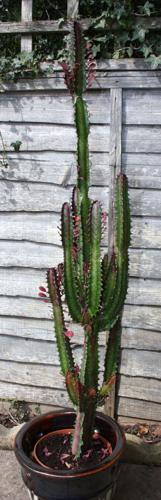
Q: The attached photo, kindly sent to me by a friend who checks my house while we are away for the summer, shows my euphorbia houseplant with drooping stalks. I have been researching online, to no avail. As of a week ago, he said the plant still appeared green in color.
A: Euphorbias should be treated much like cactus. They need well-drained soil and can suffer from fungal diseases if left in too much water for too long. Your plant is showing signs of a vascular problem in that it cannot provide enough water pressure to keep some of the stems upright. Wilting like this can be a sign of underwatering but it can also be a sign of overwatering or disease when the stems are clogged with fungi.
If you can rule out under watering, then consider your container. From your photo, it appears the container doesn’t have a way to drain and if that’s true, it can be part of the problem. You might try cutting off a wilted stem and look at the cross section to see if it appears to be diseased. It would likely be discolored if it were diseased.
If so, it’s possible you can cut off the infested parts and still have a surviving plant. Be sure to disinfect your pruners between cutting diseased tissue and healthy parts in case it can be spread on your tools. You can use a diluted bleach solution or rubbing alcohol solution (one part to nine parts water).
Once you cut off the diseased parts, the first thing to do is see if your plant container can be replaced with one that drains so any excess water can be diverted from the root zone. If a disease has spread to the main stem, there might not be anything to do for your plant. Time will tell.
Peter L. Warren is the urban horticulture agent for the Pima County Cooperative Extension and the University of Arizona. Questions may be emailed to
- By Peter L. Warren Special to the Arizona Daily Star
- Updated
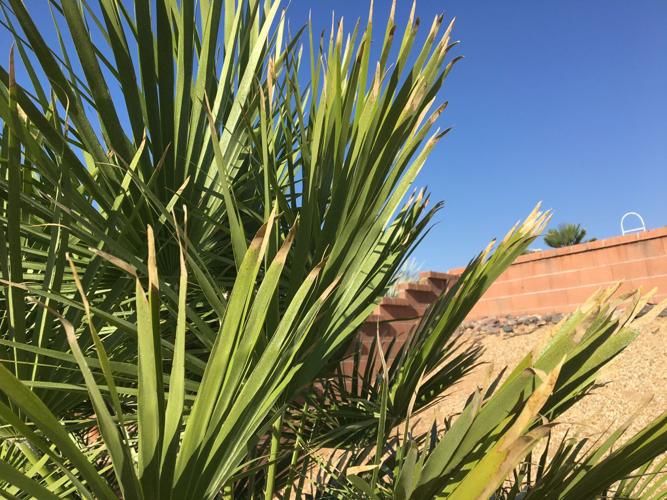
Q: I have a palm tree where the frond tips are turning yellow. I know that the lower fronds usually turn yellow or brown due to age, but the yellowing tips are throughout the entire tree. I have not changed any watering or fertilizing schedules. Any thoughts on why this yellowing is occurring?
A: Frond tips turning yellow and brown are often a symptom of drought and excess salt in the soil around the roots. Fortunately, the cure for both of these is the same, more water.
A good soak once every few months will help wash the salt out of the root zone. The rest of the time these trees should be getting water every seven to 10 days in the summer, 10 to 14 days in the spring and fall, and every two to three weeks in the winter. Each time the water should reach a depth of 36 inches. With proper irrigation and an occasional soak, you will soon see how we can be good fronds for the palms.
Peter L. Warren is the urban horticulture agent for the Pima County Cooperative Extension and the University of Arizona. Questions may be emailed to
- By Peter L. Warren Special to the Arizona Daily Star
- Updated
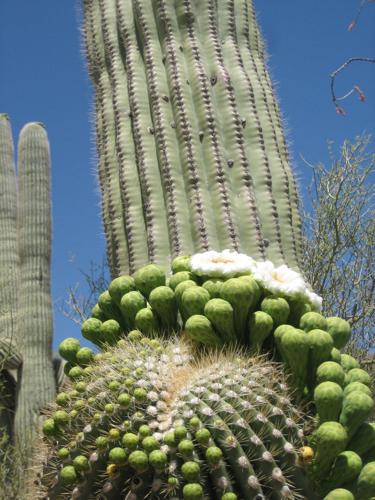
Q: We have three saguaros in our front yard, two, four and 10 feet tall. All appear to be healthy. The tallest one will get only two or three blooms each year. Before they can open they all dry up and fall off. Do you know what would cause this? Other saguaros in the area will have buds that open up into flowers. The 10-foot saguaro was transplanted into our yard about six years ago.
A: Dropping flower buds are sometimes associated with environmental stress, so first I’m curious to know if they are receiving enough irrigation. Some saguaros planted in our landscapes don’t end up in ideal locations so we might need to take better care of them than those in the wild desert.
Typically, they don’t need much water but they do need some. The recommendation is once every two weeks in the summer, every three to four weeks in the spring and fall, and none in the winter. Of course, you can skip the months where we get significant rain during the monsoon season. If you can rule out the water problem, consider what other factors in your environment could be affecting the area where they are growing.
Peter L. Warren is the urban horticulture agent for the Pima County Cooperative Extension and the University of Arizona. Questions may be emailed to
- By Peter L. Warren Special to the Arizona Daily Star
- Updated
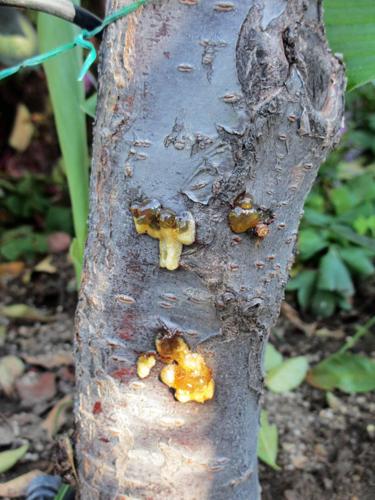
Q: I planted three Flowering Yoshino Cherry trees from pots about four years ago. Watered and fertilized the same for all these years. Two of the trees are doing okay. For some reason, one of the cherry trees started to drops its leaves. There is some kind of white sap coming out from the lower part of this one tree.
I do not know if the sap has anything to do with the tree dying. Do you know what might be causing the tree to look wilted and leaves to drop? This started before the high temperatures we have been getting.
A: Cherry trees and related fruit trees may ooze sap and drop leaves in response to injury. The injury can be due to freeze damage, insect feeding, disease, wounding from tools, hail, or sun scald of the bark. If you see any sawdust around the wound or in the sap, insects become a prime suspect.
The location of the wounds may be significant since some insects usually attack the lower trunk, others the upper branches. If you only see the cracking on the sunniest sides of the tree, the scalding is more likely.
From your photo, there doesn’t seem to be any obvious injuries from tools. If you experienced any freezing last winter or hail damage, they are possibly to blame. Please let me know if you come up with any more clues to help solve this puzzle.
Peter L. Warren is the urban horticulture agent for the Pima County Cooperative Extension and the University of Arizona. Questions may be emailed to
- By Peter L. Warren Special to the Arizona Daily Star
- Updated
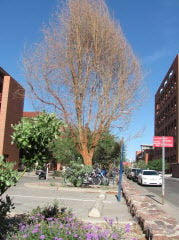
Q: We have a large acacia tree (the trunk is about 22 inches diameter) that is dropping leaves. We are wondering if it simply needs to be watered (though other acacia trees in the neighborhood are not getting watered and not dropping leaves). It also needs to be pruned, is there a person/company that you would recommend or can we do this ourselves?
A: Drought is certainly one reason trees drop leaves. I just checked the sweet acacia at our office and it is dropping leaves as well. It gets no water except rain. Desert trees like the acacia could use water every two to three weeks in the summer to a depth of 36 inches.
They can survive without for some time, but eventually they show symptoms. There are going to be differences between trees wherever you go and it’s hard to say without seeing them all what factors might be affecting these trees. Trees also lose leaves for other reasons such as pests and diseases.
If you examine some of the leaves under a magnifier you might see symptoms or signs of these potential problems. I would be glad to examine some if you want to bring them to my office. A good sample will include a small branch with some leaves still attached freshly pruned from the tree so anything living might be still attached.
Putting the sample in a zip lock bag will keep things contained until I can see them.
You can prune yourself as long as you know a little something about pruning. It’s not rocket science but there are some basic guidelines to help you take good care of your tree.
The following link will show you a publication on pruning that should help. If you decide to hire someone instead, there is a link below to the International Society of Arboristry web site that allows you to look up local arborists to consider.
extension.arizona.edu/sites/extension.arizona.edu/files/pubs/az1139.pdf
- By Peter L. Warren Special to the Arizona Daily Star
- Updated
Q: My Arizona rosewood has some distorted leaves and fuzzy brown places at the ends of some of the distorted leaves. What could be causing this and what do I do about it?
A: The problem with your Arizona rosewood is witches broom rust called Gynosporangium vauquelinia. Rusts like this require an alternate host to complete their lifecycle.
This rust has juniper as an alternate host so there is likely an infested tree nearby or at least upwind from the rosewood. These rusts don’t kill the plants but they do reappear every year or two if the alternate host is still nearby. So you don’t need to do anything about it.
Peter L. Warren is the urban horticulture agent for the Pima County Cooperative Extension and the University of Arizona. Questions may be emailed to
- By Peter L. Warren Special to the Arizona Daily Star
- Updated
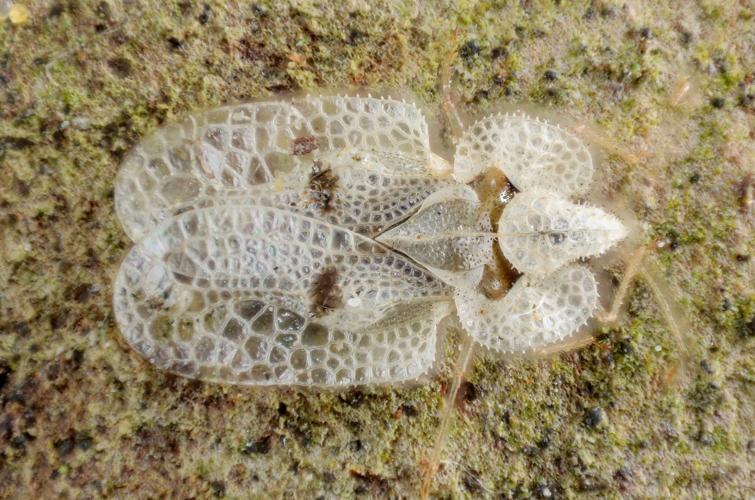
Q: I was at the garden this morning and noticed how droopy our patch of sunflowers is! So I took a closer look and discovered that the leaves are infested with insects! There are little white aphid looking things, and then massive sections of black dot-looking bugs, especially underneath the leaves. Maybe you can tell from the photos I’ve attached. I did my best to give them a sudsing with Dawn. Do you think this is the remedy for these bugs? Any other thoughts?
A: The insects on your sunflowers are called lace bugs, not to be confused with lacewings, which are beneficial predators. The black spots are likely a combination of young lace bugs, which are that color, and their poop.
Lace bugs are of the true bug order we call Hemiptera and they have piercing-sucking mouthparts just like the aphids. So they suck out the sap rather than chewing the foliage. The result of large numbers of these lace bugs feeding over a period of weeks is discoloration and the droopy look you noticed.
Fortunately, they don’t damage the flowers as much as the leaves. Insecticidal soap is a good solution as is a blast from a hose. Some dish soaps are toxic to plants so if you don’t want to spend a bit more for actual insecticidal soap, you might try spraying only part of your plant to begin just in case. These insects tend to be on the underside of the leaves at least as much as we see them on the tops so make sure you spray the plants in such a way as to cover the underside of the leaves.
Peter L. Warren is the urban horticulture agent for the Pima County Cooperative Extension and the University of Arizona. Questions may be emailed to plwarren@cals.arizona.edu
- By Peter L. Warren Special to the Arizona Daily Star
- Updated
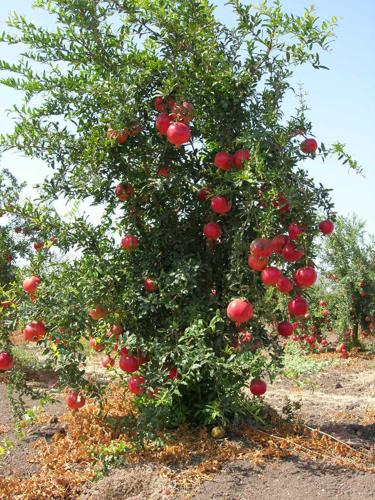
Q: I have an Angel Red variety pomegranate tree that is 5 years old. It is producing a very good crop of fruit this year. I’m concerned about the care of my tree. Specifically, I would appreciate your advice on:
How often does it need fertilizing? I’ve been fertilizing only in the early spring.
How often should I water it in these very hot and dry conditions?
A: Pomegranates are tough plants that grow well in our arid conditions as long as we care for them. I recommend fertilizing once in the spring and then again in the fall. The fertilizer should be complete in that it contains equal amounts of nitrogen, phosphorus, and potassium, such as a 10-10-10 formulation. Irrigation should be provided every one to two weeks during the summer to a depth of 24 to 36 inches.
Keeping consistent irrigation throughout the growing season also helps prevent fruit from splitting. Pruning is something you do each winter to remove dead, damaged, and crossing branches. Also remove watersprouts and suckers as they appear.
Proper pruning involves removing these parts near the connection with larger branches, avoiding flush cuts and not leaving stubs either. There is more information on pruning available if you need it so please let me know. If you are okay with the natural shrubby form, this might be all you need to do. If you are trying for a tree form, there is more maintenance pruning to shape the plant and keep it that way.
Peter L. Warren is the urban horticulture agent for the Pima County Cooperative Extension and the University of Arizona. Questions may be emailed to
- By Peter L. Warren Special to the Arizona Daily Star
- Updated
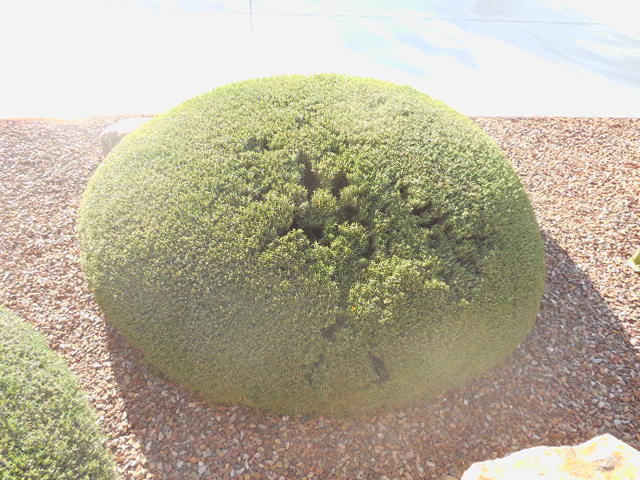
Q: What is going on with my rosemary bush? Two days ago I looked at the bush and discovered damage.
A: Rosemary (Rosmarinus officinalis) is a shrub that grows well in the desert. The natural form is shaggier than the sheared version you have growing. The damage you are seeing is likely a result of regular shearing of the foliage. Often shearing creates a shell of green that prevents light from entering the inner parts of the plant. Eventually dead spots will occur and regrowth from those branches will not likely happen. A better treatment would be less frequent light pruning as necessary and in a more selective fashion to allow the plant to achieve its natural form and to open up the plant a bit to light, air, and water.
Peter L. Warren is the urban horticulture agent for the Pima County Cooperative Extension and the University of Arizona. Questions may be emailed to tucsongardensage@gmail.com
- By Peter L. Warren Special to the Arizona Daily Star
- Updated
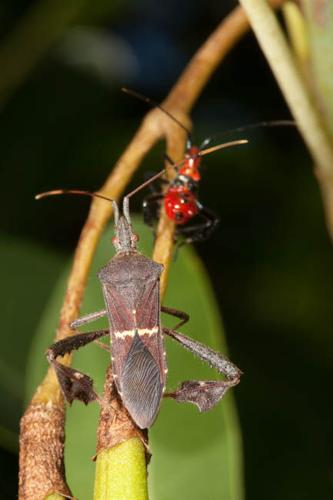
Q: This year, we have some peaches with dimples. The fruit is rotten inside. Could it be a plant pathogen of some kind?
A: The short answer is yes. Your peaches are likely suffering from a pathogen as a result of insect feeding damage. The prime suspect in this case is the leaf-footed bug. These insects have piercing-sucking mouthparts and while feeding on young developing fruit leave scars that are known as cat-facing and sometimes this feeding activity will introduce fungi that may cause the rot.
Leaf-footed bugs are common in our area and may feed on a variety of plants including pomegranate, pecan, citrus, and peaches. They are difficult to manage once in the adult stage because they can fly and move about quickly.
There are insecticides available, but they are only effective on the young bugs. These insecticides are harmful to bees, so take care to avoid spraying plants in bloom. Monitoring for and removing egg masses in the early spring is another tactic that is potentially more successful if you are persistently looking in the spring when eggs are laid and young bugs are emerging from them.
Peter L. Warren is the urban horticulture agent for the Pima County Cooperative Extension and the University of Arizona. Questions may be emailed to tucsongardensage@gmail.com
- By Peter L. Warren Special to the Arizona Daily Star
- Updated
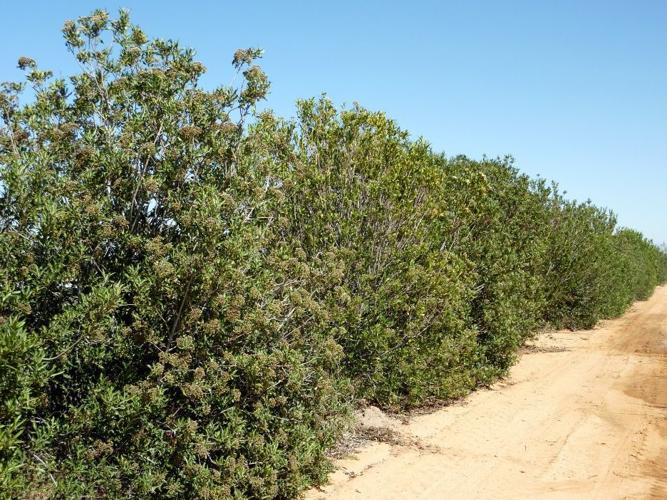
Q: I purchased this sugar bush at Desert Survivors Native Plant Nursery two years ago. It chronically looks like it isn’t getting enough water; there are dry, brown leaves. It is planted in desert soil with a cactus mix amendment. It is on a shrub line that runs twice a week right now, for 2½ hours. I have played with the emitter flow and am putting about 20 gallons each application. It gets sun until about 3 p.m. Is there anything I can do to help it thrive?
A: Sugar bush (Rhus ovata) is a moderate water user but twice per week at 20 gallons each application seems like a lot of water for a native shrub. If you aren’t checking to see how deep the water is going, I suggest using a soil probe to determine the depth of the watering. Ideally, water should reach a depth of 24 to 36 inches. I recommend backing off your irrigation to once a week for the summer and once every two weeks in the spring and fall.
Overwatering sometimes shows similar symptoms to underwatering, so looks can be deceiving.
Peter L. Warren is the urban horticulture agent for the Pima County Cooperative Extension and the University of Arizona. Questions may be emailed to tucsongardensage@gmail.com
- By Peter L. Warren Special to the Arizona Daily Star
- Updated
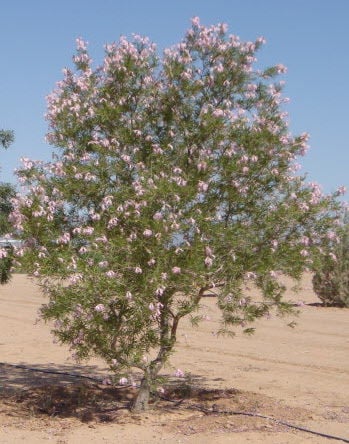
Q: I am sending two photos of my desert willow tree, now in its fourth spring. The buds form, grow and then dry out before opening. Have taken samples to Mesquite Valley Growers. They see no evidence of pests or disease, and recommended more water and fertilizer. The leaves seem smaller and shorter than others I see.
A: I agree with Mesquite Valley Growers; the symptoms you describe are likely related to insufficient watering. The recommended schedule for desert trees is once every two to three weeks in the spring, summer, and fall to a depth of 24 to 36 inches. An annual spring fertilizer application wouldn’t hurt either, making sure the fertilizer is watered in to reach the absorbing roots.
Peter L. Warren is the urban horticulture agent for the Pima County Cooperative Extension and the University of Arizona. Questions may be emailed to tucsongardensage@gmail.com
- By Peter L. Warren Special to the Arizona Daily Star
- Updated
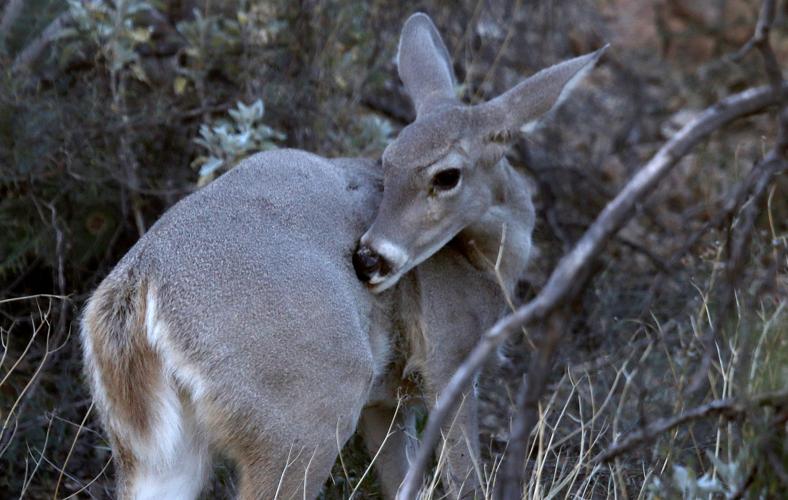
Q: We have 30-year-old Rhaphiolepis indica planted in a slightly raised planter. One side was particularly hit hard by the freeze a few years ago (17 degrees in Tucson in February), or so we thought, until we caught a couple of deer munching on that particular shrub. It never recovered from the munching. The shrubs on the other side of the planter were doing well until four deer became emboldened and began munching on the flowers and new leaf growth on the other side near our front gate. Those plants, too, have stopped putting on new leaves and weeks later look exactly like the deer left them. What can we do to rejuvenate the plants/encourage them to grow again?
A: Deer munching is definitely a hazard for Rhaphiolepis indica (Indian hawthorn), so some sort of fencing or detours around your shrub are required before you spend a lot of time on rejuvenation.
The best time to prune is around May or when it is finished blooming. You can selectively prune out the damaged branches where deer were feeding. From your photo the shrub looks pretty full and selective pruning should help open it up to more light, air, and water as well. Otherwise, continue to provide sufficient water, fertilize annually and monitor deer activity as needed.
Peter L. Warren is the urban horticulture agent for the Pima County Cooperative Extension and the University of Arizona. Questions may be emailed to tucsongardensage@gmail.com
- By Peter L. Warren Special to the Arizona Daily Star
- Updated
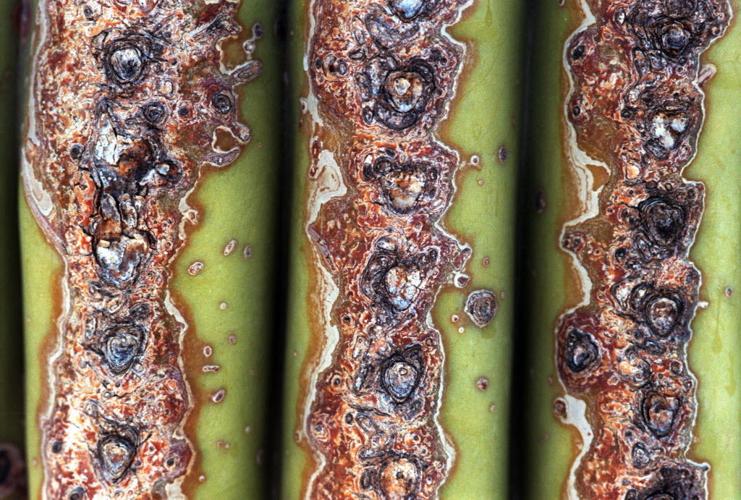
Q: We moved into this home a couple of years ago in Benson. We have a lot of prickly pear cactus in the yard. I just noticed that some of the bigger plants have black spots on them. Is there something we can do to stop or protect the others in our yard from getting whatever it is?
A: The disease you are seeing is called Phyllosticta pad spot. These lesions are commonly seen on pads of prickly pear cacti (Opuntia species) and may be caused by several different pests or environmental conditions. However, the most common pad spot on the Engelmann’s prickly pear in the Arizona desert is caused by a species of the fungus Phyllosticta. The disease is found throughout the desert. Lesions are almost completely black because of the presence of small black reproductive structures called pycnidia produced on the surface of infected plant tissue. Spores produced within these reproductive structures are easily disseminated by windblown rain or dripping water and infect new sites on nearby pads. Pads on the lower part of plants are often most heavily infected since the humidity is higher and moisture often persists after rain. Once pads dry, the fungus becomes inactive. The lesions may fall out, leaving holes in the pads. Severely infected pads or entire plants should be removed from landscapes to prevent fungus spread.
- By Peter L. Warren Special to the Arizona Daily Star
- Updated

- By Peter L. Warren Special to the Arizona Daily Star
- Updated
Q: I have a question about compost. My neighbors have two eucalyptus trees, which shed many leaves into my yard. Are these good to put into the compost or not? I have concerns because of oil they may have in the leaves.
A: Eucalyptus leaves are fine for compost. They need to be broken down like any plant matter put into compost so that any compounds that are otherwise harmful will be neutralized. The oil that you refer to has been reported to interfere with germination in some plants but that is not something to be concerned about with composted material.
Peter L. Warren is the urban horticulture agent for the Pima County Cooperative Extension and the University of Arizona. Questions may be emailed to tucsongardensage@gmail.com
- By Peter L. Warren Special to the Arizona Daily Star
- Updated
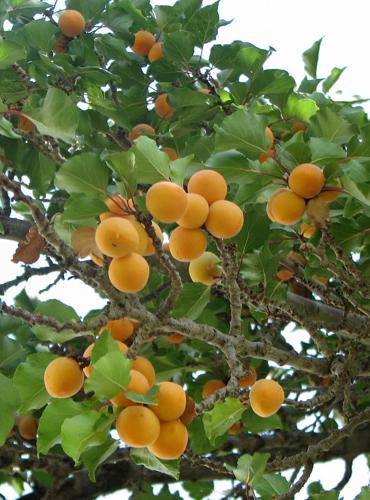
Q: This may be an odd question but here goes: I have an apricot tree in my yard (at least 15 years old) and it was a dwarf/ semi-dwarf when I planted it. I chose one that required the lowest chilling hours. I cannot remember the type or the name. It is still a reliable producer, self-pollinating and ripens in May. Do you have any guesses what the name of it could be? I think I remember the name included the word Gold.
A: I suspect your apricot variety is Gold Kist. This is an excellent backyard apricot for warm winter climates. Its features include very good quality, freestone fruit, and it is heavy bearing. It is an early harvest variety, from late May to early June. It requires 300 chill hours and is self-fruitful.
- By Peter L. Warren Special to the Arizona Daily Star
- Updated
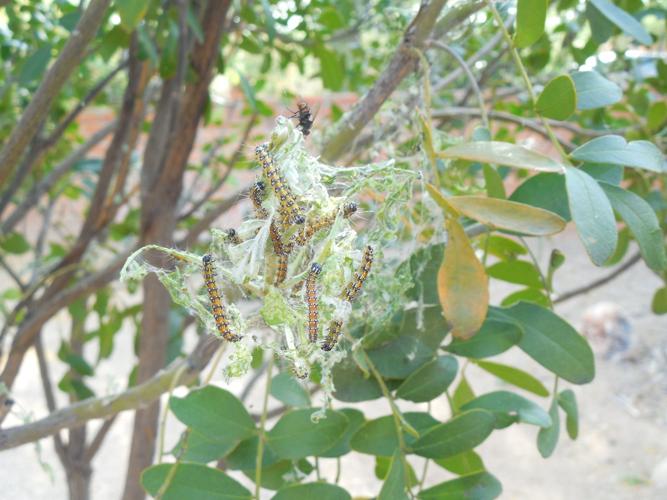
Q: These caterpillar bugs are all over my Texas mountain laurel (the same one that had the red and black plant bugs in March – which I sprayed off with a soap solution). There are probably at least 10 groups of these caterpillars on the tree. Suggestions?
A: These insects are called genista caterpillars (Uresiphita reversalis) and they are commonly found throughout the southwest on Texas mountain laurels. Their damage doesn’t affect the overall health of the tree unless there are unusually high numbers of them. The damage is often only cosmetic. The same soap solution can be used against these caterpillars. Soap acts an irritant and doesn’t always completely solve the problem. You might get the same result by spraying them with a hose. The benefit of the caterpillars is they are food for birds so you could leave them there and put up with the minor damage the caterpillars cause when feeding. Other solutions include pruning off the infested ends of branches, hand-picking the caterpillars, and various insecticides labeled for use on landscape trees and shrubs. An organic solution is spraying Bt (Bacillus thuringiensis) on the leaves where they are feeding. This works best when the caterpillars are young and most susceptible to the poison. The Bt bacteria are poisonous to caterpillars but not to anything else. Since there are several strains of Bt, make sure you use the one labeled for caterpillar pests. As always, when using any pesticide it is important to read the label and follow instructions to protect you and those other non-target organisms that might be exposed to the spray. By the way, the red and black bugs (Lopidea major) you saw earlier this year are also just a minor pest that feeds on Texas mountain laurel.
Peter L. Warren is the urban horticulture agent for the Pima County Cooperative Extension and the University of Arizona. Questions may be emailed totucsongardensage@gmail.com
- By Peter L. Warren Special to the Arizona Daily Star
- Updated
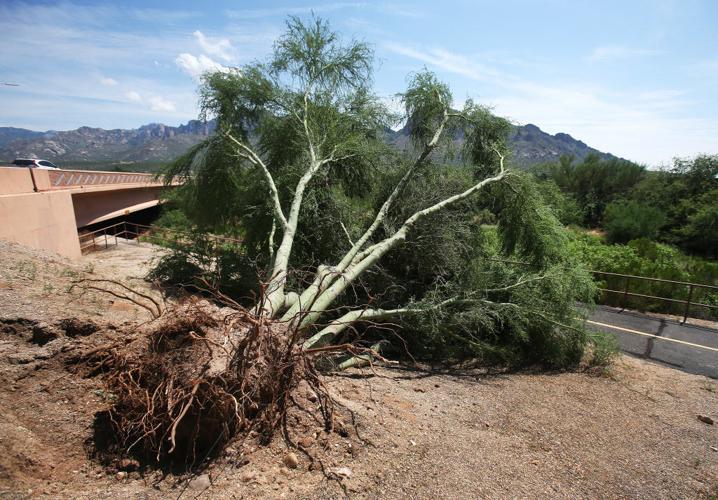
Q: I have a question related to the “Desert Museum” palo verde.
I want to plant this tree at our house, but I am a little wary because of the threat of palo verde beetles getting to the roots and killing it prematurely. Perhaps you can help me assess this risk?
A: The main risk for these beetles is an unhealthy tree. The palo verde beetle is endemic to this area and there is little to be done to a tree that has been infested. They are known to attack stressed trees so the best prevention is to keep trees as healthy as possible. This is primarily accomplished by providing proper irrigation and pruning. Since these are native desert trees they can survive on rainwater but when we have drier conditions than usual, supplemental water can help. Typically for desert trees this means installing drip irrigation around the tree at the drip line and providing deep watering to a depth of 24 to 36 inches every 14 to 21 days in the spring, summer, and fall. In the winter you can skip the irrigation, assuming we have normal winter rains. Proper pruning when the tree is young will result in a mature tree that is structurally stronger, lives longer, and is less costly to maintain. Don’t be in a hurry to prune at planting. A newly planted young tree should be given a chance to put down roots before taking any branches off unless they were damaged in the planting process. After a year or so it will be time to structurally prune your tree to ensure its long-term health.
Peter L. Warren is the urban horticulture agent for the Pima County Cooperative Extension and the University of Arizona. Questions may be emailed to tucsongardensage@gmail.com
- By Peter L. Warren Special to the Arizona Daily Star
- Updated
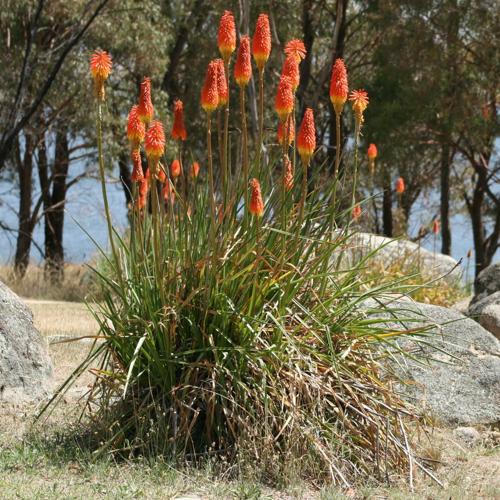
Q: I have a customer who is trying to identify a plant. She says it can change directions of the branching/leaves almost at will. It has leaves like a wild chive or a hesperaloe combination.
A: It is from the genus Kniphofia, and commonly called tritoma, red-hot poker, torch lily, knofflers, or poker plant. They are closely related to aloes, although Kniphofias don’t have very succulent leaves. There are quite a few species and cultivars of different colors. It is native to Africa. The plant has a mature height of 2 to 4 feet and a width of 3 feet. It does well in a site with full sun and well-drained soil.
Peter L. Warren is the urban horticulture agent for the Pima County Cooperative Extension and the University of Arizona. Questions may be emailed to tucsongardensage@gmail.com
- By Peter L. Warren Special to the Arizona Daily Star
- Updated
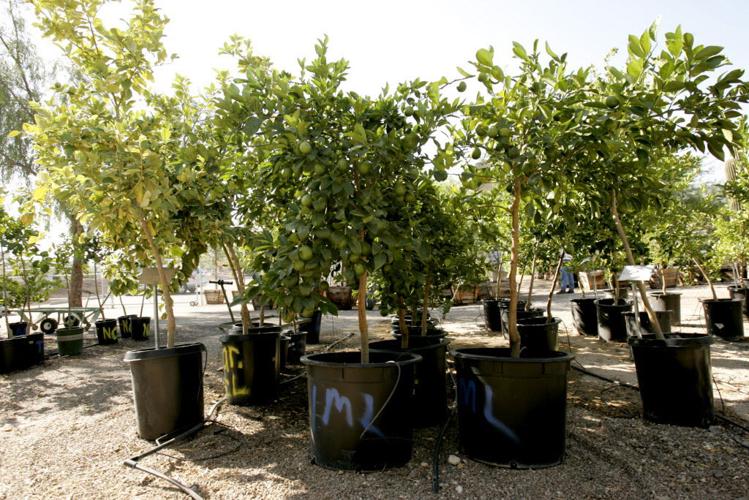
Q: My orange tree has been very productive for 14 years but it put out small fruit last year and this year it is blooming more than a month later than usual. Is something wrong with my tree?
A: Both symptoms you described, small fruit and odd bloom time, are associated with lack of water. It is possible that your irrigation system needs adjusting, so that would be the first thing to check. Also we had a relatively dry late winter and early spring this year. If you reduced your irrigation for the winter as recommended and then experienced no rain in February and March, your tree was probably in need of more water. Citrus trees sometimes respond to drought conditions followed by rain with a bloom about a month later, which corresponds to the rain you had in early April.
Peter L. Warren is the urban horticulture agent for the Pima County Cooperative Extension and the University of Arizona. Questions may be emailed to tucsongardensage@gmail.com
- By Peter L. Warren Special to the Arizona Daily Star
- Updated
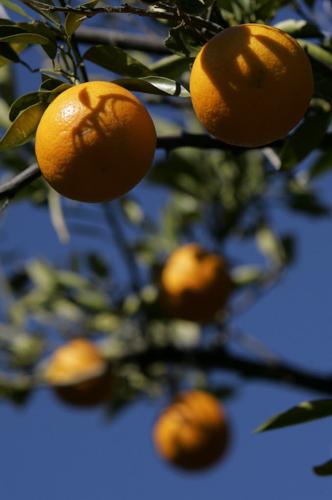
Q: How likely are seriously neglected mature citrus trees to recover?
Our trees are located in central Tucson and have curling leaves, and we will not be able to water them until after May 20. They probably have not been watered (other than rain of course) since last summer.
A: It’s hard to say for sure without seeing them. Curling leaves is a symptom of drought so watering soon would be good. That said, at least the leaves are still on the tree and that should give you hope. The next thing the trees will do without water is drop the leaves to reduce the amount of water escaping into the atmosphere through the leaves. Make sure that when you have the opportunity to water that you put the trees on drip irrigation arranged in a circular fashion around the drip line of the trees. The timing should be set for once every seven to 10 days now that we are experiencing the hottest and driest part of the year. Also make sure the water gets to a depth of 36 inches in the soil. You can measure this with a simple soil probe.
Peter L. Warren is the urban horticulture agent for the Pima County Cooperative Extension and the University of Arizona. Questions may be emailed to tucsongardensage@gmail.com
- By Peter L. Warren Special to the Arizona Daily Star
- Updated
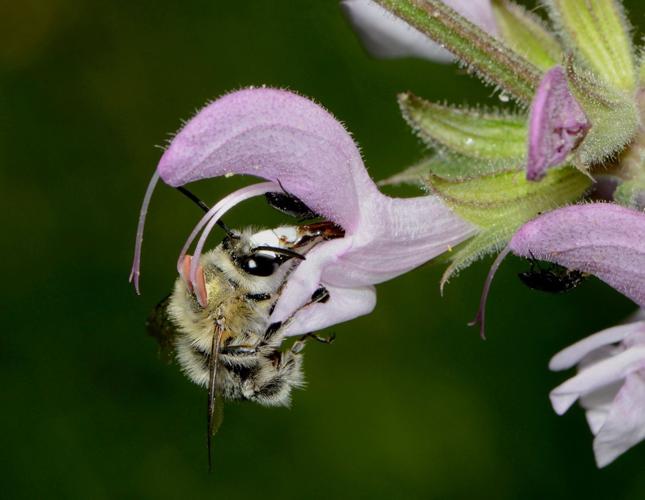
Q: Why are bees in my vegetable garden? They appear to be digging in the soil. Makes it impossible to get veggies.
A: Many species of solitary bees make their homes in the soil. A group called digger bees or Anthophora (meaning “flower bearer”) are extremely common and they sometimes nest in large numbers like a community of single-family homes. Your garden is likely a good spot, according to the bees. They are not typically aggressive should you want to work around them. If you want to discourage them from nesting there, one thing you can try is using an overhead sprinkler in the area where they are nesting. Digger bees will often seek a new habitat if there is regular water raining down on their holes. Since these are also some of our native pollinators, it is good to keep them alive and nearby, if not in your garden.
Peter L. Warren is the urban horticulture agent for the Pima County Cooperative Extension and the University of Arizona. Questions may be emailed to tucsongardensage@gmail.com
- By Peter L. Warren Special to the Arizona Daily Star
- Updated
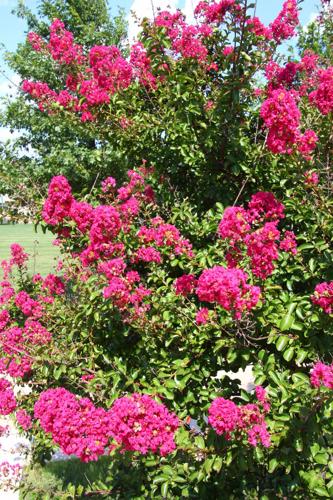
Q: Please tell me how and when to feed and care for crepe myrtle.
A: The crepe myrtle (Lagerstroemia indica) is an interesting woody Asian tree/shrub that grows well throughout the southern US. It does best in a loam/clay soil and needs regular watering.
By this I mean, every 7 to 14 days in the summer to a depth of 24 to 36 inches. In the spring and fall, water every 10 to 21 days and in the winter water every 14 to 21 days.
Fertilization can be done once each spring with a complete fertilizer such as 10-10-10 or you can use organic products such as composted manure. Make sure you water right after you apply the fertilizer.
In any case, a one to two inch layer of bark mulch over the root zone (being careful to keep it away from the trunk) will provide some protection for the roots from hot temperatures and help keep the root zone moist longer.
Some advocate for renovation pruning in the winter (called crepe murder by others) but this is hard on these plants so I recommend minimal pruning to remove dead and broken limbs, crossing and rubbing branches, and shape as needed.
Peter L. Warren is the urban horticulture agent for the Pima County Cooperative Extension and the University of Arizona. Questions may be emailed to
- By Peter L. Warren Special to the Arizona Daily Star
- Updated
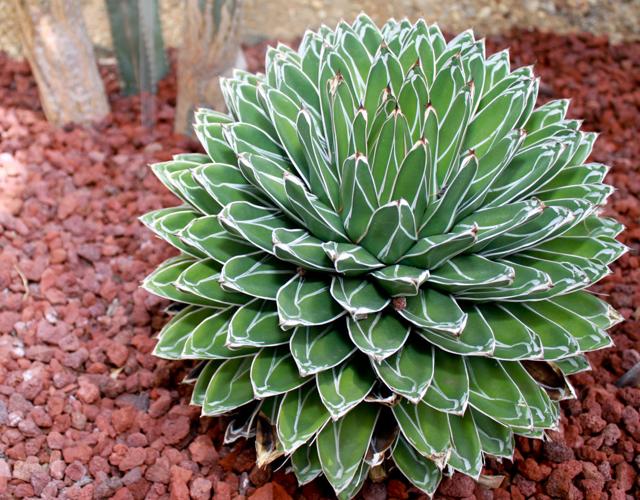
Q: Please tell me the name of this plant. Also if it blooms, will it then die?
A: This is the Queen Victoria agave (Agave victoriae-reginae). According to Greg Starr in his excellent book called “Agaves”, this is a Chihuahuan Desert species. It grows well throughout our area although it doesn’t do as well in the hot sun of the low desert so planting it in a spot with afternoon shade is a good idea. It is a slow growing species and after 20-25 years it will bloom and then die.
Peter L. Warren is the urban horticulture agent for the Pima County Cooperative Extension and the University of Arizona. Questions may be emailed to
- By Peter L. Warren Special to the Arizona Daily Star
- Updated
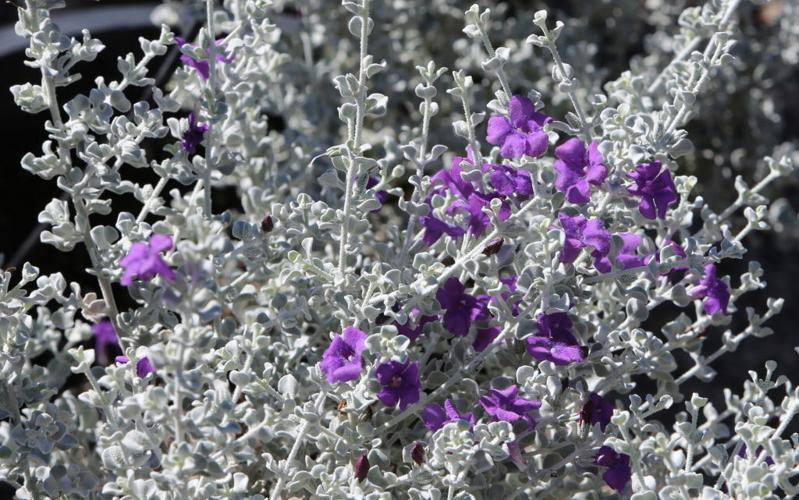
Q: Our HOA of 40-plus years has numerous sheared shrubs and we’re trying to renovate and naturalize as many as we can. I hope you can follow up your tree pruning advice with some on the positive approach of hard pruning or rejuvenating some currently sheared, older and overly large Texas rangers and oleanders.
A: Renovating or rejuvenating older, overly large, or previously sheared shrubs extends the life and improves the aesthetic value of these plants. One method is to cut all stems to about 12-18 inches above the ground.
This is a severe measure and changes the appearance drastically, however, when done in early spring before bud burst, causes a great number of stems to grow just below each cut by mid-summer. At that time, about half of the stems should be removed and the remaining ones should be cut back to different heights.
Varying the height and cutting just above an outward pointing bud will stimulate growth of new branches out of the canopy. According to University of Arizona Horticulture Specialist, Ursula Schuch, this procedure works well for larger fast growing shrubs like Texas ranger and oleander and for slower growing shrubs like hop bush and creosote.
Some shrubs such as cassias, arborvitae, rosemary, and junipers do not respond favorably to this treatment and might die. A less severe approach to rejuvenating shrubs is to remove half or more of the older unproductive branches at the base of the plant or those growing into the canopy. This thins out the plant to a much greater extent than regular maintenance pruning.
Follow-up care requires removing a portion of the new shoots a couple of weeks later, which might be too numerous and result in an overly dense canopy.
A third method of rejuvenation that spans three to four years and is less noticeable requires removing about one third to a quarter of the oldest unproductive branches each year. This method requires thinning excess branches and cutting back the remaining new branches as described before.
A common practice that is not recommended except in the case of formal hedges and topiaries is shearing. Shearing shrubs means cutting back branches to a uniform surface using heading cuts. We see all sorts of examples in our area where shrubs have been sheared to resemble beer can and meatball shapes. It doesn’t just look weird; it’s bad for other reasons.
The maintenance costs for sheared shrubs increases because they require repeat shearing more frequently than they would need regular pruning and they use more water to recover from this harsh treatment. Shearing stresses plants and can result in decline or death.
Peter L. Warren is the urban horticulture agent for the Pima County Cooperative Extension and the University of Arizona. Questions may be emailed to
- By Peter L. Warren Special to the Arizona Daily Star
- Updated
Q: I was in a shopping center yesterday and watched a landscape crew trimming the trees, if trimming is the word for what they were doing. I know little about the subject, but why would they cut so far back? There must be some good reason. We don’t get hurricanes, so that isn’t it.
A: There is no good reason for what was done to those trees. The pruning style is called tree topping and it is simply bad for the trees. Trees require a large leaf surface area to provide food for maintenance and growth.
Topping cuts off a major portion of the food making potential and depletes the stored reserves. While removing most of the buds that would form a normal branch system, topping often stimulates the regrowth of dense, unattractive, upright branches (water sprouts) just below the pruning cut. Water sprout regrowth is vigorous. A topped tree will rapidly return to its original height, but will lack its original form.
The branch wounds left from topping are slow to close, therefore more vulnerable to insect attacks and fungal decay. An invasion by either pest can spread into the trunk, killing the tree. Weakened stubs are more prone to wind and storm breakage because they generally begin to die back or decay.
Increased sun exposure on trunk and branches can lead to severe bark damage. Ugly branch stubs, conspicuous pruning cuts, and a broom-like branch growth replace natural beauty and form.
Topping reduces the real estate value of trees by 20 to 100 percent. A correctly trimmed tree increases in value at each pruning. If tree workers suggest topping, I would hire somebody else. I recommend using ISA Certified Arborists whenever possible to assure that your tree workers have received the proper training and passed an exam on the topics most critical to good tree care.
Peter L. Warren is the urban horticulture agent for the Pima County Cooperative Extension and the University of Arizona. Questions may be emailed to tucsongardensage@gmail.com
- By Peter L. Warren Special to the Arizona Daily Star
- Updated
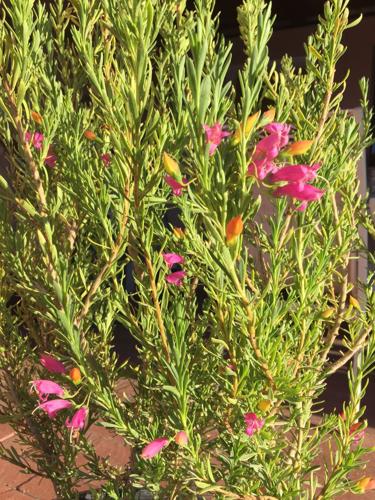
Q: I had an Eremophila racemosa for about three years until last week when it just dried up and died on me. I don’t know what happened. Is there some kind of insect that could have killed my bush? Also I would like to know about removing a stump from a tree that was cut down last year. I remember reading in your Sunday articles about how to remove a stump with some kind of natural items.
A: The emu shrub (Eremophila racemosa) is a desert-adapted plant from Australia. These plants are relatively free of insect pests, so I suspect that lack of water was the cause of its demise. In the summer, it is best to provide water every 7 to 14 days to a depth of 24 to 36 inches. In the spring and fall you can adjust your irrigation to water every 10 to 21 days and in the winter, every 14 to 21 days.
Stumps will naturally degrade in the soil. Depending on the size of the roots and the nature of your soil, it may take years to completely decompose. Fortunately for us, warmer soil temperatures are one factor that speeds up the process.
Other factors than can speed up the process include aerating the soil around the stump, irrigation of the stump as long as the water doesn’t accumulate, adding a small amount of nitrogen fertilizer and a layer of compost will help provide the microorganisms that break down the stump, and drilling holes in and/or scaring the stump and above ground roots provides access to fungi and bacteria that will aid in the process.
Peter L. Warren is the urban horticulture agent for the Pima County Cooperative Extension and the University of Arizona. Questions may be emailed to tucsongardensage@gmail.com
- By Peter L. Warren Special to the Arizona Daily Star
- Updated
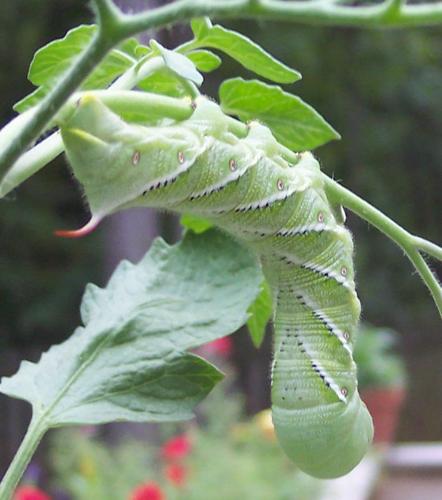
Q: We have several different types of trees in our yard that have for the past three to four years been infiltrated by those large green hornworms. It is a complete puzzle to us where they come from, as we have no tomato plants or vegetable garden of any kind, and also why they keep showing up every year.
My husband has sprayed the trees with a solution that usually causes the worms to fall to the ground and thereby easy to find and dispose of, but why are we having this problem year after year and what can we do to avoid it? The trees we find them in are ash and willow. Any advice you can give would be appreciated.
A: The hornworm caterpillars you are finding are related to the tomato hornworm but not necessarily the same species. Tomato hornworms feed on potato, tobacco, tomato, and other plants in the nightshade family (Solanaceae). Other species of hornworms will feed on other plants such as your trees.
The sphinx or hawk moth family (Sphingidae) to which the hornworms belong includes about 125 species in North America. Around 40 or so of these can be found in Pima County. They are called hornworms due to the conspicuous horn on the back end of their abdomen and that is a clue that helps identify them as members of this family.
The adult moths, which are excellent flyers, lay eggs on their host plants, often at night. These caterpillars are not considered to be pests on trees since trees can handle some defoliation without any adverse affects. The caterpillars are also a good food source for birds so you can leave the pest management to them and save yourself some time and money on the insecticides.
Plus, I am guessing you don’t want the birds to eat caterpillars laced with insecticides. There is no practical way to avoid this situation in the future. You like your trees and the caterpillars have to eat.
Peter L. Warren is the urban horticulture agent for the Pima County Cooperative Extension and the University of Arizona. Questions may be emailed to tucsongardensage@gmail.com
- By Peter L. Warren Special to the Arizona Daily Star
- Updated
Question: This past October, I planted three palo verde “desert museum” trees that were in 10-gallon containers. Also, a Texas mountain laurel that I previously emailed you about and a pyracantha and some lantana. We depart for the summer on April 14. I plan to set up an irrigation system. Can you advise me as to the size and number of emitters per tree, frequency of irrigation and duration of irrigation?
Answer: The number of emitters is based on the size of the tree, so if your trees are 7 to 10 feet in diameter, for example, you would use about four emitters that can deliver about 3 gallons per hour. If your trees are larger, you can add a couple more emitters every 4 or 5 feet in diameter larger. The emitters should be placed in a circular fashion at the edge of the crown of the tree or shrub. For desert species like the paloverde, watering every 14 to 21 days in the summer to a depth of 24 to 36 inches is best. In the winter, you shut off your irrigation for desert species unless we get no winter rain. The pyracantha will likely need more frequent irrigation, more like every week in the summer, and will still benefit from water every three weeks in the winter.
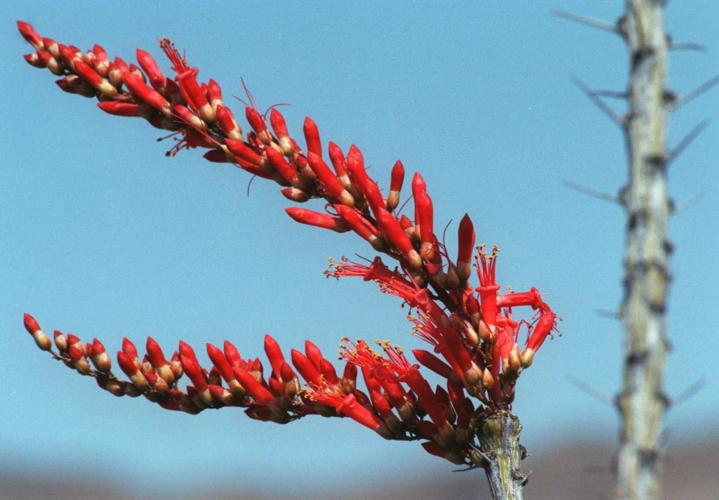
Question: Is my saguaro dying or dead? It is about 4 feet tall and eight years old. Professional landscapers transplanted it two years ago from its original spot facing in the same direction and only about 10 feet away. There are no drips around it and only receives water when it rains. I sure would appreciate your help to determine if I should replace it.
Answer: Your saguaro looks like it needs some water. The recommended irrigation schedule for cacti is once every 10 to 14 days in the summer and every 21 to 28 days during the spring and fall to a depth of 12 to 18 inches. Once nighttime temperatures go below 60 degrees, you can shut off the irrigation. Most cacti will survive without supplemental winter irrigation. Another recommendation, albeit too late in this case, would be to provide some shade cloth for newly transplanted cacti. Transplanting is a stressful thing for any plant, and shelter from the sun is one way to reduce that stress. Sunburned cacti turn yellow, and in extreme cases, too much sunburn can kill cacti. Your plant looks like it will survive if you can provide the irrigation, although time will tell.
Question: Yesterday I found two bees entering my single-story home’s rafters through two small openings in the stucco and wood. Also, the bees tracked toward me after I stood nearby. Then, this evening, I found a 20-inch-long and 2-inch-wide dark spot in my ceiling. The spot is directly below the two spots where I saw the bees entering the rafters. However, I don’t hear any buzzing. Also, I went into my attic area, but couldn’t see the floor due to the insulation in the attic. What actions would you recommend I take?
Answer: If you see honeybees coming and going from a hole in your home on a regular basis, there might be a colony living inside. The sign on your ceiling makes it more suspicious, and if related, could mean the bees have been there for a while. If you continue to see bees coming and going from that area, I recommend you have a professional take a closer look. This is a job for a beekeeper or a pesticide control operator. You don’t want a bunch of bees coming after you in defense of their colony. Depending on where you live, there is likely a list of people who will inspect this situation and do any remedial work for you for a fee. If you live in Tucson, a list can be found on the Tucson Beekeepers Facebook page.
Question: Why does my plant look sick?
Answer: Two things jump out at me right away. First, this plant is too close to the building. You can see that the leaves don’t have enough room to grow to their mature size. Likely this is a problem for the roots as well. The ideal thing to do would be to move this plant to a more suitable location before the summer heat begins. Secondly, the leaves are showing signs of drought and salt damage.
The brown tips are your first clue. Salt builds up in the root zone over time because our soils and water are high in salinity, and most fertilizers are as well. The solution for this part is to give the plant extra water every few months to wash the salt out of the root zone. Put the plant on a regular irrigation schedule of deep watering every 10 to 14 days in the summer, every 21 to 28 days in the spring and fall, and none in the winter, unless we get no rain.
Make sure the watering goes 12 to 18 inches deep in the soil.
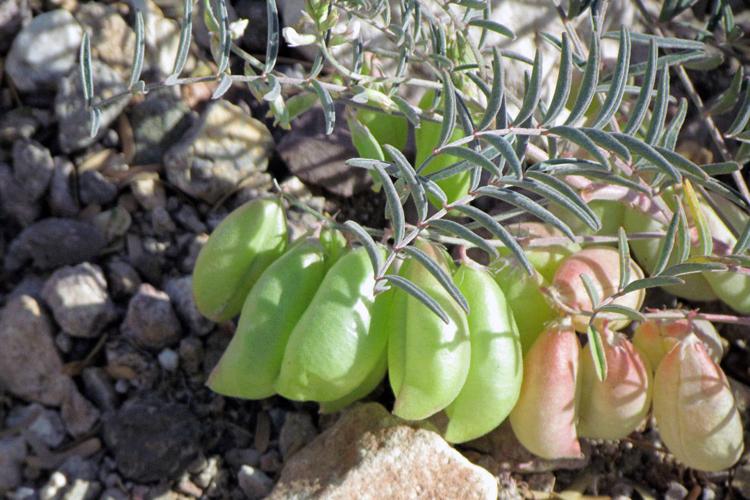
Question: A friend of mine took the attached photo while we were out walking along Kinney Road. Do you know what it is called? Oddest thing we’ve seen here in Tucson so far.
Answer: The odd looking plant you found is Wooton’s locoweed, also called half-moon milk vetch (Astragalus wootonii). It’s a Southwest desert native, and can be found from the California desert into Texas. It’s a member of the legume family Fabaceae. According to the USDA, it is a winter annual in the Southwest deserts, and in wet winters can be a major component of the creosote bush and saguaro cactus desert, mesquite savannahs and desert grasslands. It germinates following autumn rains, and continues to grow through the winter, becoming a large, robust plant with white to pinkish-purple flowers, followed by large, inflated, single-compartment pods. Once seeds are set, it dies back. Since it remains green and actively growing over winter, it is relatively palatable, and poses a significant risk of poisoning for grazing animals.
- By Peter L. Warren Special to the Arizona Daily Star
- Updated
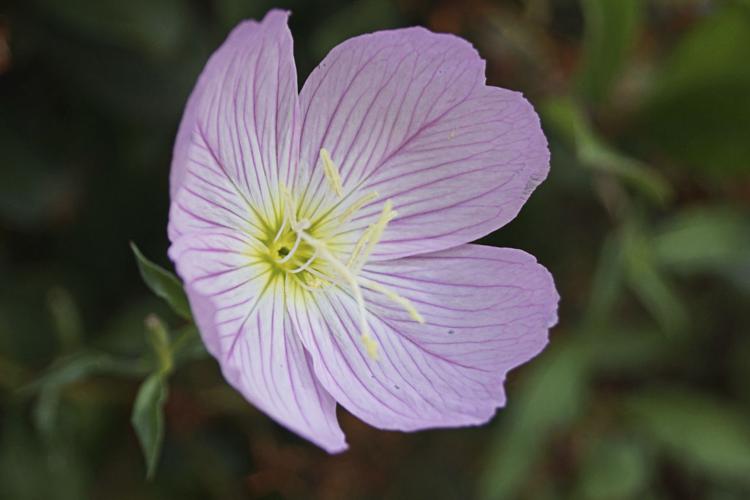
Q: How can I stop the infestation of Mexican primrose into my Bermuda lawn? Not knowing how invasive this plant can be, I placed several on a slope next to a grass area. Plants have now started growing in the grass.
A: Since Mexican primrose is a broadleaf plant, you can either pull it up as you see it or you can use a broadleaf herbicide to keep it out of your lawn area by spot treating where you see it coming up.
There are many broadleaf herbicides available and some are packaged with nonselective chemicals that also kill grass, like glyphosate.
It is important to read the label to make sure you are not also getting something that will kill your lawn and to make sure you understand the safety precautions for applying it.
Peter L. Warren is the urban horticulture agent for the Pima County Cooperative Extension and the University of Arizona. Questions and requests for site visits may be emailed to
- By Peter L. Warren Special to the Arizona Daily Star
- Updated
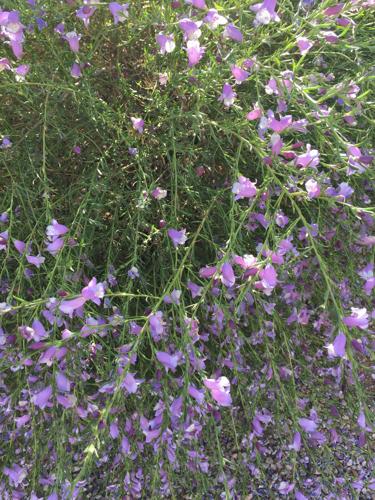
Q: I saw this plant while walking to work on campus. Can you tell me what it is?
A: The plant is called spotted emu bush (Eremophila divaricata). It’s an Australian native in the figwort or Scrophulariaceae family, which also includes the Texas rangers we see around these parts.
These shrubs do well in arid environments and seem to fair better with afternoon shade in our climate. Although they are desert-adapted plants, they do require some water.
Peter L. Warren is the urban horticulture agent for the Pima County Cooperative Extension and the University of Arizona. Questions and requests for site visits may be emailed to
- By Peter L. Warren Special to the Arizona Daily Star
- Updated
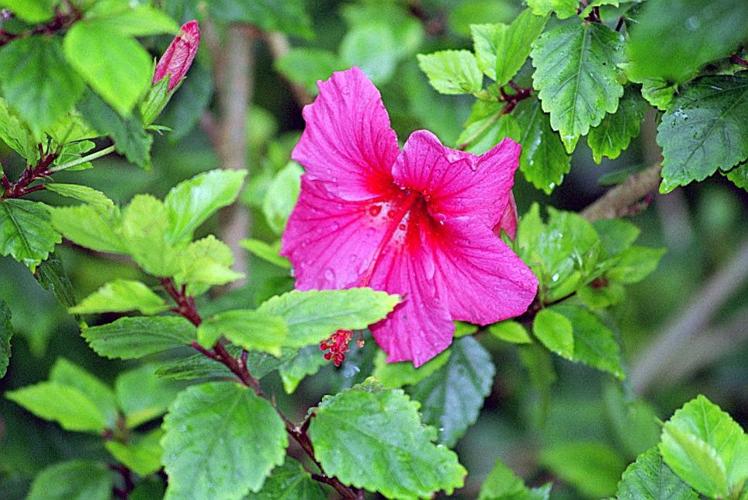
Q: I purchased a Hibiscus rosa-sinensis plant and I wonder if it can go in my front (open) patio. I don’t see many others around here in Green Valley, so I guess the javelina like them.
A: The hibiscus you purchased, sometimes called Chinese or Hawaiian hibiscus, is a tropical variety and would probably be best grown in a container in your neighborhood so that you can bring it indoors during the winter.
They don’t tolerate the temperatures we experience in the cool part of the year. The javelina would probably enjoy it as well, so maybe you maybe you can find an elevated place to put it out of reach or grow it indoors.
Peter L. Warren is the urban horticulture agent for the Pima County Cooperative Extension and the University of Arizona. Questions and requests for site visits may be emailed to
- By Peter L. Warren Special to the Arizona Daily Star
Q: I plan to buy a 15-gallon fruitless olive tree. Please tell me how much water daily or weekly it should be given once planted. The irrigation system in place for shrubs and trees comes on Monday and Friday for one hour. There are two black adjustable 10-gallon emitters where the tree will be planted. If the tree requires daily watering instead of the two days, I can water with a hose. When the temperature increases to 90 and higher, the irrigation system waters Monday, Wednesday, and Friday for two hours.
A: Olive trees should receive water every seven to 10 days in the summer to a depth of 24 to 36 inches. In the spring and fall, you can water every 10 to 14 days and in the winter, you can water every 14 to 21 days. Typically, two emitters can supply new trees as you described. As trees get older and their root zones increase in size, adding an emitter to the increasingly wider circle of drip irrigation would be appropriate every few years. The depth of irrigation can be measured with a soil probe. The schedule you are using now is watering too often and will encourage shallow root growth that will be more susceptible to our blast furnace summer heat.
Peter L. Warren is the urban horticulture agent for the Pima County Cooperative Extension and the University of Arizona. Questions may be emailed to
- By Peter L. Warren Special to the Arizona Daily Star
Q: My husband pruned two of our Mexican bird of paradise shrubs way down. Only one came back and is doing nicely. We have watered and used Miracle Grow fertilizer on the other one but nothing happens. Will it come back next season or do we need to replant a new one?
A: If you aren’t seeing any new growth by now, I suspect it’s a goner. You can scratch the surface of the branches to see if there is any green beneath. The good news is you can probably plant new ones from the seeds of the one that is doing nicely. The Mexican bird of paradise (Caesalpinia mexicana) is one of three species that grow in our area. The other two are the yellow (Caesalpinia gilliesii) and red (Caesalpinia pulcherrima) birds of paradise. A good time to prune is once blooming is finished. If you cut them too short, you risk killing them. Try just cutting back the top third next time to be safe. The flower stalks on all three species may be removed to prevent seedpods from forming and to reduce the likelihood of volunteer seedlings. If the pods are left on the plant to dry and split, the seeds can be thrown a surprising distance. The red bird of paradise dies back to ground at temperatures below freezing. It generally regrows in spring, from the ground and the dead parts can be pruned to a few inches above the ground in late winter. Mulching the base of plant in colder areas may protect the plant’s crown until spring.
Peter L. Warren is the urban horticulture agent for the Pima County Cooperative Extension and the University of Arizona. Questions may be emailed to
- By Peter L. Warren Special to the Arizona Daily Star
Q: When your time permits, Would you share your thoughts on this newest visitor to the garden? He/she has increased in numbers over the past weeks and I have yet to determine which plant is part of their meal choices.
A: The insect, Pyropyga nigricans, is a firefly species without a light. These are predatory insects and are garden helpers so you’re lucky to have them.
Peter L. Warren is the urban horticulture agent for the Pima County Cooperative Extension and the University of Arizona. Questions may be emailed to
- By Peter L. Warren Special to the Arizona Daily Star
Q: I have a lilac bush, which I purchased from a mail order company. It is about 12 years old, and it has never bloomed a single flower. It grows larger each year and has lush green foliage. I have given it fertilizer but nothing seems to help. What am I doing wrong?
A: The common lilac (Syringa vulgaris) is a favorite in many places so I understand your desire to grow them. Unfortunately, your place might not be suitable. Lack of blooms is usually related to one of six causes: the age of the plant, temperature, alternate flowering, light, nutrition, or pruning practices. In your situation, I think the likely problem is temperature. Lilacs require a certain amount of cold to trigger blooming, also known as vernalization. We don’t usually get enough cold in Southern Arizona for this plant to bloom unless you live at higher elevations. There are lilacs at the Santa Rita Experimental Range near Green Valley than have been monitored for bloom times by the USA National Phenology Network for many years. The elevation there is approximately 3,714 feet above sea level. You can check their web site for details if you are interested: usanpn.org/nn/lilacs
In downtown Tucson, where the elevation is closer to 2,389 and winter is barely recognizable, it’s too warm.
Peter L. Warren is the urban horticulture agent for the Pima County Cooperative Extension and the University of Arizona. Questions may be emailed to
- By Peter L. Warren Special to the Arizona Daily Star
Q: What are these bugs on this milkweed?
A: The red and black ones are milkweed bugs. That might seem like a snarky answer but it’s the official common name for these insects otherwise known as Oncopeltus fasciatus. They can also be found on oleander plants, which might explain why the yellow insects are called oleander aphids (Aphis nerii).
Both species are commonly found on milkweed and oleander plants. Insects tend to favor specific plants or plant families when they feed. Milkweed and oleander are relatives from the same plant family and known for their sap that contains cardiac glycosides, which are poisonous. The insects that ingest it as a food source are able to sequester it and become protected to some extent.
If you watch other animals preying on these insects, you may notice they spit them back out. The red and yellow coloration is nature’s way of warning predators to leave them alone but not everyone understands the warning signs without a taste test.
Peter L. Warren is the urban horticulture agent for the Pima County Cooperative Extension and the University of Arizona. Questions may be emailed to
- By Peter L. Warren Special to the Arizona Daily Star
Q: We have infested-with-mealybugs prickly pears on a border with a neighbor who insists that the only way to control the infestation is to use a Bayer Tree and Shrub chemical. I so dislike and try to avoid these solutions. Can you direct me to an online intelligent discussion that isn’t sponsored by Bayer? Or do you have a nonpoisonous alternative?
A: I suspect what you are seeing isn’t mealybugs but rather Cochineal scale (Dactylopious coccus) on your prickly pear cactus. The easiest treatment is spraying them with a hose. You can also use a soap solution (1 tablespoon per gallon of water).
While the Bayer product will kill these insects, it is also likely to kill beneficial insects in the area that may be feeding on the scale insects. You and your neighbor shouldn’t expect to eradicate these insects. They are very common in our area and will likely continue to feed on the cactus no matter what method you choose.
Fortunately, they aren’t likely to kill these plants if you spray them with a hose periodically.
Peter L. Warren is the urban horticulture agent for the Pima County Cooperative Extension and the University of Arizona. Questions may be emailed to
- By Peter L. Warren Special to the Arizona Daily Star
Q: I have six bougainvillea plants in my back yard. I have three on the east side and three on the west side planted about a year ago. Last summer the ones on the west side looked great and ones on the east side looked really bad. This summer the ones on the east side look great (see picture), the ones on the west side (not shown) look really bad.
We feed them and spray for bugs but still no luck. The water system goes off every other day at 7 a.m. and 3 p.m. My wife also waters them with the hose. But we can’t seem the get them to look good at the same time. Do you have any ideas as to what we can do?
A: Bougainvilleas are fairly tough plants once established and by the time they are a year old they should be doing well. The trouble last summer could have been from the shock of transplanting them. The plants on the east side appear to be getting western afternoon sun. That is where they do best and your plants on that side look great.
The plants on the west side appear to be getting eastern morning sun and might be shaded in the afternoon by the wall. Since full sun is prescribed for these plants, it could be a factor for the ones that may be shaded. It’s hard for me to say from the photos (not shown) how much shade they get but it’s something to keep in mind.
From your description, the trouble this year may be due to overfertilizing and overwatering. Once or twice each year is all you need to fertilize and watering should be done less often and deeper than your current schedule. Try switching your irrigation schedule to once every seven to 10 days to a depth of 12 to 18 inches in the summer. Then you can reduce the irrigation to once every two weeks in the fall and every three weeks in the winter.
Peter L. Warren is the urban horticulture agent for the Pima County Cooperative Extension and the University of Arizona. Questions may be emailed to
- By Peter L. Warren Special to the Arizona Daily Star
Q: The leaves/stalks in the center of my desert spoon plants are being eaten away about 6 inches up from the base. I don’t see any problem from the base and only water them about once per month with a hose. What is causing the problem and what can I do to make them healthy again?
A: It appears your desert spoons are a food source for a four-legged critter, probably javelina. These animals will feed on a variety of cacti and succulents. The solution is fencing or some sort of a detour around the plants you are trying to protect. Keep up the good care you are already providing and see if you can devise some fencing system that suits your landscape plan.
Peter L. Warren is the urban horticulture agent for the Pima County Cooperative Extension and the University of Arizona. Questions may be emailed to
- By Peter L. Warren Special to the Arizona Daily Star
Q: The attached photo, kindly sent to me by a friend who checks my house while we are away for the summer, shows my euphorbia houseplant with drooping stalks. I have been researching online, to no avail. As of a week ago, he said the plant still appeared green in color.
A: Euphorbias should be treated much like cactus. They need well-drained soil and can suffer from fungal diseases if left in too much water for too long. Your plant is showing signs of a vascular problem in that it cannot provide enough water pressure to keep some of the stems upright. Wilting like this can be a sign of underwatering but it can also be a sign of overwatering or disease when the stems are clogged with fungi.
If you can rule out under watering, then consider your container. From your photo, it appears the container doesn’t have a way to drain and if that’s true, it can be part of the problem. You might try cutting off a wilted stem and look at the cross section to see if it appears to be diseased. It would likely be discolored if it were diseased.
If so, it’s possible you can cut off the infested parts and still have a surviving plant. Be sure to disinfect your pruners between cutting diseased tissue and healthy parts in case it can be spread on your tools. You can use a diluted bleach solution or rubbing alcohol solution (one part to nine parts water).
Once you cut off the diseased parts, the first thing to do is see if your plant container can be replaced with one that drains so any excess water can be diverted from the root zone. If a disease has spread to the main stem, there might not be anything to do for your plant. Time will tell.
Peter L. Warren is the urban horticulture agent for the Pima County Cooperative Extension and the University of Arizona. Questions may be emailed to
- By Peter L. Warren Special to the Arizona Daily Star
Q: I have a palm tree where the frond tips are turning yellow. I know that the lower fronds usually turn yellow or brown due to age, but the yellowing tips are throughout the entire tree. I have not changed any watering or fertilizing schedules. Any thoughts on why this yellowing is occurring?
A: Frond tips turning yellow and brown are often a symptom of drought and excess salt in the soil around the roots. Fortunately, the cure for both of these is the same, more water.
A good soak once every few months will help wash the salt out of the root zone. The rest of the time these trees should be getting water every seven to 10 days in the summer, 10 to 14 days in the spring and fall, and every two to three weeks in the winter. Each time the water should reach a depth of 36 inches. With proper irrigation and an occasional soak, you will soon see how we can be good fronds for the palms.
Peter L. Warren is the urban horticulture agent for the Pima County Cooperative Extension and the University of Arizona. Questions may be emailed to
- By Peter L. Warren Special to the Arizona Daily Star
Q: We have three saguaros in our front yard, two, four and 10 feet tall. All appear to be healthy. The tallest one will get only two or three blooms each year. Before they can open they all dry up and fall off. Do you know what would cause this? Other saguaros in the area will have buds that open up into flowers. The 10-foot saguaro was transplanted into our yard about six years ago.
A: Dropping flower buds are sometimes associated with environmental stress, so first I’m curious to know if they are receiving enough irrigation. Some saguaros planted in our landscapes don’t end up in ideal locations so we might need to take better care of them than those in the wild desert.
Typically, they don’t need much water but they do need some. The recommendation is once every two weeks in the summer, every three to four weeks in the spring and fall, and none in the winter. Of course, you can skip the months where we get significant rain during the monsoon season. If you can rule out the water problem, consider what other factors in your environment could be affecting the area where they are growing.
Peter L. Warren is the urban horticulture agent for the Pima County Cooperative Extension and the University of Arizona. Questions may be emailed to
- By Peter L. Warren Special to the Arizona Daily Star
Q: I planted three Flowering Yoshino Cherry trees from pots about four years ago. Watered and fertilized the same for all these years. Two of the trees are doing okay. For some reason, one of the cherry trees started to drops its leaves. There is some kind of white sap coming out from the lower part of this one tree.
I do not know if the sap has anything to do with the tree dying. Do you know what might be causing the tree to look wilted and leaves to drop? This started before the high temperatures we have been getting.
A: Cherry trees and related fruit trees may ooze sap and drop leaves in response to injury. The injury can be due to freeze damage, insect feeding, disease, wounding from tools, hail, or sun scald of the bark. If you see any sawdust around the wound or in the sap, insects become a prime suspect.
The location of the wounds may be significant since some insects usually attack the lower trunk, others the upper branches. If you only see the cracking on the sunniest sides of the tree, the scalding is more likely.
From your photo, there doesn’t seem to be any obvious injuries from tools. If you experienced any freezing last winter or hail damage, they are possibly to blame. Please let me know if you come up with any more clues to help solve this puzzle.
Peter L. Warren is the urban horticulture agent for the Pima County Cooperative Extension and the University of Arizona. Questions may be emailed to
- By Peter L. Warren Special to the Arizona Daily Star
Q: We have a large acacia tree (the trunk is about 22 inches diameter) that is dropping leaves. We are wondering if it simply needs to be watered (though other acacia trees in the neighborhood are not getting watered and not dropping leaves). It also needs to be pruned, is there a person/company that you would recommend or can we do this ourselves?
A: Drought is certainly one reason trees drop leaves. I just checked the sweet acacia at our office and it is dropping leaves as well. It gets no water except rain. Desert trees like the acacia could use water every two to three weeks in the summer to a depth of 36 inches.
They can survive without for some time, but eventually they show symptoms. There are going to be differences between trees wherever you go and it’s hard to say without seeing them all what factors might be affecting these trees. Trees also lose leaves for other reasons such as pests and diseases.
If you examine some of the leaves under a magnifier you might see symptoms or signs of these potential problems. I would be glad to examine some if you want to bring them to my office. A good sample will include a small branch with some leaves still attached freshly pruned from the tree so anything living might be still attached.
Putting the sample in a zip lock bag will keep things contained until I can see them.
You can prune yourself as long as you know a little something about pruning. It’s not rocket science but there are some basic guidelines to help you take good care of your tree.
The following link will show you a publication on pruning that should help. If you decide to hire someone instead, there is a link below to the International Society of Arboristry web site that allows you to look up local arborists to consider.
extension.arizona.edu/sites/extension.arizona.edu/files/pubs/az1139.pdf
- By Peter L. Warren Special to the Arizona Daily Star
Q: My Arizona rosewood has some distorted leaves and fuzzy brown places at the ends of some of the distorted leaves. What could be causing this and what do I do about it?
A: The problem with your Arizona rosewood is witches broom rust called Gynosporangium vauquelinia. Rusts like this require an alternate host to complete their lifecycle.
This rust has juniper as an alternate host so there is likely an infested tree nearby or at least upwind from the rosewood. These rusts don’t kill the plants but they do reappear every year or two if the alternate host is still nearby. So you don’t need to do anything about it.
Peter L. Warren is the urban horticulture agent for the Pima County Cooperative Extension and the University of Arizona. Questions may be emailed to
- By Peter L. Warren Special to the Arizona Daily Star
Q: I was at the garden this morning and noticed how droopy our patch of sunflowers is! So I took a closer look and discovered that the leaves are infested with insects! There are little white aphid looking things, and then massive sections of black dot-looking bugs, especially underneath the leaves. Maybe you can tell from the photos I’ve attached. I did my best to give them a sudsing with Dawn. Do you think this is the remedy for these bugs? Any other thoughts?
A: The insects on your sunflowers are called lace bugs, not to be confused with lacewings, which are beneficial predators. The black spots are likely a combination of young lace bugs, which are that color, and their poop.
Lace bugs are of the true bug order we call Hemiptera and they have piercing-sucking mouthparts just like the aphids. So they suck out the sap rather than chewing the foliage. The result of large numbers of these lace bugs feeding over a period of weeks is discoloration and the droopy look you noticed.
Fortunately, they don’t damage the flowers as much as the leaves. Insecticidal soap is a good solution as is a blast from a hose. Some dish soaps are toxic to plants so if you don’t want to spend a bit more for actual insecticidal soap, you might try spraying only part of your plant to begin just in case. These insects tend to be on the underside of the leaves at least as much as we see them on the tops so make sure you spray the plants in such a way as to cover the underside of the leaves.
Peter L. Warren is the urban horticulture agent for the Pima County Cooperative Extension and the University of Arizona. Questions may be emailed to plwarren@cals.arizona.edu
- By Peter L. Warren Special to the Arizona Daily Star
Q: I have an Angel Red variety pomegranate tree that is 5 years old. It is producing a very good crop of fruit this year. I’m concerned about the care of my tree. Specifically, I would appreciate your advice on:
How often does it need fertilizing? I’ve been fertilizing only in the early spring.
How often should I water it in these very hot and dry conditions?
A: Pomegranates are tough plants that grow well in our arid conditions as long as we care for them. I recommend fertilizing once in the spring and then again in the fall. The fertilizer should be complete in that it contains equal amounts of nitrogen, phosphorus, and potassium, such as a 10-10-10 formulation. Irrigation should be provided every one to two weeks during the summer to a depth of 24 to 36 inches.
Keeping consistent irrigation throughout the growing season also helps prevent fruit from splitting. Pruning is something you do each winter to remove dead, damaged, and crossing branches. Also remove watersprouts and suckers as they appear.
Proper pruning involves removing these parts near the connection with larger branches, avoiding flush cuts and not leaving stubs either. There is more information on pruning available if you need it so please let me know. If you are okay with the natural shrubby form, this might be all you need to do. If you are trying for a tree form, there is more maintenance pruning to shape the plant and keep it that way.
Peter L. Warren is the urban horticulture agent for the Pima County Cooperative Extension and the University of Arizona. Questions may be emailed to
- By Peter L. Warren Special to the Arizona Daily Star
Q: What is going on with my rosemary bush? Two days ago I looked at the bush and discovered damage.
A: Rosemary (Rosmarinus officinalis) is a shrub that grows well in the desert. The natural form is shaggier than the sheared version you have growing. The damage you are seeing is likely a result of regular shearing of the foliage. Often shearing creates a shell of green that prevents light from entering the inner parts of the plant. Eventually dead spots will occur and regrowth from those branches will not likely happen. A better treatment would be less frequent light pruning as necessary and in a more selective fashion to allow the plant to achieve its natural form and to open up the plant a bit to light, air, and water.
Peter L. Warren is the urban horticulture agent for the Pima County Cooperative Extension and the University of Arizona. Questions may be emailed to tucsongardensage@gmail.com
- By Peter L. Warren Special to the Arizona Daily Star
Q: This year, we have some peaches with dimples. The fruit is rotten inside. Could it be a plant pathogen of some kind?
A: The short answer is yes. Your peaches are likely suffering from a pathogen as a result of insect feeding damage. The prime suspect in this case is the leaf-footed bug. These insects have piercing-sucking mouthparts and while feeding on young developing fruit leave scars that are known as cat-facing and sometimes this feeding activity will introduce fungi that may cause the rot.
Leaf-footed bugs are common in our area and may feed on a variety of plants including pomegranate, pecan, citrus, and peaches. They are difficult to manage once in the adult stage because they can fly and move about quickly.
There are insecticides available, but they are only effective on the young bugs. These insecticides are harmful to bees, so take care to avoid spraying plants in bloom. Monitoring for and removing egg masses in the early spring is another tactic that is potentially more successful if you are persistently looking in the spring when eggs are laid and young bugs are emerging from them.
Peter L. Warren is the urban horticulture agent for the Pima County Cooperative Extension and the University of Arizona. Questions may be emailed to tucsongardensage@gmail.com
- By Peter L. Warren Special to the Arizona Daily Star
Q: I purchased this sugar bush at Desert Survivors Native Plant Nursery two years ago. It chronically looks like it isn’t getting enough water; there are dry, brown leaves. It is planted in desert soil with a cactus mix amendment. It is on a shrub line that runs twice a week right now, for 2½ hours. I have played with the emitter flow and am putting about 20 gallons each application. It gets sun until about 3 p.m. Is there anything I can do to help it thrive?
A: Sugar bush (Rhus ovata) is a moderate water user but twice per week at 20 gallons each application seems like a lot of water for a native shrub. If you aren’t checking to see how deep the water is going, I suggest using a soil probe to determine the depth of the watering. Ideally, water should reach a depth of 24 to 36 inches. I recommend backing off your irrigation to once a week for the summer and once every two weeks in the spring and fall.
Overwatering sometimes shows similar symptoms to underwatering, so looks can be deceiving.
Peter L. Warren is the urban horticulture agent for the Pima County Cooperative Extension and the University of Arizona. Questions may be emailed to tucsongardensage@gmail.com
- By Peter L. Warren Special to the Arizona Daily Star
Q: I am sending two photos of my desert willow tree, now in its fourth spring. The buds form, grow and then dry out before opening. Have taken samples to Mesquite Valley Growers. They see no evidence of pests or disease, and recommended more water and fertilizer. The leaves seem smaller and shorter than others I see.
A: I agree with Mesquite Valley Growers; the symptoms you describe are likely related to insufficient watering. The recommended schedule for desert trees is once every two to three weeks in the spring, summer, and fall to a depth of 24 to 36 inches. An annual spring fertilizer application wouldn’t hurt either, making sure the fertilizer is watered in to reach the absorbing roots.
Peter L. Warren is the urban horticulture agent for the Pima County Cooperative Extension and the University of Arizona. Questions may be emailed to tucsongardensage@gmail.com
- By Peter L. Warren Special to the Arizona Daily Star
Q: We have 30-year-old Rhaphiolepis indica planted in a slightly raised planter. One side was particularly hit hard by the freeze a few years ago (17 degrees in Tucson in February), or so we thought, until we caught a couple of deer munching on that particular shrub. It never recovered from the munching. The shrubs on the other side of the planter were doing well until four deer became emboldened and began munching on the flowers and new leaf growth on the other side near our front gate. Those plants, too, have stopped putting on new leaves and weeks later look exactly like the deer left them. What can we do to rejuvenate the plants/encourage them to grow again?
A: Deer munching is definitely a hazard for Rhaphiolepis indica (Indian hawthorn), so some sort of fencing or detours around your shrub are required before you spend a lot of time on rejuvenation.
The best time to prune is around May or when it is finished blooming. You can selectively prune out the damaged branches where deer were feeding. From your photo the shrub looks pretty full and selective pruning should help open it up to more light, air, and water as well. Otherwise, continue to provide sufficient water, fertilize annually and monitor deer activity as needed.
Peter L. Warren is the urban horticulture agent for the Pima County Cooperative Extension and the University of Arizona. Questions may be emailed to tucsongardensage@gmail.com
- By Peter L. Warren Special to the Arizona Daily Star
Q: We moved into this home a couple of years ago in Benson. We have a lot of prickly pear cactus in the yard. I just noticed that some of the bigger plants have black spots on them. Is there something we can do to stop or protect the others in our yard from getting whatever it is?
A: The disease you are seeing is called Phyllosticta pad spot. These lesions are commonly seen on pads of prickly pear cacti (Opuntia species) and may be caused by several different pests or environmental conditions. However, the most common pad spot on the Engelmann’s prickly pear in the Arizona desert is caused by a species of the fungus Phyllosticta. The disease is found throughout the desert. Lesions are almost completely black because of the presence of small black reproductive structures called pycnidia produced on the surface of infected plant tissue. Spores produced within these reproductive structures are easily disseminated by windblown rain or dripping water and infect new sites on nearby pads. Pads on the lower part of plants are often most heavily infected since the humidity is higher and moisture often persists after rain. Once pads dry, the fungus becomes inactive. The lesions may fall out, leaving holes in the pads. Severely infected pads or entire plants should be removed from landscapes to prevent fungus spread.
- By Peter L. Warren Special to the Arizona Daily Star
Q: I have a question about compost. My neighbors have two eucalyptus trees, which shed many leaves into my yard. Are these good to put into the compost or not? I have concerns because of oil they may have in the leaves.
A: Eucalyptus leaves are fine for compost. They need to be broken down like any plant matter put into compost so that any compounds that are otherwise harmful will be neutralized. The oil that you refer to has been reported to interfere with germination in some plants but that is not something to be concerned about with composted material.
Peter L. Warren is the urban horticulture agent for the Pima County Cooperative Extension and the University of Arizona. Questions may be emailed to tucsongardensage@gmail.com
- By Peter L. Warren Special to the Arizona Daily Star
Q: This may be an odd question but here goes: I have an apricot tree in my yard (at least 15 years old) and it was a dwarf/ semi-dwarf when I planted it. I chose one that required the lowest chilling hours. I cannot remember the type or the name. It is still a reliable producer, self-pollinating and ripens in May. Do you have any guesses what the name of it could be? I think I remember the name included the word Gold.
A: I suspect your apricot variety is Gold Kist. This is an excellent backyard apricot for warm winter climates. Its features include very good quality, freestone fruit, and it is heavy bearing. It is an early harvest variety, from late May to early June. It requires 300 chill hours and is self-fruitful.
- By Peter L. Warren Special to the Arizona Daily Star
Q: These caterpillar bugs are all over my Texas mountain laurel (the same one that had the red and black plant bugs in March – which I sprayed off with a soap solution). There are probably at least 10 groups of these caterpillars on the tree. Suggestions?
A: These insects are called genista caterpillars (Uresiphita reversalis) and they are commonly found throughout the southwest on Texas mountain laurels. Their damage doesn’t affect the overall health of the tree unless there are unusually high numbers of them. The damage is often only cosmetic. The same soap solution can be used against these caterpillars. Soap acts an irritant and doesn’t always completely solve the problem. You might get the same result by spraying them with a hose. The benefit of the caterpillars is they are food for birds so you could leave them there and put up with the minor damage the caterpillars cause when feeding. Other solutions include pruning off the infested ends of branches, hand-picking the caterpillars, and various insecticides labeled for use on landscape trees and shrubs. An organic solution is spraying Bt (Bacillus thuringiensis) on the leaves where they are feeding. This works best when the caterpillars are young and most susceptible to the poison. The Bt bacteria are poisonous to caterpillars but not to anything else. Since there are several strains of Bt, make sure you use the one labeled for caterpillar pests. As always, when using any pesticide it is important to read the label and follow instructions to protect you and those other non-target organisms that might be exposed to the spray. By the way, the red and black bugs (Lopidea major) you saw earlier this year are also just a minor pest that feeds on Texas mountain laurel.
Peter L. Warren is the urban horticulture agent for the Pima County Cooperative Extension and the University of Arizona. Questions may be emailed totucsongardensage@gmail.com
- By Peter L. Warren Special to the Arizona Daily Star
Q: I have a question related to the “Desert Museum” palo verde.
I want to plant this tree at our house, but I am a little wary because of the threat of palo verde beetles getting to the roots and killing it prematurely. Perhaps you can help me assess this risk?
A: The main risk for these beetles is an unhealthy tree. The palo verde beetle is endemic to this area and there is little to be done to a tree that has been infested. They are known to attack stressed trees so the best prevention is to keep trees as healthy as possible. This is primarily accomplished by providing proper irrigation and pruning. Since these are native desert trees they can survive on rainwater but when we have drier conditions than usual, supplemental water can help. Typically for desert trees this means installing drip irrigation around the tree at the drip line and providing deep watering to a depth of 24 to 36 inches every 14 to 21 days in the spring, summer, and fall. In the winter you can skip the irrigation, assuming we have normal winter rains. Proper pruning when the tree is young will result in a mature tree that is structurally stronger, lives longer, and is less costly to maintain. Don’t be in a hurry to prune at planting. A newly planted young tree should be given a chance to put down roots before taking any branches off unless they were damaged in the planting process. After a year or so it will be time to structurally prune your tree to ensure its long-term health.
Peter L. Warren is the urban horticulture agent for the Pima County Cooperative Extension and the University of Arizona. Questions may be emailed to tucsongardensage@gmail.com
- By Peter L. Warren Special to the Arizona Daily Star
Q: I have a customer who is trying to identify a plant. She says it can change directions of the branching/leaves almost at will. It has leaves like a wild chive or a hesperaloe combination.
A: It is from the genus Kniphofia, and commonly called tritoma, red-hot poker, torch lily, knofflers, or poker plant. They are closely related to aloes, although Kniphofias don’t have very succulent leaves. There are quite a few species and cultivars of different colors. It is native to Africa. The plant has a mature height of 2 to 4 feet and a width of 3 feet. It does well in a site with full sun and well-drained soil.
Peter L. Warren is the urban horticulture agent for the Pima County Cooperative Extension and the University of Arizona. Questions may be emailed to tucsongardensage@gmail.com
- By Peter L. Warren Special to the Arizona Daily Star
Q: My orange tree has been very productive for 14 years but it put out small fruit last year and this year it is blooming more than a month later than usual. Is something wrong with my tree?
A: Both symptoms you described, small fruit and odd bloom time, are associated with lack of water. It is possible that your irrigation system needs adjusting, so that would be the first thing to check. Also we had a relatively dry late winter and early spring this year. If you reduced your irrigation for the winter as recommended and then experienced no rain in February and March, your tree was probably in need of more water. Citrus trees sometimes respond to drought conditions followed by rain with a bloom about a month later, which corresponds to the rain you had in early April.
Peter L. Warren is the urban horticulture agent for the Pima County Cooperative Extension and the University of Arizona. Questions may be emailed to tucsongardensage@gmail.com
- By Peter L. Warren Special to the Arizona Daily Star
Q: How likely are seriously neglected mature citrus trees to recover?
Our trees are located in central Tucson and have curling leaves, and we will not be able to water them until after May 20. They probably have not been watered (other than rain of course) since last summer.
A: It’s hard to say for sure without seeing them. Curling leaves is a symptom of drought so watering soon would be good. That said, at least the leaves are still on the tree and that should give you hope. The next thing the trees will do without water is drop the leaves to reduce the amount of water escaping into the atmosphere through the leaves. Make sure that when you have the opportunity to water that you put the trees on drip irrigation arranged in a circular fashion around the drip line of the trees. The timing should be set for once every seven to 10 days now that we are experiencing the hottest and driest part of the year. Also make sure the water gets to a depth of 36 inches in the soil. You can measure this with a simple soil probe.
Peter L. Warren is the urban horticulture agent for the Pima County Cooperative Extension and the University of Arizona. Questions may be emailed to tucsongardensage@gmail.com
- By Peter L. Warren Special to the Arizona Daily Star
Q: Why are bees in my vegetable garden? They appear to be digging in the soil. Makes it impossible to get veggies.
A: Many species of solitary bees make their homes in the soil. A group called digger bees or Anthophora (meaning “flower bearer”) are extremely common and they sometimes nest in large numbers like a community of single-family homes. Your garden is likely a good spot, according to the bees. They are not typically aggressive should you want to work around them. If you want to discourage them from nesting there, one thing you can try is using an overhead sprinkler in the area where they are nesting. Digger bees will often seek a new habitat if there is regular water raining down on their holes. Since these are also some of our native pollinators, it is good to keep them alive and nearby, if not in your garden.
Peter L. Warren is the urban horticulture agent for the Pima County Cooperative Extension and the University of Arizona. Questions may be emailed to tucsongardensage@gmail.com
- By Peter L. Warren Special to the Arizona Daily Star
Q: Please tell me how and when to feed and care for crepe myrtle.
A: The crepe myrtle (Lagerstroemia indica) is an interesting woody Asian tree/shrub that grows well throughout the southern US. It does best in a loam/clay soil and needs regular watering.
By this I mean, every 7 to 14 days in the summer to a depth of 24 to 36 inches. In the spring and fall, water every 10 to 21 days and in the winter water every 14 to 21 days.
Fertilization can be done once each spring with a complete fertilizer such as 10-10-10 or you can use organic products such as composted manure. Make sure you water right after you apply the fertilizer.
In any case, a one to two inch layer of bark mulch over the root zone (being careful to keep it away from the trunk) will provide some protection for the roots from hot temperatures and help keep the root zone moist longer.
Some advocate for renovation pruning in the winter (called crepe murder by others) but this is hard on these plants so I recommend minimal pruning to remove dead and broken limbs, crossing and rubbing branches, and shape as needed.
Peter L. Warren is the urban horticulture agent for the Pima County Cooperative Extension and the University of Arizona. Questions may be emailed to
- By Peter L. Warren Special to the Arizona Daily Star
Q: Please tell me the name of this plant. Also if it blooms, will it then die?
A: This is the Queen Victoria agave (Agave victoriae-reginae). According to Greg Starr in his excellent book called “Agaves”, this is a Chihuahuan Desert species. It grows well throughout our area although it doesn’t do as well in the hot sun of the low desert so planting it in a spot with afternoon shade is a good idea. It is a slow growing species and after 20-25 years it will bloom and then die.
Peter L. Warren is the urban horticulture agent for the Pima County Cooperative Extension and the University of Arizona. Questions may be emailed to
- By Peter L. Warren Special to the Arizona Daily Star
Q: Our HOA of 40-plus years has numerous sheared shrubs and we’re trying to renovate and naturalize as many as we can. I hope you can follow up your tree pruning advice with some on the positive approach of hard pruning or rejuvenating some currently sheared, older and overly large Texas rangers and oleanders.
A: Renovating or rejuvenating older, overly large, or previously sheared shrubs extends the life and improves the aesthetic value of these plants. One method is to cut all stems to about 12-18 inches above the ground.
This is a severe measure and changes the appearance drastically, however, when done in early spring before bud burst, causes a great number of stems to grow just below each cut by mid-summer. At that time, about half of the stems should be removed and the remaining ones should be cut back to different heights.
Varying the height and cutting just above an outward pointing bud will stimulate growth of new branches out of the canopy. According to University of Arizona Horticulture Specialist, Ursula Schuch, this procedure works well for larger fast growing shrubs like Texas ranger and oleander and for slower growing shrubs like hop bush and creosote.
Some shrubs such as cassias, arborvitae, rosemary, and junipers do not respond favorably to this treatment and might die. A less severe approach to rejuvenating shrubs is to remove half or more of the older unproductive branches at the base of the plant or those growing into the canopy. This thins out the plant to a much greater extent than regular maintenance pruning.
Follow-up care requires removing a portion of the new shoots a couple of weeks later, which might be too numerous and result in an overly dense canopy.
A third method of rejuvenation that spans three to four years and is less noticeable requires removing about one third to a quarter of the oldest unproductive branches each year. This method requires thinning excess branches and cutting back the remaining new branches as described before.
A common practice that is not recommended except in the case of formal hedges and topiaries is shearing. Shearing shrubs means cutting back branches to a uniform surface using heading cuts. We see all sorts of examples in our area where shrubs have been sheared to resemble beer can and meatball shapes. It doesn’t just look weird; it’s bad for other reasons.
The maintenance costs for sheared shrubs increases because they require repeat shearing more frequently than they would need regular pruning and they use more water to recover from this harsh treatment. Shearing stresses plants and can result in decline or death.
Peter L. Warren is the urban horticulture agent for the Pima County Cooperative Extension and the University of Arizona. Questions may be emailed to
- By Peter L. Warren Special to the Arizona Daily Star
Q: I was in a shopping center yesterday and watched a landscape crew trimming the trees, if trimming is the word for what they were doing. I know little about the subject, but why would they cut so far back? There must be some good reason. We don’t get hurricanes, so that isn’t it.
A: There is no good reason for what was done to those trees. The pruning style is called tree topping and it is simply bad for the trees. Trees require a large leaf surface area to provide food for maintenance and growth.
Topping cuts off a major portion of the food making potential and depletes the stored reserves. While removing most of the buds that would form a normal branch system, topping often stimulates the regrowth of dense, unattractive, upright branches (water sprouts) just below the pruning cut. Water sprout regrowth is vigorous. A topped tree will rapidly return to its original height, but will lack its original form.
The branch wounds left from topping are slow to close, therefore more vulnerable to insect attacks and fungal decay. An invasion by either pest can spread into the trunk, killing the tree. Weakened stubs are more prone to wind and storm breakage because they generally begin to die back or decay.
Increased sun exposure on trunk and branches can lead to severe bark damage. Ugly branch stubs, conspicuous pruning cuts, and a broom-like branch growth replace natural beauty and form.
Topping reduces the real estate value of trees by 20 to 100 percent. A correctly trimmed tree increases in value at each pruning. If tree workers suggest topping, I would hire somebody else. I recommend using ISA Certified Arborists whenever possible to assure that your tree workers have received the proper training and passed an exam on the topics most critical to good tree care.
Peter L. Warren is the urban horticulture agent for the Pima County Cooperative Extension and the University of Arizona. Questions may be emailed to tucsongardensage@gmail.com
- By Peter L. Warren Special to the Arizona Daily Star
Q: I had an Eremophila racemosa for about three years until last week when it just dried up and died on me. I don’t know what happened. Is there some kind of insect that could have killed my bush? Also I would like to know about removing a stump from a tree that was cut down last year. I remember reading in your Sunday articles about how to remove a stump with some kind of natural items.
A: The emu shrub (Eremophila racemosa) is a desert-adapted plant from Australia. These plants are relatively free of insect pests, so I suspect that lack of water was the cause of its demise. In the summer, it is best to provide water every 7 to 14 days to a depth of 24 to 36 inches. In the spring and fall you can adjust your irrigation to water every 10 to 21 days and in the winter, every 14 to 21 days.
Stumps will naturally degrade in the soil. Depending on the size of the roots and the nature of your soil, it may take years to completely decompose. Fortunately for us, warmer soil temperatures are one factor that speeds up the process.
Other factors than can speed up the process include aerating the soil around the stump, irrigation of the stump as long as the water doesn’t accumulate, adding a small amount of nitrogen fertilizer and a layer of compost will help provide the microorganisms that break down the stump, and drilling holes in and/or scaring the stump and above ground roots provides access to fungi and bacteria that will aid in the process.
Peter L. Warren is the urban horticulture agent for the Pima County Cooperative Extension and the University of Arizona. Questions may be emailed to tucsongardensage@gmail.com
- By Peter L. Warren Special to the Arizona Daily Star
Q: We have several different types of trees in our yard that have for the past three to four years been infiltrated by those large green hornworms. It is a complete puzzle to us where they come from, as we have no tomato plants or vegetable garden of any kind, and also why they keep showing up every year.
My husband has sprayed the trees with a solution that usually causes the worms to fall to the ground and thereby easy to find and dispose of, but why are we having this problem year after year and what can we do to avoid it? The trees we find them in are ash and willow. Any advice you can give would be appreciated.
A: The hornworm caterpillars you are finding are related to the tomato hornworm but not necessarily the same species. Tomato hornworms feed on potato, tobacco, tomato, and other plants in the nightshade family (Solanaceae). Other species of hornworms will feed on other plants such as your trees.
The sphinx or hawk moth family (Sphingidae) to which the hornworms belong includes about 125 species in North America. Around 40 or so of these can be found in Pima County. They are called hornworms due to the conspicuous horn on the back end of their abdomen and that is a clue that helps identify them as members of this family.
The adult moths, which are excellent flyers, lay eggs on their host plants, often at night. These caterpillars are not considered to be pests on trees since trees can handle some defoliation without any adverse affects. The caterpillars are also a good food source for birds so you can leave the pest management to them and save yourself some time and money on the insecticides.
Plus, I am guessing you don’t want the birds to eat caterpillars laced with insecticides. There is no practical way to avoid this situation in the future. You like your trees and the caterpillars have to eat.
Peter L. Warren is the urban horticulture agent for the Pima County Cooperative Extension and the University of Arizona. Questions may be emailed to tucsongardensage@gmail.com
- By Peter L. Warren Special to the Arizona Daily Star
Question: This past October, I planted three palo verde “desert museum” trees that were in 10-gallon containers. Also, a Texas mountain laurel that I previously emailed you about and a pyracantha and some lantana. We depart for the summer on April 14. I plan to set up an irrigation system. Can you advise me as to the size and number of emitters per tree, frequency of irrigation and duration of irrigation?
Answer: The number of emitters is based on the size of the tree, so if your trees are 7 to 10 feet in diameter, for example, you would use about four emitters that can deliver about 3 gallons per hour. If your trees are larger, you can add a couple more emitters every 4 or 5 feet in diameter larger. The emitters should be placed in a circular fashion at the edge of the crown of the tree or shrub. For desert species like the paloverde, watering every 14 to 21 days in the summer to a depth of 24 to 36 inches is best. In the winter, you shut off your irrigation for desert species unless we get no winter rain. The pyracantha will likely need more frequent irrigation, more like every week in the summer, and will still benefit from water every three weeks in the winter.
Question: Is my saguaro dying or dead? It is about 4 feet tall and eight years old. Professional landscapers transplanted it two years ago from its original spot facing in the same direction and only about 10 feet away. There are no drips around it and only receives water when it rains. I sure would appreciate your help to determine if I should replace it.
Answer: Your saguaro looks like it needs some water. The recommended irrigation schedule for cacti is once every 10 to 14 days in the summer and every 21 to 28 days during the spring and fall to a depth of 12 to 18 inches. Once nighttime temperatures go below 60 degrees, you can shut off the irrigation. Most cacti will survive without supplemental winter irrigation. Another recommendation, albeit too late in this case, would be to provide some shade cloth for newly transplanted cacti. Transplanting is a stressful thing for any plant, and shelter from the sun is one way to reduce that stress. Sunburned cacti turn yellow, and in extreme cases, too much sunburn can kill cacti. Your plant looks like it will survive if you can provide the irrigation, although time will tell.
Question: Yesterday I found two bees entering my single-story home’s rafters through two small openings in the stucco and wood. Also, the bees tracked toward me after I stood nearby. Then, this evening, I found a 20-inch-long and 2-inch-wide dark spot in my ceiling. The spot is directly below the two spots where I saw the bees entering the rafters. However, I don’t hear any buzzing. Also, I went into my attic area, but couldn’t see the floor due to the insulation in the attic. What actions would you recommend I take?
Answer: If you see honeybees coming and going from a hole in your home on a regular basis, there might be a colony living inside. The sign on your ceiling makes it more suspicious, and if related, could mean the bees have been there for a while. If you continue to see bees coming and going from that area, I recommend you have a professional take a closer look. This is a job for a beekeeper or a pesticide control operator. You don’t want a bunch of bees coming after you in defense of their colony. Depending on where you live, there is likely a list of people who will inspect this situation and do any remedial work for you for a fee. If you live in Tucson, a list can be found on the Tucson Beekeepers Facebook page.
Question: Why does my plant look sick?
Answer: Two things jump out at me right away. First, this plant is too close to the building. You can see that the leaves don’t have enough room to grow to their mature size. Likely this is a problem for the roots as well. The ideal thing to do would be to move this plant to a more suitable location before the summer heat begins. Secondly, the leaves are showing signs of drought and salt damage.
The brown tips are your first clue. Salt builds up in the root zone over time because our soils and water are high in salinity, and most fertilizers are as well. The solution for this part is to give the plant extra water every few months to wash the salt out of the root zone. Put the plant on a regular irrigation schedule of deep watering every 10 to 14 days in the summer, every 21 to 28 days in the spring and fall, and none in the winter, unless we get no rain.
Make sure the watering goes 12 to 18 inches deep in the soil.
Question: A friend of mine took the attached photo while we were out walking along Kinney Road. Do you know what it is called? Oddest thing we’ve seen here in Tucson so far.
Answer: The odd looking plant you found is Wooton’s locoweed, also called half-moon milk vetch (Astragalus wootonii). It’s a Southwest desert native, and can be found from the California desert into Texas. It’s a member of the legume family Fabaceae. According to the USDA, it is a winter annual in the Southwest deserts, and in wet winters can be a major component of the creosote bush and saguaro cactus desert, mesquite savannahs and desert grasslands. It germinates following autumn rains, and continues to grow through the winter, becoming a large, robust plant with white to pinkish-purple flowers, followed by large, inflated, single-compartment pods. Once seeds are set, it dies back. Since it remains green and actively growing over winter, it is relatively palatable, and poses a significant risk of poisoning for grazing animals.
- By Peter L. Warren Special to the Arizona Daily Star
Q: How can I stop the infestation of Mexican primrose into my Bermuda lawn? Not knowing how invasive this plant can be, I placed several on a slope next to a grass area. Plants have now started growing in the grass.
A: Since Mexican primrose is a broadleaf plant, you can either pull it up as you see it or you can use a broadleaf herbicide to keep it out of your lawn area by spot treating where you see it coming up.
There are many broadleaf herbicides available and some are packaged with nonselective chemicals that also kill grass, like glyphosate.
It is important to read the label to make sure you are not also getting something that will kill your lawn and to make sure you understand the safety precautions for applying it.
Peter L. Warren is the urban horticulture agent for the Pima County Cooperative Extension and the University of Arizona. Questions and requests for site visits may be emailed to
- By Peter L. Warren Special to the Arizona Daily Star
Q: I saw this plant while walking to work on campus. Can you tell me what it is?
A: The plant is called spotted emu bush (Eremophila divaricata). It’s an Australian native in the figwort or Scrophulariaceae family, which also includes the Texas rangers we see around these parts.
These shrubs do well in arid environments and seem to fair better with afternoon shade in our climate. Although they are desert-adapted plants, they do require some water.
Peter L. Warren is the urban horticulture agent for the Pima County Cooperative Extension and the University of Arizona. Questions and requests for site visits may be emailed to
- By Peter L. Warren Special to the Arizona Daily Star
Q: I purchased a Hibiscus rosa-sinensis plant and I wonder if it can go in my front (open) patio. I don’t see many others around here in Green Valley, so I guess the javelina like them.
A: The hibiscus you purchased, sometimes called Chinese or Hawaiian hibiscus, is a tropical variety and would probably be best grown in a container in your neighborhood so that you can bring it indoors during the winter.
They don’t tolerate the temperatures we experience in the cool part of the year. The javelina would probably enjoy it as well, so maybe you maybe you can find an elevated place to put it out of reach or grow it indoors.
Peter L. Warren is the urban horticulture agent for the Pima County Cooperative Extension and the University of Arizona. Questions and requests for site visits may be emailed to
Tags


View this profile on Instagram#ThisIsTucson 🌵 (@this_is_tucson) • Instagram photos and videos
Most viewed stories
-
27 exciting events to check out this weekend, January 16-18 💎
-
New eats! 10 new restaurants that opened in Tucson this fall
-
Tucson's twin winter music festivals kick off this weekend 🎵
-
Horchata lattes and breakfast burritos: Tucson's Barista del Barrio opens 2nd location
-
Looking ahead to Tucson's new and cool for '26
-
Nearly 50 fun events happening in the month of January! ✨
-
Get ready to eat all the spicy tuna rolls you can at this viral sushi spot 🍣
-
Presta's newest location is bringing coffee culture to the foothills ☕
-
Pilates is so hot, demand for space and classes is booming
-
Create the icy dessert of your dreams at this new frozen yogurt spot 🍨