

Garden Sage: Non-blooming iris; IDing bees hard; stressed trees
- Updated
Answers to your gardening questions from an expert in Southern Arizona.
- By Peter L. Warren Special to the Arizona Daily Star
- Updated
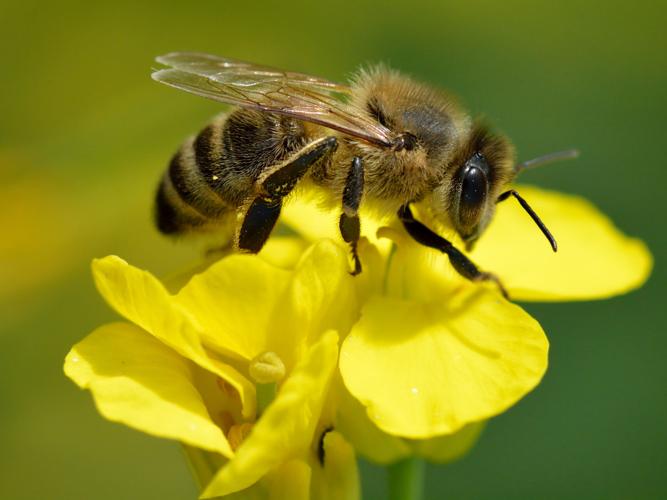
Q: I’m hoping you can settle an argument between my husband and myself. He says there are no longer any regular honey bees in Arizona — that they all have been Africanized. I find it hard to believe that the bees buzzing my flowers are the African killer bees.
A: You can both be correct, depending on how you frame the question. It is true that all feral or wild honey bees are considered to be Africanized. It is also true that many kept honey bees by our local beekeepers are not Africanized.
For example, beekeepers will often purchase Russian or Italian honey bees for their managed hives. Because all honey bees are the same species (Apis mellifera) they can and will interbreed. Over time managed colonies may become hybridized by mating with feral honey bees. So, the bees buzzing your flowers could be either. It’s not easy to tell them apart on the fly because they don’t have physical differences you can spot without laboratory equipment.
Peter L. Warren is the Forest Health Program Coordinator for the Arizona Department of Forestry and Fire Management. Questions, photos or videos may be emailed to
- By Peter L. Warren Special to the Arizona Daily Star
- Updated
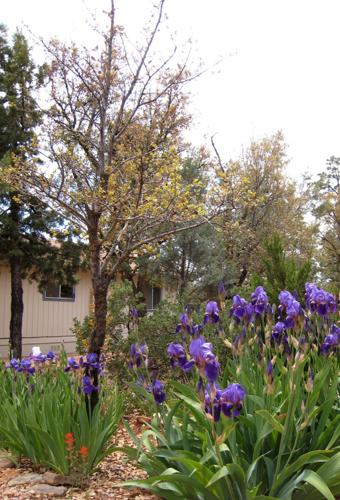
Q: Transplanted iris bulbs with roots and leaves intact to pots. Tips of leaves now brown. Water daily and place pots near the front door with filtered sunlight throughout the day. Hoping for flowers someday. Believe our zone in Tucson doesn’t lend itself to summer blossoms. Maybe spring. Is it true, iris grow like weeds here in the Old Pueblo? We have caliche soil so I am leery about transplanting to our garden.
A: Sometimes soil becomes too salty over time due to our water and fertilizer. Brown leaf tips is a common symptom of this salt damage. Another possibility is that they need more frequent watering. Containers dry out quickly so you might need to water twice daily. It really depends on the size of the container.
Also, make sure the soil drains well after watering. Some irises do better in the desert than others but in general they do well so you shouldn’t worry about transplanting to your garden if the conditions are right.
- By Peter L. Warren Special to the Arizona Daily Star
- Updated
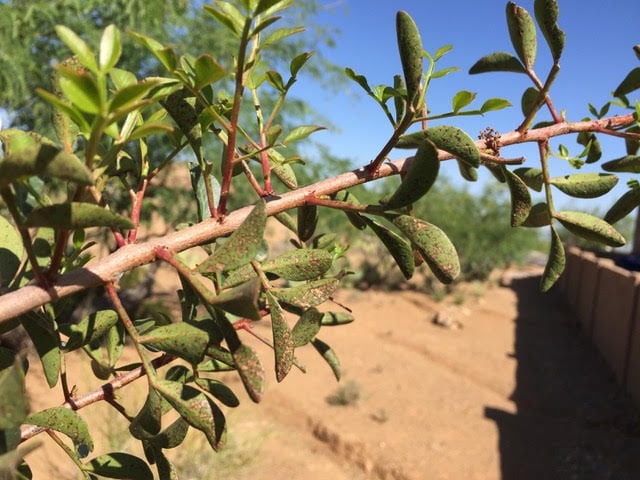
Q: We live in Sycamore Canyon, Corona de Tucson area. A local landscaper planted three 24-inch box mastic trees for us in January this year. They looked very healthy at the time of planting. Within a month, the backs of the leaves, on all three trees, had become severely spotted (see photos attached). At that point they had been getting drip irrigation equal to one hour every other day.
When the weather warmed, we increased it to two hours every other day. There has been quite a bit of new growth on all the trees and the new growth looks healthy, but we are concerned that the trees are diseased or infested, though we cannot see any bugs. Can you diagnose this problem ?
A: I think it’s likely your trees are suffering from either transplant shock or a weather-related disease. The old growth looks stressed but the new growth looks great. I recommend waiting to see how your trees respond through the spring. Your watering and patience may be enough until the stress of transplanting subsides and they grow through the leaf spot problem. Keep an eye on it to see if the new growth continues to look good or if the damage gets worse. We can always take a closer look at a sample of the leaves if things don’t improve.
Peter L. Warren is the Forest Health Program Coordinator for the Arizona Department of Forestry and Fire Management. Questions, photos or videos may be emailed to
- By Peter L. Warren Special to the Arizona Daily Star
- Updated
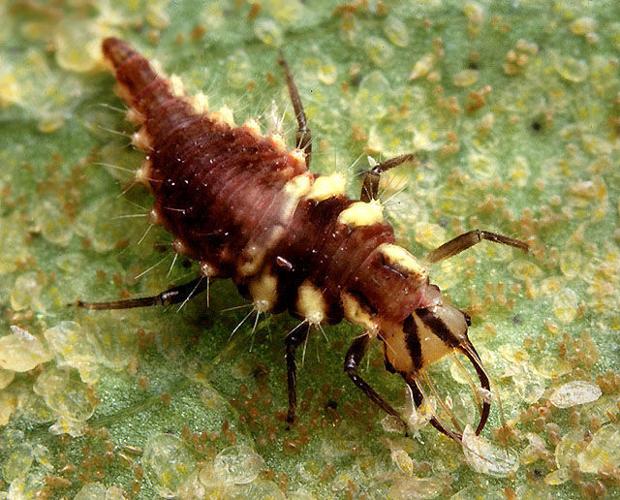
Q: I have an insect that nobody can identify: it stings, is very small, light tan in color, pointed tail end, with two feelers in front. I think it comes from the pods of our bottle tree. Can you tell me where I could go to find out about this pest?
A: Your insect is an immature lacewing. They are beneficial predators of things like aphids and not usually regarded as pests. They are often found crawling on trees and shrubs, so it could have come from your bottle tree. They don’t feed on plants so they are not likely from the pods. They are known to bite humans on occasion but their main food is other insects. They don’t have stingers so the pain you felt was from a bite. Because they are mostly beneficial, no management is typically recommended. Here is a link with more information: en.wikipedia.org/wiki/Chrysopidae
Peter L. Warren is the forest health program coordinator for the Arizona Department of Forestry and Fire Management. Questions, photos and videos may be emailed to tucsongardensage@gmail.com
- By Peter L. Warren Special to the Arizona Daily Star
- Updated
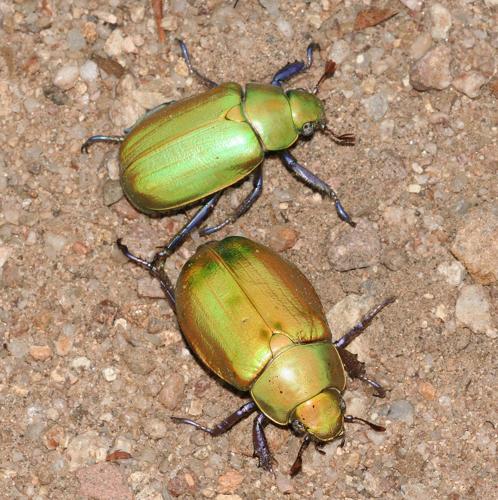
Q: I have been experiencing a beetle problem at my Carr Canyon property over the last two years. I have attached a photo of the beetle and a June bug, I think. I don’t have photos of the damage, but I have several oak trees without a single leaf. I noticed this same occurrence, a large oak with no leaves, at my neighbor’s house and his house is on the National Forest property line, hence my concern. I am hoping something can be done and I am willing to take any action you might suggest.
A: The beetles in your photo are both scarabs and are sometimes referred to as June beetles. The dark green beetle is also sometimes called a fig beetle because of their attraction to ripe fruit — not only figs, but anything from peaches to tomatoes. As adults, they also feed on nectar and pollen and can be found on large flowers. The larger, light green beetle is called a Beyer’s scarab and a likely suspect since it feeds on oak leaves. These beetles are not widespread and not really considered a pest insect. If they are having a high population this year and last year, they may be doing more damage than usual. No management is recommended because the trees will recover.
Peter L. Warren is the forest health program coordinator for the Arizona Department of Forestry and Fire Management. Questions, photos and videos may be emailed to tucsongardensage@gmail.com

- By Peter L. Warren Special to the Arizona Daily Star
- Updated
Q: I just purchased a retirement home in Joshua Tree and LOVE the ocotillo plant. I’m reading about the care and cultivation of them, but one thing perplexes me: which side is the south side and which side is the north side? All the articles state that the plant needs to be oriented in the direction it was growing originally so as not to burn/injure the plant when replanting. I cannot see any pictures of what the two different sides should look like. Can you help me with this?
A: The sides don’t necessarily look any different so it’s best to mark which side faces the south or west when digging up the plant. If you are purchasing the plant, some nurseries will mark the container to show which direction to use when planting. Otherwise you must guess. In some cases, young plants grown from seeds or cuttings have spent their whole lives inside greenhouses or under protective shaded areas and have never been out in the landscape. In this situation, it doesn’t matter because any side will need to be oriented to its new surroundings. You can orient your plant to the new surroundings by covering it with shade cloth for the first few months to limit the damage it might receive from the sun until it is accustomed to the situation. Hardening a plant to its new location can be accomplished by increasing the sun exposure a little bit at a time by removing the shade cloth for increasingly longer amounts of time during the day. You will know if you are moving too fast by observation. Sunburn will appear as discoloration. The best time of year to transplant this plant is March through May. Transplanting larger specimens is not as likely to succeed as smaller plants.
Peter L. Warren is the forest health program coordinator for the Arizona Department of Forestry and Fire Management. Questions, photos and videos may be emailed to tucsongardensage@gmail.com
- By Peter L. Warren Special to the Arizona Daily Star
- Updated
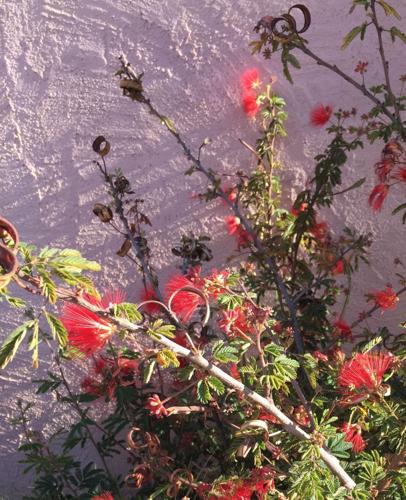
Q: I am writing to you hoping you can tell me what I am doing wrong. My home is in the 85718 zip code. The area in question faces north. This is the second tree I lost in a couple of years in the same spot. I am sending you pictures so you can see the details. We water religiously, slowly for hours once a week. The area gets sun and shade, yet I have no luck with my trees here. We are getting ready to remove this dead tree and try yet another one. Not sure what yet since I would like to discover what the problem is first. Any insight and advice you provide will be appreciated.
A: The place where this tree is planted is not suitable for a tree because the size of the area of soil for roots to grow is too small. The soil area should be twice the width of the crown of the mature tree if you want it to be healthy and long-lived. In addition, the soil area is surrounded by patio and that will reflect sun onto the plant like an oven. I recommend you select a small shrub for this area, preferably one that does well in our desert climate so it can tolerate the heat radiating off the hardscape. Perhaps a fairy duster (Calliandra eriophylla) or the Baja fairy duster (Calliandra californica) would be nice since they provide flowers and are attractive to hummingbirds.
Peter L. Warren is the forest health program coordinator for the Arizona Department of Forestry and Fire Management. Questions, photos and videos may be emailed to tucsongardensage@gmail.com
- By Peter L. Warren Special to the Arizona Daily Star
- Updated
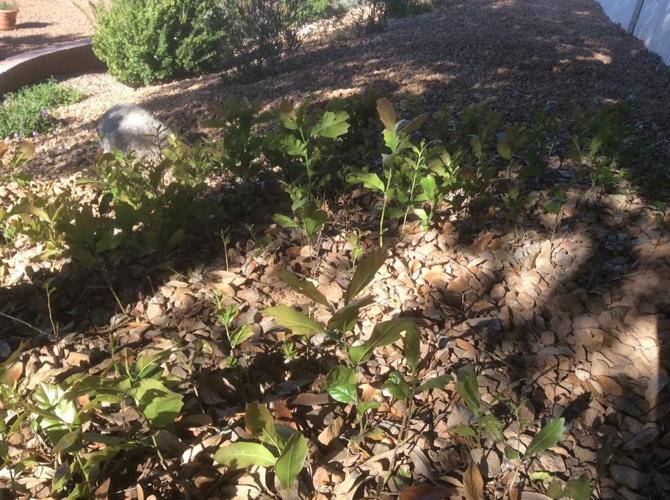
Q: I have a desert oak tree on the landscaped embankment in my back yard in Oro Valley. The tree is nearly 20 years old and for several years now it has produced a progressively larger amount of suckers (or maybe they are upward protruding roots that grow leaves). They cover a large area under the tree and are starting to lift up the adjacent flagstone stairs and are spreading into other landscaping. I try pulling them up only for them to continue to grow back. I have tried using the product “Sucker Stopper” that I purchase at a local nursery. It seems to only temporarily retard the growth and that product is quite expensive ($50) for a small spray bottle). I have also tried using a flame torch but that also is only a temporary solution. I have attached some pictures of the sucker growth. Do you have any advice on how I can stop the growth of these suckers?
A: This is an unfortunate feature of some live oaks (Quercus species). There is no way to stop the sucker growth completely since they are part of the tree and they will continue to grow back. You could mow them down to a manageable size periodically but you probably don’t want to spray them with something that might harm the tree. Or do you? The glass half full perspective is they make a nice ground cover but you might not want a tiny forest under your tree so cutting and digging them out is what’s left.
Peter L. Warren is the Forest Health Program Coordinator for the Arizona Department of Forestry and Fire Management. Questions, photos and videos may be emailed to tucsongardensage@gmail.com
- By Peter L. Warren Special to the Arizona Daily Star
- Updated
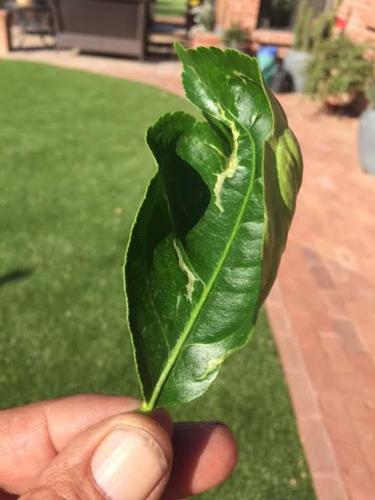
Q: I’m experiencing leaf curling on my mature lemon tree, most notably on the new leaf growth. Most of the new growth is also much larger in leaf size than on the established limbs. This tree flowered wonderfully last month and there is a nice crop of fruit growing. I haven’t found any signs of insects on the leaves but there is a definite veining occurring which I tried to capture on the attached photos. I’ve been deep watering this tree every three to four weeks trying to keep moisture at the 36-inch depth and am fertilizing every three months (first dose at the beginning of February each year). Can you please help me with some of your sharp analysis and provide recommendations for treating?
A: Your citrus leaves are being eaten by tiny insects called citrus thrips (Scirtothrips citri). The females lay their eggs in new leaf tissue and when the young thrips feed, they cause curling, distortion and scaring. They may also lay eggs in and scar the rind of the fruit. The good news is they don’t do enough damage to warrant any concern unless you own an orchard and want to sell the fruit to a grocery store. The leaves are still photosynthesizing despite their contorted appearance and the fruit are as numerous and tasty as the ones you buy at the grocery store without any scars.
Peter L. Warren is the Forest Health Program Coordinator for the Arizona Department of Forestry and Fire Management. Questions, photos and videos may be emailed to tucsongardensage@gmail.com
- By Peter L. Warren Special to the Arizona Daily Star
- Updated
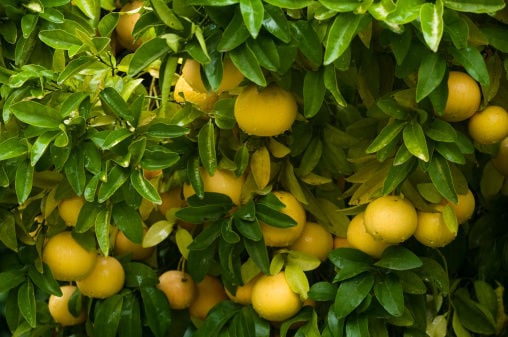
Q: Can you tell me what this is on my grapefruit tree and how to get rid of it?
A: Unfortunately, your grapefruit tree has a disease commonly called gummosis (Phytophthora species). This disease is common in the soil and may be introduced through wounds or cracks in the bark. A contributing factor is irrigation. Flood irrigation or systems that consistently spray water on the trunk of the tree can not only weaken the bark but also provide a liquid pathway for the fungi to move from the soil into the tree. One of the signs we see is the oozing from cracks in the bark as the disease moves through the tree. Sometimes we also see bark sloughing off as branches succumb to the disease. Some trees will live a few years with this disease and you can help by spraying fungicide on actively oozing areas. In other cases, the tree may die within a year. Once the disease spreads to the trunk and/or most the tree, it is time to plan for its removal.
Peter L. Warren is the Forest Health Program Coordinator for the Arizona Department of Forestry and Fire Management. Questions, photos and videos may be emailed to tucsongardensage@gmail.com

- By Peter L. Warren Special to the Arizona Daily Star
- Updated
Q: My aspen trees have scale insects on the bark and some disease on the leaves that causes them to drop off early. What can I do?
A: The insects are called oystershell scale (Lepidosaphes ulmi) and they feed on the bark and branches. Large populations can reduce the vigor of the trees and make them susceptible to other problems. These insects may be scraped off the trees by hand or if heavily infested, pruning branches might be best. Alternatively, you can spray them with horticultural oil in the spring when the immature crawler stage is active. That should be right about now but you should examine the bark with a magnifier to see if they are out from under their parent’s protective cover and moving about. From your photo, I think your trees are also suffering from Marssonina leaf spot disease. The black spots with yellow halos in the photo you sent fit the description and this is a common leaf disease of aspen trees. The important thing about the common leaf diseases in aspen trees is that they are all managed in a similar fashion. The most important tactic is sanitation because the diseased leaves on the ground are a source of inoculum. If you have a few of these trees, this might not be a big challenge. I’m not sure how practical removing and destroying the diseased leaves is in a large stand of these trees. If you choose to use a fungicide, there are quite a few to choose from that could help. Look for those that are labeled for use on trees and shrubs. Some common active ingredients include propiconazole, chlorothalonil, mancozeb, and captan.
Peter L. Warren is the Forest Health Program Coordinator for the Arizona Department of Forestry and Fire Management. Questions, photos and videos may be emailed to tucsongardensage@gmail.com
- By Peter Warren Special to the Arizona Daily Star
- Updated
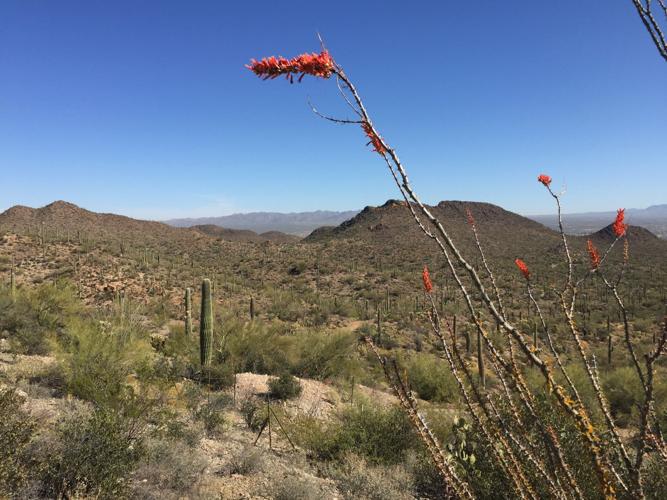
Question: I live in Marana and have been at this address for about 10 years. We have a mature ocotillo on our property that has been here since we moved in. For the first seven or eight years it seemed to leaf out in the spring and after the summer rains, much the same as he other ocotillos in our area. However, the last two years it has been rather slow to leaf out, and so far this year, there are only a few leaves on it, although the orange blooms did appear at the tops of the canes. I have tried to deep water it a few times, and even used a hose end sprayer to spray the canes all the way to the top, (they are about 20 feet tall in places) yet still there isn’t much leaf growth. All of the other ocotillos in our immediate area have seemed to be completely leafed out. My question is, is there anything that I can do? Or should I just give up on this plant and have it removed?
A: Ocotillos typically leaf out in response to rain in the spring as well as during the monsoon season if they receive enough. It’s hard to be sure why individual plants leaf out normally one year and then less the next unless there is some change in their surroundings. For example, the growth of nearby shrubs or trees could be shading the plant more in the last few years than previously and it could be sheltered from the storms. Timing of the rain or irrigation may have some effect. I wouldn’t give up on the plant if it were still flowering. For native desert shrubs in the landscape, irrigation once every two to three weeks to a depth of 24 to 36 inches in the spring through fall is all that is recommended.
Peter L. Warren is the Forest Health Program coordinator for the Arizona Department of Forestry and Fire Management. Questions, photos and videos may be emailed to
- By Peter L. Warren Special to the Arizona Daily Star
- Updated
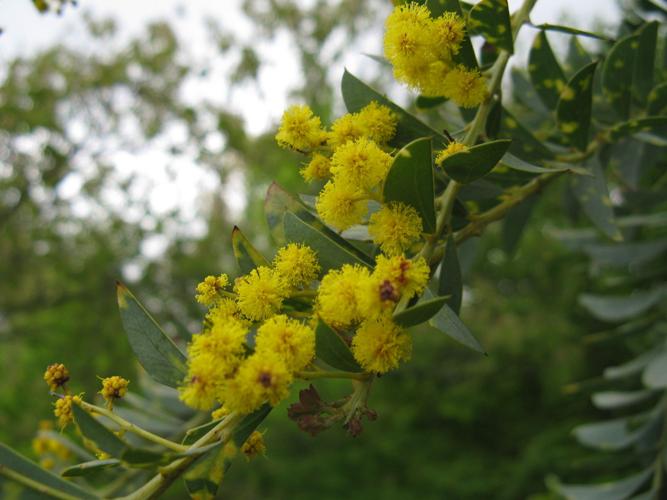
Question: We planted this knife acacia about eight years ago. It remains spindly and hasn’t grown as fast or lush as the previous one. (I think it succumbed to a three-day hard freeze a few years back and went to plant heaven). Do you believe it needs more/less water or should we start over? I dislike giving up on a plant that may thrive with some changes. It’s on a drip currently watering three times a week for 30 minutes, less in colder months
Answer: Your acacia might have been damaged by a frost a while ago but I see no remaining damage and this species (Acacia cultriformis, aka knife-leaf wattle) is supposed to be frost tolerant. Mostly it appears to be lacking nitrogen and/or receiving too much water according to the yellowing leaves. Actually, they’re not really leaves but rather leaf-like flattened stems called phyllodes. Since it is a plant that typically does well in arid regions, you should switch to irrigating it more deeply and less frequently. I think once every three weeks to a depth of 24 inches would be better than your current schedule. You could also apply a slow-release fertilizer to the surface around the root zone that can be watered in over time. I agree with your idea of not giving up on this plant. It’s a very nice one and worth another effort.
Peter L. Warren is the Forest Health Program coordinator for the Arizona Department of Forestry and Fire Management. Questions, photos and videos may be emailed to tucsongardensage@gmail.com

- By Peter L. Warren Special to the Arizona Daily Star
- Updated
Question: Attached are photos of this little black bug that hangs out on the ground, close to my raised lettuce garden. I haven’t seen any of them on the lettuce, but they hang out on and near the shade cloth when it’s not covering the garden. I have the shade cloth lying on the ground near the garden most of the time, and that’s when I see the bugs there. They are bigger than regular ants, and smaller than carpenter ants.
Answer: These beetles are sometimes called darkling beetles. Some species are predators of other insects while others feed on decaying plants and still others feed on stored grains. It’s hard to determine the species from your photos but I suspect these are not a pest problem based on your examination of the lettuce. To be sure, you can keep an eye on the situation and notice if your plants begin to suffer any damage.
Peter L. Warren is the Forest Health Program coordinator for the Arizona Department of Forestry and Fire Management. Questions, photos and videos may be emailed to tucsongardensage@gmail.com
- By Peter L. Warren Special to the Arizona Daily Star
- Updated
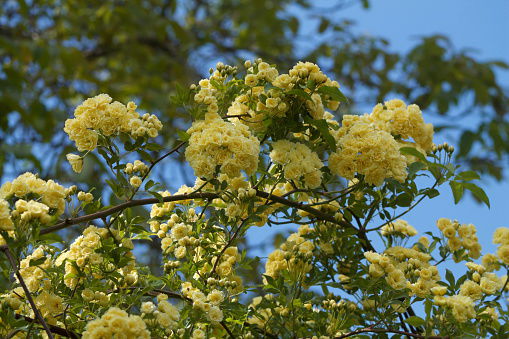
Question: We have a climbing yellow rose that we didn’t prune in January. Shall we prune now or wait until September? Shall we fertilize now or add fresh soil?
Answer: You can certainly prune off any dead or damaged canes now but leave the healthy canes. The problem with a major pruning now is that pruning is stressful to plants and the warm temperatures that have begun are as well. It’s probably best to wait until fall to do any pruning of healthy canes and then only do a light pruning, as normally recommended in the fall, and take off no more than one-third of the plant. You can do more serious pruning in the winter. Fertilizer can be applied beginning in February through May and then again in September and October. If you are spreading solid fertilizer on the soil, make sure you water before and after fertilizing to prevent burning the plants or use a water-soluble fertilizer while you are watering. You can add a half-inch of compost or other organic material to the soil surface as a slow release fertilizer and to help moderate summer temperatures in the root zone.
Peter L. Warren is the Forest Health Program coordinator for the Arizona Department of Forestry and Fire Management. Questions, photos and videos may be emailed to tucsongardensage@gmail.com
- By Peter L. Warren Special to the Arizona Daily Star
- Updated
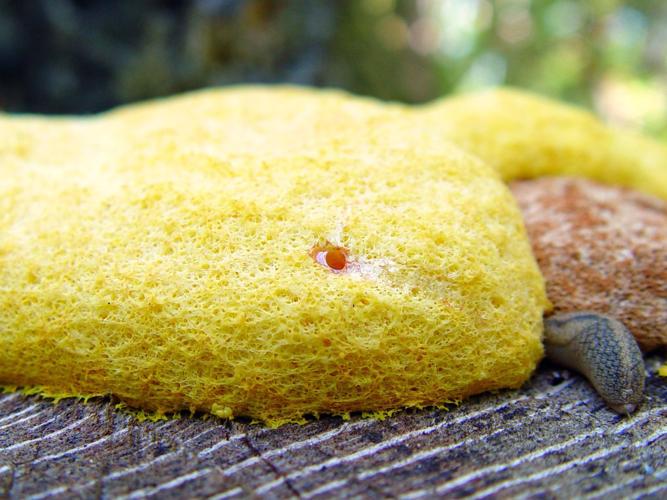
Question: After having a compost pile for a few years, I have noticed a number of large roaches in the area and at times a greenish yellow mold grows on the top of the compost. Is there some way I can control these two problems?
Answer: Cockroaches use compost as a food source and as a place to live. The same is true for the mold you see growing on the surface. They are probably not your favorite things to see in your compost, but they are both helping to decompose the pile, so they’re not all bad. Most people dislike cockroaches that like to live in our homes although my cats love them to death. Out in the wild, cockroaches are very helpful decomposers. The yellow mold you see is sometimes affectionately known as dog vomit slime mold because that’s what it looks like when you find it. By turning your compost over more frequently, you will disturb the life cycle of both these organisms and they will be less likely to colonize the area. You will also likely speed up the process of turning your compost into something usable.
Peter L. Warren is the Forest Health Program coordinator for the Arizona Department of Forestry and Fire Management. Questions, photos and videos may be emailed to tucsongardensage@gmail.com
- By Peter L. Warren Special to the Arizona Daily Star
- Updated
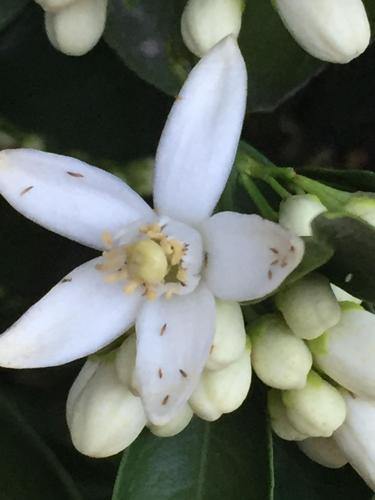
Question: We saw these little bugs/insects on our friend’s orange tree in Tucson — near the Oracle and River roads area — and wondered what they were, and if harmful or not. First saw them about three weeks ago, and last saw them (not so many) about a week ago.
Answer: These insects are called thrips. They can be pests when they feed on flower, fruit and leaf buds. Their feeding causes very small damaged areas but as the flowers, leaves and fruit grow, the areas become larger and appear as discoloration or distortion on the plant surface. Typically, we don’t recommend treating for them because the damage often occurs before we notice them and they don’t affect the taste of the fruit or the ability of the leaves to photosynthesize. If you were selling your fruit to a grocery store, it would be important to spray the trees because shoppers won’t often buy fruit that have scars on the rind.
Peter L. Warren is the Forest Health Program Coordinator for the Arizona Department of Forestry and Fire Management. Questions, photos and videos may be emailed to tucsongardensage@gmail.com
- By Peter L. Warren Special to the Arizona Daily Star
- Updated
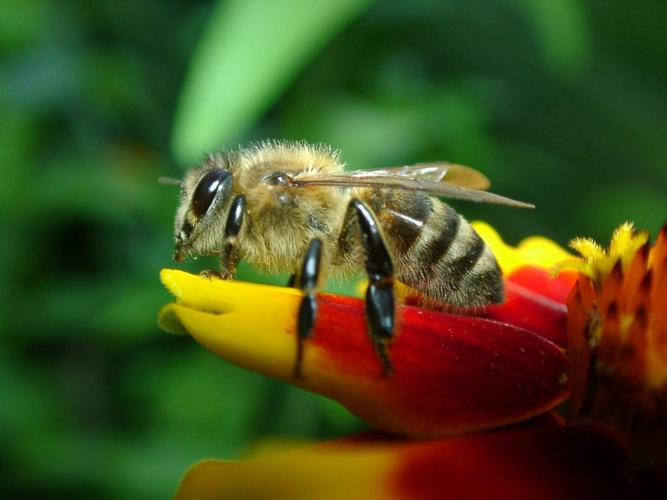
Question: I was at my doctor’s office and noticed a guy spraying pesticide on flowering plants with bees. I asked in the doctor’s office and they said the bees were flying around the door and bothering some of the patients as they came and went so they called this guy to spray the bees. Isn’t there another way to fix this besides killing the bees?
Answer: Yes, there is a way to fix it. The bees are attracted to nectar and pollen so you must remove the food source or they will return. Unfortunately, what sometimes happens is an uninformed client asks for help from a pesticide applicator that either can’t or isn’t willing to think critically about the situation. In this case, the applicator treated the symptom instead of the problem. He may have killed some bees but more will return later. Hopefully they will not continue to pay this applicator to kill more bees when they return. Pesticide applicators aren’t all this bad. Most applicators are trained to think about the entire landscape as an ecosystem and to watch out for non-target organisms, including beneficial insects like bees. This is a good teaching moment for the doctor office as well. Bees are not aggressive unless defending their home so their presence on flowers doesn’t necessarily equate to a dangerous situation. There are some pesticide applicators that are also beekeepers or at least have knowledge of bees and their behavior. I recommend seeking someone like this to deal with bee problems.
Peter L. Warren is the Forest Health Program Coordinator for the Arizona Department of Forestry and Fire Management. Questions, photos and videos may be emailed to tucsongardensage@gmail.com

- By Peter L. Warren Special to the Arizona Daily Star
- Updated
Question: I am interested in identifying this unknown garden visitor. I originally ID’d it as a native bee but after closer inspection, I am not sure if this is a bee.
Answer: Your visitor is a bee mimic sometimes called a bee fly. It is a member of the fly order (Diptera) and the family Bombyliidae. As larvae, these insects are parasites of other insects. As adults, we generally see them feeding on nectar and pollen. They can’t harm humans and are not considered to be pests.
Peter L. Warren is the Forest Health Program Coordinator for the Arizona Department of Forestry and Fire Management. Questions, photos and videos may be emailed to tucsongardensage@gmail.com

- By Peter L. Warren Special to the Arizona Daily Star
- Updated
Question: In the paper recently there was an article about blooming palo verde trees, and a claim that the reason for the bountiful flowers this year was due to additional carbon dioxide in the atmosphere. This struck me a totally ludicrous. My take is timely winter rains are the cause of bountiful flowers on any plant any year, not additional carbon dioxide!
Answer: In many plants the primary factors affecting flowering are day length, light intensity, temperature, soil moisture, and plant nutrition. Carbon dioxide in the atmosphere plays a critical role in photosynthesis and plant growth. If levels are too low, plant growth shuts down. In response to concerns about elevated carbon dioxide levels in the future associated with climate change, studies have been done to determine how these elevated levels will affect plant growth in the future. Some of this research found that plants grown at elevated carbon dioxide levels show earlier and higher production of flowers, fruits, and seeds. Keep in mind these studies were done at artificially elevated carbon dioxide levels . In the article you mentioned the quote from a local doctor said “The reason we see palo verdes become so lush is that there is more carbon dioxide in the atmosphere.”
Although we are currently experiencing the highest levels in many years, it would be difficult to show we had more flowers this year than last year based on increased levels of carbon dioxide. The more likely explanation is a combination of timely winter rains, as you mentioned, and a warm spring.
Peter L. Warren is the Forest Health Program Coordinator for the Arizona Department of Forestry and Fire Management. Questions, photos and videos may be emailed to tucsongardensage@gmail.com
- By Peter L. Warren Special to the Arizona Daily Star
Q: I’m hoping you can settle an argument between my husband and myself. He says there are no longer any regular honey bees in Arizona — that they all have been Africanized. I find it hard to believe that the bees buzzing my flowers are the African killer bees.
A: You can both be correct, depending on how you frame the question. It is true that all feral or wild honey bees are considered to be Africanized. It is also true that many kept honey bees by our local beekeepers are not Africanized.
For example, beekeepers will often purchase Russian or Italian honey bees for their managed hives. Because all honey bees are the same species (Apis mellifera) they can and will interbreed. Over time managed colonies may become hybridized by mating with feral honey bees. So, the bees buzzing your flowers could be either. It’s not easy to tell them apart on the fly because they don’t have physical differences you can spot without laboratory equipment.
Peter L. Warren is the Forest Health Program Coordinator for the Arizona Department of Forestry and Fire Management. Questions, photos or videos may be emailed to
- By Peter L. Warren Special to the Arizona Daily Star
Q: Transplanted iris bulbs with roots and leaves intact to pots. Tips of leaves now brown. Water daily and place pots near the front door with filtered sunlight throughout the day. Hoping for flowers someday. Believe our zone in Tucson doesn’t lend itself to summer blossoms. Maybe spring. Is it true, iris grow like weeds here in the Old Pueblo? We have caliche soil so I am leery about transplanting to our garden.
A: Sometimes soil becomes too salty over time due to our water and fertilizer. Brown leaf tips is a common symptom of this salt damage. Another possibility is that they need more frequent watering. Containers dry out quickly so you might need to water twice daily. It really depends on the size of the container.
Also, make sure the soil drains well after watering. Some irises do better in the desert than others but in general they do well so you shouldn’t worry about transplanting to your garden if the conditions are right.
- By Peter L. Warren Special to the Arizona Daily Star
Q: We live in Sycamore Canyon, Corona de Tucson area. A local landscaper planted three 24-inch box mastic trees for us in January this year. They looked very healthy at the time of planting. Within a month, the backs of the leaves, on all three trees, had become severely spotted (see photos attached). At that point they had been getting drip irrigation equal to one hour every other day.
When the weather warmed, we increased it to two hours every other day. There has been quite a bit of new growth on all the trees and the new growth looks healthy, but we are concerned that the trees are diseased or infested, though we cannot see any bugs. Can you diagnose this problem ?
A: I think it’s likely your trees are suffering from either transplant shock or a weather-related disease. The old growth looks stressed but the new growth looks great. I recommend waiting to see how your trees respond through the spring. Your watering and patience may be enough until the stress of transplanting subsides and they grow through the leaf spot problem. Keep an eye on it to see if the new growth continues to look good or if the damage gets worse. We can always take a closer look at a sample of the leaves if things don’t improve.
Peter L. Warren is the Forest Health Program Coordinator for the Arizona Department of Forestry and Fire Management. Questions, photos or videos may be emailed to
- By Peter L. Warren Special to the Arizona Daily Star
Q: I have an insect that nobody can identify: it stings, is very small, light tan in color, pointed tail end, with two feelers in front. I think it comes from the pods of our bottle tree. Can you tell me where I could go to find out about this pest?
A: Your insect is an immature lacewing. They are beneficial predators of things like aphids and not usually regarded as pests. They are often found crawling on trees and shrubs, so it could have come from your bottle tree. They don’t feed on plants so they are not likely from the pods. They are known to bite humans on occasion but their main food is other insects. They don’t have stingers so the pain you felt was from a bite. Because they are mostly beneficial, no management is typically recommended. Here is a link with more information: en.wikipedia.org/wiki/Chrysopidae
Peter L. Warren is the forest health program coordinator for the Arizona Department of Forestry and Fire Management. Questions, photos and videos may be emailed to tucsongardensage@gmail.com
- By Peter L. Warren Special to the Arizona Daily Star
Q: I have been experiencing a beetle problem at my Carr Canyon property over the last two years. I have attached a photo of the beetle and a June bug, I think. I don’t have photos of the damage, but I have several oak trees without a single leaf. I noticed this same occurrence, a large oak with no leaves, at my neighbor’s house and his house is on the National Forest property line, hence my concern. I am hoping something can be done and I am willing to take any action you might suggest.
A: The beetles in your photo are both scarabs and are sometimes referred to as June beetles. The dark green beetle is also sometimes called a fig beetle because of their attraction to ripe fruit — not only figs, but anything from peaches to tomatoes. As adults, they also feed on nectar and pollen and can be found on large flowers. The larger, light green beetle is called a Beyer’s scarab and a likely suspect since it feeds on oak leaves. These beetles are not widespread and not really considered a pest insect. If they are having a high population this year and last year, they may be doing more damage than usual. No management is recommended because the trees will recover.
Peter L. Warren is the forest health program coordinator for the Arizona Department of Forestry and Fire Management. Questions, photos and videos may be emailed to tucsongardensage@gmail.com
- By Peter L. Warren Special to the Arizona Daily Star
Q: I just purchased a retirement home in Joshua Tree and LOVE the ocotillo plant. I’m reading about the care and cultivation of them, but one thing perplexes me: which side is the south side and which side is the north side? All the articles state that the plant needs to be oriented in the direction it was growing originally so as not to burn/injure the plant when replanting. I cannot see any pictures of what the two different sides should look like. Can you help me with this?
A: The sides don’t necessarily look any different so it’s best to mark which side faces the south or west when digging up the plant. If you are purchasing the plant, some nurseries will mark the container to show which direction to use when planting. Otherwise you must guess. In some cases, young plants grown from seeds or cuttings have spent their whole lives inside greenhouses or under protective shaded areas and have never been out in the landscape. In this situation, it doesn’t matter because any side will need to be oriented to its new surroundings. You can orient your plant to the new surroundings by covering it with shade cloth for the first few months to limit the damage it might receive from the sun until it is accustomed to the situation. Hardening a plant to its new location can be accomplished by increasing the sun exposure a little bit at a time by removing the shade cloth for increasingly longer amounts of time during the day. You will know if you are moving too fast by observation. Sunburn will appear as discoloration. The best time of year to transplant this plant is March through May. Transplanting larger specimens is not as likely to succeed as smaller plants.
Peter L. Warren is the forest health program coordinator for the Arizona Department of Forestry and Fire Management. Questions, photos and videos may be emailed to tucsongardensage@gmail.com
- By Peter L. Warren Special to the Arizona Daily Star
Q: I am writing to you hoping you can tell me what I am doing wrong. My home is in the 85718 zip code. The area in question faces north. This is the second tree I lost in a couple of years in the same spot. I am sending you pictures so you can see the details. We water religiously, slowly for hours once a week. The area gets sun and shade, yet I have no luck with my trees here. We are getting ready to remove this dead tree and try yet another one. Not sure what yet since I would like to discover what the problem is first. Any insight and advice you provide will be appreciated.
A: The place where this tree is planted is not suitable for a tree because the size of the area of soil for roots to grow is too small. The soil area should be twice the width of the crown of the mature tree if you want it to be healthy and long-lived. In addition, the soil area is surrounded by patio and that will reflect sun onto the plant like an oven. I recommend you select a small shrub for this area, preferably one that does well in our desert climate so it can tolerate the heat radiating off the hardscape. Perhaps a fairy duster (Calliandra eriophylla) or the Baja fairy duster (Calliandra californica) would be nice since they provide flowers and are attractive to hummingbirds.
Peter L. Warren is the forest health program coordinator for the Arizona Department of Forestry and Fire Management. Questions, photos and videos may be emailed to tucsongardensage@gmail.com
- By Peter L. Warren Special to the Arizona Daily Star
Q: I have a desert oak tree on the landscaped embankment in my back yard in Oro Valley. The tree is nearly 20 years old and for several years now it has produced a progressively larger amount of suckers (or maybe they are upward protruding roots that grow leaves). They cover a large area under the tree and are starting to lift up the adjacent flagstone stairs and are spreading into other landscaping. I try pulling them up only for them to continue to grow back. I have tried using the product “Sucker Stopper” that I purchase at a local nursery. It seems to only temporarily retard the growth and that product is quite expensive ($50) for a small spray bottle). I have also tried using a flame torch but that also is only a temporary solution. I have attached some pictures of the sucker growth. Do you have any advice on how I can stop the growth of these suckers?
A: This is an unfortunate feature of some live oaks (Quercus species). There is no way to stop the sucker growth completely since they are part of the tree and they will continue to grow back. You could mow them down to a manageable size periodically but you probably don’t want to spray them with something that might harm the tree. Or do you? The glass half full perspective is they make a nice ground cover but you might not want a tiny forest under your tree so cutting and digging them out is what’s left.
Peter L. Warren is the Forest Health Program Coordinator for the Arizona Department of Forestry and Fire Management. Questions, photos and videos may be emailed to tucsongardensage@gmail.com
- By Peter L. Warren Special to the Arizona Daily Star
Q: I’m experiencing leaf curling on my mature lemon tree, most notably on the new leaf growth. Most of the new growth is also much larger in leaf size than on the established limbs. This tree flowered wonderfully last month and there is a nice crop of fruit growing. I haven’t found any signs of insects on the leaves but there is a definite veining occurring which I tried to capture on the attached photos. I’ve been deep watering this tree every three to four weeks trying to keep moisture at the 36-inch depth and am fertilizing every three months (first dose at the beginning of February each year). Can you please help me with some of your sharp analysis and provide recommendations for treating?
A: Your citrus leaves are being eaten by tiny insects called citrus thrips (Scirtothrips citri). The females lay their eggs in new leaf tissue and when the young thrips feed, they cause curling, distortion and scaring. They may also lay eggs in and scar the rind of the fruit. The good news is they don’t do enough damage to warrant any concern unless you own an orchard and want to sell the fruit to a grocery store. The leaves are still photosynthesizing despite their contorted appearance and the fruit are as numerous and tasty as the ones you buy at the grocery store without any scars.
Peter L. Warren is the Forest Health Program Coordinator for the Arizona Department of Forestry and Fire Management. Questions, photos and videos may be emailed to tucsongardensage@gmail.com
- By Peter L. Warren Special to the Arizona Daily Star
Q: Can you tell me what this is on my grapefruit tree and how to get rid of it?
A: Unfortunately, your grapefruit tree has a disease commonly called gummosis (Phytophthora species). This disease is common in the soil and may be introduced through wounds or cracks in the bark. A contributing factor is irrigation. Flood irrigation or systems that consistently spray water on the trunk of the tree can not only weaken the bark but also provide a liquid pathway for the fungi to move from the soil into the tree. One of the signs we see is the oozing from cracks in the bark as the disease moves through the tree. Sometimes we also see bark sloughing off as branches succumb to the disease. Some trees will live a few years with this disease and you can help by spraying fungicide on actively oozing areas. In other cases, the tree may die within a year. Once the disease spreads to the trunk and/or most the tree, it is time to plan for its removal.
Peter L. Warren is the Forest Health Program Coordinator for the Arizona Department of Forestry and Fire Management. Questions, photos and videos may be emailed to tucsongardensage@gmail.com
- By Peter L. Warren Special to the Arizona Daily Star
Q: My aspen trees have scale insects on the bark and some disease on the leaves that causes them to drop off early. What can I do?
A: The insects are called oystershell scale (Lepidosaphes ulmi) and they feed on the bark and branches. Large populations can reduce the vigor of the trees and make them susceptible to other problems. These insects may be scraped off the trees by hand or if heavily infested, pruning branches might be best. Alternatively, you can spray them with horticultural oil in the spring when the immature crawler stage is active. That should be right about now but you should examine the bark with a magnifier to see if they are out from under their parent’s protective cover and moving about. From your photo, I think your trees are also suffering from Marssonina leaf spot disease. The black spots with yellow halos in the photo you sent fit the description and this is a common leaf disease of aspen trees. The important thing about the common leaf diseases in aspen trees is that they are all managed in a similar fashion. The most important tactic is sanitation because the diseased leaves on the ground are a source of inoculum. If you have a few of these trees, this might not be a big challenge. I’m not sure how practical removing and destroying the diseased leaves is in a large stand of these trees. If you choose to use a fungicide, there are quite a few to choose from that could help. Look for those that are labeled for use on trees and shrubs. Some common active ingredients include propiconazole, chlorothalonil, mancozeb, and captan.
Peter L. Warren is the Forest Health Program Coordinator for the Arizona Department of Forestry and Fire Management. Questions, photos and videos may be emailed to tucsongardensage@gmail.com
- By Peter Warren Special to the Arizona Daily Star
Question: I live in Marana and have been at this address for about 10 years. We have a mature ocotillo on our property that has been here since we moved in. For the first seven or eight years it seemed to leaf out in the spring and after the summer rains, much the same as he other ocotillos in our area. However, the last two years it has been rather slow to leaf out, and so far this year, there are only a few leaves on it, although the orange blooms did appear at the tops of the canes. I have tried to deep water it a few times, and even used a hose end sprayer to spray the canes all the way to the top, (they are about 20 feet tall in places) yet still there isn’t much leaf growth. All of the other ocotillos in our immediate area have seemed to be completely leafed out. My question is, is there anything that I can do? Or should I just give up on this plant and have it removed?
A: Ocotillos typically leaf out in response to rain in the spring as well as during the monsoon season if they receive enough. It’s hard to be sure why individual plants leaf out normally one year and then less the next unless there is some change in their surroundings. For example, the growth of nearby shrubs or trees could be shading the plant more in the last few years than previously and it could be sheltered from the storms. Timing of the rain or irrigation may have some effect. I wouldn’t give up on the plant if it were still flowering. For native desert shrubs in the landscape, irrigation once every two to three weeks to a depth of 24 to 36 inches in the spring through fall is all that is recommended.
Peter L. Warren is the Forest Health Program coordinator for the Arizona Department of Forestry and Fire Management. Questions, photos and videos may be emailed to
- By Peter L. Warren Special to the Arizona Daily Star
Question: We planted this knife acacia about eight years ago. It remains spindly and hasn’t grown as fast or lush as the previous one. (I think it succumbed to a three-day hard freeze a few years back and went to plant heaven). Do you believe it needs more/less water or should we start over? I dislike giving up on a plant that may thrive with some changes. It’s on a drip currently watering three times a week for 30 minutes, less in colder months
Answer: Your acacia might have been damaged by a frost a while ago but I see no remaining damage and this species (Acacia cultriformis, aka knife-leaf wattle) is supposed to be frost tolerant. Mostly it appears to be lacking nitrogen and/or receiving too much water according to the yellowing leaves. Actually, they’re not really leaves but rather leaf-like flattened stems called phyllodes. Since it is a plant that typically does well in arid regions, you should switch to irrigating it more deeply and less frequently. I think once every three weeks to a depth of 24 inches would be better than your current schedule. You could also apply a slow-release fertilizer to the surface around the root zone that can be watered in over time. I agree with your idea of not giving up on this plant. It’s a very nice one and worth another effort.
Peter L. Warren is the Forest Health Program coordinator for the Arizona Department of Forestry and Fire Management. Questions, photos and videos may be emailed to tucsongardensage@gmail.com
- By Peter L. Warren Special to the Arizona Daily Star
Question: Attached are photos of this little black bug that hangs out on the ground, close to my raised lettuce garden. I haven’t seen any of them on the lettuce, but they hang out on and near the shade cloth when it’s not covering the garden. I have the shade cloth lying on the ground near the garden most of the time, and that’s when I see the bugs there. They are bigger than regular ants, and smaller than carpenter ants.
Answer: These beetles are sometimes called darkling beetles. Some species are predators of other insects while others feed on decaying plants and still others feed on stored grains. It’s hard to determine the species from your photos but I suspect these are not a pest problem based on your examination of the lettuce. To be sure, you can keep an eye on the situation and notice if your plants begin to suffer any damage.
Peter L. Warren is the Forest Health Program coordinator for the Arizona Department of Forestry and Fire Management. Questions, photos and videos may be emailed to tucsongardensage@gmail.com
- By Peter L. Warren Special to the Arizona Daily Star
Question: We have a climbing yellow rose that we didn’t prune in January. Shall we prune now or wait until September? Shall we fertilize now or add fresh soil?
Answer: You can certainly prune off any dead or damaged canes now but leave the healthy canes. The problem with a major pruning now is that pruning is stressful to plants and the warm temperatures that have begun are as well. It’s probably best to wait until fall to do any pruning of healthy canes and then only do a light pruning, as normally recommended in the fall, and take off no more than one-third of the plant. You can do more serious pruning in the winter. Fertilizer can be applied beginning in February through May and then again in September and October. If you are spreading solid fertilizer on the soil, make sure you water before and after fertilizing to prevent burning the plants or use a water-soluble fertilizer while you are watering. You can add a half-inch of compost or other organic material to the soil surface as a slow release fertilizer and to help moderate summer temperatures in the root zone.
Peter L. Warren is the Forest Health Program coordinator for the Arizona Department of Forestry and Fire Management. Questions, photos and videos may be emailed to tucsongardensage@gmail.com
- By Peter L. Warren Special to the Arizona Daily Star
Question: After having a compost pile for a few years, I have noticed a number of large roaches in the area and at times a greenish yellow mold grows on the top of the compost. Is there some way I can control these two problems?
Answer: Cockroaches use compost as a food source and as a place to live. The same is true for the mold you see growing on the surface. They are probably not your favorite things to see in your compost, but they are both helping to decompose the pile, so they’re not all bad. Most people dislike cockroaches that like to live in our homes although my cats love them to death. Out in the wild, cockroaches are very helpful decomposers. The yellow mold you see is sometimes affectionately known as dog vomit slime mold because that’s what it looks like when you find it. By turning your compost over more frequently, you will disturb the life cycle of both these organisms and they will be less likely to colonize the area. You will also likely speed up the process of turning your compost into something usable.
Peter L. Warren is the Forest Health Program coordinator for the Arizona Department of Forestry and Fire Management. Questions, photos and videos may be emailed to tucsongardensage@gmail.com
- By Peter L. Warren Special to the Arizona Daily Star
Question: We saw these little bugs/insects on our friend’s orange tree in Tucson — near the Oracle and River roads area — and wondered what they were, and if harmful or not. First saw them about three weeks ago, and last saw them (not so many) about a week ago.
Answer: These insects are called thrips. They can be pests when they feed on flower, fruit and leaf buds. Their feeding causes very small damaged areas but as the flowers, leaves and fruit grow, the areas become larger and appear as discoloration or distortion on the plant surface. Typically, we don’t recommend treating for them because the damage often occurs before we notice them and they don’t affect the taste of the fruit or the ability of the leaves to photosynthesize. If you were selling your fruit to a grocery store, it would be important to spray the trees because shoppers won’t often buy fruit that have scars on the rind.
Peter L. Warren is the Forest Health Program Coordinator for the Arizona Department of Forestry and Fire Management. Questions, photos and videos may be emailed to tucsongardensage@gmail.com
- By Peter L. Warren Special to the Arizona Daily Star
Question: I was at my doctor’s office and noticed a guy spraying pesticide on flowering plants with bees. I asked in the doctor’s office and they said the bees were flying around the door and bothering some of the patients as they came and went so they called this guy to spray the bees. Isn’t there another way to fix this besides killing the bees?
Answer: Yes, there is a way to fix it. The bees are attracted to nectar and pollen so you must remove the food source or they will return. Unfortunately, what sometimes happens is an uninformed client asks for help from a pesticide applicator that either can’t or isn’t willing to think critically about the situation. In this case, the applicator treated the symptom instead of the problem. He may have killed some bees but more will return later. Hopefully they will not continue to pay this applicator to kill more bees when they return. Pesticide applicators aren’t all this bad. Most applicators are trained to think about the entire landscape as an ecosystem and to watch out for non-target organisms, including beneficial insects like bees. This is a good teaching moment for the doctor office as well. Bees are not aggressive unless defending their home so their presence on flowers doesn’t necessarily equate to a dangerous situation. There are some pesticide applicators that are also beekeepers or at least have knowledge of bees and their behavior. I recommend seeking someone like this to deal with bee problems.
Peter L. Warren is the Forest Health Program Coordinator for the Arizona Department of Forestry and Fire Management. Questions, photos and videos may be emailed to tucsongardensage@gmail.com
- By Peter L. Warren Special to the Arizona Daily Star
Question: I am interested in identifying this unknown garden visitor. I originally ID’d it as a native bee but after closer inspection, I am not sure if this is a bee.
Answer: Your visitor is a bee mimic sometimes called a bee fly. It is a member of the fly order (Diptera) and the family Bombyliidae. As larvae, these insects are parasites of other insects. As adults, we generally see them feeding on nectar and pollen. They can’t harm humans and are not considered to be pests.
Peter L. Warren is the Forest Health Program Coordinator for the Arizona Department of Forestry and Fire Management. Questions, photos and videos may be emailed to tucsongardensage@gmail.com
- By Peter L. Warren Special to the Arizona Daily Star
Question: In the paper recently there was an article about blooming palo verde trees, and a claim that the reason for the bountiful flowers this year was due to additional carbon dioxide in the atmosphere. This struck me a totally ludicrous. My take is timely winter rains are the cause of bountiful flowers on any plant any year, not additional carbon dioxide!
Answer: In many plants the primary factors affecting flowering are day length, light intensity, temperature, soil moisture, and plant nutrition. Carbon dioxide in the atmosphere plays a critical role in photosynthesis and plant growth. If levels are too low, plant growth shuts down. In response to concerns about elevated carbon dioxide levels in the future associated with climate change, studies have been done to determine how these elevated levels will affect plant growth in the future. Some of this research found that plants grown at elevated carbon dioxide levels show earlier and higher production of flowers, fruits, and seeds. Keep in mind these studies were done at artificially elevated carbon dioxide levels . In the article you mentioned the quote from a local doctor said “The reason we see palo verdes become so lush is that there is more carbon dioxide in the atmosphere.”
Although we are currently experiencing the highest levels in many years, it would be difficult to show we had more flowers this year than last year based on increased levels of carbon dioxide. The more likely explanation is a combination of timely winter rains, as you mentioned, and a warm spring.
Peter L. Warren is the Forest Health Program Coordinator for the Arizona Department of Forestry and Fire Management. Questions, photos and videos may be emailed to tucsongardensage@gmail.com


View this profile on Instagram#ThisIsTucson 🌵 (@this_is_tucson) • Instagram photos and videos
Most viewed stories
-
Over 40 free events happening in Tucson this December! ⛄
-
More than 40 fun events in Tucson, December 12-14! ❄️✨
-
Save the date! Here's the ultimate list of Tucson holiday events 🎄
-
20 gifts under $20 from Tucson shops! 🎄🎁
-
Cafe Maggie suddenly closes doors on Tucson's North Fourth Avenue
-
17 festive holiday markets that support Tucson artisans
-
A giant guide to gifts made by Tucson makers and small businesses
-
Satisfy your pozole craving at these 9 local places!
-
A large list of fun and festive events in December! 🎄❄️
-
Get fresh bread and flaky, buttery croissants at the MSA Annex's new micro-bakery 🥖