



Editor's note: This story was originally published in August 2019.
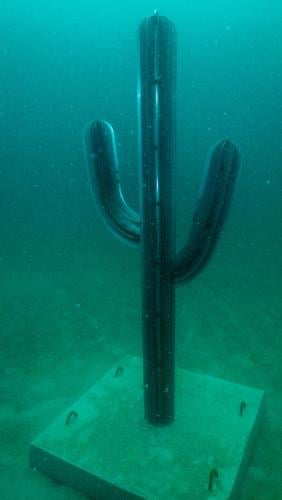
A 10-foot-tall, stainless steel saguaro cactus, born in Tucson, went to its forever home this summer, at the bottom of the Gulf of Mexico.
The sculpture is one of 12 works created by artists around the world that were installed in June at the Underwater Museum of Art, located in a one-acre patch of seabed off Grayton Beach State Park in South Walton, Florida.
The curated pieces joined seven sculptures, including one shaped like a pineapple and another like a human skull, already serving as a marine habitat for the local ocean life nearly 60 feet below the surface.
The museum is free, but requires that visitors have the proper diving equipment, certifications and can arrange for transportation to the sculpture site, nearly a mile off the coast.
Tucson artist Ghazal Ghazi, co-creator of the saguaro sculpture, thought an underwater museum sounded surreal when she responded to the museum’s call to artists, and was subsequently chosen to participate, earlier this year.
“It seemed very beautiful, very magical,” said Ghazi, who moved to Tucson from the Midwest in 2008 to attend the University of Arizona.
Ghazi tapped fellow Tucson artists Bill Baron and Michael Ramirez to work with her on the project.
The group explored several designs, but the iconic saguaro “really stood out to us,” Ghazi said.
“Sea life will be growing on these sculptures,” Ghazi said. “We thought about how saguaros are so vital to maintaining and promoting life in the desert. The sculpture would be accomplishing the same role underwater.”
The colossal cactus was constructed in a workshop near downtown Tucson and took nearly a month to finish. It weighed close to 300 pounds upon completion.
It was shipped to Florida via flatbed truck in late March, where it was fixed onto a concrete pad, meant to prevent it from sinking into the sand, and to ensure proper balance on the sea floor, according to Jennifer Steele, executive director of the Cultural Arts Alliance of Walton County.
The museum, a collaboration between the arts alliance and the South Walton Artificial Reef Association, opened in June of 2018 and bills itself as the nation’s first underwater art museum.
That same year, Time included it in its annual list of world’s greatest places. The list highlighted 100 global destinations based on several factors, including originality, innovation, influence and sustainability.
The sculptures, now officially part of the Florida Department of Environmental Protection’s artificial reef project and the arts alliance’s Art in Public Spaces program, will remain there indefinitely, even as more sculptures are added, Steele said.
Steele added that they hope to install about 50 sculptures total before the allotted space reaches capacity.
The museum launched in an area of Florida already known for its tourism. Walton County, Florida, receives more than 4 million visitors to its white sand beaches annually, and some of those visitors in the last year have included a trip to see the sculptures.
“The destination is becoming increasingly popular with divers as they learn about the site,” Steele said. “As a result, more dive resources are becoming available due to the demand.”
Ghazi, who attended the saguaro sculpture’s deployment, saw the whole experience as a “unique opportunity.”
“It is wonderful to be able to create, and, at the same time, make something that will help marine life,” she said.
Artist colleague Bill Baron said it is a weird feeling making a piece of public art for an exhibition that he will probably never see himself, but there are advantages to its location.
“It is cool because it will be untampered with,” Baron said. “It is like a weird little sunken treasure.”
26 photos of Tucson's quirkiest saguaros
Tucson's quirky saguaros
Updated
You can find this crested saguaro near the entrance to the Arizona-Sonora Desert Museum.
Tucson's quirky saguaros
Updated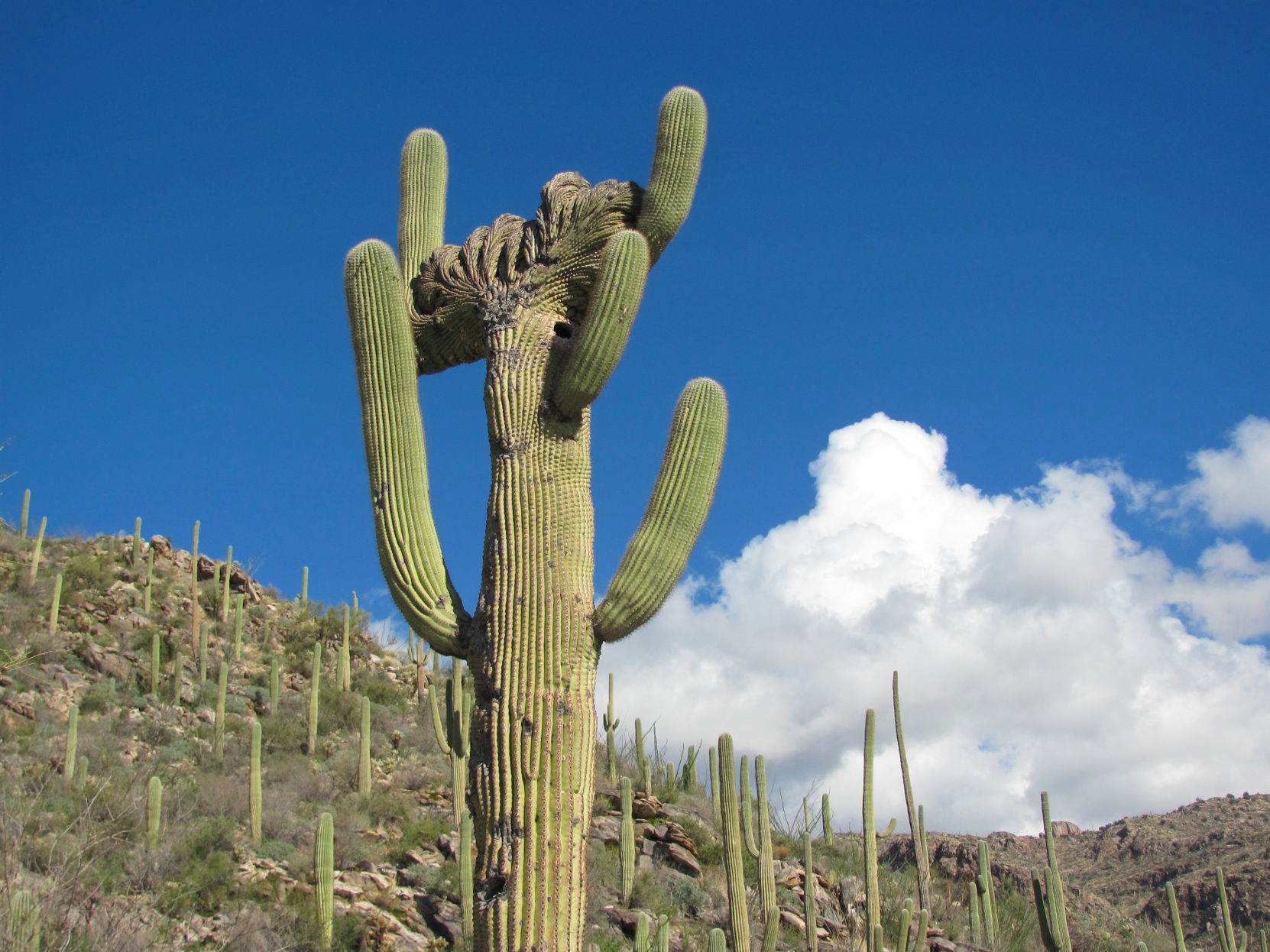
A rare crested saguaro stands on a slope above the Pima Canyon Trail.
Tucson's quirky saguaros
Updated
This crested saguaro beside Old Main on the University of Arizona campus appears to be signaling a touchdown.
Tucson's quirky saguaros
Updated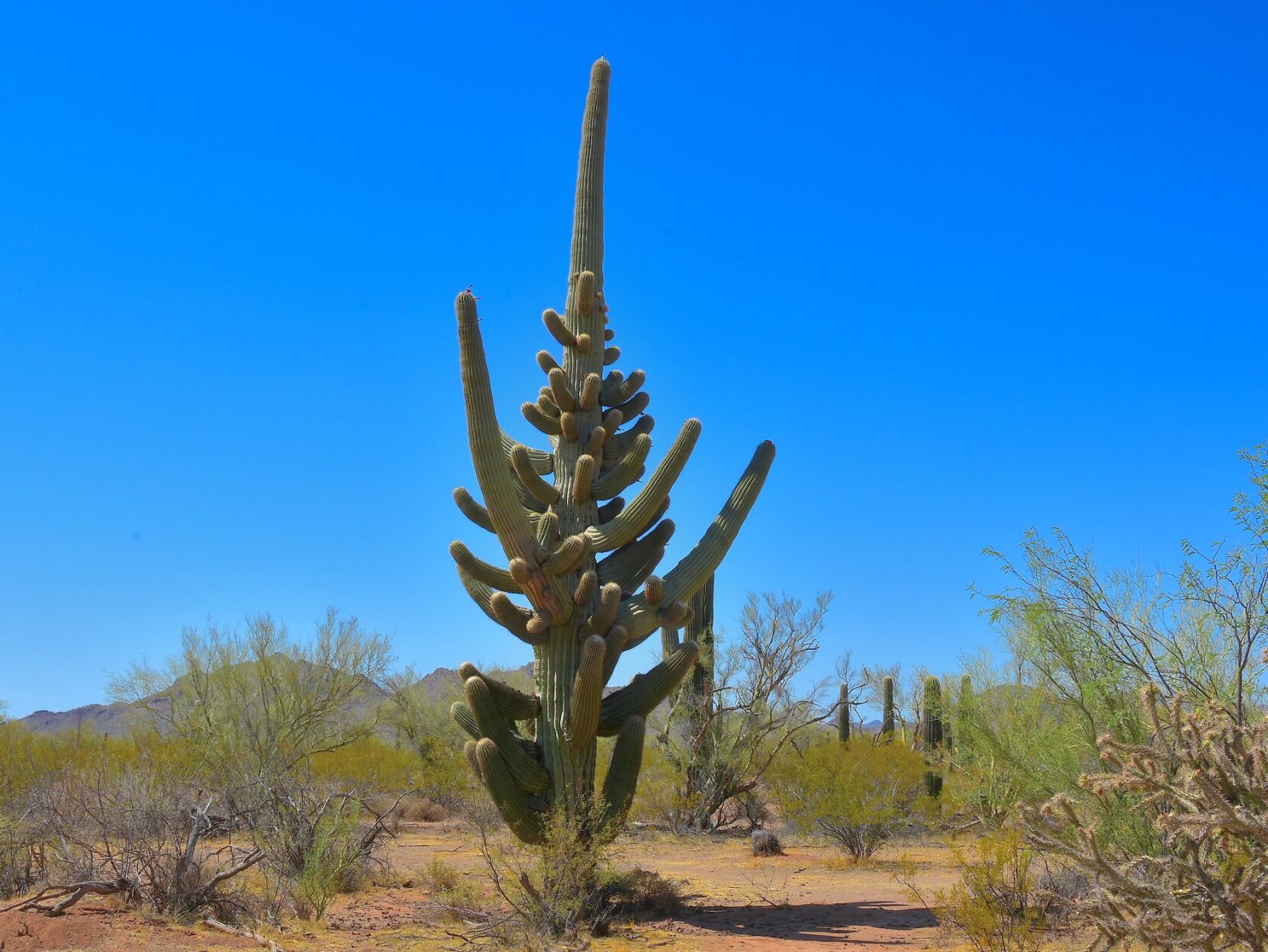
This photo was taken in Ironwood Forest National Monument, west of Marana.
Tucson's quirky saguaros
Updated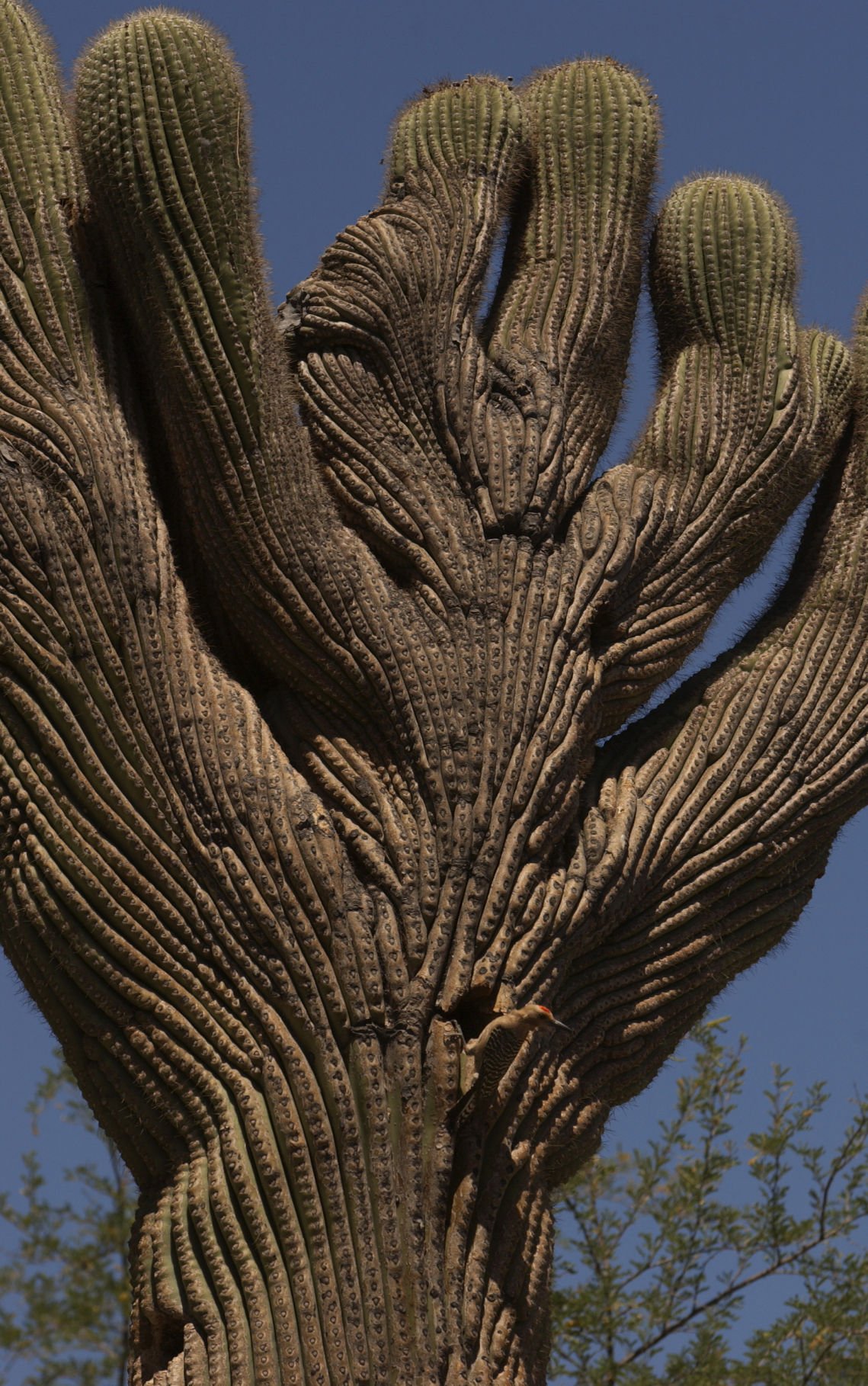
A Gila woodpecker prepares to pop into its nest on a crested saguaro at Tucson Botanical Gardens, Tuesday, June 1, 2004.
Tucson's quirky saguaros
Updated
This cactus was spotted west of Green Valley.
Tucson's quirky saguaros
Updated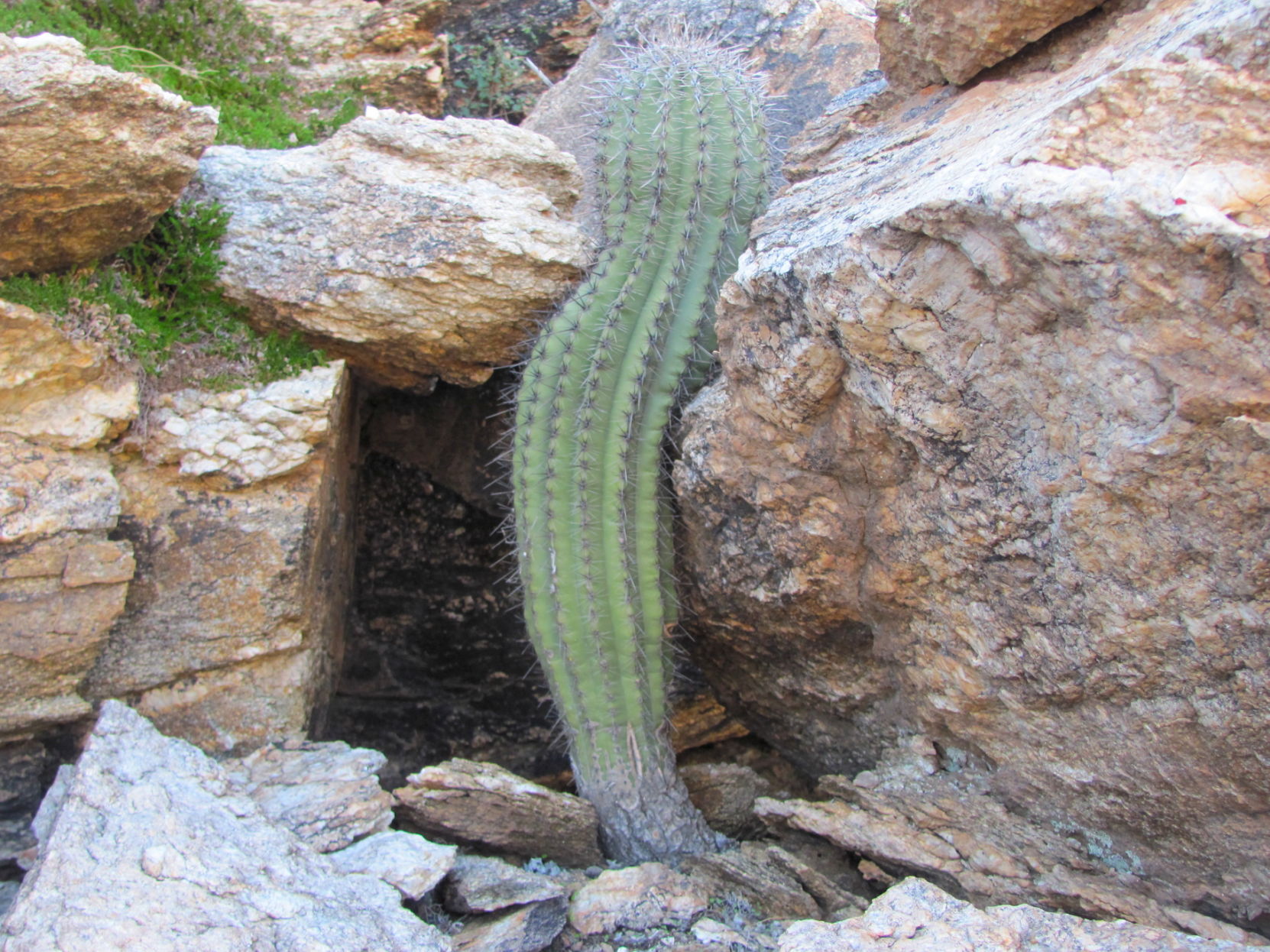
A little saguaro has found its niche between a rock and a hard place along the Esperero Trail in Sabino Canyon.
Tucson's quirky saguaros
Updated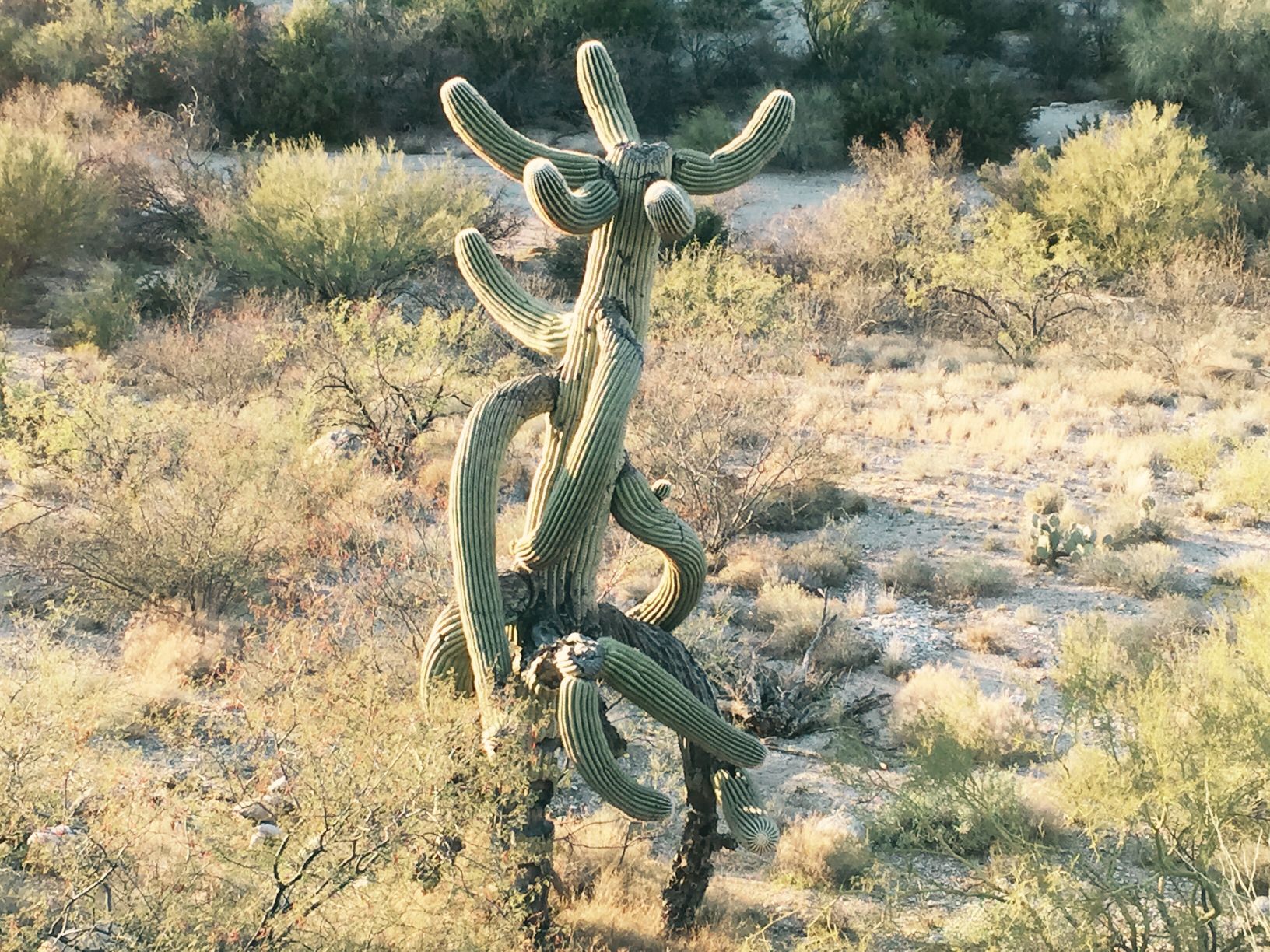
Many saguaros make a big thing of symmetry and perfect form. And then there's this one.
Tucson's quirky saguaros
Updated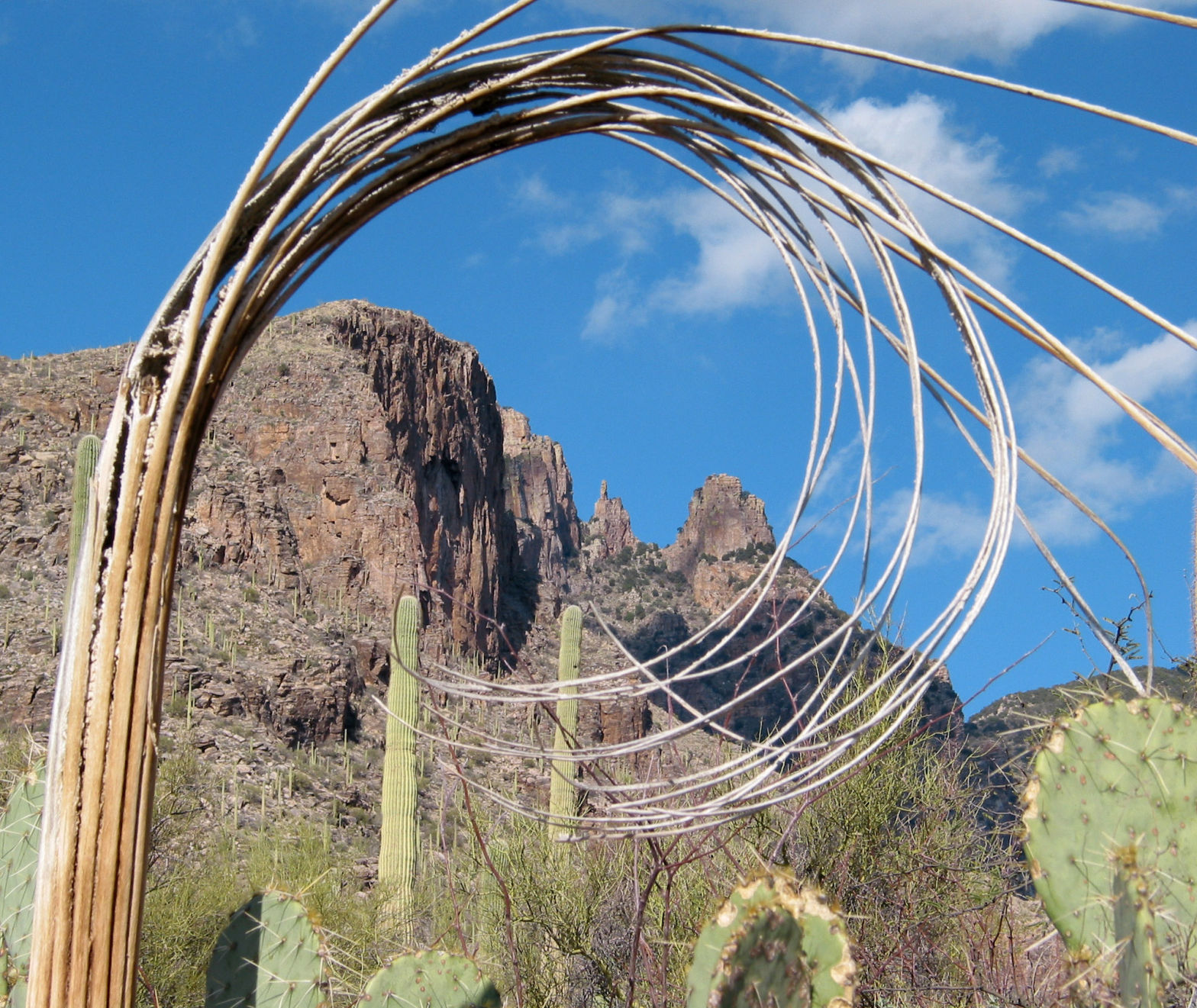
Distant finger rock is framed by the almost circular strands of a dead saguaro.
Tucson's quirky saguaros
Updated
A Saguaro the looks like a dinosaur (Tyrannosaurus Rex) near Ridgeside Drive near Sediment Drive on Jan. 21, 2013.
Tucson's quirky saguaros
Updated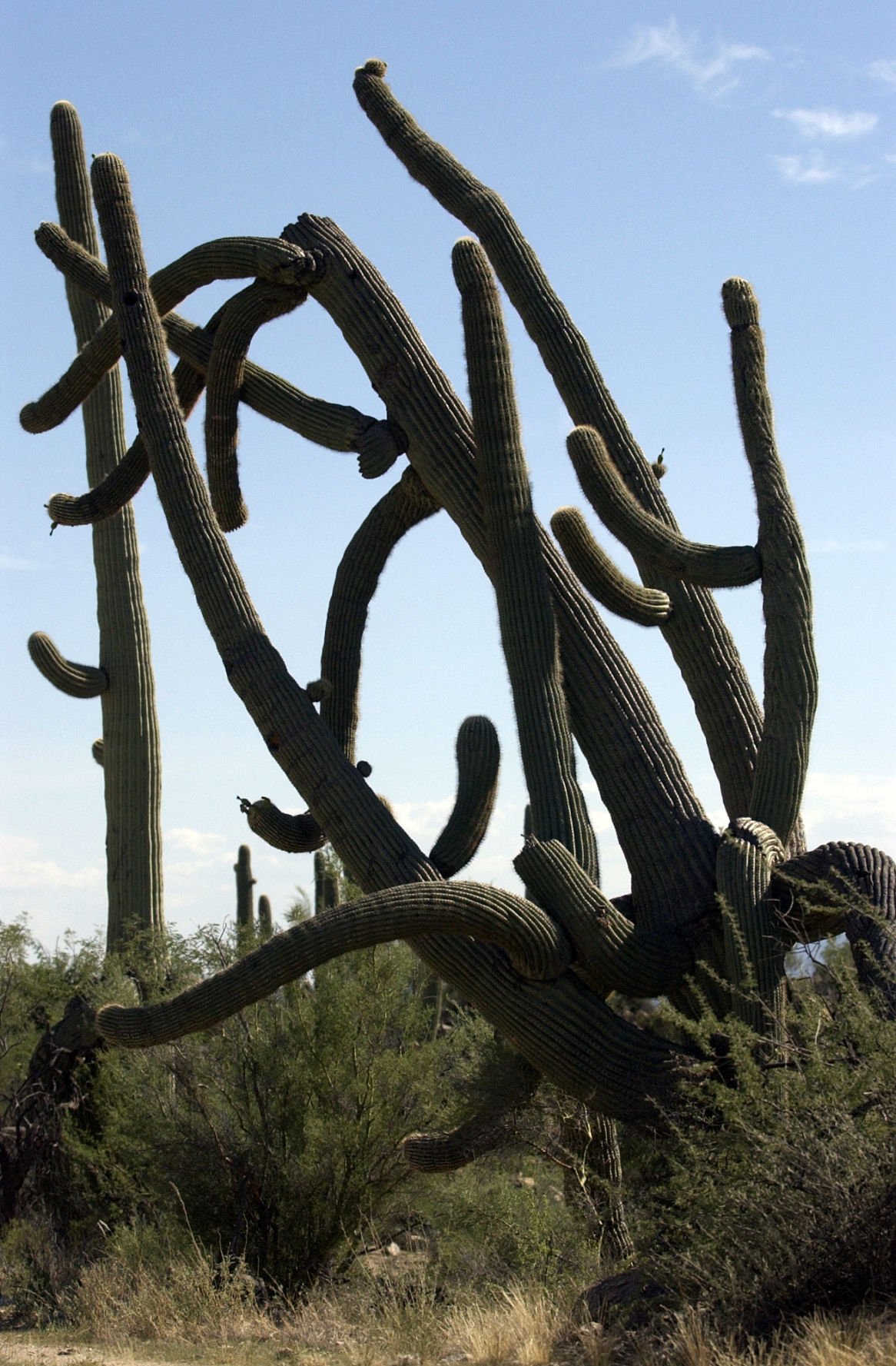
An old multiple arm saguaro appears to ready to topple over Friday, Sept. 10, 2004 near Teal Blue Trail and Moore Roads.
Tucson's quirky saguaros
Updated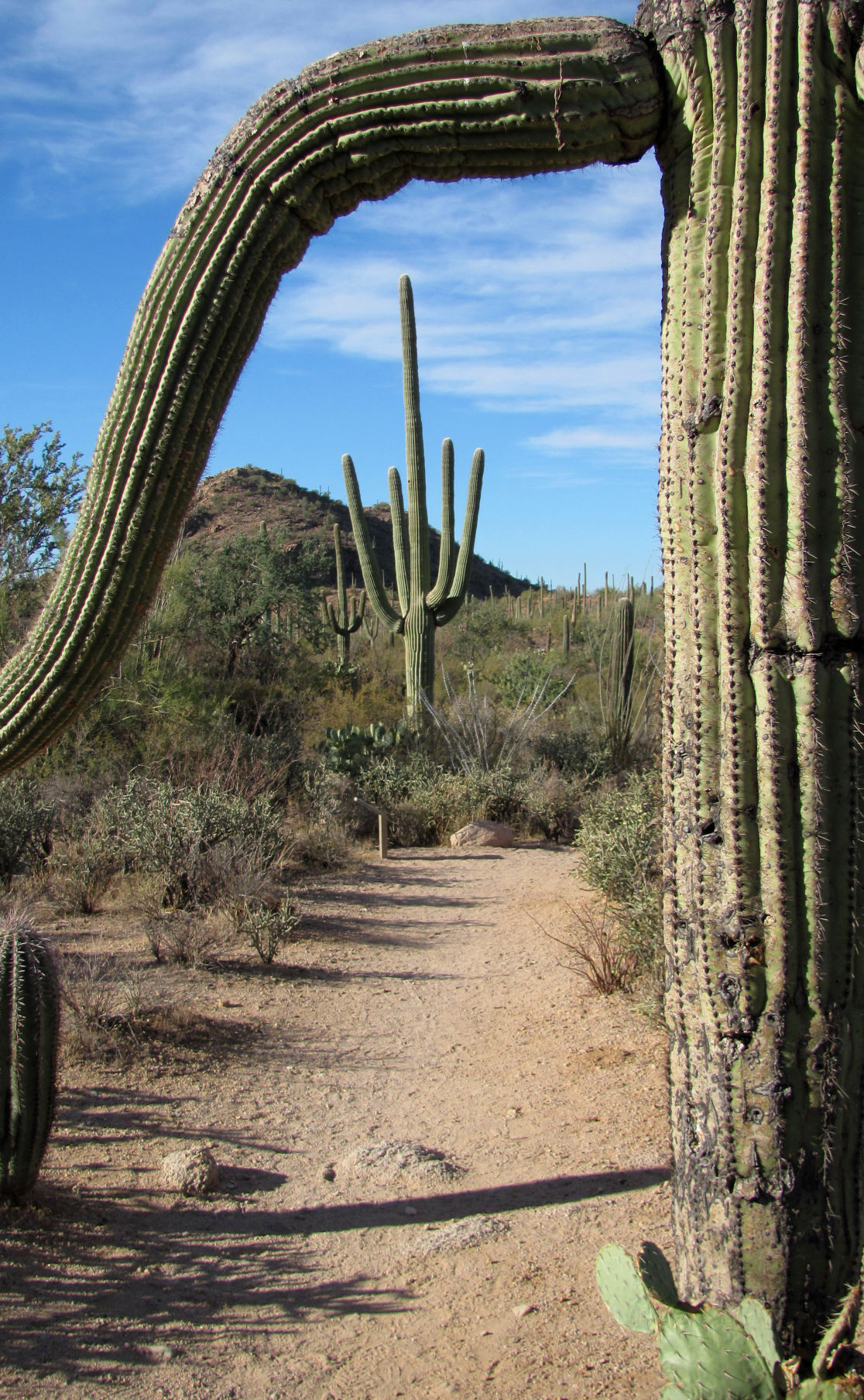
Scenery along the Valley View Overlook Trail at Saguaro National Park West on Dec. 15, 2010.
Tucson's quirky saguaros
Updated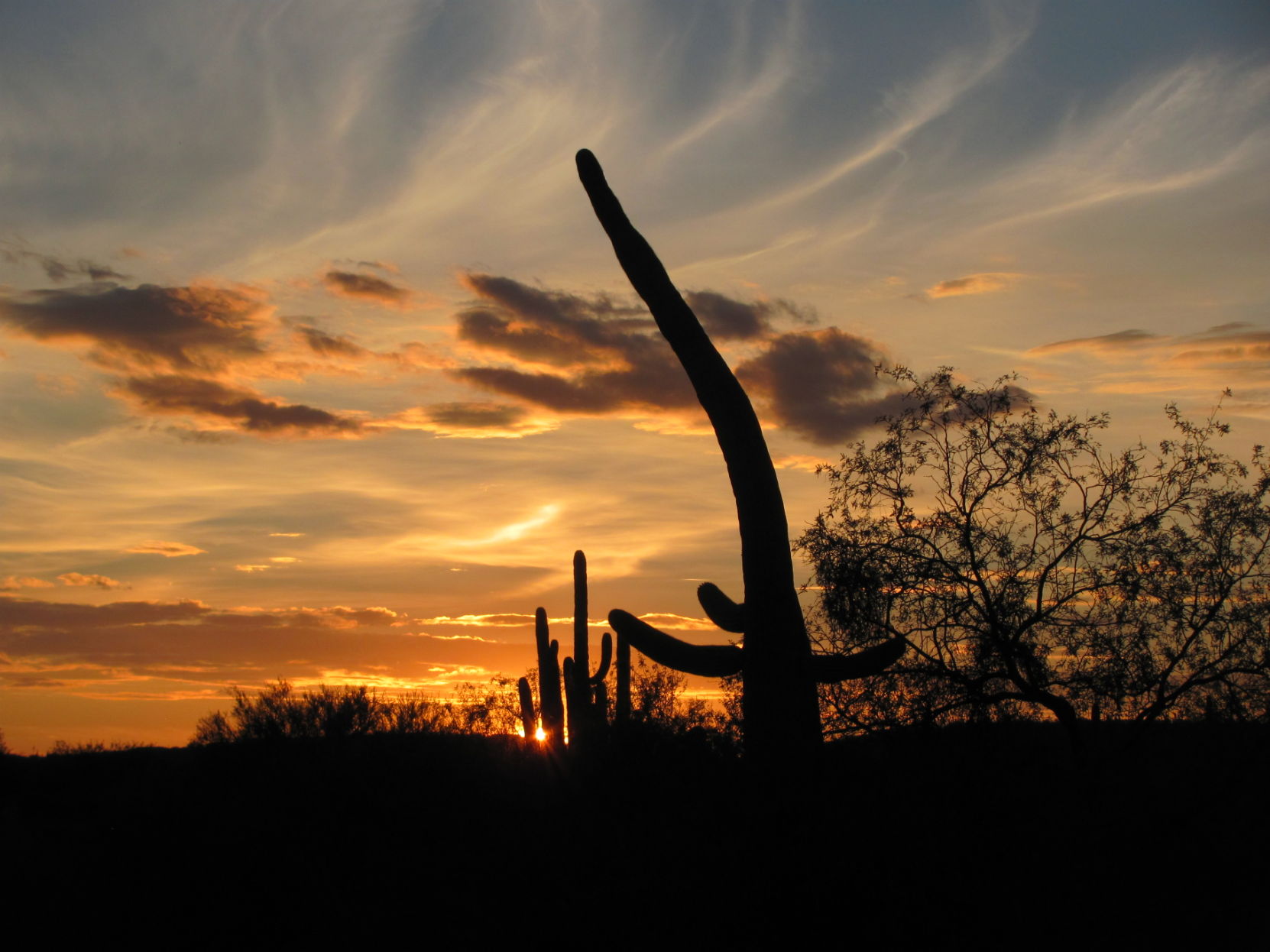
A saguaro appears to embrace the sunset in Sabino Canyon along the final stretch of a hike on the Phoneline Trail. Photo taken January 10, 2015. Doug Kreutz / Arizona Daily Star
Tucson's quirky saguaros
Updated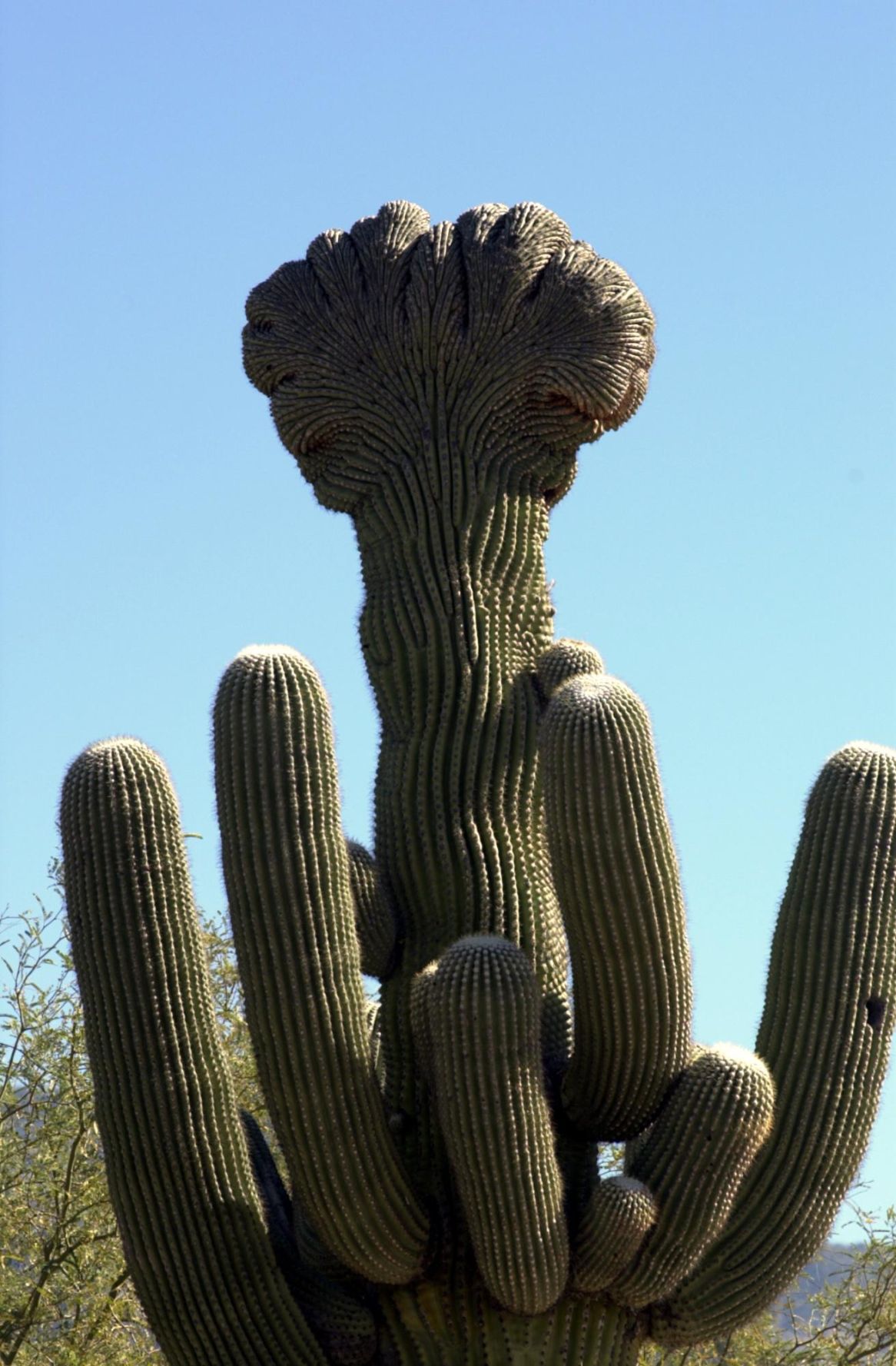
A crested saguaro with numerous arms soaks up the sun on the city's northwest side. Crested saguaros are quite rare happening only 1 in 10,000.
Tucson's quirky saguaros
Updated
This saguaro, along the Mica View Trail at Saguaro National Park east of Tucson, was leaning at a precarious angle before it fell to the ground in early 2015. Photo by Doug Kreutz / Arizona Daily Star
Tucson's quirky saguaros
Updated
This cristate, or crested, saguaro in Sabino Canyon near Tucson is putting on a good bloom. Photo taken June 3, 2014. Photo by Doug Kreutz / Arizona Daily Star
Tucson's quirky saguaros
Updated
A rare crested saguaro in Sabino Canyon near Tucson has plenty of blooms and buds this spring. Photo taken June 3, 2014.
Tucson's quirky saguaros
Updated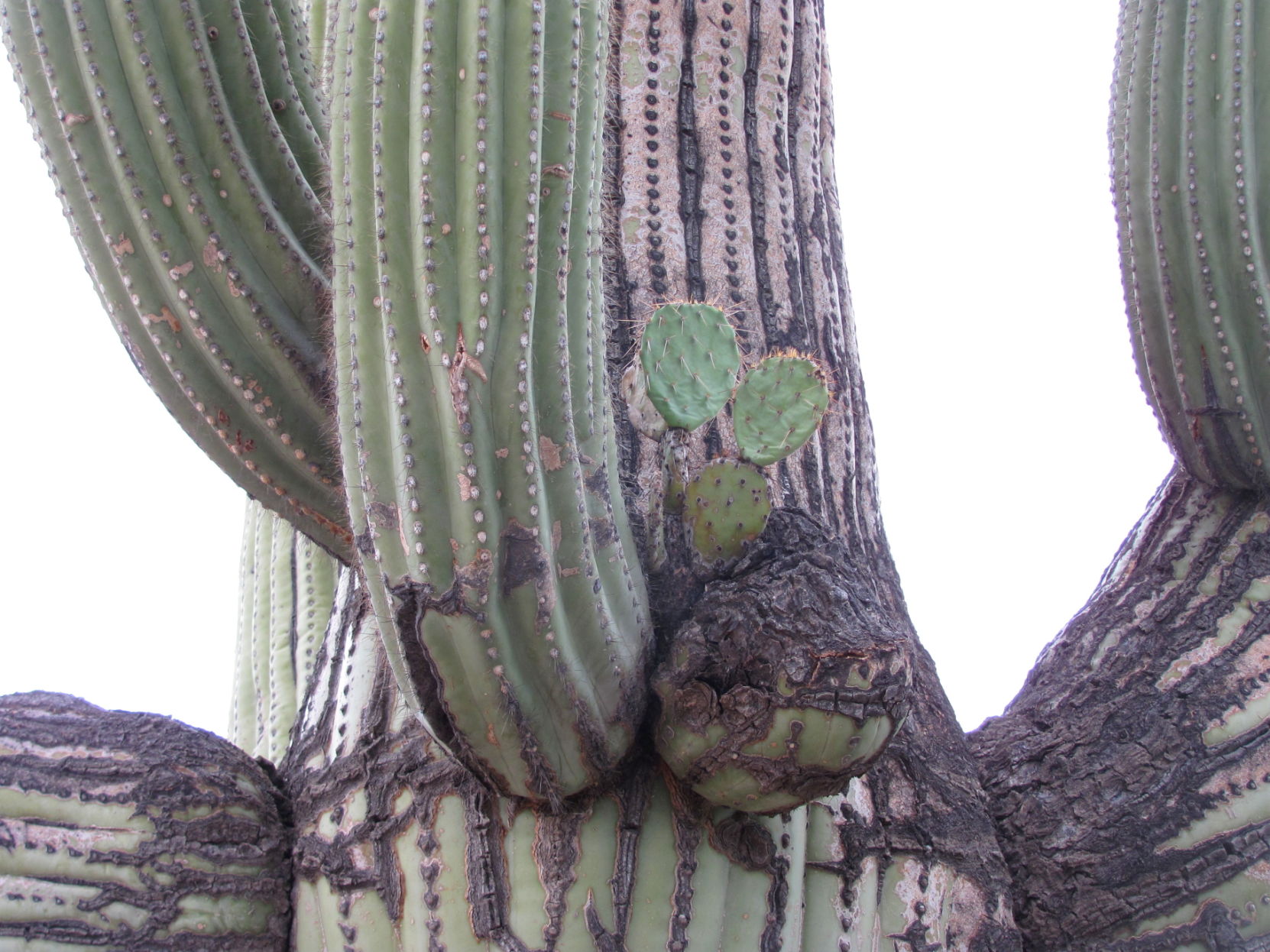
A prickly pear cactus is growing out of a saguaro in the Desert Garden area along the Bajada Loop Nature Trail in Sabino Canyon northeast of Tucson.
Tucson's quirky saguaros
Updated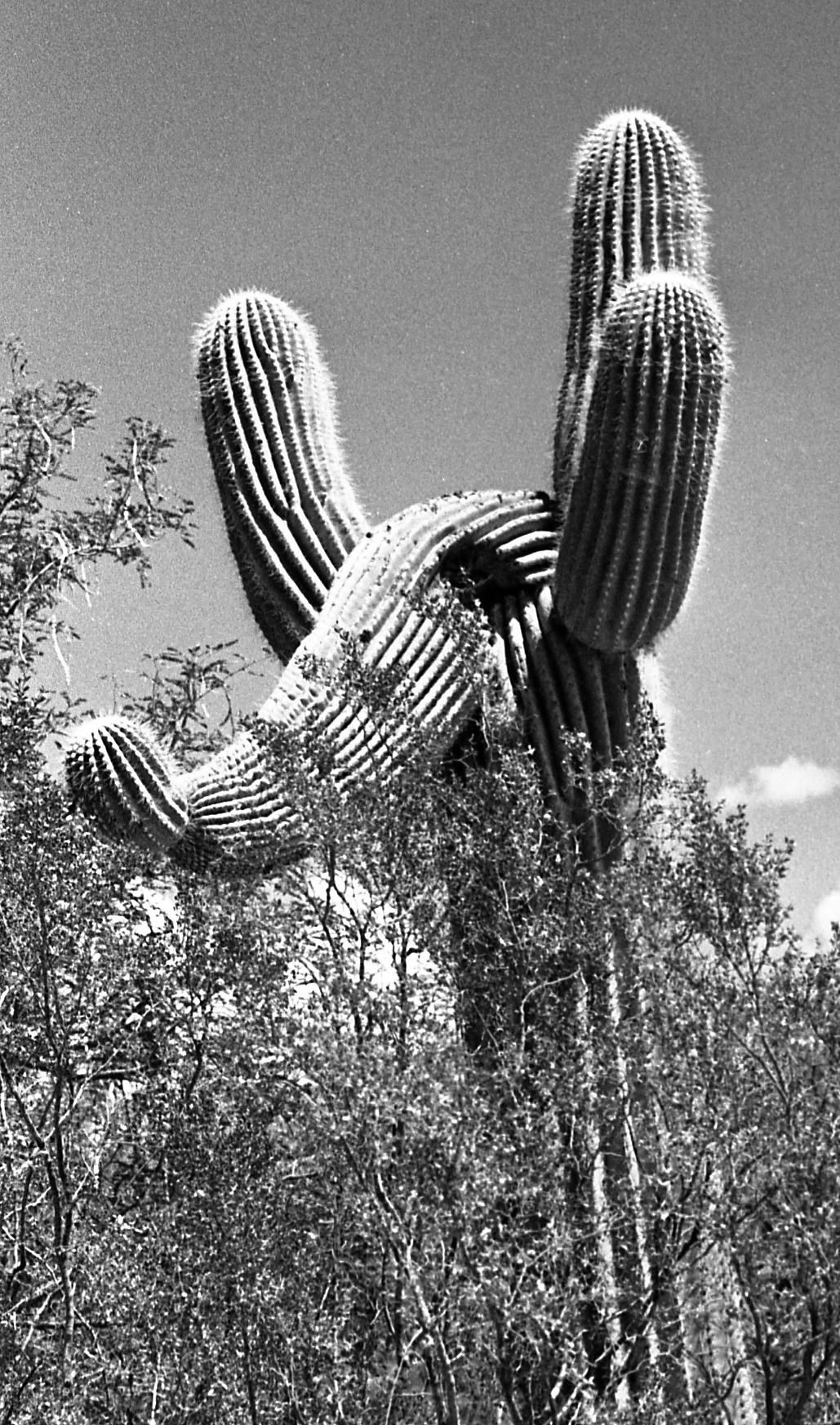
A Saguaro cactus on Soldiers Trail Road that looks like an elephant in 1973. The Tucson Citizen called it a "Saguarontosaurus." "This spiny antecedent of the ponderous pachyderm stalks the desert east of town," the newspaper wrote. Tucson Citizen file
Tucson's quirky saguaros
Updated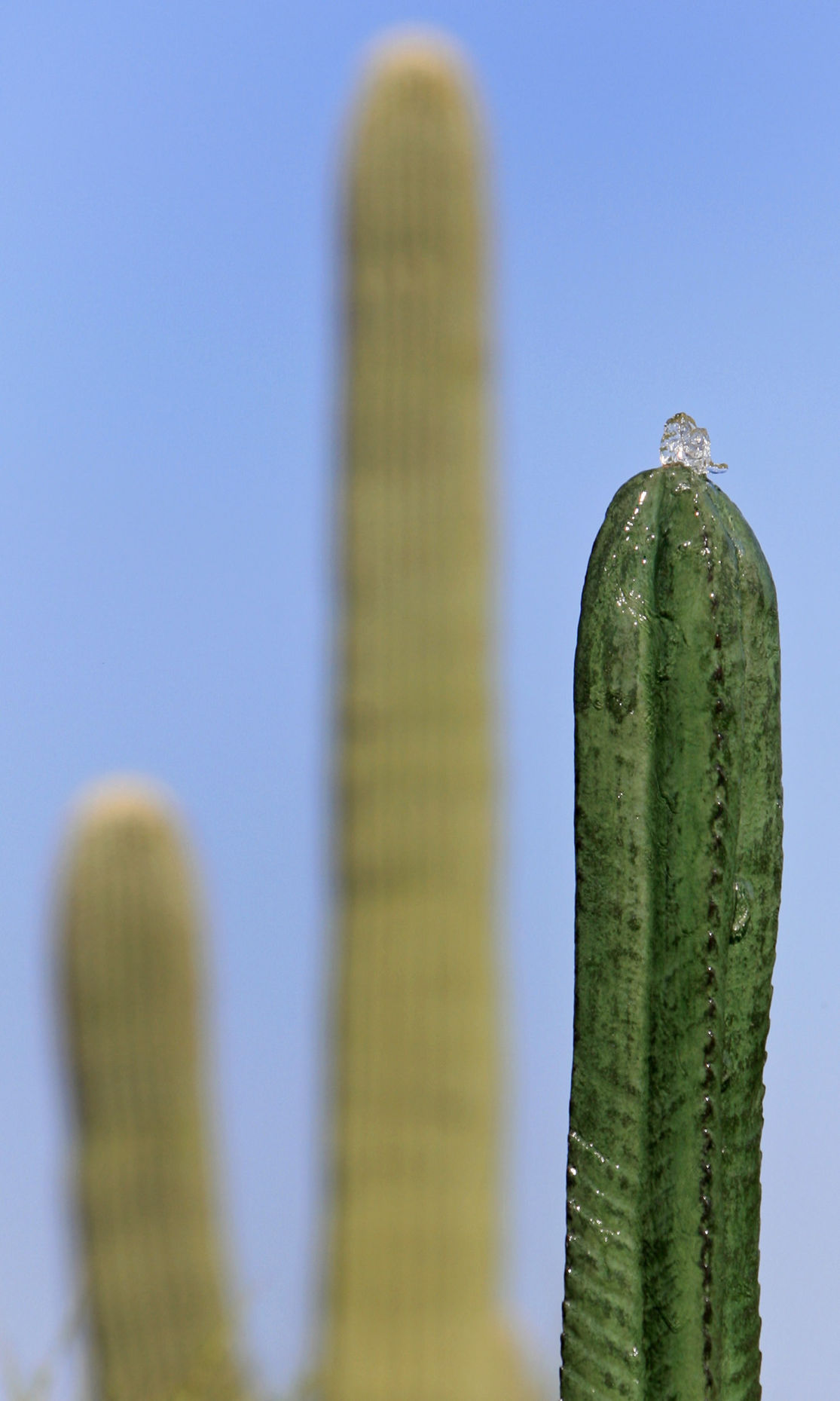
A fountain shaped like a saguaro cactus stands in front of a real cactus at a home in Dove Mountain on Aug. 31, 2010.
Tucson's quirky saguaros
Updated
Saguaros stand against a sky of patchy clouds Thursday afternoon on July 31, 2003 at Saguaro National Park near Tucson, Ariz.
Tucson's quirky saguaros
Updated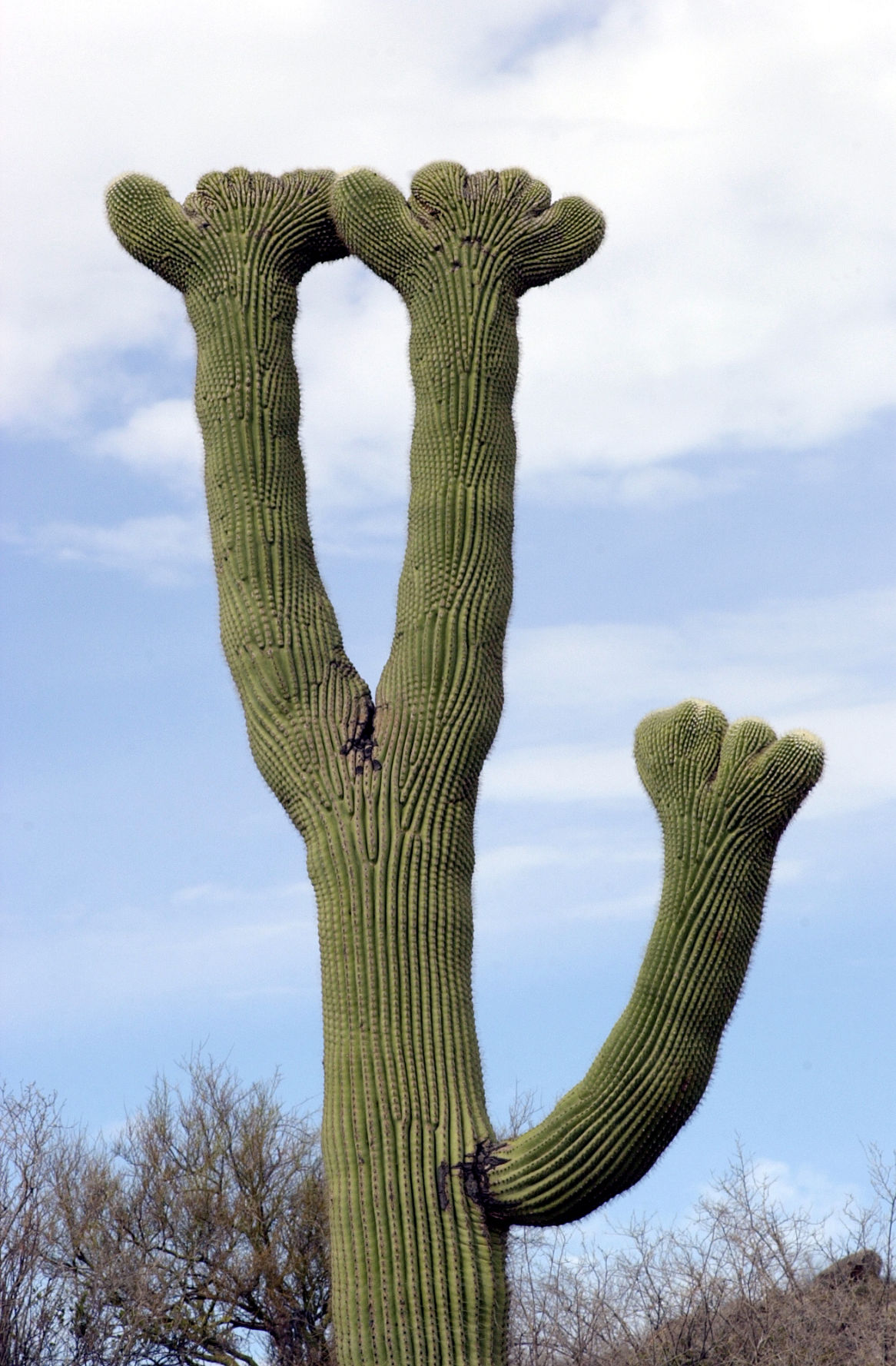
A rare tri-crested saguaro seems to be waving in the Tortolita Mountains on Jan. 3, 2002.
Tucson's quirky saguaros
Updated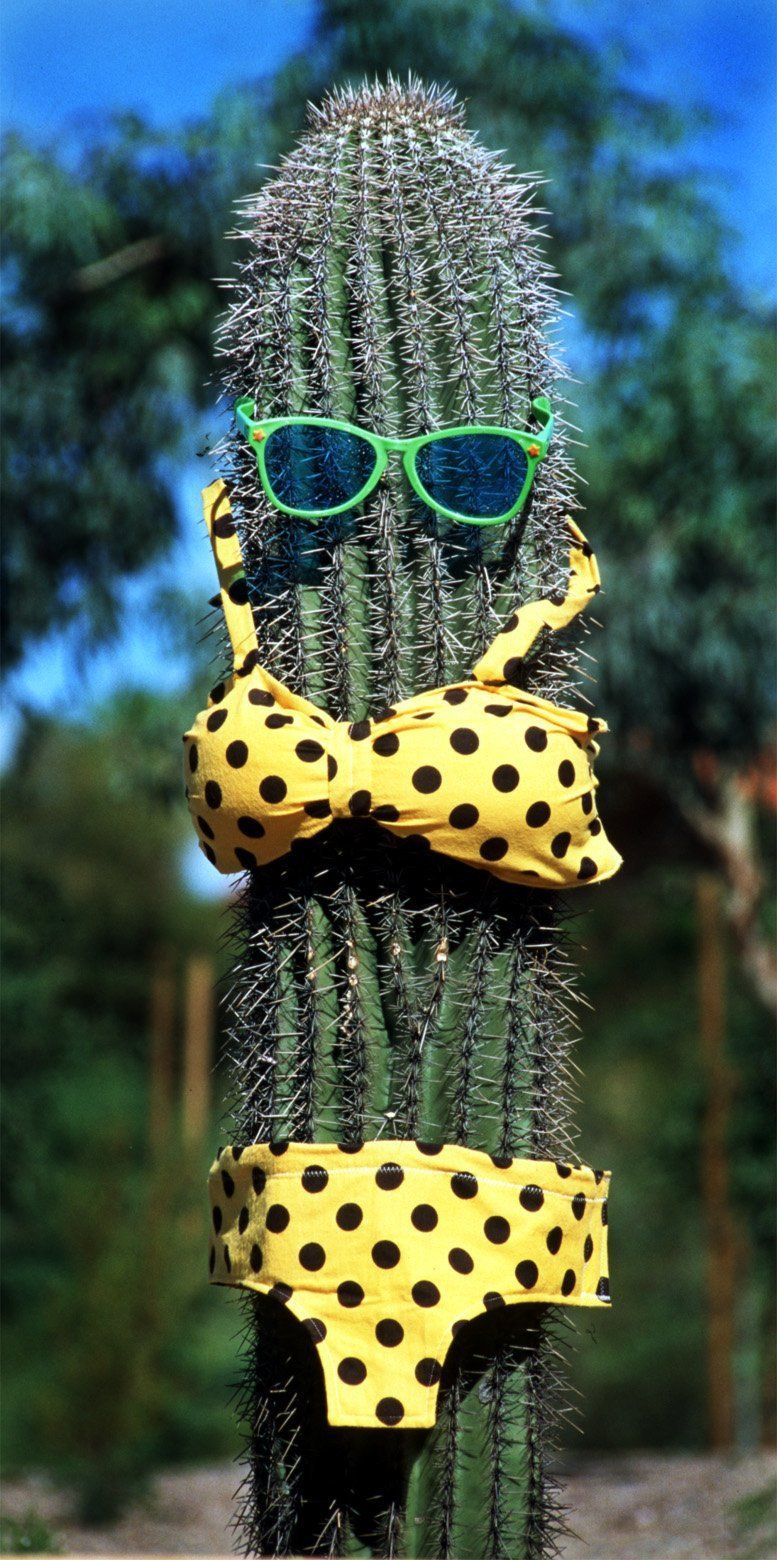
A saguaro wears a bikini outside a Pizza Hut at East Sunrise Drive and Swan Road June 17, 1997.
Tucson's quirky saguaros
Updated
This rider has a cute little Saguaro cactus with a golf ball hat on his helmet during El Tour de Tucson on Saturday November 19, 2011, in Tucson, Ariz.
Tucson's quirky saguaros
Updated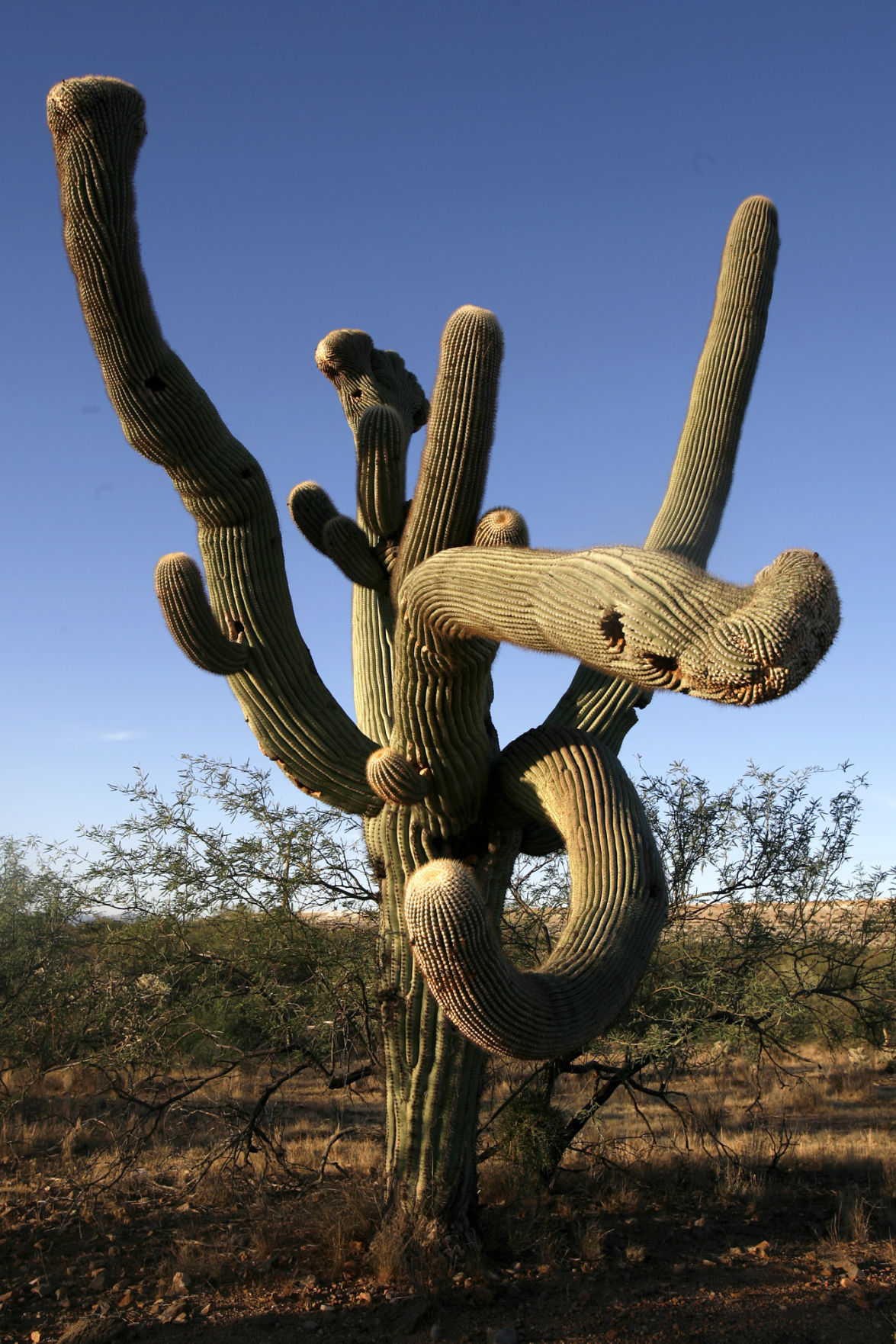
A rare crested saguaro cactus stands on the land of the 2,073-acre Green Valley preserve Oct. 7, 2007 in Green Valley, Ariz.
Tucson's quirky saguaros
Updated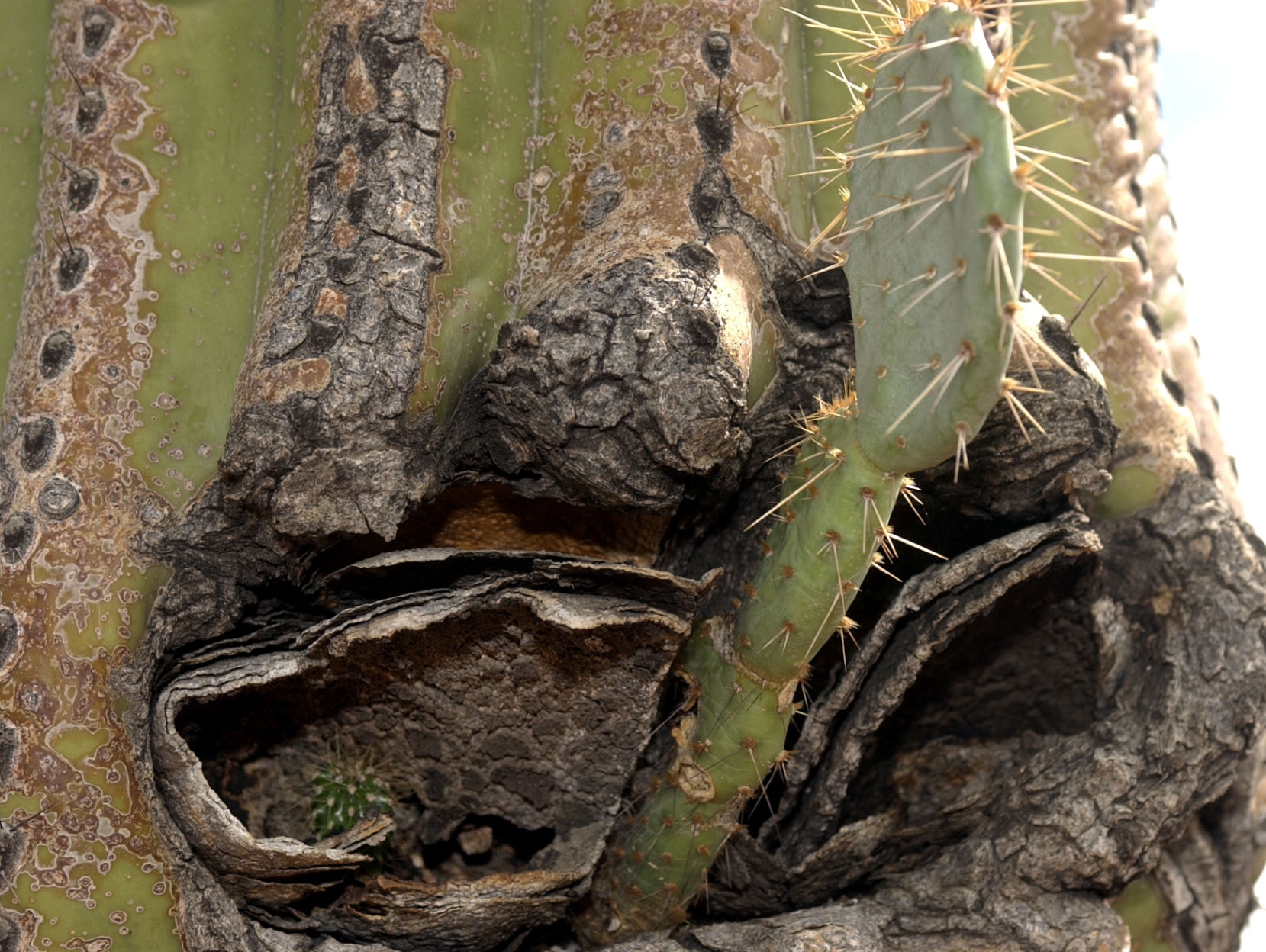
A prickly pear cactus and another cactus grow out of one of the scars on the side of the transplanted saguaro Monday Sept. 9, 2002.

