


Tucson’s wide open skies and long-standing love affair with astronomy has made it so you don’t have to be a professional to access the equipment and expertise to go stargazing.
With the Perseid meteor shower streaking through the night sky this month, set to peak Aug. 11-13, now is the perfect time, save for some monsoon cloud cover, to look up toward the heavens and see what’s going on in the cosmos.
Whether you are interested in purchasing a telescope for your backyard or checking out high-end equipment in action at an established facility like Kitt Peak (when it reopens to the public), Tucson has options.

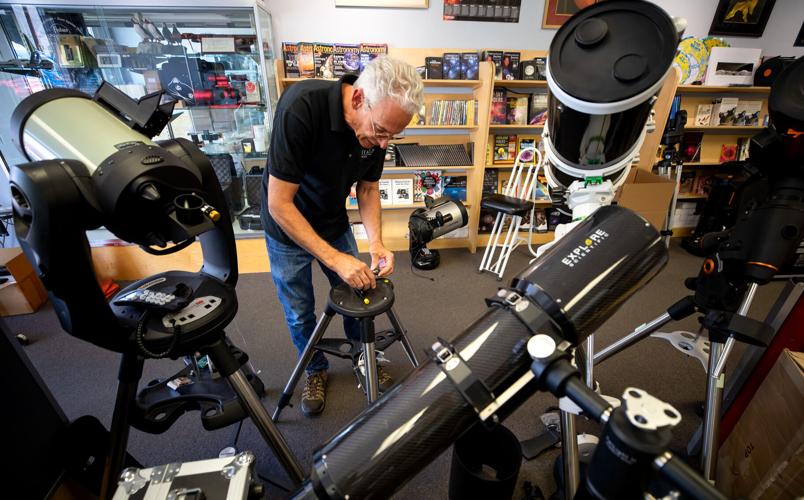
Store owner Dean Koenig looks at a telescope for a customer at Starizona, 5757 N. Oracle Road.
Starizona
5757 N. Oracle Road, 292-5010;
starizona.com
Located about two miles north of the Tucson Mall, Starizona is an astronomy store that stocks a healthy supply of telescopes, cameras and just about every accessory imaginable, from the very basic to the highly advanced.
Owner Dean Koenig has owned and operated the shop for 25 years. Koenig said his love for astronomy began later in life, but once he started, he was enthralled with the hobby.
“I say there are astronauts and there’s astro-nuts and I was one of the crazy ones,” he said.
Koenig says a high-powered telescope isn’t required to enjoy astronomy. Beginners can easily pick out constellations in the night sky using their naked eyes.
Moving from your own optics to a decent pair of binoculars, like a Meade 7 x 50 set, can enhance the experience for less than $40, Koenig said.
As far as telescopes go, Starizona has models ranging from a $340 to $9,000. Koenig said that for about $1,500 to $2,000, amateur astronomers can purchase a stand-alone telescope that can find everything in the sky for you automatically using triangulation technology.
If you’d like to capture some of the stars that you see on film, Starizona also carries astrophotography cameras, designed specifically for that purpose.
Spencer’s Observatory at Cat Mountain Lodge
2720 S. Kinney Road, 578-6085; catmountainstation.com/spencers-observatory
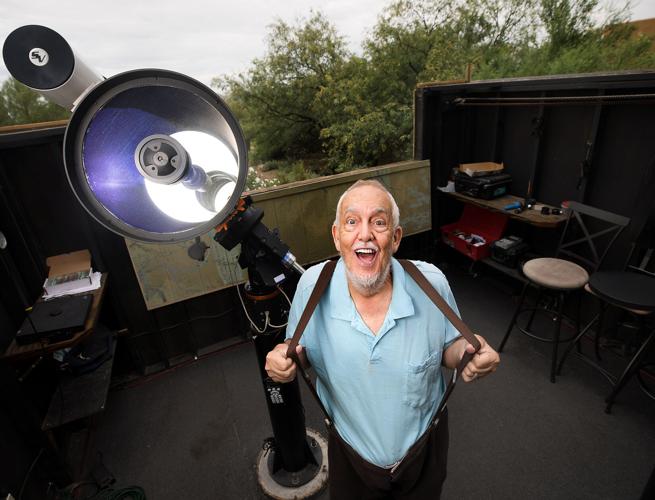
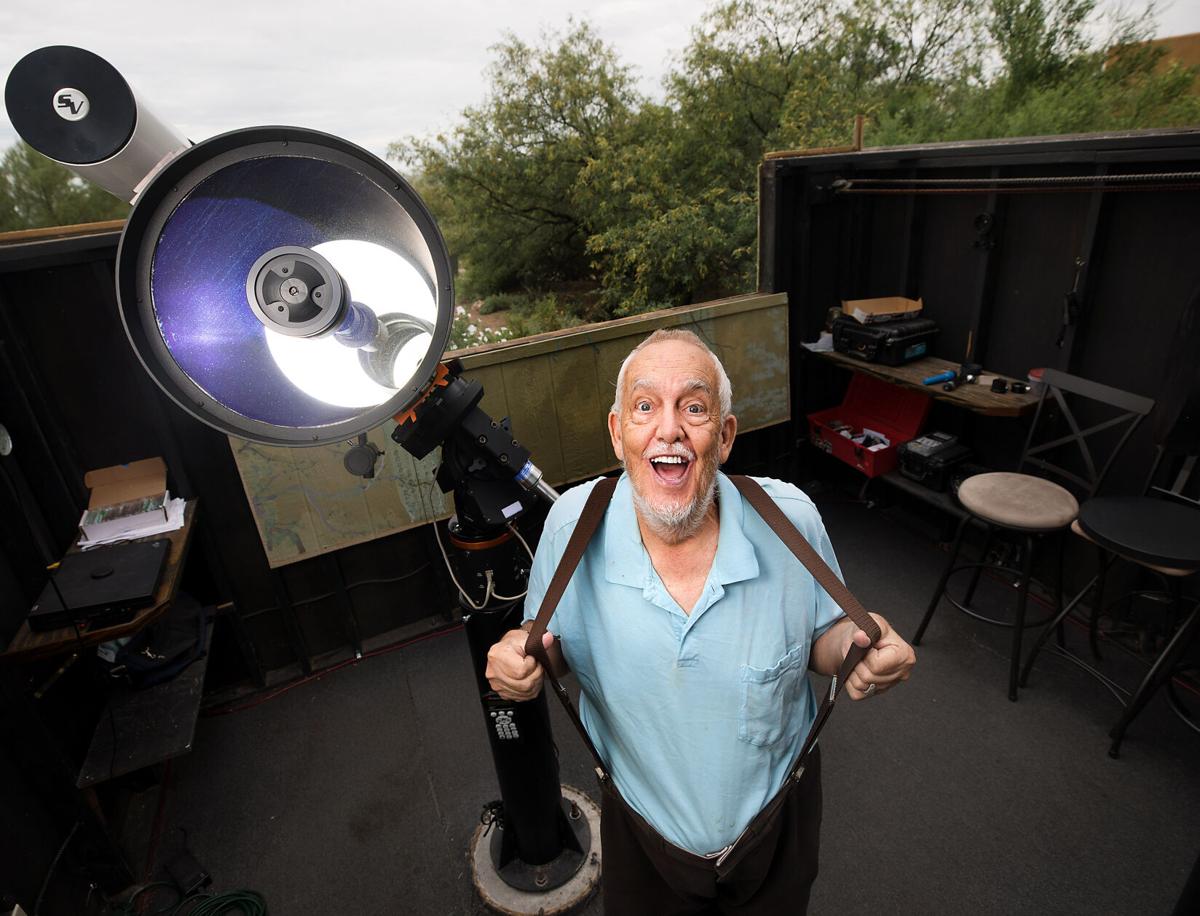
Victor Sunstar, one of the guides at Spencer’s Observatory on Tucson’s west side, likes to describe himself with a bit of humor.
“Do you know what an old astronomer is?” Sunstar asks. “Well, I’ll tell you. A stargeezer.”
Sunstar is the resident stargeezer and star tour guide at the observatory, with more than 50 years of presenting experience.

Spencer’s Observatory is behind Cat Mountain Lodge on Kinney Road.
Located next to Cat Mountain Station, Spencer’s is home to a Celestron 14-inch telescope that Sunstar says will blow your socks off when it sets its sights on the moon.
The observatory provides an intimate experience for small groups of up to five people, making it so no one gets left behind. Over the course of the two-hour star tour, Sunstar uses interactive activities and kinesthetic learning to educate and entertain.
The telescope is housed in a structure with a roll-off roof, providing an uninterrupted view of the night sky.
“The ancients, they used the sky like we use a watch, a compass and a calendar, so I orient the people so that they can do that, too,” Sunstar said, emphasizing the need to physically point with your finger as you trace the constellations to kinesthetically learn where they are and what they look like.
Sunstar said the interactive activities give people a mental picture and a concept of how incredibly small we are in relation to the galaxy and the universe.

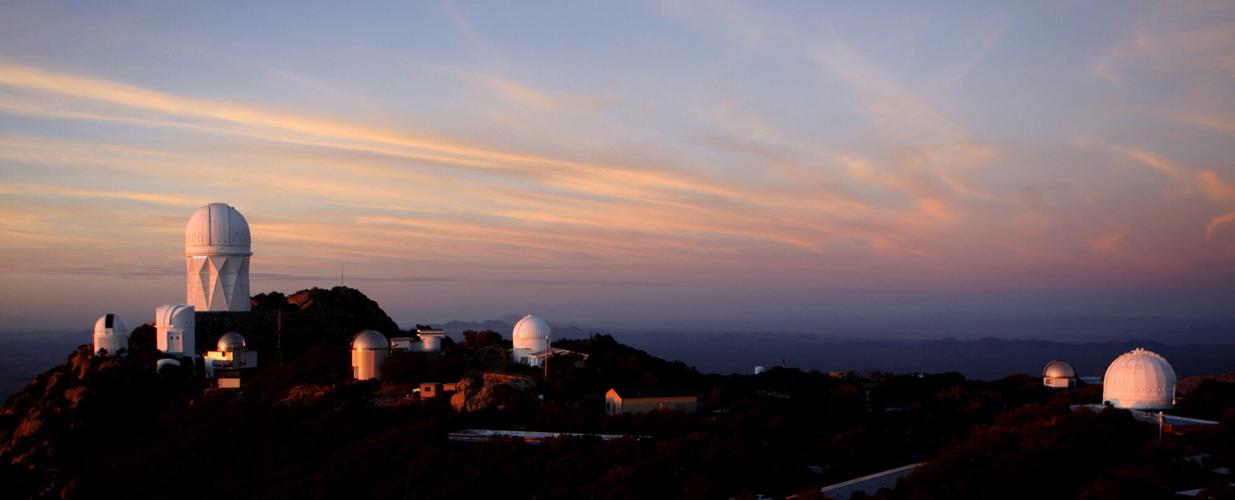
Kitt Peak National Observatory, west of Tucson, is closed for now but hopes to reopen later this year.
Kitt Peak National Observatory
Kitt Peak is currently closed to the public, but that just means you have more time to plan your visit for when the observatory tentatively reopens later this year.
“It will come back one way or the other,” said Bill Buckingham, Kitt Peak Visitor Center manager. “We have every intention of returning to normal. It is just a matter of doing it in a safe, phased manner and figuring out the exact timing.”
Pre-pandemic, the observatory offered a range of daytime guided tours, outdoor exhibits, and nighttime stargazing programs.
Twenty-six major telescopes reside on the mountain, including the original 36-inch telescope from Steward Observatory dating to 1922. It was moved in 1963 to Kitt Peak and is still in operation today.
The observatory attracts people from around the world, Buckingham said, coming from as far away as Beijing to take part in its programs.
Buckingham said Kitt Peak’s phased reopening will most likely start in September with a selection of virtual programs, including a remote viewing and imaging program.
Participants will be able to remotely control a 12½-inch Solario telescope on Kitt Peak and take photographs with the telescope, about 80 feet from the visitor center. With the aid of a staff member, you’ll be able to access the night sky from your living room.
Buckingham said they hope in-person, nighttime viewing programs will be able to resume in November, but it is all dependent on the progress of the pandemic.
LibraryScope Program
The Pima County Public Library provides access to telescopes for those who are not able to or are not sure if they want to own one themselves.
The naked eye is perfect for taking in a meteor shower, but to see the details of the heavens up close and personal, a telescope needs to be in the mix.
The program is in partnership with the Tucson Amateur Astronomy Association and provides the public with 4.5-inch, reflective tabletop telescopes. To guide the uninitiated, the library provides a user’s manual, constellation guide, and moon map.
Shawn Finn, the LibraryScope program coordinator said four branches have telescopes available for rent; Kirk-Bear Canyon, Miller-Golf Links, Oro Valley and Sam Lena South Tucson. Addresses can be found at library.pima.gov.
To check out a telescope, you need to be 18 years or older with a full-service library card, have $5 or less in fees, and a form of identification. Telescopes can be checked out for three weeks at a time, not unlike library books.
Finn said the program is very popular, but you can’t reserve them ahead of time, to give everybody a chance. Check on the library website to see if telescopes are available.
Photos: Kitt Peak National Observatory - crown jewel of U.S. observatories
Kitt Peak National Observatory
Updated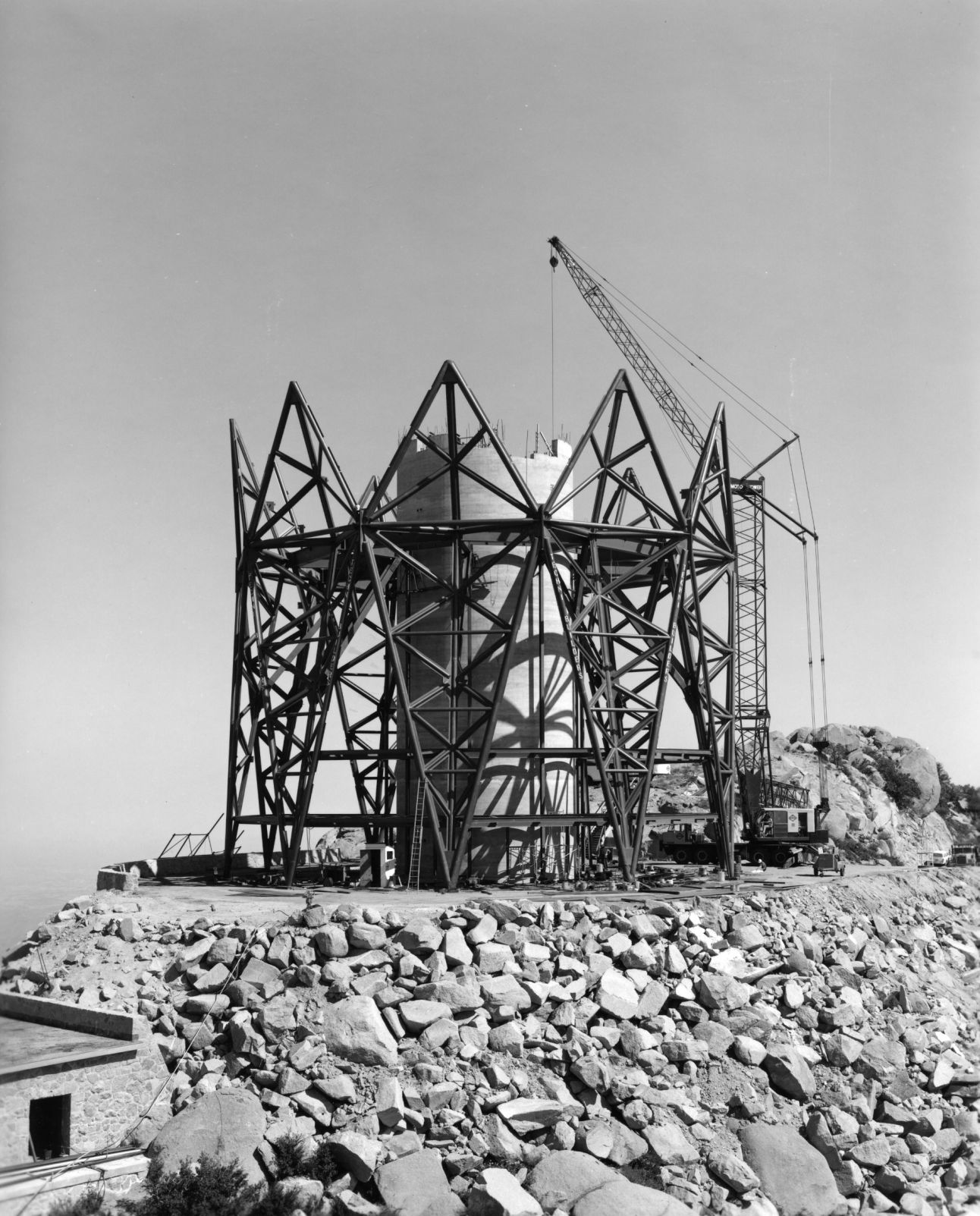
The 4-Meter Mayall optical telescope under construction at Kitt Peak National Observatory in September, 1967.
Nicholas U. Mayall 4-meter Telescope, KPNO, 1969
Updated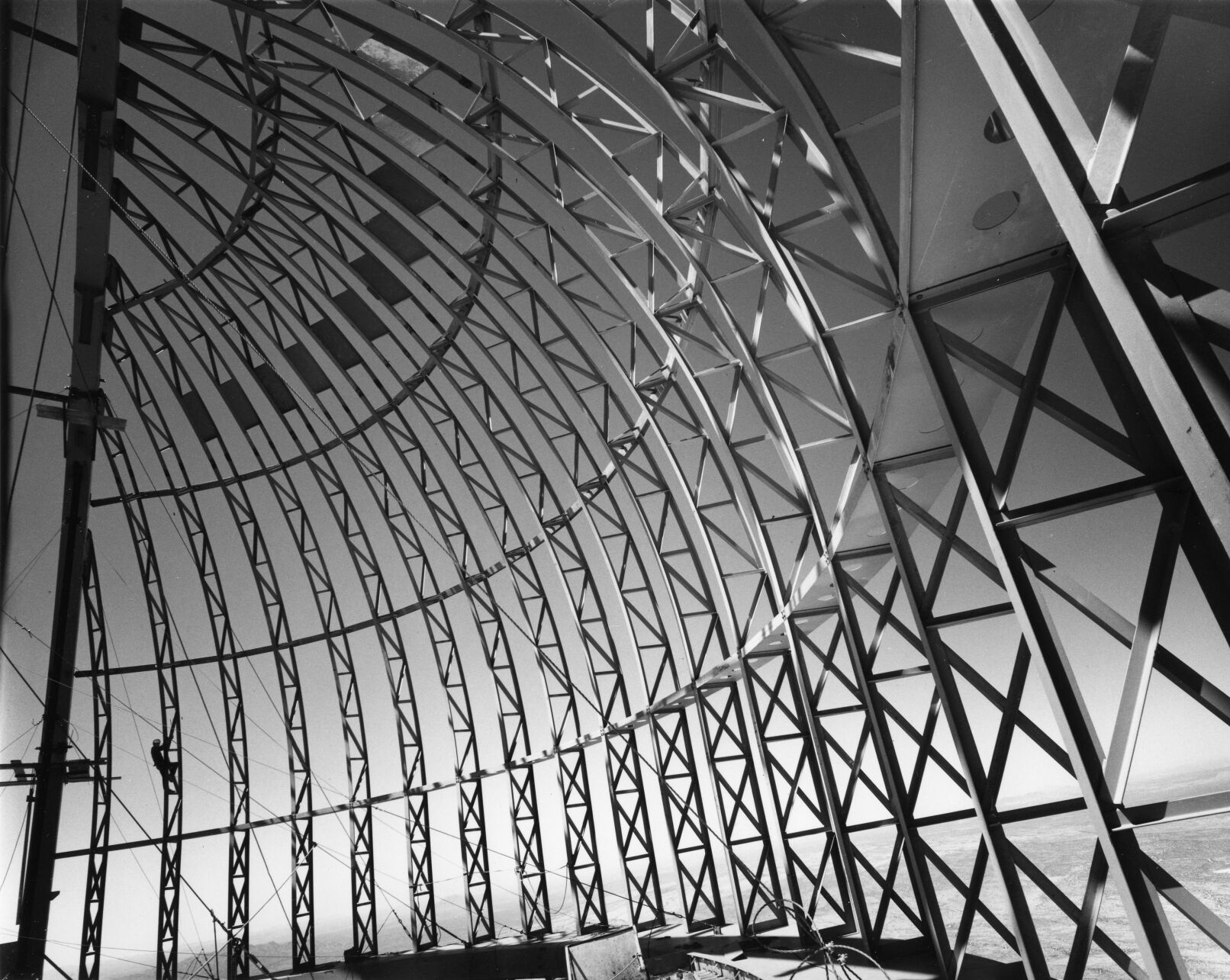
Nicholas U. Mayall 4-meter Telescope under construction at Kitt Peak National Observatory in 1969.
Kitt Peak National Observatory
Updated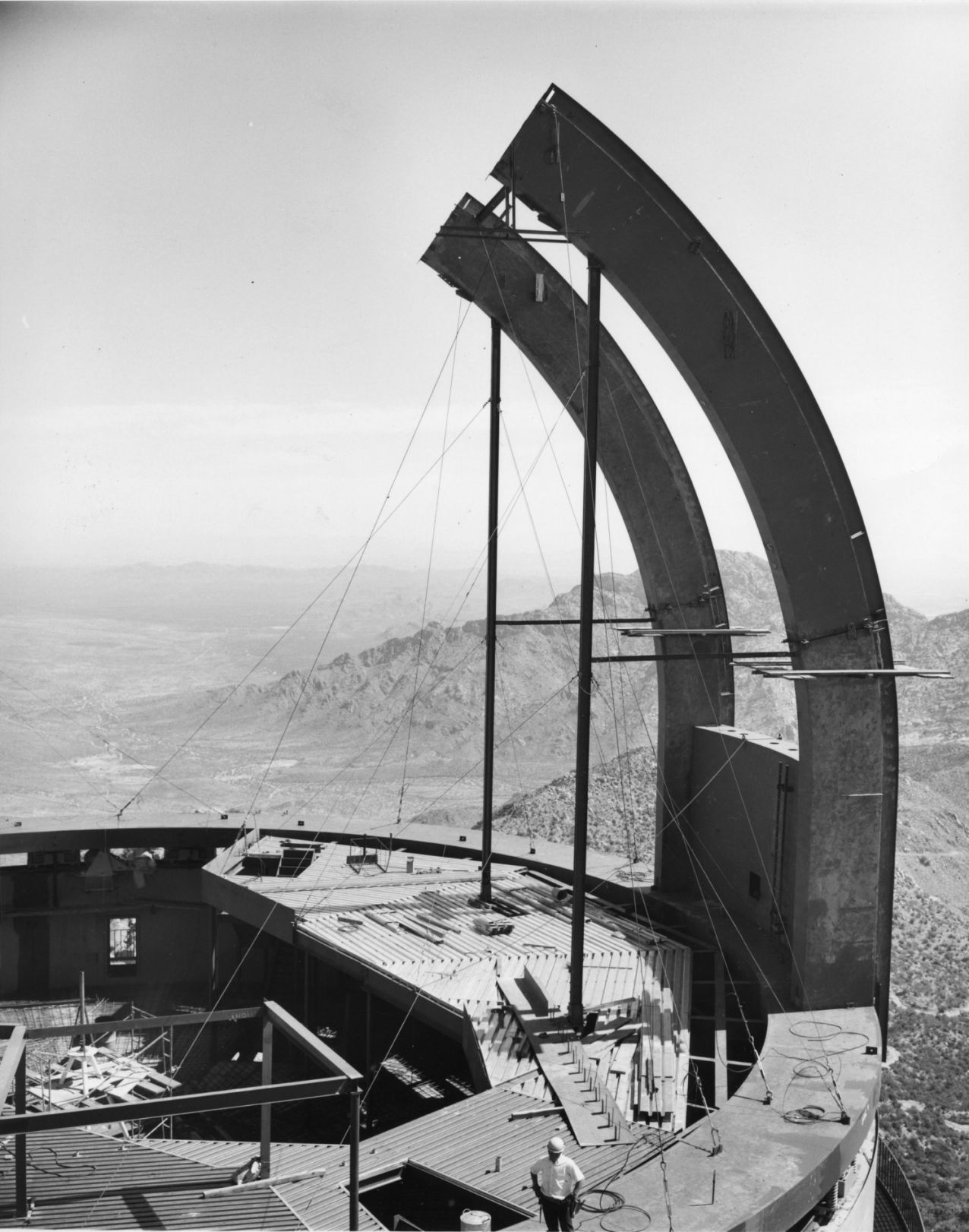
Construction of the 500-ton dome the 4-meter (158 inch) Nicholas U. Mayall Telescope at Kitt Peak National Observatory in 1968.
Nicholas U. Mayall 4-meter Telescope, KPNO, 1969
Updated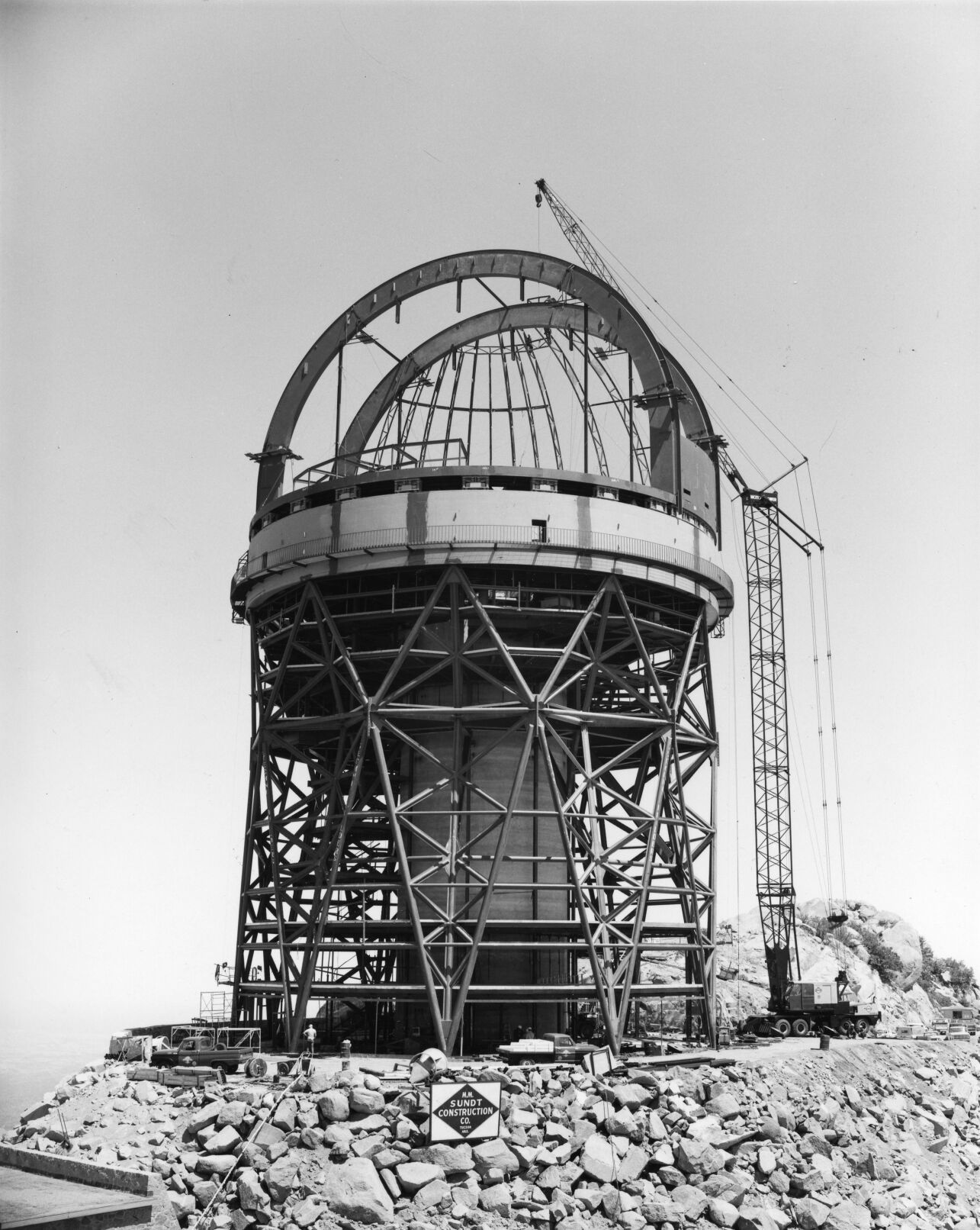
Nicholas U. Mayall 4-meter Telescope under construction at Kitt Peak National Observatory in 1969.
Nicholas U. Mayall 4-meter Telescope, KPNO, 1969
Updated
Nicholas U. Mayall 4-meter Telescope under construction at Kitt Peak National Observatory in 1969.
Mayall Telescope
Updated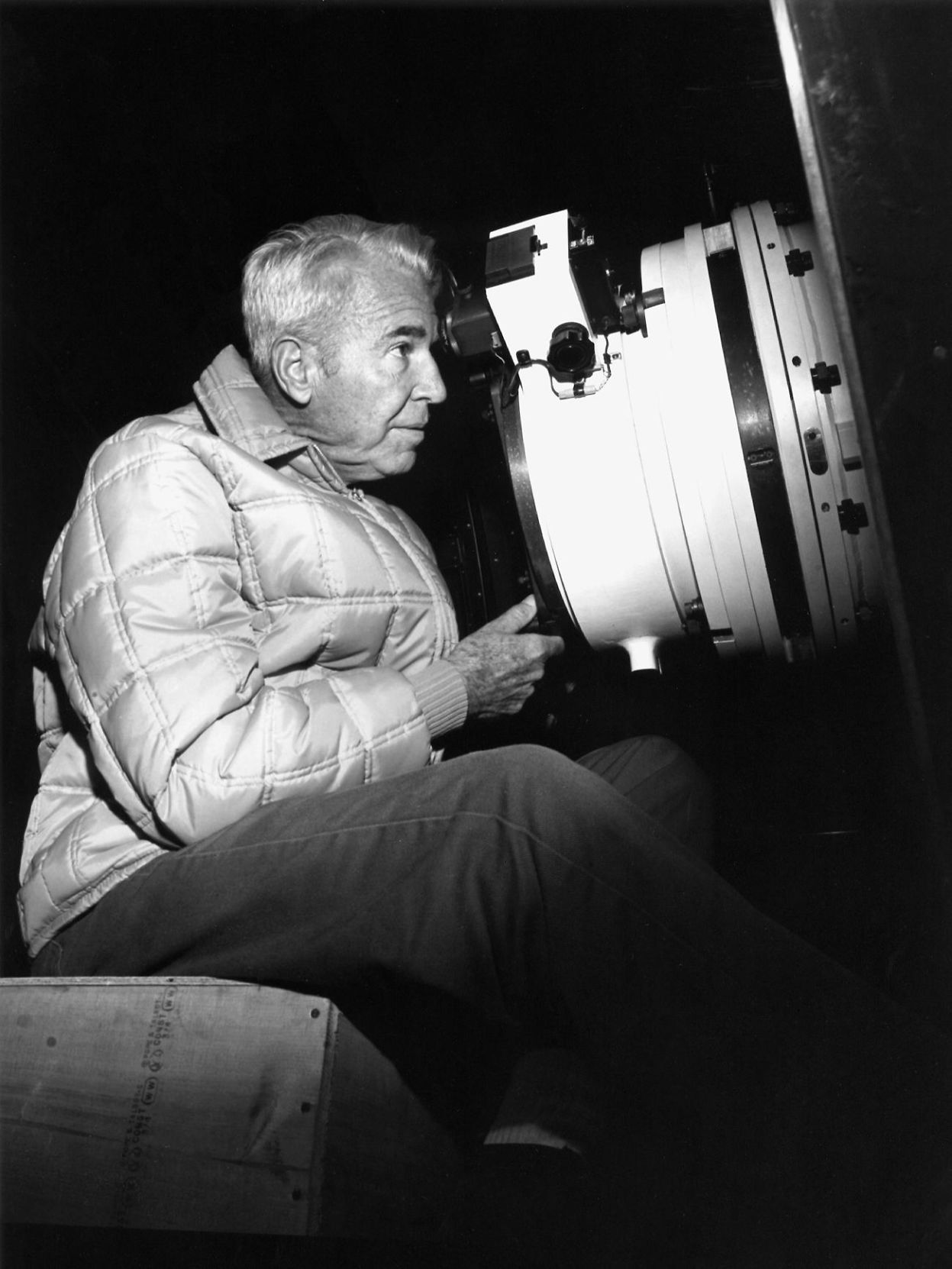
Dr. Nicholas U. Mayall, Director of the Kitt Peak National Observatory from 1960 to 1971, is seen here observing at the prime focus of the 4-meter telescope on 2 March, 1973. After Dr Mayall’s retirement, the telescope was rededicated on 20 June, 1973, as the Nicholas U. Mayall telescope.
Kitt Peak National Observatory
Updated
Technicians at Kitt Peak National Observatory's Cherry Ave. shops on the University of Arizona campus, look over the steel cell upon which the 80-inch mirror will be mounted. The Pyrex mirror "blank" from Corning, N.Y., took more than two years to polish.
Kitt Peak National Observatory
Updated
The massive 4-Meter Mayall telescope during dedication at Kitt Peak National Observatory in June, 1973. At the time, it was the world's second-largest optical telescope.
KPNO, lightning, 1998
Updated
Lightning atop Kitt Peak, looking to the north-west, with the Mayall 4-meter telescope silhouetted against the stormy sky. Taken by Adam Block in July 1998. This picture was a twenty second exposure using Fuji 800 film with a 50mm camera lens.
Mayall Telescope
Updated
Star trails over the Mayall 4-meter Telescope, Kitt Peak National Observatory.
Bok Telescope, KPNO, 1969
Updated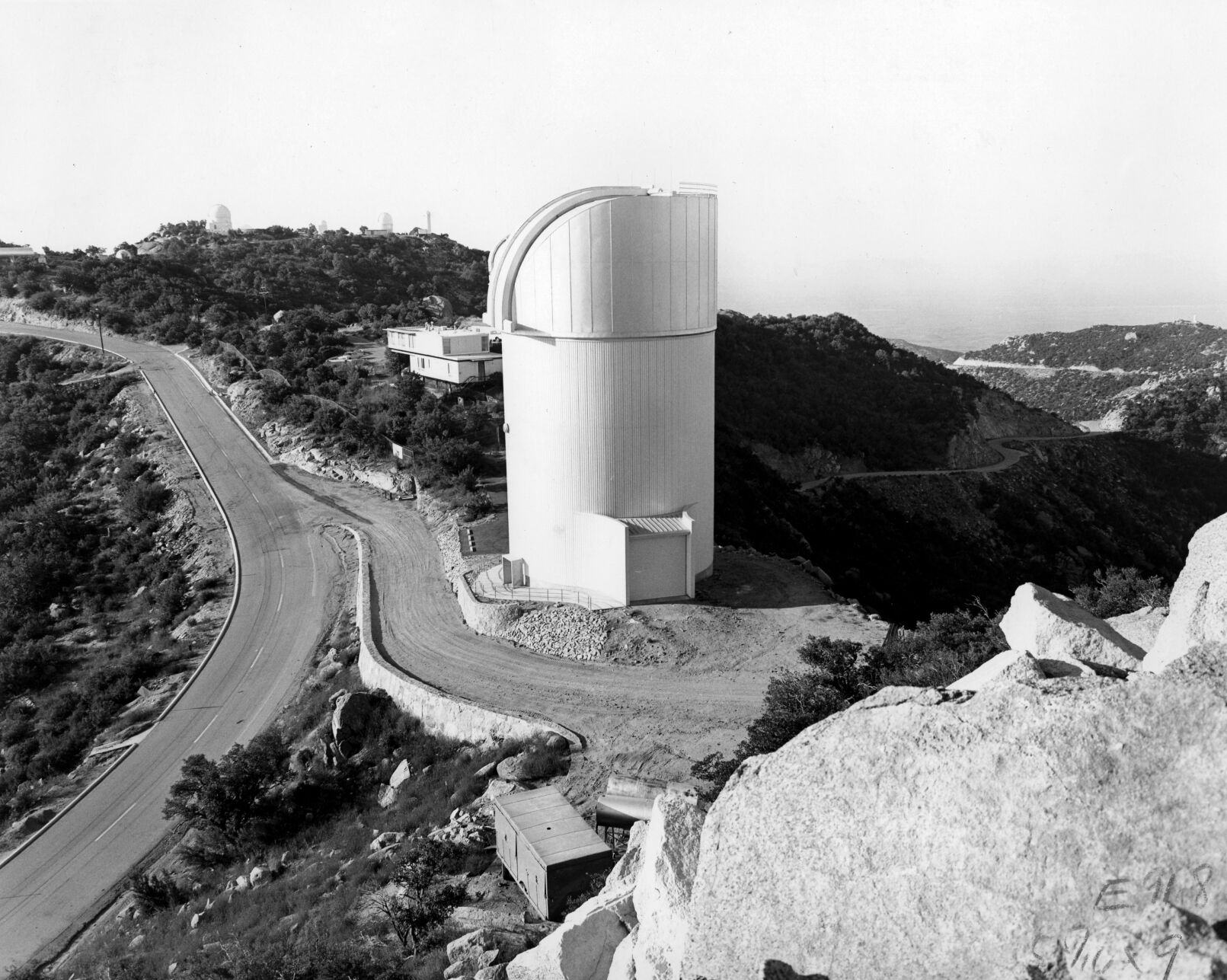
The 2.3 M Bok Telescope operated by the University of Arizona Steward Observatory at Kitt Peak National Observatory, shown after completion in 1969.
Bok Telescope on Kitt Peak National Observatory
Updated
The Bok Telescope (front) on Kitt Peak National Observatory, AZ..
Southwest view of McMath-Pierce Solar Telescope during construction
Updated
Southwest view of the McMath-Pierce Solar Telescope during construction, 27 February 1961.
Kitt Peak National Observatory
Updated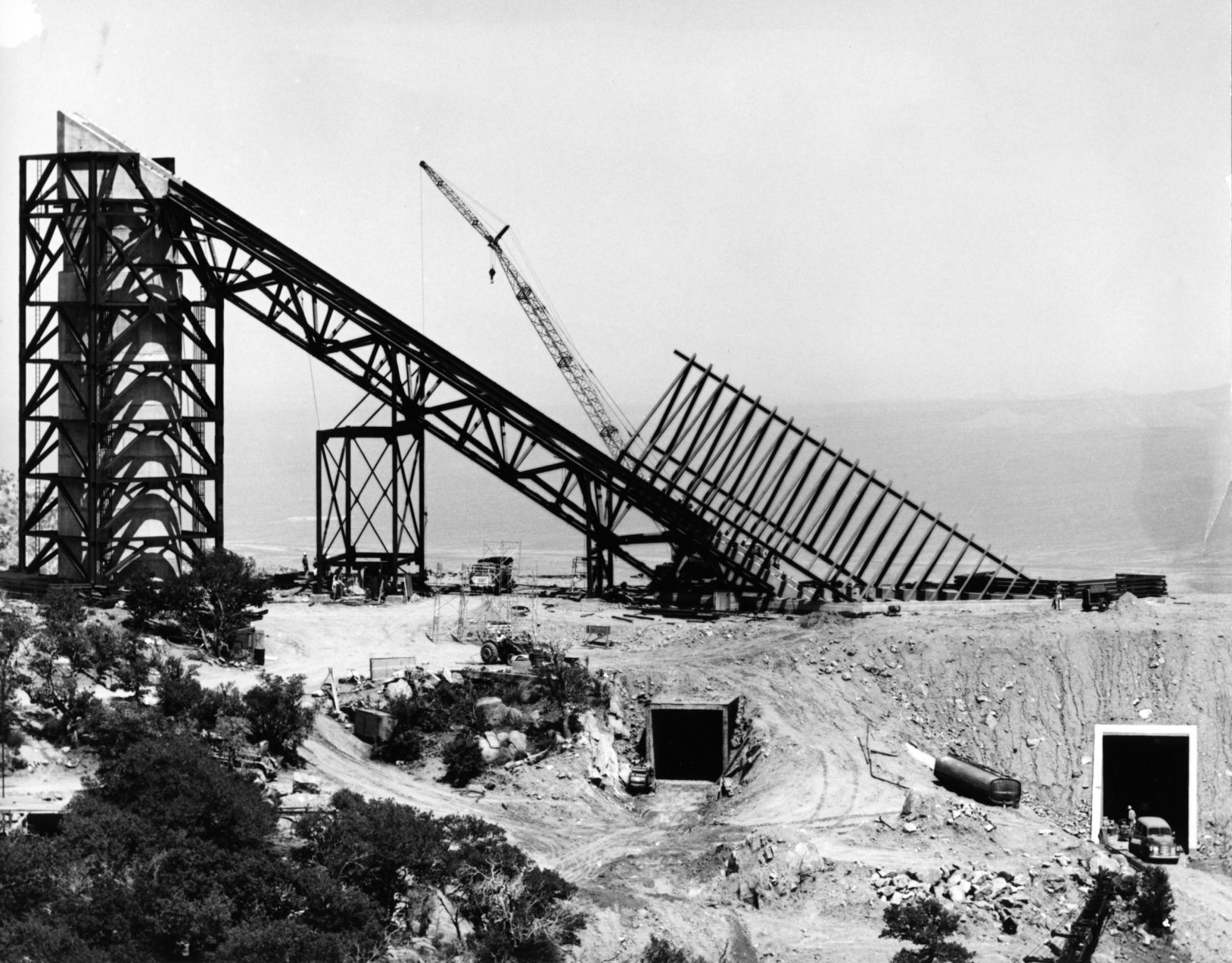
The McMath Solar Telescope under construction at Kitt Peak National Observatory in 1957.
Kitt Peak National Observatory
Updated
The McMath Solar Telescope under construction at Kitt Peak National Observatory in 1957.
Kitt Peak National Observatory
Updated
A 1972 architectural rendering of the vertical housing of the Synoptic Optical Long-term Investigations of the Sun at Kitt Peak National Observatory
Kitt Peak National Observatory
Updated
The McMath-Pierce Solar Telescope at Kitt Peak National Observatory nearing completion in 1962.
Kitt Peak National Observatory
Updated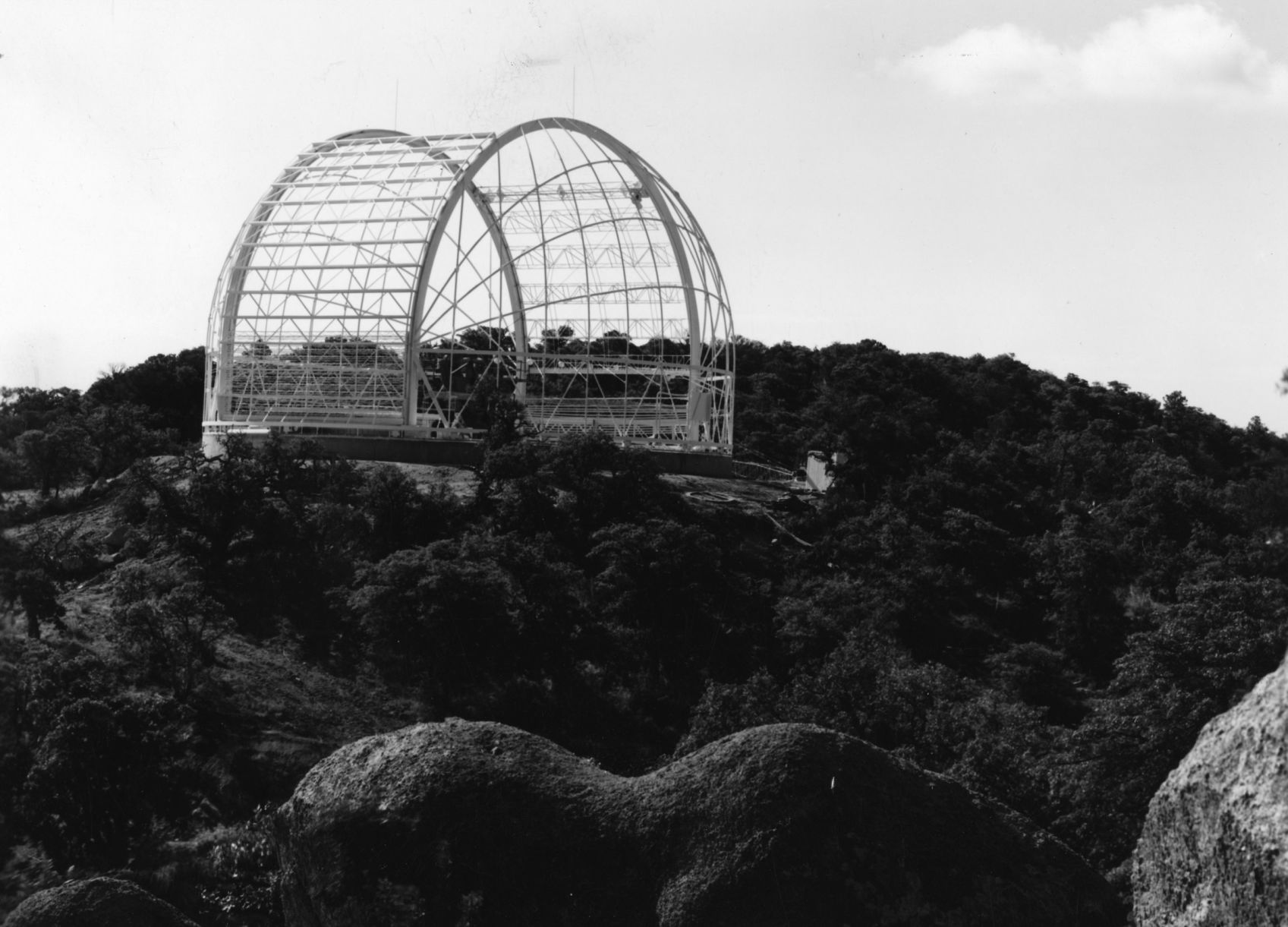
The skeleton for the 55-foot-tall dome of the 36-foot radio telescope under construction at Kitt Peak National Observatory in 1966.
Kitt Peak National Observatory
Updated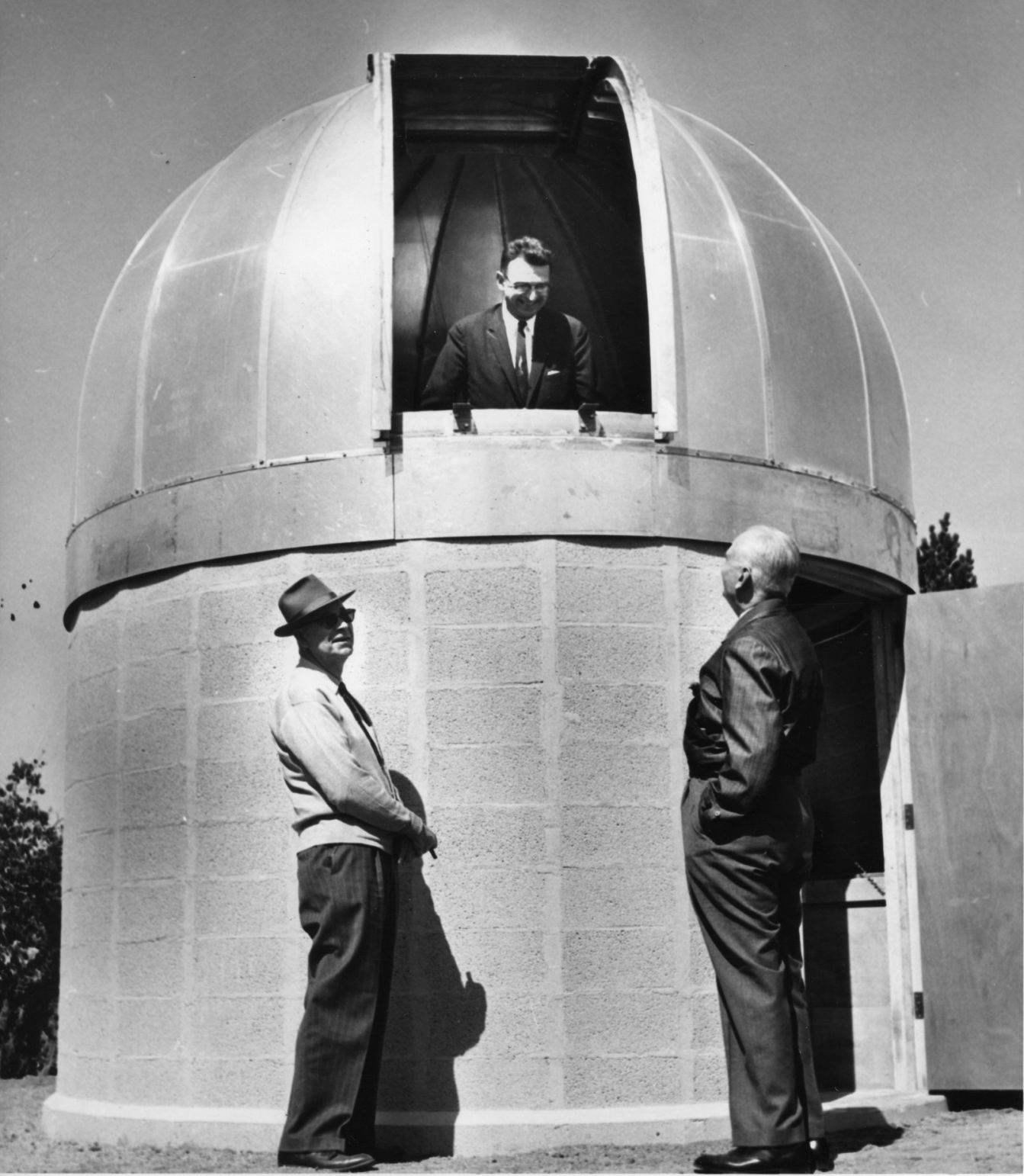
The smallest telescope – a 16-inch – at Kitt Peak National Observatory, ca. 1960.
Kitt Peak National Observatory
Updated
The 36-foot National Radio Astronomy Observatory telescope inside side its vinyl-coated nylon dome at Kitt Peak National Observatory in 1969.
Kitt Peak National Observatory
Updated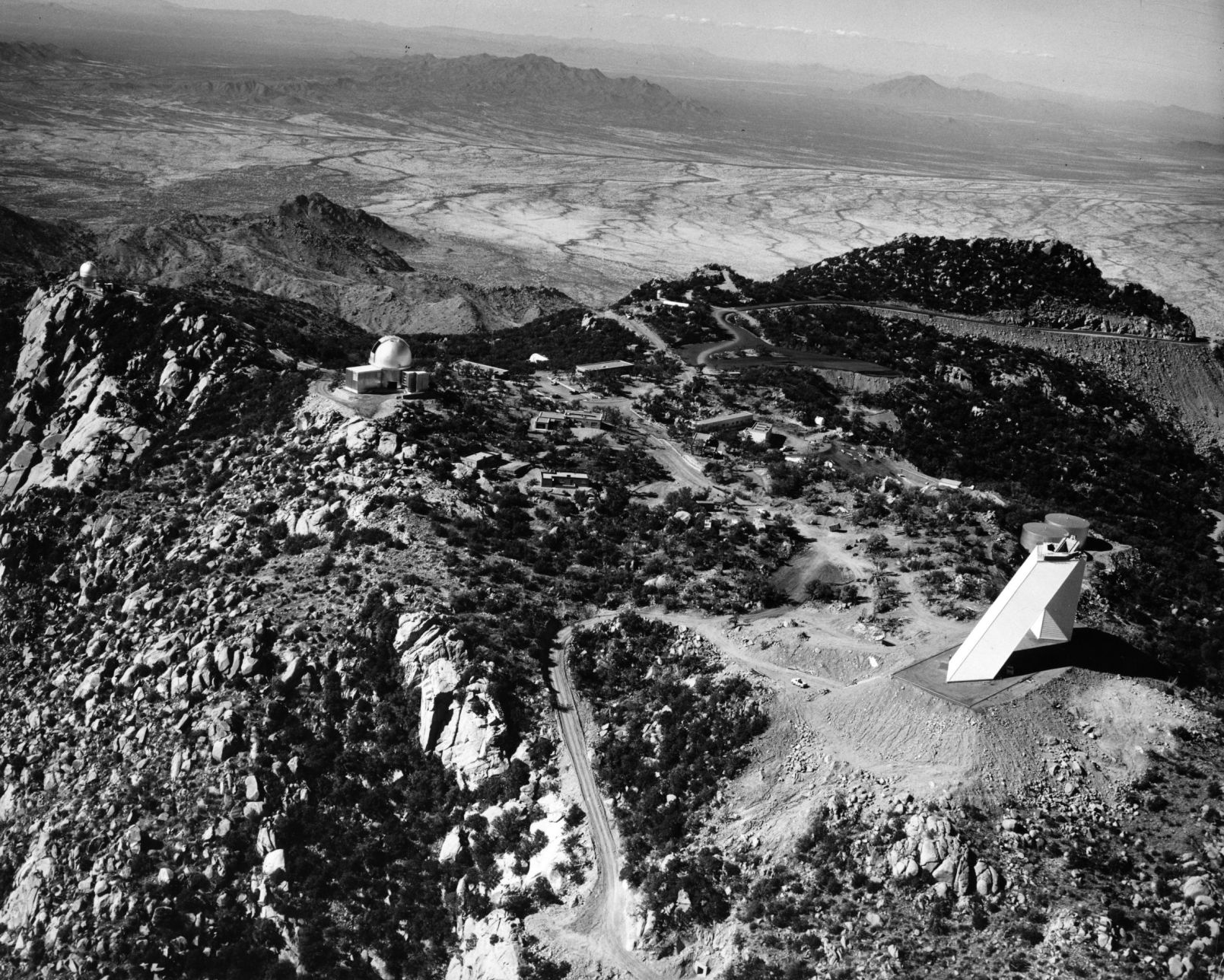
The McMath Solar telescope on its perch at Kitt Peak National Observatory, ca. 1962.
Kitt Peak National Observatory
Updated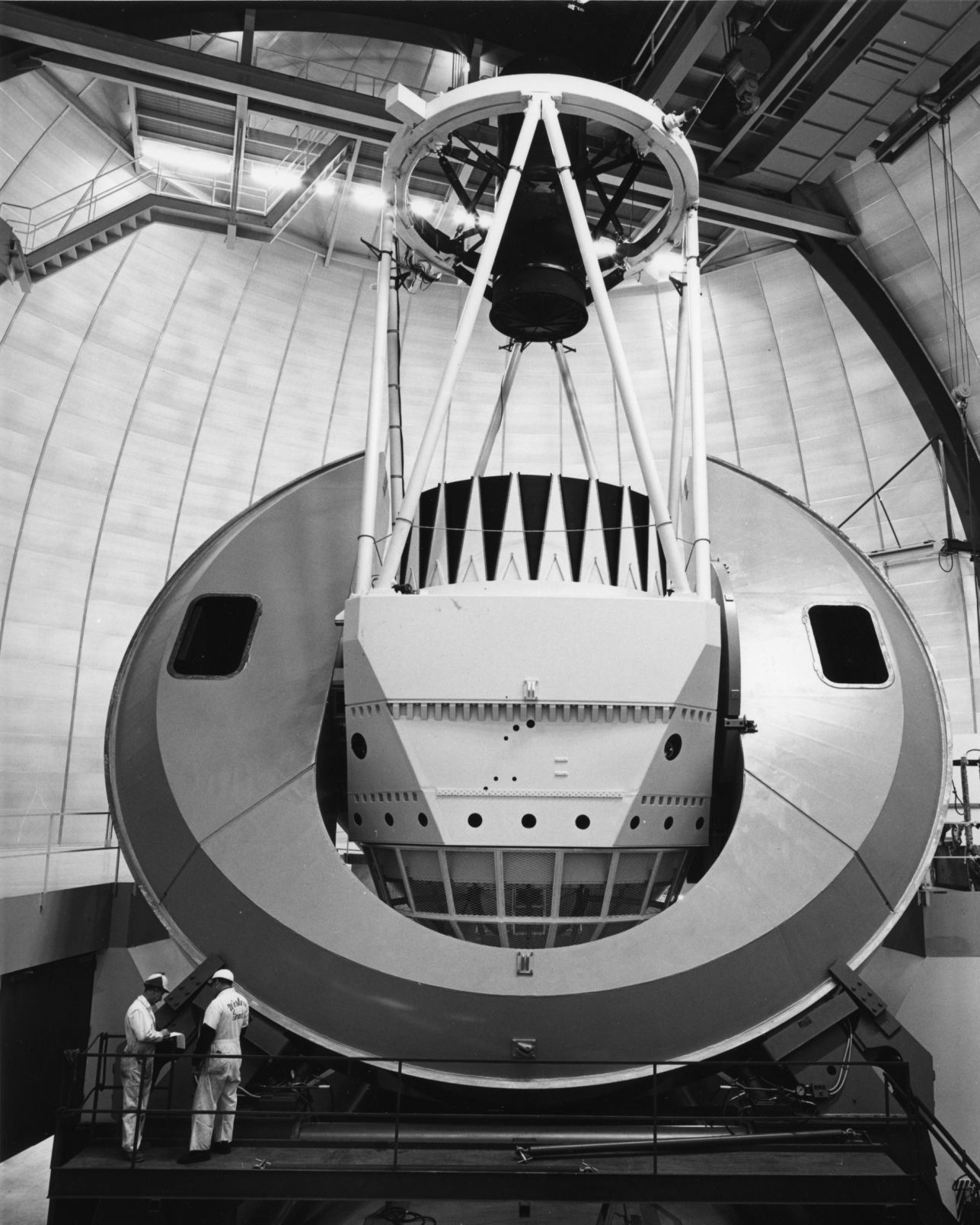
The horseshoe-shaped yolk housing in the 4-Meter Mayall Telescope at Kitt Peak National Observatory in 1973.
Kitt Peak National Observatory
Updated
Dr. Bart Bok stands beneath the 90-inch, 100-ton telescope destined for Kitt Peak National Observatory in 1968. Bok was the head of the department of astronomy at the University of Arizona and director of Steward Observatory.
Kitt Peak National Observatory
Updated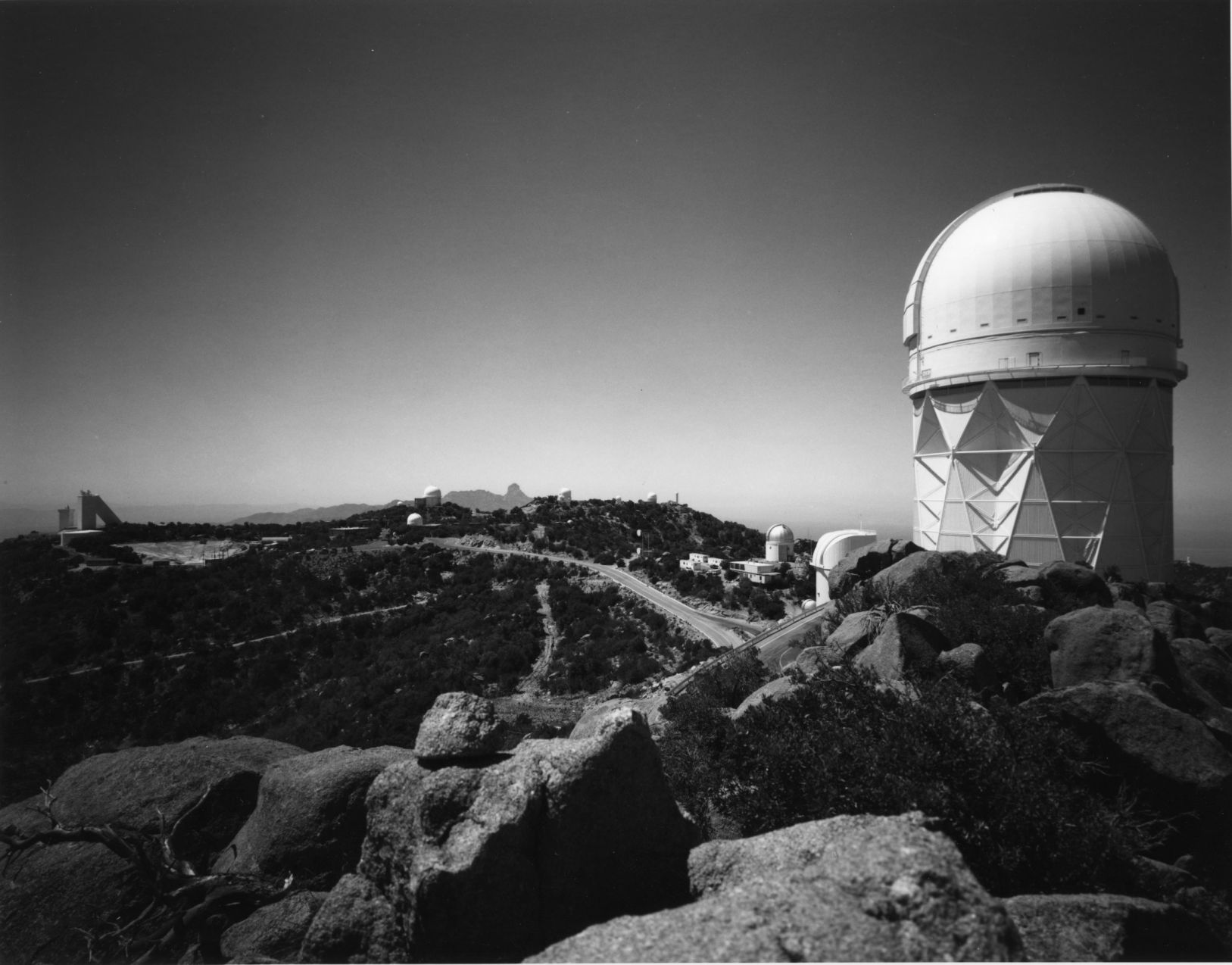
The 4-meter Mayall Telescope, left, at Kitt Peak National Observatory in 1975.
Kitt Peak National Observatory
Updated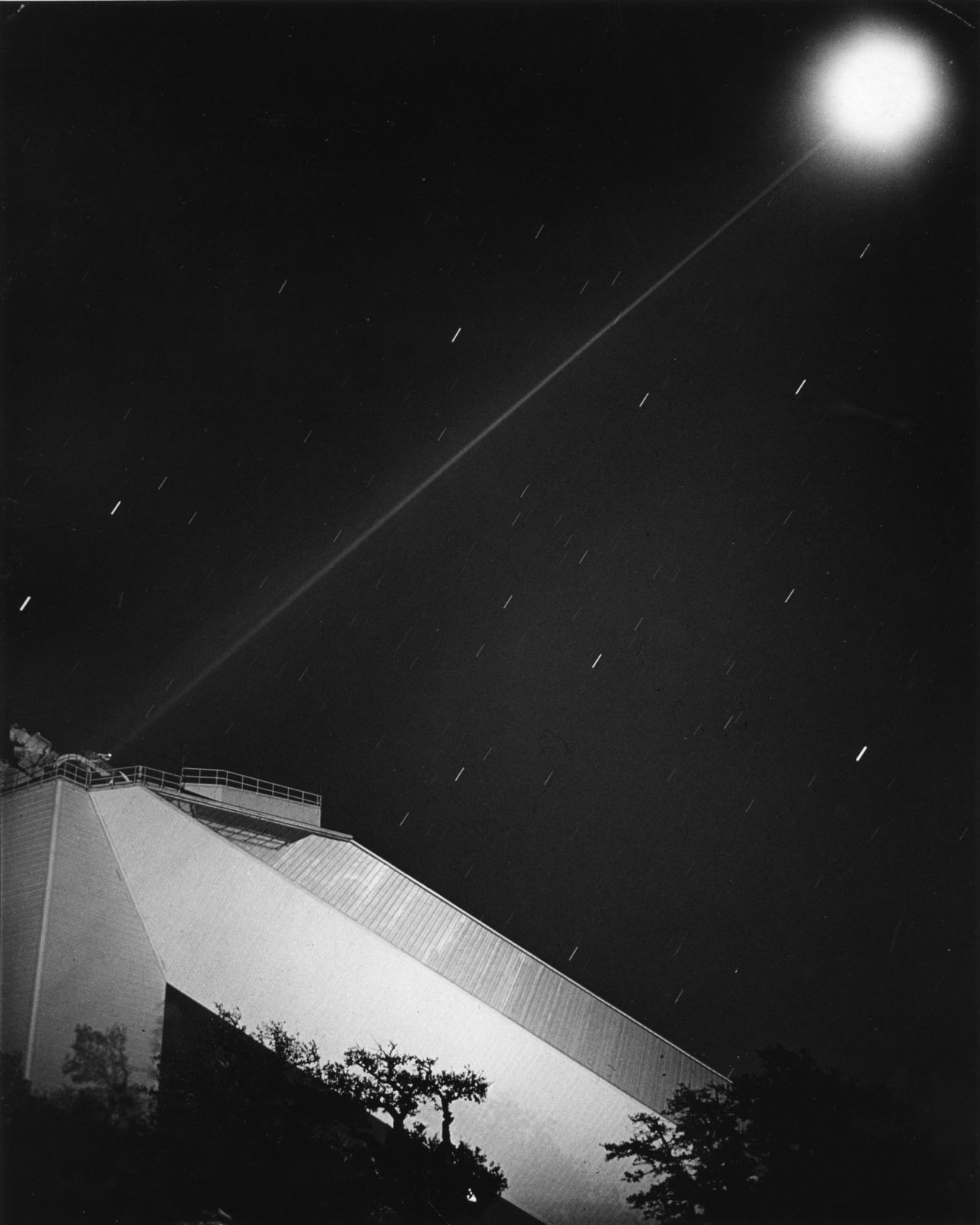
A laser beam from the McMath Solar Telescope at Kitt Peak National Observatory targets the moon in July, 1971.
Kitt Peak National Observatory
Updated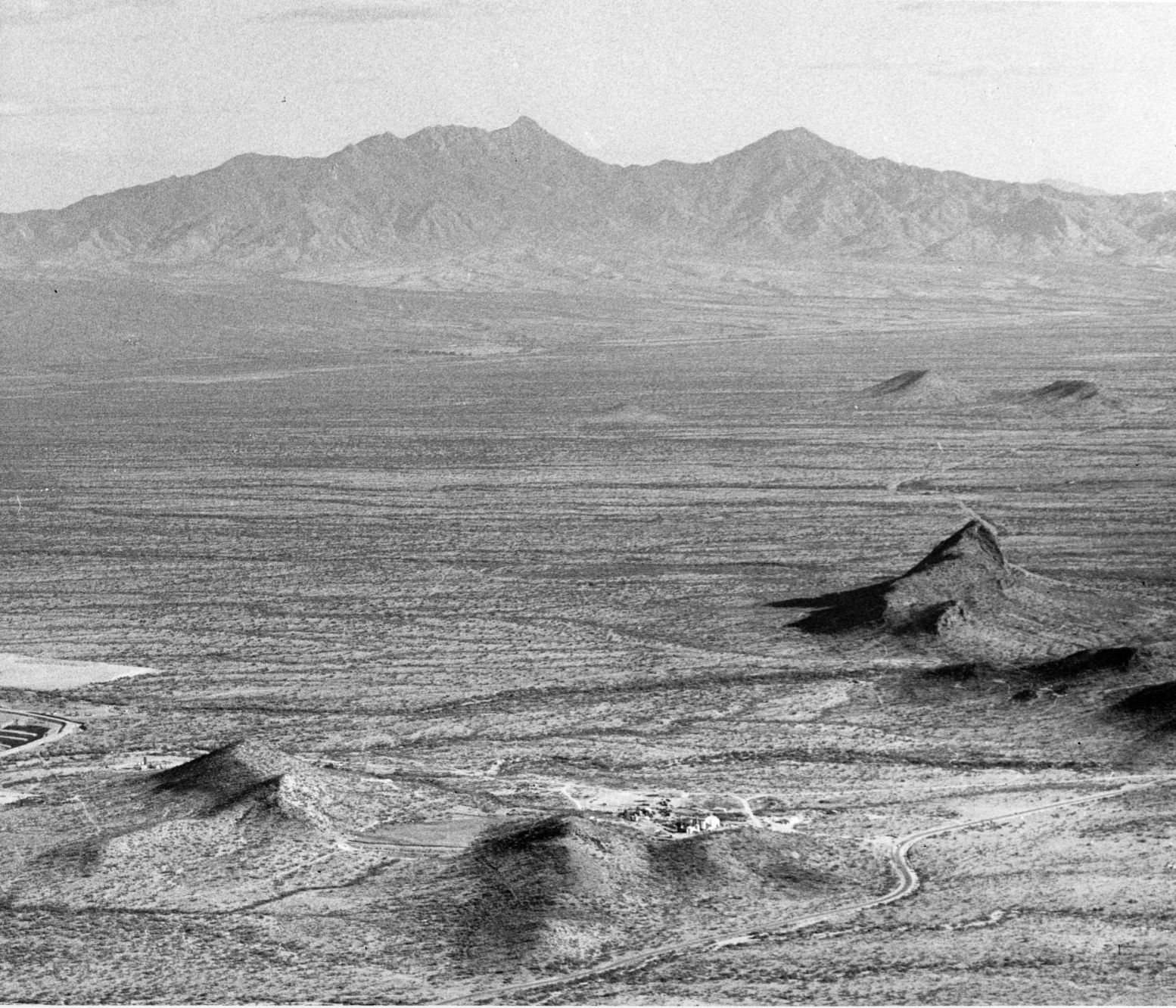
The valley floor below Kitt Peak National Observatory, ca. 1960
Kitt Peak National Observatory
Updated
The McMath Solar Telescope flanked by snow that fell on Kitt Peak National Observatory in February, 1966,
Kitt Peak National Observatory
Updated
A 10.5-ton fork is lifted into place at the 3.5 Meter WIYN telescope at Kitt Peak National Observatory in May, 1992. The fork holds a center section that includes the mirror, which was added later that year.
Kitt Peak National Observatory
Updated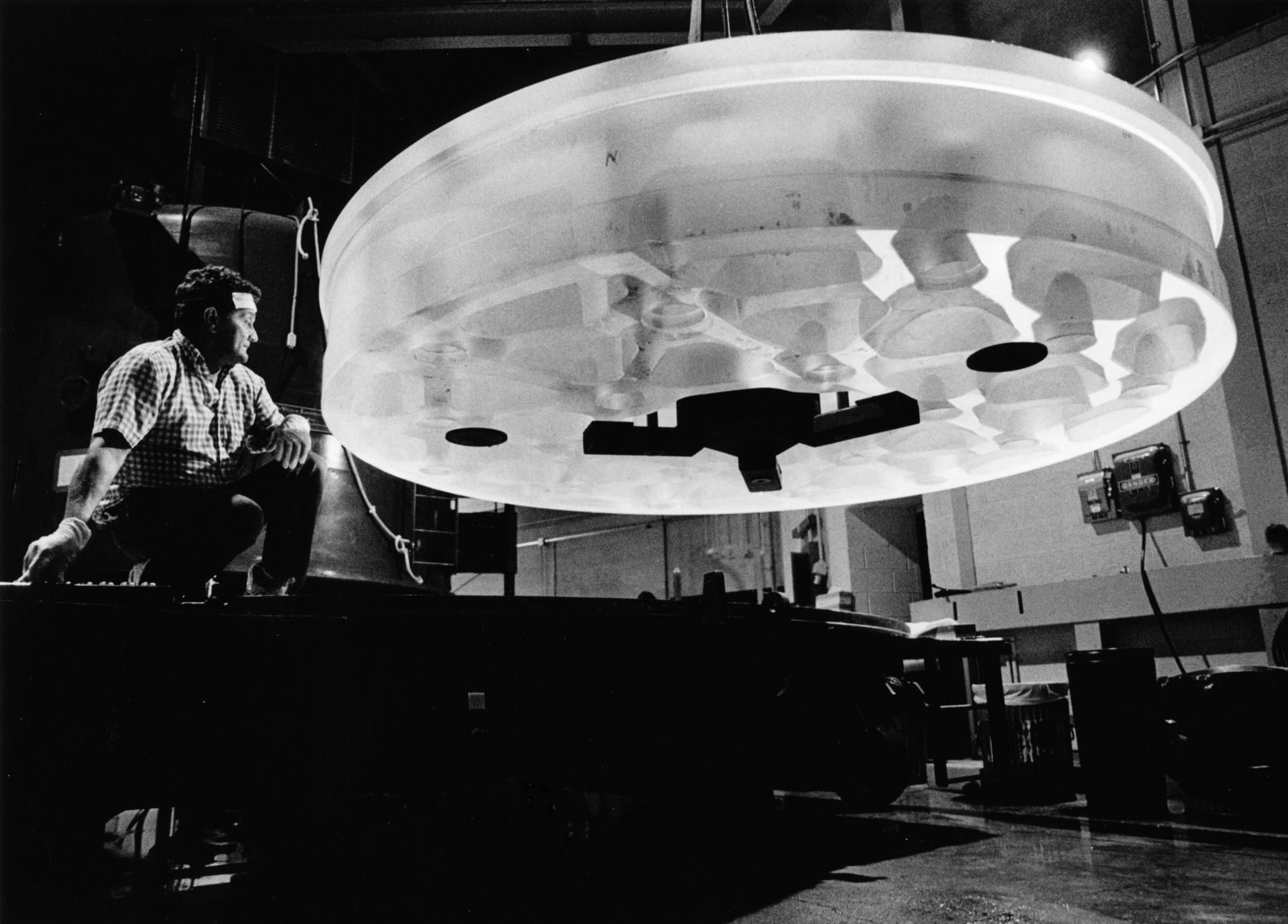
Jon Settlemyre watches the quart mirror from the 2.1 Meter telescope lowered onto a platform on an realuminizing chamber at Kitt Peak National Observatory in 1992. It was transferred to the Mayall Telescope building where the old coatings were stripped off and new ones reapplied.
Kitt Peak National Observatory
Updated
The lights of Tucson as seen from Kitt Peak National Observatory in 1959 (top) and 1980 (bottom).
Kitt Peak National Observatory
Updated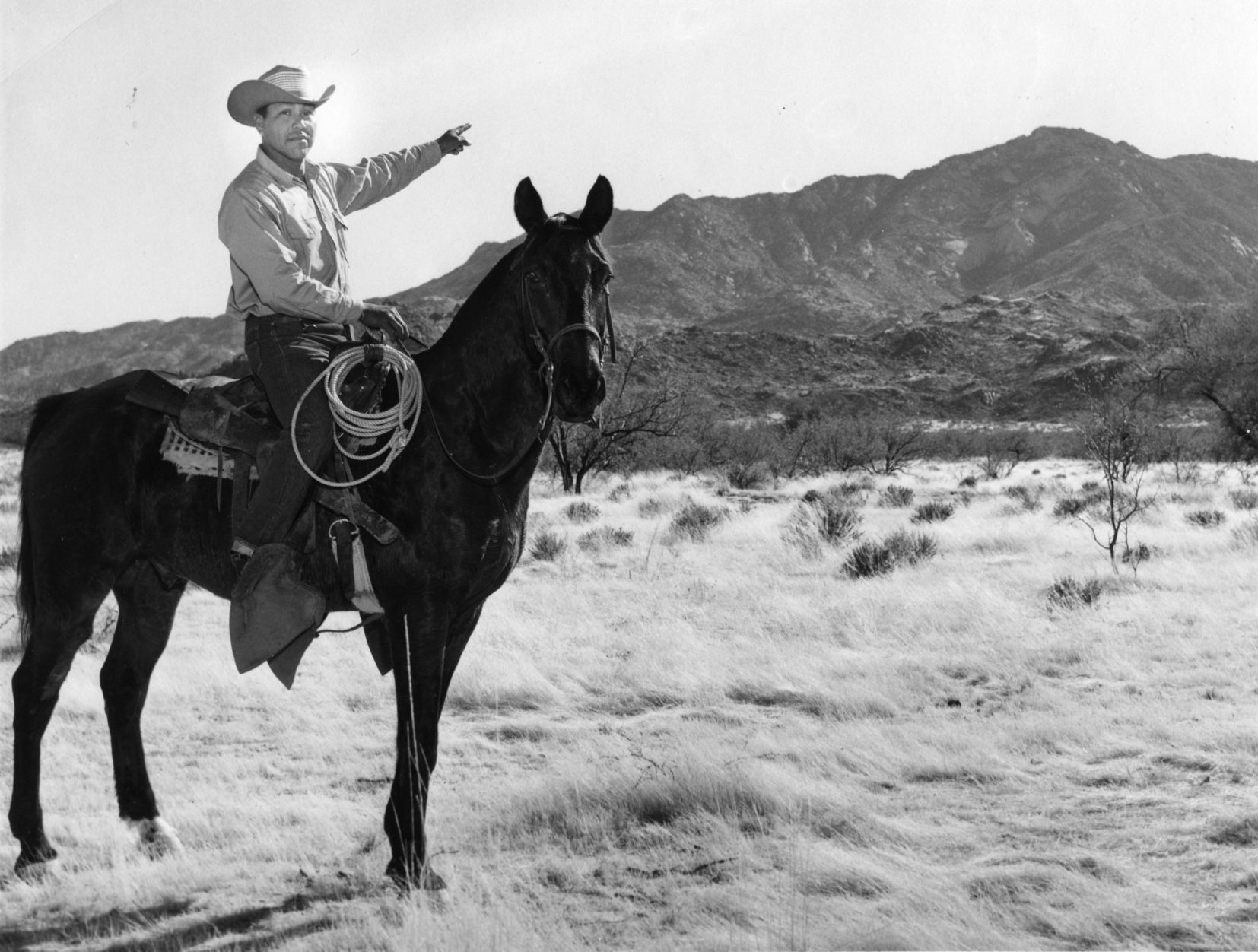
Roman Chavez, vice-chairman of the Papago (now Tohono O'Odham) Tribal Council, points at Kitt Peak in the Quinlan Mountains west of Tucson in 1956, during site and lease discussions for the observatory.
Kitt Peak National Observatory, 1959
Updated
Aerial photo of Kitt Peak on Jan 31, 1959. looking west solar telescope pad at bottom center of the picture.
Building the road to Kitt Peak National Observatory
Updated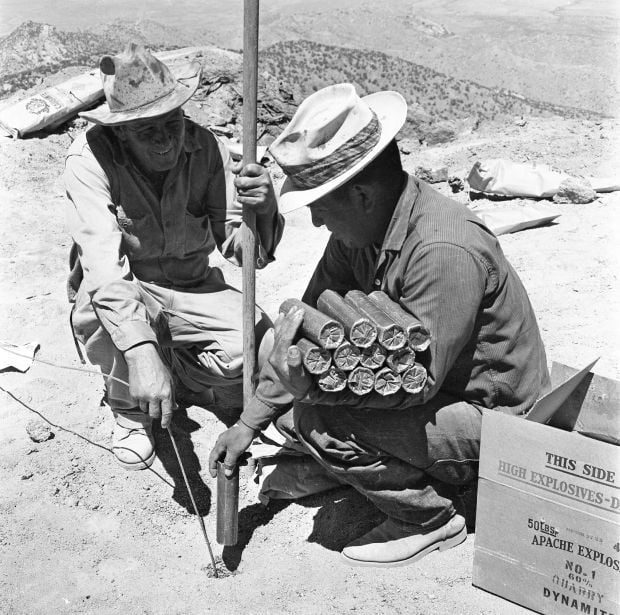
Building the road to Kitt Peak National Observatory in May, 1960: Workers slip explosives into holes to blast away rock.
Building the road to Kitt Peak National Observatory
Updated
Building the road to Kitt Peak National Observatory in May, 1960: A jackhammer operator pounds away at the rock face.
Building the road to Kitt Peak National Observatory
Updated
Building the road to Kitt Peak National Observatory in May, 1960: Bulldozers operate on treacherous, unstable material blasted from the the face of the mountain.
Building the road to Kitt Peak National Observatory
Updated
Building the road to Kitt Peak National Observatory in May, 1960: A truck eases down the early primitive road from near the top. The first telescope on the mountain, the 36-inch, can be seen in the background.
Building the road to Kitt Peak National Observatory
Updated
Building the road to Kitt Peak National Observatory in May, 1960: A dozer operator tackles tree stumps and rock.
Snow in Tucson
Updated
Snow and ice clinging to the telescope structure at Kitt Peak National Observatory west of Tucson on March 3, 1964.
Snow in Tucson
Updated
Snow and ice at Kitt Peak National Observatory on March 3, 1964.
Kitt Peak National Observatory
Updated
Actuators on the back of the telescope can make minute adjustments in the shape of the mirror surface of the WIYN Telescope, a 3.5 m meter telescope operated by a consortium of University of Wisconsin-Madison, Indiana University, Yale University and the National Astronomy Observatory. It is located west of Tucson, AZ.Photo taken Wednesday, October 23, 2013.
Kitt Peak National Observatory
Updated
A view from the Nicholas U. Mayall Telescope of some of the other telescopes at Kitt Peak National Observatory west of Tucson, AZ. The tall telescope at left is The McMath-Pierce Solar Telescope. Top center is The 2.1-meter Telescope and at right is The WIYN Telescope. Photo taken Wednesday, October 23, 2013.
Kitt Peak National Observatory
Updated
Seen from inside the 780 ft. linear optical tunnel of Kitt Peak National Observatory's McMath-Pierce Solar Telescope, sunlight is reflected from the three mirror heliostat, through a series of mirrors in the tunnel to the observation room where is it analyzed with spectrographs. McMath-Pierce Solar Telescope, built in 1962, west of Tucson, AZ., is the largest solar telescope in the world. Photo taken Wednesday, October 23, 2013.
Kitt Peak National Observatory
Updated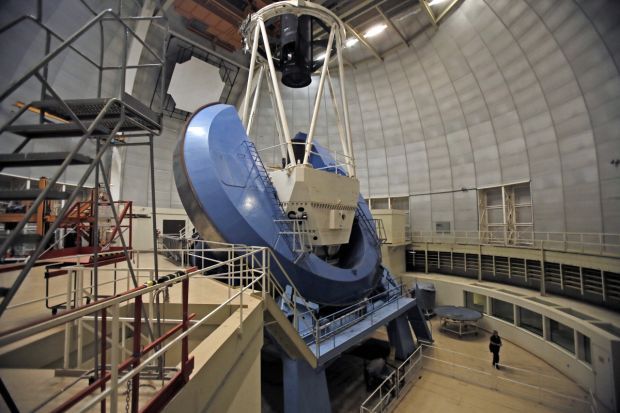
Lori Allen, left, Director of Kitt Peak National Observatory, is dwarfed by the Nicholas U. Mayhall 4-meter Telescope at Kitt Peak National Observatory west of Tucson, AZ. . Photo taken Wednesday, October 23, 2013.
Kitt Peak National Observatory
Updated
Matt Penn, Solar Astronomer with National Solar Observatory, discusses telescopes in the observation room of Kitt Peak National Observatory's McMath-Pierce Solar Telescope, built in 1962, the largest solar telescope in the world west of Tucson, AZ. Photo taken Wednesday, October 23, 2013.
Kitt Peak National Observatory
Updated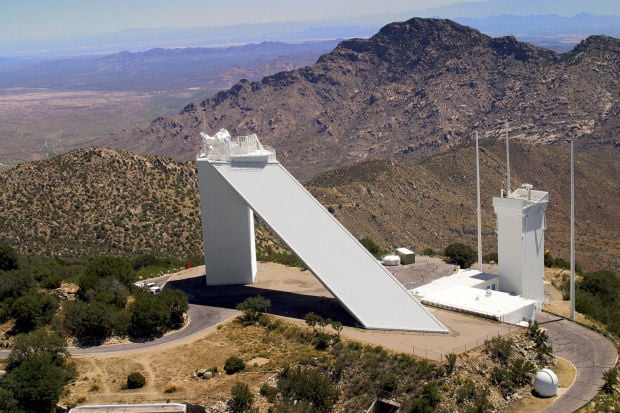
The McMath-Pierce Telescope on Kitt Peak since 1962, LEFT, and the SOLIS (Synoptic Optical Long-term Investigations of the Sun) at right..
Kitt Peak National Observatory
Updated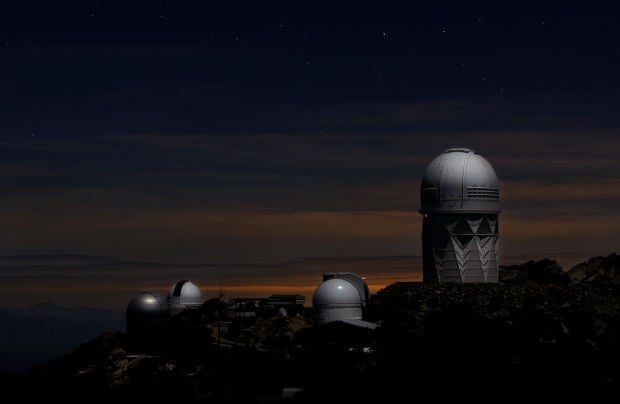
The orange glow of light pollution from Phoenix and Casa Grande lights the skies north of the SARA 0.9 meter, left, the Spacewatch 0.9 meter, the CWRU Burrel Schmidt 0.6 meter, the Steward Observatory's Bok 2.3 meter and the KPNO Mayall 4 meter telescopes at Kitt Peak National Observatory in 2010.
Kitt Peak National Observatory
Updated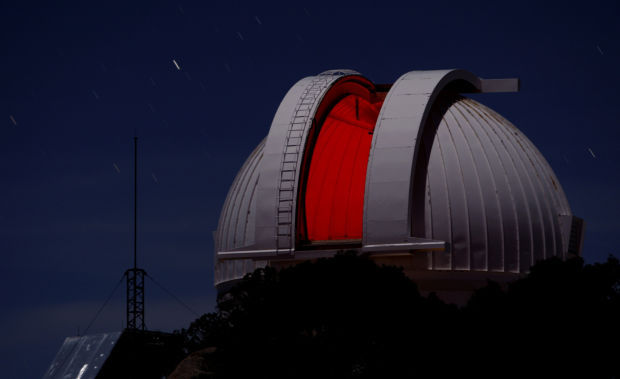
The dim glow of saftey lights shines out of the door of the WIYN 0.9 meter telescope where a tour group is using the instrument at Kitt Peak National Observatory in 2010.
Kitt Peak National Observatory
Updated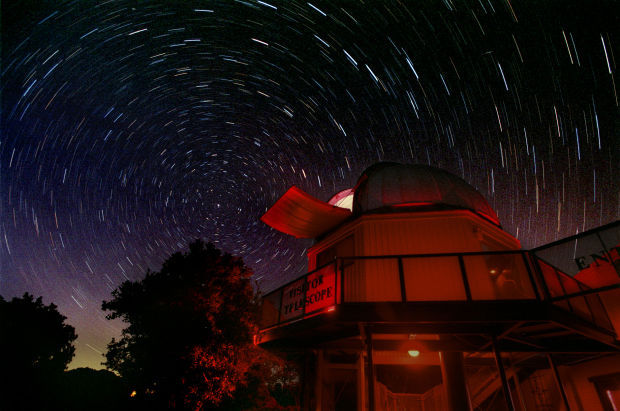
Stars swirl around the North Star, just to the left of the Kitt Peak observatory, in a 40-minute exposure.
Kitt Peak National Observatory
Updated
Bob Martino, standing at left, talks to astronomy enthusiasts about some of the stars that are visible at sunset as they listen to him at the 16 inch telescope with its roll-off roof at the top of Kitt Peak National Observatory in 2009. At upper left is the 4-meter Mayall telescope with the city lights of Three Points, AZ at the upper right.
Kitt Peak National Observatory
Updated
Some of the many observatories at Kitt Peak National Observatory.
Kitt Peak National Observatory
Updated
Aden B. Meinel, First director of Kitt Peak Observatory, photographed in 1993.
Kitt Peak National Observatory
Updated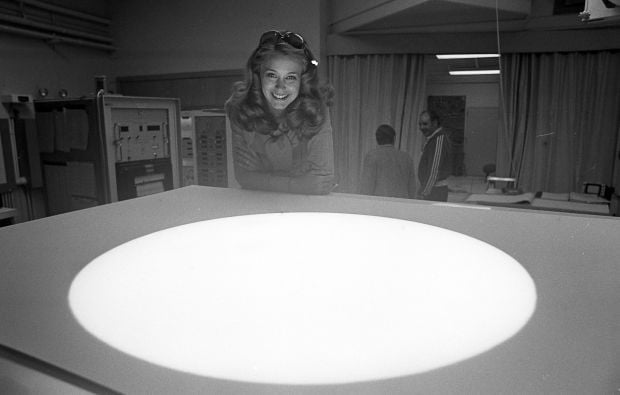
Jane Pauley surveys Kitt Peak's solar telescope in 1978.
Contreras Fire, Kitt Peak National Observatory, 2022
Updated
Kitt Peak National Observatory after the Contreras Fire.
Contreras Fire, Kitt Peak National Observatory, 2022
Updated
Kitt Peak National Observatory after the Contreras Fire. The Nicholas U. Mayall 4-meter Telescope is visible on the ridge on the left hand side of the image.
Steward Observatory
933 N. Cherry Ave., 621-2288;
as.arizona.edu
A long-standing piece of Tucson’s astronomical history, Steward Observatory dates back to some of the earliest days of the University of Arizona.
Although the original telescope has now been moved to Kitt Peak, the observatory stands as a testament to our community’s dedication to making the most of the night skies of the Sonoran Desert.
Before the pandemic, the historic campus building provided a space for lecture halls and a forum for the discussion of space-related endeavors. Whether you are a student or a member of the public, the observatory is there to educate.
The Tucson Amateur Astronomers Association was a frequent host of lectures at the observatory, but in-person activities have yet to resume.
Moving into the fall, keep an eye out and check in with this integral piece of Tucson’s legacy in astronomical research.

