



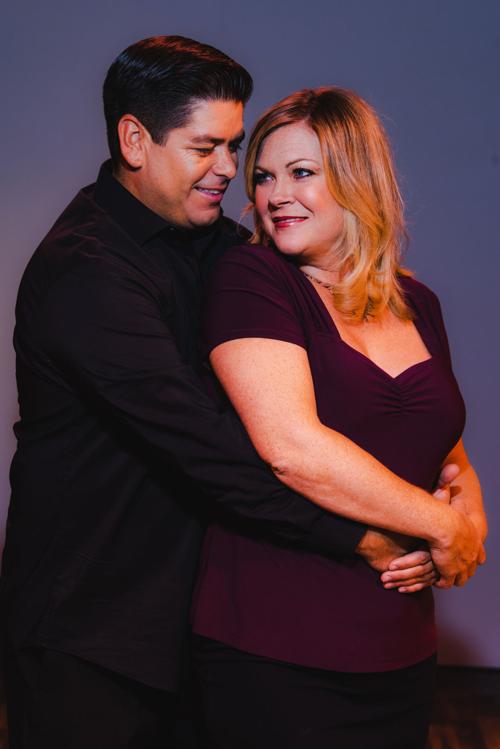
It started out so well.
The talented Jodi Darling is on stage, alone, heartbroken and singing “Still Hurting,” the haunting song that launches Jason Robert Brown’s “The Last Five Years.”
The play, currently on stage at Roadrunner Theatre Company, is a two-person musical that tells the story of the raveling and unraveling relationship between Cathy (Darling), a struggling insecure actress, and Jamie (Josè “Chach” Snook), a writer who is about to make the big time. Cathy begins with the ending and takes us back to the beginning; Jamie goes in reverse order. The two come together only in the middle, when they are married.
Darling’s voice is warm and lush and we can’t help but feel her pain as she sings “Jamie is over and Jamie is gone/Jamie’s decided it’s time to move on/Jamie has new dreams he’s building upon/And I’m still hurting.”
Then it’s Jamie’s turn. He is giddy with excitement about meeting Cathy. It’s hard not to catch the bug as he sings “Shiksa Goddess,” how his mother would not be happy that he is falling for a woman who is not Jewish.
Snook’s voice is one you want to hear over and over.
And the two, married in real life, have the acting chops to bring this musical to life.
Brown’s songs — some with a jazz accent, some ballads, and even an irresistible klezmer tune — are clever and mournful and joyous.
And the structure of the play works. That they interact only once underscores their isolation. There is a beauty in the simplicity.
But the usually reliable Mark Klugheit decided simplicity wasn’t going to cut it. He added a trio of silent actors who helped tell the story through a series of speechless roles, acting out a preacher, Jamie’s agent, folks at a cocktail party, even a clock. It was almost as though he didn’t trust the audience’s imagination.
They completely upstaged Snook and Darling at important moments. They were a distraction that pulled the audience out of the story.
This lovely little piece with two strong actors and singers at its center became frustrating thanks to the unnecessary addition of the players.
In Klugheit’s director’s notes, he writes that the set, the music and the actors are all that’s needed to tell this story.
He’s right. We wish that’s all he had used.

