


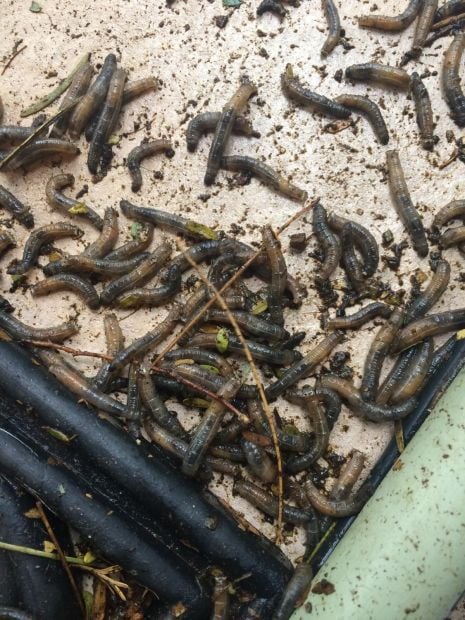
Q: In the last week when we had a couple inches of rain there were hundreds of wormy creatures crawling about and some were getting into my house. Where did they come from and what are they?
A: Those are crane fly larvae, family Tipulidae. Many fly larvae are commonly referred to as maggots although I’ve found many people do not like that term for some reason. You may notice the emergence of crane flies in the spring. They look like giant mosquitoes but are harmless. There are a multitude of species that develop in the soil and their response to a lot of water is the same as ours: seek higher ground. Unfortunately that meant that many were getting into places that humans don’t want them and many died as a result.
Q: I planted two desert willows this year and one Texas ebony as well as some hopseed bushes. Most of the rest of my plantings for now are cactus and succulents. If you have any fertilizing suggestions for this group, please let me know.
A: The plants you mentioned are all desert or desert-adapted plants so you can fertilize them once or twice per year (fall and spring are good times) with a slow-release fertilizer or composted manure. Applying a half-inch of compost across the root zone but not up against the trunks is a good way to uniformly apply it. You can top off the compost with an inch or two of shredded bark mulch or other kinds of mulch to protect the roots from temperature extremes and water loss. The irrigation plan for these types of plants is to water every 14 to 21 days in the spring, summer and fall to a depth of 24 inches. You can back it off to once a month in the winter or not at all if we get good rains.
Q: There is a caterpillar that eats my yellow bells each year and I would like to stop them before they get too far along this year.
A: The caterpillar is Antigastra catalaunalis and commonly known as the sesame leaf-tier, Tecoma leaf-tier, and other names not suitable for printing. In our area they tend to favor the Tecoma stans and depending on where you live they may only nibble a bit or eat the whole plant to the ground. The best plan is to watch closely for the caterpillars to start feeding and then remove them from the plants or spray the leaves with Bacillus thuriengensis kurstaki (Bt), not to be confused with Bt for mosquitoes and other insects. Bt makes the leaves poisonous to the caterpillars that feed on them but nobody else should be affected, which makes it very safe to use.

