


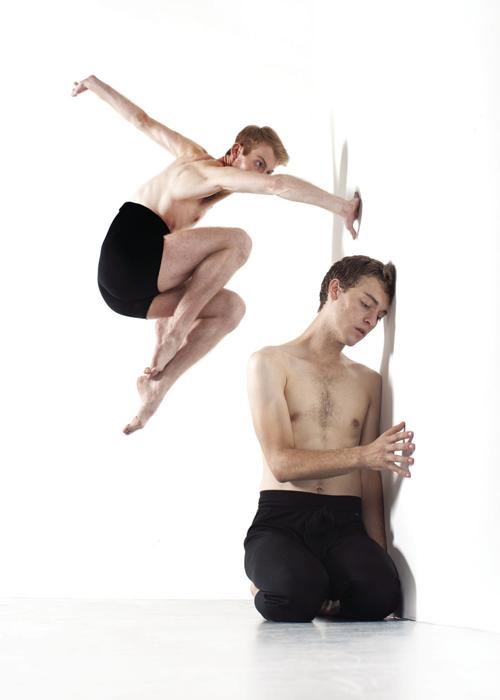
Don’t expect the norm with the Artifact Dance Project’s “Animal Farm.” This should be more of an experience than a dance concert.
The world premiere performance will take on an unconventional arrangement — it will be in the Museum of Contemporary Art’s large gallery with audience members sitting around a 30- by 20-foot sandbox, which serves as the stage and the character’s pigpen. The cast members will wear minimalistic flesh-colored costumes and as the story progresses, the dancers will get dirtier.
“It’s the adaptation of the story by George Orwell to fit basically what I like to think of as a theatrical installation piece in MOCA,” says choreographer and dancer Claire Hancock.
Kevin Justus worked with Artistic Director Ashley Bowman to adapt the story specifically for dance.
“We’ve got a lot of different parts coming together to make that possible,” Hancock says.
The performance is a collaboration between the Artifact Dance Project, Tucson Girls Chorus and several local vocalists and musicians.
The show will feature 11 Artifact dancers accompanied by a collection of compositions Hancock calls a “history of music.” The pieces, performed live, range from the Renaissance to the contemporary. Mezzo-soprano Korby Myrick and 23 members of the Tucson Girls Chorus, directed by Marcela Molina, will provide vocal accompaniment.
Orwell’s dystopian novella, originally published in 1945, explores themes of corruption, ignorance, and propaganda. Artifact’s adaptation tries to stay true to the text as much as possible, Hancock says, with some slight modification.
“It is such an important story and what a great time to do it,” Hancock says. “Right now in this politically charged time and in this time of talking so much about rights and inequality.”
The project will encourage the audience to think about propaganda and the brainwashing effect it can have, says Hancock.
“Each of the characters represents a larger idea,” Hancock says. “It’s not like I am just a horse or this character Clover. It’s like I am standing on this platform of a much larger idea for women’s rights or for education.”
In adapting the story, Justus and Bowman simplified the cast of characters to the essentials: Napoleon, Snowball, Squealer, Old Major/Benjamin, Boxer, Clover and Mollie. The dog and chicken characters have been boiled down to four unnamed individuals and the chorus will represent the sheep in the story.
Because of the physical limitations of the stage, dancers have a lot to consider in their performances. Not only do they need to portray the physicality of the animal, but the concept that the animal represents, as well.
“The movements not only have to be contained within the box but also (the dance) needs to be catered to the audience throughout,” Hancock says. “There is no front of the stage so all movement has to, like a piece of sculpture, cater to all angles that people will be watching it from.”
The sand box set presented some challenges in choreography, Hancock says, but the challenge is what makes her job enjoyable.
“Like any great piece of theater, you can kind of suspend your belief and take the audience there with you,” Hancock says.

