



Not many cities can say they have a storybook land.
Even fewer can say they have one that is an official historic landmark.
Tucson can.
That place is Valley of the Moon.
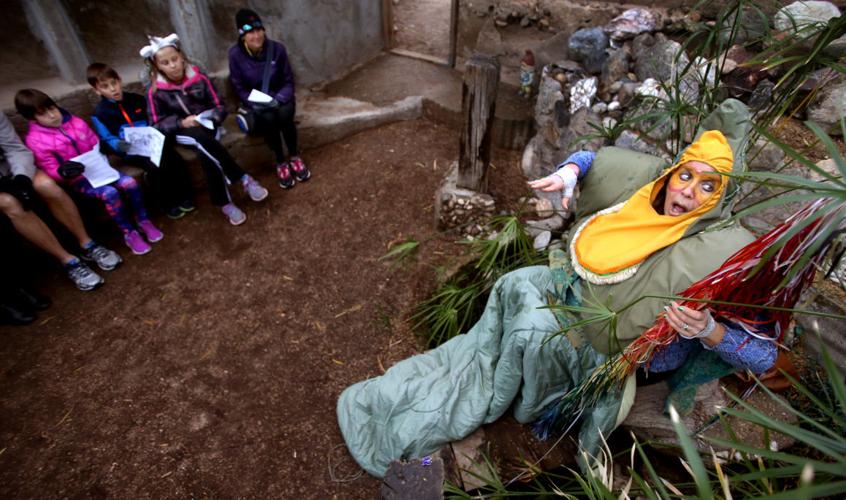
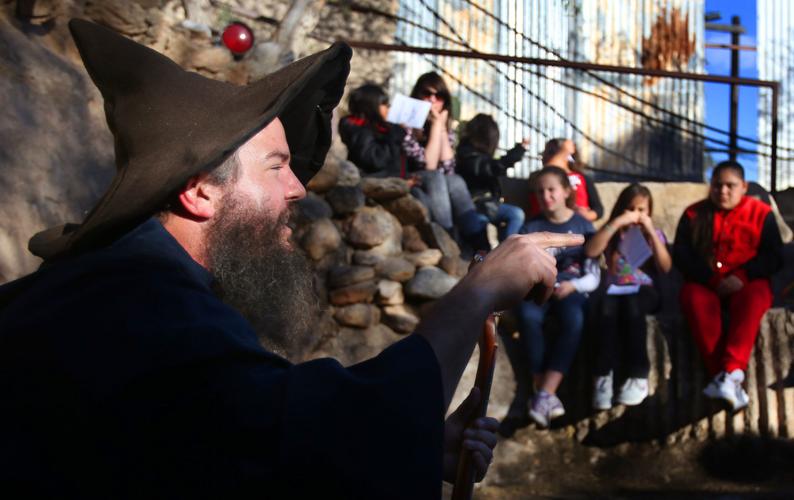
It is known for its enchanting storytelling events, handmade caves, quirky cement sculptures and the characters that inhabit it — fairies, gnomes and wizards, to name a few.
More than that, it’s a place with a mission to spread kindness, happiness and a little magic to the families of Tucson.
“We want to increase happiness,” said Zack Jarrett, president of Valley of the Moon. “We want people to leave here with more kindness in their hearts than they came in with, more tolerance in their hearts than they came in with. We want people to have a magical experience with their friends and families that’s outdoors and unplugged and analog in nature.”
THE BEGINNING
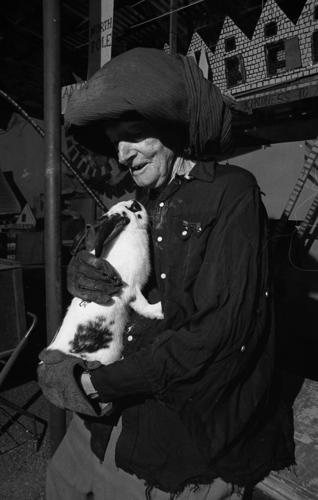
To George Phar Legler, fairies were real.
Legler was a spiritualist with an undying desire to teach kindness and spread happiness to children.
As the city became more developed, he built a place for the fairies and all of the magical creatures of the Sonoran Desert to live. A place where children and their families could go to escape the city, hear enchanting stories — which always included a lesson of kindness — and connect with others.
That place included a fairy house, gnome gardens, an amphitheater, and caves in which Legler lived until a broken hip forced him to move into a nursing home in 1980.
“There was never anybody like him,” said Linda Legler Voorhies, George’s granddaughter. “He really, really believed in fairies. It was real to him. He took it seriously.”
Legler died in 1982 at 97, but through Valley of the Moon, his legacy will live on for generations to come.
MAGICAL ADVENTURES AND THE FIRST FAIRY QUEEN
Before there was electricity at Valley of the Moon, Legler and his friend, Frank Thibault, would light 200 candles and lanterns to prepare to take kids on fantasy tours. When the children arrived, they’d sign their names in the guest book and wait for Legler to show up, Jarrett said.
When he arrived, he always wore black and never showed his face.
“He would warn them that this place attracted magical creatures of all sorts. Good magical creatures as well as wicked ones,” Jarrett said.
In order to be safe, the kids were given “magic stones,” which are still given out today, a sprig of rosemary or scented oil they’d put on the back of their hands.
“Adventures would wind through the paths. He would stop and tell stories,” Jarrett said. “The blue fairy at the bottom of the well — nobody saw her, but we knew she was there because the water was so blue and clear and perfect.”
As stories became more elaborate and he needed more characters, Legler enlisted the help of his grandchildren who lived across the street and other neighborhood children to participate. The only stipulation was they could never tell their friends about the role they played.
When Voorhies was 6 years old, she was the first to play the fairy queen, a coveted role among little girls.
“He was a natural showman,” Voorhies recalled. “He knew how to create a dramatic scene.”
Voorhies remembers her grandfather telling the audience it had to get permission from the fairy queen to continue its journey. Then with a poof of gun powder, the lights would come on and the fairy queen would be there.
“I have a lot of memories of that,” Voorhies said. “After I got a little older and a little tired of it, other moms would say ‘Can my little girl be the fairy queen?’ A lot of little girls here were fairies, but I was the first one.”
THE ADVENTURES CONTINUE
Today, families still embark on fantasy journeys through the winding paths of the 2.3-acre property, stopping at different spots along the way, to see scenes portrayed by actors or hear storytellers’ tales.
Two major theatrical performances are held each year — “Haunted Ruins” in fall and a spring show, which will be “Rumpelstiltskin” this year. Both shows are admission-based fundraisers. Admission is $10 for anybody over the age of 15.
A couple years ago, “Harry Potter” was the subject of the fall show.
“It was a nice play they put on,” said Zach Boyan, 10, Legler’s great-great grandson. “‘Harry Potter’ was really cool.”
Boyan said he thinks it’s also pretty “cool” that his family legacy is Valley of the Moon.
Noah Samson, 8, played “Harry Potter” in the Haunted Ruins production that year. And, he hopes to be cast in future performances.
“It’s really fun acting and seeing all of our friends,” Samson said. “My favorite part was when I accidentally fell asleep on Harry Potter’s bed and an actor had to wake me up and was all ‘Harry Potter! Are you going to fight me?’”
Other events include Free First Saturdays. Half of those are fairly mellow, where families can go and wander the paths and bring a picnic. The other half have an organized event, such as the Campfire Singalong on Feb. 6.
Depending on cast interest and volunteer capacity, a free show, usually a comedy, is often held during summer.
Like in the days of George Legler, most stories told at Valley of the Moon teach lessons in kindness, Jarrett said.
“We keep bringing people together and building community through storytelling, dramatic arts and song,” Jarrett said. “And I think all the while we’re doing what George Legler wanted Valley of the Moon to be doing, which is bringing people together and teaching kindness.”
CELEBRATING MEMORIES
“I brought my children here when they were little,” said Sue Deamond, a volunteer and neighbor. “They loved it. I still have my magic stone. In the evening when it’s dark, it’s very mysterious. This is a place that collects a lot of different kinds of people. It’s a Tucson tradition, really.”
State Sen. Steve Farley was one of a handful of dignitaries at a recent celebration of the property’s historic landmark designation. He, along with artist Charles Spillar were instrumental in preserving and transporting the castle, Old Stump, Spider Tree and Pygmy Hut sculptures from Magic Carpet Golf to Valley of the Moon.
“I’ve been coming to this place since 1995,” Farley said. “My daughter asked to have her fifth birthday here. She’s 21 now. This is one of those places that makes Tucson Tucson.”
“All you gotta do is see some of the kids and the magic in their eyes,” Spillar added.
On stage that evening, Vice Mayor Karin Uhlich, Mayor Jonathan Rothschild and Demion Clinco from the Tucson Historic Preservation Foundation addressed an audience of about 200 on their memories and the importance of the recent landmark designation of Valley of the Moon.
“Seeing my now 4 and 7 year old at ‘Alice in Wonderland’ just wide-eyed. Like seriously they knew they entered the fantasy land of their dreams,” recalled Vice Mayor Karin Uhlich. “They clasped each other’s hands and walked down the path looking for Alice … That’s my favorite memory here.”
LANDMARK PROTECTION
The road to receiving its historic landmark designation was a long one, which started with being listed on the National Register of Historic Places in 2011, Jarrett said.
While that was a “great honor” for Valley of the Moon, it didn’t protect the structures on the property.
A team spearheaded by Clinco worked with the city to see it listed as a Tucson Historic Landmark, which would make sure that no matter who owns the property, the historical structures and landscapes are protected from development that would harm them.
“So we can’t build an apartment complex here and neither can anybody else,” Jarrett said. “More importantly, it protects from development from within. We have in the past done repairs that have harmed the historic structures.”
When Clinco addressed the audience at the celebration, he talked about how historic preservation is important to the life of a city.
“Historic places are part of the economic engines,” Clinco said. “Places like Valley of the Moon are singularly unique for charm and sense of place.”
Being listed as a landmark is a rarity, said Mayor Rothschild.
“There are only six properties in Tucson that are designated as city historic landmarks,” Rothschild said. “The last one designated was the El Tiradito Wishing Shrine in 1995, 20 years ago. So, Valley of the Moon has joined a very selective list.”
VOLUNTEERS MAKE THE MAGIC HAPPEN
The most important magic at Valley of the Moon is the magic the volunteers bring in their hearts, Jarrett said.
“Without them, Valley of the Moon would have disappeared long ago,” Jarrett said.
During its two big annual shows, volunteers consist of 40 to 50 actors and there are about 30 people who are called upon regularly to help out, Jarrett said.
Some stay for decades.
Shari Murphy has been a volunteer since 1982.
“It’s a magical, wonderful place,” Murphy said. “It’s a place of kindness. People just love to be here. And it’s not just for kids. I can’t really explain it. It’s Valley of the Moon.”
Jarrett started volunteering a few years ago when his daughter became a cast member. He was “moonstruck.”
He recalls playing music on his guitar for guests as they waited for the show to start.
Now he’s president of the board, with a deep passion for storytelling.
“What I love doing here is telling people stories, particularly kids,” Jarrett said. “These kids and their parents come and they live in a world where they’re on their electronics … and they come to Valley of the Moon and all of that is turned off. All of that high-tech connection to the outside world is broken and people reconnect with a natural earthy magic right here and that’s what I love about my volunteerism. Being part of that natural magic of community.”
Felicia Chew began volunteering when her son joined the cast in 2012.
“Part of the fun is volunteering as a family,” Chew said. “I work in the Carnival, Tour Follow and sometimes share some music as a guitar wielding, wandering minstrel/fairy, singing songs and sharing stories about the Moon. And of course the fun part is the clean-up, cast parties and work days at the Moon … and so many other events and people to meet.”
A new volunteer group — Friends of the Valley of the Moon — that will help manage the volunteer pool was announced at the landmark celebration. The group’s mission is to provide operational support, fund development and advocacy.
“I hope our volunteers find a second home here, one that’s safe for them to be themselves without fear of judgment and are encouraged to have fun while doing something great for their community,” said Leora Renteria, a volunteer since 2011. “I hope our audiences are immersed in the stories long enough for Valley of the Moon to work it’s special magic so that they can be young once more. I hope it sparks their imagination and reminds them how much potential each of them has, how powerful kindness can be in dark times and places.”

