



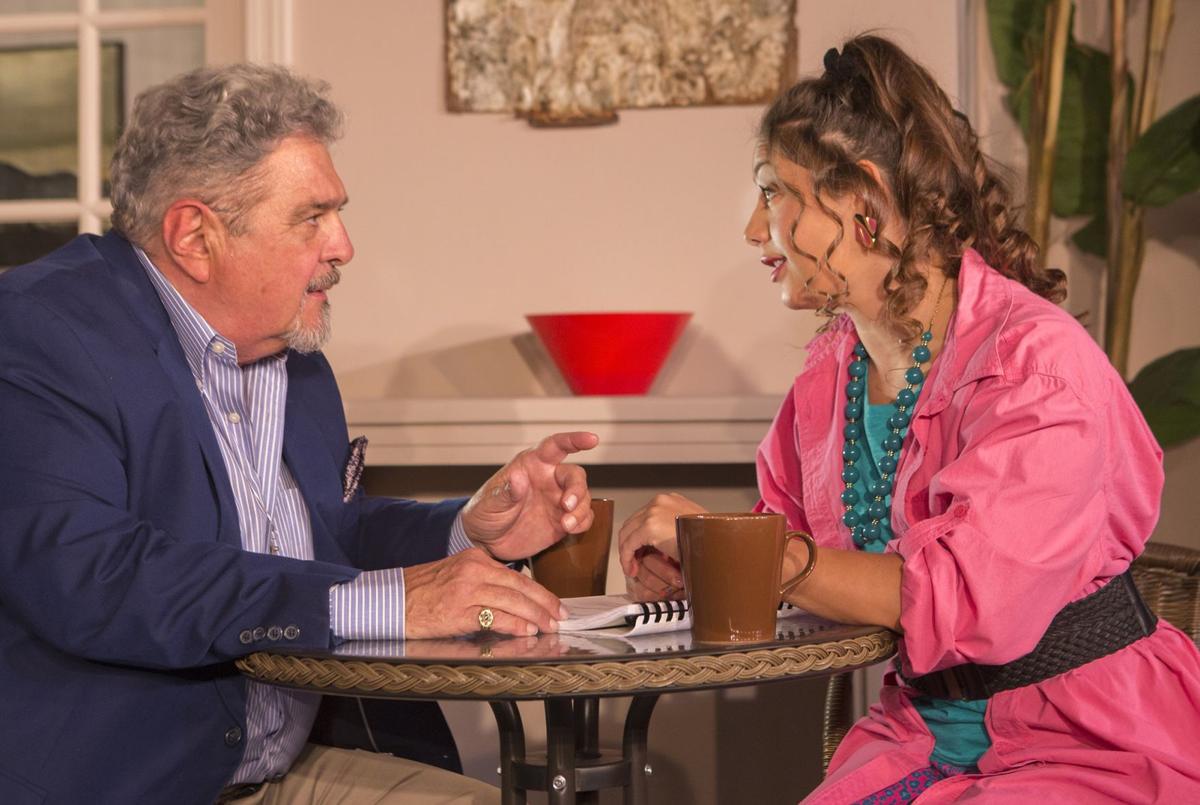
Can the sin of betrayal be forgiven? Not in Jeffrey Sweet’s “The Value of Names,” currently on stage at the Invisible Theatre.
Benny (David Alexander Johnston) has held a grudge against his onetime friend Leo (Michael A. Candela) for 30 years. And, some might say, for a good reason: Leo appeared before the House Un-American Activities Committee in the early 1950s and named Benny as a communist sympathizer. Benny was a budding actor but became instantly blacklisted, unable to find a job for years. Leo, meanwhile, went on to a wildly successful career as a director.
Benny’s daughter Norma (Julianna Grantham), a budding actress, is staying at her father’s Malibu home while in rehearsal for a play. When the director takes ill, Leo is brought in. She’s conflicted — though Benny never discussed the blacklisting, she’d read about it. She knows about Leo. She considers backing out.
One day, Leo shows up at Benny’s home unannounced, ostensibly to persuade Norma to stay in the play. Finally, he and Benny have a chance to talk it out.
This is a wordy play about forgiveness, art, politics — lots of heady ideas.
Sweet’s script is contrived at times. The role of Norma is sketchy and kind of annoying — she’s a complainer, often steps aside to address the audience (which whips us out of the story), and she’s an unnecessary device Sweet uses to get to the meat of the play: The discussion between Benny and Leo, which is sometimes explosive, sometimes insightful. Leo wants to get Benny to let his anger go. He doesn’t seem one bit sorry that while his career soared, Benny struggled for years. Hey, he says, Ezra Pound (a racist) and Richard Wagner (an anti-Semite) made great art, as Leo says he has done. Shouldn’t that be enough?
The production, directed by Fred Rodriguez, falls flat mostly because the performances are played too close to the surface.
That leaves the characters’ stakes shallow and the consequences of their actions trivial.
But the biggest fault lies with a script that tries to be too neat and doesn’t succeed at delivering what the premise promises: a deeper look at that dark time in American history and a look at the great-art-made-by-dreadful-people debate that is particularly relevant today.

