



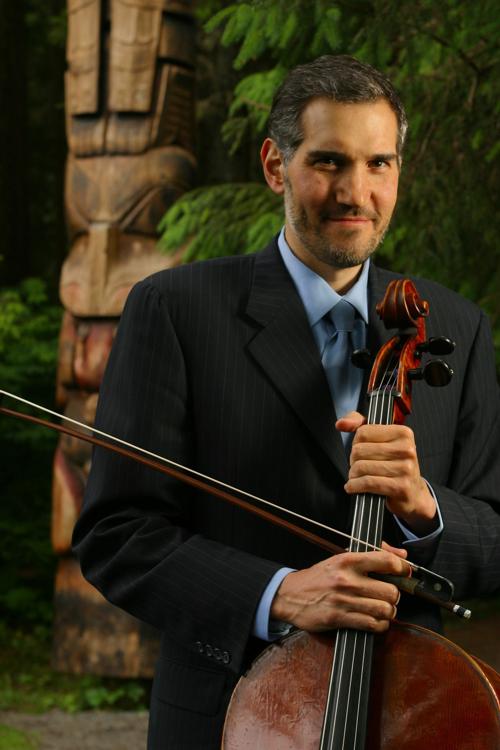
Evan Drachman might be a shirttail cousin to Tucson’s Roy Drachman.
“We’re probably related but we couldn’t make the connection,” he said last week during a phone call from home in Baltimore.
But he is related to the famous Russian-born American cellist Gregor Piatigorsky — his grandfather.
And on Saturday, March 12, he will join the Civic Orchestra of Tucson to perform Dvorák’s Cello Concerto, a work that Drachman credits for leading him to follow in his famous grandfather’s footsteps.
“The Dvorák, I think, is one of the most important concertos written for cello and orchestra. It might be one of his greatest works,” said the cellist, who, at the age of 13 while he was away at music camp, discovered a recording of his grandfather performing the Dvorák with the Boston Symphony.
Until that discovery, Drachman had been finding his footing in the cello after years of exploring everything from guitar to drums. He had been studying cello for a year, but was not quite comfortable on the instrument.
The Dvorák recording and his music camp experience changed that.
“I just completely fell in love with music there. After that it was all I wanted to do,” he said, recounting how he would wake up in the morning and play before school and come back to the cello after school to get in practice before doing his homework.
Saturday’s Civic Orchestra concert will be his third with the volunteer ensemble, under the baton of music director Herschel Krelof, who has led the orchestra since 1980
“It is massive in scope,” Drachman said of the concerto. “It contains everything: It has virtuosity, pathos, humor, incredibly gorgeous melodies. It just feels from beginning to end that you’re taking this incredible journey.”
Drachman never got to study with his grandfather. He was just getting interested in the cello when Piatigorsky died in Los Angeles in 1976. But Drachman is carrying on his grandfather’s legacy in not only his performances but with his non-profit Piatigorsky Foundation, which sponsors concerts in areas where classical music is not readily accessible. Drachman said they perform in schools, nursing homes, on Native American reservations and in rural areas, promoting his grandfather’s philosophy that classical music in not meant for the elite but should be a required experience for all.
“Classical music has the reputation for being high-browed and snooty, but it’s powerful stuff and it’s for everybody,” he said.
Civic Orchestra of Tucson is in the homestretch of its 40th anniversary season. Founded in 1975, the 60-piece ensemble performs mostly free concerts including its annual Pops in the Parks concert in May at Reid Park’s DeMeester Outdoor Performance Center.
In addition to the Dvorák concerto, the orchestra will perform Mozart’s Symphony No. 40 to mark the anniversary, said General Manager Bob Kovitz.
“I think 40 years is extraordinary,” said Kovitz. “We rent the halls, we don’t charge admission. It’s not a business school model you would recommend. I think there’s such a love of classical music by the musicians themselves and by the community that the organization has kept going.”
In addition to a half-dozen concerts a year, the orchestra also hosts instrument petting zoos for children and a young artists competition.

