

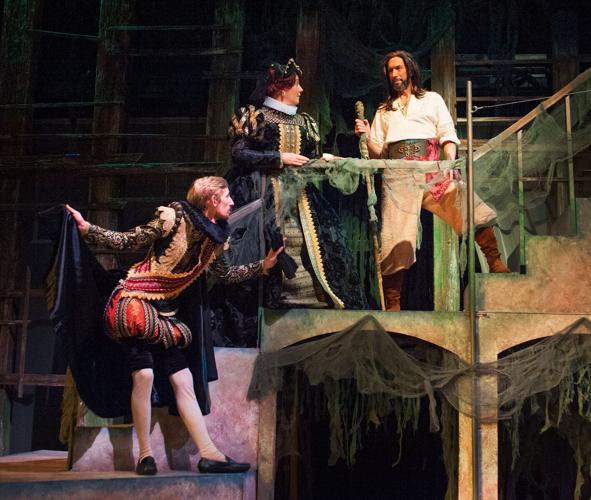
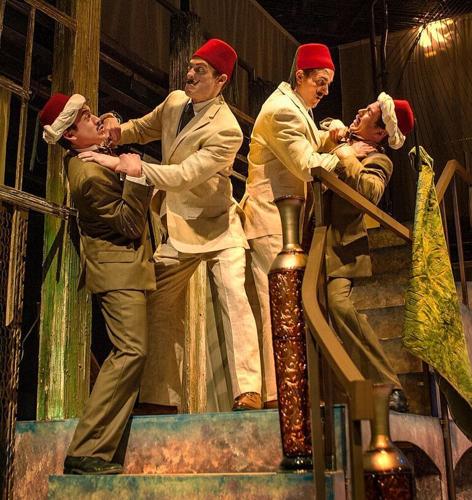
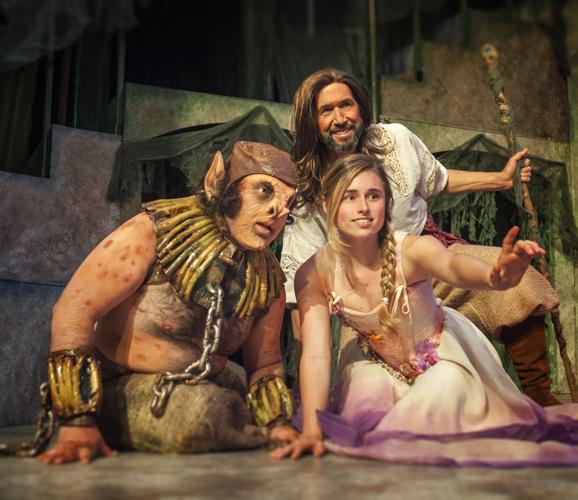
Mounting a Shakespeare play is always a challenge.
So you can imagine the effort involved in staging two of his works at the same time.
It’s the task the Arizona Repertory Theatre has taken on, presenting “The Comedy of Errors” and “The Tempest” in repertory. “Comedy” opens in previews Sunday, Feb. 28, and “Tempest” March 6. Thereafter, the two will play on alternate days.
The Shakespeare bonanza has been timed with the visit of the First Folio to the Old Pueblo, which is at the Arizona State Museum through March 15.
The Star sat down with director Brent Gibbs to talk about the plays.
Why do these two plays in repertory?
“There are several reasons. The university is hosting the First Folio. There were 18 plays that were published for the first time in the First Folio, and these are two of those plays. ... Then, there is also the reason that these are plays from the beginning of Shakespeare’s career. ‘The Comedy of Errors,’ is one of the first that he wrote, and ‘The Tempest’ was one of the last that he wrote. It is a lovely chance to be able to have the bookends of his career represented in these plays that would have been lost if the First Folio had not been published.”
Other than the playwright, are there any other similarities or common themes in these two plays?
“I think there are similarities in terms of journeys of discovery. In ‘The Comedy of Errors,’ the twins find each other throughout the course of the play after many mishaps. Egeon, their father, is reunited with Emilia, their mother, so they discover each other. In ‘The Tempest,’ at the end of the play, Gonzalo mentions that on this island where no one was their own (person), everyone found themselves. Ferdinand finds Miranda; Prospero receives his dukedom back. But for a large portion of the play people are at odds with themselves. And then everything is put back in order, which is why it’s a comedy.
What challenges do staging two plays in repertory present?
“It is just very difficult to find enough time to give everything the attention that it deserves, and yet, that is our job. We started rehearsals for ‘The Comedy of Errors’ in November, so we’ve been at it for a while. And then we picked up with ‘The Tempest’ as soon as this semester started. We have spread it out as long as we thought we could.”
Are you using the same cast?
“It is ... primarily the same cast. For example, the actor playing Prospero in ‘The Tempest’ doesn’t appear in ‘The Comedy of Errors,’ but that’s really the only difference in terms of the cast. Using the same cast is a common repertory model. People may have a smaller role in ‘The Comedy of Errors’ but a larger role in ‘The Tempest’ and vice versa.”
For the untrained ear, what is the best way to take in a Shakespeare play?
“The thing about going to see a Shakespeare play is that there is a short period of adjustment at the beginning of the show where your ear becomes acclimated to the language. Shakespeare wrote as people talk. There is a perception that it is a foreign tongue, when in reality it is not. The rhythms that Shakespeare wrote in are the rhythms that we speak in normally. The language can be sometimes somewhat archaic, but we stress clarity in terms of the productions that we produce. That means the clarity of the word, the clarity of the pictures, the clarity in terms of the design, so that everything can help the audience.”

