


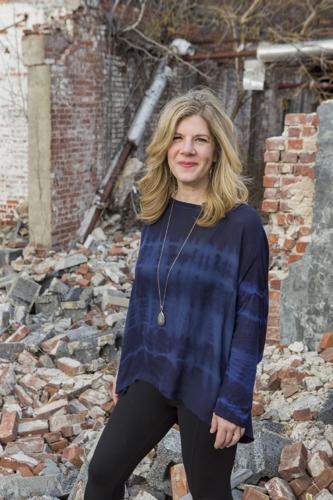

Dar Williams recorded her breakthrough album “Mortal City” in 1996 as the world around her was changing in dramatic fashion.
People were fleeing downtown America and heading to the suburbs, eschewing Main Street for Mall of America.
Fast-forward 20 years and the world is changing, yet again.
People are ditching the big-boxes and cookie-cutter chains in the suburbs for mom and pops in revitalized and re-energized downtowns.
Socially, we are more tolerant of one another’s differences and celebrate diversity — of people and opinions — and there’s a return of the together-we-can attitude that made America great, she said.
“Every one of the songs (on ‘Mortal City’) was a benchmark from which we have progressed,” said Williams, who brings her Return to “Mortal City” 20th anniversary tour to Rialto Theatre on Tuesday, Jan. 10. “Basically it’s about how the long table with the patriarch at the head has become more of a round table of different kinds of people getting to be who they are. This country, in terms of more people having a voice at the table, has come a long way forward. There’s much more of an expectation that you’re going to be bringing home a boyfriend or a girlfriend of a different religion, of a different background, and more of an understanding that it’s the family’s job to assimilate different voices.”
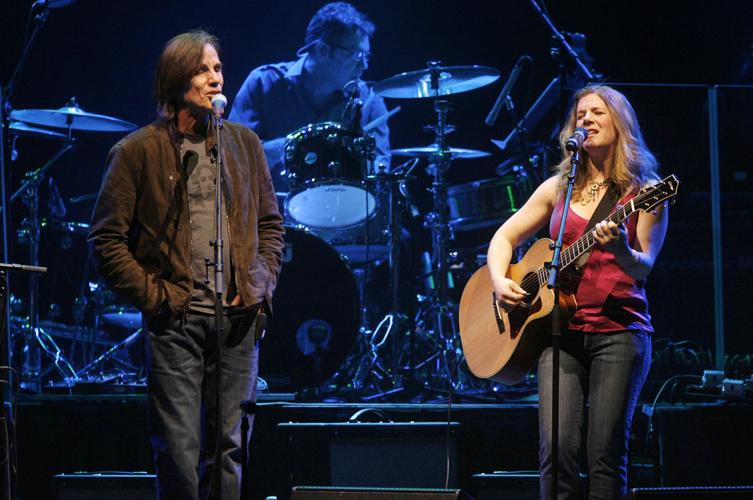
Williams, with a band in tow and a handful of poets reading before she goes on stage, will perform “Mortal City” track by track on Tuesday. She’ll pepper the concert with stories from the places where she penned the songs and met the characters, including the heroine addict in “The Ocean” and the optimistic girl trying to legalize hemp in “The Pointless, Yet Poignant, Crisis of a Co-Ed.” That idea failed miserably, but in an ironic twist marijuana is now legal in many states, she said.
“I started touring at a time when downtowns were boarded up, and that trend seemed to be growing. But somehow people chose to be in the ‘mortal’ communities of their cities, to go towards the centers, to go towards the green as opposed to settling for living at the outskirts with the big boxes,” said Williams, whose appearance Tuesday will be her first in Tucson since she was on the lineup at Ron Barber’s 2011 Fund for Civility, Respect and Understanding benefit concert. “People wanted to come back to the downtowns. There’s more life in the cities and towns than when I started touring, by far.”
She’ll realize that to some degree when she sets foot in downtown Tucson. In the five years since she’s been here, the city has undergone a dramatic downtown transformation including the additions of a modern street car, a multistory student housing complex, bars and restaurants in the entertainment corridor and a hotel rising out of the once empty lot butting up against Congress Street.
“The thing about Tucson is that it has this remarkable terrain, and then it’s got this population of people who seem to understand how cool and interesting it is from other places. They choose to live in the desert,” said Williams, whose relationship with Tucson goes back to the early 1990s when she was just starting her music career.
On one of her last Tucson visits, she recalled that zombies were wandering downtown. Several years ago a group of folks would dress as zombies and hold parades downtown.
“Not every city knows to have a zombie night,” she reflected, letting out a giggle as if she had just heard herself say “zombie night” like it was a real thing that everyone should be hosting. “It takes a city with a certain kind of humor and identity and comfort to have things that are fun on top of business-as-usual.”
“I think Tucson, from the character to the landscape, I point to it to say, ‘If you’re unique and you know it, you’re in a really good place,’ ” she said. “Tucson is really unique and Tucson knows it, and that’s what creates a successful American city in my mind.”

