


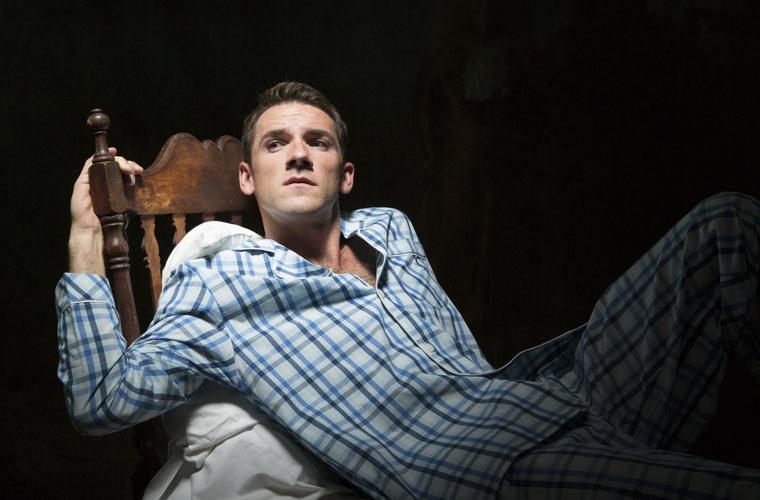
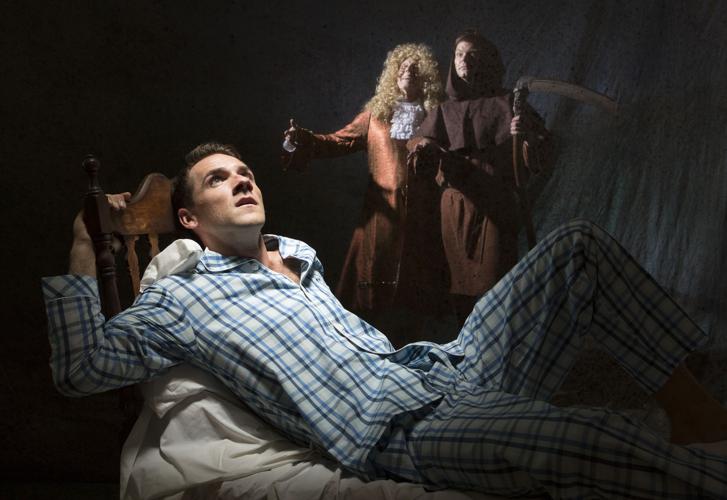

Twenty-five years ago, Tony Kushner’s masterpiece, “Angels in America: Millennium Approaches,” was born in a small San Francisco theater.
It was sprawling. It was revolutionary. It was nearly impossible to stage.
Still, two years later, it opened on Broadway, and theatrical history was made.
This weekend, The Rogue Theatre opens its production of the Pulitzer- and Tony-winning play, the first of Kushner’s two-part epic dubbed “Angels in America: A Gay Fantasia on National Themes.”
Matt Bowdren makes his Rogue directing debut with the production.
“I’ve loved this play forever,” says Bowdren. “I think I’ve done every speech from the play for audition monologues. ”
“Angels” is an eloquent and painful examination of AIDS in the 1980s, when the disease spread and was ignored by anyone not directly impacted by it. AIDS primarily attacked gay men; at that time — and when this play hit New York — homophobia was as deadly a disease as the illness.
The play focuses on Prior, who is dying of AIDS, and his partner, Louis, who abandons Prior when caring for him becomes too much. But it encompasses much more than that relationship: community, politics, religion, the country’s attitude toward homosexuality.
“It’s such an important piece of our cultural history,” says Bowdren.
While some things have changed — AIDS is no longer a death sentence, and gay rights have blossomed — there is much that hasn’t, he says. The shootings in Orlando, Florida, make that clear.
Groups are still marginalized and ignored, he says. That is what makes this period piece so universal, and so timely, he adds.
“The AIDS epidemic is one of the most horrific events in our history,” says Bowdren. He’s referring not just to the disease, but to the lack of political will to do anything about it. Thousands died as a result.
Bowdren says that attitude isn’t confined to the 1980s.
“It is still happening, and as members of society, we can’t be passive.”
Kushner demands we wake up. And the play demands we think about a few things, as well.
Such as Louis’ abandonment of Prior.
“Kushner paints this complicated character (Louis) who takes care of himself,” says Bowdren. Then he makes us wonder: “How do you belong to a community and retain your individuality and still keep your humanity.”
“These characters are flawed, and Kushner animates that really well,” he adds.
His hope is audiences leave with a resolve.
“I would love people to become involved and take action; to try to empathize and understand.”

