



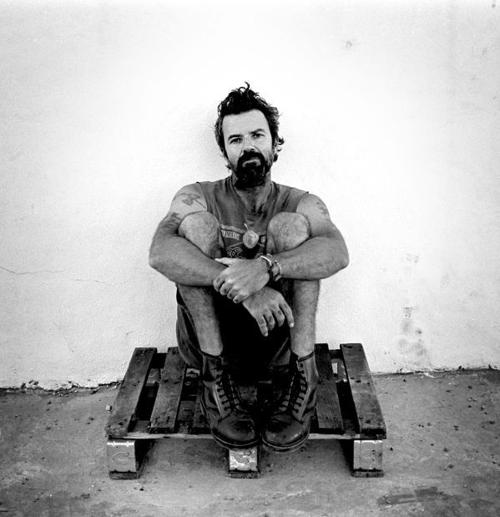
The growth has come in increments for rock ‘n’roll en español, small but steady, and the results are clearly heard on music stages across the U.S.
Spain and Latin America are increasingly enjoying larger venues, bigger audiences and longer tours, said Pau Donés, lead singer, songwriter and guitarist with Jarabe de Palo, one of Spain’s enduring rock groups.
The wide presence of rockeros reflects the growth of the Latino population in the U.S. and the development of the music and its creators, added Donés who fronts the Barcelona-born band.
Jarabe de Palo returns to The Rialto Theatre for an Easter Sunday performance, almost a year to the day when the group made its first appearance at the downtown venue.
Last year Jarabe de Palo played on 32 stages in the U.S. On its current U.S. tour, which is coming to and end, the group will have performed in more venues, Donés said in a phone interview while the group was driving to Portland, Ore., to perform a day after a show in Seattle.
Since the group’s inception 19 years ago, Jarabe de Palo has evolved from its 1996 hit recording, “La Flaca.” It has shed some of its Latin rhythms for a more straight-ahead rock approach. Last year the group’s “Somos” recording received a Latin Grammy nomination.
Latino rock bands have become more sophisticated and complex because the music makers themselves have grown. In Spain, Donés said that musical creativity exploded after the death of dictator Francisco Franco in 1975.
Creativity in the arts began to flourish, producing influential rock bands such as Héroes del Silencio and Ketama. Music schools widened their doors to alternative music and songwriters honed their lyrics, Donés added.
“On top of that Jarabe de Palo brings nearly 20 years of personal experience and experimentation,” he said.
Donés the U.S. is a good place for Jarabe to perform and expand its musical wings, regardless that the group’s lyrics are in Spanish.
“The U.S. rocks,” he said.

