


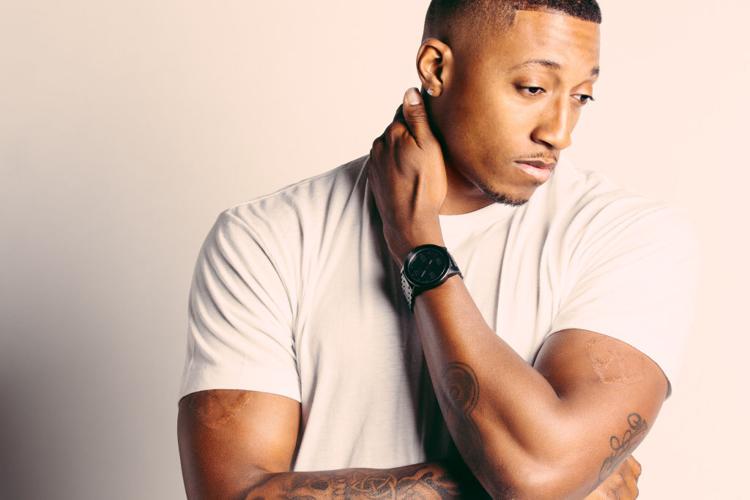
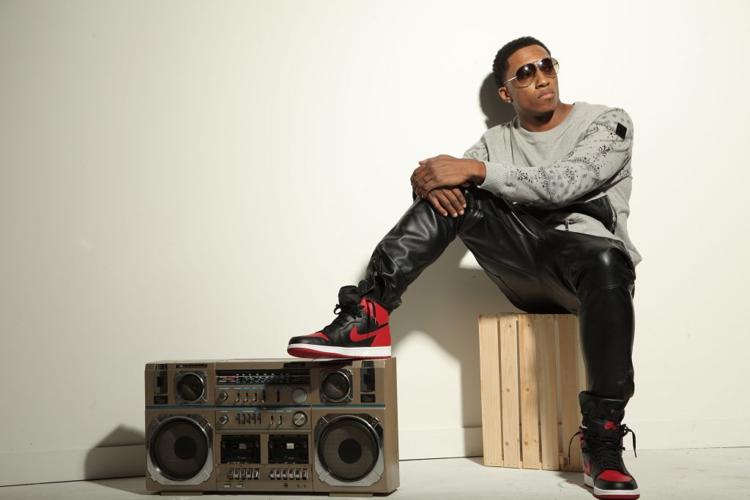

Flip on a mainstream hip-hop radio station and you are not likely to hear anything by Grammy-winning rapper Lecrae Devaughn Moore.
But on Friday night at Tucson Arena, you will hear the audience singing along as if his songs were in heavy rotation alongside Drake, Nicki Minaj, Wiz Khalifa and Iggy Azalea.
Instead of hearing sexually explicit, curse-filled lyrics about the thug life and drugs, you’ll hear Moore — who goes by the stage name Lecrae — professing his Christian faith in a hip-hop style that is hardly distinguishable from his mainstream counterparts.
“I think what I’m doing for a lot of people is breaking barriers and transcending categories,” the 36-year-old father of three said from his home in Atlanta. “People don’t know quite what to do. It’s not gospel. It’s not contemporary Christian. It is hip-hop, but then obviously it’s not cussing, it’s not misogynistic. It’s just transcending all these categories and I think it is opening doors and opening avenues.”
People haven’t known quite what to make of Moore since he started rapping in the early 2000s. His life fit the common rapper mold — dealing and using drugs, stealing, drinking, illicit sex and a dangerous thrill-seeking lifestyle. But when he reached the bottom, he turned to God, largely at his grandmother’s urging. And what he found forever changed him.
“I was writing songs about my life and my pain and even my transformation, when I met God and my whole life was transformed,” he said.
His first real audiences were with kids in juvenile detention. He tagged along with a buddy who volunteered at the center “and I started doing some of these songs for the guys and they really could relate to it and they really gravitated toward the music,” Moore said. “It was me trying to offer them a picture of hope and inspiration and connectivity despite the circumstances they were in.”
Moore’s music career — which included being a member of the Christian hip-hop crew called 116 Clique — didn’t follow the same path as his pop-Christian colleagues. Most of them broke in at megachurches. Moore never got that chance, he said.
“When I started out, honestly a lot of churches didn’t know quite what to do with me. I think it was just you got tattoos and your pants are low, hanging a little bit, and you’re rapping all hard and it was just kind of a weird thing,” he explained.
He had to make his own way. So he launched a record label and played any venue that would have him, from a shopping center parking lot to an abandoned warehouse.
And it worked. His solo career has been nothing shy of groundbreaking:
- His 2008 album “Rebel” was the first Christian hip-hop album to top Billboard’s Gospel chart.
- His 2012 mix tap was downloaded more than 100,000 times in less than 48 hours.
- His 2012 album “Gravity” debuted as the No. 1 on the iTunes chart and No. 3 on the Billboard 200. It won the 2013 Grammy Award for Best Gospel Album — a first for a hip-hop artist.
- His 2014 album “Anomaly” debuted at No. 1 on Billboard 200 — the first album to top both the 200 and Billboard Gospel charts simultaneously.
Moore’s popularity is largely driven by word of mouth and much of it starts from his live shows.
“I don’t get a whole lot of radio play or anything along those lines so the live show has really been where a lot of my time, effort and energy has gone into,” he said. “Hip-hop a lot of times doesn’t put a lot of energy into the live show, but for me, when you look at people like U2 and people who do crazy, amazing things along those lines, I want to get as close to that as I possibly can obviously without having their budget.”

