


“Make a Mess Not a Masterpiece: Delight in Your Creative Spirit” by Shirley Dunn Perry. Independently published. 194 pages. $14.99.
Don’t eat your vegetables, paint with them! Author Shirley Dunn Perry received a round of applause from the second-grade art class she’d supplied with broccoli and carrots in place of paint brushes, and that’s the enthusiasm she brings to this affirming book. Delight in your doodles and make a happy mess, she advises. With visual prompts, contemplative meditations, and space to create, Perry urges readers to free their inner artists. Think (and draw) outside the box, be courageous, and — most importantly — forget about pleasing anyone but yourself. A retired nurse, artist, poet and doting grandmother, Perry lives in Tucson.
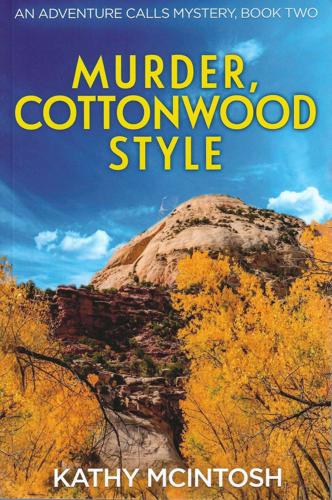
— Helene Woodhams “Murder, Cottonwood Style: An Adventure Calls, Mystery Book 2” by Kathy McIntosh. Dogged Kat Press. 319 pages. $14.99; $3.99 Kindle.
“Eco-tour guides see people at their best and their worst,” observes amateur sleuth Madrone Hunter. As chef of Adventure Calls Tours, she sees plenty of both, but few clients can match bad-tempered Violet Brock for pure cussedness. As a traveling companion Violet left much to be desired and Madrone was happy to part company at the tour’s end. But as luck would have it, their unhappy relationship is far from over: when she discovers Violet’s lifeless body while walking along the Verde River, Madrone becomes obsessed with finding her killer.
In this second installment of her Arizona-based mystery series, author Kathy McIntosh sets the action in Cottonwood, a town with a down-home vibe — not bustling like Tucson or posh like Sedona, but a place where everyone knows everyone and news travels fast. There’s no shortage of opinions about Violet, giving Madrone plenty to investigate, but things turn dark when she starts receiving anonymous threats. Some of the friendly townsfolk, it appears, have secrets that won’t stand the light of day.
Kathy McIntosh interweaves intrigue, humor, lively dialogue and an authentic Arizona setting in this, her fourth novel. Two of them are set in Idaho, where she lived before relocating to Tucson.
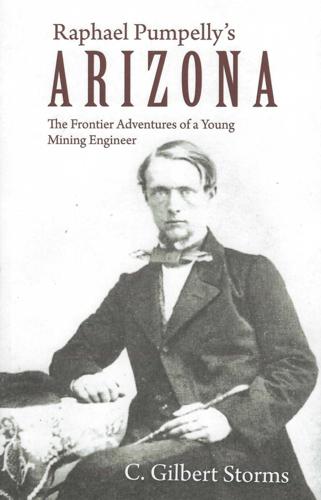
— Helene Woodhams “Raphael Pumpelly’s Arizona: The Frontier Adventures of a Young Mining Engineer” by C. Gilbert Storms. Wheatmark; 152 pages. $10.95; $7.99 Kindle.
“Raphael Pumpelly woke to a gunshot to find himself in a room where men were gambling. He had reached Tucson.” After a grueling, 16-day stagecoach journey, this wasn’t the 23-year-old mining engineer’s first rude awakening and, in lawless Southern Arizona, it wouldn’t be his last.
The product of a privileged eastern upbringing and self-described “roma/ntic adventurer,” Pumpelly held a degree from Germany’s prestigious Royal Mining Academy, and the prospect of mining silver for the Santa Rita Mining Company on the fabled frontier spoke to his inner daredevil. He found enough adventure to fill a book: Pumpelly’s vivid recollections of life in the remote Southwest are hugely valuable to historians. The mining part went less well—the company was underfunded, supplies were impossible to procure, incursions were constant, and the military offered scant protection. By the time he made the treacherous trek out of the Southwest in 1861, Pumpelly had cheated death several times, enjoying better luck than several comrades. He went on to make his name as a world-renown geologist, but it’s his unvarnished take on the (very) wild west that delights readers.
Drawing on Pumpelly’s reminiscences, enhanced with the scholarship of numerous historians including Thomas Sheridan and Andrew Paul Hutton, C. Gilbert Storms offers an enthralling and richly-detailed account of Arizona as Pumpelly experienced it. Indexed, illustrated, and with a lengthy bibliography, this volume belongs on the bookshelf of anyone interested in frontier history. Storms, who lives in Tucson, formerly taught American literature and writing at Ohio’s Miami University.
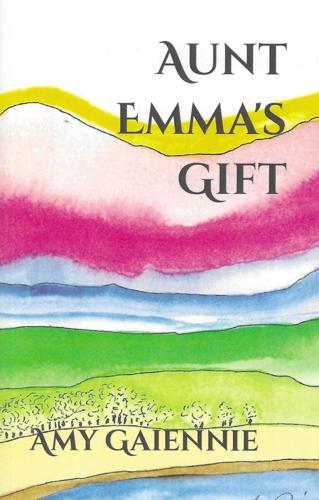
— Helene Woodhams “Aunt Emma’s Gift” by Amy Gaiennie. Independently published. 228 pages. $9.49.
A goal of retired Tucson teacher and National Park Service Ranger Amy Gaiennie is “to inspire people of all ages to love, learn about, and care for the natural world.” That’s clear in this imaginative little book that features stories (including literary and fairy tales), magic, and a touch of Rachel Carson’s “Silent Spring.” It opens on Christmas morning, when 11-year-old Carolyn Finchley is given both a ranch playhouse and an unusual patchwork quilt. When she wakes up the next day, she finds herself inside the playhouse, on barren land with no food. Her quest for provisions and to find her way home takes her to a new land where wishes can be granted, but nightmares portend threats to both this land and the Earth she left behind.
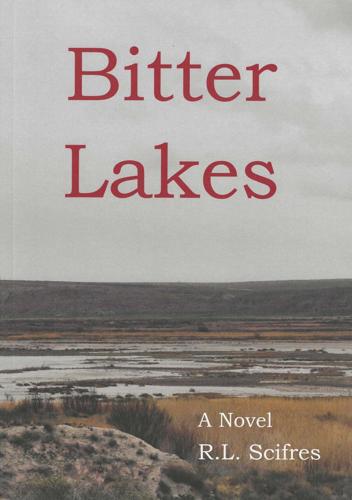
— Christine Wald-Hopkins “Bitter Lakes” by R.L. Scifres. Independently published. 355 pages. $18.99 hardcover, $9.99 paperback, $6.99 Kindle.
R.L. Scifres’s terrific opening paragraph kick-starts this novel: “He was born a dirt-poor bastard in a tiny West Texas town and had been cursed with incredible insight. Consequently, he knew he was about to die.”
This is a tale of family, secrets, lies, and intended consequences. Abe Godwin wasn’t much of a father, and even less of a husband, so it was probably advantageous all around that he leave the three mothers of his daughter and two sons shortly after they were born. He kept track of his kids, however, and made himself known to them — and them to each other — when they became adults. When he lies down in the back of his Roswell-area ranch pickup, and gazes into the sky until his light goes out, he bequeaths to his children mysteries to solve and sudden, unexpected — and not necessarily welcome — family.
In the course of settling Abe’s affairs, the siblings: single, ex-Army Evie; sex-besotted car salesman Jesse; and hair-trigger oil field worker Eloy confront both outside threats and personal demons as they struggle to cooperate as family.
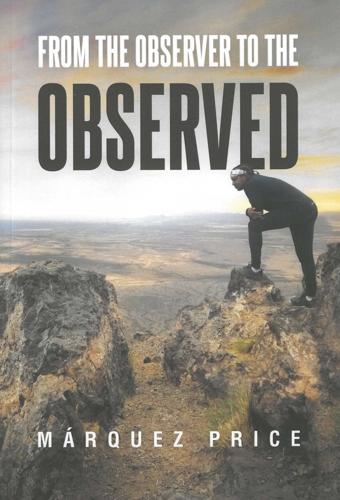
— Christine Wald-Hopkins “From the Observer to the Observed” by Márquez Price. Independently published. 90 pages. $14.99.
Tucson essayist and poet Márquez Price, who is “passionate about making an impact on others …by touching issues of the collective human fabric” once again brings personal experience and witness — often gritty — to this new collection of poems. Central to the work are the challenges and complexities of being a young Black man in America. As he did in his well-received debut collection, “My Train Is on Schedule,” Price tells stories. Abused childhood friends become violent adults. A happy-go-lucky girl becomes a murdered mother. But in one dialogue poem “Conversations to the West of Me,” a beloved cousin narrates cleaning up a life of addiction by going to an ashram where there was a basketball court (“I was an instant celebrity. No look passes to monks, splashin’ 3’s… it was extraordinary.”) Besides situating himself in family, Price incorporates racial history — invoking warrior king Shaka Zulu in an elegy to Ahmad Arbery, and South African Khoikhoi women exhibited in 19th century Europe. As these and other poems reveal underlying anger, Price writes of wisdom acquired dealing with it, and reveals personal vulnerabilities and sensitivities, enveloping them with a sense of hope.
— Christine Wald-Hopkins
Briefly noted
“Guam: Return of the Songs” by Elaine A. Powers. Independently published. 70 pages. $15.95 — The story of how non-native snakes decimated Guam’s ecosystem, and the subsequent remediation efforts is told in this rhyming picture book about invasive species; a section on Guam’s birds (including those now extinct) is lovely to see. Bilingual, in English and Chamorro, Guam’s native language.
— Helene Woodhams
“The Aliens Among Us” by Victoria Herrod. Independently published. 466 pages. $25.95. — In the Martian year 3978, when the prime minister of the country of Montigan realizes that his population is being depleted, he sends four handsome human Montigans to Earth to entice young women to Mars to replenish the forces.
— Christine Wald-Hopkins
“Mineralogy of Arizona, Fourth Edition” by Raymond W. Grant, Ronald B. Gibbs, Harvey W. Jong, Jan C. Rasmussen and Stanley B. Keith. University of Arizona Press. 744 pages. $75; $49.95 paperback, $41.17 Kindle. — This brilliantly-photographed and definitive compendium of the 986 minerals found in Arizona, with information about geology and the state’s mineral districts, includes 200 new species and substantially updates the previous edition.
— Helene Woodhams
“Belonging and Healing: Creating Awesomeness for Yourself and Others” by Dave A. Cornelius. JCWALK Publishing. 224 pages. $19.99. — In this work, organization and DEI (diversity, equity and inclusion) coach Dave A. Cornelius demonstrates how the principles of Ubuntu, a system followed by South Africans Desmond Tutu and Nelson Mandela, can bring harmony and equity into the workplace.
— Christine Wald-Hopkins
“Patience & Possibility (Boom Talk Media Relief-lets)” by Andrea Gould-Marks and Barbara Peters. Independently published. 72 pages. $15.65; $3.99 Kindle. — Slow down: the ability to practice patience is the gift that keeps on giving in terms of self-awareness, coping with anxiety and nurturing relationships. Boom Talk Media’s hosts provide an inspirational tool-kit for the patience-curious, with some friendly encouragement.
— Helene Woodhams
“A Certain Ache: Poems in Women’s Voices” by Bonnie Wehle. Vanishing Line Press. 33 pages. $14.99. — Supplemented by historical information when called for, this accessible and engaging chapbook of dramatic monologues tells stories in the voices of 19 fictional and historic women, including Frida Kahlo defending her painting of the suicide of Dorothy Hale, Gloria Vanderbilt, and Madame Curie talking back to patronizing men.
— Christine Wald-Hopkins “The Memory of All That: A Love Story about Alzheimer’s” by Mary McCracken. She Writes Press. 181 pages. $16.95. — Completed posthumously by her daughter, Tucsonan Susan Thistle, Mary McCracken’s memoir relates the story of her husband Cal’s progressive Alzheimer’s Disease and her gradual realization that Alzheimer’s care cannot be a solo endeavor.
— Christine Wald-Hopkins

