










“Chucky’s in Tucson” by Brant Vickers.
Palmetto Publishing Group. $14.99 paperback; $6.99 Kindle.
One under-appreciated benefit of public school teaching is that you’re never at a loss for stories to tell. Even more so if you’re a special education teacher. In “Chucky’s in Tucson,” retired TUSD teacher Brant Vickers chronicles his 18 years in special education. After a military career and a discouraging stint as a ninth-grade English teacher, he discovered he could connect with special needs students and found his calling. This memoir highlights his relationships with students, staff, administration, social services and parents, and tells many interesting kid stories. The world of special education is not easy to navigate, but Vickers managed it with clear affection for and from his students. And the title? Try walking a strong, wild, fetal alcohol-damaged man-child who’s seen horror movies past a mall costume display at Halloween (“Chucky’s in Tucson!”)
— Christine Wald-Hopkins
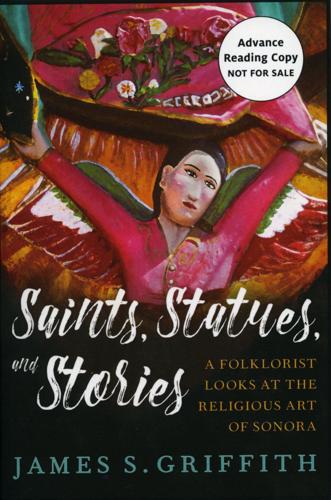
“Saints, Statues, and Stories: A Folklorist Looks at the Religious Art of Sonora” by James S. Griffith, with Research Associate Javier Manzo Taylor.
University of Arizona Press. $16.95 paperback; e-book available.
He claims he’s not writing as a historian, an art historian or relator of fact-checkable accounts, but folklorist James S. Griffith (Tucson Meet Yourself’s “Big Jim”) does, in fact, offer us history, art commentary and great stories in this slim new book. Based on his 50+ years studying and traveling in Sonora, Mexico, it’s foundationally academic—referenced, indexed, fully footnoted, in historical and aesthetic context—but it reads like spun tales. With photographs and personal anecdotes, Griffith discusses the introduction of religious art into Sonora, its preservation, its role in the spiritual life of the people and direct impact of saints in the lives of individuals and the community.
Particularly striking are the lengths to which Sonorans went in the 1920s and ’30s to save religious art from the revolutionary government’s anticlerical “quemasantos” purges. (In an amalgam of history and legend, when police burned all the religious images in the village of Júpari, the statue of John the Baptist escaped by jumping into the Río Mayo.) It’s an informative, entertaining, rich narrative. And don’t miss the appendices: Appendix A presents verbal religious art (what poem will protect the speaker from scorpions or snakes); B explains sacred personages (including Jesús Malverde, saint of drug traffickers); and C relates the legends of patron saints saving villages.
— Christine Wald-Hopkins
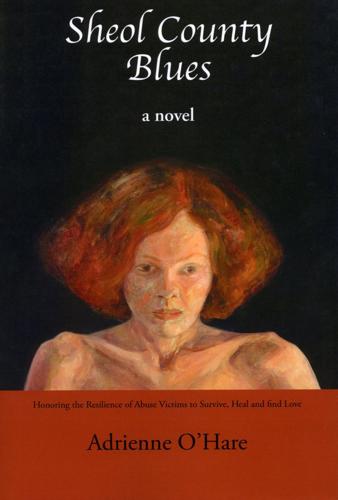
“Sheol County Blues” by Adrienne O’Hare.
Asna Publishing. $18.
The subtitle of this novel by Tucson Counselor for Child Protective Services Adrienne O’Hare (“Honoring the Resilience of Abuse Victims to Survive, Heal, and Find Love”) could send casual readers fleeing. But there’s no psychobabble in the book (well, aside from the patients in the psych ward where the central character works); it’s just a nicely told story of young adults trying to outlive traumatic childhoods. It opens with 20-something Skye arriving late for her shift in the psych ward at Sheol County Hospital.
Although she’s a good tech, she’s troubled and unreliable and about to be fired. First, however, she has to do an intake interview with a “frequent flyer” to the ward—20-something anorexic “cutter,” Geena. Turns out they know each other, having been placed as children in the same foster home due to sexual abuse.
When Skye is fired, she’s also evicted, and Geena offers her a bed in her single wide and a waitressing job. The problem is they’re each dealing with effects of the abuse: Geena, by inviting to her bed anything in pants; Skye, by resisting any human touch, and brandishing a knife against recurring nightmares. The book’s about their struggle to find resolution.
O’Hare creates sympathetic principal characters in this novel and an engaging plot. Her biggest strength, however, lies in drawing from her experience as a therapist in psychiatric units to create credible behaviors and a convincing setting.
— Christine Wald-Hopkins
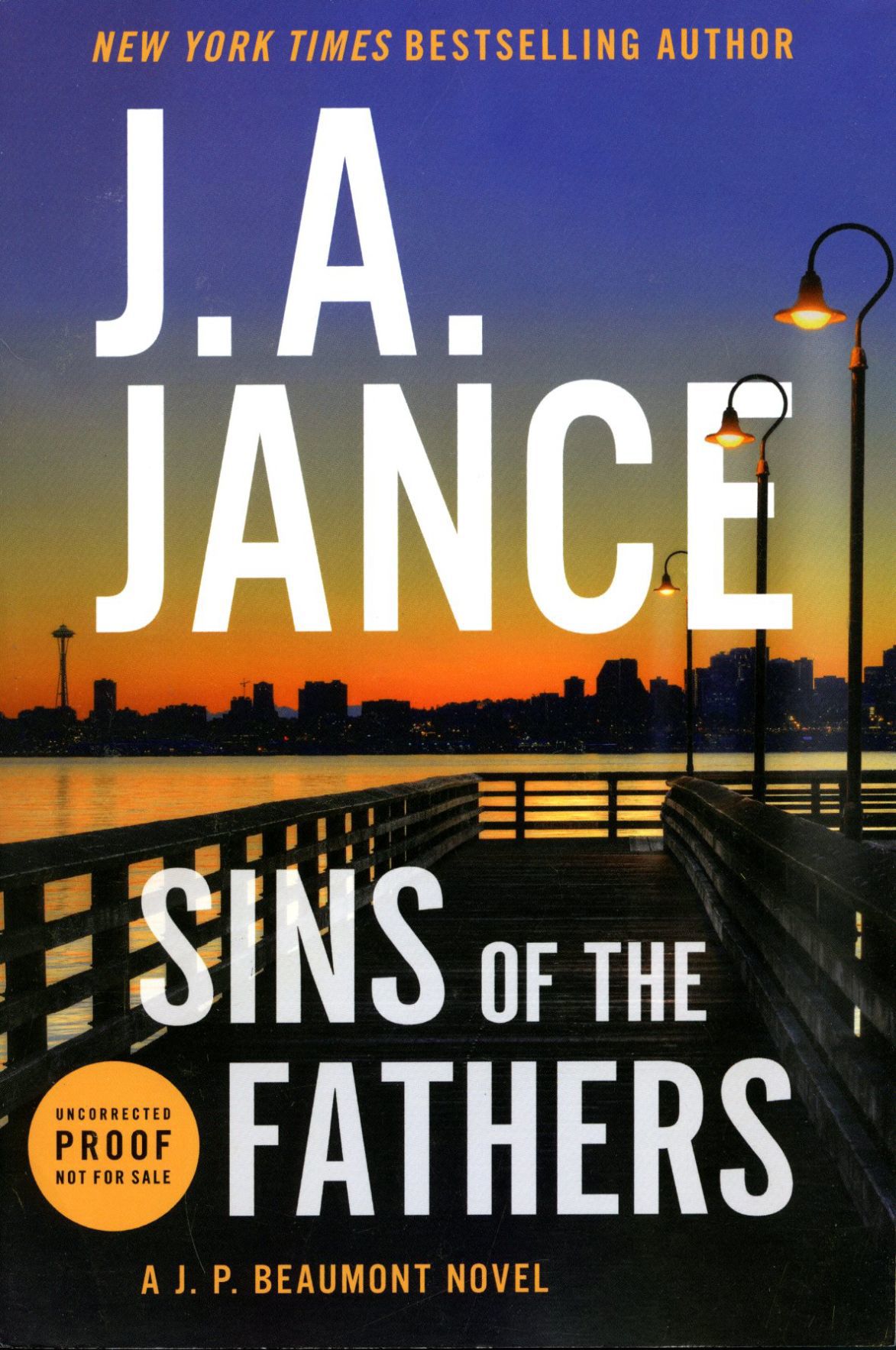
“Sins of the Fathers” by J.A. Jance.
William Morrow. $26.99 hardcover; also available on e-book.
It’s a little hard to be a retired detective when you’ve ferreted out juicy clues, and then have to stand back and let the still-working kids solve a case ... Just ask J.P. Beaumont. In this latest J.A. Jance mystery, Beau, retired from Seattle PD Homicide but now a private investigator, fills his considerable downtime doing crosswords and walking the Irish wolfhound. Life seems fairly satisfying until an old acquaintance shows up at his door, toting a brand-new baby. The baby’s mother—the acquaintance’s daughter—has disappeared, and he’s come to Beau to help find her. Freed from legal constraints on police investigations (warrants to enter houses, for example), P.I. Beaumont soon uncovers good leads. They also open up unpleasantness in his past, however, and then police get credit for breaking the case.
— Christine Wald-Hopkins
“All in a Drop: How Antony van Leeuwenhoek Discovered an Invisible World” by Lori Alexander, illustrations by Vivien Mildenberger.
HMH Books for Young Readers. $17.99, Kindle $9.99.
STEM-powered young readers will enjoy this biography of Antony van Leeunwenhock, Dutch draper-turned-scientist who first identified microbes using microscopes he made himself. He didn’t invent the microscope — that was English scientist Robert Hooke — but van Leeunwenhock’s were better and stronger, and made it possible to see a previously unknown world of tiny animals, a discovery that revolutionized science and medicine. The author describes van Leeunwenhock’s life in 17th century Netherlands then moves on to a lively, kid-pleasing account of his research with brief, explanatory sidebars about science and technology.
Even the STEM-incurious will be beguiled by her retelling of his investigations, which included incubating lice in his socks and scraping the icky stuff off people’s teeth, all in the interest of learning (an added bonus, kids may approach dental hygiene with new vigor when they hear what he discovered on unbrushed teeth). Lori Alexander’s captivating look at the father of microbiology will inspire budding researchers ages 7-10; playful and imaginative illustrations by Vivien Mildenberger round out this delightful book. Alexander, who lives in Tucson, is the author of several board books and picture books.
— Helene Woodhams
“Clifford’s Ghost: An Art Mystery” by Cynthia Lang.
Mill City Press. $18.99, Kindle $9.99.
Odd couple or dynamic duo? Emmeline and Xavier appear to be a mismatched team (she’s a wealthy, elderly, upper East Side widow with a “PBS accent,” and he’s a savvy, gay, 20-something resident of Spanish Harlem)—but the combination of their unique skill sets results in some powerful sleuthing. They encounter murders in Manhattan and hedge fund hanky-panky, but the real name of their game is art fraud—possibly involving Emmeline’s late husband— and it has them following a trail of deceit leading from New York to London to Barcelona. It’s the evolution of their relationship, though, that makes this book such a delight. After an inauspicious first meeting (he comes to her aid after she’s been mugged) they move from suspicion to trust, timidly revealing their closely held-secrets a little at a time, and arriving at a place where the differences between them are no obstacle to understanding and caring about each other. Cynthia Lang, who lives in Tucson, is also the author of “Sara Carlisle’s River and Other Stories” and the novel “Preservation”; her work has been featured in several national periodicals.
— Helene Woodhams
“Estate Planning in Arizona: What You Need to Know.” Second edition By Donald A. Loose.
Wheatmark. $15.95.
Attorney Donald Loose’s valuable legal resource on Arizona estate planning law was first published in 2008. This revised edition reflects subsequent changes in state statutes but offers the same jargon-free, user-friendly basics for preserving wealth, protecting families and creating a succession plan.
The small 159-page book covers four areas of estate planning: wills and trusts, probate, powers of attorney, and property and gifts. Each section identifies issues, delivers facts and dismisses common misconceptions in an easy-to-understand way, and offers tips on avoiding probate and minimizing tax burden. Appendices provide sample forms.
Do not, however, mistake this book for a do-it-yourself will kit; the author notes that estate planning is best undertaken with an attorney’s help. But for non-legal minds thinking about estate planning, this is an informative starting place. Loose, who is the founder and managing partner of Loose Law Group, P.C. and the author of Arizona Laws 101, lives in Tucson.
— Helene Woodhams
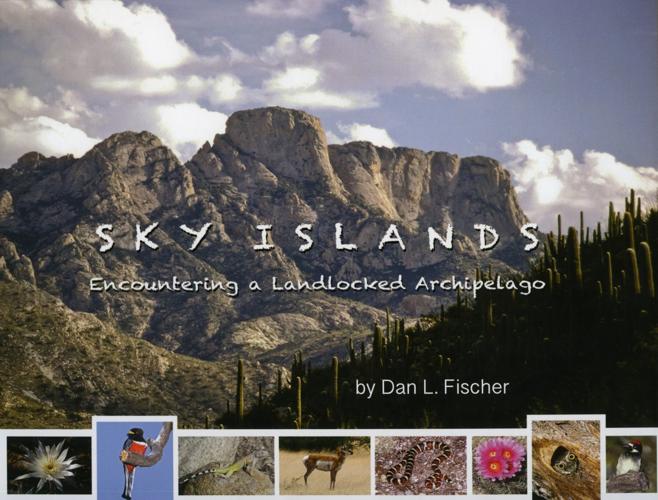
“Sky Islands: Encountering a Landlocked Archipelago” By Dan L. Fischer.
Sky Islands Press. $62.
Natural history meets the human experience in southeastern Arizona’s biodiverse Sky Islands in this lavish and brilliantly researched volume about one of the world’s unique landscapes. To Spanish explorers in the 16th century, the rugged mountains emerging from a sea of forbidding desert replete with poisonous creatures and treacherous vegetation represented the ultimate terra incognita. Later arrivals found survival a daily struggle, but the desire to explore and understand the region was, for many, irresistible. The contributions of individuals whose investigations helped make this unknown land knowable, with accompanying maps and illustrations, comprise a third of this volume. They provide context for the author’s often eye-popping photographs of landscape, flora and fauna, and for the discussion of natural history that follows.
A chapter on geology, topography and climate provides the setting, and a thorough bibliography and index complete this notable book.
It’s a banquet for lovers of wildlife — particularly for birders — and aficionados of Arizona history, and would be a fine addition to any Southwest bookshelf.
Photographer, historian and naturalist Dan L. Fischer has traveled the Southwest photographing birds for more than 50 years. He is also the author of “Early Southwest Naturalists, 1528-1900,” and his photography has appeared in Arizona Highways and several other periodicals
— Helene Woodhams

