

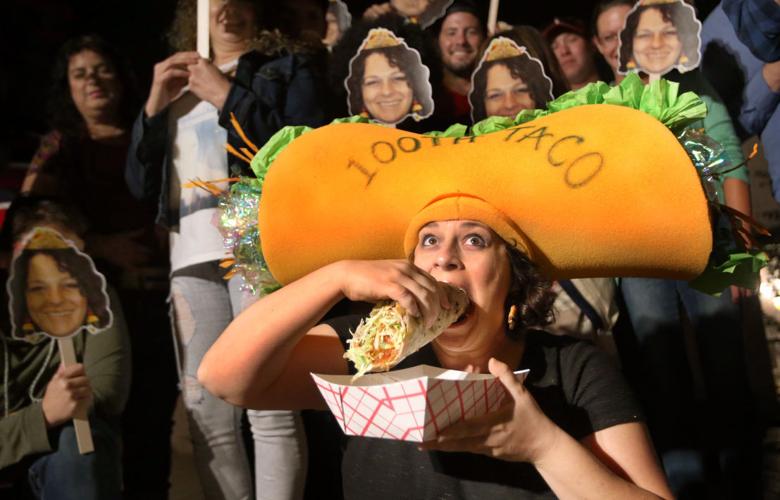
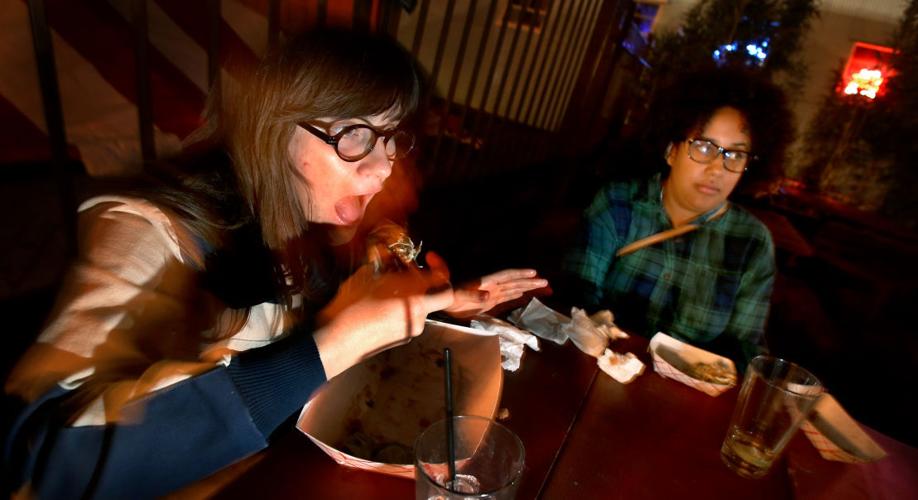
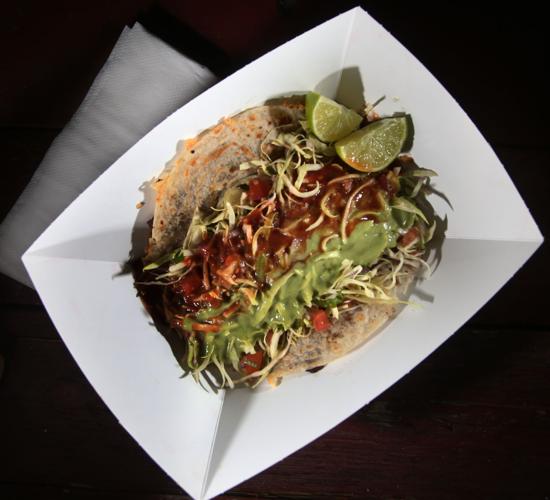
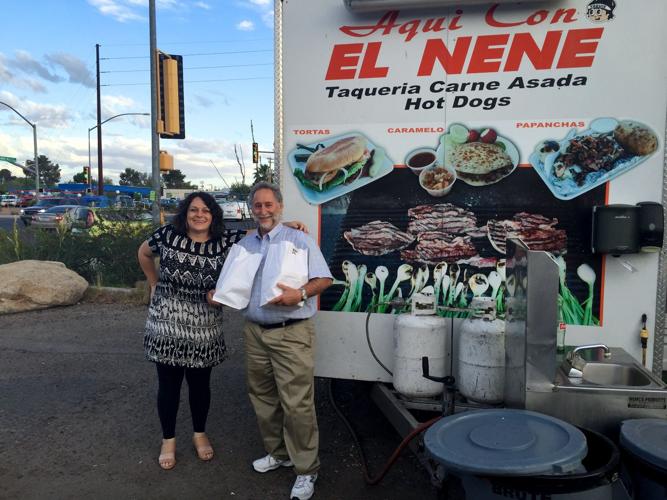

Hi, I’m Andi! And I spent the entire summer (plus you know, a few more weeks) eating 100 tacos around Tucson.
Up north in the finest restaurants, I dined on short ribs and maple-glazed buffalo meat. On a south-side street corner this June, I bit into sizzling golden tacos de Jalisco served on a bed of shiny foil. On the east side, I nibbled on ahi tuna at the gates of Saguaro National Park. Out west at the dusty Tohono O’odham Swapmeet, I tasted fried pig cheek that melted away like cotton candy.
I drove miles, tirelessly looking for roadside food carts that might yield an exciting discovery. I scoured personal Facebook pages. I walked into carnicerías, bugging the butchers for tips on their favorite places. I also hit Interstate 19 toward Nogales, and drove west to eat Indian fry bread tacos in Sells.
I have eaten tacos at historic restaurants and I have eaten tacos at gas stations.

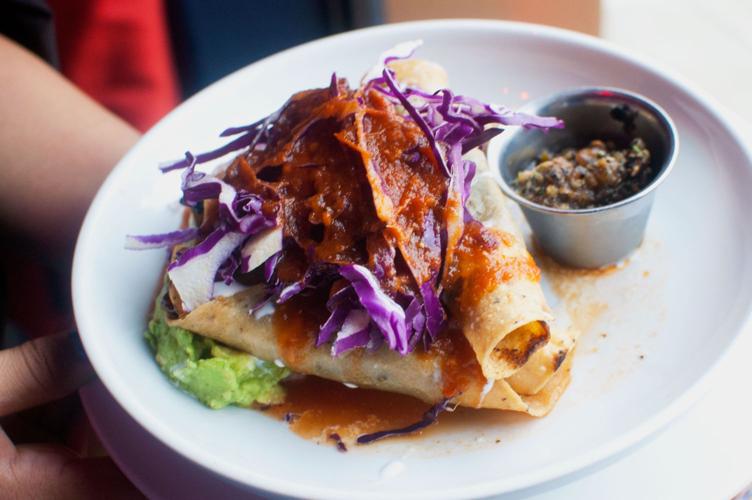
You can still get Elvira’s rolled chicken and cuitlacoche tacos at their Tubac restauran.
Why? Here's where I'm coming from ...
When I started as digital food writer for the Arizona Daily Star in February, my editor and I sat down and talked about big projects —ideas that would make a splash.
I had always been interested in food studies, and tacos seemed to exemplify our city’s multiculturalism and its Mexican roots. Eating 100 seemed a reasonably impressive goal.
To be honest, as a Jewish girl who grew up in suburban Chandler, I have always been more of a burrito person. We didn’t eat much Mexican food at home unless we brought it back from Filiberto’s. When I went out to Garcia’s or Macayo’s I usually got a chimichanga.
It wasn’t until I arrived as a freshman at the University of Arizona that I started visiting taco trucks and little places on Tucson’s south side, like BK and Taqueria Pico de Gallo. The atmosphere, the prices and the bright flavors were enthralling — but I didn’t truly appreciate them until I left them behind and moved to Northern California for two years.
The taco inspires me — It’s a blank canvas for an artist to stylize and build with boundless creativity. There are naturalist tacos that paint a landscape of a region and the animals that live there. There’s experimental fusion at the food trucks, which draw from cultures around the world. There’s the high concept and the gourmet, and the cheap fried and crunchy. (The people's tacos/pop art?)
Tacos are also an industry here. For many chefs and business owners, they are a living and a lifeline, a way to support their families and find the American dream.
Above all, tacos are a symbol of who we are as Tucsonans. We live in a multiracial city immersed in the Southwest, with a thriving food culture and some of the most eclectic restaurants in the country. We are creative people and proud of what we do, because —guess what? — it’s absurdly delicious.

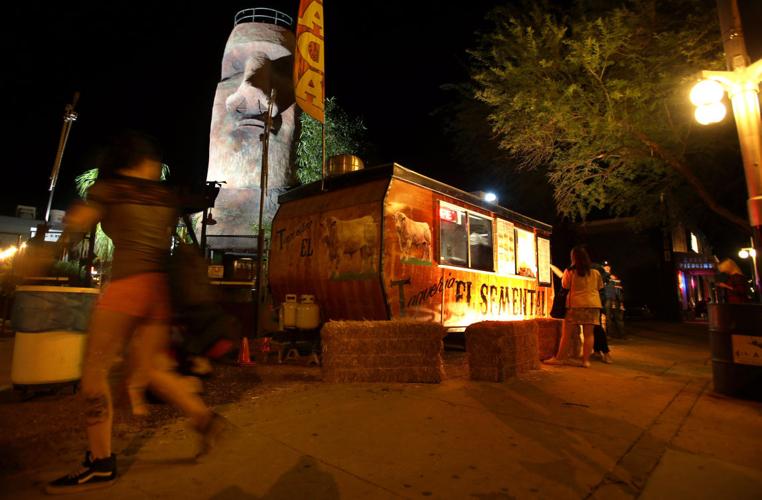
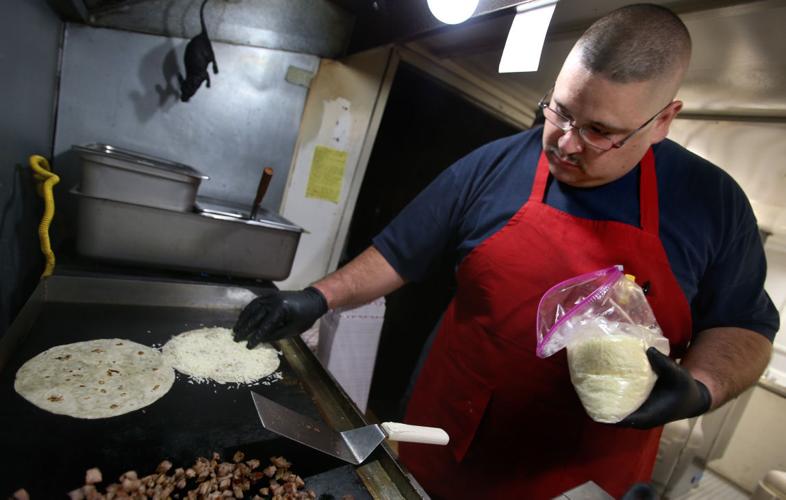
Taqueria El Semental owner David Prieto makes up a beef caramelo taco during my 100th Taco party at The Hut on Fourth Avenue.
What tacos taught me about our food scene
Many people have asked me, “Are you sick of tacos?”
To that I say, “NO! Aren’t you sick of sandwiches by now? Because you seem to eat one every day.”
Really, this project has been one of the coolest and most rewarding things I have ever done.
This is what I learned: First off, when we talk about Mexican food around here, we usually call it “Sonoran” food. This label is a little flawed, in my opinion: Sonoran food is more than chimichangas, cheesy enchiladas and carne seca. These dishes speak just as much to the American Southwest as they do to the state of Sonora.

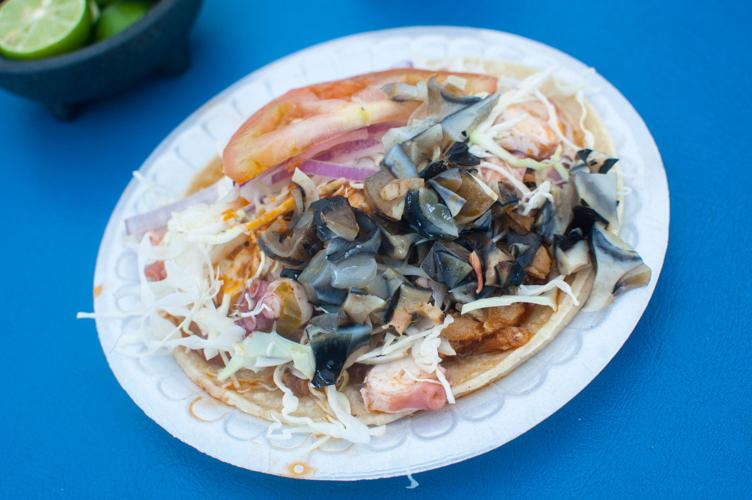
Add this oddity to your food bucket list: a Taco Super with manta ray, octopus and glutinous black tuna fin, $3.75.
Sonoran food is a lot of things, but here are the biggies: 1) mesquite-grilled carne asada chopped up on tacos or served as big slabs of steak, 2) obscure cow parts like brains, cheeks and testicles, delicacies of cattle ranches, 3) smoked marlin, saucy shrimp cocktails and mariscos tostadas from the coastal cities around Guaymas, 4) the spicy manta ray and shrimp soup called “cahuamanta,” 5) stuffed yellow guero peppers and those rapturous roasted green onions!
How I learned to stop worrying and love the flour
Sonoran food is also known for its “tortilla de harina,” the wheat flour tortilla with a complex and troubled history. According to research by University of Arizona anthropologist Maribel Alvarez, who is also program director of Tucson Meet Yourself, wheat was introduced to native desert dwellers by Spanish missionaries in the 1600s, and took off because it was drought resistant and could be grown in the wintertime.

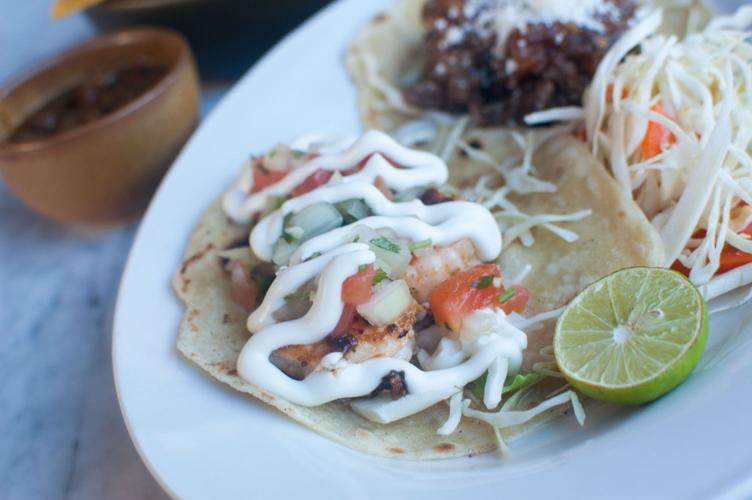
A fresh-made flour tortilla bundles up these shrimp tacos in a blanket of "yum", $5.50.
In the 1940s, Sonora was a focal point in The Green Revolution, where scientists developed genetically modified crops with the intent of alleviating world hunger. (Unfortunately, much of this led to the disappearance of heirloom varieties like the prized White Sonora Wheat.)
In today’s local food movement with its emphasis on regional cuisine, many gourmet restaurants have abandoned the flour tortilla in favor of the pre-Hispanic corn. At the beginning of this project I followed suit, but now I feel confident enough to say “no mas.”
Wheat flour tortillas are intrinsically tied to our region’s identity and our past — the pretty parts and the ugly parts — and they are in no way inauthentic. They are what myself and countless numbers of us grew up eating, and they are of course the best, most delicious choice for carne asada.
The good, the bad and the offal
The list I’ve compiled over these past months is far from perfect.
Because I was writing up “one” taco at each place, I inadvertently missed out on several popular taco styles. These include: calabacitas (there is a great take on the squash classic at Boca, but I went with python instead), real spit-roasted al pastor (Polo’s at the Tohono O’odham Swapmeet, plus Street Taco & Beer Co.), and tacos “al carbon.” (oops!)
I missed several spots, including Mi Nidito (fearing a long wait to get in), a truck called Adictacos Sonorastyle on Prince Road that apparently invented the “Vaca” taco with jalapeños and cream cheese, and El Güero Canelo, which I had planned to save for last.
By the numbers
This is how much I claimed on my expense reports: $756.08. (This figure includes mileage, tips, and all the extra tacos I “had to” eat, because many restaurants only offered full plates.)
Times I got sick/food poisoning: 0
Times I ate pig stomach: 2 (I also ate obscure cow parts like brains, cheeks and testicles, python, a manta ray and two vegan tacos).
Times I cried in my car: 1 (Out of joy, after the quesadilla taco at Cocteleria La Palma.)
Dress sizes I've gone up: 1 (Not because tacos are unhealthy, but because nobody should eat out this much. Also, the taco’s best friend: the michelada.)

During my first taco at Aqui Con El Nene, I ran into James Beard-winning chef Janos Wilder picking up takeout.
My biggest regret?
Ordering guacamole tacos at Guadalajara Mexican Grill on East Broadway. Meh. Just spend the money and get the steaming molcajete bowl.
What I'll never forget
Concluding my four-year search for “sesos” (cow brains) at Tacos de Cabeza truck on Grant Road and Stone Avenue. Getting to know the south side and the people who work and live there. They are some of the friendliest, hardest-working people I have ever met.
Driving east toward the monsoon lightning, looking for a new place to eat and to learn. Pushing my boundaries and expanding my horizons.

