


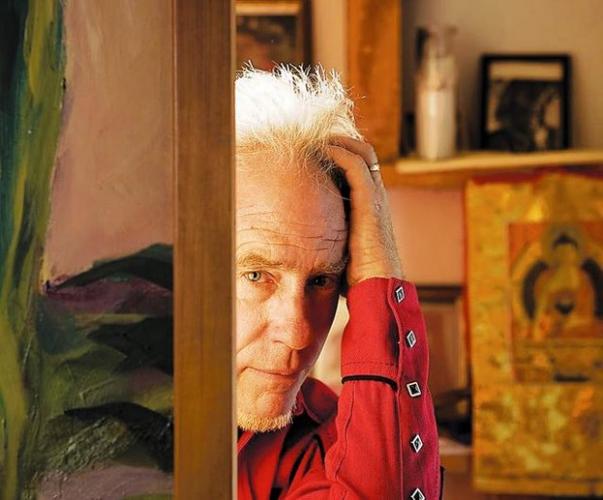
John Coinman was a bundle of nerves in anticipation of his first major tour through Europe in 2004.
Coinman's career as a guitarist had spanned more than three decades. That included 10 years in Los Angeles where he held a publishing deal with United Artists and served as the music supervisor for the Kevin Costner film "Dances with Wolves."
His résumé was strong, but he had done very little touring. He had never been to Europe before. There was no guarantee he would fill any seats, even with his label, CoraZong Records, based out of the Netherlands.
"I wanted to do well over there," Coinman said in a phone interview last week from Nashville, where the musician was recording with Costner. "I liked the idea of establishing a fan base in Europe."
Coinman — one of a large number of Tucson musicians, ranging from jazz to country to blues artists, who have made their way abroad — saw more than 400 people show up to his first concert in Amsterdam, marking the beginning of a successful tour that took him through Holland, Belgium and Germany.
He has since sold thousands of copies of his "desert noir" CoraZong releases, "This Place Ain't What It Used to Be" and "Songs from the Modern West," in Europe, far more than he has sold stateside, and he still receives royalty checks for all of his overseas airplay.
"There are people in parts of Europe that love Americana music," Coinman said. "It is a little bit more special there. Fans are a little hungrier for it."
As the dollar continues to fall, some are predicting more musicians will increase their touring outside the U.S., which is good news for some Tucson bands that have already built up a following across the pond.
Groups such as Giant Sand and the Sand Rubies helped establish that European connection for Tucson musicians in the 1980s and '90s, bringing a fresh, desert rock sound that appealed to certain areas of the world, particularly Western Europe.
Today, Calexico and the hardcore rock outfit The Bled lead the pack, with a slew of smaller bands and solo artists following suit —all making their marks on the European music scene and beyond.
Traditional country singer/songwriter DeLon Thompson, a former car salesman who records under his first name only, spent 33 weeks in 2006-07 on the Joyce Ramgatie Top 200 and Top 40 Country Music International Mainstream Chart compiled from the Netherlands. In late October, DeLon scored a No. 1 spot for his single "Git," the title song of his latest CD.
Vocalist Anna Warr has toured through Lebanon. Nick Luca has performed around Australia.
And when local blues pianist Lisa Otey isn't tickling the ivories in the Old Pueblo, you can find her playing clubs and festivals with audiences topping out at 30,000 strong in Germany, Belgium, France and Spain.
Otey began touring overseas as an accompanist for Los Angeles-based blues musician Candye Kane in 2000, eventually earning invites of her own from club and festival promoters .
Otey has hit Europe at least once a year since. She knew she was developing a significant fan base when she heard people were driving three to four hours just to see her.
"In Europe everything is so close together," she explained. "An hour is usually as far as most people are willing to go."
Otey said networking has definitely helped her spread her wings. Over the years, the sultry singer has formed relationships with artists like Dutch pianist Eric-Jan Overbeek, also known as Mr. Boogie Woogie, who helped set up her tours early on.
In turn, Otey has helped Mr. Boogie Woogie with shows in Tucson and has worked with him to assist at least half a dozen Tucson musicians in getting their own tours started.
It was through their support that bassist Steve Grams first began touring the Netherlands with acoustic duo partner Danny Krieger in 2003. He has made several returns with Krieger and just came back from a trip through England, Ireland and the Netherlands with another local group, the Bad News Blues Band.
If he didn't have family ties in Tucson, Grams said, he would have moved to Europe years ago. He said performing music over there has nothing to do with the pay, which he believes is on a par with the pay in the States, and everything to do with the respect musicians receive in Europe.
"By the time we (The Bad News Blues Band) paid for this and that, the pay was probably not as good as if we had stayed home that month," Grams said. "But where would you rather be, Ireland or Pima County? I know people who go there and lose money just because they want to play to an audience that appreciates it and gets it.
"The people you meet there, professional and amateur musicians, club owners, audiences, know more about American music than most of my musician friends. You can play a small pub on a Tuesday night that holds 50 people and there will be 100 people there. You can't get 50 people to go out on a Saturday night in this town."
Drummer Erik Truelove made his first trip as a musician overseas earlier this year as a fill-in member of Rich Hopkins' Tucson band, the Luminarios.
The band played 23 shows in 24 days throughout Germany and Austria. Truelove said the experience was intense.
"All of the shows were well attended. And when you were done, you were signing 70 to 100 T-shirts, posters, and everybody wanted to come up and meet you. It was phenomenal."
Howe Gelb, solo artist and founder of Giant Sand
• Genre: "Erosion rock," says Gelb.
• Passport stamps include: United Kingdom, Spain, France, Germany, Austria, Switzerland, Portugal, Holland, Belgium, Portugal, Italy, Serbia.
• Europe calling: Gelb had received interest from labels across the pond in the '80s for his work. He eventually ended up licensing his music to labels over there, which means he still has rights to the songs.
He says he now sells an average of 25,000 to 30,000 albums worldwide.
• Appeal of Tucson bands: "The one thing I always talked around or down was the sound of the desert," Gelb said. "(Those overseas) always thought that whatever we were must be the sound of the desert. What they call 'desert rock' or' Americana,' because that's where we came from. And for them, that seemed to evoke their imagination and seemed exotic."
• But don't call it desert rock: Gelb said his music is not exactly desert rock, mostly because of the way he tinkers with his songs each night. "I did call it 'erosion rock,' because if there's one thing I like about living out here, it's how the wind and the rain changes the land so much. So I thought that would be the analogy; our music changes every night, in a sense it erodes."
• Europe different than Tucson crowd? "It's more like you're playing in your living room. You tend to get to the gig late, last minute. If there's something going on with the family, the family always seems like the most important thing."
— Kevin W. Smith
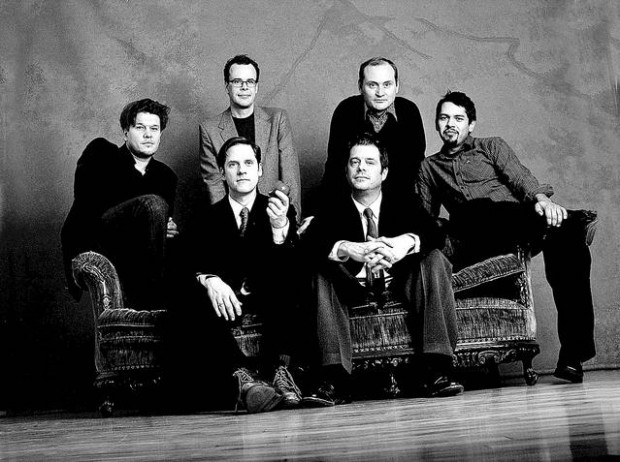
Calexico created tour albums to go with other merchandise for its travels
• Genre: Diverse, whimsical rock.
• Passport stamps include: Germany, UK, Chile, Argentina, South America, Belgium.
• Europe calling: Calexico began touring abroad after it released its 1998 album, "The Black Light." The band had a German record label, City Slang Records, release the album to a favorable response.
Calexico remains on City Slang abroad, which also houses bands like Arcade Fire and Broken Social Scene. In the U.S., Calexico is on another indie label, Touch and Go, though Joey Burns said most of the band's albums are sold overseas.
The act has met several musicians in its travels overseas, including some, like multi-instrumentalist Martin Wenk, who have become permanent members of Calexico.
• On Your Own: Burns said City Slang doesn't help too much with tour support abroad, so the band is usually trying to come up with interesting merchandise to sell at shows to at least break even. They've been creating tour releases for such cases, like 2007's instrumental "Tool Box."
The tour releases are now available in MP3 format from the band's site, casadecalexico.com.
• Appeal of Tucson bands? When in Europe, Calexico mostly plays clubs, theaters and festivals. "When you're a band or artist coming from another country really far away like the United States, they're kind of excited to see what you're about," he said.
• Next local show: A Dec. 28 benefit for local radio station KXCI (91.3 -FM) at the Temple of Music and Art, 330 S. Scott Ave. The show is sold out.
— Kevin W. Smith
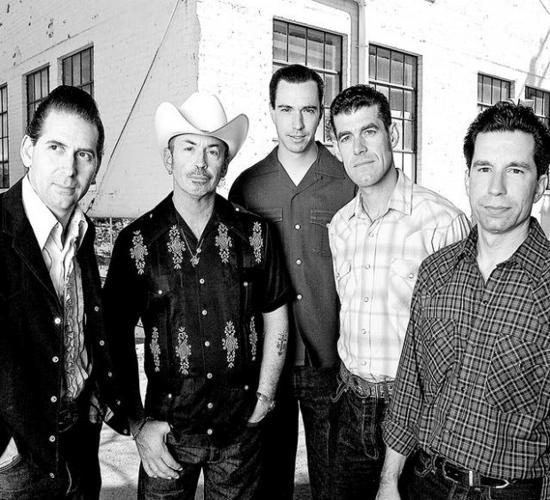
The Hacienda Brothers have been traveling annually to Europe since 2005
• Genre: Western soul, Americana and roots.
• Latest album: "Music for Ranch & Town," a limited-edition live album recorded during one of the band's early tours of Europe.
• Europe calling: Chris Gaffney and Dave Gonzalez and their band did their first European tour in 2005 and have gone every year since. Stops included England, Norway, Sweden and Ireland.
• Passport stamps: Australia, Norway, Sweden, Ireland, England and Spain. "In Spain, they love our sound, the country mixed with the soul," Gonzalez said.
• Favorite stop: "Ireland for us seems to be the best. Ireland is where folk music came from — fiddle and country music. If you play Ireland and you have a steel guitar or a fiddle or an accordion — if it's a gritty real Americana sound, they take to it. As soon as they hear twangy or gritty, they just get into it. It's just an amazing place for music."
• How those audiences respond: "They get very excited because we have the unique, well-seasoned sound in Chris Gaffney. There's not many people who can sing like him. . . . It's like James Brown meets Waylon Jennings. . . . It's an American-hybrid sound, and over in Europe they recognize that we are really unique."
• Next local show: 8 p.m. today at The Hut, 305 N. Fourth Ave. $10; 623-3200.
– Cathalena E. Burch
Naïm Amor moved from Paris to Tucson a decade ago
• Genre: French pop.
• Passport stamps include: France.
• Europe calling: Native Parisian Amor moved to Tucson a decade ago and began playing around town in acts like Amor Belhoom Duo and solo. He recently went back to Paris in October to celebrate his new solo album, "Sanguine."
Amor originally released the album on a French label, Atmosphériques, and is now looking for a North American label.
• Going back home: Amor said when he went back home to release "Sanguine" and play some shows, he took some help from Tucson, including Golden Boots' Dimitri Manos.
Amor played music theaters when in Paris, some of which were packed.
• Thanks, Internet: Despite the album not officially being out in the States, Amor recently had a CD-release party for "Sanguine" at Club Congress. He said a lot of people turned out that he had never seen before, which he credits to the Web. "With MySpace, you have more people than you think that know about you," he said.
• French rockabilly: Amor also has played shows in France with local rockabilly hero Al Foul, who recently completed a tour over there.
"Over there, he's like a weird guy," Amor said. "It's like the zoo, you know, 'Come over and see the gorilla.' People are amazed."
• Next local show: Amor will be playing the "Christmas In Tucson" CD-release show at Club Congress Friday with other locals, including Al Perry and Little Black Cloud. Doors open at 9 p.m. Tickets are $5 in advance and $10 with a copy of the CD. Proceeds go to the Primavera Foundation.
— Kevin W. Smith
The Sand Rubies wrap up their European tour Sunday in Frankfurt
• Genre: Desert rock.
• Passport stamps include: Germany, Switzerland, Italy.
• Europe calling: The Rubies generated interest overseas, but didn't make it over there until 1999.
• Easier to break Europe? "In some ways. Absolutely. People who've had not much of a career here have at least been able to get over there and play," said singer David Slutes.
• Thanks, Germany!: "Mas Cuacha," the new album from the Sand Rubies, was funded by the band's German record label, Blue Rose Records. The group is now on tour in Europe, supporting the release.
Recently, on the Blue Rose Web site (bluerose-records.de), excerpts of "Mas Cuacha" could be heard on a mini-player on the home page. Other artists on the record label include Buffalo Tom and The Drive-By Truckers.
The Sand Rubies wrap up their European tour Sunday in Frankfurt, Germany.
In the label's online store, you can buy a box set from the Sidewinders, which was the previous incarnation of the Sand Rubies.
The description on the site reads, "The very best and worst of the greatest band in the world who played desert rock and you probably haven't heard of them."
• German fans: "In Germany, it's really strange," said Slutes. "Ninety percent of the German populace listens to that German techno stuff and 5 percent listens to Neil Young-based rock and roll. And that 5 percent is so fervent and so passionate about it."
• Eating it up: "We can play for hours and they can never get sick of it," Slutes said.
— Kevin W. Smith
One good reason to play Europe: They treat you better.
Howe Gelb of Giant Sand
One of the first things Howe Gelb noticed when he began touring Europe in the '80s was the hospitality.
In Europe, band members got their own bed or room, hot meals, food in the dressing room, and the sound systems were state-of-the-art, helmed by people who took their job seriously.
Gelb said touring America was basically the opposite, but Europe did have a downside, though.
"If you have music with a lot of lyrics in it, the Europeans are never really quite going to get the wordplay," Gelb said. "You always wondered what they were getting out of it. You never really knew."
Sand Rubies
"There's just a different mind-set to how they treat rock bands, basically," singer David Slutes said. "They treat you more as an artist rather than club scum."
Calexico
"They have a higher standard," Calexico founder and singer Joey Burns said. "They take pride in wanting to show you the best that they have to offer."
— Kevin W. Smith

