



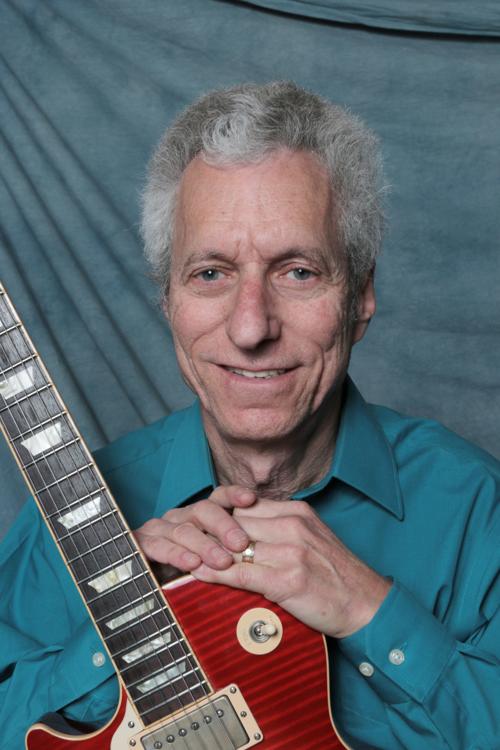
Pete Fine has been doing a lot of hiking lately in the areas not far form his northwest Tucson home.
And on those walks meandering through lush desert flora and fauna, the sun shining warm and inviting, the Tucson musician has found some special inspiration to take his mind off being sheltered at home.
“I just started getting these ideas for music that reminded me of getting out in nature,” said Fine, the guitarist who splits his musical output between his progressive jazz band Beyond Words, his role playing guitar for the western/Americana band Blue Prairie Dogs and composing classical music.
Fine, who has composed six full symphonies and a few other classical works, sketched out a 10-minute piece in his head. But “The Journey” turned out to be a bit bigger than that.
When Fine sat down in his makeshift home studio, where a handful of guitars and a sitar share space with a small keyboard and a duel screen computer, the musical ideas flowed. His 10-minute piece became a six-movement, 35-minute symphony.
“I’m really happy with the way it came,” Fine said last week, days after posting a video of the work on YouTube (tucne.ws/petefine). “It conveys a lot of what I was feeling initially.”
“The Journey” plays like a travelogue of Fine’s hikes, opening with cinematic “Departure: Hills and Valleys,” winding through the glorious “Sunrise: The Animals; Sunset,” before triumphantly climbing “The Mountains.”
You can almost picture a bubbling creek over a slippery rock bed in the fourth movement “The Creek,” with its delightful interplay between the woodwinds and brass that segues to a more brassy, percussion- and strings-driven “Rainstorms, Evening,” before “The Journey” ends where it began: “Destination and Return Home.”
Fine composed “The Journey” using notation software, then recorded it digitally using sample software technology that pulls from a library of recorded notes from musicians. While the end result certainly sounds like he envisioned, Fine said he would love to hear it performed live.
“I can actually hear the piece as if I had real musicians playing it,” Fine said, but with a full orchestra led by a conductor with their own ideas about tempo and expression, Fine can hear the work coming to even fuller life.
“The software could not totally replace that. I would love to hear it and I would love to get orchestras to perform my works,” he said.
Fine has been composing classical music for nearly two decades and has had several of his pieces, including a guitar concerto, performed by the Southern Arizona Symphony Orchestra and the now defunct Catalina Chamber Orchestra.

