

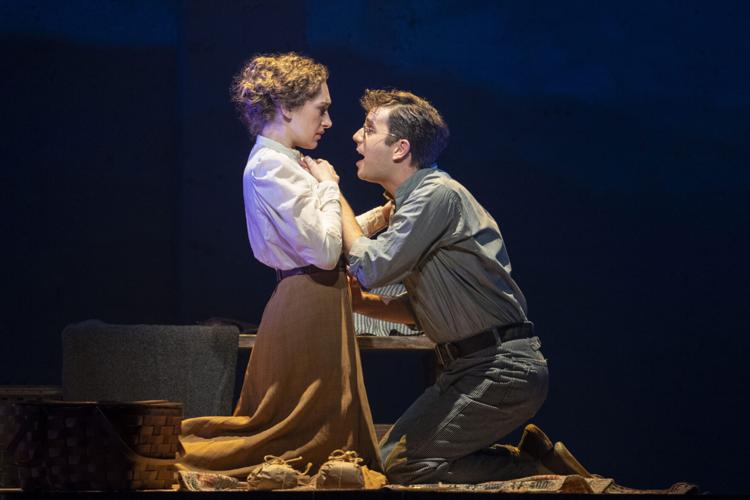
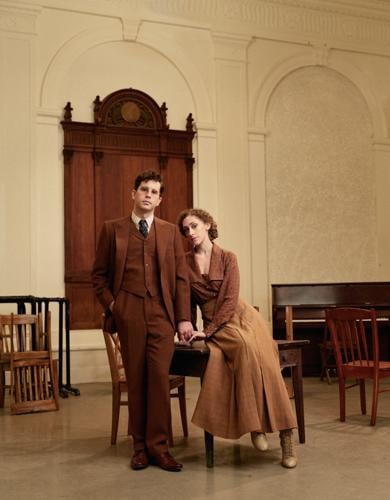
The story of Leo Frank, a pencil factory manager who was charged with murdering a 13-year-old employee, has taken many forms over the years but the latest, a musical called “Parade,” hits emotions other writers may not have considered.
In a big Broadway revival – inventively directed by Michael Arden – it’s also a love story between Frank (Ben Platt) and his wife Lucille (Micaela Diamond). Together, they confront the fallout of the Civil War.
Still upset about the way things turned out, those former Confederates are more than willing to believe a Jew could have killed the young girl, even though there's no evidence. Arrested on trumped-up charges, Frank is convinced he’ll be found innocent of the crime if he only gets the chance to tell his story.
In the process, you see how Lucille travels her own road to justice and seeks the help of others to come to the same conclusion.
What amazes is how Arden has staged this – on a platform that becomes everything from a courtroom to a jail cell to a parade route. He uses his actors well, seating them along the skirts of the platform and including them as a chorus to the main action. The voices, in fact, are so well-tuned you’ll marvel at even the peripheral characters’ participation.
Platt and Diamond, however, tower. He gets those “Dear Evan Hansen” vibes going and doesn’t let go. She finds the emotion in exposition. When they’re together, “Parade” is chilling – and a reminder of the struggles people still face.
Jason Robert Brown’s songs are memorable but, more important, they’re essential to enhancing Alfred Uhry’s book. Uhry hits key moments in the early 20th century case, but Arden makes them resonate for today. Indeed, there’s an update that tells where the murder of Mary Phagan currently stands.
A young soldier blessed with a beautiful voice sets the stage for the story. With “The Old Red Hills of Home,” Charlie Webb helps us understand what’s about to transpire. When he sets the bar, it’s up to the others to hit it – and they do.
“Parade” is moving, upsetting and telling. It speaks to divides we still see and makes you wonder where justice actually exists.

