

Five cool things to do in Tucson this weekend (August 5-August 6)
- Updated
Five fantastic ways to fill your weekend.
- Updated
Mark Twain was a funny man; just ask Mark Twain.
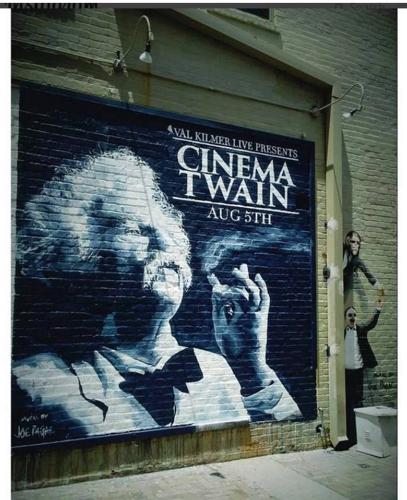
Or Val Kilmer, who channels the long-dead American writer, humorist and icon in Kilmer’s one-man play “Citizen Twain.”
Kilmer brings his 90-minute self-penned play to Rialto Theatre on Saturday, Aug. 5, for “Val Kilmer Live Presents Cinema Twain,” to screen a film version of the play. The actor (“Tombstone,” “Top Gun,” “The Doors,” “Batman Forever”) is expected on Saturday to introduce the 90-minute film and take questions from the audience afterwards. VIP ticketholders can meet Kilmer at the end of the night for selfies and one-on-one time.
Here’s the 4-1-1 on the show:
- When, where and how much: 8 p.m. Saturday at the Rialto, 318 E. Congress St. Tickets are $36 general admission, $71 VIP at ticketfly.com
- What: Kilmer reinvents himself as the famous humorist, from the bushy mustache to the shock of fuzzy white hair. Dressed in a white three-piece suit, he channels Samuel Clemens and his alter ego Twain — the film was shot before a full house in Pasadena, California, in 2013 — for 90 minutes, recounting Clemens’s life with humor and poignancy while inserting modern-day political and pop culture references.
- Yes, I’ll be your Huckleberry: Kilmer utters that famous line from “Tombstone” — “I know the story you want to hear. ‘I’ll be your huckleberry’ “ — before sucking on a vapor pipe that he later explained was his attempt to create the “thick pea soup” fog. “But Val Kilmer can’t afford a fog machine in Pasadena apparently,” he told the audience, which busted out laughing.
- And speaking of huckleberry: Kilmer is taking part in the inaugural Doc Holli-Days in Tombstone Aug. 12 and 13. He is expected to be the special guest at the VIP Doc Holliday Birthday Party Aug. 12. Very few if any tickets ($150 apiece) remain; check out valkilmer.gallery/product/doc-holliday-birthday-party-vip-tickets
- Cathalena E. Burch
- Updated
We don't have to remind you that Saturday is National Mead Day, do we?
We do?
Oh, OK. Well, it is.
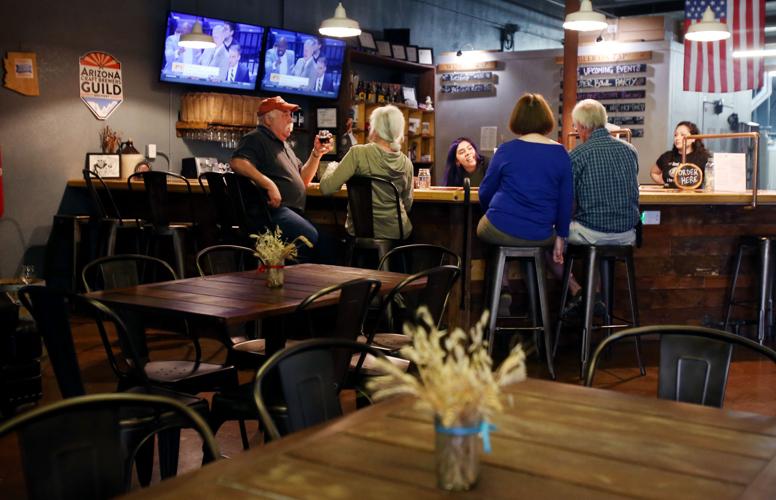
In honor of such an occasion, 1912 Brewing Company, at 2045 N. Forbes Boulevard, is hosting a mead and bacon pairing starting at 4 p.m.
Three different bacons will be paired with 3 types of Mead from Superstition Meads.
More information can be found on the Facebook event page.
- Updated
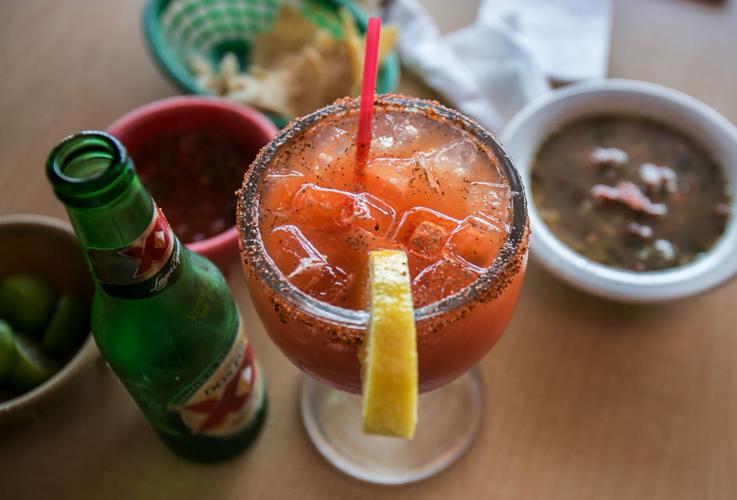
Micheladas, those alcoholic beverages made with, among other ingredients, clamato juice and beer, take centerstage with the Fourth annual Michelada Challenge at the Tucson Convention Center, 260 S. Church Ave., this Saturday.
Bartenders from across Southern Arizona will compete to see who makes the best of the best with the ingredients given.
Attendees get to sample the drinks, then vote on which of the micheladas is their favorite.
The event runs from 6 p.m. to 10 p.m. More information can be found here.
- Updated
Longtime local drummer Dan "The Deacon" Bunnell holds blues jams at Rockabilly Grill, 3700 N. Oracle Road, every Sunday from 5 p.m. to 9 p.m.
Here is what Star writer Kathleen Allen wrote about the jams this week:
Dan “The Deacon” Bunnell believes in magic.
And the magic is the music.
Bunnell, long a professional drummer, is immersed in the magic when he leads music jams. He does that twice a week: Sundays at Rockabilly and Tuesdays at Chicago Bar. Though the bars have changed over the years, he has led jams in Tucson since shortly after he moved here from Los Angeles in the early 1980s.
“I love watching him,” says musician Amber Gaia, who has been joining the jams for about two years. She was at the Chicago Bar, in the middle of the dance floor and moving to the music.
“I go to the jams a lot and don’t even bring my guitar because I love what he creates.”
Actually, Bunnell, 70, doesn’t know exactly what he will create each night. Musicians from around the city come in and sign up with the hopes of playing. Some he knows, others are new. He matches the musicians with each other and the music. Those who have come to jam play three songs; if the sign-up list is short and the musician good, there’s a chance of more time on stage.
Each jam has a “core band” — it changes according to availability. Those professional musicians, including Bunnell, step in to play when it is needed, backing up players with less experience but as much passion.
“I love how Deacon puts people together to play and have fun,” says Gaia, who did a few solo songs at a recent Tuesday night jam.
“He’s a master bandleader. I love to sit back and watch what he does and how he puts people together. ... He creates a wonderful time for everyone.”
For Bunnell, a member of Arizona Blues Hall of Fame, it’s all about keeping the magic alive.
In the beginning
Bunnell’s first decade was spent in rural Kentucky. “We were dirt farmers,” he says. It was there he discovered a knack for banging on drums. “I was good at it,” he says. “I just had a natural talent for it. I would beat up my mother’s furniture with knives and forks.” He was so good, in fact, a cousin signed him on to play drums in a bluegrass band.
When he was 10, the family moved to Louisville. He dove more deeply into music.
“I learned how to read and write music and play classical,” he recalls. “I played in the marching band in high school — I was the drum leader.”
Bunnell had no doubt what his future would hold.
“I didn’t have any what-am-I-going-to-be crisis,” he says. “I knew I was going to be a drummer.”
He was in love with the music that was created in the late ‘50s — The Drifters, Bo Diddley, Little Richard. And, especially, James Brown.
“I stole hubcaps one time to get James Brown tickets. That’s how foolish I was,” says Bunnell, who was about 15 at the time.
“James Brown was practically the second coming — his band changed my life. I had always known I would be a musician, but I was lacking inspiration. James had it.”
High school ended with a joke he can’t remember.
“I got into a little row with the English teacher. I made a joke about a dangling participle. It got me kicked out of class and that was the end of my high school career.”
He drifted around Kentucky, getting into minor trouble with the police. Then came the time, in about ‘64, that he found himself in front of a judge who figured the young man needed some direction.
“The judge ‘requested’ that I join the military,” says Bunnell.
He enlisted in the Navy and much of the time during his 1964-68 service he was on a ship off the shores of Vietnam.
But he never forgot music.
“I played around here and there with different bands, getting my chops together. I knew I wanted to start music when I got out.”
The L.A. years
He got off his last Navy ship in Long Beach, California and immediately started searching for music gigs in the Los Angeles area. Fame was not his goal; playing music was.
“I didn’t care if I were a star; I kept searching until I found musical work.”
He played at hotels, bars and clubs. Often he was called upon to be a backup musician on recordings.
“I called myself an unrepentant musical prostitute,” he says. “I’d play polka in a cow pasture if I got paid.”
He also started putting together jams in the Los Angeles area.
“The idea is the networking,” says Bunnell.
“If you are in touch with a lot of musicians and see what’s happening, it can be very beneficial. I knew a jam would do that. l did it for networking and to help fill an off-night.”
His childhood resolve to make a living as a musician had become a reality.
But Los Angeles was becoming glutted with musicians. It was a too-packed scene that no longer appealed to him. In the early ‘80s, Bunnell moved to Tucson.
The Tucson jams
Once here, Bunnell continued to play music, joining a variety of local bands.
By 1985, he had started his first jam here. In the ‘90s, he headed up the jams at the now-closed Berky’s, where he packed in musicians and fans for about 15 years.
It’s also where his reputation as a master jam host grew.
Amo Chip Dabney used to grab his sax and join those jams. These days, the Grammy-nominated musician is often too busy to jump on stage for the jams, but he makes sure to go to them as frequently as possible.
“We go to the jams to see new musicians in town,” says Dabney, who recently spent a fair amount of time on the dance floor at a Chicago Bar jam. “We have a wealth of talent here in the Old Pueblo.”
But he also goes to see Bunnell in action.
“It’s not as easy as it looks,” says Dabney about leading the jams.
“Deacon is so good at it. Everyone feels involved and invited and there’s a real connectivity there with jammers. Deacon is masterful at coordinating people who have shown up, being aware of instruments they play, and he has a pretty extensive song book they can play. It’s his specialty.”
At a recent Chicago Bar jam, Bunnell stands on stage with his core band for that night: Koko Matsumoto on bass and her husband Bryan Dean on guitar — they are two-thirds of the popular Bryan Dean Trio.
Bunnell has a train conductor’s cap on — his trademark at the jams — and a t-shirt with an image of Goofy on it.
He has turned the drums over to another musician, but keeps a cowbell nearby — if he starts beating it, you know someone has lost the beat and he is trying to get the music back on track.
Bob Richards, who has been playing jams hosted by Bunnell for about 10 years, straps his guitar around his neck and the band breaks into “Mustang Sally.” Bunnell’s bluesy voice growls while the musicians sound, well, as though they’d been playing together much longer than just this night.
“Take it Bob,” Bunnell says to Richards, a retired civil engineer with a gift for playing guitar. Bunnell makes sure musicians get their time in the spotlight.
While there are other jams to go to in town, Richards prefers the Bunnell-led ones.
“Deacon is always at the jam early, setting up the drum kit and the p.a. and making sure everything is ready to go,” says Richards.
“He takes it very seriously. He calls it a ‘pro jam.’ You do not have to be an expert but you had better be professional in behavior. And he will get in your face if you are not paying attention to the cues. Everyone is welcome, young and old alike. It is all about producing good-sounding music.”
Good-sounding music is why Cindy Mullozzi attends the jams as a fan.
“I like the variety of musicians,” she says. “The music is always good — well, almost always good. And it’s good to dance to. I hope the jams last for a long time, or at least as long as I am able to go.”
The following Sunday, Bunnell is on stage at Rockabilly. He has his conductor hat on, and this time a t-shirt that says “Thou shalt not snivel.” “It’s the eleventh commandment,” he explains with a chuckle.
On this Sunday, the core band consists of Kenny Wheels and John June, both professional musicians with extensive experience and striking chops.
“Thank you all for believing in live music,” Bunnell says as he opens the jam. He plays drums and sings on the first song — “Knockin’ On Heaven’s Door.” He dedicates it to the late musician Eric Garcia, who regularly sat in on the jams.
Soon, Terrence Kelly steps up to play harmonica and wail the blues. The veteran musician knows how to hold a stage and demand attention.
Bunnell, who has turned the sticks over to another drummer, walks around the outskirts of the dance floor, checks the sign-up list, and leans back against a pool table as he listens. This is one set where he does not need his cowbell.
“He gives everyone a chance to interact, a chance to connect,” says Wheels, who has jammed with Bunnell for about 19 years.
But there are a few rules, he adds.
“Make sure your instrument is tuned before you come up, and if you can’t sing, don’t try.”
Bunnell doesn’t discriminate; he tries to give all musicians a chance to play.
“If you’re only a beginner, you’ll have some trouble,” Bunnell says. “But I do my best to help beginners out.”
And the key to making musicians who have never before played together sound as though they had?
“Simple songs,” he says.
“If you have real good players and you do simple tunes, then it’s pretty easy to come together. There’s a lot of 12-bar blues tunes — ‘Johnny Be Good’ is a 12-bar format. It’s a certain pattern of chord progression that is standard. You can go to Afghanistan and have that same progression.”
Why he does it
For most, there’s not a lot of money in making music, or hosting jams.
But money doesn’t motivate Bunnell; music does.
“It’s the last vestige of magic left on the planet,” he says with a fervor. “Without it, I think I would have been dead many years ago, so God bless the magic of music. Watch those jams and you’ll find something magical two or three times a night, and that’s what you are seeking.”
- Updated
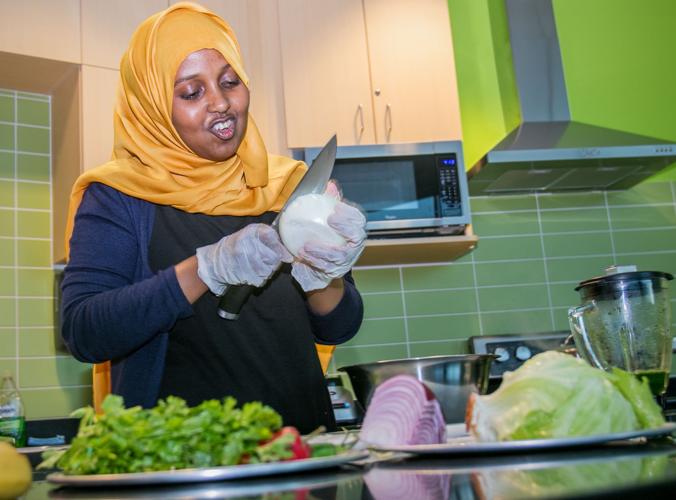
“Today, I’m going to give you the food of Somalia,” Chef Samiro Elmi says to her practice cooking class. “Are you ready to eat?”
Elmi is preparing for the 3-hour class she’ll be teaching in partnership with the International Rescue Committee and the Tucson Jewish Community Center.
Elmi is a Somali refugee who moved to Tucson last March.
“America is a peaceful country; that’s the experience I’ve gotten,” Elmi says with the help of translator Fardoso Mohamed.
Elmi is originally from Somalia, but spent eight years in Kenya before moving to Tucson to receive a better education for herself and her three children.
“Tucson is a nice place,” Elmi says. “It’s a bit hot, but I like it. I don’t miss much about Somalia, even the food, because I can make it all myself.”
Elmi, who works full-time preparing tamales for Tucson Tamale Company, learned to cook from her mother when she was very young. This will be her first time teaching a cooking class.
Her enjoyment for cooking is quite simple. “I like to cook because everyone likes food,” she says. She doesn’t plan to open her own Somali restaurant in Tucson; she says her children love her cooking, which is more than enough for her.
Elmi says the upcoming cooking class is important to her and to Tucson because she wants to teach Tucsonans about the cuisine and culture of Somalia.
“There are a lot of different foods in Somalia, but I can’t show it all in one day,” she says. “But the foods I will show are important to me.”
One of Elmi’s favorite meals is bariis, a Somali rice dish. The dish usually consists of Basmati rice, veggies, and spices such as cilantro, garlic, and cumin. Elmi serves the dish with raisins and a homemade chile pepper sauce with a freshly cut salad on the side. Bariis is often served with a banana, which isn’t meant to be eaten separately.
The beauty of bariis is how different it can be prepared, says Elmi. She often uses different vegetables and spices, and sometimes adds different meats.
Although spices are important in Somali cuisine, Elmi says that vegetables are the key. Even in a simple dish like scrambled eggs, Elmi likes to add in tomatoes and onions.
Another one of Elmi’s favorites is baasto, which is pasta served with a thick tomato sauce, vegetables, sometimes a banana, and “a lot of meat,” as Elmi says. She also likes to serve bariis with baasto.
As for an American favorite of Elmi’s, she says she loves good ol’ Kentucky Fried Chicken and wouldn’t mind learning how to make the chicken herself.
“I’m a good learner,” she says. “If you show me once, I’ll get it.
The JCC has previously worked with the IRC to present two Syrian cooking classes, both of which sold out. This is the first Somali cooking class offered.
“This collaboration pays homage to the history of the JCC’s legacy as a support site for immigrants,” says Barbara Fenig, the JCC’s director of arts and culture.
According to Fenig, Tucson is home to 900 refugees from around the world.
“Food brings people together,” Fenig says. “What better way to celebrate a community partnership than to gather around the table to share a cooking lesson, a meal, and conversation between people from all backgrounds, faiths, and ages?”
Besides the Somali class, the JCC will work with the IRC to offer four more Syrian cooking classes in the fall, in addition to Congolese and Iraqi classes in the spring. Each class will be led by a refugee.
- Gloria Knott
Details:
What: Somali Cuisine Cooking Class with Chef Samiro Elmi.
When: 12—3 p.m., Sunday, Aug. 6.
Where: Tucson Jewish Community Center, 3800 E. River Road
Cost: $65 for members, $75 for non-members.
More information: tucsonjcc.org.
Et cetera: The JCC’s upcoming Syrian cooking classes will take place Sundays, September 17 — October 8.
Mark Twain was a funny man; just ask Mark Twain.
Or Val Kilmer, who channels the long-dead American writer, humorist and icon in Kilmer’s one-man play “Citizen Twain.”
Kilmer brings his 90-minute self-penned play to Rialto Theatre on Saturday, Aug. 5, for “Val Kilmer Live Presents Cinema Twain,” to screen a film version of the play. The actor (“Tombstone,” “Top Gun,” “The Doors,” “Batman Forever”) is expected on Saturday to introduce the 90-minute film and take questions from the audience afterwards. VIP ticketholders can meet Kilmer at the end of the night for selfies and one-on-one time.
Here’s the 4-1-1 on the show:
- When, where and how much: 8 p.m. Saturday at the Rialto, 318 E. Congress St. Tickets are $36 general admission, $71 VIP at ticketfly.com
- What: Kilmer reinvents himself as the famous humorist, from the bushy mustache to the shock of fuzzy white hair. Dressed in a white three-piece suit, he channels Samuel Clemens and his alter ego Twain — the film was shot before a full house in Pasadena, California, in 2013 — for 90 minutes, recounting Clemens’s life with humor and poignancy while inserting modern-day political and pop culture references.
- Yes, I’ll be your Huckleberry: Kilmer utters that famous line from “Tombstone” — “I know the story you want to hear. ‘I’ll be your huckleberry’ “ — before sucking on a vapor pipe that he later explained was his attempt to create the “thick pea soup” fog. “But Val Kilmer can’t afford a fog machine in Pasadena apparently,” he told the audience, which busted out laughing.
- And speaking of huckleberry: Kilmer is taking part in the inaugural Doc Holli-Days in Tombstone Aug. 12 and 13. He is expected to be the special guest at the VIP Doc Holliday Birthday Party Aug. 12. Very few if any tickets ($150 apiece) remain; check out valkilmer.gallery/product/doc-holliday-birthday-party-vip-tickets
- Cathalena E. Burch
We don't have to remind you that Saturday is National Mead Day, do we?
We do?
Oh, OK. Well, it is.
In honor of such an occasion, 1912 Brewing Company, at 2045 N. Forbes Boulevard, is hosting a mead and bacon pairing starting at 4 p.m.
Three different bacons will be paired with 3 types of Mead from Superstition Meads.
More information can be found on the Facebook event page.
Micheladas, those alcoholic beverages made with, among other ingredients, clamato juice and beer, take centerstage with the Fourth annual Michelada Challenge at the Tucson Convention Center, 260 S. Church Ave., this Saturday.
Bartenders from across Southern Arizona will compete to see who makes the best of the best with the ingredients given.
Attendees get to sample the drinks, then vote on which of the micheladas is their favorite.
The event runs from 6 p.m. to 10 p.m. More information can be found here.
Longtime local drummer Dan "The Deacon" Bunnell holds blues jams at Rockabilly Grill, 3700 N. Oracle Road, every Sunday from 5 p.m. to 9 p.m.
Here is what Star writer Kathleen Allen wrote about the jams this week:
Dan “The Deacon” Bunnell believes in magic.
And the magic is the music.
Bunnell, long a professional drummer, is immersed in the magic when he leads music jams. He does that twice a week: Sundays at Rockabilly and Tuesdays at Chicago Bar. Though the bars have changed over the years, he has led jams in Tucson since shortly after he moved here from Los Angeles in the early 1980s.
“I love watching him,” says musician Amber Gaia, who has been joining the jams for about two years. She was at the Chicago Bar, in the middle of the dance floor and moving to the music.
“I go to the jams a lot and don’t even bring my guitar because I love what he creates.”
Actually, Bunnell, 70, doesn’t know exactly what he will create each night. Musicians from around the city come in and sign up with the hopes of playing. Some he knows, others are new. He matches the musicians with each other and the music. Those who have come to jam play three songs; if the sign-up list is short and the musician good, there’s a chance of more time on stage.
Each jam has a “core band” — it changes according to availability. Those professional musicians, including Bunnell, step in to play when it is needed, backing up players with less experience but as much passion.
“I love how Deacon puts people together to play and have fun,” says Gaia, who did a few solo songs at a recent Tuesday night jam.
“He’s a master bandleader. I love to sit back and watch what he does and how he puts people together. ... He creates a wonderful time for everyone.”
For Bunnell, a member of Arizona Blues Hall of Fame, it’s all about keeping the magic alive.
In the beginning
Bunnell’s first decade was spent in rural Kentucky. “We were dirt farmers,” he says. It was there he discovered a knack for banging on drums. “I was good at it,” he says. “I just had a natural talent for it. I would beat up my mother’s furniture with knives and forks.” He was so good, in fact, a cousin signed him on to play drums in a bluegrass band.
When he was 10, the family moved to Louisville. He dove more deeply into music.
“I learned how to read and write music and play classical,” he recalls. “I played in the marching band in high school — I was the drum leader.”
Bunnell had no doubt what his future would hold.
“I didn’t have any what-am-I-going-to-be crisis,” he says. “I knew I was going to be a drummer.”
He was in love with the music that was created in the late ‘50s — The Drifters, Bo Diddley, Little Richard. And, especially, James Brown.
“I stole hubcaps one time to get James Brown tickets. That’s how foolish I was,” says Bunnell, who was about 15 at the time.
“James Brown was practically the second coming — his band changed my life. I had always known I would be a musician, but I was lacking inspiration. James had it.”
High school ended with a joke he can’t remember.
“I got into a little row with the English teacher. I made a joke about a dangling participle. It got me kicked out of class and that was the end of my high school career.”
He drifted around Kentucky, getting into minor trouble with the police. Then came the time, in about ‘64, that he found himself in front of a judge who figured the young man needed some direction.
“The judge ‘requested’ that I join the military,” says Bunnell.
He enlisted in the Navy and much of the time during his 1964-68 service he was on a ship off the shores of Vietnam.
But he never forgot music.
“I played around here and there with different bands, getting my chops together. I knew I wanted to start music when I got out.”
The L.A. years
He got off his last Navy ship in Long Beach, California and immediately started searching for music gigs in the Los Angeles area. Fame was not his goal; playing music was.
“I didn’t care if I were a star; I kept searching until I found musical work.”
He played at hotels, bars and clubs. Often he was called upon to be a backup musician on recordings.
“I called myself an unrepentant musical prostitute,” he says. “I’d play polka in a cow pasture if I got paid.”
He also started putting together jams in the Los Angeles area.
“The idea is the networking,” says Bunnell.
“If you are in touch with a lot of musicians and see what’s happening, it can be very beneficial. I knew a jam would do that. l did it for networking and to help fill an off-night.”
His childhood resolve to make a living as a musician had become a reality.
But Los Angeles was becoming glutted with musicians. It was a too-packed scene that no longer appealed to him. In the early ‘80s, Bunnell moved to Tucson.
The Tucson jams
Once here, Bunnell continued to play music, joining a variety of local bands.
By 1985, he had started his first jam here. In the ‘90s, he headed up the jams at the now-closed Berky’s, where he packed in musicians and fans for about 15 years.
It’s also where his reputation as a master jam host grew.
Amo Chip Dabney used to grab his sax and join those jams. These days, the Grammy-nominated musician is often too busy to jump on stage for the jams, but he makes sure to go to them as frequently as possible.
“We go to the jams to see new musicians in town,” says Dabney, who recently spent a fair amount of time on the dance floor at a Chicago Bar jam. “We have a wealth of talent here in the Old Pueblo.”
But he also goes to see Bunnell in action.
“It’s not as easy as it looks,” says Dabney about leading the jams.
“Deacon is so good at it. Everyone feels involved and invited and there’s a real connectivity there with jammers. Deacon is masterful at coordinating people who have shown up, being aware of instruments they play, and he has a pretty extensive song book they can play. It’s his specialty.”
At a recent Chicago Bar jam, Bunnell stands on stage with his core band for that night: Koko Matsumoto on bass and her husband Bryan Dean on guitar — they are two-thirds of the popular Bryan Dean Trio.
Bunnell has a train conductor’s cap on — his trademark at the jams — and a t-shirt with an image of Goofy on it.
He has turned the drums over to another musician, but keeps a cowbell nearby — if he starts beating it, you know someone has lost the beat and he is trying to get the music back on track.
Bob Richards, who has been playing jams hosted by Bunnell for about 10 years, straps his guitar around his neck and the band breaks into “Mustang Sally.” Bunnell’s bluesy voice growls while the musicians sound, well, as though they’d been playing together much longer than just this night.
“Take it Bob,” Bunnell says to Richards, a retired civil engineer with a gift for playing guitar. Bunnell makes sure musicians get their time in the spotlight.
While there are other jams to go to in town, Richards prefers the Bunnell-led ones.
“Deacon is always at the jam early, setting up the drum kit and the p.a. and making sure everything is ready to go,” says Richards.
“He takes it very seriously. He calls it a ‘pro jam.’ You do not have to be an expert but you had better be professional in behavior. And he will get in your face if you are not paying attention to the cues. Everyone is welcome, young and old alike. It is all about producing good-sounding music.”
Good-sounding music is why Cindy Mullozzi attends the jams as a fan.
“I like the variety of musicians,” she says. “The music is always good — well, almost always good. And it’s good to dance to. I hope the jams last for a long time, or at least as long as I am able to go.”
The following Sunday, Bunnell is on stage at Rockabilly. He has his conductor hat on, and this time a t-shirt that says “Thou shalt not snivel.” “It’s the eleventh commandment,” he explains with a chuckle.
On this Sunday, the core band consists of Kenny Wheels and John June, both professional musicians with extensive experience and striking chops.
“Thank you all for believing in live music,” Bunnell says as he opens the jam. He plays drums and sings on the first song — “Knockin’ On Heaven’s Door.” He dedicates it to the late musician Eric Garcia, who regularly sat in on the jams.
Soon, Terrence Kelly steps up to play harmonica and wail the blues. The veteran musician knows how to hold a stage and demand attention.
Bunnell, who has turned the sticks over to another drummer, walks around the outskirts of the dance floor, checks the sign-up list, and leans back against a pool table as he listens. This is one set where he does not need his cowbell.
“He gives everyone a chance to interact, a chance to connect,” says Wheels, who has jammed with Bunnell for about 19 years.
But there are a few rules, he adds.
“Make sure your instrument is tuned before you come up, and if you can’t sing, don’t try.”
Bunnell doesn’t discriminate; he tries to give all musicians a chance to play.
“If you’re only a beginner, you’ll have some trouble,” Bunnell says. “But I do my best to help beginners out.”
And the key to making musicians who have never before played together sound as though they had?
“Simple songs,” he says.
“If you have real good players and you do simple tunes, then it’s pretty easy to come together. There’s a lot of 12-bar blues tunes — ‘Johnny Be Good’ is a 12-bar format. It’s a certain pattern of chord progression that is standard. You can go to Afghanistan and have that same progression.”
Why he does it
For most, there’s not a lot of money in making music, or hosting jams.
But money doesn’t motivate Bunnell; music does.
“It’s the last vestige of magic left on the planet,” he says with a fervor. “Without it, I think I would have been dead many years ago, so God bless the magic of music. Watch those jams and you’ll find something magical two or three times a night, and that’s what you are seeking.”
“Today, I’m going to give you the food of Somalia,” Chef Samiro Elmi says to her practice cooking class. “Are you ready to eat?”
Elmi is preparing for the 3-hour class she’ll be teaching in partnership with the International Rescue Committee and the Tucson Jewish Community Center.
Elmi is a Somali refugee who moved to Tucson last March.
“America is a peaceful country; that’s the experience I’ve gotten,” Elmi says with the help of translator Fardoso Mohamed.
Elmi is originally from Somalia, but spent eight years in Kenya before moving to Tucson to receive a better education for herself and her three children.
“Tucson is a nice place,” Elmi says. “It’s a bit hot, but I like it. I don’t miss much about Somalia, even the food, because I can make it all myself.”
Elmi, who works full-time preparing tamales for Tucson Tamale Company, learned to cook from her mother when she was very young. This will be her first time teaching a cooking class.
Her enjoyment for cooking is quite simple. “I like to cook because everyone likes food,” she says. She doesn’t plan to open her own Somali restaurant in Tucson; she says her children love her cooking, which is more than enough for her.
Elmi says the upcoming cooking class is important to her and to Tucson because she wants to teach Tucsonans about the cuisine and culture of Somalia.
“There are a lot of different foods in Somalia, but I can’t show it all in one day,” she says. “But the foods I will show are important to me.”
One of Elmi’s favorite meals is bariis, a Somali rice dish. The dish usually consists of Basmati rice, veggies, and spices such as cilantro, garlic, and cumin. Elmi serves the dish with raisins and a homemade chile pepper sauce with a freshly cut salad on the side. Bariis is often served with a banana, which isn’t meant to be eaten separately.
The beauty of bariis is how different it can be prepared, says Elmi. She often uses different vegetables and spices, and sometimes adds different meats.
Although spices are important in Somali cuisine, Elmi says that vegetables are the key. Even in a simple dish like scrambled eggs, Elmi likes to add in tomatoes and onions.
Another one of Elmi’s favorites is baasto, which is pasta served with a thick tomato sauce, vegetables, sometimes a banana, and “a lot of meat,” as Elmi says. She also likes to serve bariis with baasto.
As for an American favorite of Elmi’s, she says she loves good ol’ Kentucky Fried Chicken and wouldn’t mind learning how to make the chicken herself.
“I’m a good learner,” she says. “If you show me once, I’ll get it.
The JCC has previously worked with the IRC to present two Syrian cooking classes, both of which sold out. This is the first Somali cooking class offered.
“This collaboration pays homage to the history of the JCC’s legacy as a support site for immigrants,” says Barbara Fenig, the JCC’s director of arts and culture.
According to Fenig, Tucson is home to 900 refugees from around the world.
“Food brings people together,” Fenig says. “What better way to celebrate a community partnership than to gather around the table to share a cooking lesson, a meal, and conversation between people from all backgrounds, faiths, and ages?”
Besides the Somali class, the JCC will work with the IRC to offer four more Syrian cooking classes in the fall, in addition to Congolese and Iraqi classes in the spring. Each class will be led by a refugee.
- Gloria Knott
Details:
What: Somali Cuisine Cooking Class with Chef Samiro Elmi.
When: 12—3 p.m., Sunday, Aug. 6.
Where: Tucson Jewish Community Center, 3800 E. River Road
Cost: $65 for members, $75 for non-members.
More information: tucsonjcc.org.
Et cetera: The JCC’s upcoming Syrian cooking classes will take place Sundays, September 17 — October 8.


View this profile on Instagram#ThisIsTucson 🌵 (@this_is_tucson) • Instagram photos and videos
Most viewed stories
-
Over 40 events happening in Tucson March 11-15 📖☘️
-
'Salsa Daddy' coming to the Tucson book festival
-
Tucson's St. Patrick's Day events start Saturday with festival ☘️
-
Nearly 90 fun events happening in March! 🌺
-
Dante's Kitchen is getting 'sexy' menu redo
-
Cinammon rolls and double chocolate muffins: 1989 Bakehouse is now open on Fourth Avenue
-
Why romance is 'breaking' the Tucson Festival of Books: 13 authors to turn up the heat