

Photos: Tucson Medical Center Ebola training
- Updated
TMC trains doctors and nurses on use of personal protection equipment.
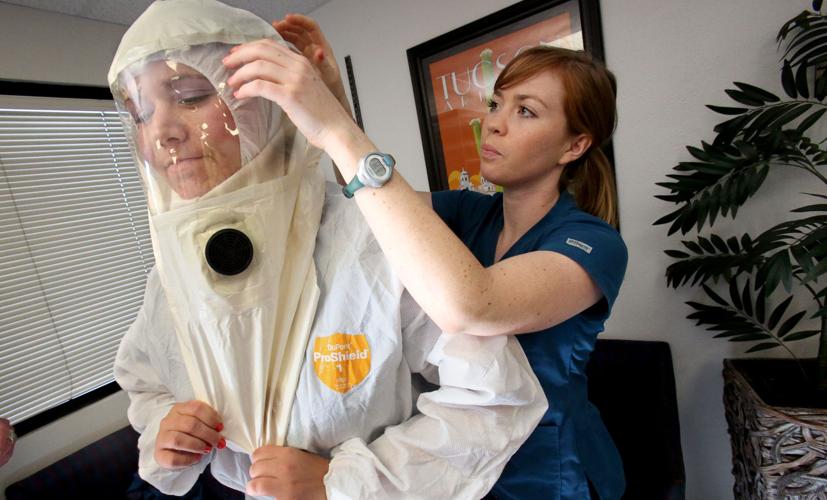
Emergency room nurse Brooke Jensen, left, gets help with her headgear from fellow nurse Amanda Poer as nurses and doctors at Tucson Medical Center train to put on and remove personal protection equipment in case of an Ebola outbreak. The protocol training, which involves a specific procedure to put on and remove the protective clothing, is scheduled to take place throughout the week, said Ted Voss, the TMC hazmat team captain. The training this week is expected to involve more than 100 emergency room nurses and they hope to train at least 80 percent of the doctors, Voss said.
- A.E. Araiza / Arizona Daily Star
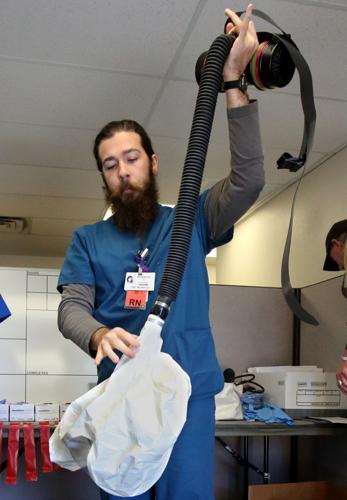
Hazmat team member Remington Stickney displays and explains the function of a hooded respirator as nurses and doctors at Tucson Medical Center train to put on and remove personal protection equipment in case of an Ebola outbreak. The suit itself is moisture resistant and it comes with hooded headgear and a battery-powered air purifying respirator, said Ted Voss, the TMC hazmat captain. The time limit wearing the suit is around four hours which is based on the life of the battery, he added.
- A.E. Araiza / Arizona Daily Star
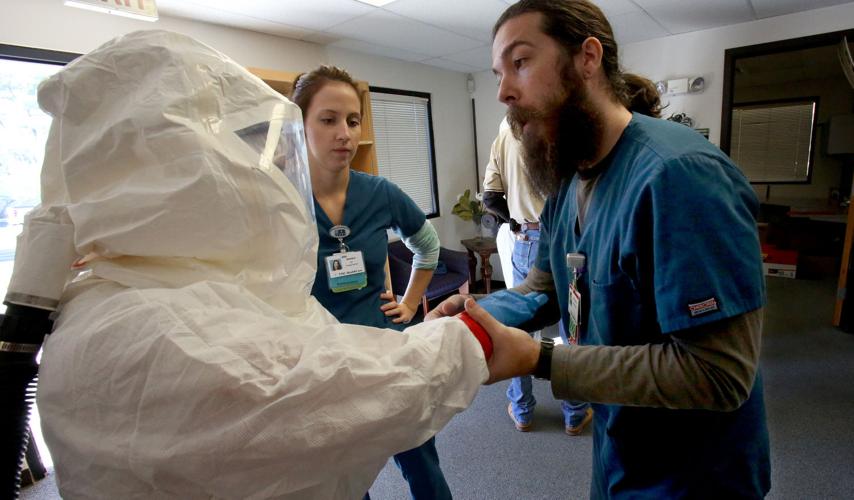
Hazmat team member Remington Stickney, right, explains the importance of taping the glove to pediatric emergency room nurse Fabiola Rangel, left, and emergency room nurse Jessica Wells, middle, while at Tucson Medical Center. The procedures for putting on and removing the suit in case of an Ebola outbreak is carefully choreographed and is important to the safety of hospital personnel.
- A.E. Araiza / Arizona Daily Star
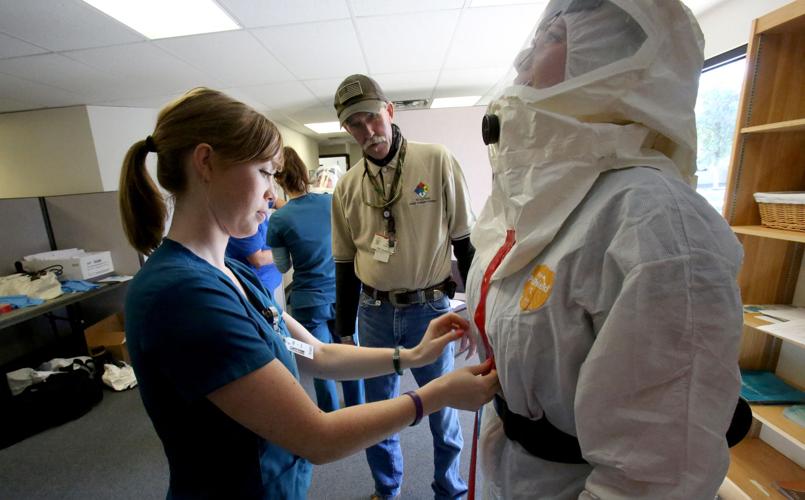
Hazmat team captain Ted Voss, middle, monitors emergency room nurses Amanda Poer, left, and Brooke Jensen at Tucson Medical Center. The protocol training, in case of an Ebola outbreak involves a specific procedure to put on and remove the protective clothing, is scheduled to take place throughout the week, Voss said. The suit itself is moisture resistant and it comes with hooded headgear and a battery-powered air purifying respirator, he said.
- A.E. Araiza / Arizona Daily Star
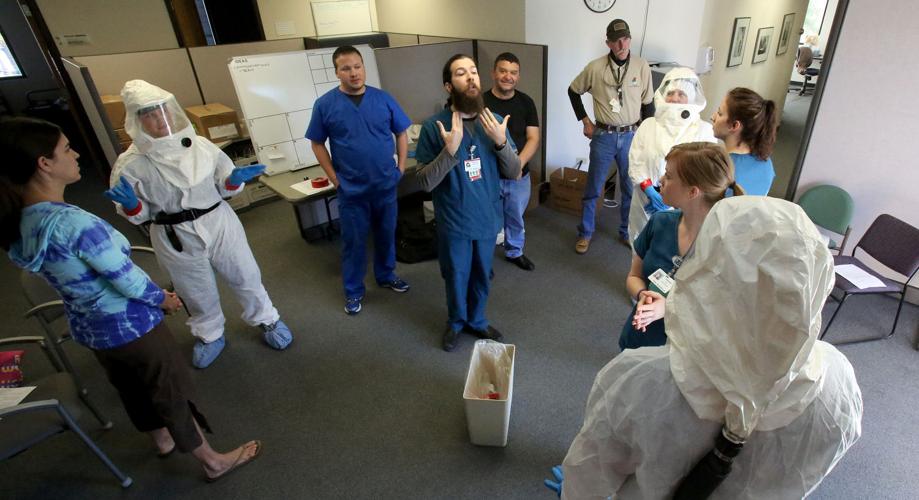
Hazmat team member Remington Stickney gestures as nurses and doctors at Tucson Medical Center train to put on and remove personal protection equipment in case of an Ebola outbreak. The training this week is expected to involve more than 100 emergency room nurses and they hope to train at least 80 percent of the emergency room doctors, said TMC hazmat team captain Ted Voss.
- A.E. Araiza / Arizona Daily Star
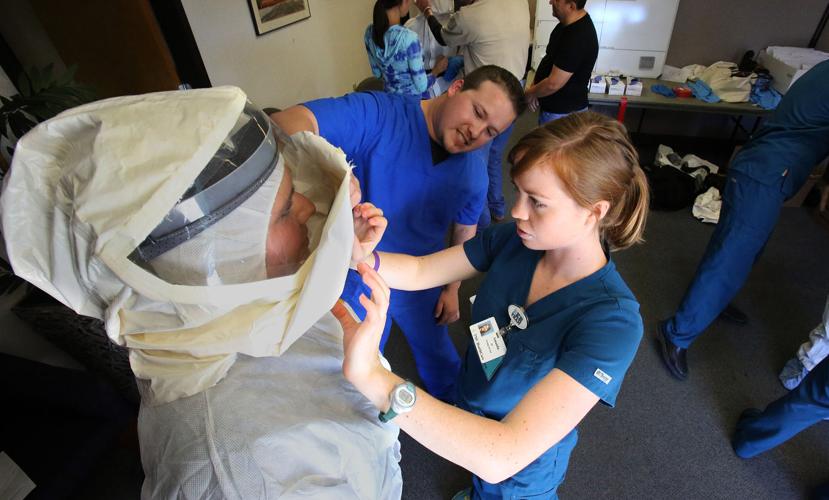
Emergency room technician Ben Bautista, middle, instructs emergency room nurse Amanda Poer, right, as to how to carefully remove hooded headgear from fellow nurse Brooke Jensen at Tucson Medical Center. The protocol training, which involves a specific procedure to put on and remove the protective clothing, is scheduled to take place throughout the week, said Ted Voss, the TMC hazmat team captain. The suit itself is moisture resistant and it comes with hooded headgear and a battery-powered air purifying respirator, he said.
- A.E. Araiza / Arizona Daily Star
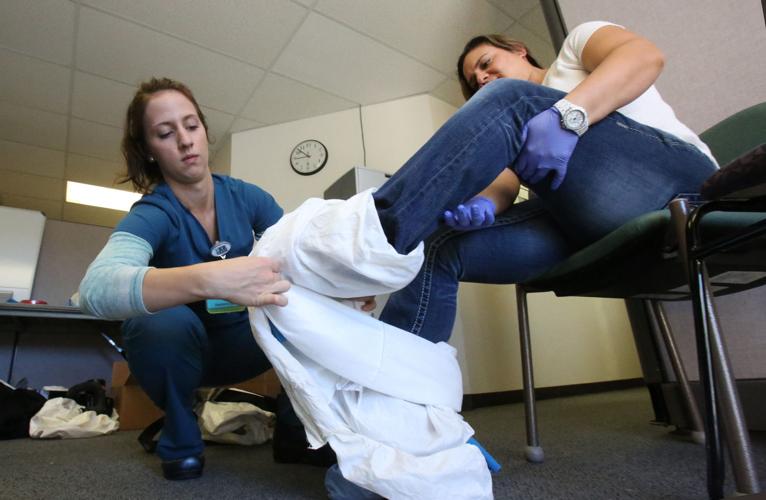
Emergency room nurse Jessica Wells, left, removes the suit from pediatric emergency room nurse Fabiola Rangel as nurses and doctors at Tucson Medical Center train to put on and remove personal protection equipment in case of an Ebola outbreak.
- A.E. Araiza / Arizona Daily Star
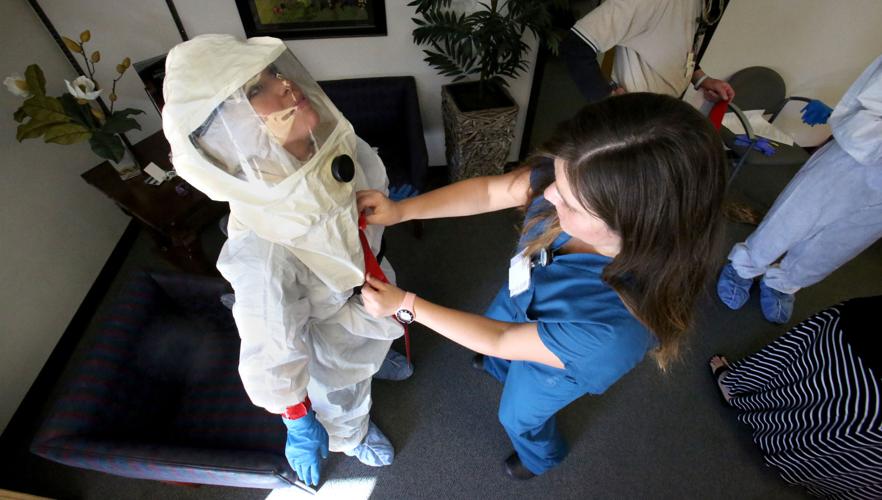
As instructed, emergency room nurse Amanda Poer, left, looks up as fellow nurse Brooke Jensen removes duct tape that covers the front zipper as nurses and doctors at Tucson Medical Center train to put on and remove personal protection equipment in case of an Ebola outbreak.
- A.E. Araiza / Arizona Daily Star
Emergency room nurse Brooke Jensen, left, gets help with her headgear from fellow nurse Amanda Poer as nurses and doctors at Tucson Medical Center train to put on and remove personal protection equipment in case of an Ebola outbreak. The protocol training, which involves a specific procedure to put on and remove the protective clothing, is scheduled to take place throughout the week, said Ted Voss, the TMC hazmat team captain. The training this week is expected to involve more than 100 emergency room nurses and they hope to train at least 80 percent of the doctors, Voss said.
- A.E. Araiza / Arizona Daily Star
Hazmat team member Remington Stickney displays and explains the function of a hooded respirator as nurses and doctors at Tucson Medical Center train to put on and remove personal protection equipment in case of an Ebola outbreak. The suit itself is moisture resistant and it comes with hooded headgear and a battery-powered air purifying respirator, said Ted Voss, the TMC hazmat captain. The time limit wearing the suit is around four hours which is based on the life of the battery, he added.
- A.E. Araiza / Arizona Daily Star
Hazmat team member Remington Stickney, right, explains the importance of taping the glove to pediatric emergency room nurse Fabiola Rangel, left, and emergency room nurse Jessica Wells, middle, while at Tucson Medical Center. The procedures for putting on and removing the suit in case of an Ebola outbreak is carefully choreographed and is important to the safety of hospital personnel.
- A.E. Araiza / Arizona Daily Star
Hazmat team captain Ted Voss, middle, monitors emergency room nurses Amanda Poer, left, and Brooke Jensen at Tucson Medical Center. The protocol training, in case of an Ebola outbreak involves a specific procedure to put on and remove the protective clothing, is scheduled to take place throughout the week, Voss said. The suit itself is moisture resistant and it comes with hooded headgear and a battery-powered air purifying respirator, he said.
- A.E. Araiza / Arizona Daily Star
Hazmat team member Remington Stickney gestures as nurses and doctors at Tucson Medical Center train to put on and remove personal protection equipment in case of an Ebola outbreak. The training this week is expected to involve more than 100 emergency room nurses and they hope to train at least 80 percent of the emergency room doctors, said TMC hazmat team captain Ted Voss.
- A.E. Araiza / Arizona Daily Star
Emergency room technician Ben Bautista, middle, instructs emergency room nurse Amanda Poer, right, as to how to carefully remove hooded headgear from fellow nurse Brooke Jensen at Tucson Medical Center. The protocol training, which involves a specific procedure to put on and remove the protective clothing, is scheduled to take place throughout the week, said Ted Voss, the TMC hazmat team captain. The suit itself is moisture resistant and it comes with hooded headgear and a battery-powered air purifying respirator, he said.
- A.E. Araiza / Arizona Daily Star
Emergency room nurse Jessica Wells, left, removes the suit from pediatric emergency room nurse Fabiola Rangel as nurses and doctors at Tucson Medical Center train to put on and remove personal protection equipment in case of an Ebola outbreak.
- A.E. Araiza / Arizona Daily Star
As instructed, emergency room nurse Amanda Poer, left, looks up as fellow nurse Brooke Jensen removes duct tape that covers the front zipper as nurses and doctors at Tucson Medical Center train to put on and remove personal protection equipment in case of an Ebola outbreak.
- A.E. Araiza / Arizona Daily Star
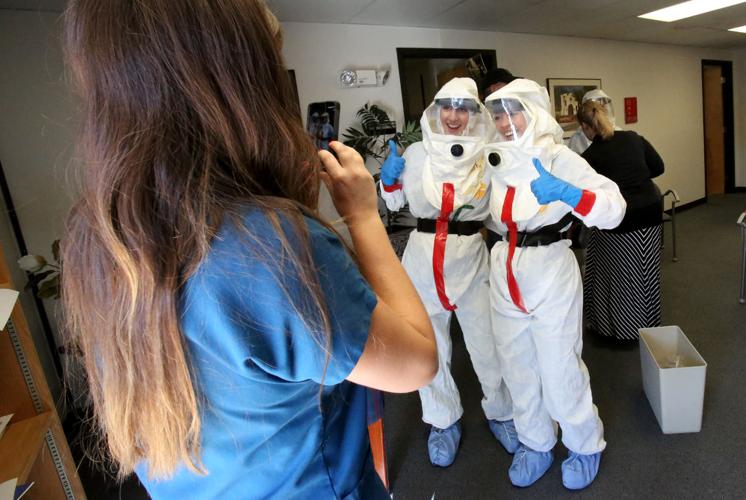
Emergency room nurses Jessica Wells, middle, and Amanda Poer, right, pose for a photograph taken by fellow nurse Brooke Jensen after going through training at Tucson Medical Center.
- A.E. Araiza / Arizona Daily Star


View this profile on Instagram#ThisIsTucson 🌵 (@this_is_tucson) • Instagram photos and videos
Most viewed stories
-
This Tucson chef has been named a semifinalist for prestigious James Beard Award 🎉
-
A saber tooth tiger fossil, gemstone paintings, and more: Here's the low-down on 4 Tucson gem shows! 💎
-
Sparkle City: Gem shows season has started — here's what to know
-
Check out these 23 exciting Tucson events, January 30 - February 1! ✨
-
Horchata lattes and breakfast burritos: Tucson's Barista del Barrio opens 2nd location
-
30 fun events happening in Tucson January 23-25! 🪩
-
Get ready to eat all the spicy tuna rolls you can at this viral sushi spot 🍣
-
27 exciting events to check out this weekend, January 16-18 💎
-
Nearly 50 fun events happening in the month of January! ✨
-
Community determined to regroup after loss of Tucson Pride