


Hansen's Sunday Notebook: Arizona Wildcats sink in Learfield Cup standings, and it's easy to see why
- Updated
Star sports columnist Greg Hansen offers his opinion on recent sports news.
- Greg Hansen Arizona Daily Star
- Updated
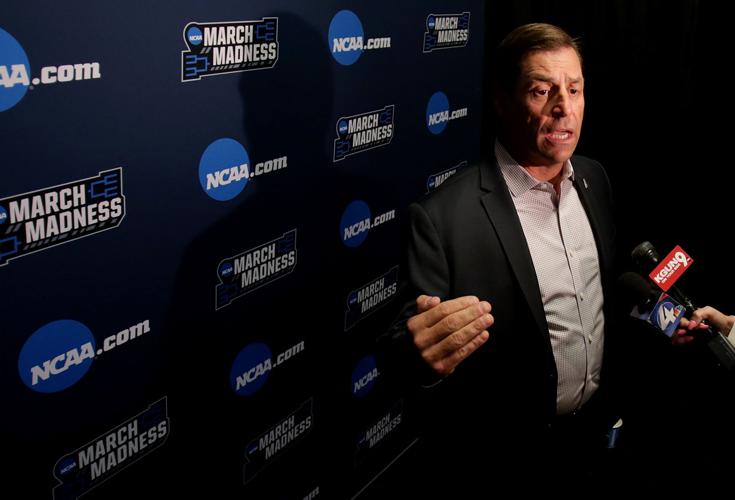
Arizona has dropped to 44th overall in the annual Learfield Cup, the measurement of all-around success in Division I college athletics.
It is the UA’s lowest figure since the NCAA began tracking each athletic department’s on-field production in 1994 (then called the Sears Cup).
What makes 44th place so unsettling is that Arizona long occupied a place in NCAA sports heaven. Here’s how the UA ranked in the first 10 years of the Learfield Cup:
1994: 6th.
1995: 4th.
1996: 7th.
1997: 6th.
1998: 6th.
1999: 9th.
2000: 8th.
2001: 5th.
2002: 9th.
2003: 16th.
Since then, Arizona has dropped precipitously in athletic department success. It was 24th by 2007 and 30th by 2010. It hit a low of 36th in 2015 and this year has fallen to 44th. This year’s final standings will factor ongoing baseball, softball and track and field, but it’s unlikely Arizona will rise above 40th.
What happened?
It is probably as simple as losing five elite-level coaches: Swimming’s Frank Busch, women’s basketball’s Joan Bonvicini, track’s Dave Murray, golf’s Rick LaRose and football’s Dick Tomey.
Arizona has struggled to replace all five.
True, this year the school won Pac-12 championships in men’s basketball and softball, but that was more than offset by seventh-place or worse (and the equivalent) finishes in 12 of 19 sports: football, men’s and women’s cross country, men’s golf, gymnastics, soccer, men’s swimming, men’s and women’s tennis, men’s and women’s track and field and volleyball.
That’s a variable that is likely to define the regime of new athletic director Dave Heeke. Can he restore Arizona as a top 25 athletic department?
A bigger question might be who truly cares if Arizona struggles in anything except the Big Four: football, basketball, softball and baseball?
As successful as the UA basketball and softball teams were, the lingering memory of their 2016-17 championships is what they DIDN’T do. Arizona couldn’t get Lauri Markkanen a shot in the final 11 minutes of an agonizing Sweet 16 loss to Xavier, and the Wildcat softball team coughed up a final-inning lead to Baylor in the Super Regionals.
We should get an early glimpse of what Heeke expects from his non-revenue sports when he hires a swimming coach this summer. His predecessor, Greg Byrne, routinely chose younger and less-expensive head coaches. It’s still too soon to evaluate if Byrne’s hiring strategy worked.
Either way, at 44th in the Learfield Cup standings, Arizona trails Harvard, for crying out loud.
- Greg Hansen Arizona Daily Star
- Updated
The Pac-12 last week sounded trumpets and shot off virtual fireworks when it won its 500th NCAA championship, dating to Cal’s 1922 track and field title.
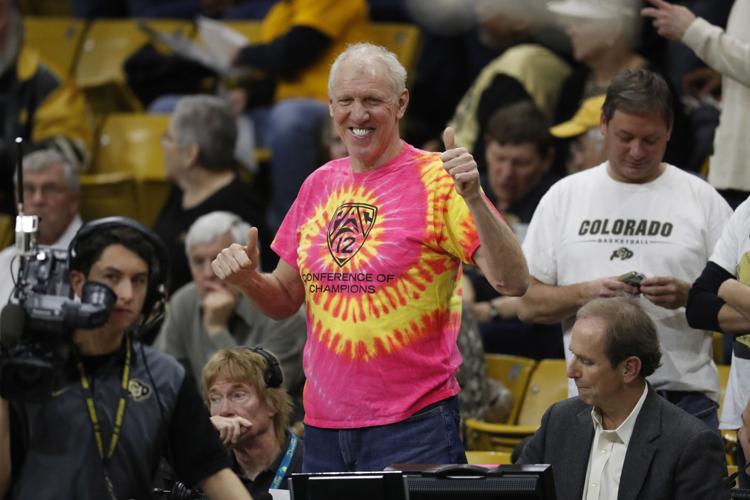
No other league, in its current membership, has more than 307. It’s enough to have Bill Walton hammer the “Conference of Champions” platform into every sentence of his TV basketball analysis.
But the Pac-12’s 500 might not be what it appears to be.
It includes 26 Colorado and 10 Utah NCAA skiing championships before the Buffaloes and Utes joined the Pac-12. It includes a 1936 Washington State boxing title and some long-ago rowing and water polo championships that were accomplished against limited competition.
But it still adds to 500, and that’s a reason to celebrate in any league.
The backbone of the league’s many championships isn’t football (nine) or men’s basketball (21). It is a compilation of men’s and women’s cross country and indoor and outdoor track. Those teams have won 97 of the 500 national championships. Runner-up? Men’s and women’s tennis, at 73.
- Greg Hansen Arizona Daily Star
- Updated
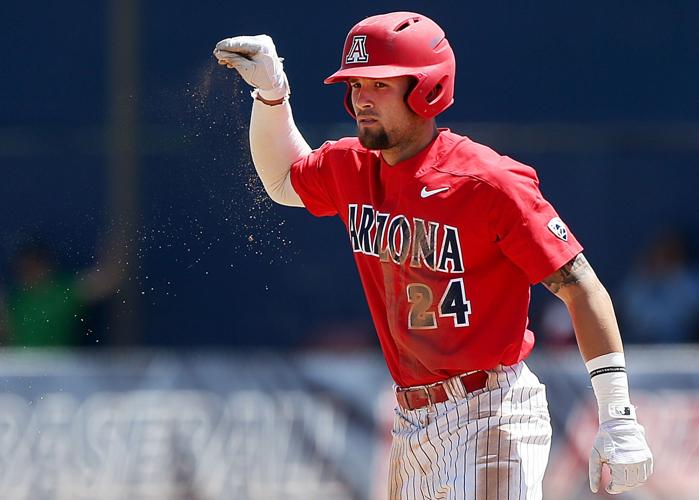
The top of next week’s MLB draft seems sure to include Catalina Foothills grad Luis Gonzalez, a speedy, left-handed hitting centerfielder who hit .361 at New Mexico this year (and .382 a year ago). Baseball America ranks Gonzalez the No. 83 overall prospect, which, if it holds, would mean a bonus between $750,000 to $1.1 million based on last year’s contracts. Arizona junior first baseman J.J. Matijevic is projected as the No. 63 overall pick by Baseball America. Last year’s No. 63 selection was paid $1,024,000 as a signing bonus.
- Greg Hansen Arizona Daily Star
- Updated
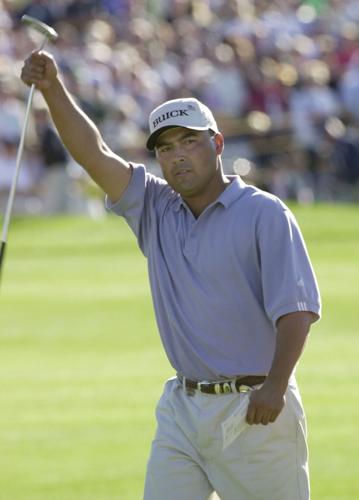
The U.S. Open Sectional qualifying (the final tier of playoffs before this month’s U.S. Open) has few better stories than 48-year-old David Berganio, a 1993 first-team All-American at Arizona and key member of the UA’s 1992 NCAA championship team. Berganio’s PGA Tour career was scuttled due to lingering back injuries. He earned $1.7 million in 151 PGA Tour starts, and won three Web.com events. He’ll be playing for one of five U.S. Open berths among the 103 players at the Newport Beach Country Club.
- Greg Hansen Arizona Daily Star
- Updated
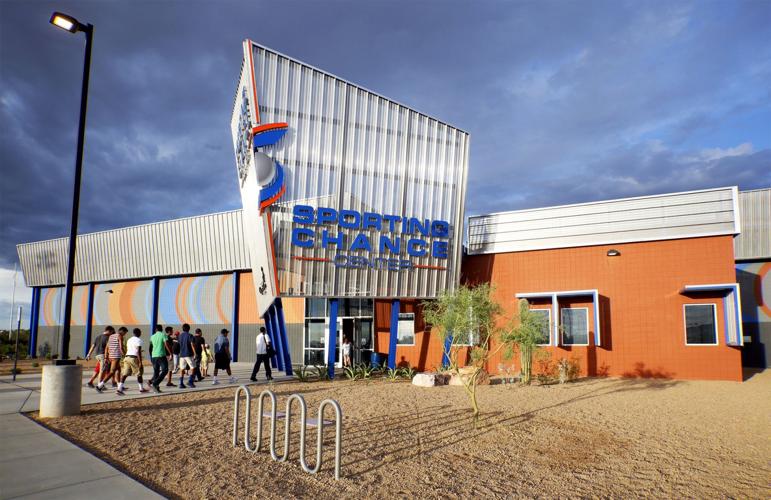
One of the busiest sports facilities in Tucson is the Sporting Chance basketball center near North La Cholla Boulevard. Last week, it was the scene of 174 high school basketball games that served as the annual referees camp for Tucson Pac-12 refs Bob Scofield and Chris Rastatter. About 50 referees from around the country helped to officiate the 174 games.
- Greg Hansen Arizona Daily Star
- Updated
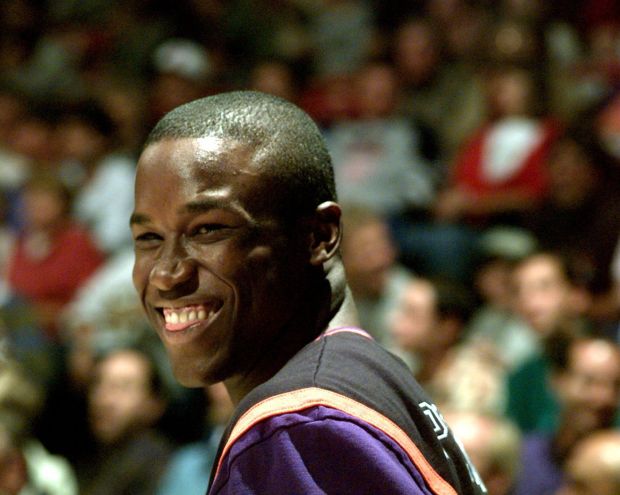
Arizona’s 1996 All-Pac-10 power forward/center Ben Davis was back in McKale Center last week, giving a tour of his old school to his son, Ben Davis II. The trip included a visit to Cochise College, where the younger Davis is considering playing for Jerry Carrillo’s NJCAA powerhouse basketball program. Ben Davis II, who is 6 feet 8 inches tall and built powerfully like his father, played at Oak Hill Academy in Virginia last year. He is still 17 and wants to play and develop in a year of NJCAA basketball before jumping to the Division I level.
- Greg Hansen Arizona Daily Star
- Updated
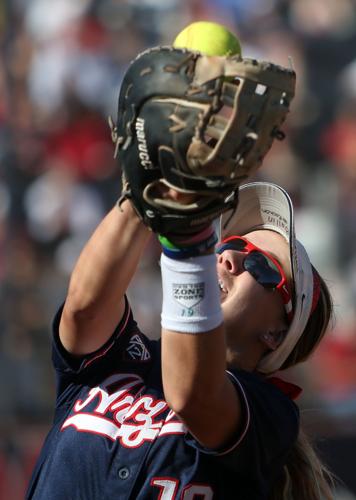
When Mike Candrea’s softball team returns for the 2018 season, it’s probable that first-team All-American first baseman Jessie Harper will move to shortstop. She was a terrific defensive first baseman this year, but shortstop is her natural position. That would enable injured centerfielder Alyssa Palomino to move to first base after her second ACL injury at Arizona. Palomino played first base on the AAU circuit.
- Greg Hansen Arizona Daily Star
- Updated
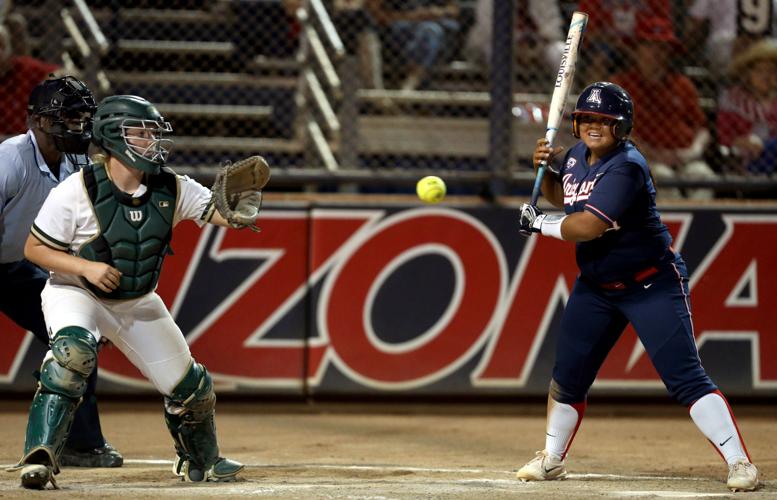
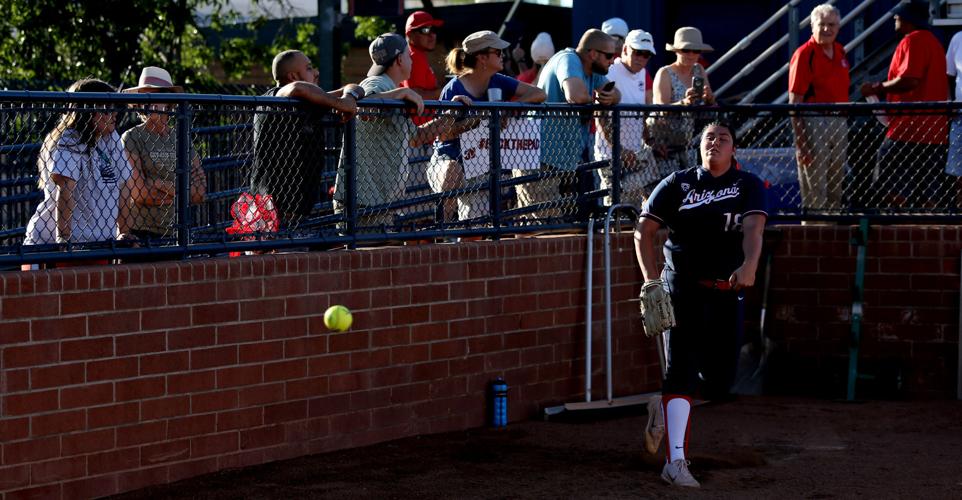
It was puzzling that UA third baseman Katiyana Mauga was not a first-team All-American selection by the NFCA last week. Florida’s Jessie Warren was the first-team pick at third base, and she had statistics superior to Mauga: a .413 batting average with 23 homers and 68 RBI. Mauga hit .356 with 25 homers and 61 RBI. But the softball coaches created space for five at-large choices, and Mauga wasn’t among them.
- Greg Hansen Arizona Daily Star
- Updated
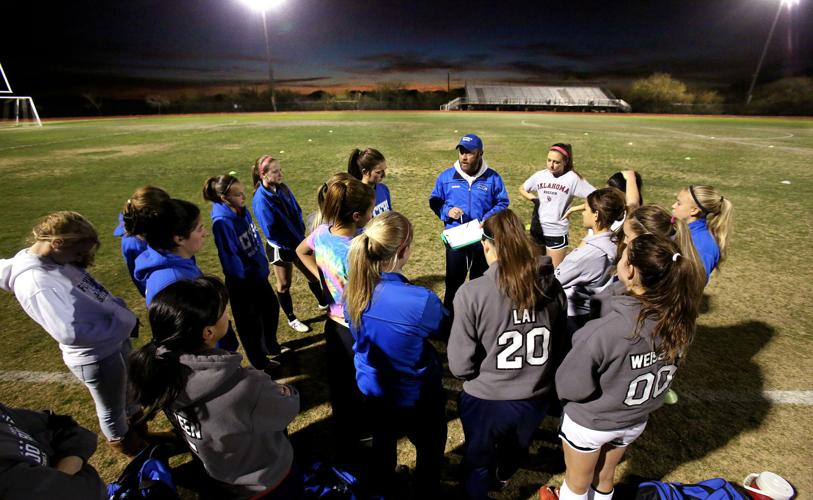
It doesn’t appear that UA sophomore lefty Taylor McQuillin will be an every-day pitcher the way former Arizona national-title pitchers Nancy Evans, Alicia Hollowell and Taryne Mowatt were. Candrea has another strong recruiting class — ranked as high as No. 6 in the nation — and it includes Broomfield, Colorado’s Taylor Gilmore, who was 22-3 with a 0.98 ERA in 2016. However, prep softball competition in Colorado is nowhere close to that in California and Arizona. Shelby Babock, a top UA pitching recruit from Denver five years ago, struggled in the Pac-12. Candrea’s top pitching recruit may be Hanah Bowen of Ramona High in Southern California. Bowen was 24-0 with 174 strikeouts in 141 innings. It wouldn’t be a surprise if Candrea acquires a transfer pitcher with notable college softball chops sometimes this summer.
- Greg Hansen Arizona Daily Star
- Updated
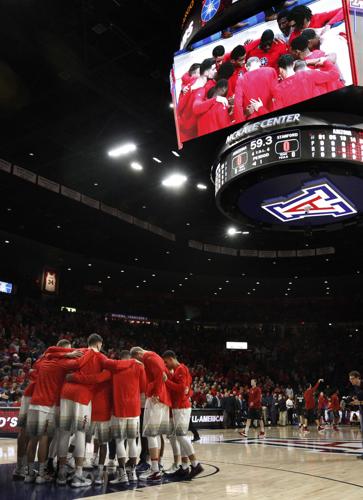
My ongoing “Top 10 of Everything” in Tucson sports series is inevitably going to disappointment some. There have just been too many top achievements in Tucson sports to include all. When the series ends in August, I plan to do a top 10 list of omissions, those I did not include. One that’ll be on that list is the 81-game win streak by former Catalina Foothills High School girls soccer coach Charlie Kendrick from 2006-08, which included back-to-back 26-0 state title seasons.
- Greg Hansen Arizona Daily Star
- Updated
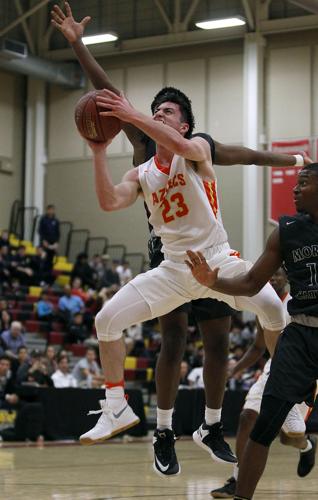
Arizona’s decision to add Avery Johnson’s Alabama Crimson Tide basketball team to its 2017-18 home schedule, while not a must-see event, is apt to be Arizona’s top nonconference home game. Bama was 19-15 last year but returns its three leading scorers from a club that beat Final Four entrant South Carolina in four overtimes. UConn, which is also on the UA’s home schedule, should be better than last season’s squad. The Huskies return three double-figure scorers.
- Greg Hansen Arizona Daily Star
- Updated
Incoming UA point guard Alex Barcello is taking a UA summer session class and preparing to join his teammates for the three-game August exhibition series in Spain. If you get a chance, watch video of him during his Tempe Corona del Sol High School days, which included two state championships. I did so last week and had four impressions: He’s tough, plays hard, doesn’t drift on defense and can shoot it from anywhere. The next T.J. McConnell? That’s too much to put on Barcello today, but it wouldn’t be much of a surprise. He’s also likely to play all four college seasons, which has uncharted value these days. Barcello’s sisters, Sarah and Amanda, are both being recruited by Arizona’s Adia Barnes; they are playing for the AAU Oakland Soldiers this summer.
- Greg Hansen Arizona Daily Star
- Updated
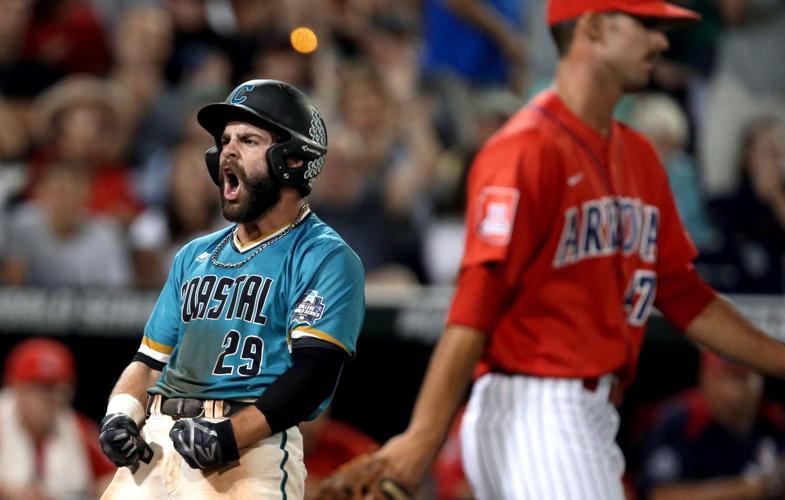
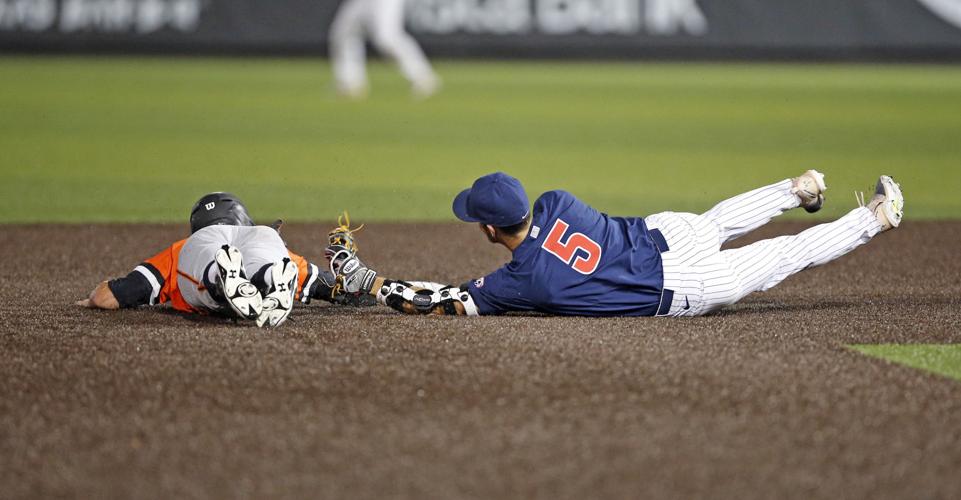
Did you notice coach Gary Gilmore’s Coastal Carolina Chanticleers, winners over Jay Johnson’s Arizona Wildcats at the 2016 College World Series, did not make the field of 64 for the ongoing NCAA Tournament? Both teams finished the regular season 37-19, but Coastal Carolina, No. 1 seed in the Sun Belt Conference tournament, was stunned by No. 8 seed Texas State in the opener and was not among the 33 at-large NCAA selections. A conference tournament is not always a good thing; Johnson says that there is no traction for a Pac-12 postseason baseball tournament.
- Greg Hansen Arizona Daily Star
- Updated
The pace of play in college baseball has made the game difficult to watch beyond seven innings, especially in the faster-faster-faster millennial generation.
In Arizona’s last 15 games, dating to an early May series against Washington, the Wildcats averaged 3 hours and 47 minutes per game. That includes nine-inning games that were played in 5:45, 4:14, 4:02 and 4:01.
Is there anything that can be done? Surely the tradition-bound fathers of NCAA baseball would never permit the game to be shortened to a softball-esque seven innings, even though it would alleviate the pitching-shortage problems that plague most college baseball teams.
The more fan-friendly softball games were manifest at Hillenbrand Stadium over the last two weekends when five capacity crowds endured near-100 degree temperatures (and precious little shade).
The average time of Arizona’s five NCAA games against Baylor and South Carolina was 2 hours 16 minutes.
UA fans and players spilled tears at the end of the entertaining softball season. By comparison, it’s sometimes a triumph if you can make it through a college baseball game without falling asleep.
Arizona has dropped to 44th overall in the annual Learfield Cup, the measurement of all-around success in Division I college athletics.
It is the UA’s lowest figure since the NCAA began tracking each athletic department’s on-field production in 1994 (then called the Sears Cup).
What makes 44th place so unsettling is that Arizona long occupied a place in NCAA sports heaven. Here’s how the UA ranked in the first 10 years of the Learfield Cup:
1994: 6th.
1995: 4th.
1996: 7th.
1997: 6th.
1998: 6th.
1999: 9th.
2000: 8th.
2001: 5th.
2002: 9th.
2003: 16th.
Since then, Arizona has dropped precipitously in athletic department success. It was 24th by 2007 and 30th by 2010. It hit a low of 36th in 2015 and this year has fallen to 44th. This year’s final standings will factor ongoing baseball, softball and track and field, but it’s unlikely Arizona will rise above 40th.
What happened?
It is probably as simple as losing five elite-level coaches: Swimming’s Frank Busch, women’s basketball’s Joan Bonvicini, track’s Dave Murray, golf’s Rick LaRose and football’s Dick Tomey.
Arizona has struggled to replace all five.
True, this year the school won Pac-12 championships in men’s basketball and softball, but that was more than offset by seventh-place or worse (and the equivalent) finishes in 12 of 19 sports: football, men’s and women’s cross country, men’s golf, gymnastics, soccer, men’s swimming, men’s and women’s tennis, men’s and women’s track and field and volleyball.
That’s a variable that is likely to define the regime of new athletic director Dave Heeke. Can he restore Arizona as a top 25 athletic department?
A bigger question might be who truly cares if Arizona struggles in anything except the Big Four: football, basketball, softball and baseball?
As successful as the UA basketball and softball teams were, the lingering memory of their 2016-17 championships is what they DIDN’T do. Arizona couldn’t get Lauri Markkanen a shot in the final 11 minutes of an agonizing Sweet 16 loss to Xavier, and the Wildcat softball team coughed up a final-inning lead to Baylor in the Super Regionals.
We should get an early glimpse of what Heeke expects from his non-revenue sports when he hires a swimming coach this summer. His predecessor, Greg Byrne, routinely chose younger and less-expensive head coaches. It’s still too soon to evaluate if Byrne’s hiring strategy worked.
Either way, at 44th in the Learfield Cup standings, Arizona trails Harvard, for crying out loud.
The Pac-12 last week sounded trumpets and shot off virtual fireworks when it won its 500th NCAA championship, dating to Cal’s 1922 track and field title.
No other league, in its current membership, has more than 307. It’s enough to have Bill Walton hammer the “Conference of Champions” platform into every sentence of his TV basketball analysis.
But the Pac-12’s 500 might not be what it appears to be.
It includes 26 Colorado and 10 Utah NCAA skiing championships before the Buffaloes and Utes joined the Pac-12. It includes a 1936 Washington State boxing title and some long-ago rowing and water polo championships that were accomplished against limited competition.
But it still adds to 500, and that’s a reason to celebrate in any league.
The backbone of the league’s many championships isn’t football (nine) or men’s basketball (21). It is a compilation of men’s and women’s cross country and indoor and outdoor track. Those teams have won 97 of the 500 national championships. Runner-up? Men’s and women’s tennis, at 73.
The top of next week’s MLB draft seems sure to include Catalina Foothills grad Luis Gonzalez, a speedy, left-handed hitting centerfielder who hit .361 at New Mexico this year (and .382 a year ago). Baseball America ranks Gonzalez the No. 83 overall prospect, which, if it holds, would mean a bonus between $750,000 to $1.1 million based on last year’s contracts. Arizona junior first baseman J.J. Matijevic is projected as the No. 63 overall pick by Baseball America. Last year’s No. 63 selection was paid $1,024,000 as a signing bonus.
The U.S. Open Sectional qualifying (the final tier of playoffs before this month’s U.S. Open) has few better stories than 48-year-old David Berganio, a 1993 first-team All-American at Arizona and key member of the UA’s 1992 NCAA championship team. Berganio’s PGA Tour career was scuttled due to lingering back injuries. He earned $1.7 million in 151 PGA Tour starts, and won three Web.com events. He’ll be playing for one of five U.S. Open berths among the 103 players at the Newport Beach Country Club.
One of the busiest sports facilities in Tucson is the Sporting Chance basketball center near North La Cholla Boulevard. Last week, it was the scene of 174 high school basketball games that served as the annual referees camp for Tucson Pac-12 refs Bob Scofield and Chris Rastatter. About 50 referees from around the country helped to officiate the 174 games.
Arizona’s 1996 All-Pac-10 power forward/center Ben Davis was back in McKale Center last week, giving a tour of his old school to his son, Ben Davis II. The trip included a visit to Cochise College, where the younger Davis is considering playing for Jerry Carrillo’s NJCAA powerhouse basketball program. Ben Davis II, who is 6 feet 8 inches tall and built powerfully like his father, played at Oak Hill Academy in Virginia last year. He is still 17 and wants to play and develop in a year of NJCAA basketball before jumping to the Division I level.
When Mike Candrea’s softball team returns for the 2018 season, it’s probable that first-team All-American first baseman Jessie Harper will move to shortstop. She was a terrific defensive first baseman this year, but shortstop is her natural position. That would enable injured centerfielder Alyssa Palomino to move to first base after her second ACL injury at Arizona. Palomino played first base on the AAU circuit.
It was puzzling that UA third baseman Katiyana Mauga was not a first-team All-American selection by the NFCA last week. Florida’s Jessie Warren was the first-team pick at third base, and she had statistics superior to Mauga: a .413 batting average with 23 homers and 68 RBI. Mauga hit .356 with 25 homers and 61 RBI. But the softball coaches created space for five at-large choices, and Mauga wasn’t among them.
It doesn’t appear that UA sophomore lefty Taylor McQuillin will be an every-day pitcher the way former Arizona national-title pitchers Nancy Evans, Alicia Hollowell and Taryne Mowatt were. Candrea has another strong recruiting class — ranked as high as No. 6 in the nation — and it includes Broomfield, Colorado’s Taylor Gilmore, who was 22-3 with a 0.98 ERA in 2016. However, prep softball competition in Colorado is nowhere close to that in California and Arizona. Shelby Babock, a top UA pitching recruit from Denver five years ago, struggled in the Pac-12. Candrea’s top pitching recruit may be Hanah Bowen of Ramona High in Southern California. Bowen was 24-0 with 174 strikeouts in 141 innings. It wouldn’t be a surprise if Candrea acquires a transfer pitcher with notable college softball chops sometimes this summer.
My ongoing “Top 10 of Everything” in Tucson sports series is inevitably going to disappointment some. There have just been too many top achievements in Tucson sports to include all. When the series ends in August, I plan to do a top 10 list of omissions, those I did not include. One that’ll be on that list is the 81-game win streak by former Catalina Foothills High School girls soccer coach Charlie Kendrick from 2006-08, which included back-to-back 26-0 state title seasons.
Arizona’s decision to add Avery Johnson’s Alabama Crimson Tide basketball team to its 2017-18 home schedule, while not a must-see event, is apt to be Arizona’s top nonconference home game. Bama was 19-15 last year but returns its three leading scorers from a club that beat Final Four entrant South Carolina in four overtimes. UConn, which is also on the UA’s home schedule, should be better than last season’s squad. The Huskies return three double-figure scorers.
Incoming UA point guard Alex Barcello is taking a UA summer session class and preparing to join his teammates for the three-game August exhibition series in Spain. If you get a chance, watch video of him during his Tempe Corona del Sol High School days, which included two state championships. I did so last week and had four impressions: He’s tough, plays hard, doesn’t drift on defense and can shoot it from anywhere. The next T.J. McConnell? That’s too much to put on Barcello today, but it wouldn’t be much of a surprise. He’s also likely to play all four college seasons, which has uncharted value these days. Barcello’s sisters, Sarah and Amanda, are both being recruited by Arizona’s Adia Barnes; they are playing for the AAU Oakland Soldiers this summer.
Did you notice coach Gary Gilmore’s Coastal Carolina Chanticleers, winners over Jay Johnson’s Arizona Wildcats at the 2016 College World Series, did not make the field of 64 for the ongoing NCAA Tournament? Both teams finished the regular season 37-19, but Coastal Carolina, No. 1 seed in the Sun Belt Conference tournament, was stunned by No. 8 seed Texas State in the opener and was not among the 33 at-large NCAA selections. A conference tournament is not always a good thing; Johnson says that there is no traction for a Pac-12 postseason baseball tournament.
The pace of play in college baseball has made the game difficult to watch beyond seven innings, especially in the faster-faster-faster millennial generation.
In Arizona’s last 15 games, dating to an early May series against Washington, the Wildcats averaged 3 hours and 47 minutes per game. That includes nine-inning games that were played in 5:45, 4:14, 4:02 and 4:01.
Is there anything that can be done? Surely the tradition-bound fathers of NCAA baseball would never permit the game to be shortened to a softball-esque seven innings, even though it would alleviate the pitching-shortage problems that plague most college baseball teams.
The more fan-friendly softball games were manifest at Hillenbrand Stadium over the last two weekends when five capacity crowds endured near-100 degree temperatures (and precious little shade).
The average time of Arizona’s five NCAA games against Baylor and South Carolina was 2 hours 16 minutes.
UA fans and players spilled tears at the end of the entertaining softball season. By comparison, it’s sometimes a triumph if you can make it through a college baseball game without falling asleep.
Tags


View this profile on Instagram#ThisIsTucson 🌵 (@this_is_tucson) • Instagram photos and videos
Most viewed stories
-
Over 40 exciting events to check out this weekend! 🌱
-
OaxaRico opened their first brick-and-mortar, serving up delicious mole and gorditas
-
Nearly 90 fun events happening in March! 🌺
-
$25 challenge kicks off at Tucson’s Pop Cycle
-
'Salsa Daddy' coming to the Tucson book festival
-
Reid Park Zoo invites Tucsonans to name baby giraffe 🦒
-
5 places in Tucson where you can get mouthwatering birria tacos 🌮
-
Over 40 events happening in Tucson March 11-15 📖☘️
-
Tucson's St. Patrick's Day events start Saturday with festival ☘️