


Hansen's Sunday Notebook: Three ways Lorenzo Romar could help Sean Miller, Arizona Wildcats improve
- Updated
Star sports columnist Greg Hansen offers his opinion on recent sports news.
- Greg Hansen Arizona Daily Star
- Updated
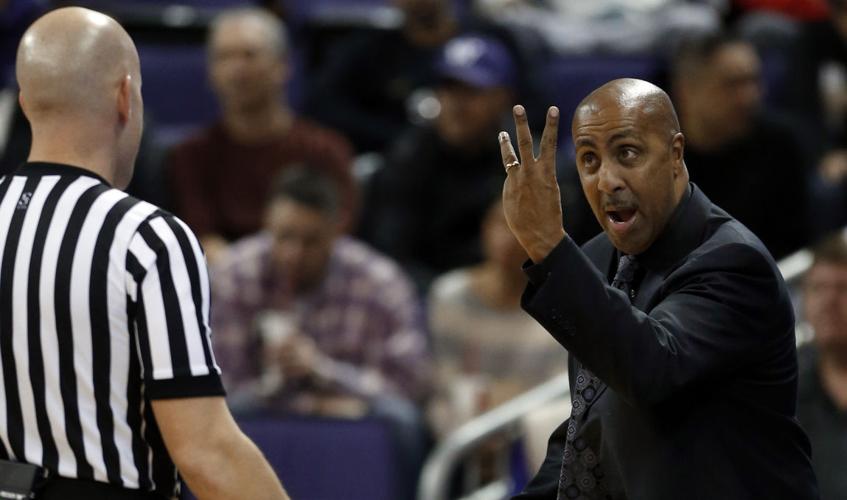
If Sean Miller hires former Washington coach Lorenzo Romar as an assistant, it will impact three important areas:
1. Recruiting. Romar recruited 15 future NBA players during his Washington years, an average of one per season, and that doesn’t include presumptive No. 1 overall pick Markelle Fultz. Seven of them were from the greater Seattle area: Brandon Roy, Jon Brockman, Nate Robinson, Isaiah Thomas, Spencer Hawes, Tony Wroten and Dejounte Murray. If Romar makes the difference in just one elite recruit choosing Arizona per year, it’ll be a bargain.
2. Work-life balance. Miller is a 24/7 grinder and ideally he’s soon going to have to trust someone in the office to take charge while he gathers himself. Much like Miller, Romar didn’t develop off-time hobbies, like golf or sailing. But he started the Lorenzo Romar Foundation for the prevention of domestic violence and educational assistance for Seattle’s disadvantaged youth.
Romar is a devout Christian; he spent five years as head coach for Athletes in Action in the 1980s, a ministry-based traveling basketball team. His priorities are in order. If he can shave any of Miller’s work load — at practice, in game-planning or as a decision-maker — it’ll be worth whatever Arizona pays him.
3. Communication. Romar is a go-to, shoulder-to-lean-on voice of reason. He knows how to bond with 18-year-olds with one eye on the NBA. He’s seen it all.
The son of a welder who grew up in racially-divided Louisiana, Romar had to earn his way into basketball, being cut from the varsity at Los Angeles Verbum Dei High School, getting no basketball scholarship offers, walking on at Cerritos College and then becoming an All-Pac-10 player at Washington.
After his long stint with Athletes in Action, Romar coached as an assistant at UCLA, and then was head coach at Pepperdine, St. Louis and finally, after Washington offered its basketball coaching job to Mark Few, Quin Snyder and Dan Monson, became head coach of the Huskies.
At 58, Romar still has a lot to give. Put it this way: No one in college basketball would have a more valued assistant coach.
- Greg Hansen Arizona Daily Star
- Updated
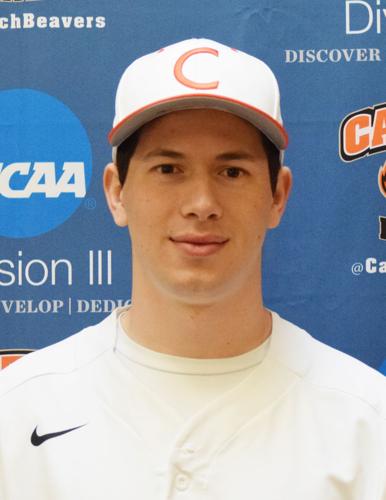
On his baseball recruiting visit to Cal Tech in 2013, Harrison Jacobs watched the Division III Beavers lose a game 20-0 “or something close to that,” as he recalls.
Cal Tech hadn’t won a game in the Southern California Intercollegiate Athletic Conference (SCIAC) since 1988, a streak that was closing in on 500 straight during Jacobs’ visit.
He liked the challenge of being part of a group that someday would end that streak.
Jacobs, who hit .357 as a part-time outfielder at Catalina Foothills in 2013, liked Cal Tech’s reputation as an academic leader.
“In some form, I was going to major in science and engineering,” he said last week. “The combination of baseball and academics at Cal Tech really appealed to me.”
As Jacobs moved toward a degree in mechanical engineering, he became a starting outfielder for the Beavers. It was not an overnight success.
He hit .195 as a freshman, .183 as a sophomore and then broke through last year — “something clicked,” he says — and hit .262. This year he became the Beavers’ leadoff hitter.
Unfortunately, Cal Tech had successive years of 0-28, 0-28 and 0-27 in the SCIAC. By March 31, the Beavers’ conference losing streak reached 548.
But finally, 10 days ago, Cal Tech rallied in the bottom of the ninth to beat Pomona-Pitzer, 4-3. Jacobs was in the on-deck circle as the winning run scored at the school’s baseball facility in Pasadena.
“It’s still hard to describe,” he says. “It was crazy seeing the winning run score. I wanted to bat, to win the game myself, but at the same time you can’t be too picky in a situation like that. We’ve been waiting so long.”
Cal Tech became somewhat infamous for a basketball losing streak of 228 games, broken in 2013. Its baseball team was far more futile. In Jacobs’ first three seasons, the Beavers had gone 0-83 in conference and 5-100 overall. This year they are 1-16 and 6-22 overall.
“I’ve thoroughly enjoyed my time here,” he says. “I’m going to go to grad school next year, working on a master’s degree in structural engineering at Cal-Berkeley. I’ve been able to play baseball all four years and meet so many great people. My career goal is to help build stadiums, for the NFL and Major League Baseball, and things of that nature. “
Jacobs’ daily schedule at Cal Tech might not appeal to the average student. After classes and baseball practice, he studies from about 8 p.m. to 2 a.m., and sometimes later, but he makes it work.
“We’ve changed the culture here,” he says. “I’ll always remember how much fun it was to be part of it.”
- Greg Hansen Arizona Daily Star
- Updated
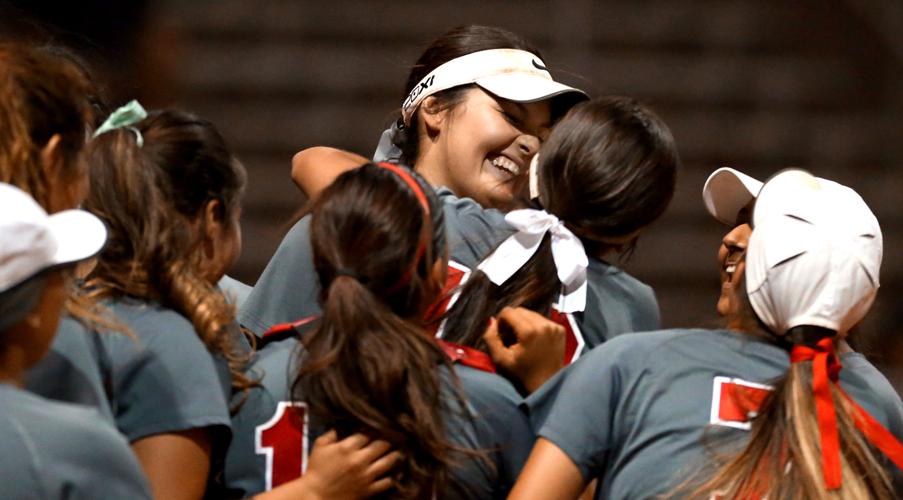
By the time freshman first baseman Carlie Scupin stepped to the plate in the seventh inning Friday, the breeze was blowing out to centerfield.
Tucson High’s softball team led Salpointe Catholic 5-2 and the Lancers’ outfielders stepped back to the warning track, playing Scupin as deep as possible.
Even though she’s only a freshman, Scupin’s reputation is known everywhere in Tucson softball, and not just because she accepted a scholarship to play for Arizona’s Mike Candrea when she was 14.
Scupin hit a towering shot that cleared the Nancy Roy Softball Complex sign behind the centerfield fence. It took one bounce onto Glenn Street. The Badgers won 7-2, extending their winning streak to 15 games, moving into state championship contention at 21-3 overall.
Scupin is hitting .583 with eight homers and 31 RBI in her varsity debut, and coach Danielle Rodriguez’s Badgers appear to be a threat to 25-0 Cibola and 25-1 Pinnacle in the Class 6A race. Scupin isn’t doing it alone; senior pitcher Mia Trejo is hitting .466 with an 8-2 pitching record, and her sophomore sister, Alyssa, is hitting .522.
Two weeks ago, Scupin hit for the cycle in a victory over defending state champion Ironwood Ridge, driving in eight runs. The left-hitting first baseman is probably Tucson’s most highly-ranked softball prospect since CDO’s Kenzie Fowler in 2006.
- Greg Hansen Arizona Daily Star
- Updated
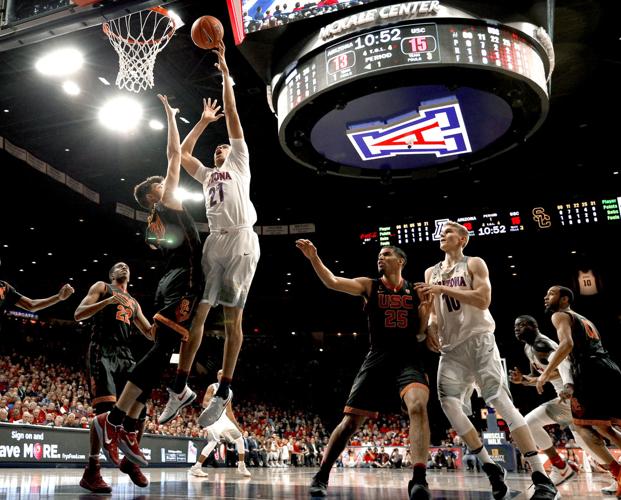
UA sophomore center Chance Comanche’s decision to enter the NBA draft — he has six weeks to withdraw — isn’t much different than that of Grant Jerrett in 2013. Jerrett played 606 minutes as an Arizona freshman; Comanche played 671 minutes this year. Jerrett attempted 154 shots; Comanche 156. Now playing for the Beijing Ducks in the Chinese Pro League, Jerrett is having his best professional season, averaging 17.8 points and playing 32 minutes per game. Jerrett won’t turn 24 until July.
- Greg Hansen Arizona Daily Star
- Updated
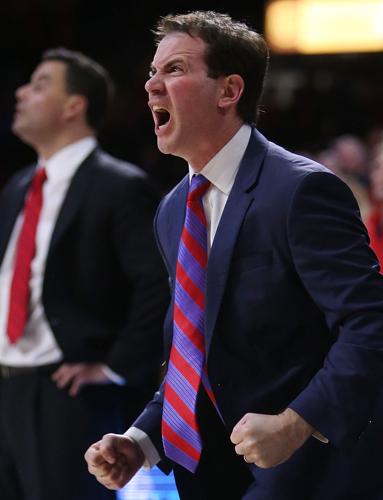
When former Arizona assistant coach Joe Pasternack became the head coach at UC Santa Barbara last week, he joined a long list of 11 other ex-UA assistants who left Tucson for their own gigs. It’s not foolproof. Five of those who took Division I head coaching jobs didn’t survive the first assignment. Jay John was fired at Oregon State; Phil Johnson at San Jose State; Rodney Tention at Loyola Marymount; and Ken Burmeister at UTSA. Four more didn’t remain head coaches over the long haul: Ricky Byrdsong was fired at Northwestern; Jessie Evans was fired at USF; Scott Thompson at Wichita State; and Kevin O’Neill job-hopped for 20 years. Only Indiana’s Archie Miller and Ball State’s James Whitford remain Division I head coaches; Burmeister is the head coach at University of the Incarnate Word in San Antonio.
- Greg Hansen Arizona Daily Star
- Updated
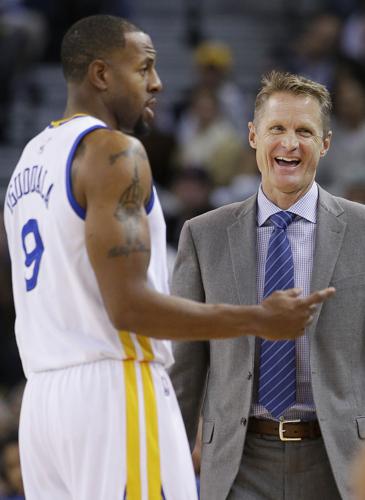
In the middle of his crazy-busy NBA season, Steve Kerr did what Steve Kerr almost always does. After the Golden State Warriors played at Phoenix’s Talking Stick Arena on Wednesday, Kerr agreed to meet with several hundred Wildcat Club members in a Q&A session after the game. He even recruited ex-Wildcat Andre Iguodala to be part of the program. Who said nice guys finish last?
- Greg Hansen Arizona Daily Star
- Updated
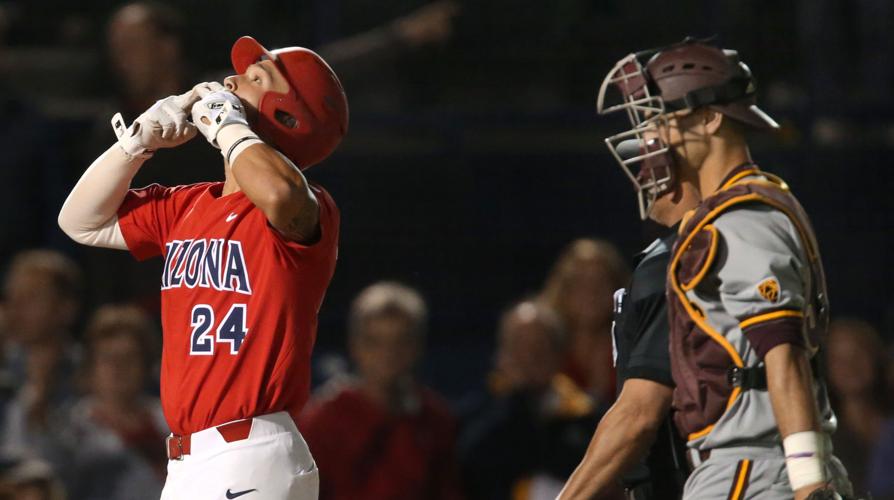
Arizona drew 4,664 fans for a Tuesday night, nonconference baseball game against Arizona State at Hi Corbett Field. It is the highest attendance in UA baseball history for a mid-week, nonconference game in the regular season. No other game comes close. When Jim Brock and Jerry Kindall were at the height of their UA-ASU rivalry, the teams met in a nonconference game at Hi Corbett Field on March 19, 1978, in the Best in the West tournament, capping four days of baseball. The Sun Devils were ranked No. 1 and Arizona No. 4. The game drew 3,918, but it was played on a more spectator-friendly Sunday evening. It’s likely Jay Johnson’s Wildcats will draw 15,000 total fans when they host powerful Oregon on Thursday, Friday and Saturday at Hi Corbett Field; there is no TV coverage scheduled.
- Greg Hansen Arizona Daily Star
- Updated
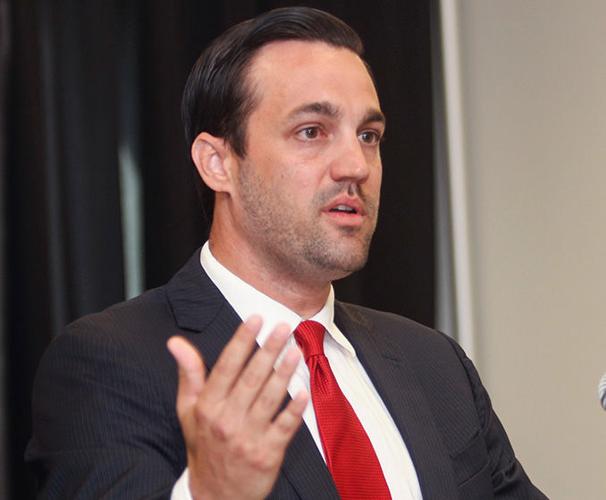
Catalina Foothills and UA grad Matt Brase coached the NBA D League’s Rio Grande Valley Vipers to the playoffs, one of eight in a 22-team league. The Vipers won the opener of a best-of-three playoff last week against the Los Angeles D-Fenders, even though their top player, Gary Payton II, was recalled to the NBA three days before the playoffs. Brase, who is Lute Olson’s grandson, is an uptempo coach; the Vipers led the D League with 120 points per game.

- Greg Hansen Arizona Daily Star
- Updated
Former Salpointe Catholic teammates Donny Sands and Jio Orozco are teammates again. Both opened the minor-league season for the Charleston RiverDogs, the New York Yankees’ Single-A affiliate. Sands started at catcher and batted cleanup in the RiverDogs’ season opener on Thursday. Orozco started on the mound Saturday night.

- Greg Hansen Arizona Daily Star
- Updated
UA football coach Rich Rodriguez spent time with Clemson national championship coach Dabo Swinney last week, taking advantage of the Tigers’ lead-up to their spring game. You couldn’t pick the coaching brain of a more valued college football offense than the man who coached QB Deshaun Watson the last three seasons.
- Greg Hansen Arizona Daily Star
- Updated
On the first week of athletic director Dave Heeke‘s employment at Arizona, he was greeted with the difference between the MAC and the Pac-12: Oregon announced it will pay women’s basketball coach Kelly Graves a guaranteed $4 million over the next six years. That’s about $700,000 per season.
Arizona pays women’s basketball coach Adia Barnes $235,000 per season, a five-year deal worth about $1.7 million.
Keeping up with the Joneses is always in flux.
As Arizona State continues to work on a $250 million redo of Sun Devil Stadium, athletic director Ray Anderson has taken care to build a bigger-better scoreboard than the one at Arizona Stadium.
When the Sun Devils open in September, their new video board will be the fourth-largest in college football and 2 feet bigger than the one Greg Byrne had installed in Tucson four years ago. It won’t be long until a Pac-12 team builds one bigger than ASU’s.
If Sean Miller hires former Washington coach Lorenzo Romar as an assistant, it will impact three important areas:
1. Recruiting. Romar recruited 15 future NBA players during his Washington years, an average of one per season, and that doesn’t include presumptive No. 1 overall pick Markelle Fultz. Seven of them were from the greater Seattle area: Brandon Roy, Jon Brockman, Nate Robinson, Isaiah Thomas, Spencer Hawes, Tony Wroten and Dejounte Murray. If Romar makes the difference in just one elite recruit choosing Arizona per year, it’ll be a bargain.
2. Work-life balance. Miller is a 24/7 grinder and ideally he’s soon going to have to trust someone in the office to take charge while he gathers himself. Much like Miller, Romar didn’t develop off-time hobbies, like golf or sailing. But he started the Lorenzo Romar Foundation for the prevention of domestic violence and educational assistance for Seattle’s disadvantaged youth.
Romar is a devout Christian; he spent five years as head coach for Athletes in Action in the 1980s, a ministry-based traveling basketball team. His priorities are in order. If he can shave any of Miller’s work load — at practice, in game-planning or as a decision-maker — it’ll be worth whatever Arizona pays him.
3. Communication. Romar is a go-to, shoulder-to-lean-on voice of reason. He knows how to bond with 18-year-olds with one eye on the NBA. He’s seen it all.
The son of a welder who grew up in racially-divided Louisiana, Romar had to earn his way into basketball, being cut from the varsity at Los Angeles Verbum Dei High School, getting no basketball scholarship offers, walking on at Cerritos College and then becoming an All-Pac-10 player at Washington.
After his long stint with Athletes in Action, Romar coached as an assistant at UCLA, and then was head coach at Pepperdine, St. Louis and finally, after Washington offered its basketball coaching job to Mark Few, Quin Snyder and Dan Monson, became head coach of the Huskies.
At 58, Romar still has a lot to give. Put it this way: No one in college basketball would have a more valued assistant coach.
On his baseball recruiting visit to Cal Tech in 2013, Harrison Jacobs watched the Division III Beavers lose a game 20-0 “or something close to that,” as he recalls.
Cal Tech hadn’t won a game in the Southern California Intercollegiate Athletic Conference (SCIAC) since 1988, a streak that was closing in on 500 straight during Jacobs’ visit.
He liked the challenge of being part of a group that someday would end that streak.
Jacobs, who hit .357 as a part-time outfielder at Catalina Foothills in 2013, liked Cal Tech’s reputation as an academic leader.
“In some form, I was going to major in science and engineering,” he said last week. “The combination of baseball and academics at Cal Tech really appealed to me.”
As Jacobs moved toward a degree in mechanical engineering, he became a starting outfielder for the Beavers. It was not an overnight success.
He hit .195 as a freshman, .183 as a sophomore and then broke through last year — “something clicked,” he says — and hit .262. This year he became the Beavers’ leadoff hitter.
Unfortunately, Cal Tech had successive years of 0-28, 0-28 and 0-27 in the SCIAC. By March 31, the Beavers’ conference losing streak reached 548.
But finally, 10 days ago, Cal Tech rallied in the bottom of the ninth to beat Pomona-Pitzer, 4-3. Jacobs was in the on-deck circle as the winning run scored at the school’s baseball facility in Pasadena.
“It’s still hard to describe,” he says. “It was crazy seeing the winning run score. I wanted to bat, to win the game myself, but at the same time you can’t be too picky in a situation like that. We’ve been waiting so long.”
Cal Tech became somewhat infamous for a basketball losing streak of 228 games, broken in 2013. Its baseball team was far more futile. In Jacobs’ first three seasons, the Beavers had gone 0-83 in conference and 5-100 overall. This year they are 1-16 and 6-22 overall.
“I’ve thoroughly enjoyed my time here,” he says. “I’m going to go to grad school next year, working on a master’s degree in structural engineering at Cal-Berkeley. I’ve been able to play baseball all four years and meet so many great people. My career goal is to help build stadiums, for the NFL and Major League Baseball, and things of that nature. “
Jacobs’ daily schedule at Cal Tech might not appeal to the average student. After classes and baseball practice, he studies from about 8 p.m. to 2 a.m., and sometimes later, but he makes it work.
“We’ve changed the culture here,” he says. “I’ll always remember how much fun it was to be part of it.”
By the time freshman first baseman Carlie Scupin stepped to the plate in the seventh inning Friday, the breeze was blowing out to centerfield.
Tucson High’s softball team led Salpointe Catholic 5-2 and the Lancers’ outfielders stepped back to the warning track, playing Scupin as deep as possible.
Even though she’s only a freshman, Scupin’s reputation is known everywhere in Tucson softball, and not just because she accepted a scholarship to play for Arizona’s Mike Candrea when she was 14.
Scupin hit a towering shot that cleared the Nancy Roy Softball Complex sign behind the centerfield fence. It took one bounce onto Glenn Street. The Badgers won 7-2, extending their winning streak to 15 games, moving into state championship contention at 21-3 overall.
Scupin is hitting .583 with eight homers and 31 RBI in her varsity debut, and coach Danielle Rodriguez’s Badgers appear to be a threat to 25-0 Cibola and 25-1 Pinnacle in the Class 6A race. Scupin isn’t doing it alone; senior pitcher Mia Trejo is hitting .466 with an 8-2 pitching record, and her sophomore sister, Alyssa, is hitting .522.
Two weeks ago, Scupin hit for the cycle in a victory over defending state champion Ironwood Ridge, driving in eight runs. The left-hitting first baseman is probably Tucson’s most highly-ranked softball prospect since CDO’s Kenzie Fowler in 2006.
UA sophomore center Chance Comanche’s decision to enter the NBA draft — he has six weeks to withdraw — isn’t much different than that of Grant Jerrett in 2013. Jerrett played 606 minutes as an Arizona freshman; Comanche played 671 minutes this year. Jerrett attempted 154 shots; Comanche 156. Now playing for the Beijing Ducks in the Chinese Pro League, Jerrett is having his best professional season, averaging 17.8 points and playing 32 minutes per game. Jerrett won’t turn 24 until July.
When former Arizona assistant coach Joe Pasternack became the head coach at UC Santa Barbara last week, he joined a long list of 11 other ex-UA assistants who left Tucson for their own gigs. It’s not foolproof. Five of those who took Division I head coaching jobs didn’t survive the first assignment. Jay John was fired at Oregon State; Phil Johnson at San Jose State; Rodney Tention at Loyola Marymount; and Ken Burmeister at UTSA. Four more didn’t remain head coaches over the long haul: Ricky Byrdsong was fired at Northwestern; Jessie Evans was fired at USF; Scott Thompson at Wichita State; and Kevin O’Neill job-hopped for 20 years. Only Indiana’s Archie Miller and Ball State’s James Whitford remain Division I head coaches; Burmeister is the head coach at University of the Incarnate Word in San Antonio.
In the middle of his crazy-busy NBA season, Steve Kerr did what Steve Kerr almost always does. After the Golden State Warriors played at Phoenix’s Talking Stick Arena on Wednesday, Kerr agreed to meet with several hundred Wildcat Club members in a Q&A session after the game. He even recruited ex-Wildcat Andre Iguodala to be part of the program. Who said nice guys finish last?
Arizona drew 4,664 fans for a Tuesday night, nonconference baseball game against Arizona State at Hi Corbett Field. It is the highest attendance in UA baseball history for a mid-week, nonconference game in the regular season. No other game comes close. When Jim Brock and Jerry Kindall were at the height of their UA-ASU rivalry, the teams met in a nonconference game at Hi Corbett Field on March 19, 1978, in the Best in the West tournament, capping four days of baseball. The Sun Devils were ranked No. 1 and Arizona No. 4. The game drew 3,918, but it was played on a more spectator-friendly Sunday evening. It’s likely Jay Johnson’s Wildcats will draw 15,000 total fans when they host powerful Oregon on Thursday, Friday and Saturday at Hi Corbett Field; there is no TV coverage scheduled.
Catalina Foothills and UA grad Matt Brase coached the NBA D League’s Rio Grande Valley Vipers to the playoffs, one of eight in a 22-team league. The Vipers won the opener of a best-of-three playoff last week against the Los Angeles D-Fenders, even though their top player, Gary Payton II, was recalled to the NBA three days before the playoffs. Brase, who is Lute Olson’s grandson, is an uptempo coach; the Vipers led the D League with 120 points per game.
Former Salpointe Catholic teammates Donny Sands and Jio Orozco are teammates again. Both opened the minor-league season for the Charleston RiverDogs, the New York Yankees’ Single-A affiliate. Sands started at catcher and batted cleanup in the RiverDogs’ season opener on Thursday. Orozco started on the mound Saturday night.
UA football coach Rich Rodriguez spent time with Clemson national championship coach Dabo Swinney last week, taking advantage of the Tigers’ lead-up to their spring game. You couldn’t pick the coaching brain of a more valued college football offense than the man who coached QB Deshaun Watson the last three seasons.
On the first week of athletic director Dave Heeke‘s employment at Arizona, he was greeted with the difference between the MAC and the Pac-12: Oregon announced it will pay women’s basketball coach Kelly Graves a guaranteed $4 million over the next six years. That’s about $700,000 per season.
Arizona pays women’s basketball coach Adia Barnes $235,000 per season, a five-year deal worth about $1.7 million.
Keeping up with the Joneses is always in flux.
As Arizona State continues to work on a $250 million redo of Sun Devil Stadium, athletic director Ray Anderson has taken care to build a bigger-better scoreboard than the one at Arizona Stadium.
When the Sun Devils open in September, their new video board will be the fourth-largest in college football and 2 feet bigger than the one Greg Byrne had installed in Tucson four years ago. It won’t be long until a Pac-12 team builds one bigger than ASU’s.
Tags


View this profile on Instagram#ThisIsTucson 🌵 (@this_is_tucson) • Instagram photos and videos
Most viewed stories
-
Over 30 fun events happening in Tucson March 27-29!
-
Bloomfest celebrates palo verde blooms and Tucson culture
-
New Eats! 20 new restaurants that opened up in Tucson this winter 🍽️
-
5 basement bars and speakeasies to visit when you want a fun drink and cool AC
-
Over 70 fun events happening in Tucson in April 🎡🐰
-
Over 40 exciting events to check out this weekend! 🌱
-
OaxaRico opened their first brick-and-mortar, serving up delicious mole and gorditas