

Q: We just bought a home, and I need to find the electrical panel. I have read that it is important to label the breakers, and I am not sure how to do that.
A: Your electrical panel can provide a lot of essential and useful information. It is important to know how it works. If you don’t know how to find your way around its components, hire an electrician to check it for safety and label the breakers. Safety comes first, last and in the middle.
Here are the steps to finding and labeling your panel:
First, locate the panel.
You will need to locate where the electrical meter is on your home. This meter is also called the SES or Service Entry Section. If the panel on the box next to it has a door that opens, open it, and you should see the circuit breakers that govern the flow of electricity into your home.
If the circuit breaker box is not directly next to the meter, it won’t be far away. Sometimes, you can look on the inside side of the wall directly behind the meter, and the sub-panel will be there. This collection of wires and circuits has several names. Originally known as the fuse box, current terms include panel box, circuit breaker box or sub-panel. Whatever name you call it, that’s your next stop.
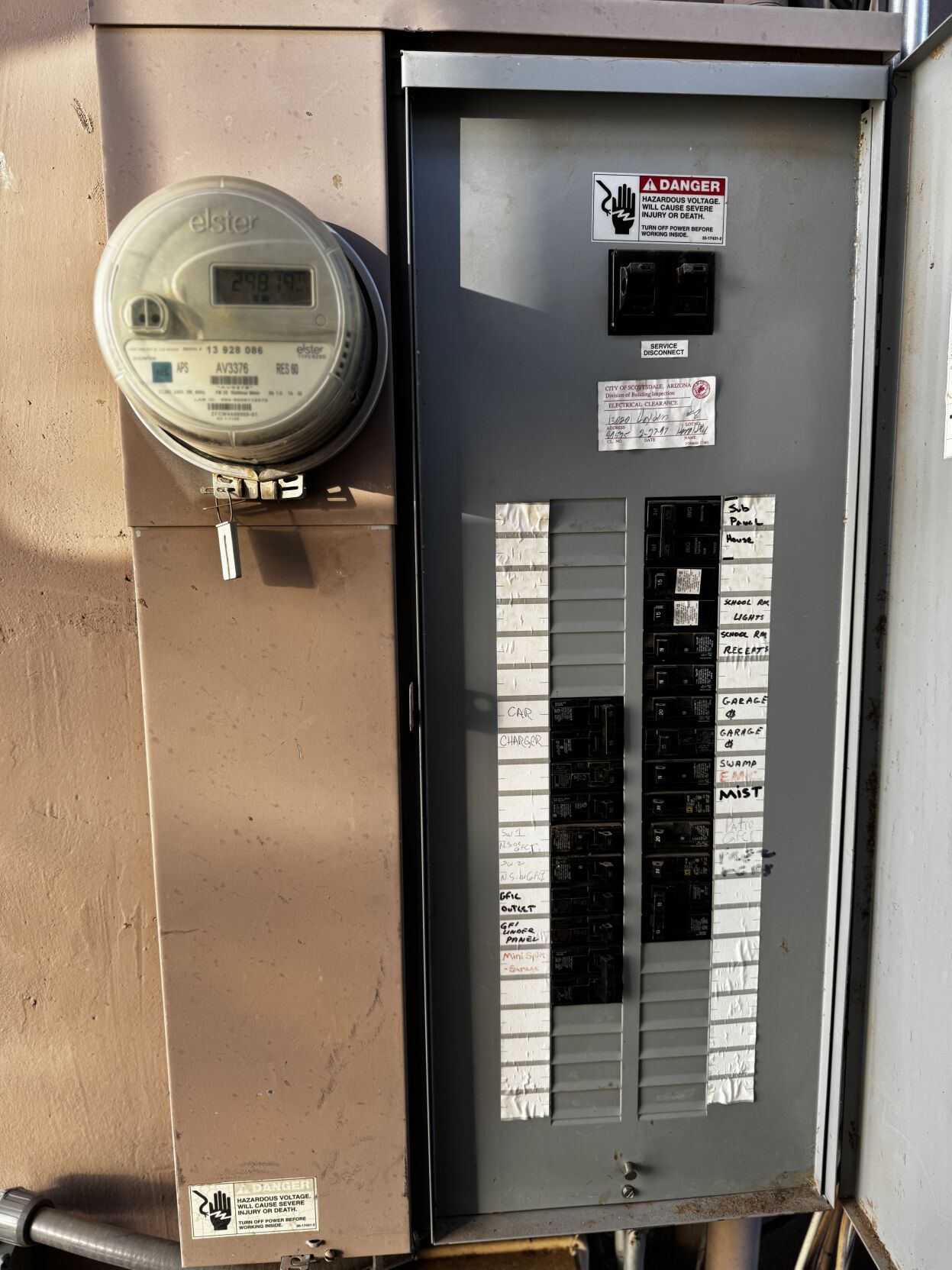
Your electric panel is usually a wall closet right next to your meter.
Inside the panel, you should see circuit breakers aligned in vertical or horizontal rows. Next to each circuit breaker, there should be writing that describes what area of the house that specific breaker controls. Labels could say kitchen, AC unit, bedroom-guest, bedroom-master, etc.
Second, make sure the breakers are labeled.
Commonly, over the past couple of decades, code has required the individual circuits to be identified. If they are not labeled or the labeling has faded, there are some steps you can take to remedy the situation.
Go to your local hardware store and look for a three-wire receptacle testing device. They range in price from $10 to $20. They are well worth the price and are a handy device to have around even after the testing.
Begin the testing by turning on lights, both overhead and table lamps. Then, turn off one circuit breaker at a time and walk through the house to see which rooms have no lights.
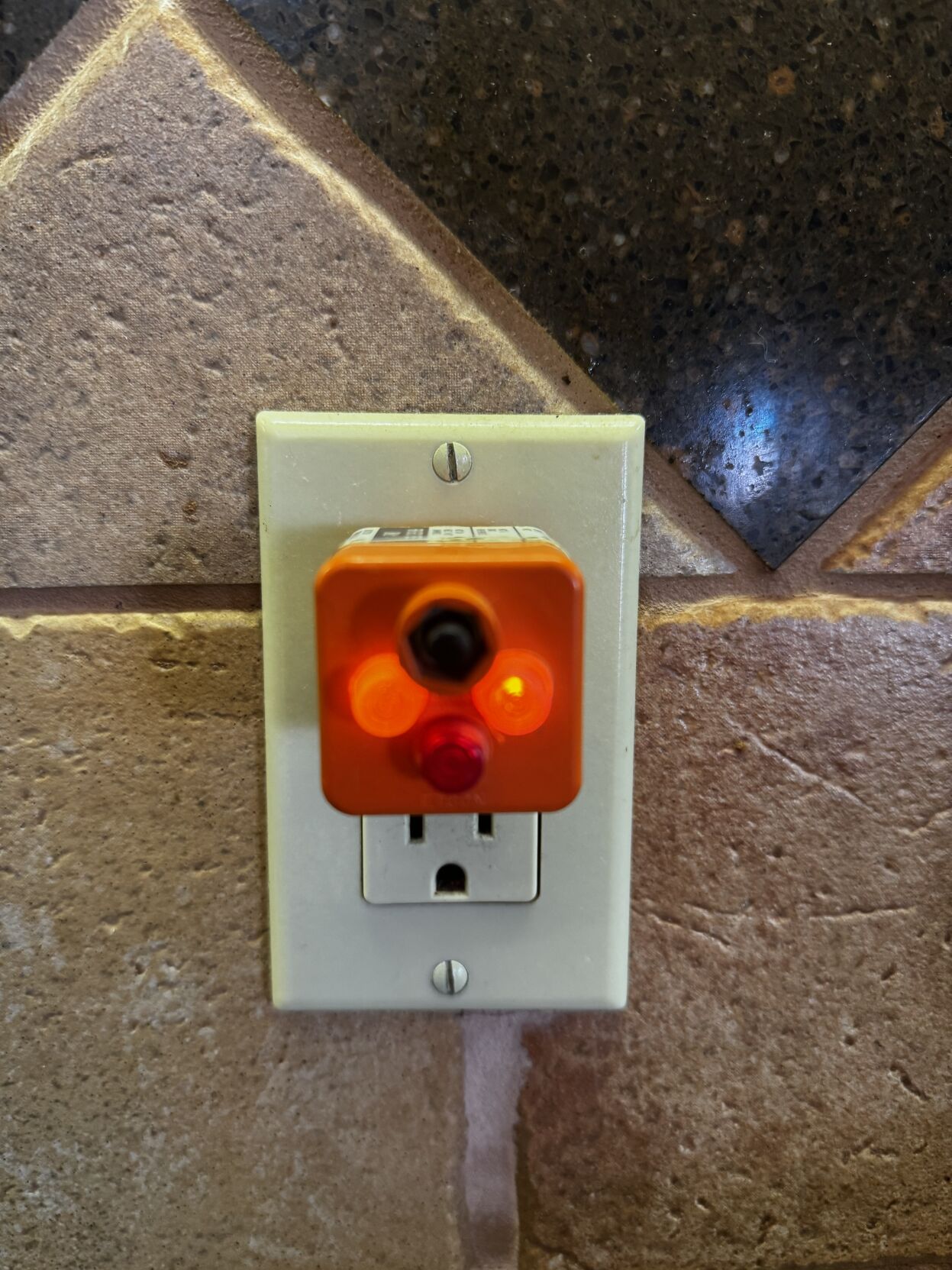
Be sure to verify that your electrical plugs are dead or active with a 3-prong receptacle tester.
Use the receptacle tester to determine which outlets in that room have power by simply plugging the device into the outlet. The lighted indicators on the testing device will light if power is present.
Once you have determined all the lights and receptacles that do not have power, you can go back to the circuit breaker panel and appropriately label the area of your home whose power is controlled by that specific breaker. You will need to repeat this process for every breaker in the panel.
Breakers marked as 50 amps (amperage is how breakers are rated) might take some special testing. These breakers control large electric usage items such as electric ranges and air-conditioning units. These appliances will need to be running to determine which breaker controls them.
Update the labeling on older panels.
If your panel is labeled, there are still reasons to verify that label’s accuracy.
The labels have worn off. Over time, the writing can be obscured or worn if the original labeling was not done with permanent ink.
Paper labels have deteriorated. Deterioration is common when the panels are outside and subject to temperature swings and humidity.
If the writing on the labels isn’t clear, start over and use the procedure mentioned above.
Added tips:
When you label each breaker, be sure to use a permanent marker.
Never assume a breaker is off. Always verify.
Somewhere on the panel, write the date that you performed the testing.
There is safety in knowledge about your home’s electrical systems. Visit rosieonthehouse.com for more information about your home’s electrical systems — type “electrical safety at home” in the search bar for additional details on this topic.

