


He is famous around the world for his black-and-white landscapes of the American West, but Ansel Adams also helped launch a renowned arts institution in Tucson.
Adams co-founded the Center for Creative Photography with then-University of Arizona president and photography enthusiast John Schaefer in 1975.
The idea grew from an audacious pitch Schaefer made during an exhibition of the photographer’s work at the U of A Museum of Art: He asked Adams point-blank to entrust the university with the complete archives of his life’s work.

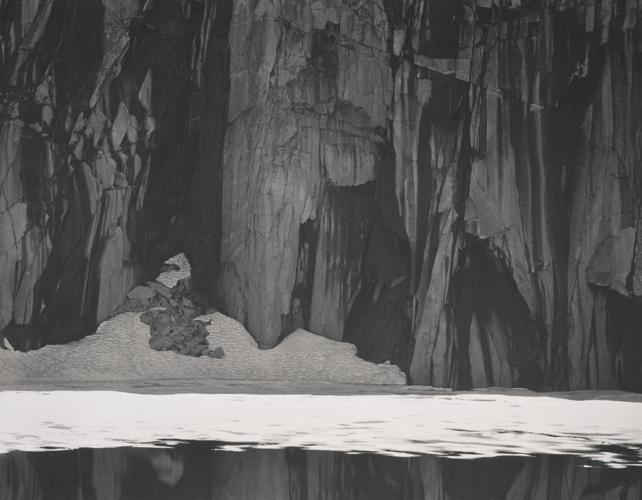
Ansel Adams, “Frozen Lake and Cliffs,” 1932. Center for Creative Photography, University of Arizona: Ansel Adams Archive © The Ansel Adams Publishing Rights Trust
As Schaefer would later write in a book about the origins of the CCP, “Ansel, though somewhat surprised by the direct nature of my suggestion, responded by saying that he was not interested in having his work stand as an isolated collection. If, however, the university were willing to think in broader terms and include the works of many other photographers, he would be interested in exploring the possibilities.”
Today, the center at 1030 N. Olive Road on the U of A campus holds more than 120,000 works by over 2,200 photographers. It also serves as the permanent home for archival collections of some 300 masters of the medium, including Adams, who died in 1984.
The Center for Creative Photography is celebrating its 50th anniversary with a new exhibition designed to showcase the depth and variety of what has become one of the world’s largest and most important research repositories for photography.
“Picture Party: Celebrating the Collection at 50” opened on May 3 and runs through Dec. 20 in the center’s Alice Chaiten Baker Interdisciplinary Gallery. Admission to the show is free.
“It’s our 50th birthday, so it seemed perfect to throw ourselves a party in the form of a show,” said CCP Chief Curator Rebecca Senf. “The curators are like the party hosts, and the viewers are like the party guests.”
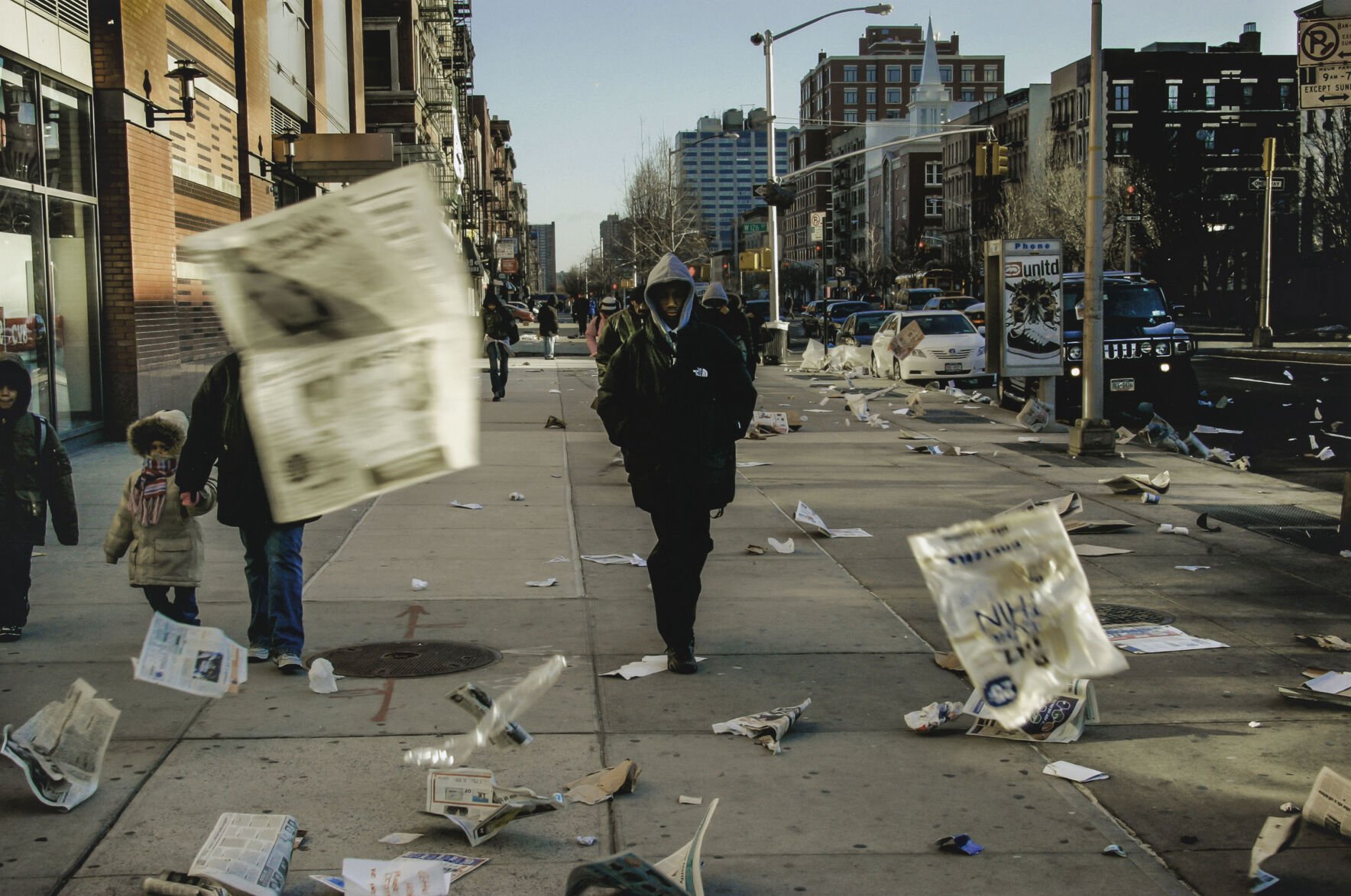
Ozier Muhammad, “Blown Headlines”: High winds blow loose newspaper pages around 125th street in Harlem near the IRT Subway entrance as some people make their way to work that morning, 2006. Inkjet print, 35.6 x 52.7 cm. Center for Creative Photography, University of Arizona: purchased with funds provided by the Center for Creative Photography Photojournalism Fund © Ozier Muhammad/NYT
Senf said the anniversary exhibition has been in the works since 2023, when Todd Tubutis joined the center as its director.
So how did they choose a few dozen representative images and objects from a library of tens of thousands?
“We got to thinking about what the collection is, what the collection means, and what the value is of the collection,” Senf said. “We started looking at it as a renewable resource.”
By selecting individual items and grouping them together in different ways, the collection can be used to “tell an infinite number of stories,” she said.
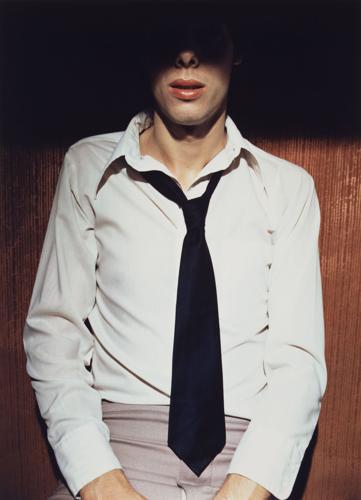
The “Picture Party” highlights examples of that. One exhibit brings together nearly a century’s worth of landscapes by Adams and others. Another assembles portraits from different photographers and different eras into a classic salon-wall-style display.

Jo Ann Callis, “Man with Tie,” 1977. Dye imbibition print, Center for Creative Photography, University of Arizona: Purchase © Jo Ann Callis
The exhibition features about 80 works of art and 20 so-called “archival objects,” Senf said. It spans nearly the entire history of the art form, from images captured in the past few years to a 19th-century daguerreotype of a sleeping child made by a prominent Boston portrait studio less than a decade after the invention of the photographic process.
Such daguerreotypes are extremely rare and valuable, but the center has four of them in its collection, all donated by Adams, Senf said. “It’s a treasure.”
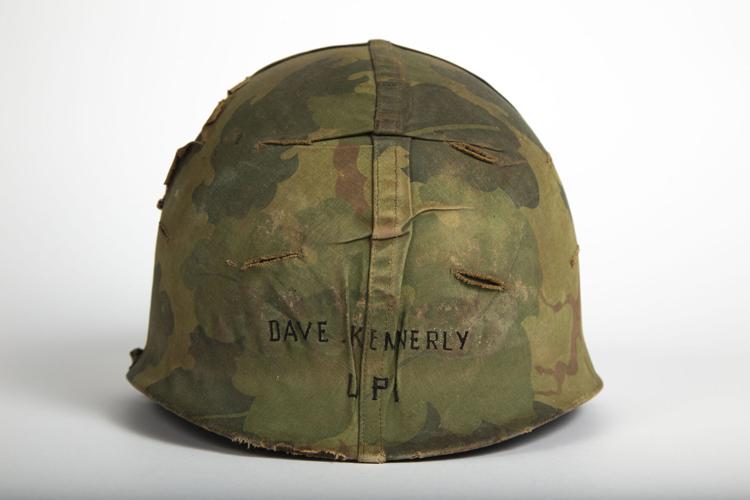
The new exhibit also features an assortment of personal items meant to evoke a physical connection to some of the celebrated photographers collected at the center — Lola Álvarez Bravo’s sunglasses; Edward Weston’s wedding ring; Pulitzer-Prize winner David Hume Kennerly’s helmet from the Vietnam War; W. Eugene Smith’s ID card, complete with his fingerprints; the body armor photojournalist Louie Palú wore in Afghanistan; and some of the dodging tools Ansel Adams used to create his coveted prints.

A helmet worn during the Vietnam War by Pulitzer-Prize photographer David Hume Kennerly. David Hume Kennerly collection, AG 272, Box 54.
Adams is “something of a touchstone” for the CCP, Senf explained, so he serves a similar role in the anniversary exhibit.
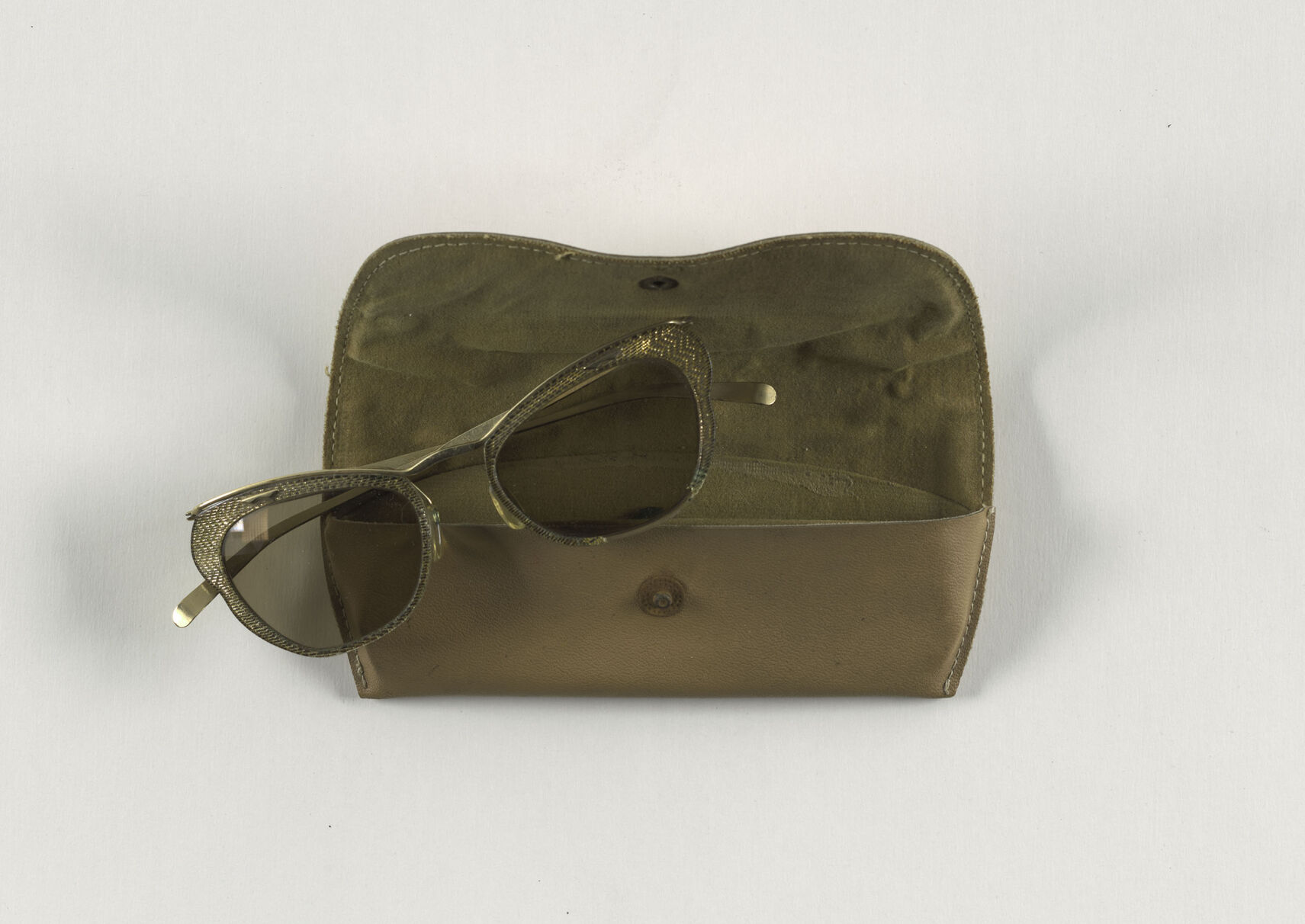
A pair of sunglasses and a case belonging to important Mexican photographer Lola Álvarez Bravo. Lola Álvarez Bravo archive, AG 154, Box 6.
But the “Picture Party” also features some of the center’s newest acquisitions and work that has never been displayed before by artists who aren’t exactly household names.
“There are photographers in this show that I learned about in the course of curating it. They were new to me,” Senf said. “I’ve been here 18 years, and I don’t know all the works in the collection.”

