

Q: What are my options for an aging pool? We rarely use our pool anymore, and it would be nice not to have the expense of keeping it up.
A: Shutting down a pool goes beyond turning the motor off. Even if you drain it initially, rainwater will partially fill the pool, causing a hazard. Odors and a haven for mosquito breeding are the reasons for not choosing this option. Here are some good options for repurposing the space your pool occupies:
Fill it: Collapsing a pool and filling it requires a permit. There are very specific requirements to filling in a pool that include how deep the pool needs to be collapsed and what it is to be filled with and capping electrical lines. Demolition will include collapse of the pools structure and deck. Fencing will need to be removed and possibly some of the immediate landscape. You will need to provide access to your backyard for the equipment necessary to break down the walls and either haul off the debris, or use it as backfill in the pool cavity. You will need to take these costs into account as you make your decisions.
Deck option: This option doesn’t require the associated damage of removal. One company, Retire My Pool, has an innovative way to retire a pool. They build a supporting structure of wood or metal in the empty pool. A deck of composite wood is built and fits in the water space at deck level. Existing water features or boulders can stay in place and add character to the deck. Pool equipment can be turned off and disconnected but does not have to be removed. The deck becomes a new place for other activities like games or entertaining.
Sunken fire pit: Similar to the deck option, this entails designing the pool cavity to accommodate seating around a fire pit. Depending on the rules for firepits in your jurisdiction, you may want to consider gas logs. Some things to consider include:
- Leveling the pool bottom: The sloping floor of the pool will need to be flattened out for seating. This may require a fill option which may entail needing equipment access. See some of the concerns mentioned in the ‘Fill it’ section.
- Access: You may be able to use the steps already in your pool. If you don’t have steps, you will need to build some.
- Drainage: The build-up of rainwater can be managed by drilling or creating holes in the pool floor to allow accumulated rainwater to seep into the ground below. With heavy rains you may want to think about a sump pump solution.
Garden: This is another fill-in option. After either removing the pool floor or large portions of it, backfill will be necessary to create the garden bed. Plan your garden to ensure proper soil mixtures are installed. Consider how you want to water the garden, hand water by a hose or an irrigation system. Each option has cost implications.
Pond: Creating a pond can be a beautiful adaptation of your pool. The oasis-like setting of moving water that can be created transforms your outdoor living area. There are many options with this solution. Here are a few considerations to ponder.
- Think about the level of maintenance you are willing to engage in or hire.
- Aquatic plant life will be a crucial consideration. Lots of choices out there.
- Do you want fish in the pond? This will affect the design. Use boulders and rock formations to create “cave like” places for the fish to hide from predators.
- Preparation of the pool will take some effort. You will need to remove all the chemical residue that is harmful to an organic mini ecosystem that will be your pond.
- Removal of the filtration system as it will not be needed. The pond will have a biofiltration system of its own.
With any of the options mentioned above, begin by checking with your local jurisdictions and your HOA, if you have one, before engaging in any project.
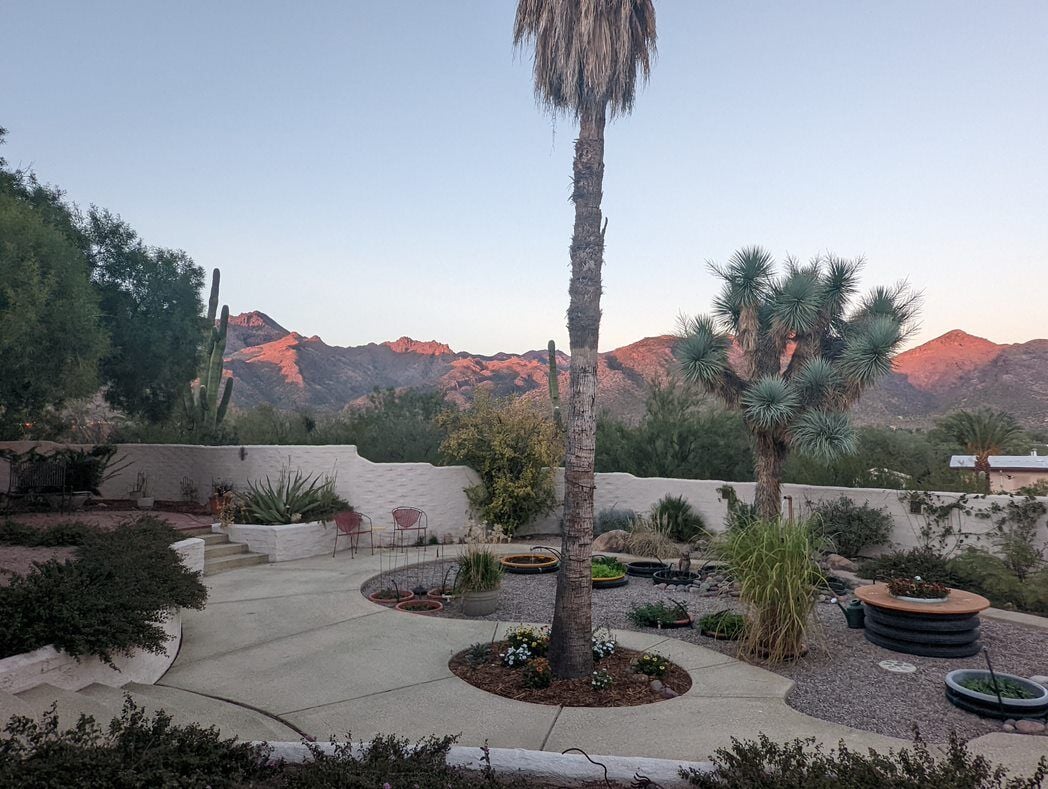
Lisa Maguire and Mike Schaefer converted their Tucson pool into a giant rainwater harvesting tank in 2010. They used recycled materials and did the work themselves.

