

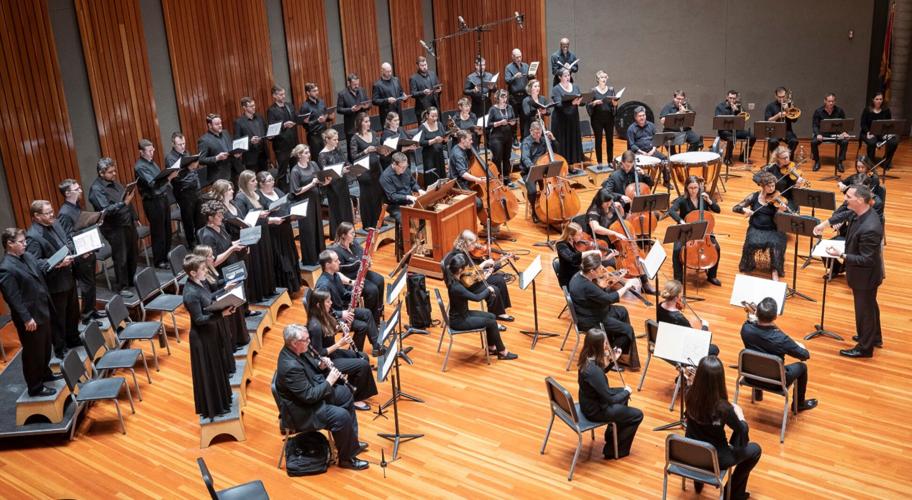

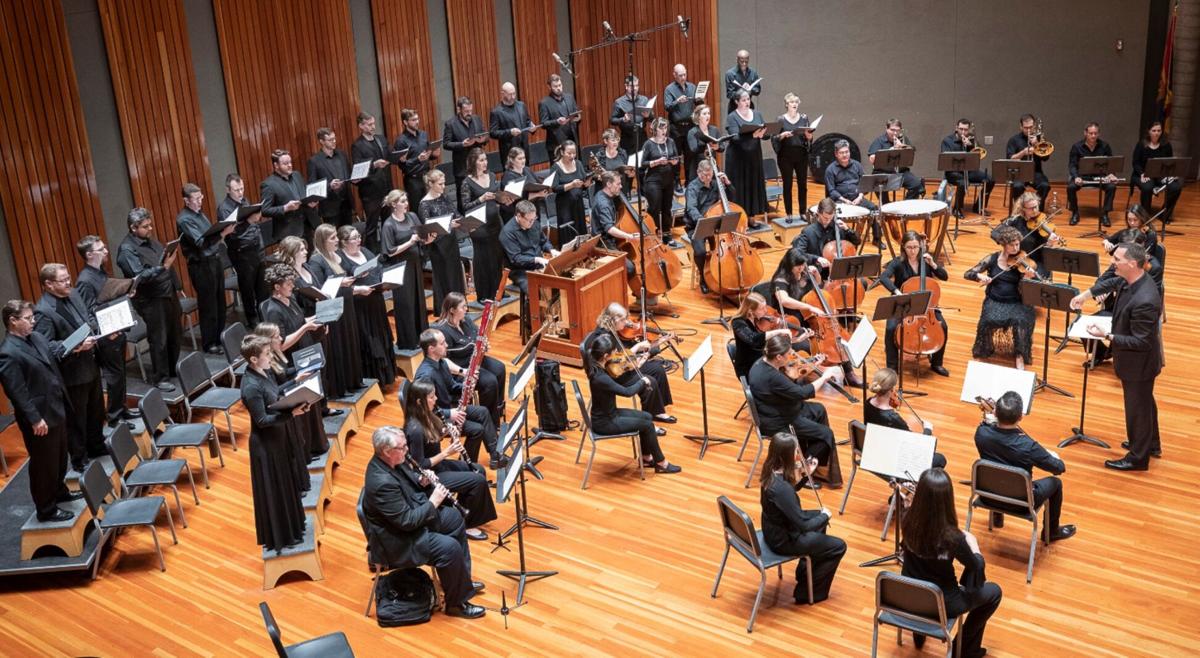
True Concord Voices & Orchestra opens its 20th anniversary season next week the way it’s opened a number of seasons since Eric Holtan launched the Grammy-nominated ensemble: Focusing on American music.
“This program, ‘Songs of America,’ is a signature program of True Concord,” Holtan said.
The program opens with Randall Thompson’s 1959 work “Frostiana: Seven Country Songs” and includes Stephen Foster’s classics “Jeanie with the Light Brown Hair” and “Swanee River.” But in the mix, Holtan has programmed the Mexican folk song “La Llorona” (“The weeping woman”) and “Tipitin,” a song written by Maria Grever, Mexico’s first female composer to gain international acclaim.
“Songs of America” aren’t necessarily songs composed by Americans so much as “the songs and the music that celebrate the incredible diversity of who we are as American people,” Holtan said.
The program connects the dots from the African-American spirituals “He’s Got the Whole world in His Hands” and “Ain’-a That Good News!” to “Gentle Annie” and “Beautiful Dreamer.”
“It’s eclectic and diverse,” Holtan said.
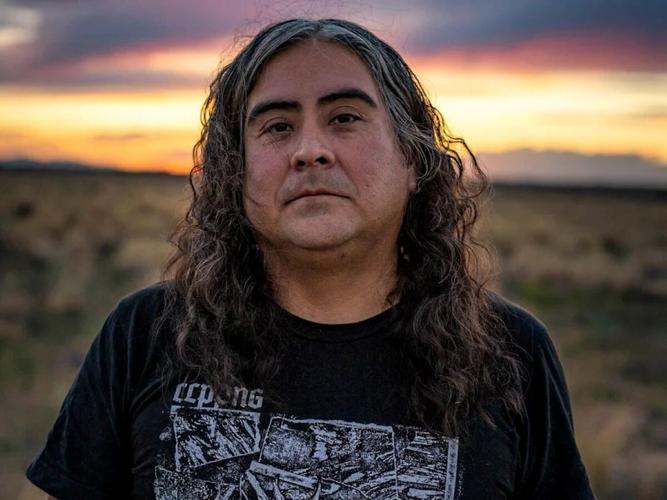
One voice Holtan really wanted to include this year was Raven Chacon, the composer, musician and visual/multimedia artist from the Navajo Nation whose 2021 chamber work “Voiceless Mass” won a Pulitzer Prize for music last year. It was the first time a Native American composer won a Pulitzer for composing.

Raven Chacon
Chacon, who spent his early years at Fort Defiance on the Navajo Nation before his family moved to Albuquerque, wrote “Voiceless Mass” after his 2021 video project “Three Songs.”
“Three Songs” features a trio of Indigenous women — one each from the Navajo Nation, Yuchi Nation and Seminole Nation — each singing songs in their traditional languages about incidents in their tribal history of displacement, massacre, forced relocation and forced migration.
The Navajo woman sings about the Navajo Long Walk at the Peabody coal mining conveyor belt near Tuba City. The Yuchi is on the banks of the Arkansas River singing about the people who died on the Trail of Tears en route to Oklahoma. And a Seminole elder stands on the tribal nation in Oklahoma singing about the forced relocation of her people from their southeastern U.S. homeland.
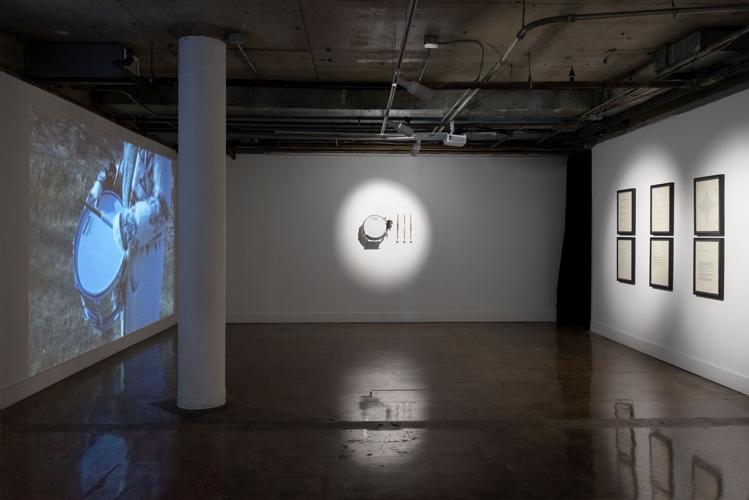
Each woman’s songs are connected by the snare drum, which was used by the Cavalry to signal U.S. participation in these atrocities, Chacon said during a phone call late last month.
Chacon said using the snare drum “was a way to reclaim the instrument and use it to take on the burden of singing those songs.”
In “Voiceless Mass,” Chacon uses the organ as the primary voice to express how the Catholic Church and other Christian churches made his community and other minority communities voiceless.
“There’s a history of Indigenous people of suppressing not only voices of those people both in the conversion of Indigenous people into Catholicism and other Christian beliefs but also leading to residential schools, leading to a loss of language, leading to a loss of voice,” explained Chacon, who was named last week as one of 19 MacArthur Fellows (aka “genius grant”). “I wanted to write a piece in the style of a Mass that you might hear in a service, but without liturgical text.”
“It’s a piece that sends a powerful message and he doesn’t want that message diluted in any way,” Holtan said.
True Concord will perform “Voiceless Mass” as Chacon intended, with musicians placed around the space to create a surround sound effect, with the organ as the central voice.
“These sounds come together in a thought-provoking, compelling way that Raven really intended,” Holtan said. “You have to be there to really experience it and feel its power.”
True Concord’s performance of “Voiceless Mass” is the work’s Southwest premiere.

“Raven Chacon: While Hissing” is on display at MOCA Tucson through Dec. 17. The exhibit celebrates sound as a medium for resistance and connection.
Jocelyn Hagen researched 46 prominent women whose voices are included in the text of her new work "Here I Am," commissioned by Tucson's True Concord Voices & Orchestra.

