

Christmas Day means no work and no school for millions across the United States, but what about the day after?
President Donald Trump signed an executive order proclaiming Dec. 26 (as well as Christmas Eve) a federal holiday in 2025, but some countries already recognize the date as its own holiday.
Boxing Day, observed in Britain, Canada and beyond, is a celebration believed to have originated in Victorian times. While the holiday did not make its way to the U.S. with the early colonists, it is still popular elsewhere, giving revelers not only another day free from work, but a second flurry of gift-giving, shopping, eating and sports-watching.

Here's what to know about Boxing Day, its origins and how it became the celebration it is today.
What is Boxing Day?
Boxing Day is a holiday celebrated on Dec. 26, following Christmas Day. It is typically marked by gift-giving, celebrations, and sporting events.
When Dec. 26 falls on a Saturday or Sunday, the bank holiday is officially celebrated the following Monday.

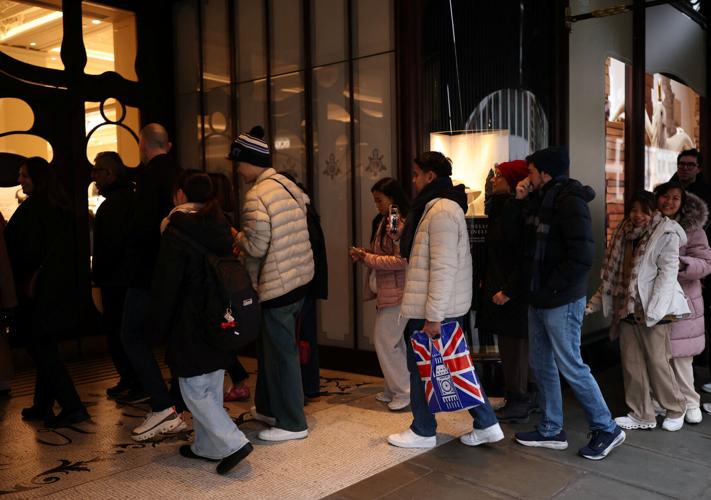
People queue outside Harrods before it opens during Boxing Day sales, in London, Britain, December 26, 2025. REUTERS/Isabel Infantes
Where is Boxing Day celebrated?
Boxing Day is celebrated in Great Britain and some Commonwealth countries, especially Australia, Canada and New Zealand, according to Encyclopedia Britannica.
Origins of Boxing Day
The origins of the holiday are a bit muddled, though the generally accepted theory is rooted in Victorian England.
During the reign of Queen Victoria, servants, tradespeople and the poor typically were given presents. The servants worked on Christmas Day and would have the next day off to go visit their own families. So, according to the Old Farmer's Almanac, the upper class would take leftover food, goods or money and put them in boxes to give out to the poor.
Another theory suggests that it derives from the opening of alms boxes provided by the church, as opposed to gifts given by employers, according to Encyclopedia Britannica.
Dec. 26 also coincides with St. Stephen’s Day, a holiday celebrated in parts of Europe and named after the first Christian martyr who was known for helping the poor, according to Farmer's Almanac.

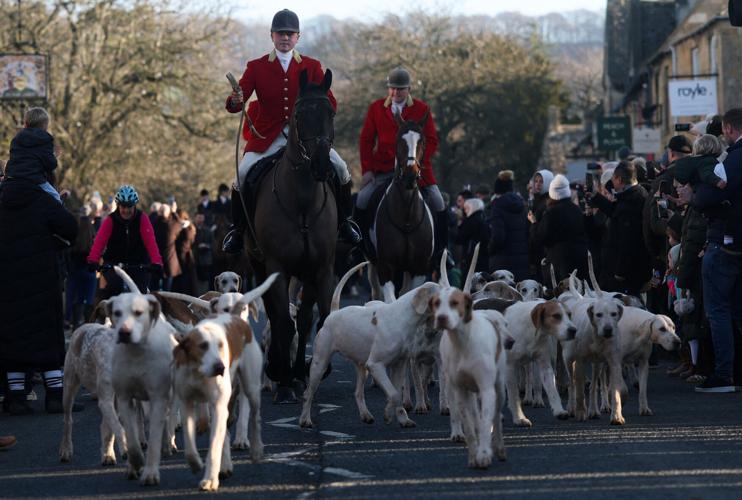
Members of the North Cotswold Hunt take part in the annual Boxing Day Meet along the High Street in the village of Broadway, Cotswolds, Britain, December 26, 2025. REUTERS/Hannah McKay
Evolution of Boxing Day
While the holiday had its roots in giving back to the poor, like many modern celebrations, it's shifted and become more associated with shopping and sports.
Boxing Day is an official bank holiday in Britain, Canada, New Zealand and most of Australia. While boxes aren't typically given to the poor anymore, it's not unusual for service employees to get bonuses around this time of year, says Britannica.
It's typical for families to invite others over to enjoy a casual lunch made from Christmas Day leftovers. Many will also head out to stores to shop post-Christmas sales or make exchanges and returns.
Traditionally, sporting events include horse races, foxhunting, and rugby, according to Britannica. Foxhunting was later modified or banned altogether, with football matches taking its place. Other popular sporting events include ice hockey, cricket and boxing.
Photos show a world aglow with holiday lights

FILE - The Rockefeller Center Christmas tree stands illuminated after the 93rd annual tree lighting ceremony in New York, Dec. 3, 2025. (AP Photo/Yuki Iwamura, File)

FILE - Herbum, a grass tuft with stems that stretch skyward, is on display as part of the Chicago Botanic Garden's Lightscape holiday event in Glencoe, Ill., Nov. 25, 2025. (AP Photo/Erin Hooley, File)

FILE - Lego portraits of both President George Washington and President Donald Trump decorate the Green Room as part of the White Christmas theme "Home is Where the Heart Is," during a press preview in Washington, Dec. 1, 2025. (AP Photo/Evan Vucci, File)

FILE - People listen to a concert amid a rainfall during a Christmas tree lighting ceremony at Syntagma Square, in Athens, Greece, Nov. 27, 2025. (AP Photo/Petros Giannakouris, File)

FILE - Holiday lights adorn a roadway at the Nemacolin Woodlands Resort on light-up night in Farmington, Pa., Nov. 28, 2025. (AP Photo/Gene J. Puskar, File)

FILE - People gather for a concert during a tree lighting event at Skanderbeg Square in Tirana, Albania, Dec. 6, 2025. (AP Photo/Hameraldi Agolli, File)

FILE - People walk along Kabatas ferry terminal decorated with lights for the holidays, in Istanbul, Turkey, Dec. 10, 2025. (AP Photo/Francisco Seco, File)

FILE - In a timed exposure, vehicles pass a pair of cowboys boots standing 40 feet tall and 30 feet long, decorated with lights for the holidays, in San Antonio, Tex., Dec. 9, 2025. (AP Photo/Eric Gay, File)

FILE - People walk across a bridge decorated with strands of holiday lights at a Christmas fair in Bucharest, Romania, Dec. 3, 2025. (AP Photo/Andreea Alexandru, File)

FILE - A performer attends a light show at Ala-Too Square decorated for the New Year and Christmas festivities in Bishkek, Kyrgyzstan, Dec. 15, 2025. (AP Photo/Vladimir Voronin, File)

FILE - A woman poses for a selfie inside a giant Christmas ornament illuminated with holiday lights in Dakar, Senegal, Dec. 15, 2025. (AP Photo/Misper Apawu, File)

FILE - A boy runs toward a model train illuminated with holiday lights in St. Petersburg, Russia, Dec. 15, 2025. (AP Photo/Dmitri Lovetsky, File)

FILE - Media art illuminates the facade of Gwanghwamun, the main gate of the 14th-century Gyeongbok Palace, during Seoul Winter Festa in Seoul, South Korea, Dec. 12, 2025. (AP Photo/Ahn Young-joon, File)

FILE - A menorah is lit to celebrate Hanukkah in Trafalgar Square, London, Dec. 16, 2025. (AP Photo/Kin Cheung, File)

FILE - A person walks past a display of holiday lights on a building at a park in Lenexa, Kan., Dec. 10, 2025. (AP Photo/Charlie Riedel, File)

FILE - People watch a multimedia light show cast on the facade of the General Staff Building, as part of the Country of Light festival at Palace Square in St. Petersburg, Russia, Dec. 7, 2025. (AP Photo/Dmitri Lovetsky, File)

FILE - Gabriel Taylor, center, sprays other children with bubbles at Sundance Square after a Christmas tree lighting ceremony, in Fort Worth, Texas, Dec. 2, 2025. (AP Photo/Tony Gutierrez, File)

FILE - Holiday lights are reflected in a rain-soaked plaza in Makati, Philippines, Dec. 9, 2025. (AP Photo/Aaron Favila, File)

FILE - In this timed exposure a man is silhouetted against holiday lights as he walks by in Lenexa, Kan., Dec. 10, 2025. (AP Photo/Charlie Riedel, File)

FILE - The Eiffel Tower is framed by Christmas tree decorations that adorn the Les Galeries Lafayette department store rooftop in Paris, Dec. 1, 2025. (AP Photo/Aurelien Morissard, File)

FILE - Lights illuminate the Christmas market at the Gendarmenmarkt square in Berlin, Germany, Nov. 24, 2025. (AP Photo/Markus Schreiber, File)

FILE - A home is decked out in holiday lights and Christmas decorations in Strongsville, Ohio, Dec. 2, 2025. (AP Photo/Sue Ogrocki, File)

FILE - People visit the holiday lights display at the Cheekwood Estate and Gardens in Nashville, Tenn., Dec. 8, 2025. (AP Photo/George Walker IV, File)

FILE - A man playfully tosses a child in the air as visitors walk through the Winter Cathedral light display at the Chicago Botanic Garden's Lightscape holiday event in Glencoe, Ill., Nov. 25, 2025. (AP Photo/Erin Hooley, File)

FILE - Visitors look at the installations on display along the Christmas light trail at Kew Gardens in London, Nov. 13, 2025. (AP Photo/Kin Cheung, File)

FILE - An illuminated giant frame is set up at the Christmas market for visitors to make souvenir photos of themselves, in Frankfurt, Germany, Nov. 25, 2025. (AP Photo/Michael Probst, File)

FILE - A child rides on a merry-go-round at a Christmas fair in Bucharest, Romania, Dec. 3, 2025. (AP Photo/Andreea Alexandru, File)

