

To attract the brightest minds to America, President Donald Trump proposed a novel idea while campaigning: If elected, he would grant green cards to all foreign students who graduate from U.S. colleges.
“It’s so sad when we lose people from Harvard, MIT, from the greatest schools,” Trump said during a podcast interview last June. “That is going to end on Day One.”
That promise never came to pass. Trump’s stance on welcoming foreign students has shifted dramatically. International students have found themselves at the center of an escalating campaign to kick them out or keep them from coming as his administration merges a crackdown on immigration with an effort to reshape higher education.
An avalanche of policies from the Trump administration — such as terminating students’ ability to study in the U.S., halting all new student visa interviews and moving to block foreign enrollment at Harvard — have triggered lawsuits, countersuits and confusion. Foreign students say they feel targeted on multiple fronts. Late Wednesday, Trump himself took the latest action against international students, signing an executive order barring nearly all foreigners from entering the country to attend Harvard.
In interviews, students from around the world described how it feels to be an international student today in America. Their accounts highlight pervasive feelings of fear, anxiety and insecurity that have made them more cautious in their daily lives, distracted them from schoolwork and prompted many to cancel trips home because they fear not being allowed to return.
For many, the past few months have forced them to rethink their dreams of building a life in America.
Markuss Saule, a freshman at Brigham Young University-Idaho, took a recent trip home to Latvia and spent the entire flight back to the U.S. in a state of panic.
For hours, he scrubbed his phone, uninstalling all social media, deleting anything that touched on politics or could be construed as anti-Trump.
“That whole 10-hour flight, where I was debating, ‘Will they let me in?’ — it definitely killed me a little bit,” said Saule, a business analytics major. “It was terrifying.”
As a student in Minnesota three years ago, he felt like a proud ambassador for his country.
“Now I feel a sense of inferiority. I feel that I am expendable, that I am purely an appendage that is maybe getting cut off soon,” he said. Trump’s policies carry a clear subtext. “The policies, what they tell me is simple. It is one word: Leave.”
A concern for attracting the world’s top students was raised in the interview Trump gave last June on the podcast “All-In.” Can you promise, Trump was asked, to give companies more ability “to import the best and brightest" students?
“I do promise,” Trump answered. Green cards, he said, would be handed out with diplomas to any foreign student who gets a college or graduate degree.
Trump said he knew stories of “brilliant” graduates who wanted to stay in the U.S. to work but couldn’t. “They go back to India, they go back to China” and become multibillionaires, employing thousands of people. “That is going to end on Day One.”
Had Trump followed through with that pledge, a 24-year-old Indian physics major named Avi would not be afraid of losing everything he has worked toward.
After six years in Arizona, where Avi attended college and is now working as an engineer, the U.S. feels like a second home. He dreams of working at NASA or in a national lab and staying in America where he has several relatives.
But now he is too afraid to fly to Chicago to see them, rattled by news of foreigners being harassed at immigration centers and airports.
“Do I risk seeing my family or risk deportation?” said Avi, who asked to be identified by his first name, fearing retribution.
Avi is one of about 240,000 people on student visas in the U.S. on Optional Practical Training — a postgraduation period where students are authorized to work in fields related to their degrees for up to three years. A key Trump nominee said he would like to see an end to postgraduate work authorization for international students.
Avi’s visa is valid until next year but he feels “a massive amount of uncertainty.”
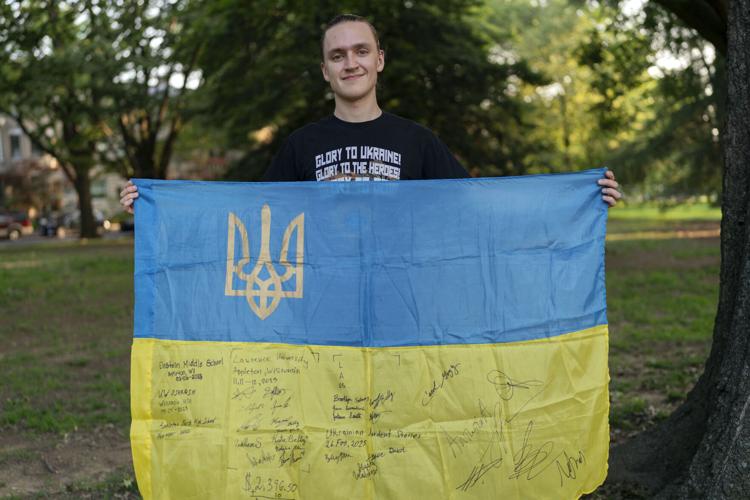
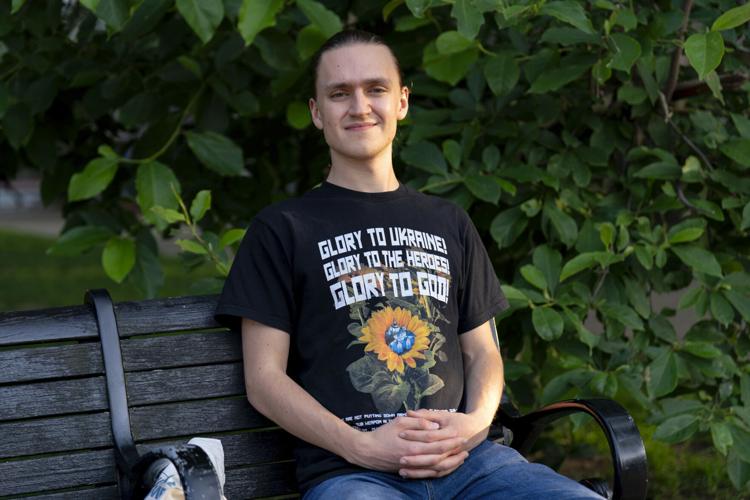
Vladyslav Plyaka came to the U.S. from Ukraine as an exchange student in high school. As war broke out at home, he stayed to attend the University of Wisconsin.
He was planning to visit Poland to see his mother but if he leaves the U.S., he would need to reapply for a visa. He doesn’t know when that will be possible now that visa appointments are suspended, and he doesn’t feel safe leaving the country anyway.
He feels grateful for the education, but without renewing his visa, he’ll be stuck in the U.S. at least two more years while he finishes his degree. He sometimes wonders if he would be willing to risk leaving his education in the United States — something he worked for years to achieve — if something happened to his family.
“It’s hard because every day I have to think about my family, if everything is going to be all right,” he said.
It took him three tries to win a scholarship to study in the U.S. Having that cut short because of visa problems would undermine the sacrifice he made to be here. He sometimes feels guilty that he isn’t at home fighting for his country, but he knows there’s value in gaining an education in America.
“I decided to stay here just because of how good the college education is,” he said. “If it was not good, I probably would be on the front lines.”

