

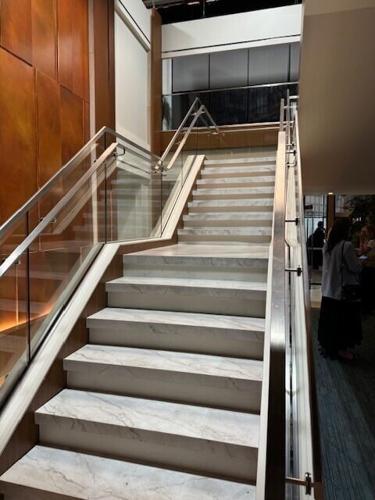

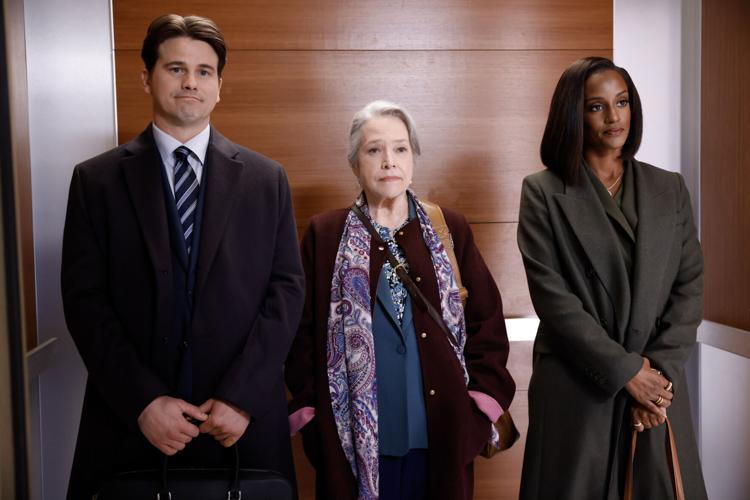
LOS ANGELES – If that staircase in “Matlock” looks familiar, you were probably a viewer of “Good Sam,” a medical series that used the same set.
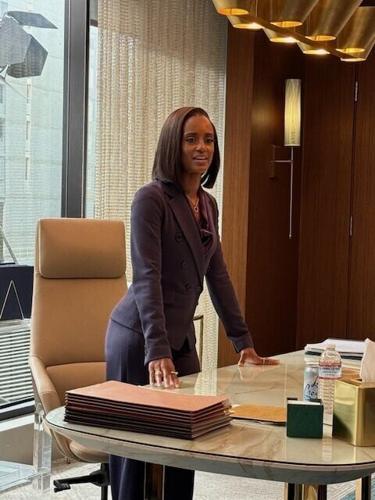
Skye P. Marshall, who stars in both series, remembers crying on the steps during the run of “Good Sam” and now, sweeping by them as a power attorney in the CBS drama “Matlock.”
Oddly, the space works for both.
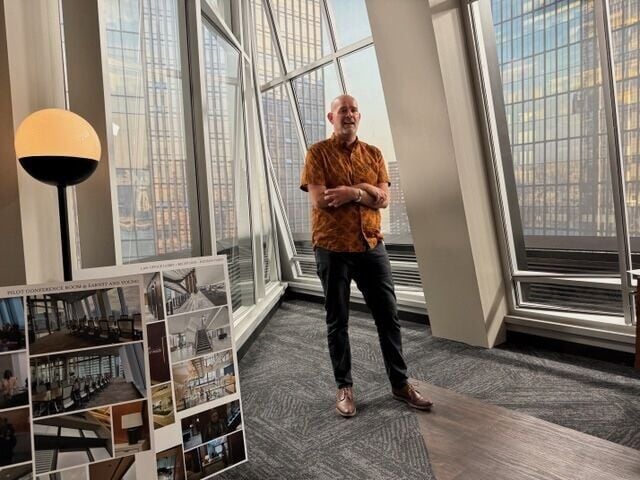
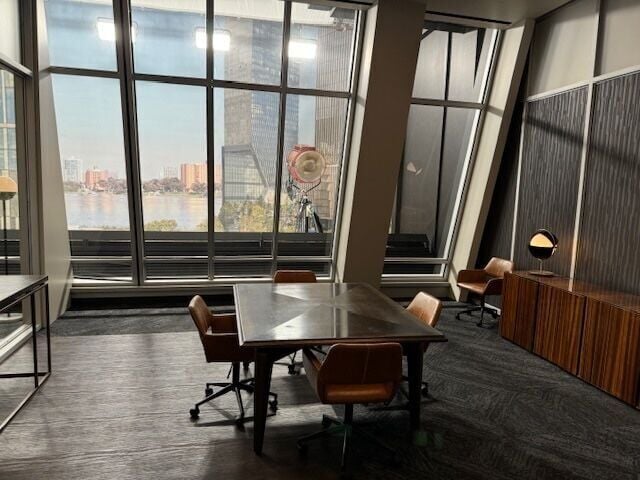
In “Matlock,” one corner alone can be Beau Bridges’ office, a conference room or the human resources department, according to Adam Rowe, production designer on both shows. “Every quadrant of the set changes in every episode. From a design perspective, it’s really exciting. The stakes (at the law firm) are high, so there’s a lot to lose.”
Filled with glass, the set gives viewers a chance to see plenty of reflections. “There are often times when you can see someone through the glass…we’re all about looking in,” Rowe says. “That’s part of the show.”
Because the set was so elaborate (and sturdy), it wasn’t destroyed after “Good Sam” ended. Instead, it was brought from Canada to the Warner Bros. lot, where it was redressed as “Matlock’s” Jacobson/Moore law firm.
Recycling set pieces has become increasingly common in Hollywood, largely because it’s expensive to build new sets for shows that could have short runs. “Good Sam,” for example, lasted 13 episodes. Conversely, “Matlock” has been renewed for a second season.
Jennie Snyder Urman served as executive producer on “Good Sam” and now holds that title on “Matlock.”
“What I got from Jennie is the show is always moving forward,” Rowe says. “The (law firm’s) seven floors should never feel small to our audience.”
“Matlock,” instead, is populated by millionaires with “Oprah Winfrey money,” as the insiders like to call it.
Key to the show’s look is its “aspirational” feel, Rowe says. “It’s not representing a ‘real’ legal world. It’s about holding you in and pulling your heartstrings.”
Rowe views it like a puzzle, making certain spots familiar others, entirely new.
Reusing another show’s set was a practical move, particularly since series budgets aren’t what they used to be. “We’re making a show that’s going to feel big and grand and we’re doing it in a post-strike era,” Rowe says.
While it’s shot in Los Angeles, “Matlock” takes place in New York. Rowe sees it somewhere in the Hudson Yards portion of the city.
“Matlock” occupies two soundstages at Warner Brothers, which means “we’re constantly manipulating Stage 9 while the company is on Stage 8.”
Even the space used as a courtroom changes, Rowe says. “I actually get excited about that. How can I make the judge look slightly different? How can I tell a story. What’s fun about this show is they allow me those changes.”
Producers, in turn, call Rowe a genius. “I’m never going to let audiences get too comfortable,” he says.
And when times get tough? “We have what’s called the ‘cry’ patio where people go to cry and tell secrets.”
Which, in case Marshall is interested, is much better than “Good Sam’s” staircase.

