

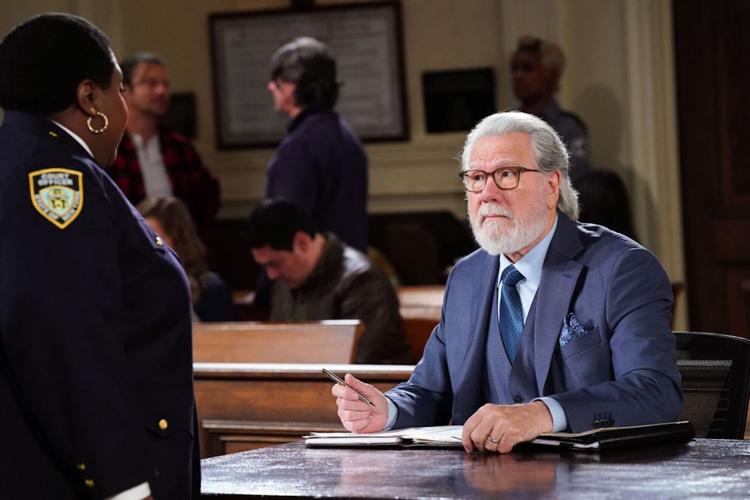
LOS ANGELES – John Larroquette gets a nostalgic twinge every now and then when he’s on the set of the new “Night Court.”
An exact reproduction of the original (even the cafeteria chairs are the same), it conjures moments when he, Harry Anderson, Markie Post and others created the original magic. When he walked on the set of the reboot, Larroquette said he felt a sense of sadness.

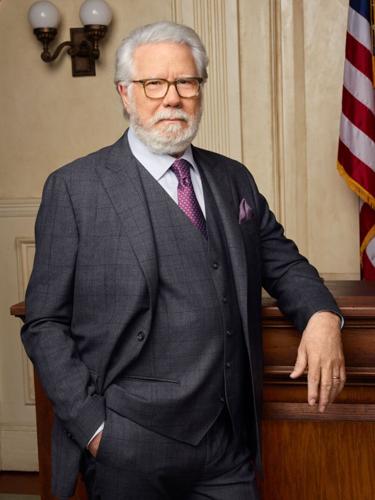
John Larroquette stars as Dan Fielding in "Night Court."
“I am literally the only one left on the door, like Leo in ‘Titanic,’ and I wondered, ‘Will I make it?’ It was a bit of a ghost town.”
When executive producer and star Melissa Rauch pitched the idea of a return, he told her, “You don’t need me...it stands on its own.”
After they talked, however, the now 76-year-old Larroquette realized it might be interesting to revisit a character he played more than three decades earlier. “Where’s the funny in him considering he can’t be who he was in the ‘80s? It began to appeal to me.”

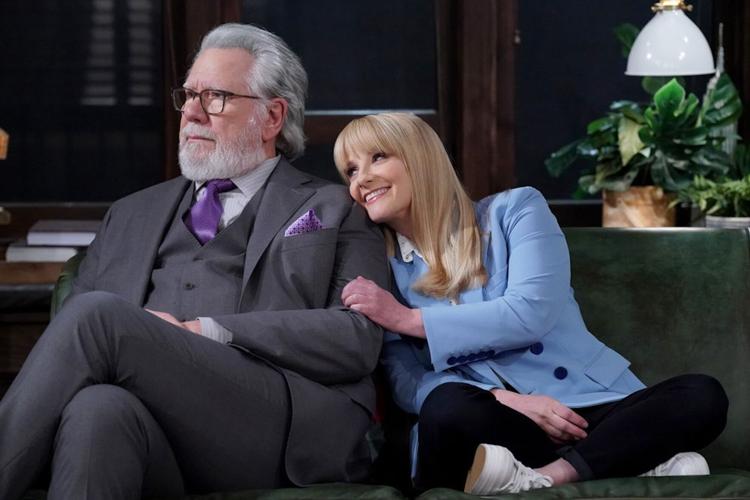
John Larroquette and Melissa Rauch co-star on "Night Court."
Now, as the comedy nears its third season, the four-time Emmy winner says it is possible to go home again.
Dan Fielding, the character he played in both versions, hasn’t changed in some ways. “His ego is still larger than the room,” Larroquette says. “He’s still a narcissist. He’s still a bit of a misanthrope. He’s still egotistical, he’s still a man-child in many ways. But we found way to make him funny without the baggage of that character from 35 years ago. Nobody wants to see that. So we try to find other ways for him to be funny and I think we’ve succeeded.”

John Larroquette as Dan Fielding.
Larroquette credits the show’s writers with making him funny but Rauch says he’s the secret weapon. “It’s that Buster Keaton quote that comedians do funny things but good comedians do things funny,” she says. “You can watch him pick up a pencil or just have a reaction and there’s brilliance in every move and every look. It’s a true master class getting to watch him work.”
On the original series, several actors were over 6-feet tall. Now, because Rauch is under 5 feet, the disparity between her and Larroquette is noticeable.
“People would look at me in real life during the original and go, ‘Oh my god, you’re so much taller than I thought you were.’” Now, it’s much different.
As much as viewers remember the core actors on the original “Night Court,” “there was almost a revolving door,” the first years of the series, Larroquette says. Producer Reinhold Weege was looking for the right mix. “The court clerks changed and certainly the defense attorney changed a lot, so it was finding its way.”
Now, the new “Night Court” has passed its shakedown period and, thanks to additions the second season, has what Larroquette calls a “solid foundation.”
After the sixth season of the original, executives talked about spinning his Dan Fielding into his own series.
“I declined to do that because, I thought, it’s a very indelible character and once this is over, (I want to) go on and hopefully do something else.”

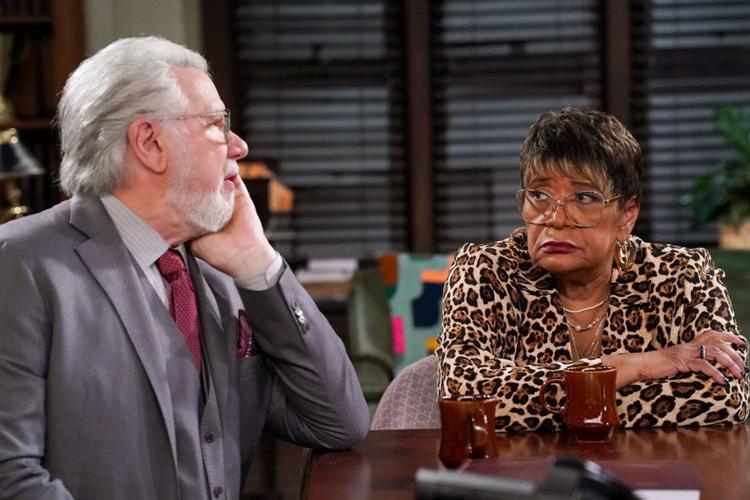
Marsha Warfield, a co-star on the original "Night Court," appears with John Larroquette in an episode of the reboot.
The talk subsided. Larroquette did his own show, won a Tony on Broadway for “How to Succeed in Business Without Really Trying” and appeared in films and other television series.
Then Rauch came calling.
Once Larroquette said yes and got involved, he realized the decision was a right one. Rauch and her husband, Executive Producer Winston Rauch, “really had the heart of the show in their hands. I became sort of pleased with coming back. So much of my career was sort of buoyed by this show, so it’s very important to me in many ways. I’d like to continue doing it for a while, if I can.”
"Night Court" airs on NBC and Peacock.
Classic TV quotes that are now part of everyday vocabulary
‘Heeeere’s Johnny!’
Updated
With these words, sidekick Ed McMahon opened each episode of “The Tonight Show Starring Johnny Carson,” starting in 1962. The line took on new meaning after its improvised use in the 1980 horror movie “The Shining” by Jack Nicholson’s increasingly deranged character as he broke down a door with an axe.
‘A three-hour tour.’
Updated
Typically used to refer to something that has taken a disastrously long time, the line comes from the theme song of “Gilligan’s Island.” The ship’s passengers and crew had set off for “a three-hour tour” from Honolulu before being shipwrecked in a storm.
‘You rang?’
Updated
Best delivered in a deep slow voice, this was the catchphrase of Lurch, the laconic butler on “The Addams Family” series. It was accompanied by the sound of a gong as Lurch ran the household for Morticia and Gomez Addams, Uncle Fester and the rest of the creepy, kooky family. Despite its outsized influence, the original television show ran for just two seasons from 1964 to 1966 on ABC.
‘Th-Th-Th-That’s all folks.’
Updated
Porky Pig signed off many a Looney Tunes cartoon from 1937 to 1946 with “Th-Th-Th-That’s all folks.” The running gag of the porcine character’s stutter, which originated with a real-life stutter by the character’s first voice actor Joe Doughterty, prompted the National Stuttering Project of San Francisco to picket Warner Bros. in a 1991 protest. The studio responded with a $12,000 grant to the group and a series of public service announcements against bullying people who stutter.
‘Is that your final answer?’
Updated
Regis Philbin, the host of “Who Wants to Be a Millionaire?” would ask this question of contestants on the television quiz show. Players went through rounds of increasingly difficult multiple-choice questions, with options to use their three lifelines—a 50/50 option to eliminate two of the four answers, asking the audience for its collective opinion, and phoning a friend.
You may also like: Best 'Simpsons' episodes of all time
‘The tribe has spoken.’
Updated
From the very first show of the long-running hit series “Survivor,” these were the decisive words spoken to the losing contestants being sent home. Host and executive producer Jeff Probst has said that after the popularity of Regis Philbin asking “Is that your final answer?” on “Who Wants to Be a Millionaire?” he knew the survival competition needed a phrase that would catch on with the public.
‘Come on down!’
Updated
Contestants on “The Price is Right” are chosen from the studio audience by the game show’s host with this invitation. On the show, which debuted in 1972, players guess the price of various items, without exceeding the amount, from appliances to vacation cruise packages and luxury cars.
‘Same Bat-time, same Bat-channel.’
Updated
This was the narrator’s reminder to viewers of the original “Batman” television series in the late 1960s to tune in for the next installment. The show’s storylines were broken up into two episodes, and the first one would end with the Dynamic Duo of Batman and Robin stuck in a seemingly hopeless cliffhanger predicament.
‘What’s up, Doc?’
Updated
Cartoon’s ultimate wise guy, Bugs Bunny, delivers this line in the Looney Tunes series, often munching on a carrot and staring down the barrel of hunter Elmer Fudd’s shotgun. The cartoon rabbit’s mannerism was inspired in part by a scene in “It Happened One Night,” in which Clark Gable was leaning on a fence, snacking on carrots.
‘Winter is coming.’
Updated
The ominous prediction came from the very first episode of what would become the hugely popular eight-season “Game of Thrones.” The warning was a call for vigilance, a need to prepare for harsh times, and a caution about the threat of lurking violence.
You may also like: 30 best episodes of 'Whose Line is it Anyway?'
‘I tawt I taw a puddy tat.’
Updated
“I tawt I taw a puddy tat” is the frequent utterance of Warner Bros.’ Looney Tunes sweet and naive Tweety Pie, typically clueless about how perilously close his nemesis Sylvester the cat may have just been. Tweety Pie made his cartoon debut in 1941, Sylvester in 1947, and the pair, with Sylvester ceaselessly trying to capture the babylike canary, appeared together until 1964.
‘We have a really big show tonight.’
Updated
Television host Ed Sullivan opened most of his entertainment variety shows, which aired on Sunday nights from 1948 to 1971 from a New York City theater, with these promising words. Indeed, “The Ed Sullivan Show” did have some really big shows, including Elvis Presley in 1956 and 1957; the Beatles in 1964; the Doors in 1967; and the Rolling Stones several times, starting in 1964.
‘I want to go to there.’
Updated
Tina Fey delivered this line on “30 Rock,” which she said originated with her young daughter Alice. Fey was the star, creator, writer, and executive producer of the hit comedy that ran seven seasons on NBC. The quote caught on, and it appeared on coffee cups, t-shirts, and other NBC merchandise.
You may also like: Can you answer these real 'Jeopardy!' questions about TV shows?
‘How you doin’?’
Updated
Matt LeBlanc’s “Friends” character Joey Tribbiani made this his trademark pickup line. It’s used not only by the well-meaning, and not so bright, character, but became a running gag on the enormously popular 10-season sitcom.
‘Beep, beep.’
Updated
This was the signature, and only, phrase of the Road Runner character in the Looney Tunes as he outsmarted his adversary Wile E. Coyote. Hoping to catch the speedy bird, Wile E. Coyote employs an endless array of catapults, explosives, and traps in his quest. Each ends in a spectacular fail, with the Road Runner issuing his taunting “Beep, beep” as he eludes capture yet again.
‘Won’t you be my neighbor?’
Updated
Fred Rogers sang these words in the theme song to the children’s show “Mister Rogers’ Neighborhood.” The show, which ran for more than three decades on public television, was beloved for its gentle messages of kindness, acceptance, and courage.
‘Sock it to me!’
Updated
“Rowan & Martin’s Laugh-In” revolutionized television comedy in the 1960s with its quick sketches, silly gags, and a psychedelic decorated wall where comics would pop out to deliver one liners. Those who said the show’s trademark “Sock it to me!” line would suffer consequences like getting doused with water or falling through a trapdoor. The show jump-started careers of such stars as Lily Tomlin, Flip Wilson, and Goldie Hawn.
You may also like: Can you answer these real Jeopardy questions about TV shows?
‘Look! Up in the sky! It’s a bird! It’s a plane! It’s Superman!’
Updated
This was part of the opening title sequence to “Adventures of Superman,” which made its television debut in 1952. A narrator chimes in with the description: “Faster than a speeding bullet! More powerful than a locomotive! Able to leap tall buildings in a single bound!”
‘Good night, John-Boy.’
Updated
On “The Waltons,” a sentimental drama, the Depression-era family living in the Virginia foothills closed each episode bidding one another good night. The order of their “good night” wishes among the Walton parents, grandparents, and seven children varied throughout the show’s 200-plus episodes. John-Boy, the family’s eldest son, was played by actor Richard Thomas.
‘Good night, and good luck.’
Updated
CBS radio correspondent Edward R. Murrow reported from Europe during World War II, where he was posted in London during the Blitz. He adopted his signoff phrase from a saying common at the time among Londoners who would say goodbye, with a reference to the dangers that could lie ahead. Murrow reported on the liberation of the Buchenwald concentration camp and later, back in the United States, was instrumental in reporting that helped turn public sentiment against the fervent anti-Communist scaremonger Sen. Joseph McCarthy.
‘That’s the way it is.’
Updated
Legendary anchorman Walter Cronkite signed off his nightly appearance on “CBS Evening News” with the decisive words: “That’s the way it is.” Network executives have said Cronkite originally signed off with a line encouraging viewers to read their local newspapers for details, and they were not happy with his suggestion to look beyond television news. Cronkite eventually agreed to change his trademark signature to the one now in the annals of history.
‘You’ve got spunk.’
Updated
On the 1970 pilot episode of “The Mary Tyler Moore,” the gruff television news director Lou Grant, played by Ed Asner, interviews the Minneapolis newcomer for a job at the local station, telling her, “You’ve got spunk.” As she thanks him, beaming, he adds, “I hate spunk.” The pilot is considered one of television’s best, in no small part due to the impeccably timed delivery of Asner’s lines and Mary Tyler Moore’s response.
You may also like: 30 best nature documentaries of all time
‘Smarter than your average bear.’
Updated
These were the words of TV cartoon’s Yogi Bear, a denizen of Jellystone Park.
Yogi, with his friend Boo-Boo, was particularly adept at swiping picnic baskets from unsuspecting tourists. The Yogi Bear Show originally aired just two seasons.
‘Oh, my God! They killed Kenny!’
Updated
Kenny McCormick had the dubious distinction of being killed off in nearly every episode in the first several seasons of “South Park.” One of the cartoon’s main characters, the boy in the orange parka with the muffled voice is based on a childhood friend of show co-creator Trey Parker. The real-life character, like the cartoon version, was the neighborhood’s poorest child who would skip school, prompting jokes that he had died, and then reappear after a few days, Parker has said.
‘People at the time said I could go Gerber.’
Updated
Cameron Tucker, played by Eric Stonestreet, delivered this line on “Modern Family,” the sitcom in which his character and partner Mitchell Pritchett, adopt daughter Lily and son Rexford. The full quote was: “I won cutest baby at the 1974 Jasper County Fair. People at the time said I could go Gerber.”
‘Meathead.’
Updated
“Meathead” was the name that Archie Bunker used for his son-in-law Mike Stivic on the groundbreaking sitcom “All in the Family.” Clashes between the ornery, bigoted Queens, New York, working man, played by Carroll O’Connor, and the younger, long-haired atheist liberal, played by Rob Reiner, featured insults and tortured malapropisms.
‘I need more cowbell.’
Updated
Actor Christopher Walken was the guest host on “Saturday Night Live” in 2000, which featured a skit recreating rock band Blue Oyster Cult recording its hit “(Don’t Fear) the Reaper.” As Will Ferrell, playing a band member, banged a cowbell, Walken, playing a music producer, gave his words of advice that hit the public funnybone.
You may also like: Most anticipated TV shows coming out in 2020
‘That’s what she said.’
Updated
Actor Steve Carell on “The Office” gave this phrase a life of its own. His character Michael Scott with his corny sense of humor played up the line’s innuendo that was particularly inappropriate in the workplace setting.
“It’s gonna be legen—wait for it—dary.’
Updated
Neil Patrick Harris’ suit-clad, womanizing character Barney Stinson made this his catchphrase on the nine-season sitcom “How I Met Your Mother.” According to linguists, it’s an example of tmesis, in which a word or phrase splits another, and infixation, when syllables are added to the middle of a word.
‘Cowabunga!’
Updated
The phrase was popularized on the children’s animated series “Teenage Mutant Ninja Turtles,” which ran from 1987 to 1996. The expression of excitement or glee originated on “The Howdy Doody Show” in the 1950s and was used in California surfing culture in the 1960s. Cartoonist Charles M. Schulz portrayed Snoopy exclaiming, “Cowabunga!” as he was riding the waves on a surfboard.
‘Can two divorced men share an apartment without driving each other crazy?’
Updated
The opening monologue on “The Odd Couple” was: “On November 13, Felix Unger was asked to remove himself from his place of residence; that request came from his wife. Deep down, he knew she was right, but he also knew that someday he would return to her. With nowhere else to go, he appeared at the home of his friend Oscar Madison. Several years earlier, Madison’s wife had thrown him out, requesting that he never return. Can two divorced men share an apartment without driving each other crazy?” Fans still celebrate Nov. 13 in honor of the comedy that starred mismatched duo Jack Klugman and Tony Randall.
‘Yabba dabba doo!’
Updated
Fred Flintstone’s ebullient cry summed up the cheerful cartoon “The Flintstones,” which debuted six decades ago on American television. According to lore, the line originated as a play on the advertising jingle for Brylcreem—“A little dab’ll do ya”—by Alan Reed, the character’s voice.
‘D’oh!’
Updated
Homer Simpson’s trademark remark from “The Simpsons” is one of the simplest to make its way into the lexicon. It was added to the authoritative 20-volume Oxford English Dictionary in 2001, without the apostrophe. The definition? “Expressing frustration at the realization that things have turned out badly or not as planned, or that one has just said or done something foolish.”
‘I am the danger.’
Updated
With this line on “Breaking Bad,” the once mild-mannered high school chemistry teacher Walter White enlightened his wife on the person he had become. The whole statement was: “You clearly don’t know who you’re talking to, so let me clue you in. I am not in danger, Skyler. I am the danger. A guy opens his door and gets shot and you think that of me? No. I am the one who knocks!” Running for five seasons, the show earned Golden Globes and a host of Primetime Emmy awards.
‘Dyn-o-mite!’
Updated
Actor Jimmie Walker starred as J.J. on “Good Times,” a sitcom in the 1970s about a family living in housing projects in Chicago. Walker has said that executive producer Norman Lear hated what became the show’s trademark line.
‘Who loves ya, baby?’
Updated
This was the catchphrase of Telly Savalas’ iconic title character on the police drama “Kojak” in the 1970s. He typically delivered the line with a Tootsie Pop in his mouth, as he was perpetually trying to quit smoking.
‘Whatchu talkin’ ’bout, Willis?’
Updated
Child actor Gary Coleman, playing Arnold Jackson on “Diff’rent Strokes,” posed this question to his on-screen brother played by Todd Bridges. The pair played Black brothers adopted by a rich white man. Coleman died of a brain hemorrhage at 42 in 2014.
You may also like: 50 best 'Friends' episodes of all time
‘Make it work.’
Updated
“Project Runway” co-host Tim Gunn could be relied upon to offer the show’s contestants—often frustrated, if not frantic—his suggestions and encouragement, typically with the words: “Make it work.” Gunn has said he began using the phrase when he taught fashion design and wanted students to learn to solve problems rather than abandon a troublesome project and start over.
‘Let’s be careful out there.’
Updated
Sgt. Phil Esterhaus wrapped up each roll call for officers on Steven Bochco’s popular police drama “Hill Street Blues” with these protective words of advice. Actor Michael Conrad, who played Esterhaus, died three years into the show’s seven-season run that earned 26 Emmys.
‘Clear eyes, full hearts, can’t lose.’
Updated
The rallying cheer of the Dillon, Texas, Panthers football team on “Friday Night Lights” captured the imagination of the television series’ many fans. The line was introduced in the pilot episode of the five-season hit.
You may also like: Award-winning TV shows that ended in controversy
Classic TV quotes that are now part of everyday vocabulary
Updated
“It’s a bird! It’s a plane!” It’s a classic TV quote! Television has provided dozens of memorable lines that have become part of everyday language. They’re a kind of shorthand, understood by the millions of people who grew up watching everything from Saturday morning cartoons to nightly news shows.
Stacker collected 50 classic television quotes that have become part of everyday vocabulary, consulting surveys, reviews, reference materials, dictionaries, fan websites, media reports, and celebrity interviews.
Some are utterly silly syllables like Homer Simpson’s “d’oh” and Seinfeld’s “yada, yada, yada,” while others really do have a thoughtful meaning like “Let’s be careful out there” from “Hill Street Blues,” and the inspirational “clear eyes, full hearts, can’t lose” from “Friday Night Lights.”
Game shows and competitions contributed a fair share, from “Is that your final answer?” of “Who Wants to Be a Millionaire?” to the “Come on down!” invitation to contestants on “The Price is Right.” So did superhero sagas like Superman and Batman and mere mortal talk shows with Ed Sullivan and Johnny Carson. News shows gave us “Good night, and good luck” and “That’s the way it is.”
Peppering our language the most have been cartoons, dating back to their most rudimentary black-and-white incarnations starring Bugs Bunny and his nemesis Elmer Fudd, Tweety Pie and his nemesis Sylvester, Wile E. Coyote and his nemesis the Roadrunner, Yogi Bear, Fred Flintstone, Scooby-Doo, and the Teenage Mutant Ninja Turtles, to name just a few.
A few lines that were funny at the time are still in the lexicon, but the humor has faded as public awareness and sensitivity has changed and grown. Take a look. See how many you use, and where they originated.
You may also like: Best TV shows with the worst endings
‘Yada, yada, yada.’
Updated
The comedy show “Seinfeld” gave the world “yada, yada, yada,” a phrase to denote something too lengthy or tedious for explanation. The authoritative Oxford English Dictionary added it in 2006, saying that it, “Indicated (usually dismissively) that further details are predictable or evident from what has preceded: ‘and so on,’ ‘blah blah blah’” or was “trivial, meaningless, or uninteresting talk or writing; chatter.”
‘Sufferin’ succotash!’
Updated
The black and white cat with a bright red nose named Sylvester in Looney Tunes cartoons used the expression “Sufferin’ succotash!” typically when vexed by his latest failed effort to catch a small yellow canary named Tweety Pie, the bane of his existence. Sylvester, who appeared for more than two decades, is said to have died—and come back to life—more often than any other Looney Tunes character.
‘Jane, you ignorant sl*t.’
Updated
“Saturday Night Live” comics Dan Akroyd and Jane Curtin played co-anchors on the show’s spoof “Weekend Update” news, which would include a “Point/Counterpoint” debate segment. Curtin would open with a reasoned view, and Akroyd would respond with this insult and some bombastic, nonsensical argument.
‘The thrill of victory and the agony of defeat.’
Updated
Sportscaster Jim McKay uttered these famous lines in the opening sequence to ABC’s weekly “Wide World of Sports.” The “agony of defeat” words were accompanied by video of Yugoslavian skier Vinko Bogataj as he hurtled off a ski-jump ramp and crashed into a barrier fence in 1970, suffering a broken ankle and concussion. The Eastern European athlete did not realize until more than a decade later, when he was invited to New York for the sports show’s 20th anniversary in 1981, how famous the video had made him in the West.
You may also like: Film and TV-themed bars and restaurants to visit
‘I see nothing! I know nothing!’
Updated
The bumbling German Sgt. Schultz uttered these lines throughout “Hogan’s Heroes,” a late 1960s comedy about a group of prisoners of war in a Nazi prison camp. Schultz and his commanding officer, the monocled Col. Klink, were regularly duped by the prisoners, whose secret activities were helping the Allied cause. Schultz was played by Austrian actor John Banner, who was Jewish and emigrated to the United States to avoid Nazi persecution.
‘Na-nu, na-nu.’
Updated
Beloved alien Mork, played by Robin Williams, utilized the phrase as his extraterrestrial greeting on the comedy series “Mork and Mindy.” The greeting was accompanied by a split-fingered hand gesture. The extraterrestrial visitor to earth was the breakout role for the actor and comedian, who died in 2014.
You may also like: How long it takes to binge 'The Office,' 'Game of Thrones,' and 50 other famous TV shows
‘Bang! Zoom! To the moon!’
Updated
Jackie Gleason’s Ralph Kramden would bicker with his wife Alice on “The Honeymooners,” curl up his fist, and threaten to send her flying. The line got laughs on the series, which debuted in 1955, but with broader awareness of domestic abuse is far less funny today.
‘ ... to boldly go where no man has gone before.’
Updated
You don’t have to be a die-hard Trekkie to know the line from television’s “Star Trek” series, especially its split infinitive that irritated grammarians. The full opening said: “Space: the final frontier. These are the voyages of the starship Enterprise. Its five-year mission: to explore strange new worlds, to seek out new life and new civilizations, to boldly go where no man has gone before.”
‘Bazinga.’
Updated
“Bazinga” was used by nerdy physicist Sheldon Cooper, at first in an effort to signal a joke and later as a trademark catchall phrase, on “The Big Bang Theory.” The CBS show, the longest-running multi-camera sitcom, aired for 12 seasons.
‘Ruh-roh!’
Updated
Big, loveable “Scooby-Doo” uttered his version of “uh-oh” when the goofy dog and the cartoon’s other characters found themselves in a predicament, which was often. The classic first aired in 1969 and grew into a vastly successful spin-off, film, and consumer products franchise.




